Inspiration
Food waste is a growing problem, and a significant amount of it happens at home simply because people forget what they have stored, lose track of expiry dates, or don't know how to use ingredients before they go bad.
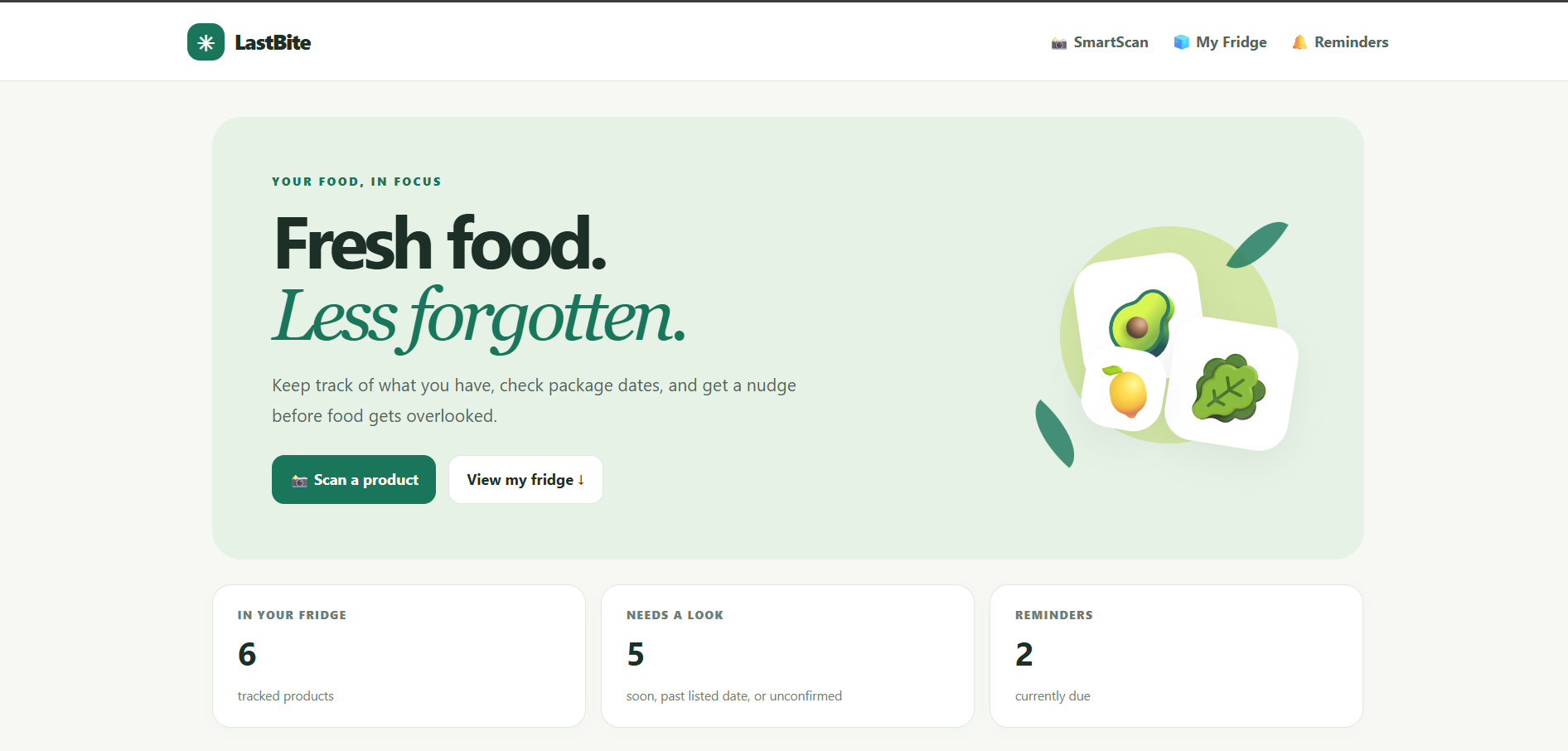
We wanted to build something that makes reducing food waste easier and more practical. This led to LastBite — an AI-powered food management application that helps people keep track of their groceries, manage expiry dates, and discover recipes using ingredients they already have.
Our goal was simple: help people make better use of the food they already own instead of letting it go to waste.
What it does
LastBite is a food-waste reduction application with three main features:
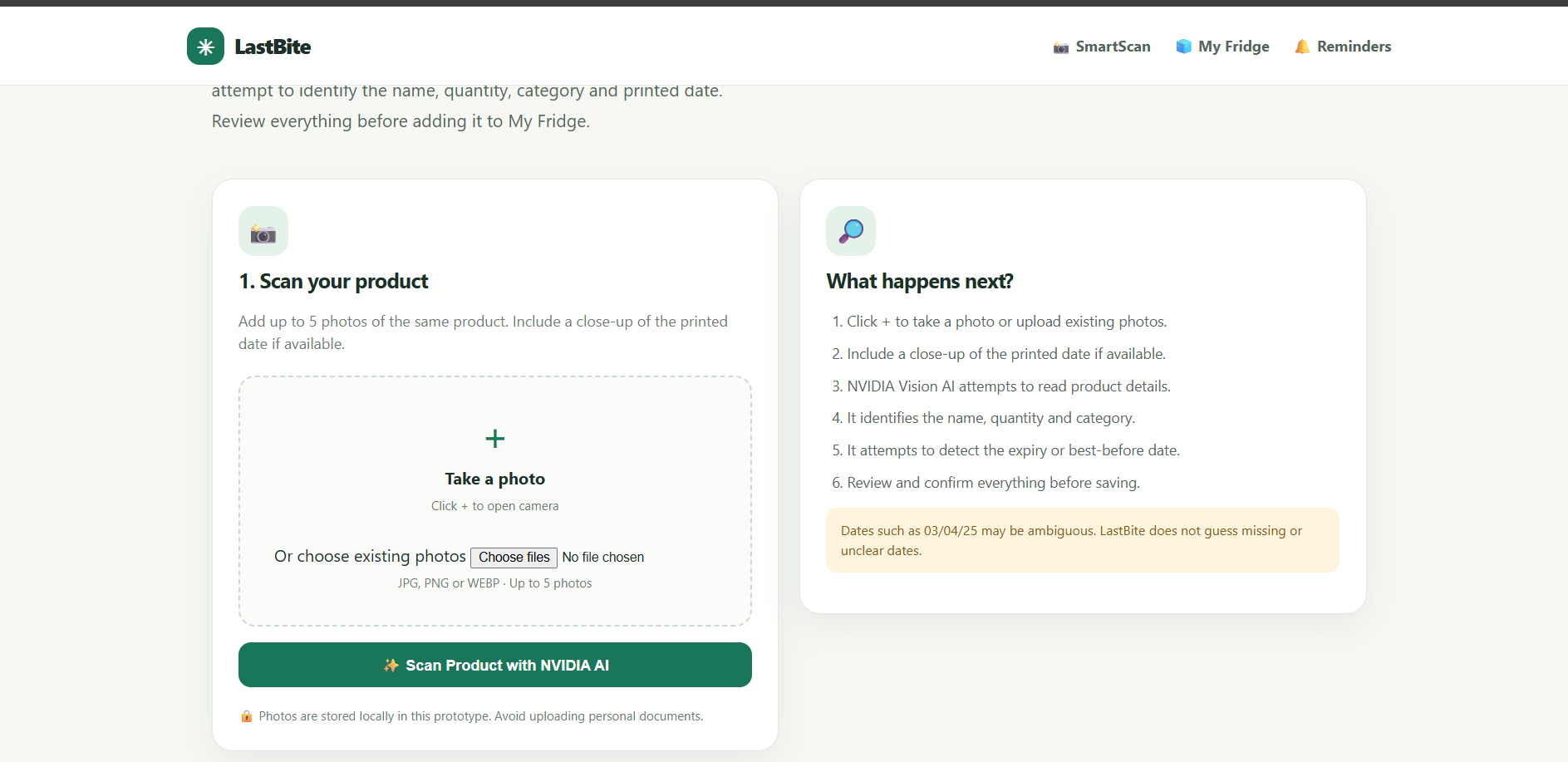
- SmartScan: Uses AI to scan food packaging and extract product information such as the product name, quantity, category, and visible expiry or best-before dates. Users can review and confirm the extracted information before saving it. Unclear dates are not guessed.
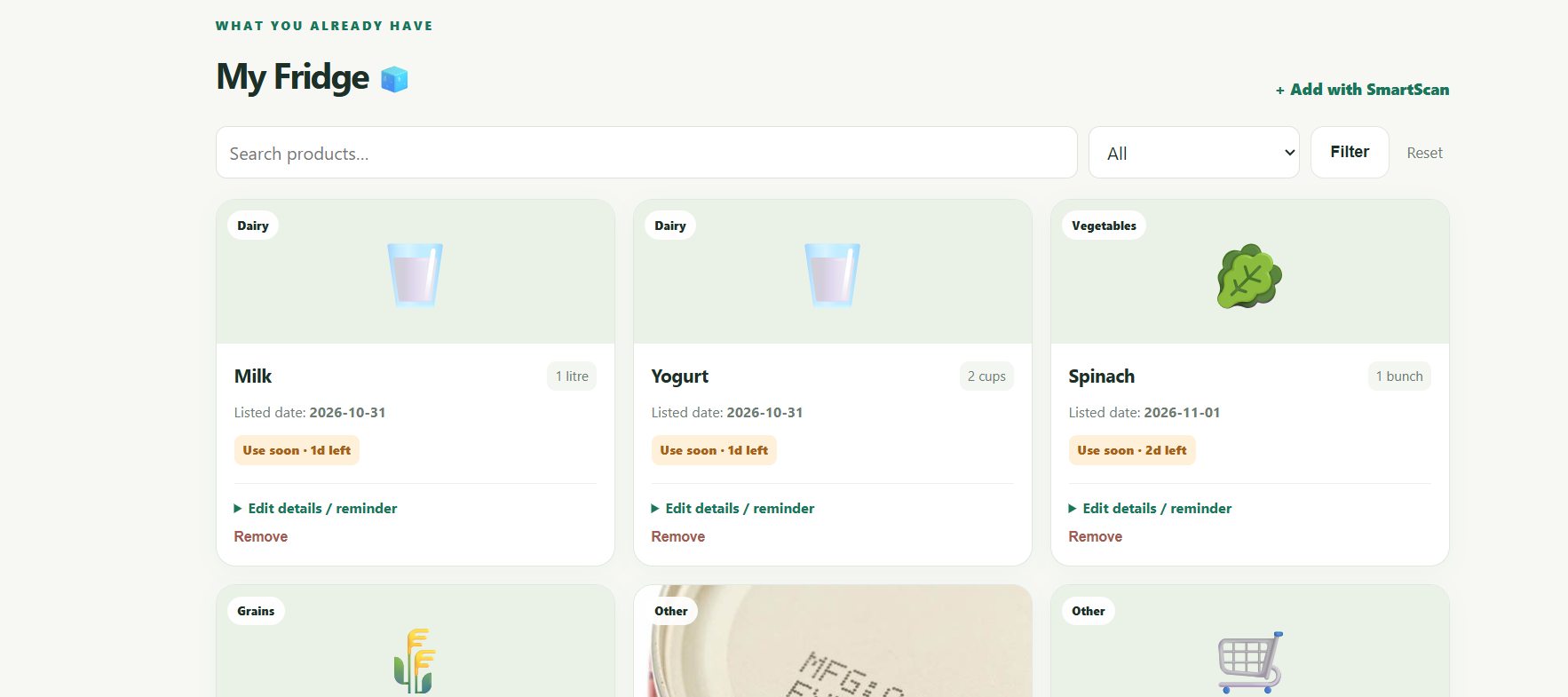
- My Fridge: Provides a centralized place to manage groceries, update product details, track quantities, and view the status of stored items.
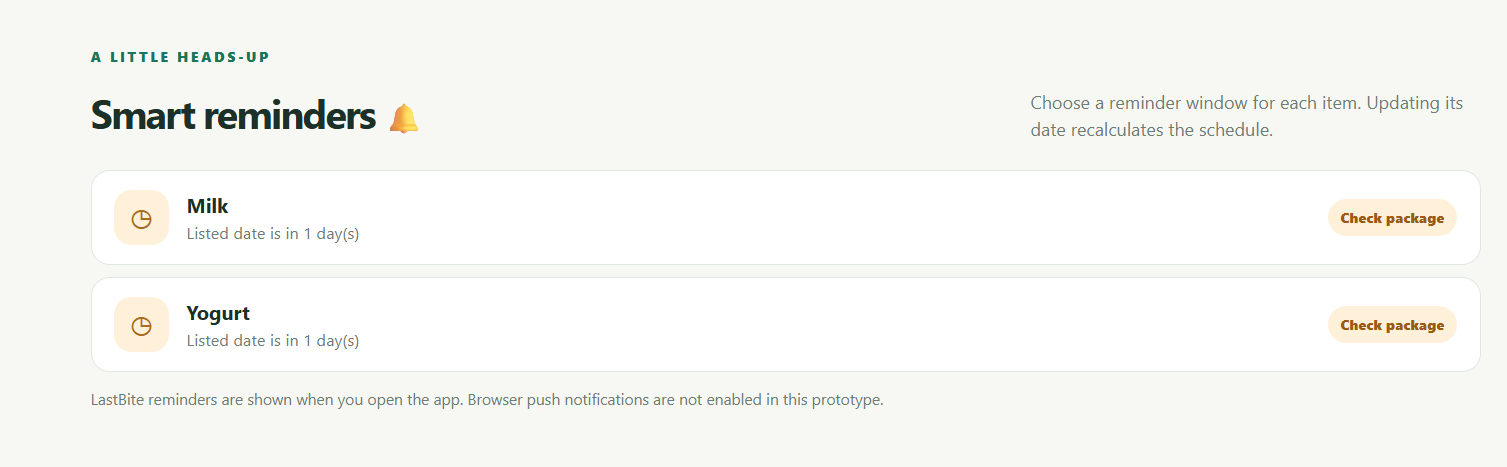
- Smart Reminders: Helps users identify products that need attention based on their confirmed dates and lets them manage reminder preferences.
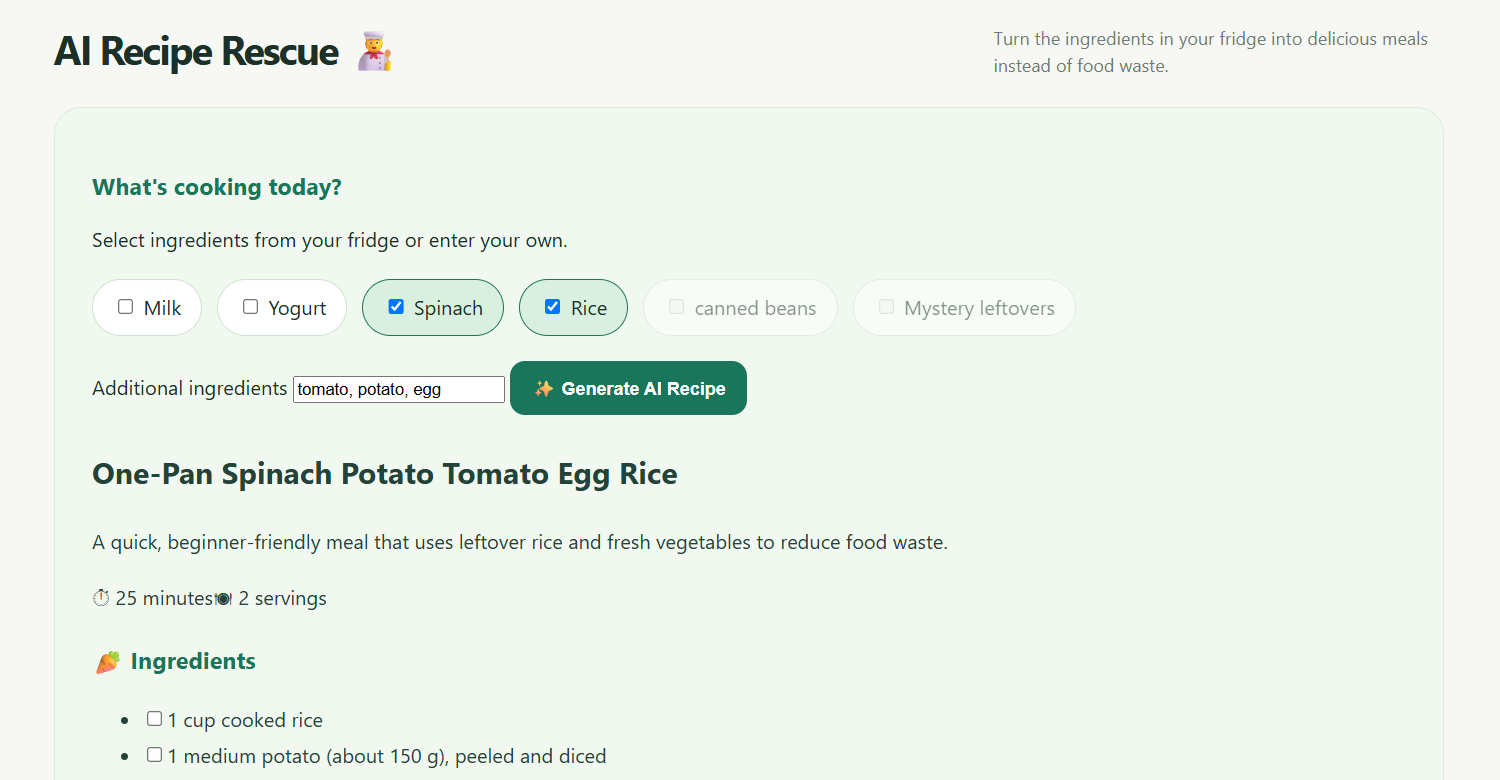
- AI Recipe Rescue: Uses AI to suggest practical recipes based on available ingredients, helping users find ways to use food they already have.
Together, these features make LastBite a simple tool for more mindful food management.
How we built it
We built LastBite using Python and Flask for the backend, HTML, CSS, and JavaScript for the frontend, and SQLite for database management.
We integrated NVIDIA AI models through an API to power the SmartScan and AI Recipe Rescue features.
For SmartScan, uploaded food-package images are processed by a vision model to identify product details and readable dates. We also explored OCR using Tesseract to assist with text extraction. The extracted information is presented for user review rather than being automatically treated as correct.
The AI Recipe Rescue feature sends the available ingredients to an NVIDIA language model, which generates a practical recipe with ingredients, quantities, cooking instructions, and storage advice.
The application uses SQLite to store grocery information and Flask routes to handle operations such as scanning, adding, updating, and deleting products.
Challenges we ran into
One of our biggest challenges was extracting accurate information from food packaging. Expiry dates can be printed in different formats, placed in unusual locations, or appear alongside manufacturing and packaging dates. We had to make sure the application did not mistake one date for another or invent information that was not clearly visible.
Another challenge was integrating NVIDIA's AI models into the application and handling API responses, model configurations, and errors.
We also had to bring multiple features together into one consistent application, ensuring that information extracted through SmartScan could be reviewed and saved to My Fridge and then used by the recipe generator.
Balancing AI automation with user control was another important consideration, especially when dealing with food-related information.
Accomplishments that we're proud of
We are proud to have developed a working prototype that brings multiple food-management features together in one application.
Some of our key accomplishments include:
- Integrating AI-powered image recognition for food-product scanning.
- Building a grocery management system with persistent SQLite storage.
- Implementing date-based product status tracking and reminders.
- Developing an AI-powered recipe generator that uses available ingredients.
- Designing a responsive interface that brings the different features together.
- Prioritizing reliability by ensuring that uncertain expiry dates are not automatically assumed or saved as confirmed information.
Most importantly, we created a solution that connects AI with a practical everyday problem.
What we learned
Through this project, we gained practical experience in integrating AI APIs into a full-stack application and connecting frontend interfaces with backend services and databases.
We learned that working with AI involves more than simply sending a prompt and receiving a response. Model selection, API configuration, response handling, validation, and error management are all important parts of building a reliable application.
We also learned the importance of designing AI systems with appropriate limitations. In LastBite, this meant recognizing that an AI model should not guess an expiry date when the packaging information is unclear.
The project helped us improve our problem-solving, debugging, teamwork, and application development skills while giving us a better understanding of how AI can be used to address real-world challenges.
What's next for LastBite?
We see LastBite as a starting point for building a more intelligent and complete food-management platform.
Our future plans include:
- Improving SmartScan accuracy through better image processing and date recognition.
- Introducing more reliable, scheduled notifications for products that need attention.

Log in or sign up for Devpost to join the conversation.