Inspiration
We wanted to find out how much game you can get from nothing but your hands, sitting at your desk, for a few minutes at a time. Driving felt like the perfect test. Everyone knows how to hold a steering wheel, and the most natural way to stop is to let go of it.
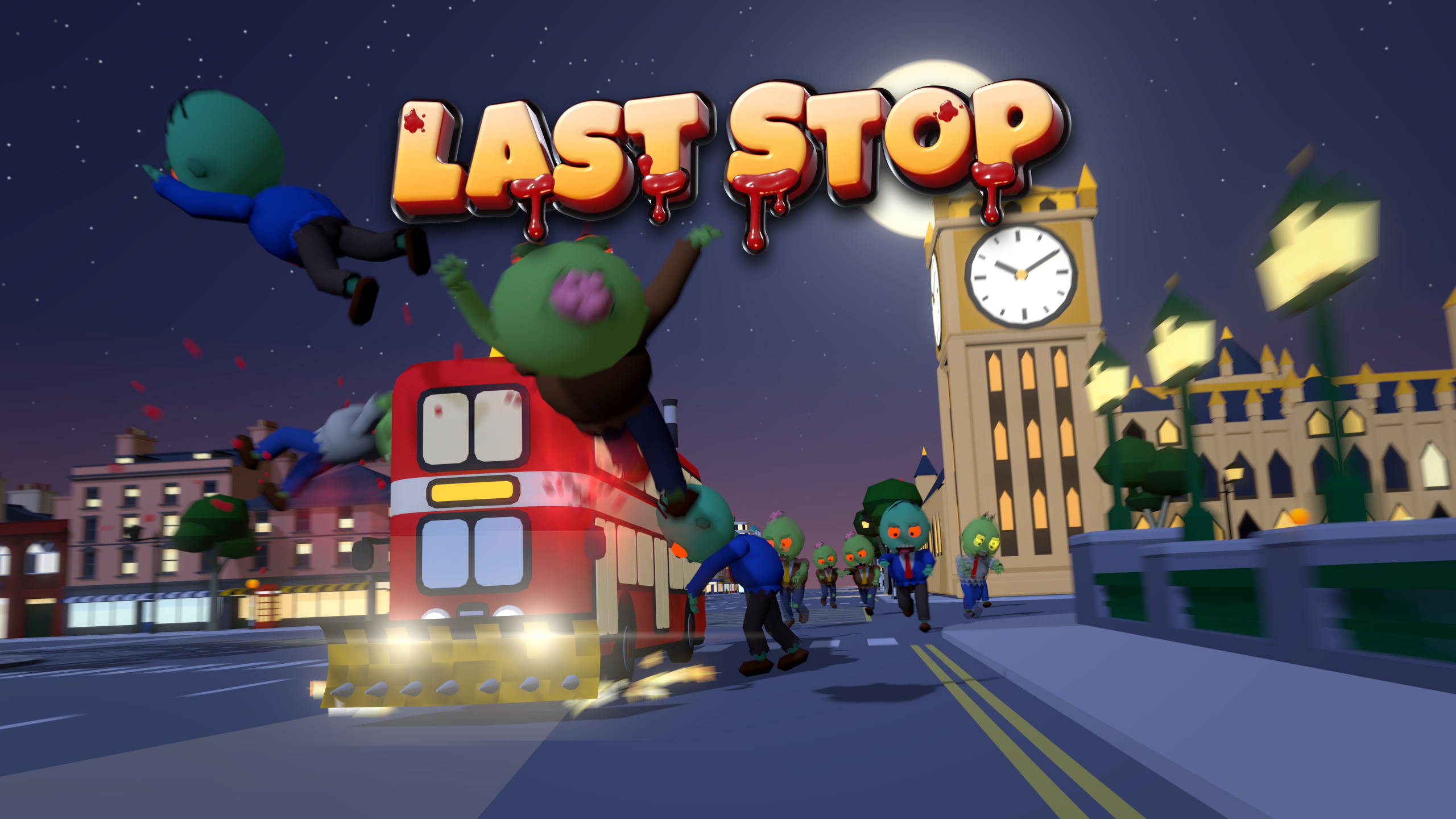
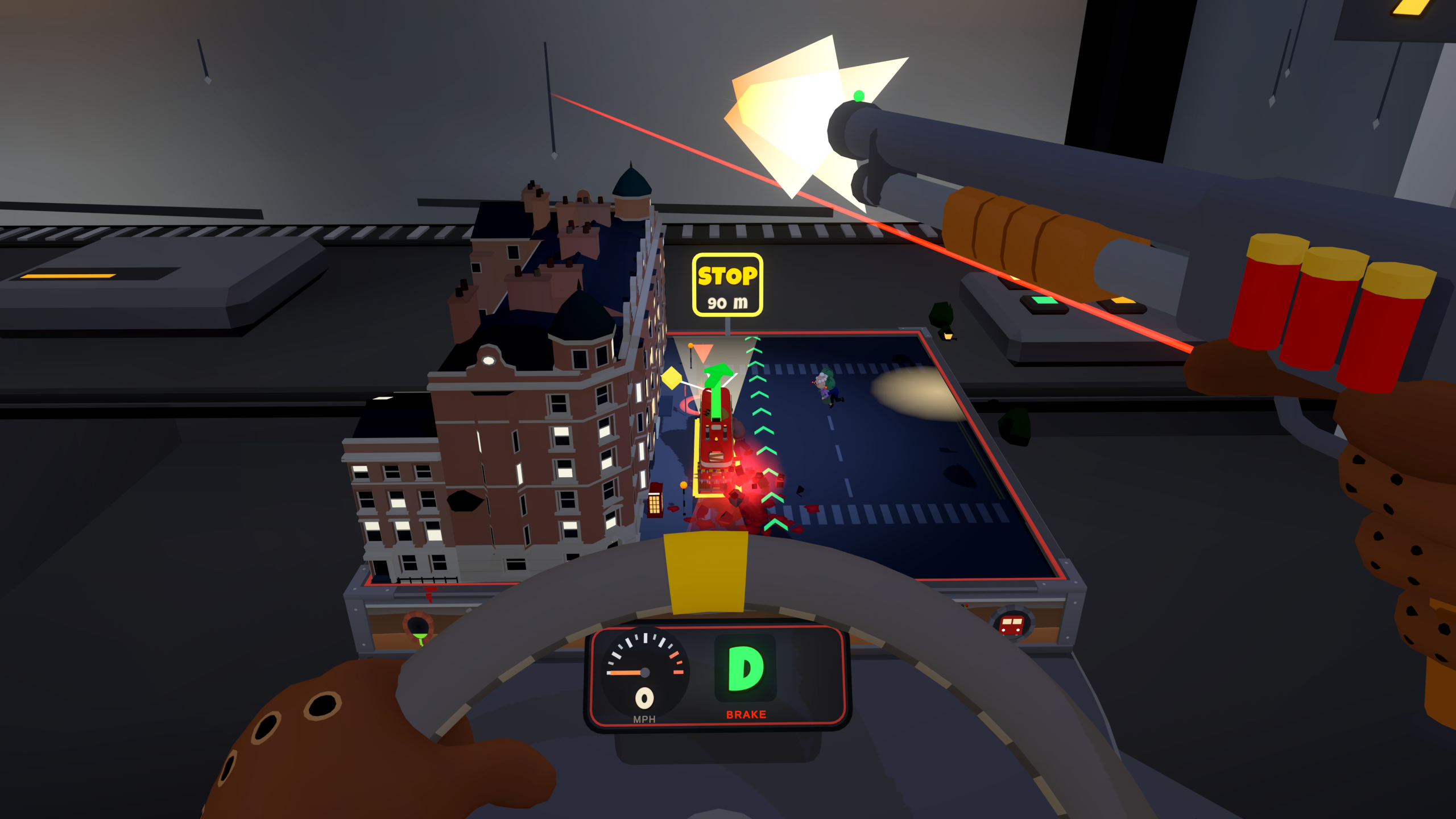
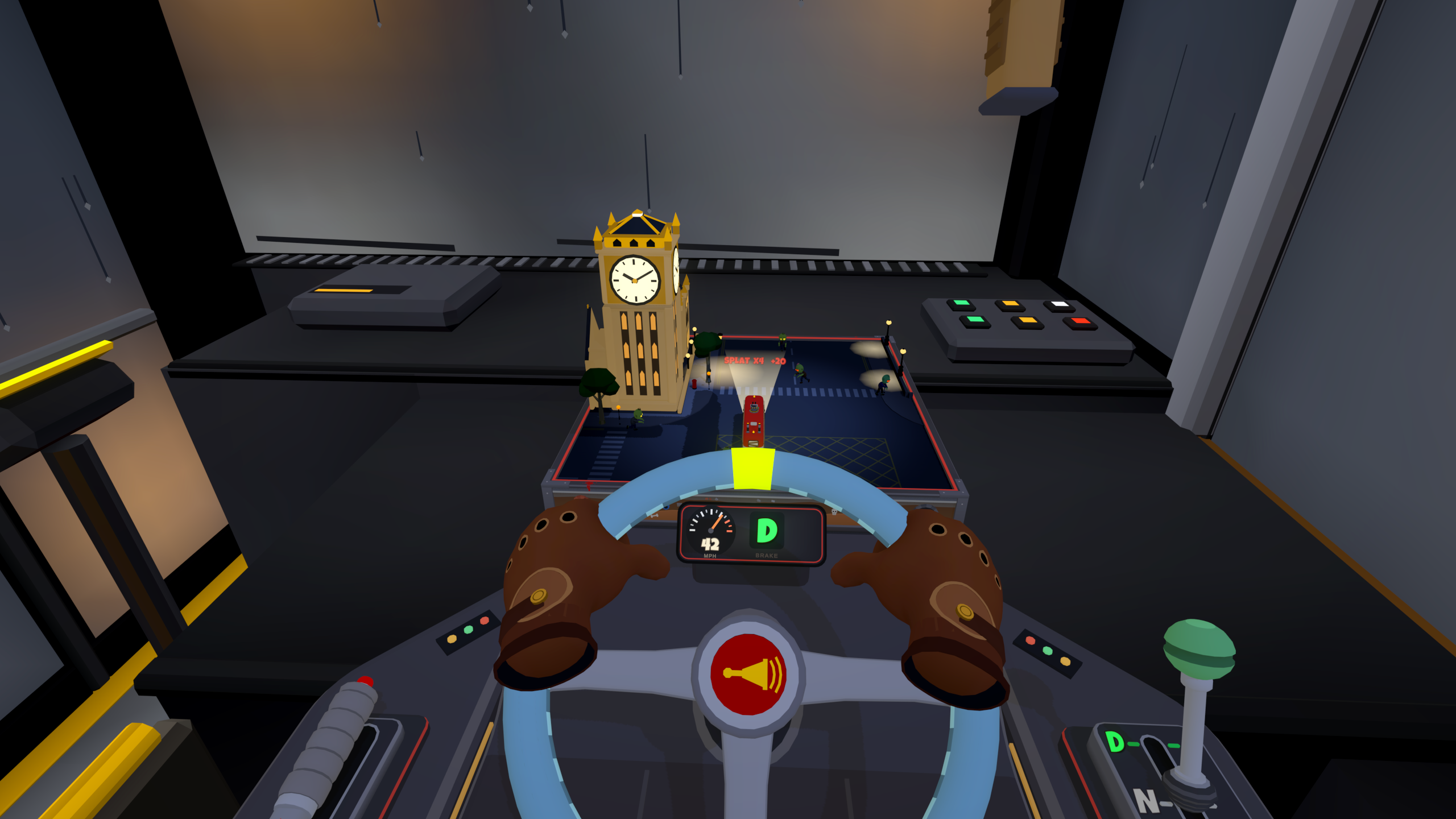
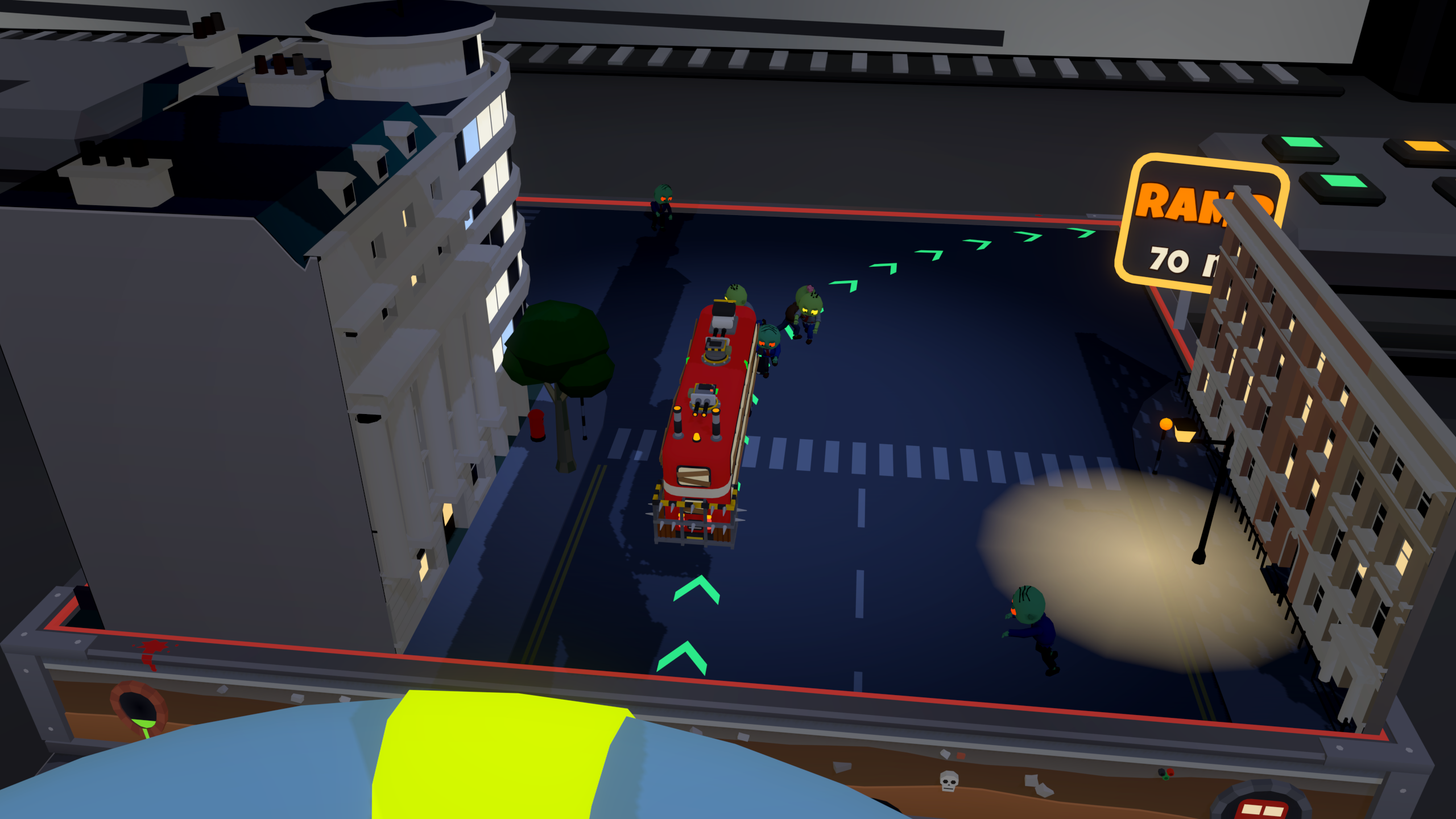
So we put a hand-tracked wheel, gear lever and handbrake in front of the player, a 1.5 ft slice of London beyond them, and a red double-decker in the middle of it. Then we filled the streets with zombies and gave the bus a job: pick up the survivors and get them to the safe house. The style comes from of our favourite cartoony zombies games combined with the quick gameplay of mobile games.
What it does
LAST STOP is a seated, hands-only zombie rescue game for Meta Quest 3 and 3S. There are no controllers at any point.
- Drive with your hands. Grip the wheel to steer. Push the gear lever to D to go, and let go of the wheel to brake. Yank the handbrake up in a corner to drift, then push it down for a boost.
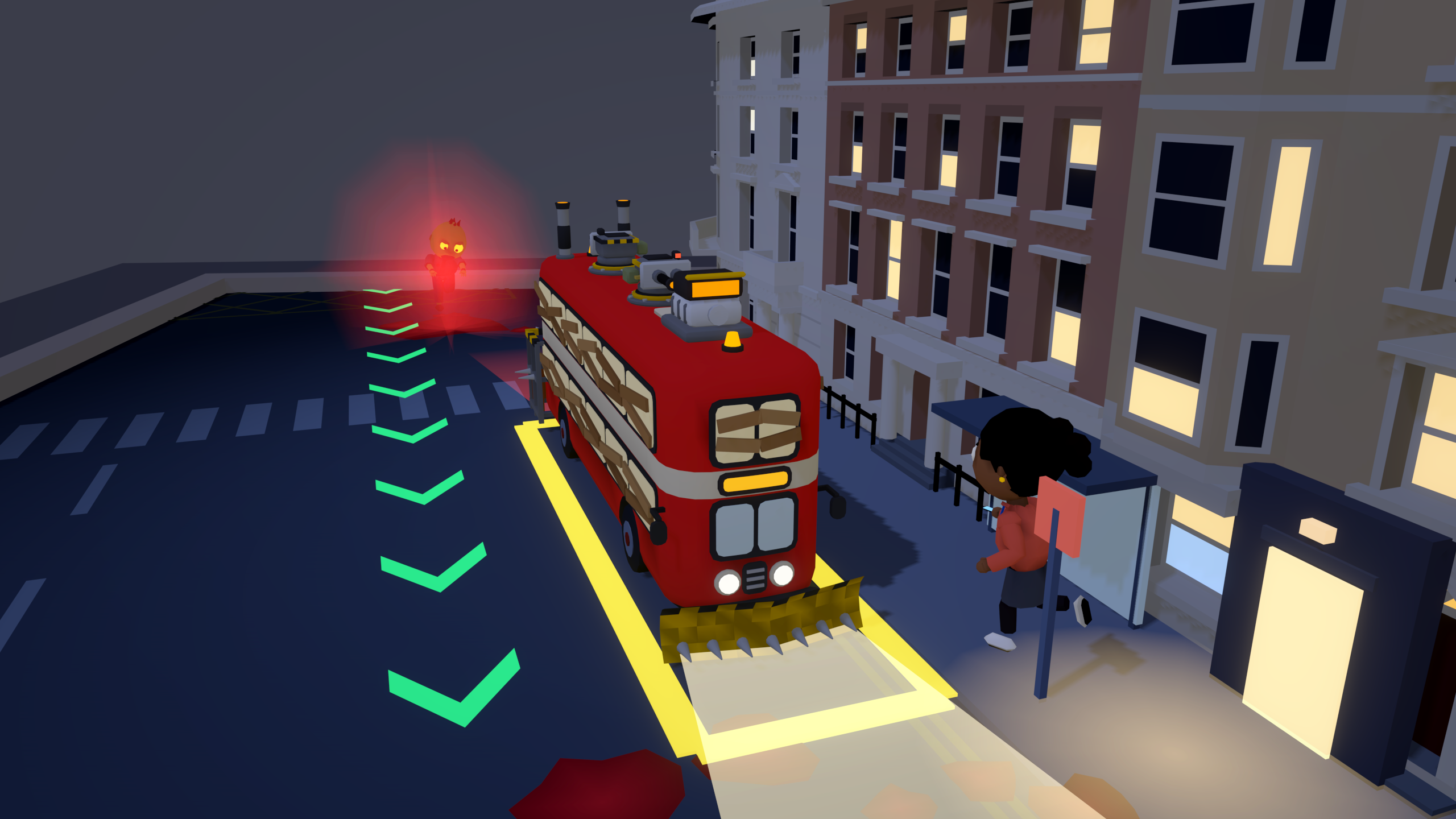
- Pick up survivors. Pull in to the kerb and run down the crowd waiting there. Survivors run out of lit doorways to the bus while zombies hunt them. Honk the horn to pull the zombies onto the bus instead.
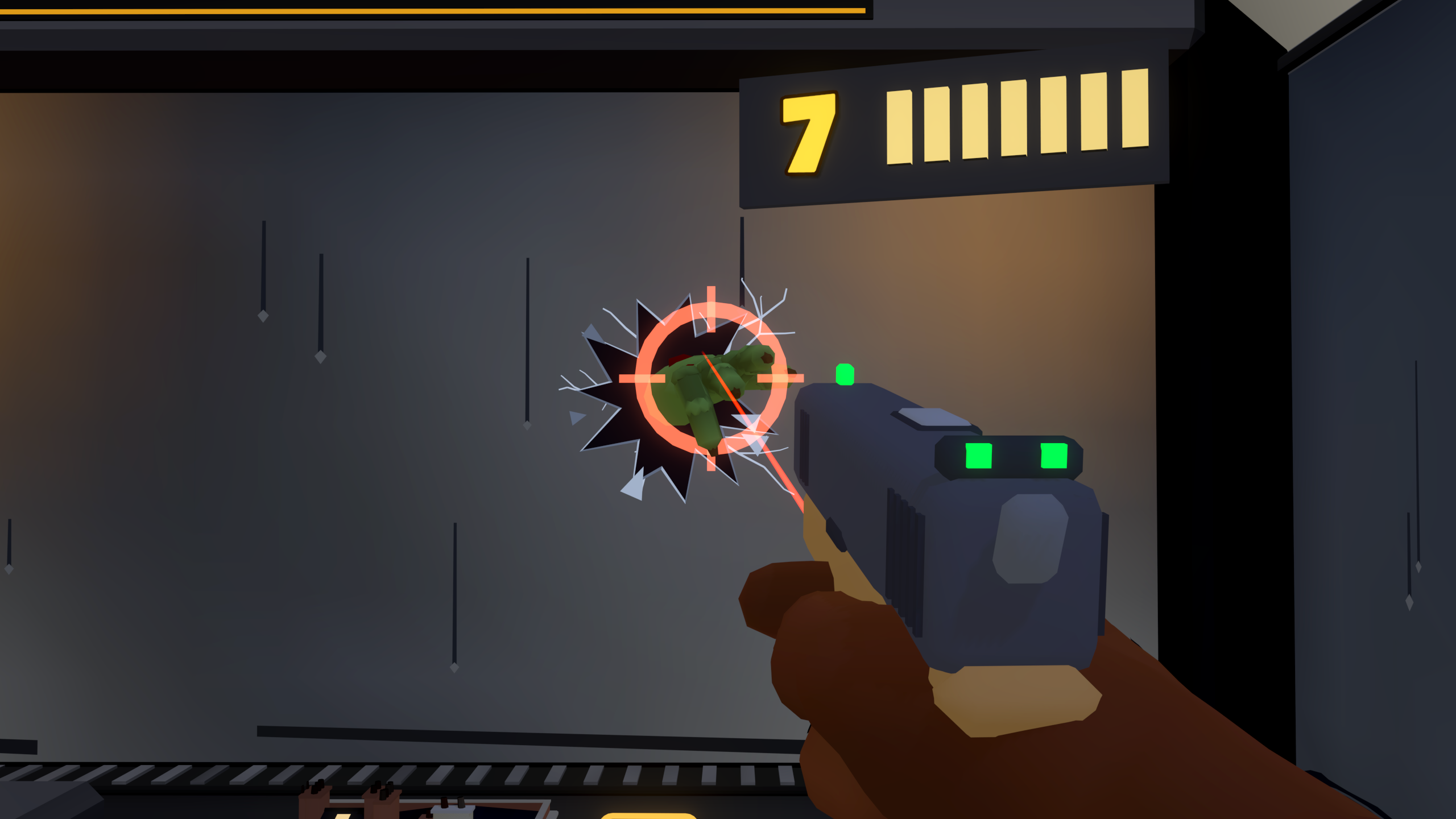
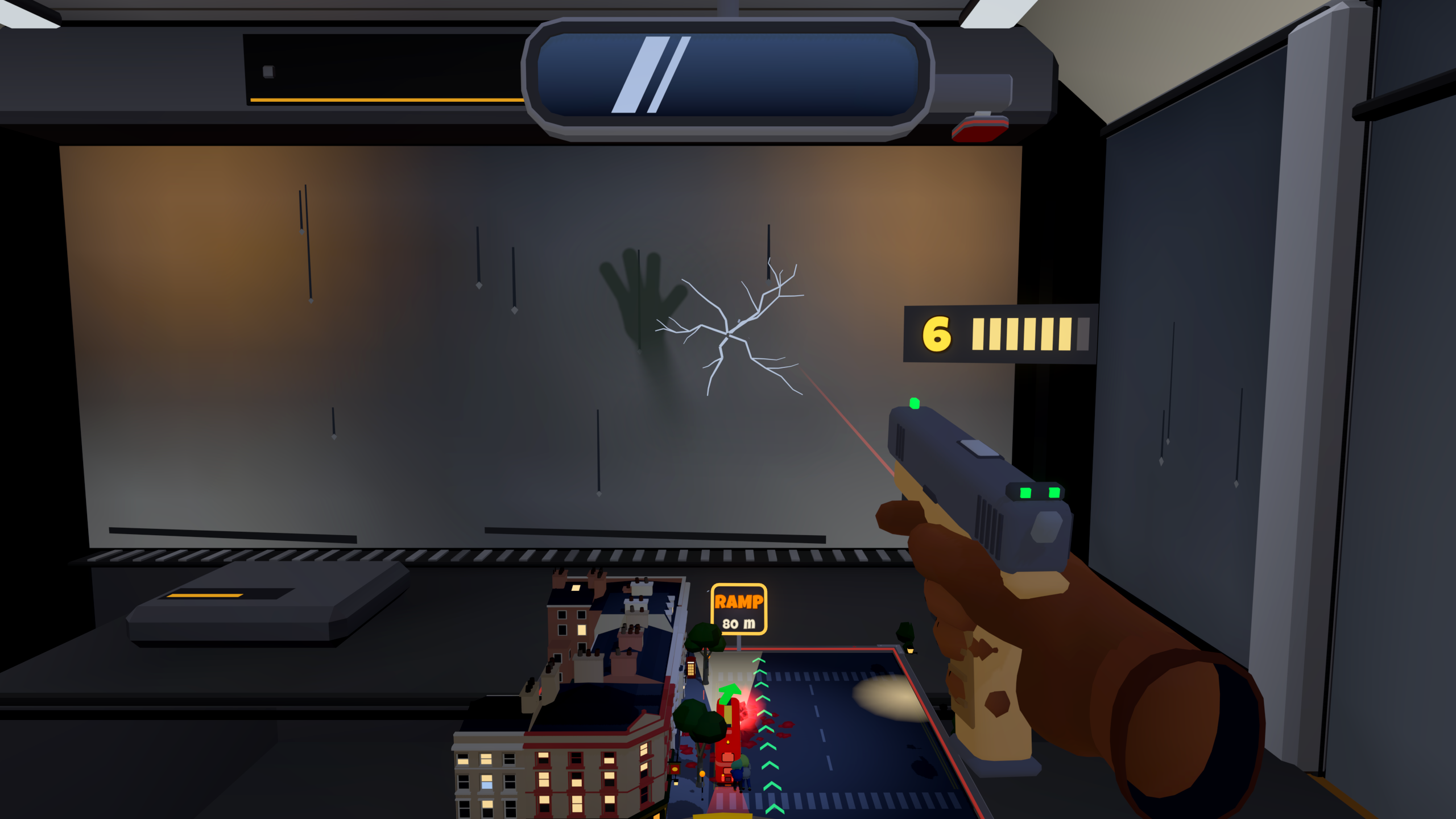
- Shoot from the seat. A gun hangs from the rear-view mirror. Grab it, point the way the zombie is on the bus, and curl your finger to fire.
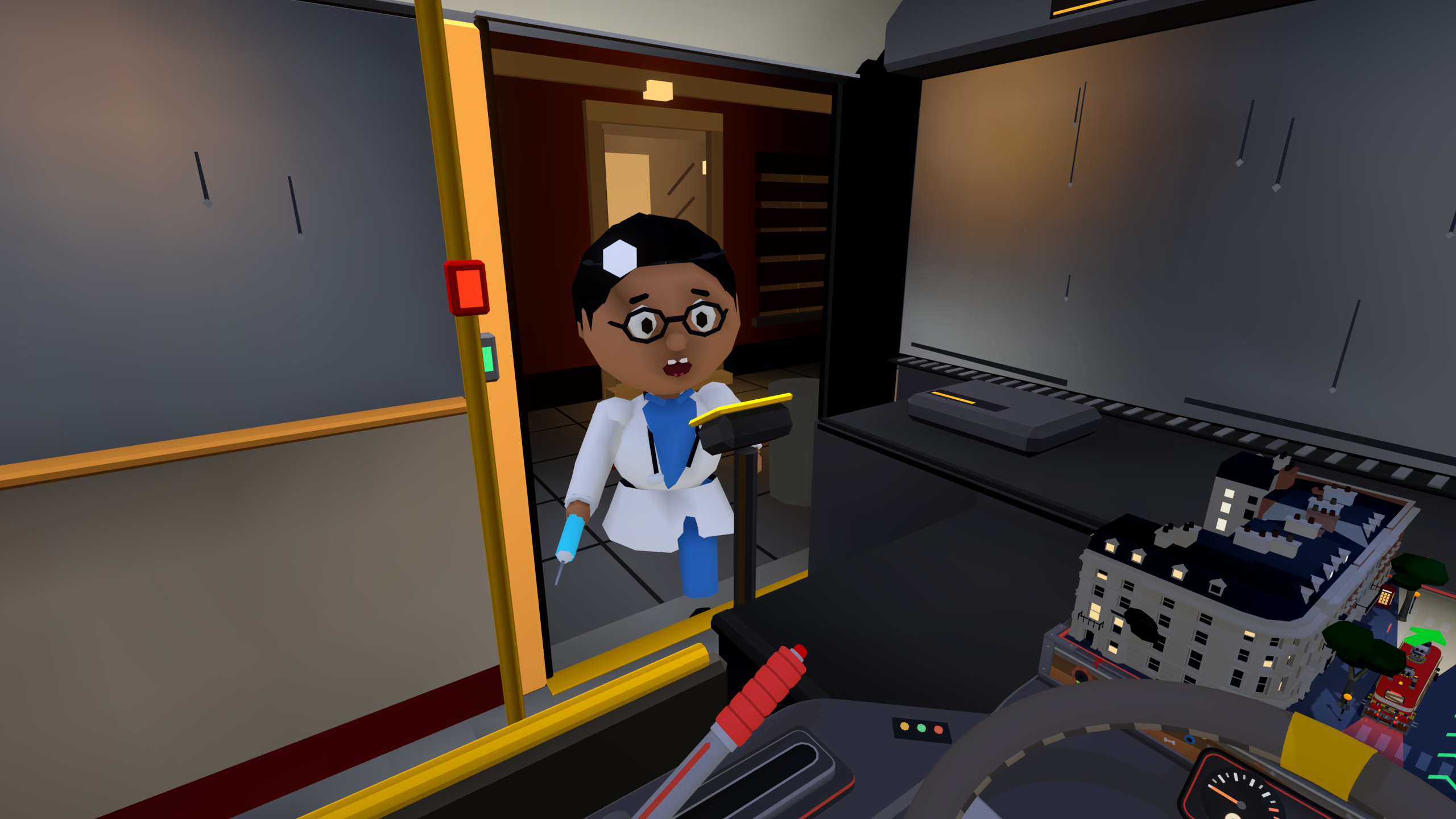
- Your room joins in. In mixed reality, zombies holding on to the bus slap your real walls from the other side, then punch through them and reach for you. At each stop the bus's doors open in your real doorway, and the survivors walk in past your shoulder like passengers past a driver.
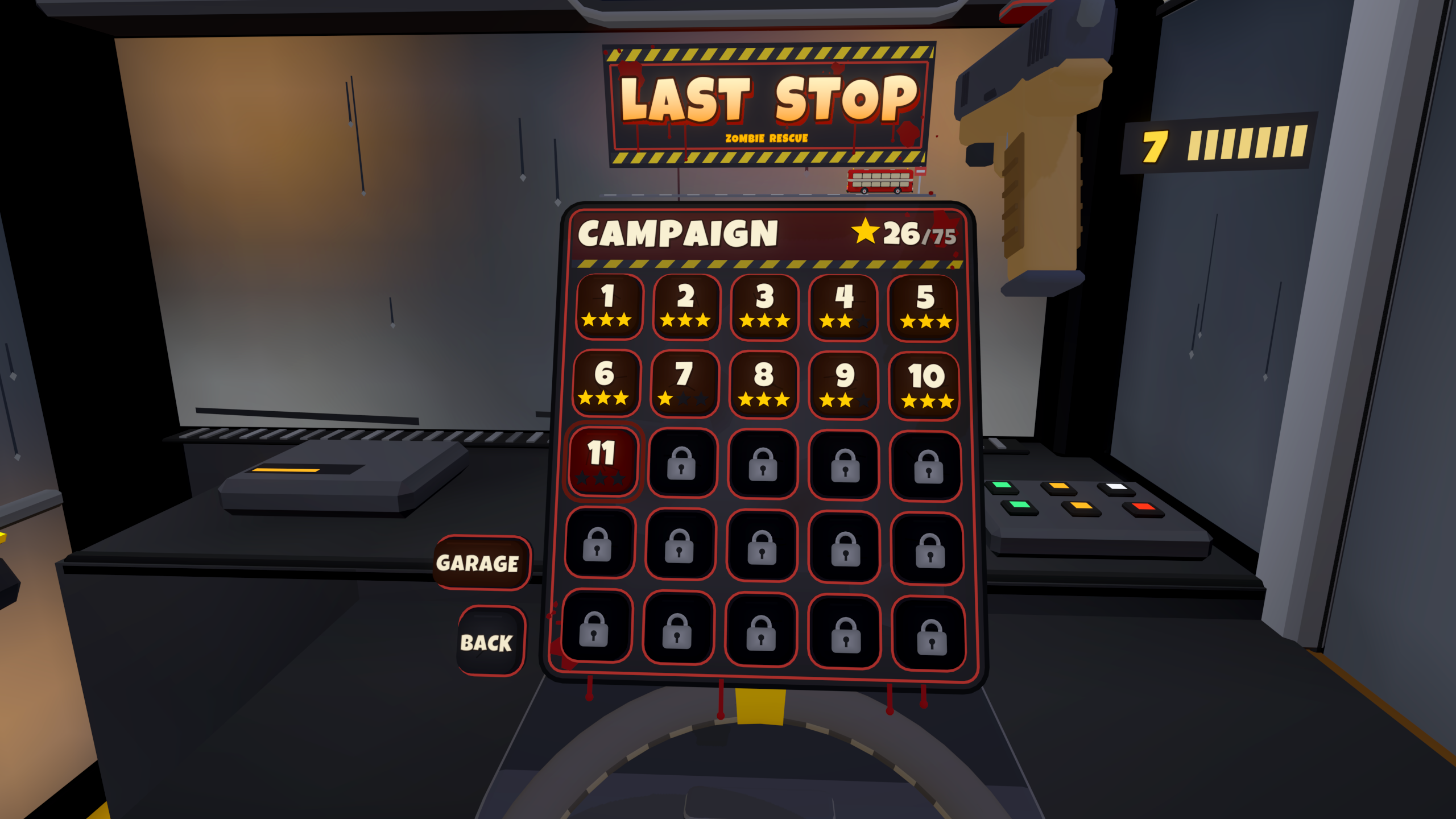
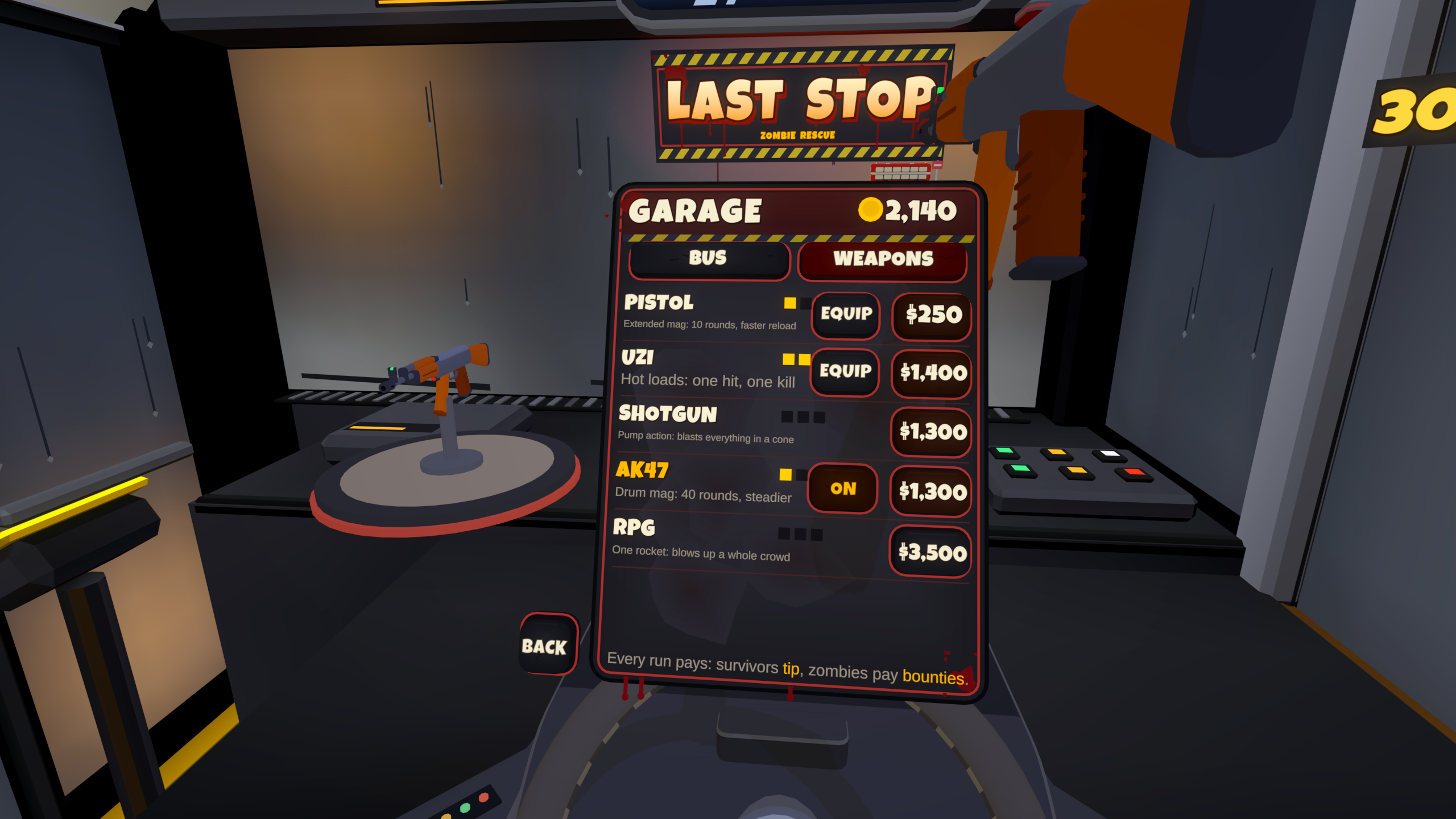
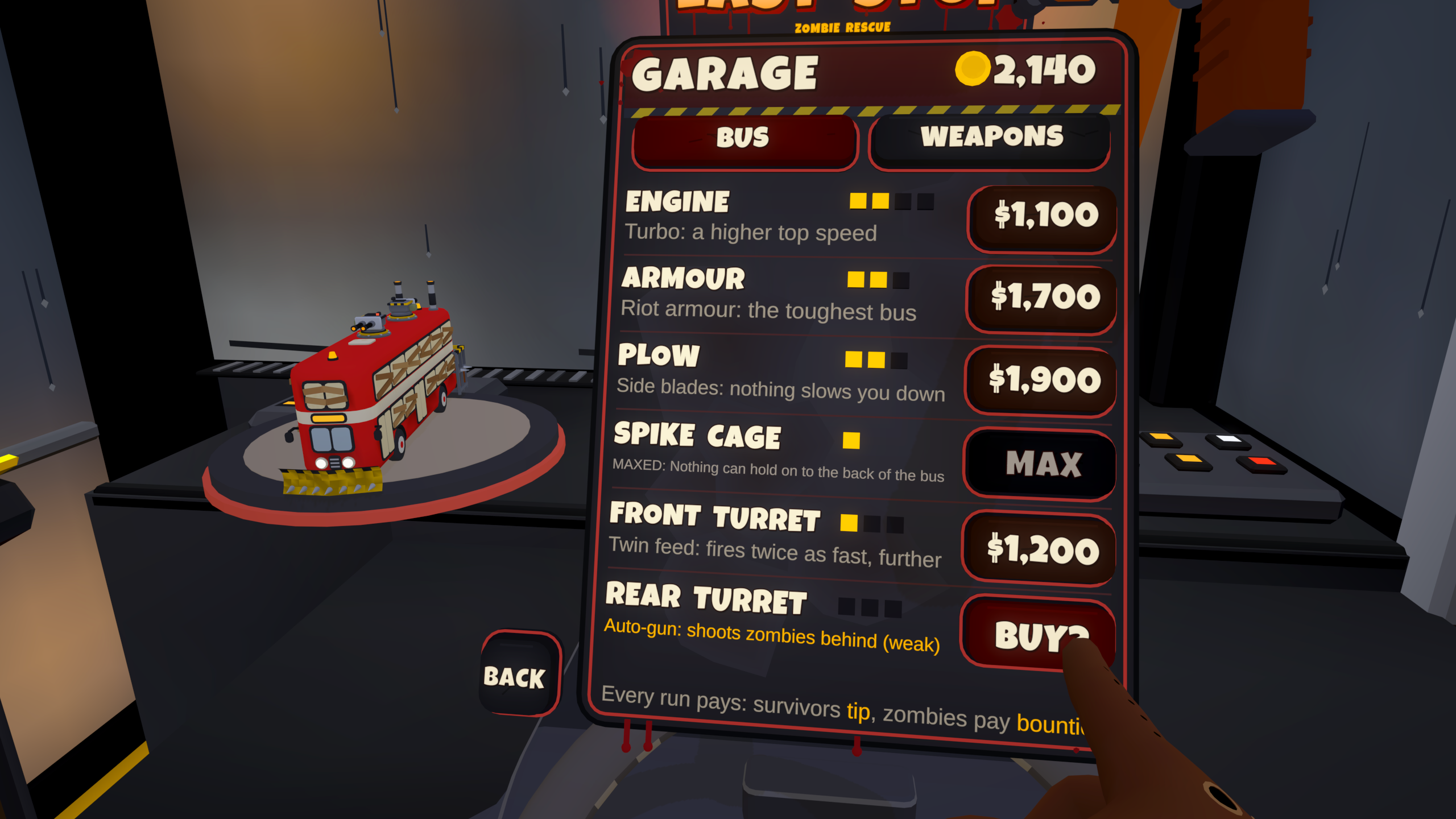
- Reasons to come back. There's a 25-level campaign with stars, and a garage of upgrades bought with tips. A daily route gives everyone the same streets each day, with a Meta leaderboard. There's also free-roam practice, and a tutorial where ghost hands show each move.
- VR mode puts you in the cab of a London bus. The windows are steamed up, zombie hands slap the glass, and the survivors you pick up climb aboard behind you.
How we built it
- Unity 6 and Meta's SDKs. Unity 6 with URP and OpenXR, plus the Meta XR Core SDK, MR Utility Kit and Platform SDK (all v207), on Android with IL2CPP and Vulkan.
- Everything is built from code. A setup script makes the scene, and the game builds the cockpit, menus and city at runtime. The city is an endless procedural London, the same streets every time for a given seed. It's streamed in 80 m cells, one mesh per cell, and cells off the board aren't drawn.
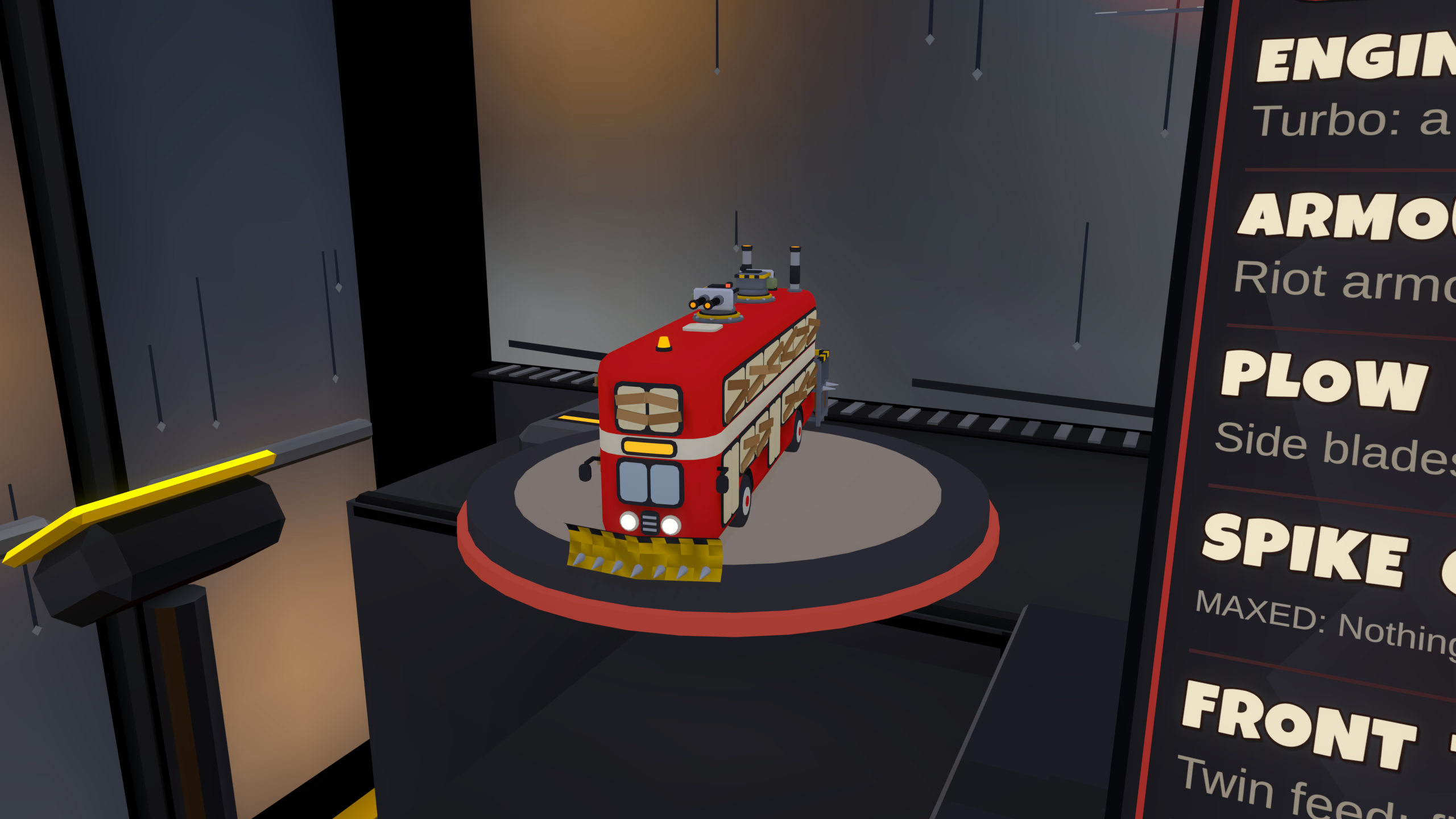
- A London of our own. We built a whole modular London kit, 86 pieces in a chunky cartoon style. Georgian terraces, stucco fronts, pubs, shops, offices and tube stations fit together into streets, with garden squares, red phone boxes and pillar boxes, the Thames with four bridges, and landmarks from Big Ben to the Shard. The bus, three zombies, eight survivors, the cockpit, five guns, the board, the bus interior and the driving gloves share the same style.
- Built for Quest. There are no textures. Everything is vertex colour on a few custom shaders, with the vertex alpha used as glow for the night. Zombies and survivors swap baked pose frames on one shared material instead of using skinning, so 30 zombies stay cheap. The bus interior's light is baked in Cycles.
- Our own hand interaction, built on the OpenXR hand skeleton (see the hand interactions answer).
- Robot playtesters. An autopilot drives the game headless. It plays all 25 levels with a stock, a mid-game and a maxed-out bus to tune the difficulty curve, and plays a whole career from a fresh save to tune the economy. A room sweep lays out the mixed reality in 87 of MRUK's sample rooms, 374 seat positions in all, and checks every walk.
Challenges we ran into
Speed without pedals. We started with a gear lever: in D the bus drives at a set speed, and letting go of the wheel brakes. We wanted players to ease the speed up and down as they would with a pedal, but a seated, hands-only game has no feet. So we made the wheel the pedal: push it to go, the further the faster, and pull it back to brake. We built and tried three versions in one day:
- Down and up its column. Simple to read, but people push forward rather than down the slant, so only about half of each push counted.
- Forward and back, level, like a plane's yoke. A tilted wheel also moves forward as you turn it, so we worked out the turn and the push together from both hands every frame. Two hands read cleanly. But with one hand at 9 o'clock (the other on the gun), the arm sinking 2 cm read as a 12° turn and a push.
- Tilting on its base, like a joystick, with a flatter wheel like a real bus's, from a sketch by the team. We used the twist of each hand to tell a turn from a tilt. Testers found it too hard to drive.
We added a dash showing the speed, the gear and how far the wheel is pushed, and our automated checks fake hands to test every version. In the end the gear lever we started with felt best, so it's the default again: D to go, and let go of the wheel to stop. The two sliding wheels are still on the Settings page for anyone who wants them.
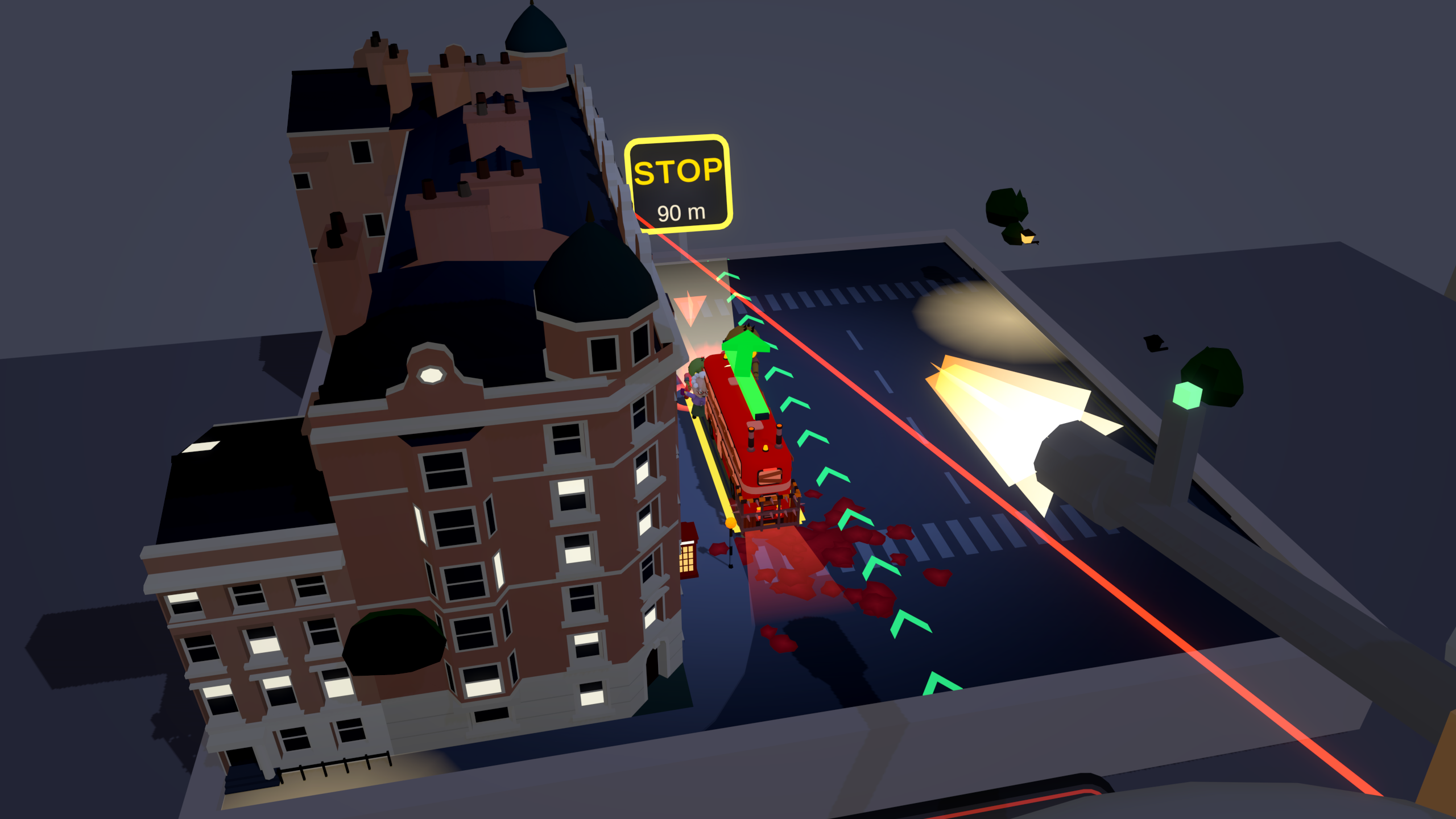
The drift nobody could do. Our first drift needed the handbrake lifted high, and it braked the bus as it slid. One tester spent ages trying and it never happened. Now a quick yank counts, judged by how fast the handle rises rather than how high. The bus keeps its speed through the slide, can't spin out, and charges a boost.
A handbrake left on. After a drift, players let go of the handbrake a little way up without noticing, so the bus never got back to full speed. We tried a spring-loaded handbrake that dropped whenever you let go, but on the Quest it wasn't much nicer. Now its ratchet only holds from half way up. Let go lower and it drops right down.
Hands that wouldn't let go. A relaxed hand stays half curled, so a hand that left the gear lever for the wheel stayed stuck to the lever, dragging the gear. Now a closed hand that moves away is handed off: for two seconds the next control can take it without a fresh grip.
A gesture that never arrived. On the Quest 3S, the system's menu gesture (left palm up, pinch) never reached our app. We read it from the hand joints ourselves.
Guide hands people read backwards. The tutorial's ghost hands show each move, but players often read them as upside down or the wrong way round. They were simple box hands, and the gear lever's and handbrake's were mirrored onto the wrong hand. Now each one is a hologram of the player's own glove, posed exactly as it will hold that control.
Two pairs of hands. Our gloves snap round whatever they're holding, a few centimetres from your real hands, so in passthrough you saw both. The gloves now follow every tracked joint, and a bus driver's cab fills the lower view and hides your real lap and hands. The gloves are the only hands you see.
Rooms we've never seen. Our first idea, bus seats on the player's floor, fitted 39 of 184 seat positions in MRUK's hand-built sample rooms. Survivors sitting on the player's couch felt odd. Now they walk in past the driver and out of view behind them. Every layout passes our checks in all 87 sample rooms, with fallbacks for a doorway behind you or a room with no space.
Keeping it a driving game. A playtester three-starred the first eight levels by shooting. So zombie crowds now gather at the kerb before you arrive, more of them the slower you are, and you run them down as you pull in. Perfect stops, drifts and combos all score, so good driving can win back a lost survivor.
Corners nobody could make. Our first streets were 12 m wide with tight corners, so players overshot the turns. Buses also stopped dead on bare pavement, because the collision didn't match the drawn kerbs, and players read that as invisible walls. Playtesters told us the fun was swerving down a long straight, running zombies over. Roads are now 26 m wide, routes run 3 to 5 blocks straight between turns you can take flat out, and you hit exactly the kerb you see.
Accomplishments that we're proud of
- Not one controller. You drive, drift, shoot, honk, work the menus and pause the game with your bare hands, sitting down.
- A whole game, not a tech demo. There's a 25-level campaign, a garage of six bus upgrades and five guns, a daily route, free-roam practice and a tutorial.
- Mixed reality that uses your room. Zombie hands slap your own walls, and the bus's doors open in your real doorway. Survivors walk round your real furniture. Our checks pass in all 87 of MRUK's sample rooms, from 374 different seats.
- Our London. We're really happy with how the modular London kit came out. Pubs, terraces and tube stations fit together into endless streets, with Big Ben, the London Eye, Tower Bridge and the Shard along the Thames, all as chunky and cartoony as the bus and the zombies.
- The same London for everyone. Each day's route is built from the date, so every player in the world drives the same streets for that day's leaderboard.
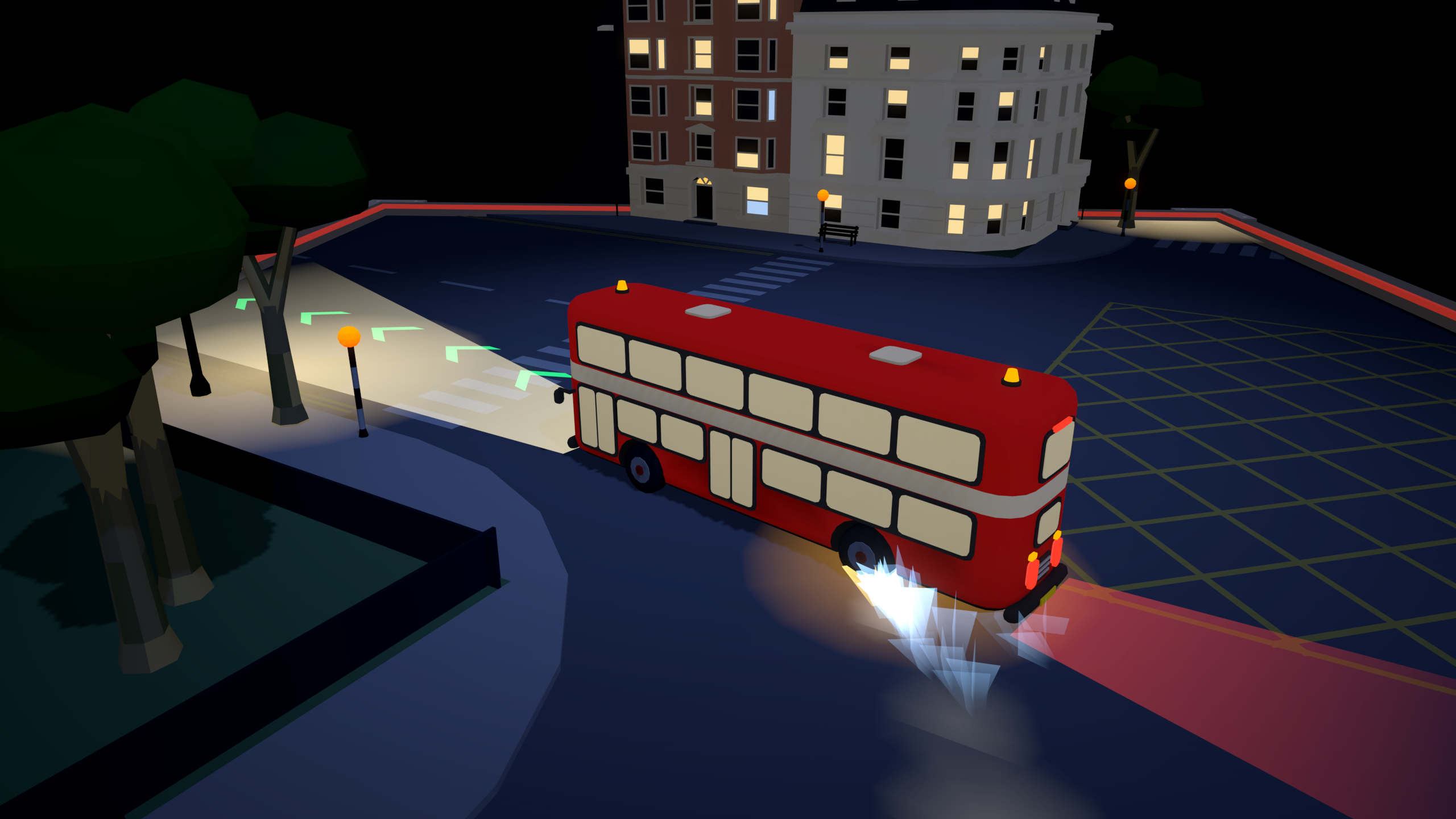
- A drift on a hand-tracked handbrake. Yank it up in a corner to slide, watch the sparks change colour as the boost charges, then push it down to boost.
What we learned
- Test on the headset every day. The drift, the menu gesture and putting the board on the player's real table all looked fine in the editor and failed on the Quest.
- Be generous with tracked hands. Hands shake and tracking drops out, so the aim locks on generously, letting go is the brake, and a handbrake let go low drops right down.
- Hands want something to hold. Fingers wrapped round the rim make the controls feel solid in a way a floating hand doesn't.
- In mixed reality, the room is the special effect. We built zombie-filled bus windows on the walls, and the team found them distracting. Dark hands slapping the other side of your own wall were far scarier.
- Comfort shapes the art. A clear bus window would show a street standing still while the bus drives, or the street racing past in the corner of your eye, a classic cause of VR sickness. So the windows in VR mode are steamed up, with blurred street lamps glowing through.
- Let a robot play it first. The autopilot plays the whole campaign three times in about 20 minutes. That's how we tuned 25 levels and an economy.
What's next for Last Stop
- More levels.
- New weapons and bus upgrades.
- New zombie variations.
- Different bus colours.
- A layout tuned for the narrower view of Meta's VR Glasses.


