Inspiration
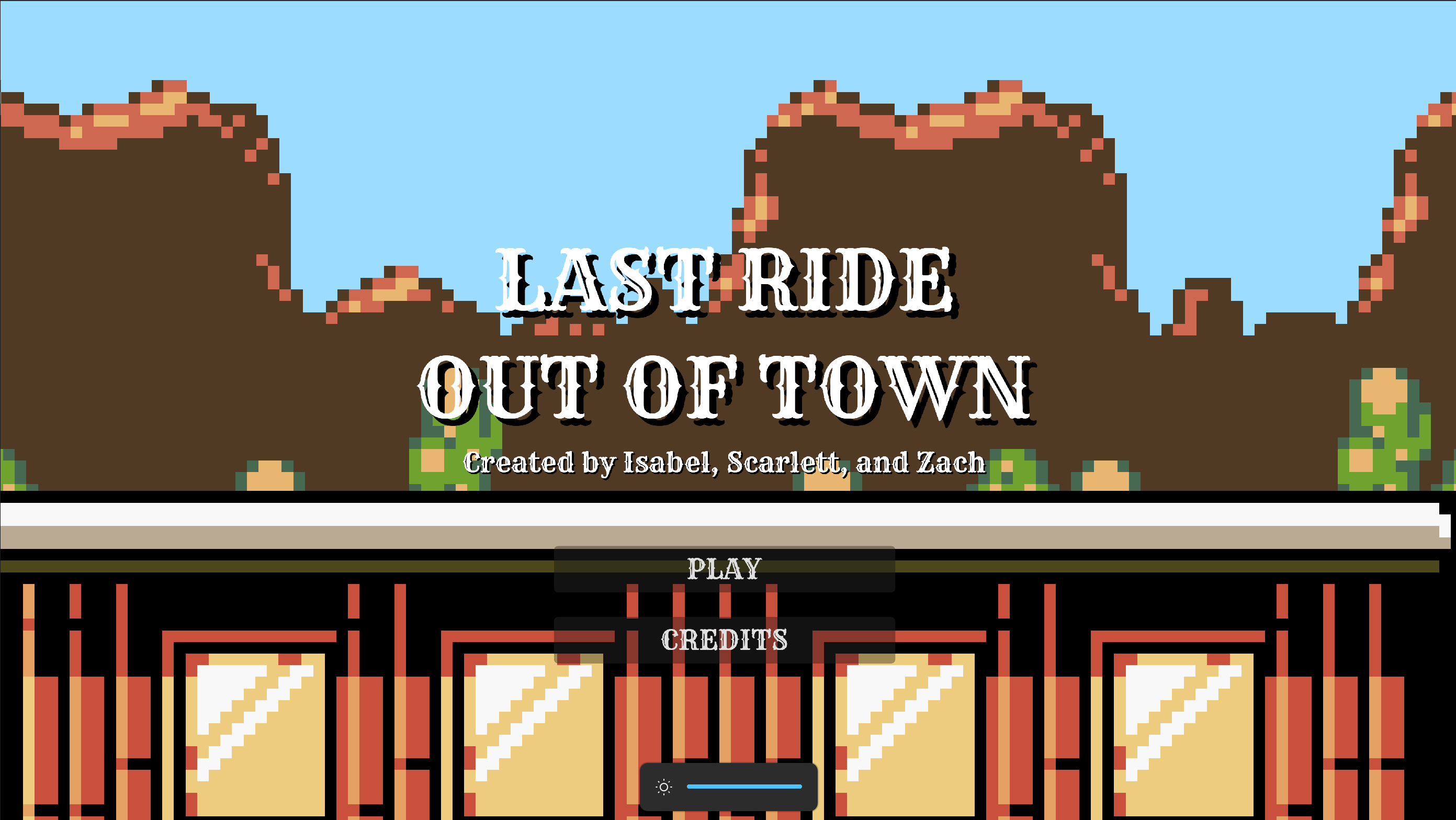
We were inspired by the Wild West theme and our shared interest in game design. We wanted to create a small but complete gameplay loop that combined exploration, a simple quest, and a final action sequence.
What it does
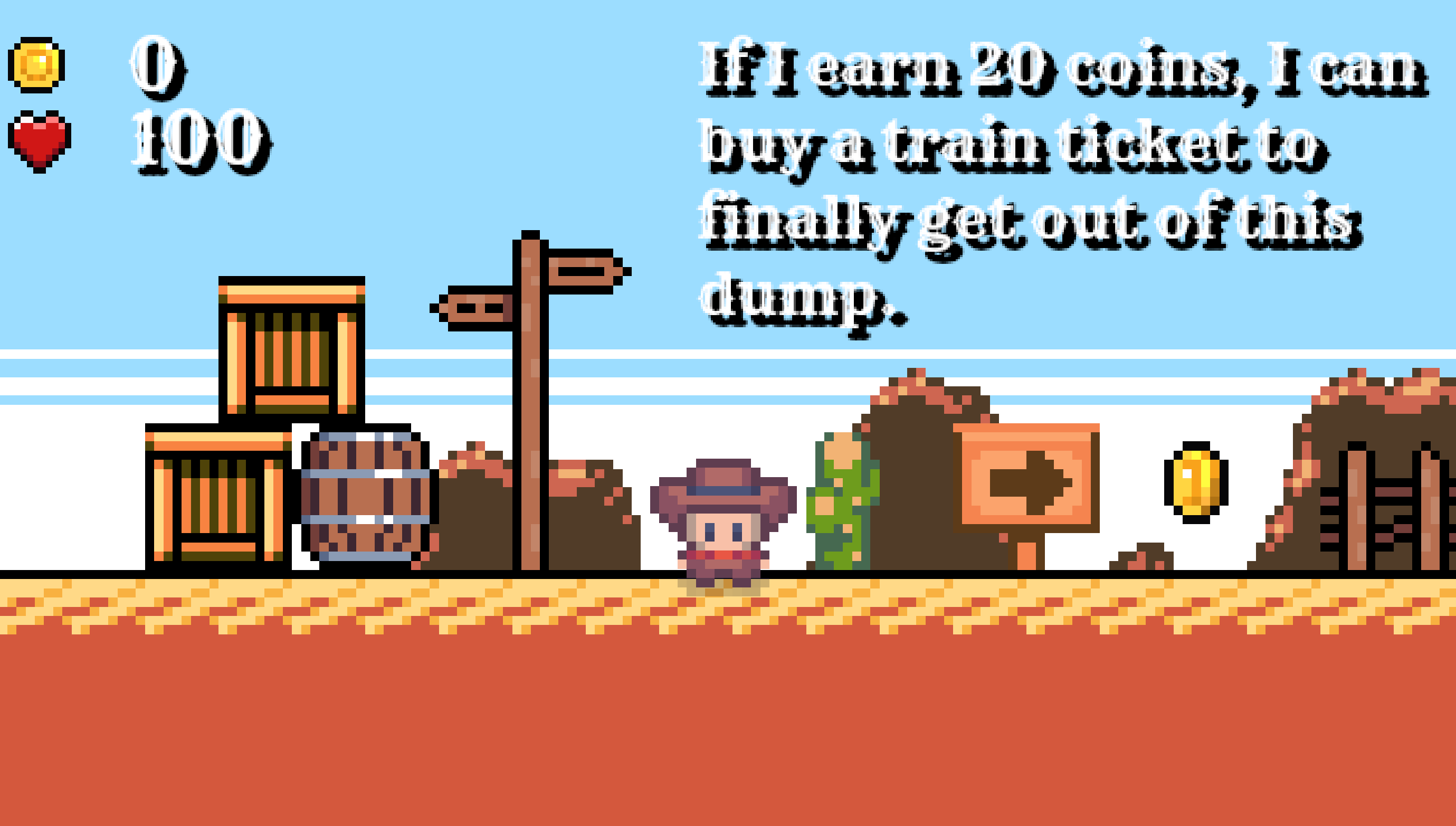
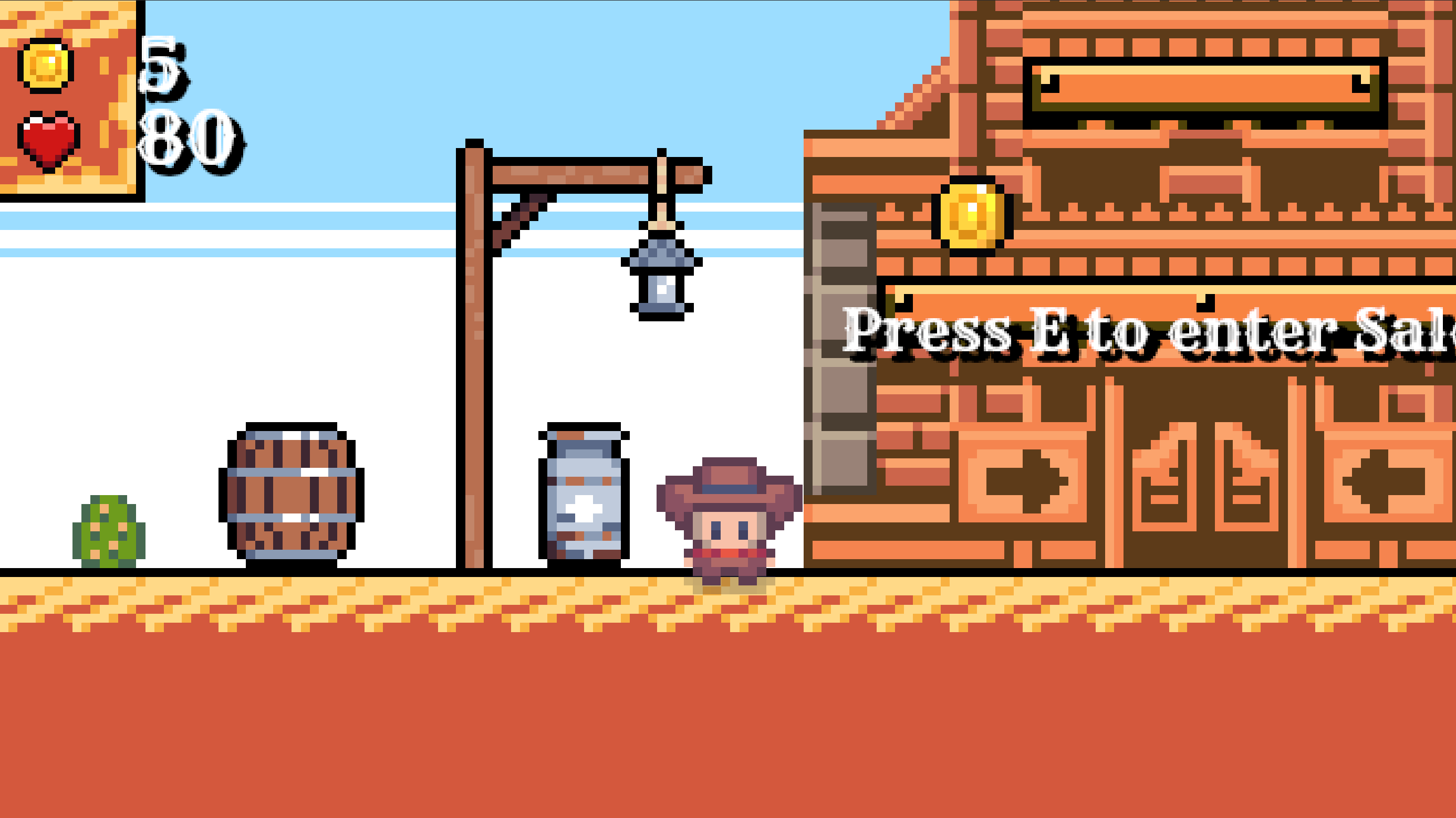
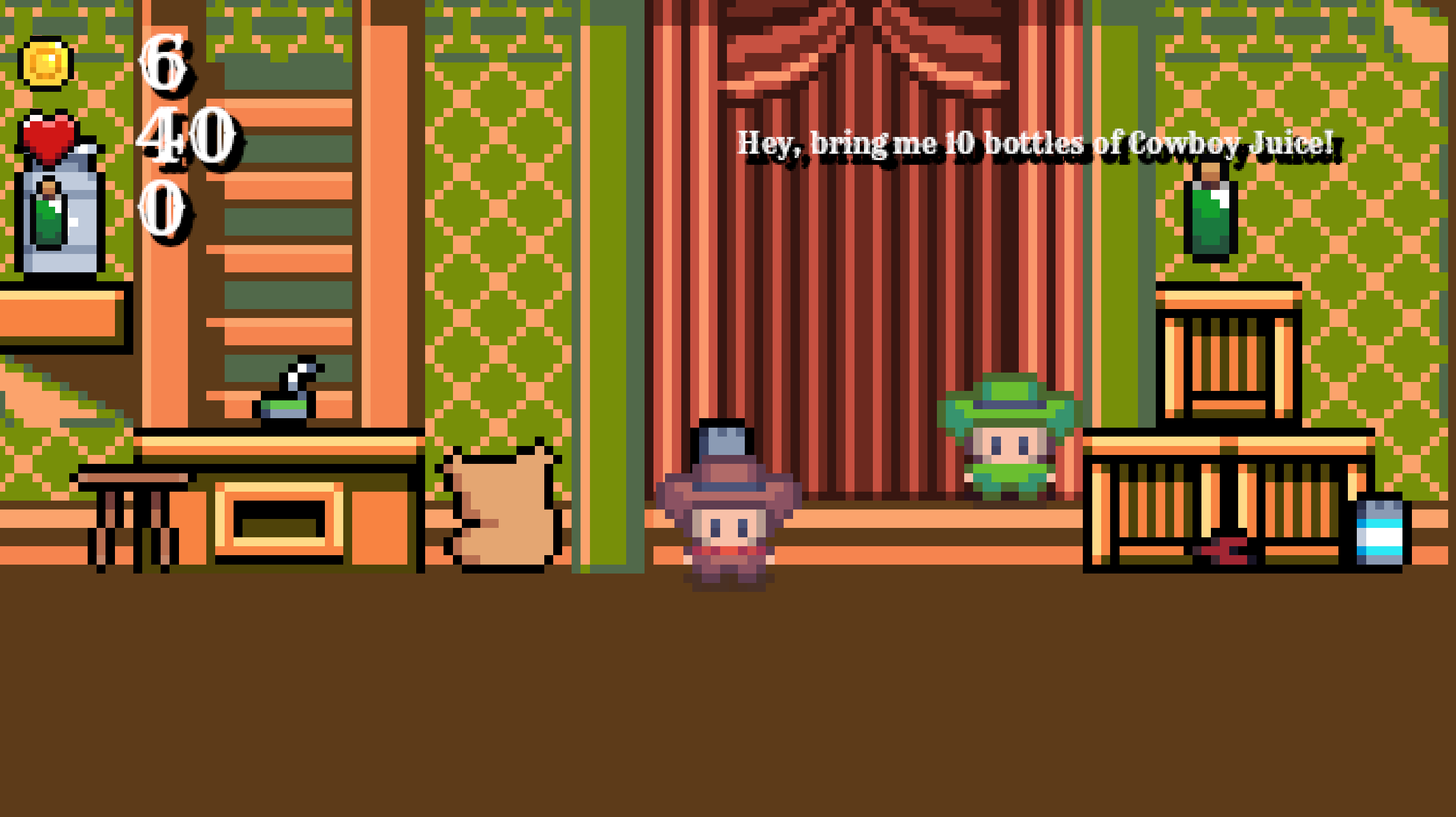
The player explores a Wild West environment, fighting bandits and collecting bottles of “cowboy juice” as part of a quest given by an NPC. After gathering enough items, the player completes the quest to earn coins and unlock access to a train. The game then transitions into a combat segment where the player defends themselves from bandits while escaping.
How we built it
The game was developed in Godot using a scene-based architecture. We created reusable scenes for elements like collectibles and NPCs, and used signals and node groups to handle interactions such as quest activation and item collection. UI elements were updated dynamically to track player progress, and the game flow was structured to transition from exploration to a final combat sequence.
Challenges we ran into
One of our biggest challenges was managing scene transitions and game state in Godot. When moving between the overworld and the saloon, we initially ran into issues with the player spawning in the wrong location. Fixing this required rethinking how we handled scene changes and player positioning.
We also faced challenges integrating multiple gameplay systems into a cohesive experience. Connecting the potion collection quest to NPC dialogue, UI updates, and the reward system (coins) required careful coordination. Ensuring that the dialogue changed at the right time and that the UI accurately reflected the player’s progress took several iterations to get right.
Another challenge was debugging interactions between objects. For example, making sure collectible items only triggered once, properly updated the player’s inventory, and interacted correctly with other systems involved tracking state across multiple scripts.
Overall, the biggest difficulty was making all of our systems communicate reliably with each other, rather than just working in isolation.
Accomplishments that we're proud of
We’re proud that we were able to build a complete, playable gameplay loop from start to finish, including exploration, item collection, an NPC-driven quest, and a final action sequence.
One of our biggest accomplishments was successfully integrating multiple systems so they work together seamlessly. The potion collection quest dynamically affects NPC dialogue, UI elements, and the player’s coin count, creating a more interactive and responsive experience.
We’re also especially proud that two of us used GitHub collaboratively for the first time. We learned how to manage branches, resolve merge conflicts, and coordinate changes across the project. While it came with challenges, it was a valuable experience that significantly improved our workflow and teamwork.
What we learned
We learned a lot about how to take separate game systems and actually make them work together. It’s one thing to build movement, collectibles, and dialogue individually, but getting them to interact correctly (like updating quests, UI, and rewards) taught us a lot about managing game state and communication between scripts.
We also gained more experience working in Godot, especially with scene transitions, signals, and organizing our project in a clean way.
A big takeaway for us was learning how to collaborate using GitHub. We got experience with branches, merging, and resolving merge conflicts, which gave us a much better understanding of how teams work on shared codebases.
What's next for Last Ride out of Town
In the future, we hope to expand the game by adding more levels, each with unique environments and enemies to create more variety and challenge for the player.
We’d also like to build on the quest system by introducing additional NPCs, more complex objectives, and branching interactions that make the world feel more dynamic.
Beyond that, we’re interested in further polishing the gameplay experience, including improving combat mechanics, refining UI elements, and adding more visual and audio feedback to make the game feel even more engaging!

Log in or sign up for Devpost to join the conversation.