-
-
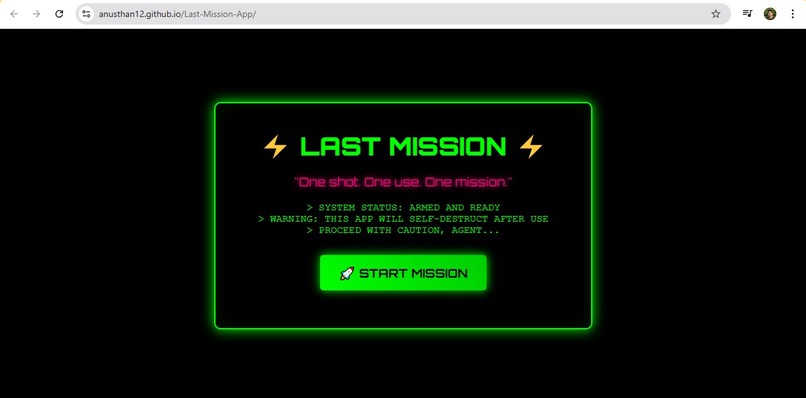
Home (Before)
-
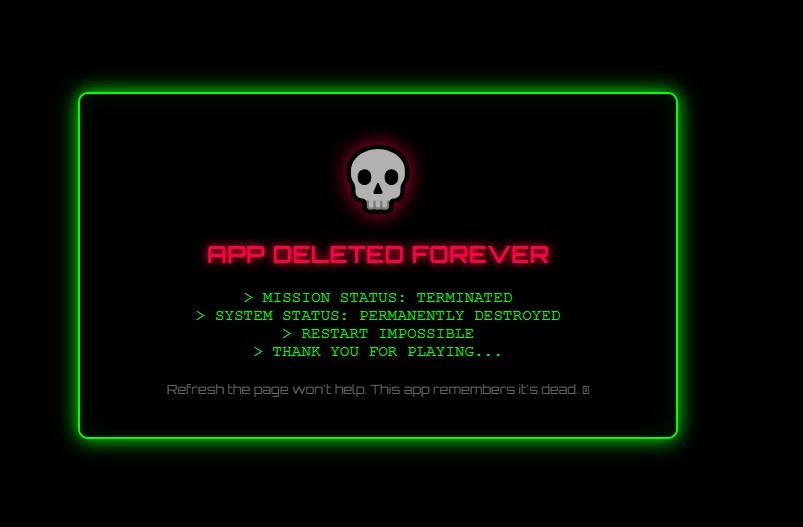
After
Last Mission App: Digital Self-Destruction
The Genesis of an Impossible Mission
I have always found the self-destructive messages that disappear after serving their function to be fascinating when I see Mission Impossible movies. In addition to the aesthetic of The Matrix's digital rebellion, I pondered: *Could software actually erase itself after just one use?
During the Code Hypothesis hackathon, this question became my passion. Conventional programs continue forever, creating a pile of digital trash. What if we questioned this basic premise?
Technical Architecture & Implementation
The core challenge involved creating persistent memory that survives browser sessions. My solution leveraged localStorage as a digital conscience:
const USED_KEY = 'lastMissionAppUsed';

function destroyApp() {
    localStorage.setItem(USED_KEY, 'true');
    showDeletedState();
}
The application maintains three distinct states:
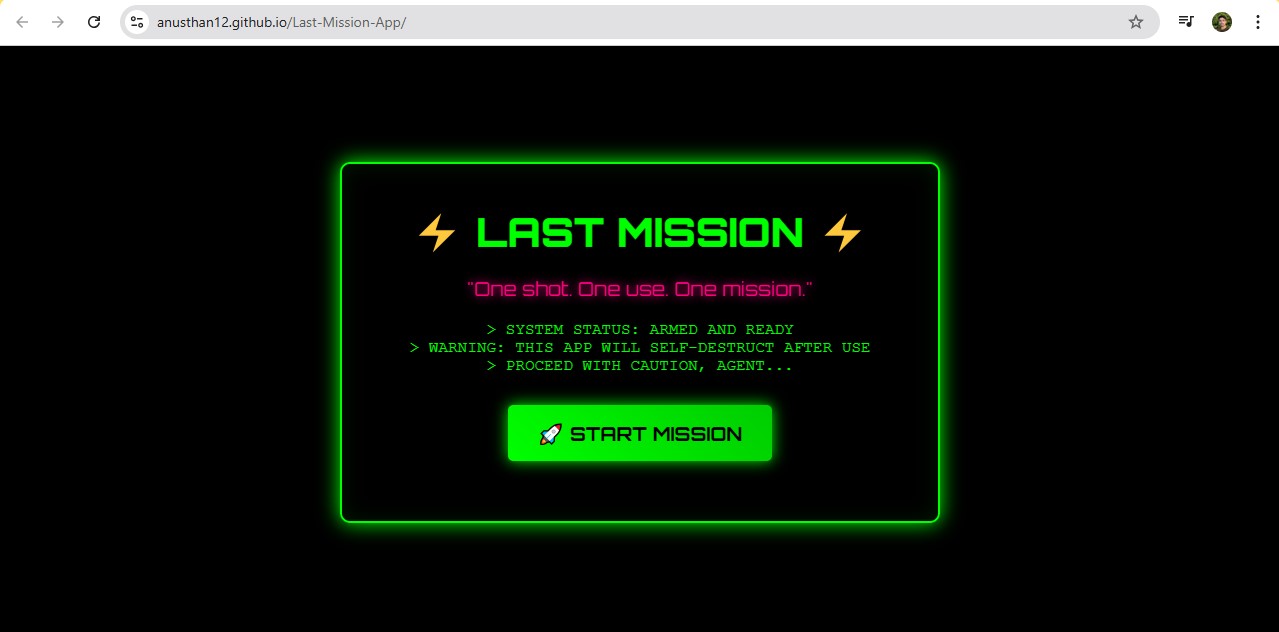
- Fresh: Initial terminal interface with mission briefing
- Activated: Post-interaction destruction sequence
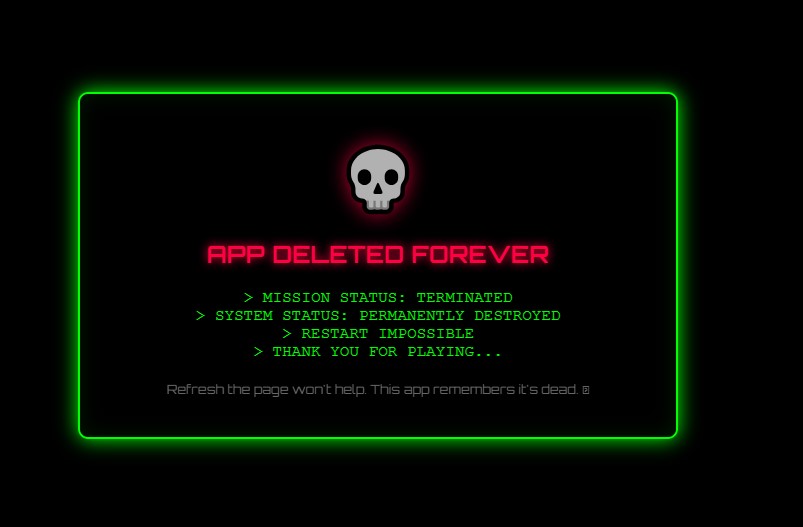
- Terminated: Permanent "death" visualization
Design Philosophy: Cyberpunk Minimalism
The aesthetic draws heavily from terminal interfaces and neon-soaked cityscapes. I implemented:
- Glitch animations mimicking system corruption
- Matrix-inspired cascading background patterns
- Phosphorescent green typography against void-black backdrops
- Pulsing elements suggesting digital heartbeats
.glitch {
    animation: glitch 2s infinite;
    text-shadow: 0 0 10px #00ff00;
}
Mathematical Precision in Chaos
The destruction sequence follows a calculated progression. User interaction triggers an irreversible state transition:
$$\text{Fresh State} \xrightarrow{\text{click}} \text{Destruction Options} \xrightarrow{\text{any choice}} \text{Permanent Death}$$
This creates a one-way function - mathematically impossible to reverse without external intervention.
Challenges Encountered
Browser Persistence: Initially struggled with session-based storage. Discovered localStorage provides the permanence needed for authentic self-destruction.
Mobile Compatibility: Ensuring the experience translates seamlessly across devices required responsive design considerations and touch-optimized interactions.
Psychological Impact: Balancing genuine "deletion" feeling with user understanding that data persists locally.
Cross-Platform Implications
The concept extends beyond web browsers. Native implementations would utilize:
- Android: SharedPreferences for permanent flag storage
- iOS: UserDefaults maintaining destruction state
- Desktop: Registry entries or configuration files
Reflection & Future Possibilities
This prototype demonstrates that ephemeral software represents a viable paradigm. Applications could embrace planned obsolescence, reducing digital accumulation while creating unique user experiences.
The project successfully merges entertainment with philosophical questioning about software permanence. Sometimes the most profound innovations emerge from asking seemingly impossible questions.
Mission accomplished. Self-destruct initiated.


Log in or sign up for Devpost to join the conversation.