-
-
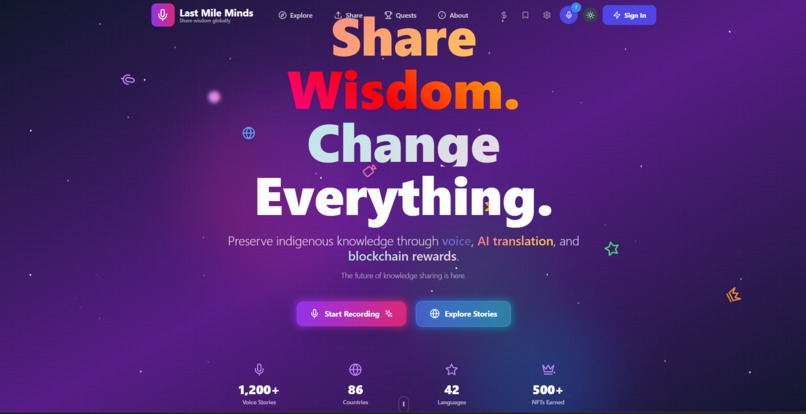
home page
-
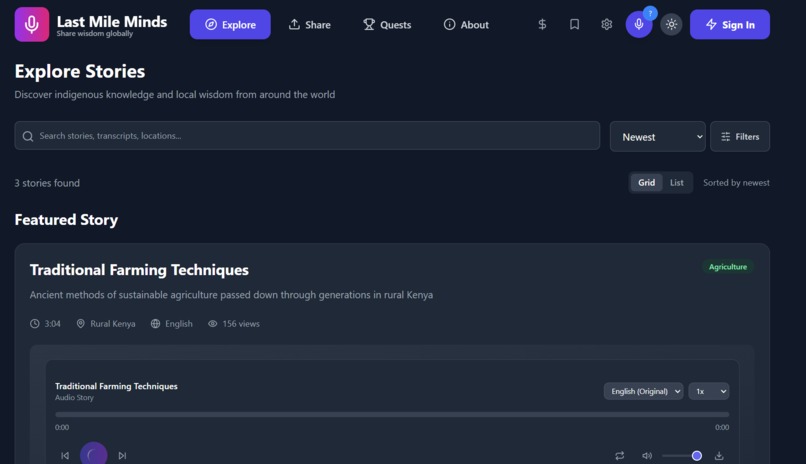
explore
-
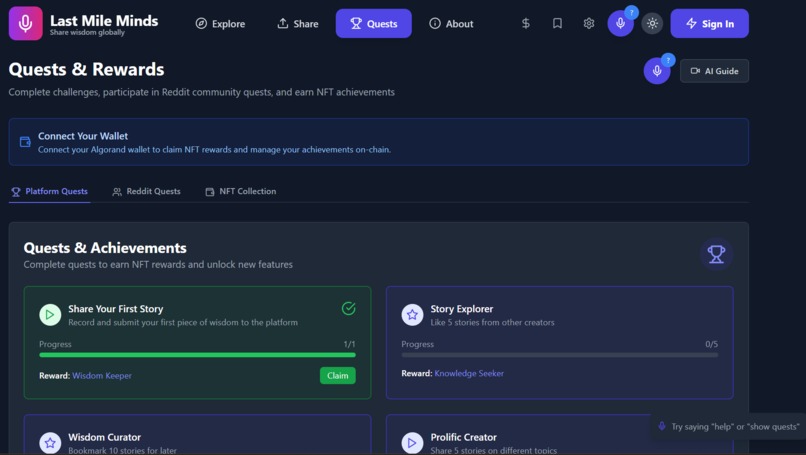
quests
-
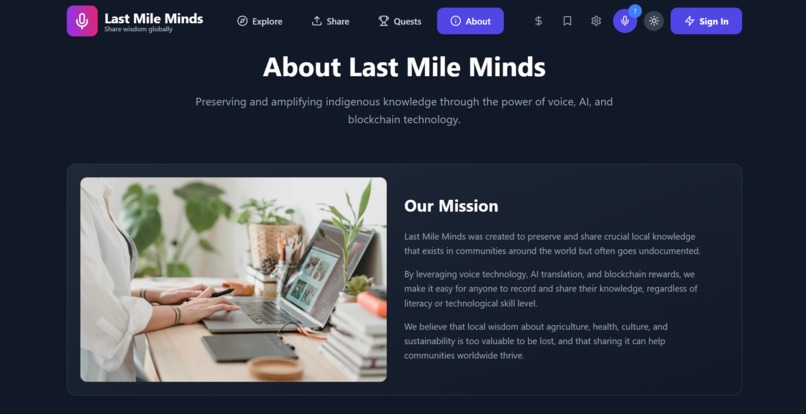
about
Inspiration
This idea came from a quiet but persistent feeling I’ve carried for a long time. I grew up around people who knew how to solve problems in ways you’d never find in a textbook. My grandparents used neem leaves instead of antiseptics, farmers nearby built irrigation systems from recycled parts, and teachers handled overcrowded classrooms without technology or resources. These weren’t hacks—they were real, tested solutions, born from experience and necessity.
What bothered me was how invisible all of this knowledge was. The internet is full of information, but some of the most powerful, real-world insights never made it online. They lived in people’s memories, in languages rarely written down, passed on only through conversation. And slowly, they’re disappearing. One story at a time.
At some point, I asked myself a hard question: What if the best ideas in the world never got documented? Not because they weren’t useful, but because the people who held them didn’t have the tools to share them.
That question stuck with me. So I built Last Mile Minds to give those voices a digital stage.
What it does
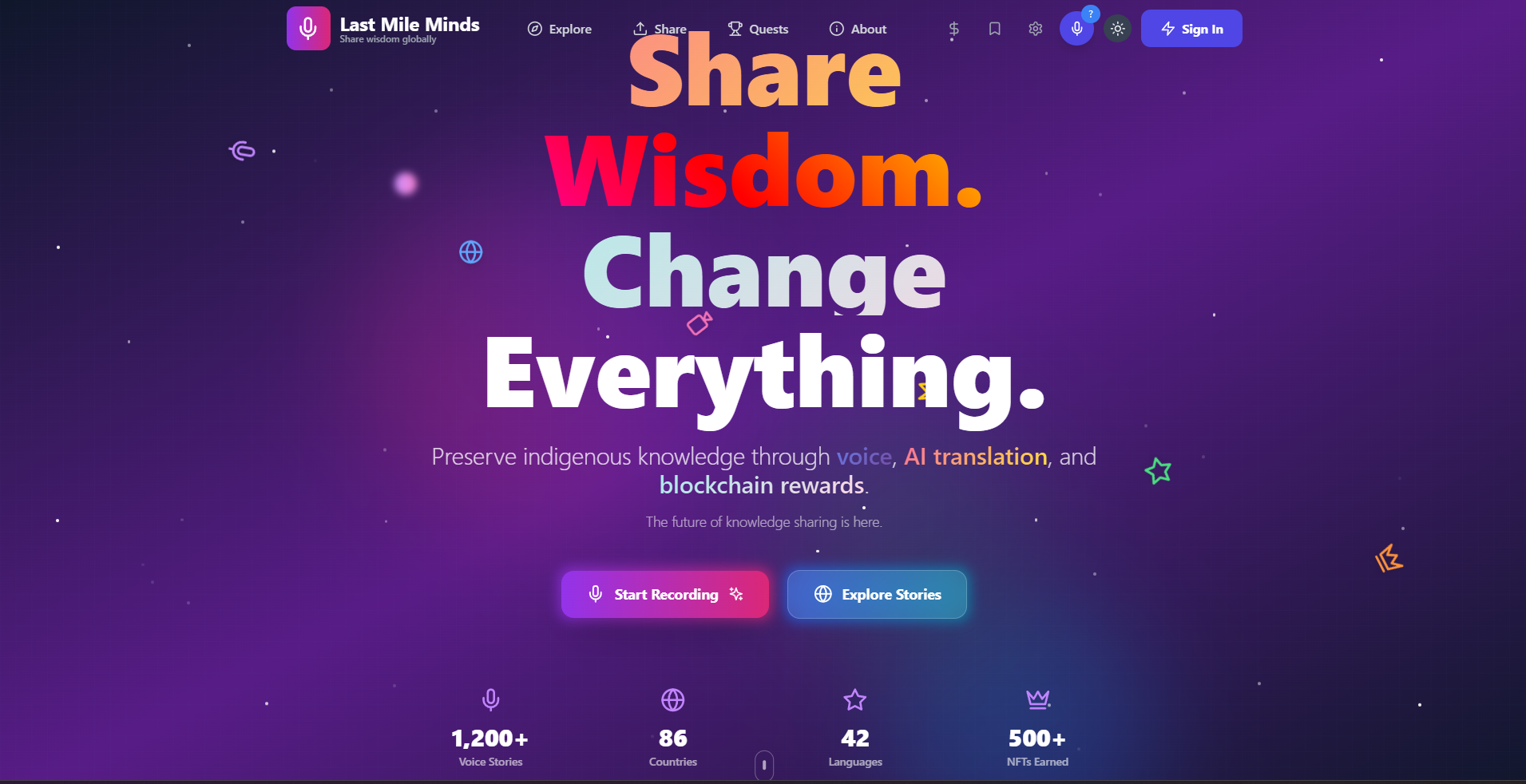
Last Mile Minds is a voice-first, multilingual AI platform that turns spoken knowledge into structured, shareable content.
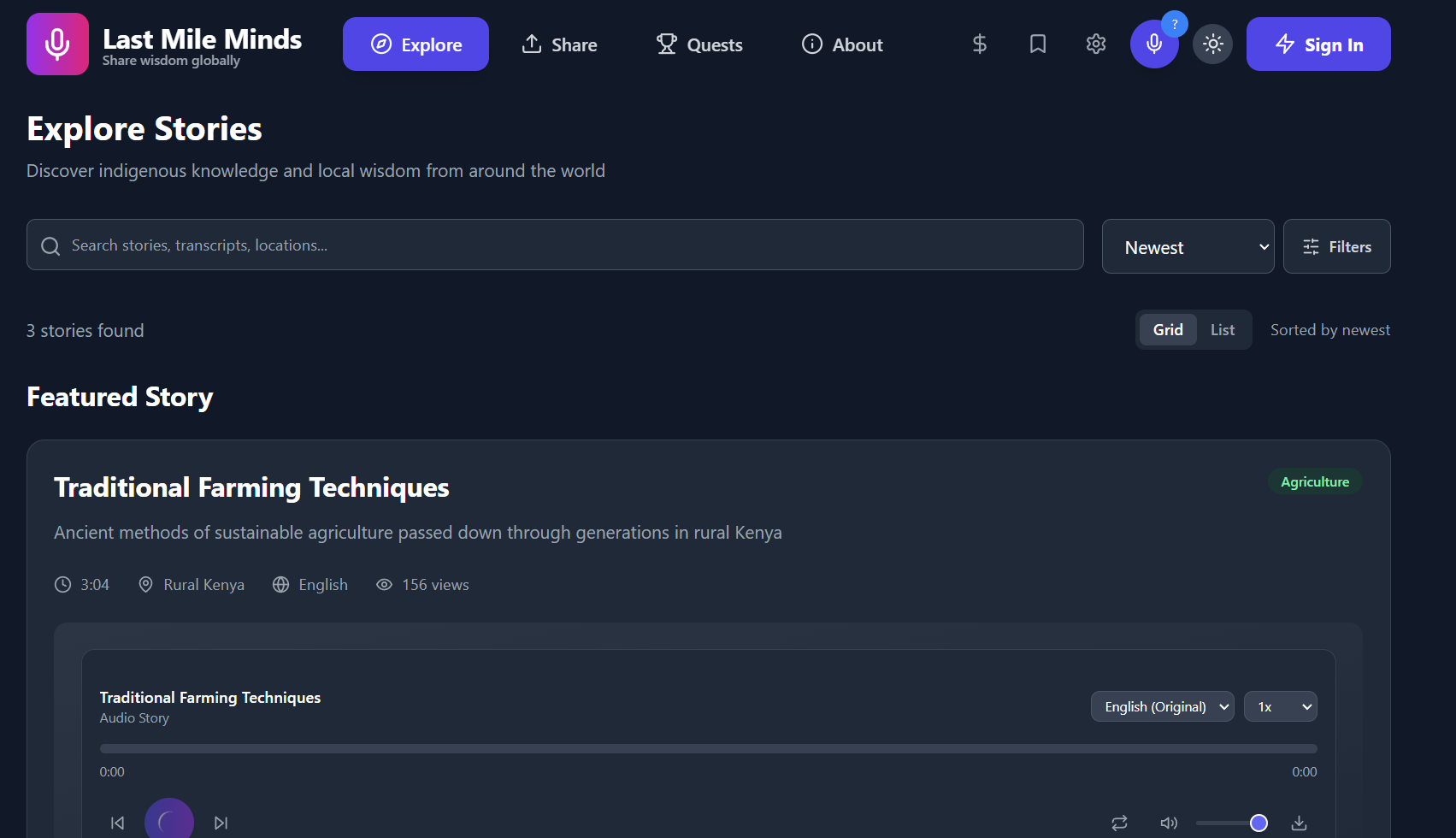
Anyone, regardless of literacy or technical skill, can record advice, methods, or stories in their own language. The app then transcribes, translates, summarizes, and transforms that voice recording into an AI-generated video explainer. The final result is published into a public, searchable knowledge repository, where it’s tagged by topic and translated into multiple languages.
I built it so someone without a formal education, without even a keyboard, could teach the world what they know on their terms.
How I built it
I used Bolt, new to designing and building the core application. It let me build quickly without starting from scratch, which was essential as a solo builder.
To generate video explainers from voice recordings, I integrated Tavus, which creates avatar-based video content. For voice synthesis and multilingual narration, I used ElevenLabs, which allowed the original voice to be re-created in different languages without losing tone and emotion. I handled transcription and translation through a mix of Bolt’s NLP features and additional multilingual APIs.
I deployed the front end using Netlify, optimizing it for mobile-first use, especially in regions with low bandwidth. The UI was intentionally simple—just voice input, topic tagging, and publishing—so that even users who’d never used a modern app before could contribute.
I also created workflows to moderate content, enable future community contributions, and queue asynchronous processing jobs to reduce latency between recording and publishing.
Challenges I ran into
The biggest challenge was language. I expected translation to be straightforward, but dialects, informal speech, and cultural idioms made it complicated. Some recordings didn’t match any known dataset, and I had to design fallbacks for community tagging and manual review.
Designing for non-technical users was also difficult. Every screen had to be intuitive without relying on text-heavy instructions. I kept reducing steps until a user could go from idea to published video in under a minute, all with just their voice.
Latency became an issue when stitching audio, translation, and video rendering. I had to rethink how asynchronous jobs worked and where to cache results.
But the hardest challenge was emotional: making sure that this didn’t feel extractive. I wanted people to feel like they were sharing, not being studied. That took real care.
Accomplishments I’m proud of
I built a working platform, on my own, that allows people to speak their knowledge into existence. I processed voice submissions in six different languages, turned them into AI-generated videos, and made them searchable and shareable.
I enabled someone who had never used a computer before to teach someone on the other side of the world.
I created a space where local knowledge is treated with the same respect and permanence as anything in a research journal.
And I watched people’s reactions when they saw their voice translated and shared many for the first time. That feeling will stay with me forever.
What I learned
I learned that the hardest part of building inclusive technology isn’t the technical design—it’s the empathy.
I learned how to simplify complex workflows into intuitive interfaces. I learned how to combine multiple AI tools into a seamless process and how to debug when they didn’t work as expected.
I also learned that there is so much value in what people already know. We spend so much time trying to invent things from scratch. Sometimes, the smartest thing we can do is listen to someone who has already figured it out.
What’s next for Last Mile Minds
I’m building partnerships with NGOs, rural community groups, and education programs to bring this tool to more people who need it.
I’m developing an offline-first version so people can record and upload later, even without a stable internet connection.
I plan to introduce basic monetization options, like tipping or licensing, so contributors can benefit from what they share.
Eventually, I want to train regional language models using this collected knowledge—models that don’t just understand a language, but understand a context.
Most of all, I want Last Mile Minds to be a movement. Not just an app, but a platform that reminds us that wisdom doesn’t only live in cities, universities, or codebases.
It also lives in memory. In voice. In experience. And it deserves to be heard.


Log in or sign up for Devpost to join the conversation.