Inspiration
WorldID: 25796229346646244
The inspiration for Solus came from classic asteroid-defense arcade games and cinematic end-of-the-world scenarios. I wanted to capture that intense feeling of being the final line of defense when Earth is moments away from destruction. The idea of one lone defender standing between humanity and extinction became the core theme of the project.
What it does
Solus is a survival-based asteroid defense game where the player must destroy incoming meteors before they hit Earth. The game features two modes: Casual Mode, where players earn Stars based on how long they survive, and High Stakes Mode, where players wager their Stars for bigger rewards with no power-ups allowed. The goal is simple: protect Earth and survive as long as possible.
How we built it
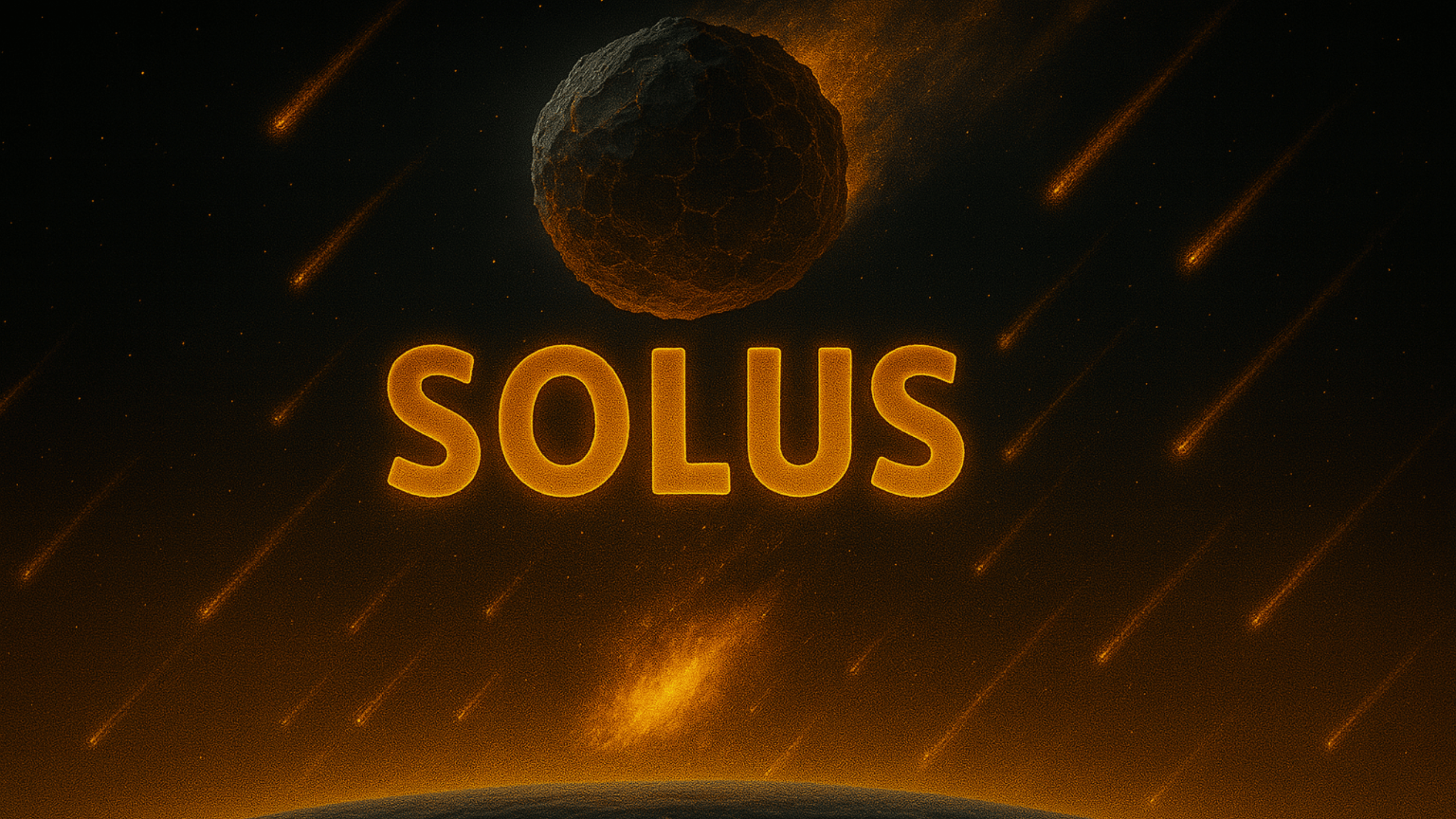
The world was built using Horizon tools, combining object pooling, collision events, timed spawning systems, and UI overlays. I created the game and portrait mode to take advantage of the quick and one handed movement. I wanted the game to be easy to where you have instant fun soon as you hop in and very addictive to where you cant put it down! I created custom lava themed UI icons, molten buttons, and cinematic cover art to give the game a strong, unified visual identity. Careful tuning of asteroid speed, spawn randomness, and hit detection was key to making the gameplay feel challenging but fair.
Challenges we ran into
Balancing performance while spawning multiple fast-moving objects was one of the biggest challenges. Creating visually polished UI elements and optimizing scripts to prevent lag also took time. Making both game modes distinct without breaking the pacing required several iterations.
Accomplishments that we're proud of
One of the biggest accomplishments I’m proud of is being able to successfully transition from building full VR experiences to creating polished, mobile-friendly games inside Horizon. Coming from a background of working mainly with VR mechanics and code blocks, moving into the desktop editor workflow pushed me to rethink how I design, script, and optimize gameplay.
Learning to build for mobile required a different mindset — tighter performance control, clearer UI, faster interactions, and more streamlined pacing. Being able to adapt to this shift and create a game that feels smooth, visually consistent, and fun on mobile is something I’m extremely proud of.
What we learned
Throughout the development of Solus, we learned how important it is to design with mobile performance and clarity in mind. Transitioning from VR-focused creation to mobile gameplay required a new understanding of optimization, UI readability, and fast, responsive interactions. We learned how to simplify mechanics while still keeping the experience intense and engaging.
We also gained deeper experience with Horizon’s desktop editor, including better ways to structure scripts, manage object spawning, and maintain smooth performance even during heavy asteroid waves. Fine-tuning hit detection, survival timers, and game mode logic taught us the value of iteration and careful balancing.
What's next for Solus
Looking ahead, Solus will continue to evolve with new features that expand gameplay depth and player progression. One of the main goals is to introduce more unlockable cannons, each offering unique visuals, firing styles, and strategic advantages. These additions will give players new goals to chase and more ways to customize their defensive loadout.
I also plan to incorporate seasonal events that bring rotating challenges, limited-time rewards, and fresh scenarios for players to experience. Alongside this, new game modes are in development to offer diverse styles of play from faster paced survival variants to high-pressure challenge modes that test precision and timing.
The long term vision for Solus is to build a dynamic, regularly updated mobile experience that keeps players engaged with new content, unlockable, and evolving gameplay opportunities.
Built With
- genai
- typescript
- worlds


Log in or sign up for Devpost to join the conversation.