-
-
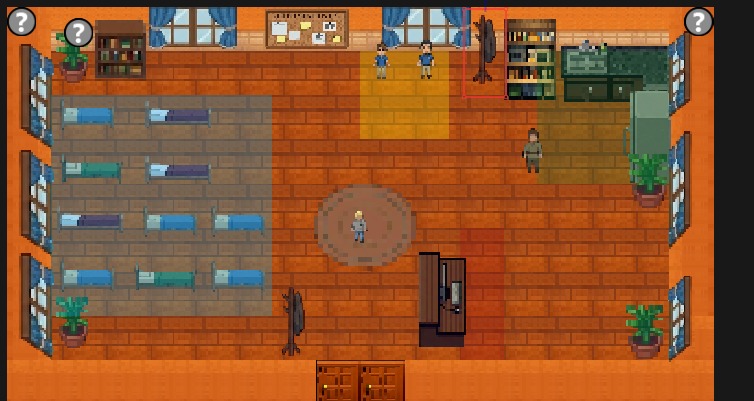
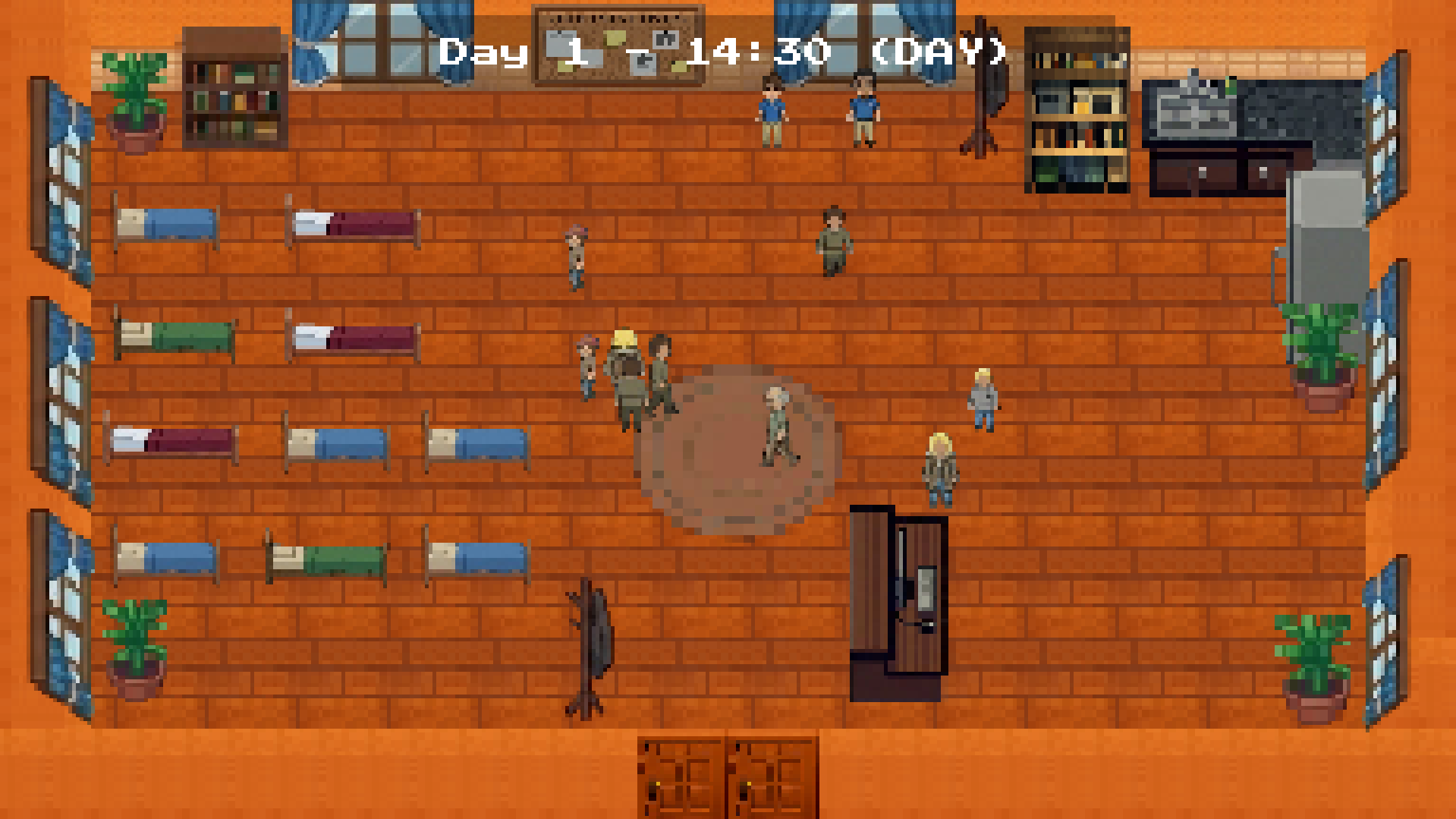
Design of the room that the game takes place in
-
Design of the main menu
-
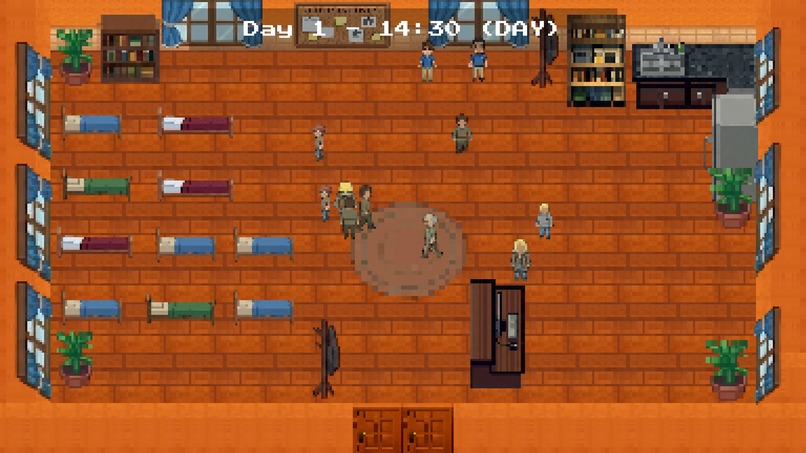
Screenshot of player in the middle of gameplay
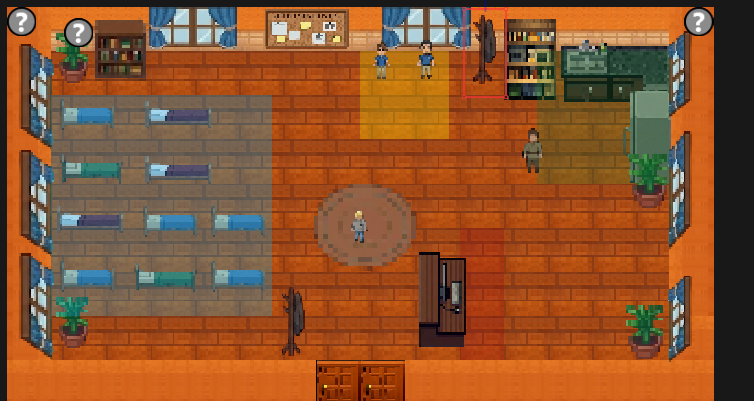

Inspiration
The inspiration behind Last Call was with what we saw firsthand in Calgary, where we came from. We went to school near a Mustard Seed shelter, where we regularly saw the effects of limited shelter capacity. Long lines, overcrowding, and people being turned away simply because there weren't enough beds, supplies, or staff available. In Calgary Winters, this scarcity becomes especially severe. The dramatic temperature makes being turned away not just an inconvenience, it can put lives at immediate risk. Seeing these conditions up close made it clear that the problem wasn't a lack of compassion, but a system under extreme strain during moments when timing and capacity matter most. These experiences was what motivated us to build Last Call, as a way to make that pressure visible through play. By putting players in the role of an intake coordinator under scarcity and time pressure, we want the experience to feel real, so that the experience doesn't end when the game ends. Our goal is that players are able to walk away with more awareness of what shelters face, and more inclined to contribute in practical ways, whether that's volunteering, or donating to local shelters when they're able
What it does
Last Call is a time pressured management game where the player is in charge of shelter intake. The player must decide who to admit, or turn away based on dialogue, while at the same time managing shortages in beds, supplies, and worker capacities. Decision are irreversible, and their consequences are often not seen immediately, creating a cascading effect that stacks over time. The game is designed to let players experience these pressures firsthand rather than explaining them abstractly.
How we built it
We built Last Call as a 2D pixel game using GameMaker as the engine, which handled all of the gameplay systems, logic, and state management. GameMaker allowed us to rapidly prototype and iterate on mechanics centered around scarcity, time phases, and statebased NPC behaviour to reflect intake, waiting, and overnight shelter dynamics. For visual assets we used Gemini to create sprite art, which we then refined inside of GameMaker and afterwards integrated into the game to maintain a consistent pixel art style. This approach let us focus our limited hackathon time on gameplay system and balance, while still producing pleasing visuals. We intentionally kept a minimal interface to emphasize decision making. Systems were designed to that scarcity, failure and pressure problems come naturally from player decisions rather than coded events; in order to reinforce the game's focus on irreversible choices and systemic constraints.
Challenges we ran into
Technically, most of us were building in GameMaker for the first time, and had to learn the engine while also making a fully functioning and playable experience for the user under the allowed hacking time. Designing timed phases, NPC state changes, and keeping outcomes consistent across the day/night cycles pushes us to think carefully and debugging. One of the hardest technical challenges we faced was creating an object that allows users to select an option, which would then refer to another object and changing the fields of that specific instance. This was also some of our first times using Git, which led to a lot for merge conflicts, especially when files were being changed and renamed simultaneously. We had to quickly learn practical version control habits, while still maintain good progress on our project.
Accomplishments that we're proud of
We are proud that Last Call delivers its impact through mechanics rather than exposition. Players feel uncertainty by playing, without the game needing to explain what to think. We're also proud that we learned an entirely new engine during the hackathon and still managed to build a complete working game. Going from nothing to something under a deadline was a major milestone for our team.
What we learned
We learned valuable experience with game design and more specifically designing systems with irreversible states, delayed outcomes, and emergent failure. Skills that are applicable beyond this project. Just as importantly, we learned how effective teamwork and communication made it possible to build a working game within a 24 hours hackathon window. By learning first hand on dividing responsibilities, sharing progress frequency, adapting to new problems quickly and maintaining a positive atmosphere, we were successful in accomplishing our goals.
What's next for Last Call
Next up, we wish to expand the depth of the gam by adding more variability, expanding the scale of the shelter, additional/more complex resource types, an longer term consequences across longer days. We also wish to improve the graphics design of the game to make Last Call feel more aesthetically impactful.


Log in or sign up for Devpost to join the conversation.