
Inspiration
Both Philadelphia and San Francisco are grappling with the same opioid crisis, a devastating public health issue that affects communities across both cities. As someone from Philadelphia, I have witnessed firsthand the toll that this epidemic has taken on our city, with rising numbers of drug overdose deaths that surpass even those caused by homicide. In fact, the first half of 2021 has seen a nearly 10% increase in fatal overdoses compared to the previous year, putting Philadelphia at the forefront of this crisis. Despite the challenges, however, we are committed to using our skills and resources to develop innovative solutions to combat this epidemic and help those in need.
What it does
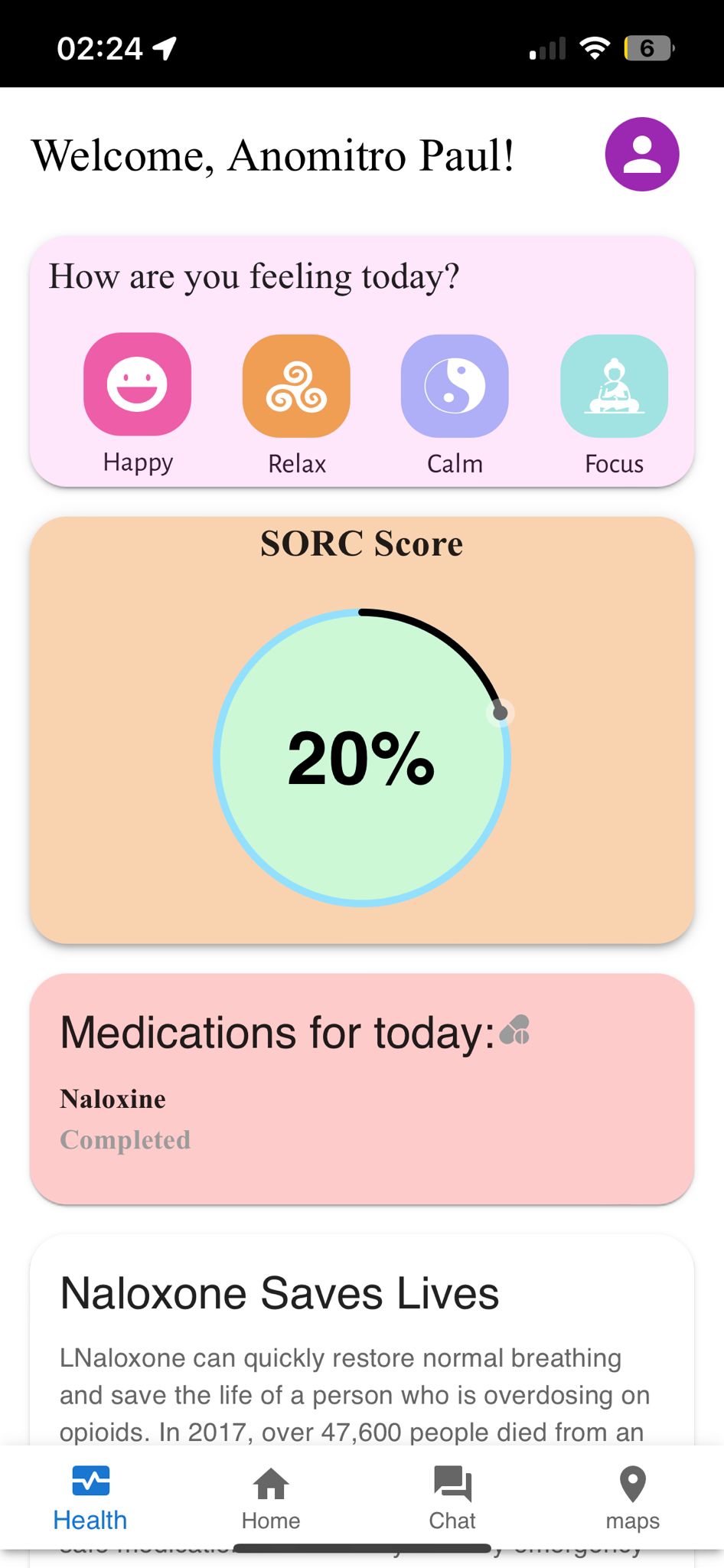
As someone who is in recovery from opioid addiction, it can be tough to walk down the same streets where you used to purchase drugs. Despite your progress, the temptation can still be strong. But then, you receive a message on your phone that feels like it's from a friend: "Hey, I know you're in a risky area. You can do this." It's a notification from Laso, an app that provides various features to support individuals in their recovery journey.
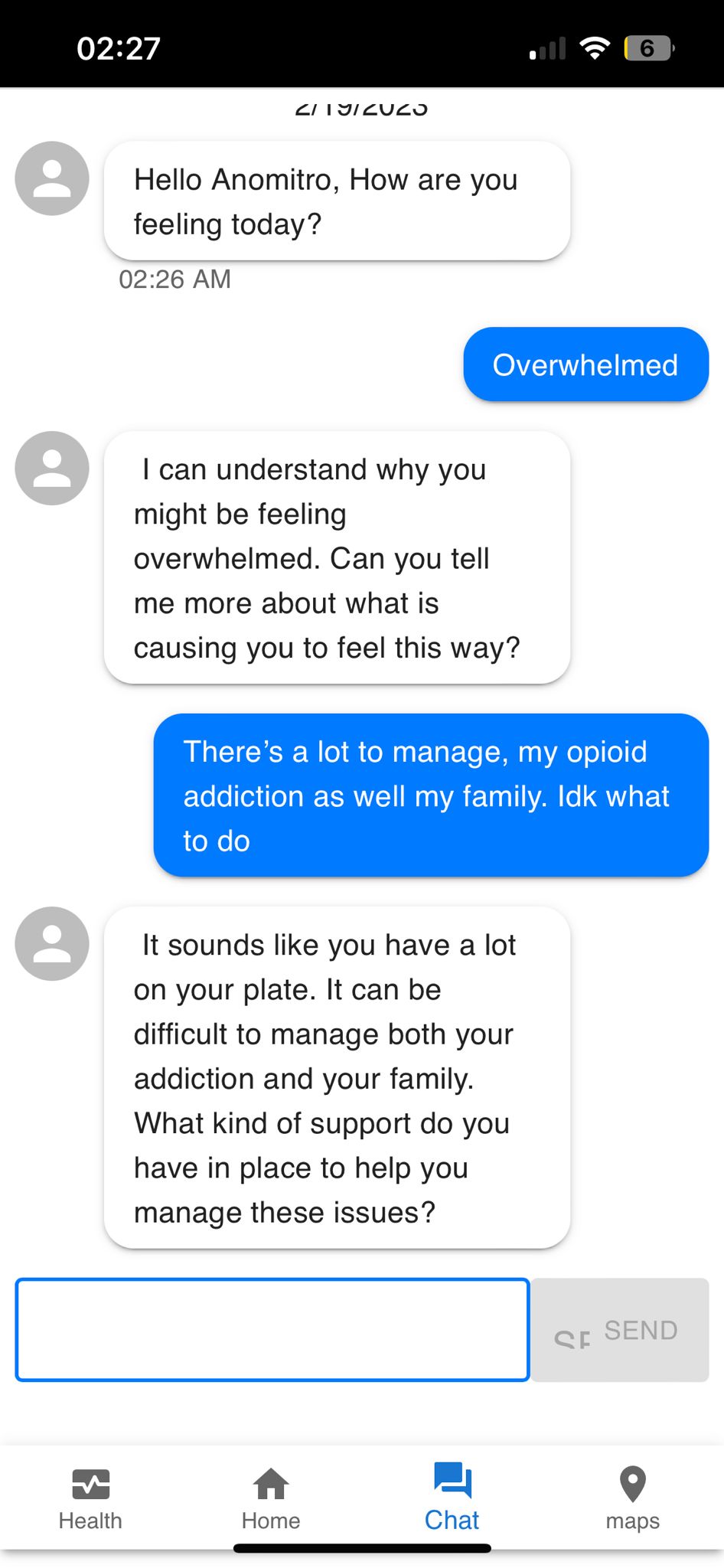
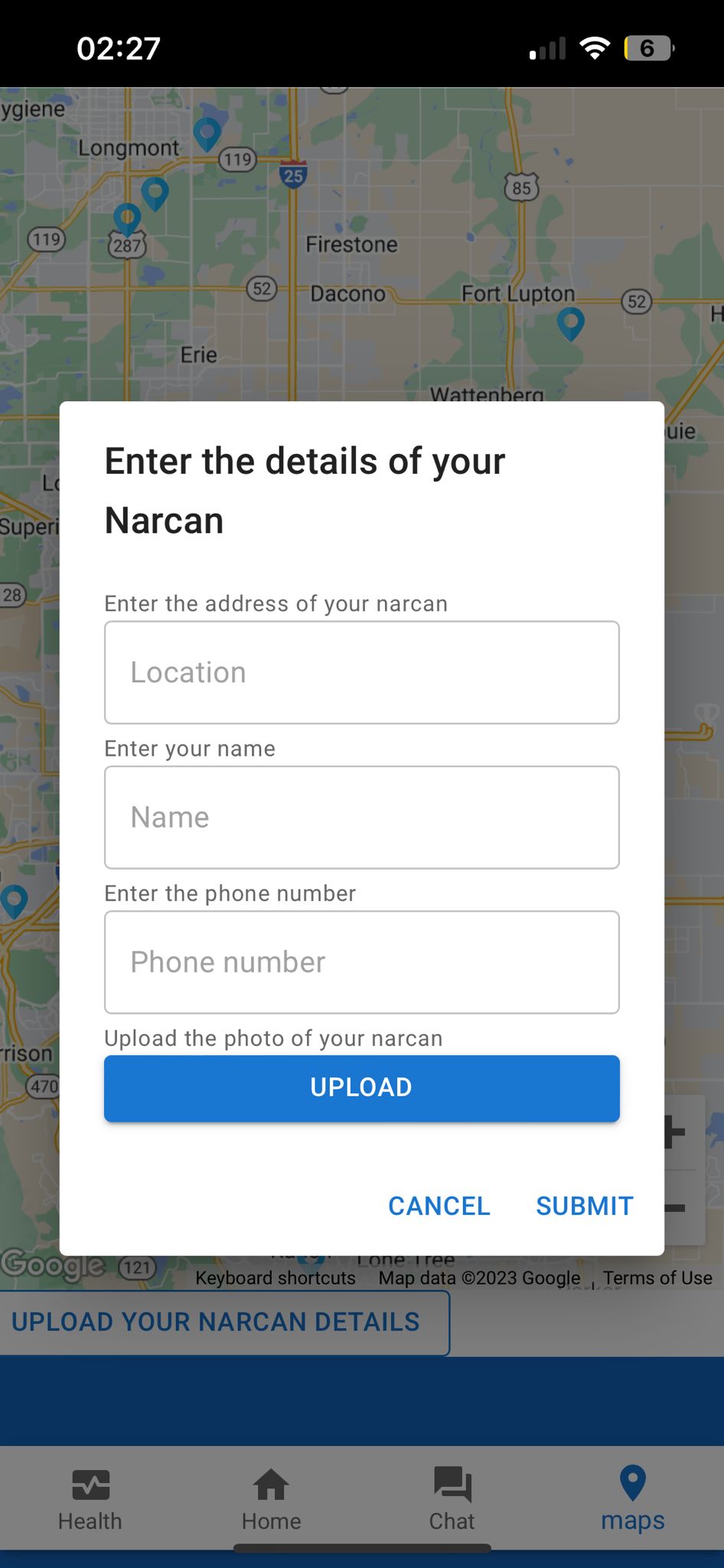
Using machine learning techniques, Laso monitors how susceptible they are to an overdose and indirectly tracks the user's progress. The app also serves as a community driven database of narcan locations, lowering the time taken to start the overdose reversal process. It also provides a Health Chat feature, where the user can find an anonymous and confidential space to discuss their mental and physical health concerns with an AI-powered chatbot.
The app also includes a mood tracker and daily activity trackerto help users monitor their emotional well-being and identify any triggers that could lead to an overdose.
Along with it, the app uses an O2 sensor to detect an overdose before the user can react and alert emergency responders
How we built it
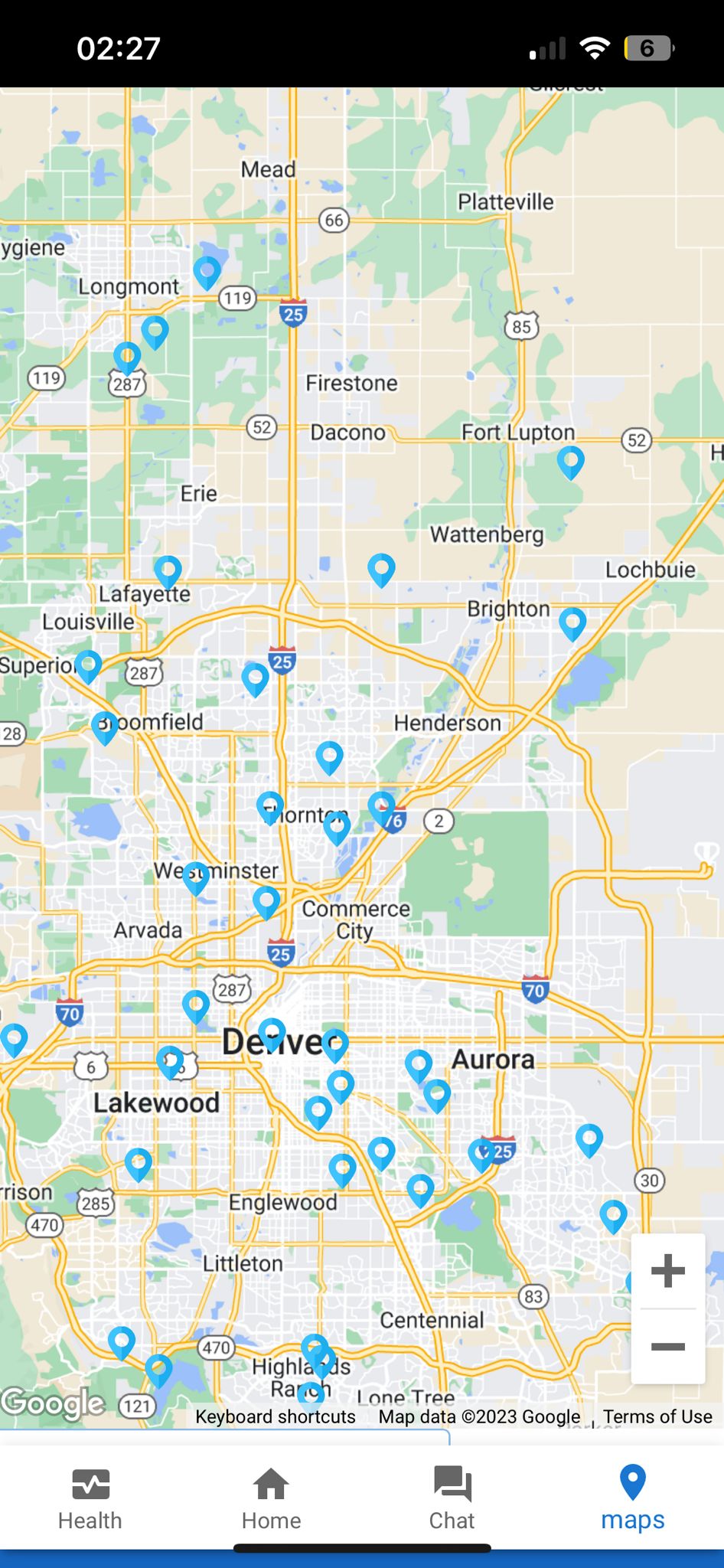
Community driven narcan map:
During an overdose, the respondent gets less than 3 minutes to find a narcan and reverse the overdose. Lowering the time taken to get to a narcan is very important. The Map shows all the registered narcans in the US, however there are more unregistered narcans than registered. So, the individual user can upload the location of their narcan and make it available to the rest of the user group. As a measure of validation, we are using an image classifier to make sure the uploaded photo is of a real narcan.
Chatbot:
At it's core, it uses the da-vinci model find-tuned on conversations between patient and therapist. Dataset
Predicting overdose from the user's daily activities:
Using the National Survey on Drug Use and Health to Predict Opioid Misuse, we did an exploratory study to see if there are correlations between the user's daily activity and opiod overdose. Due to lack of time, we had to focus only on the user's use of marijuana. However the classifiers trained using survey data were able to accurately predict subjects at risk for opioid dependence (sensitivity = .71, specificity = .80, AUC = .81), For more details, refer to the Notebook From the results, we are confident that it can be expanded to incorporate the user's daily activity and generate a trackable score
Lapse Notification:
We take the user's location and then we see if they are in a high risk area(that we have gathered using link ), then we send a reaffirming notification letting the user to stay strong!
Overdose detection:
Opioid overdose can induce respiratory depression by invoking a centrally mediated decrease in involuntary respiratory rate, which in severe cases can cause a decrease in oxygen saturation. Using this data-point, we have built a cheap blood-oxygen sensor that the user can strap on their wrist and to detect the overdose. This feature is not completed as we couldn't find a blood oxygen sensor so, we built it by hacking parts from multiple sensor, however the calibration is not accurate. There is a simulation to demonstrate how it would've worked.
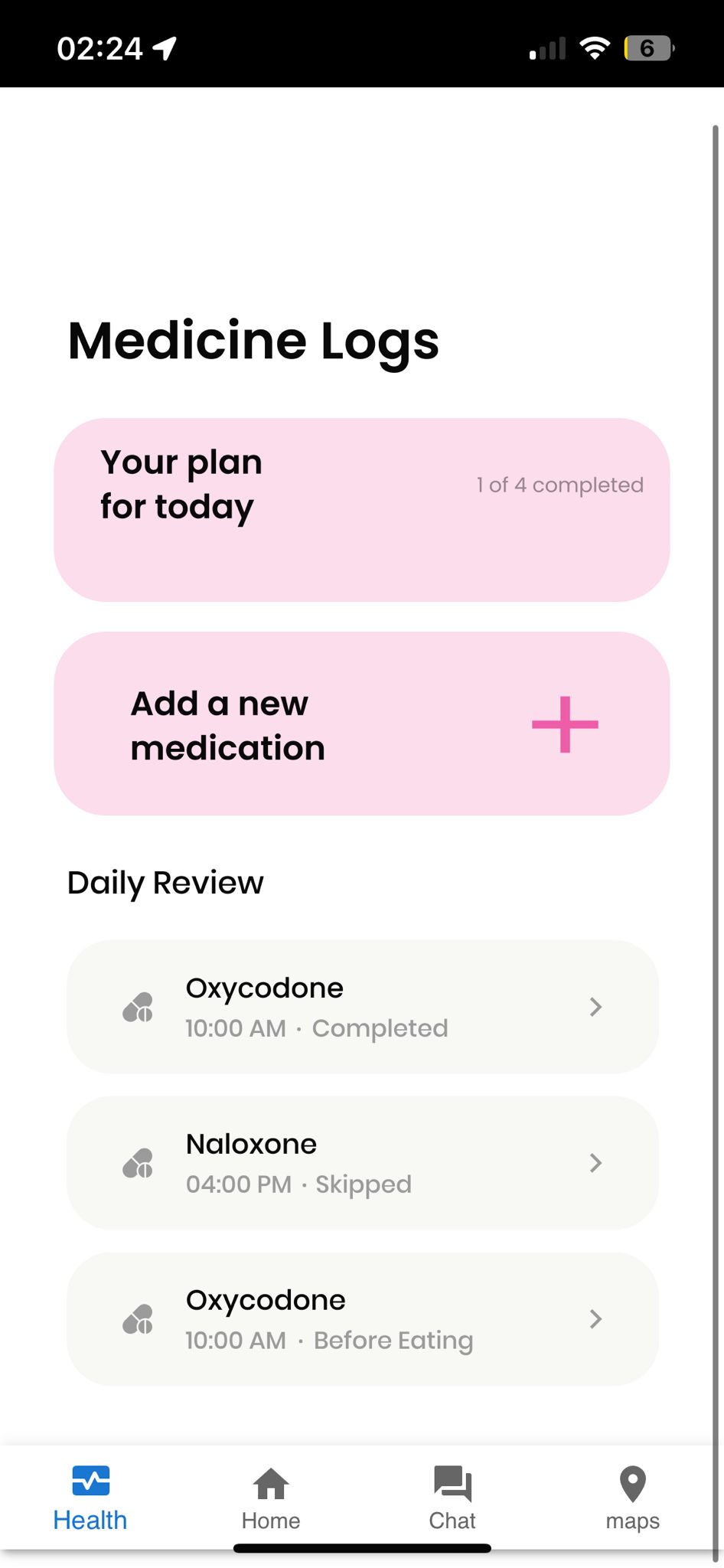
The application also comes with a medicine logger.
Tech Stack
The app is a progressive web app using react, which uses the browser's service worker to run the website as a stand-alone app. This makes downloading it hassle free, as the user can go the webpage and save it their home screen. Authentication and database is managed by firebase, and API are running are as cloud functions on GCP
Challenges we ran into
Medical datasets are extremely confidential, most of the feature that I wanted to test the feasibility of didn't have a dataset, so I had to either generate synthetic data(opiod overdose detection) or work with limited data.
Another big challenge was, coming to the hackathon I was a part of a team of 4. Unfortunately two of them couldn't make it to the hackathon, and the other person who made it, had to leave as they felt sick. I ended up having the entire responsibility on myself. I became the team.
Apart from that, I really wish heroku+github becomes a thing again, devops in hackathons would be great again.
Accomplishments that we're proud of
We are proud of creating a solution that can potentially save lives and help individuals on their path to recovery from opioid addiction. We are also proud of the variety of features we were able to implement, including the community-driven narcan map, the chatbot, the mood and activity tracker, and the overdose detection feature. Despite facing various challenges, including limited data and being a team of one, we were able to create a functional app that we hope can make a positive impact on our communities.
What we learned
Through this project, we learned a lot about the opioid crisis and the various challenges that individuals in recovery face. We also learned about the importance of community-driven solutions and the power of technology to support individuals in their recovery journey. Additionally, we learned a lot about machine learning and the challenges of working with medical datasets, as well as the importance of designing for user privacy and security. Overall, this project has been a valuable learning experience for us and has motivated us to continue to work towards innovative solutions to public health challenges.
What's next for Laso
We plan to improve the features and functionalities of the app to better serve the users. One of the main goals is to improve the accuracy of the overdose detection feature. As we have built a cheap blood-oxygen sensor that users can strap on their wrist to detect an overdose, we plan to find a more accurate sensor that can provide more precise results. We also plan to integrate the user's daily activity tracking feature to generate a trackable score that will help users identify any triggers that could lead to an overdose.
In addition, we plan to improve the chatbot feature by adding more datasets and training it to provide more personalized responses to users. We also aim to expand the overdose reversal map by incorporating more unregistered narcan locations and verifying user-submitted photos using image recognition technology. Our goal is to create an app that provides a supportive and safe community for individuals in recovery from opioid addiction. We believe that by continuing to improve Laso's features, we can make a positive impact on the communities affected by this epidemic.

Log in or sign up for Devpost to join the conversation.