-
-
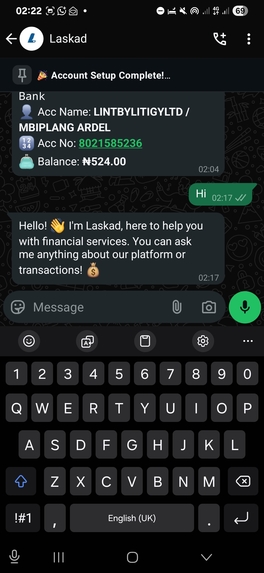
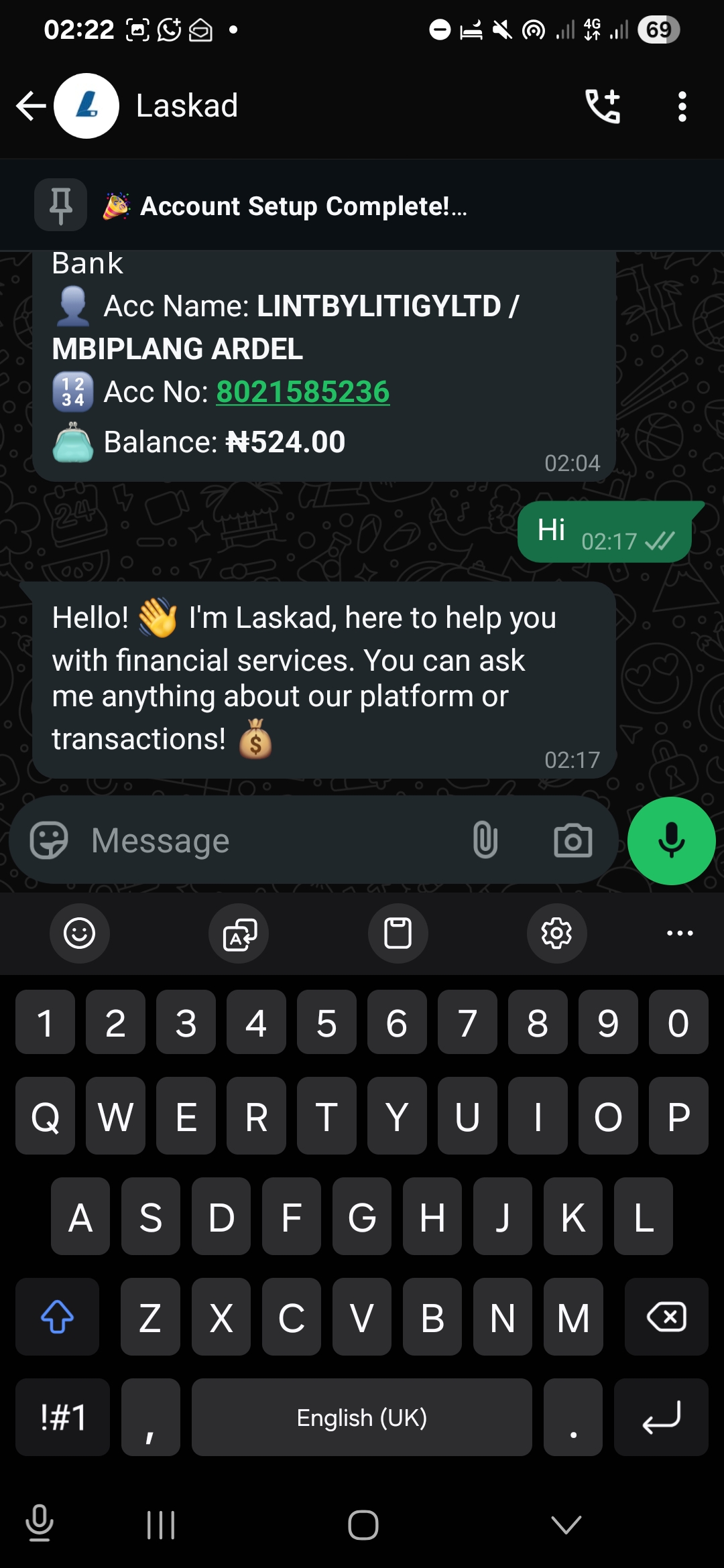
Greetings from Laskad
-
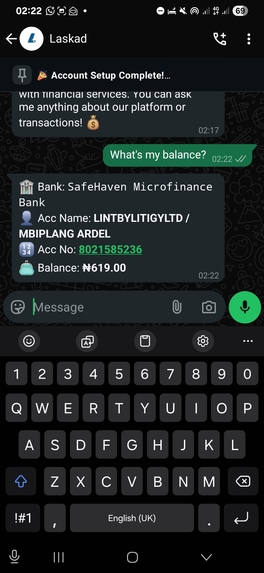
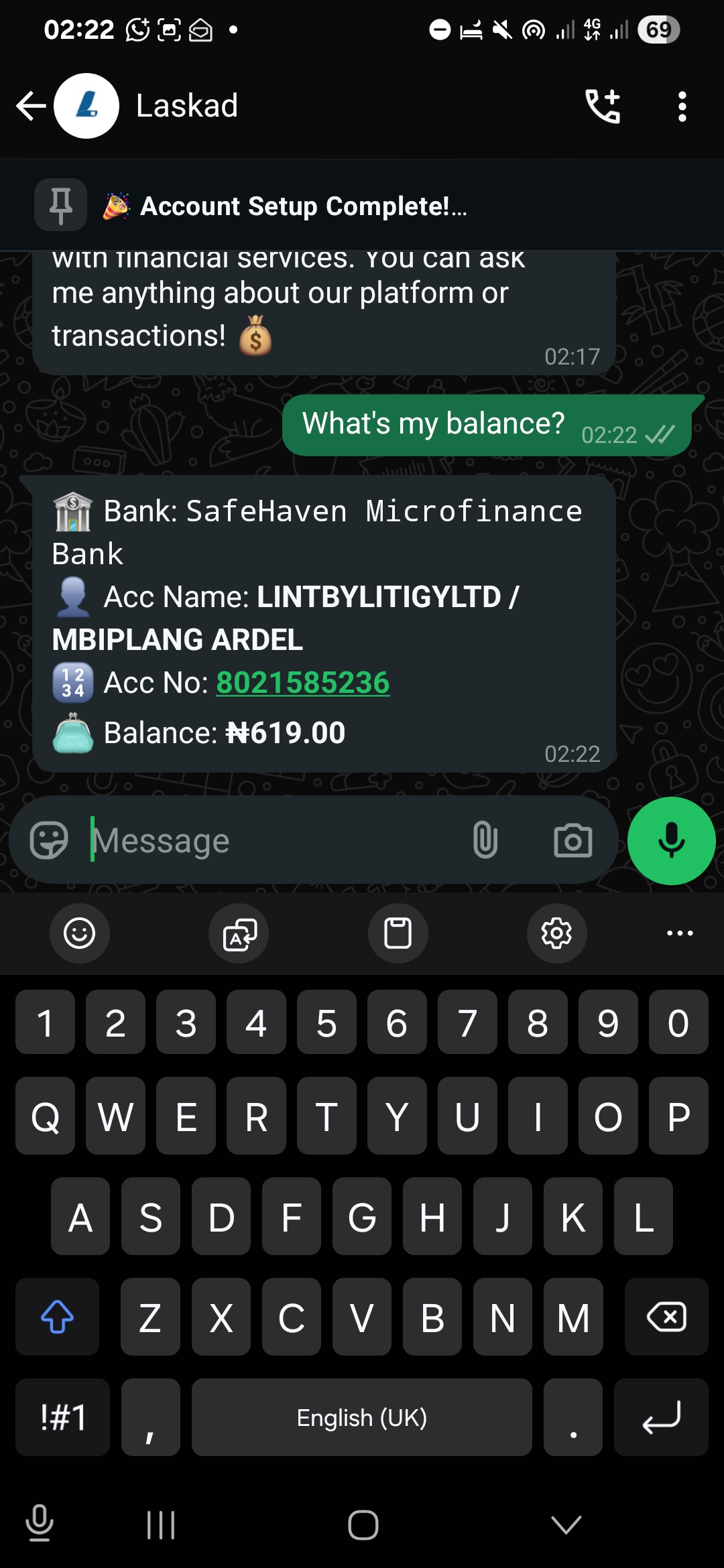
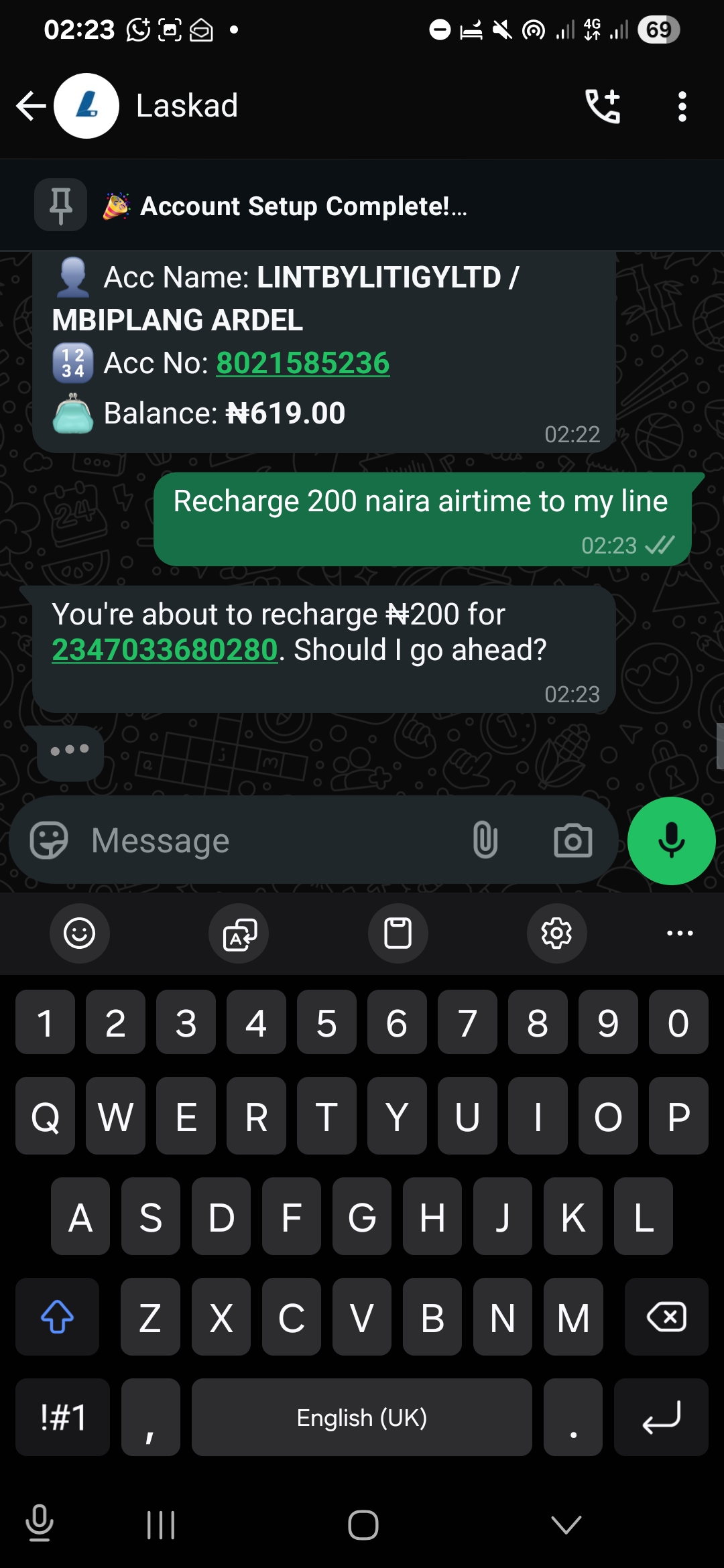
Checking my Laskad account balance
-
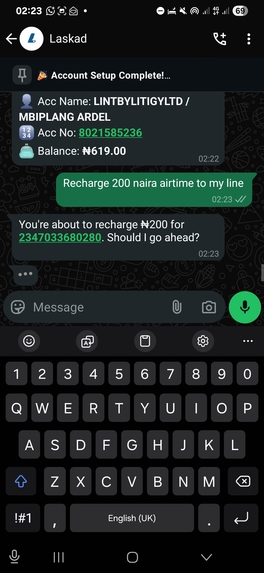
Requested Laskad to recharge 200 naira airtime to my line
-
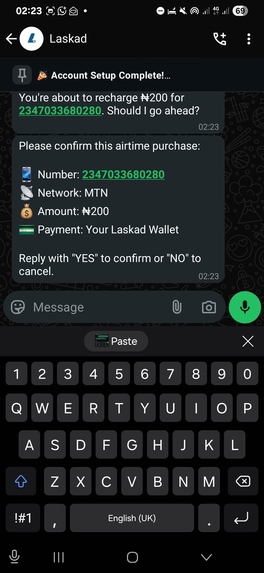
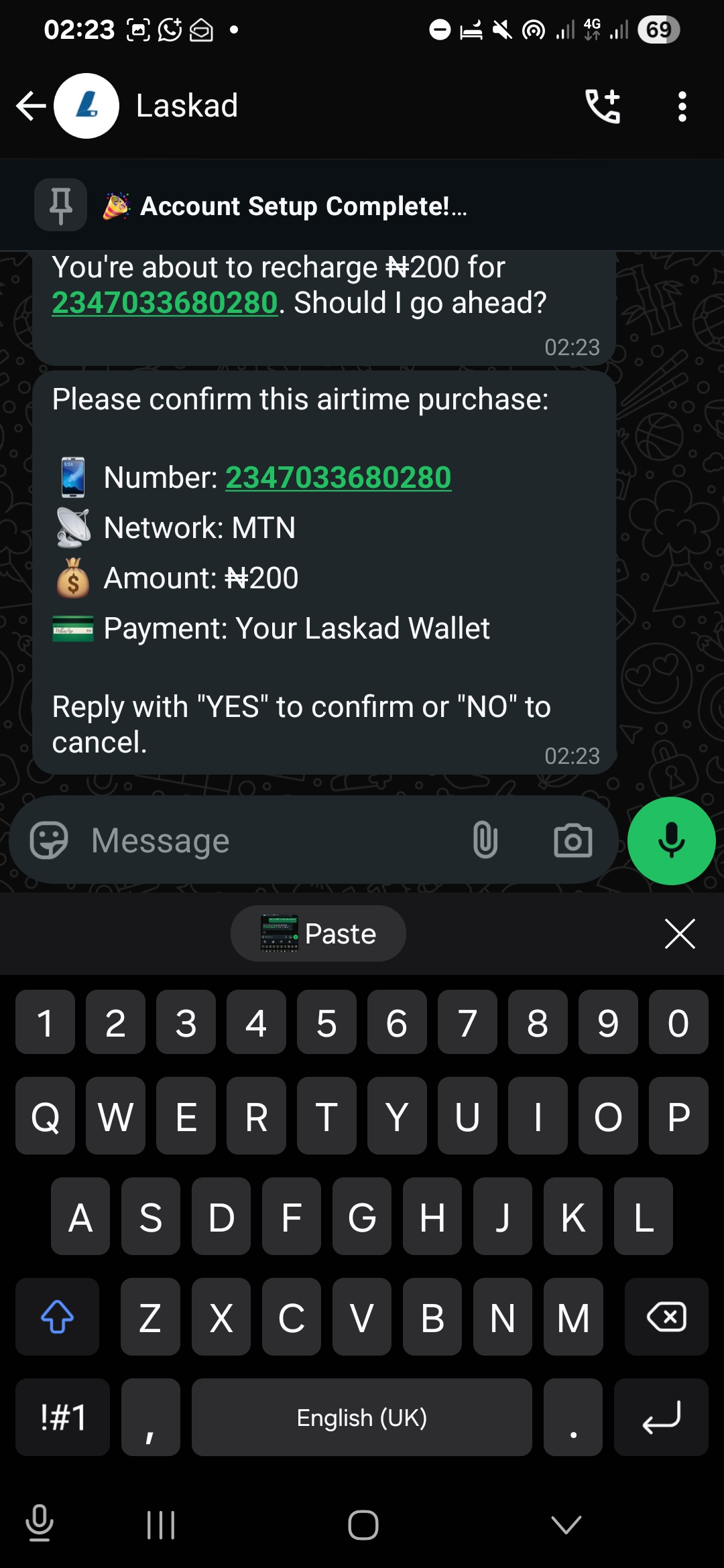
Being asked to verify airtime recharge details
-
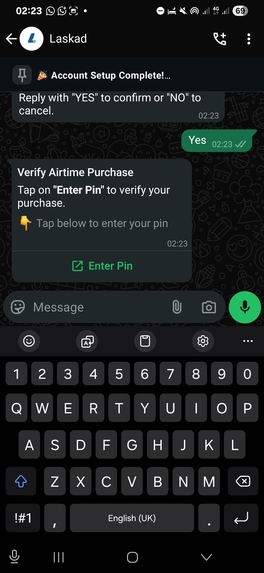
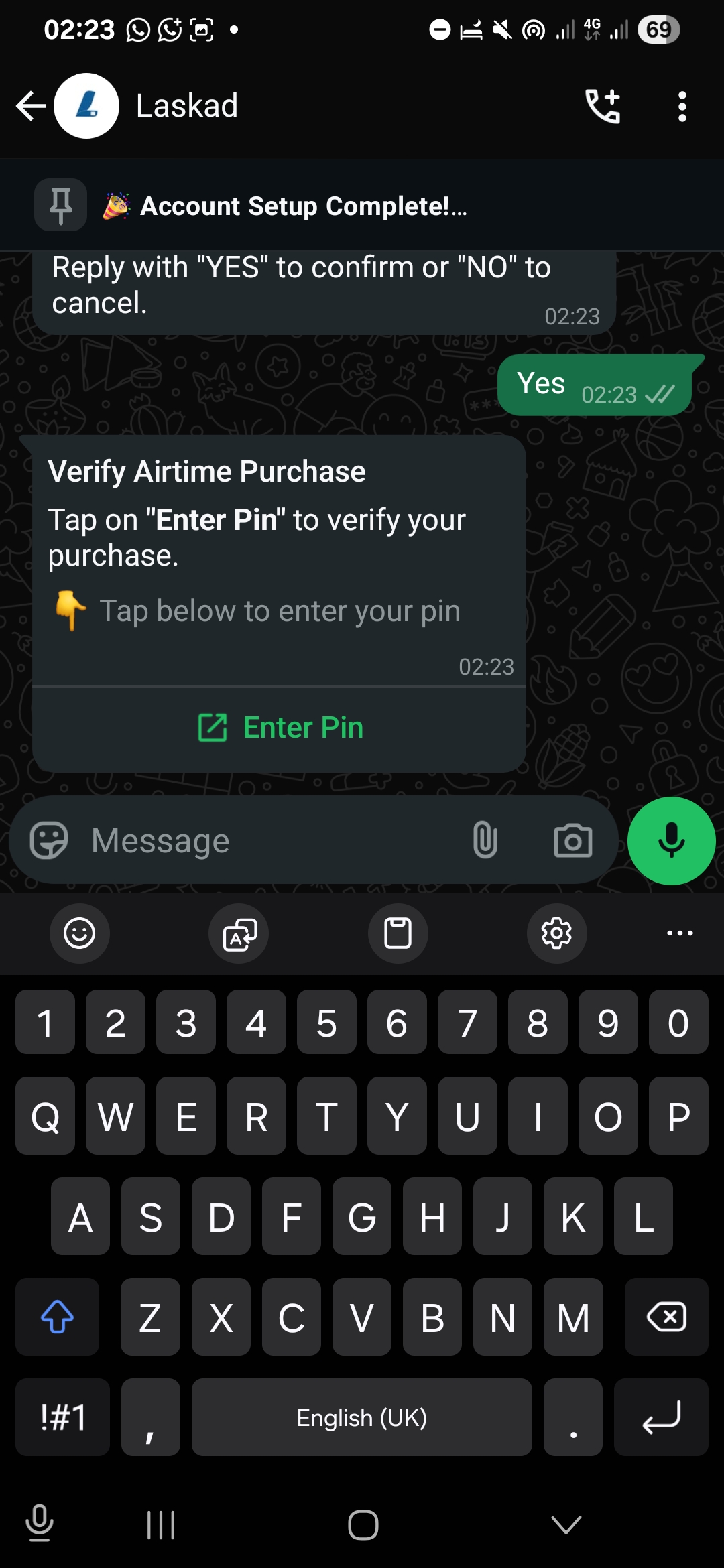
Asked to provide my transaction pin
-
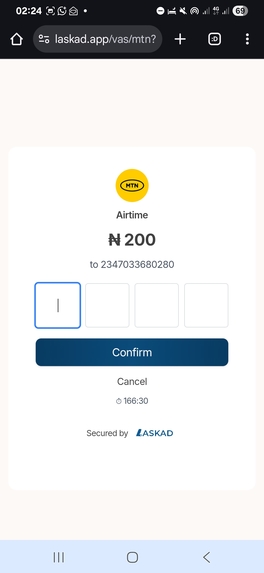
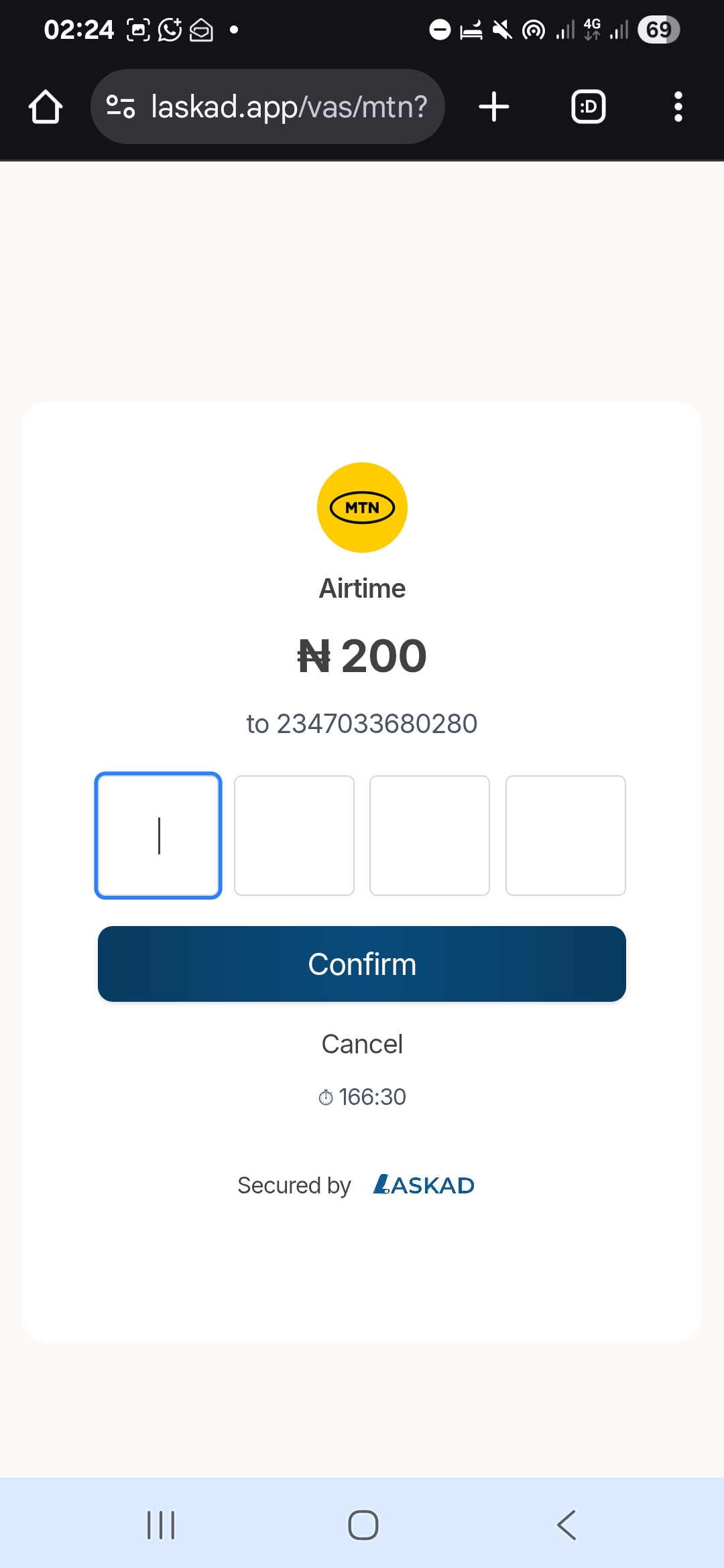
Web interface to provide my 4-digit pin
-
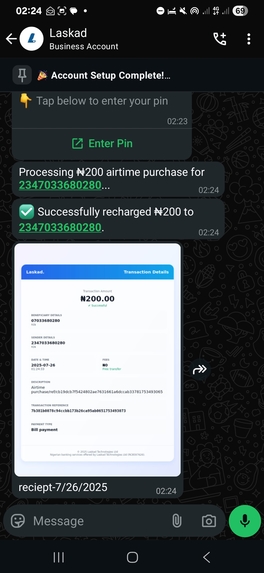
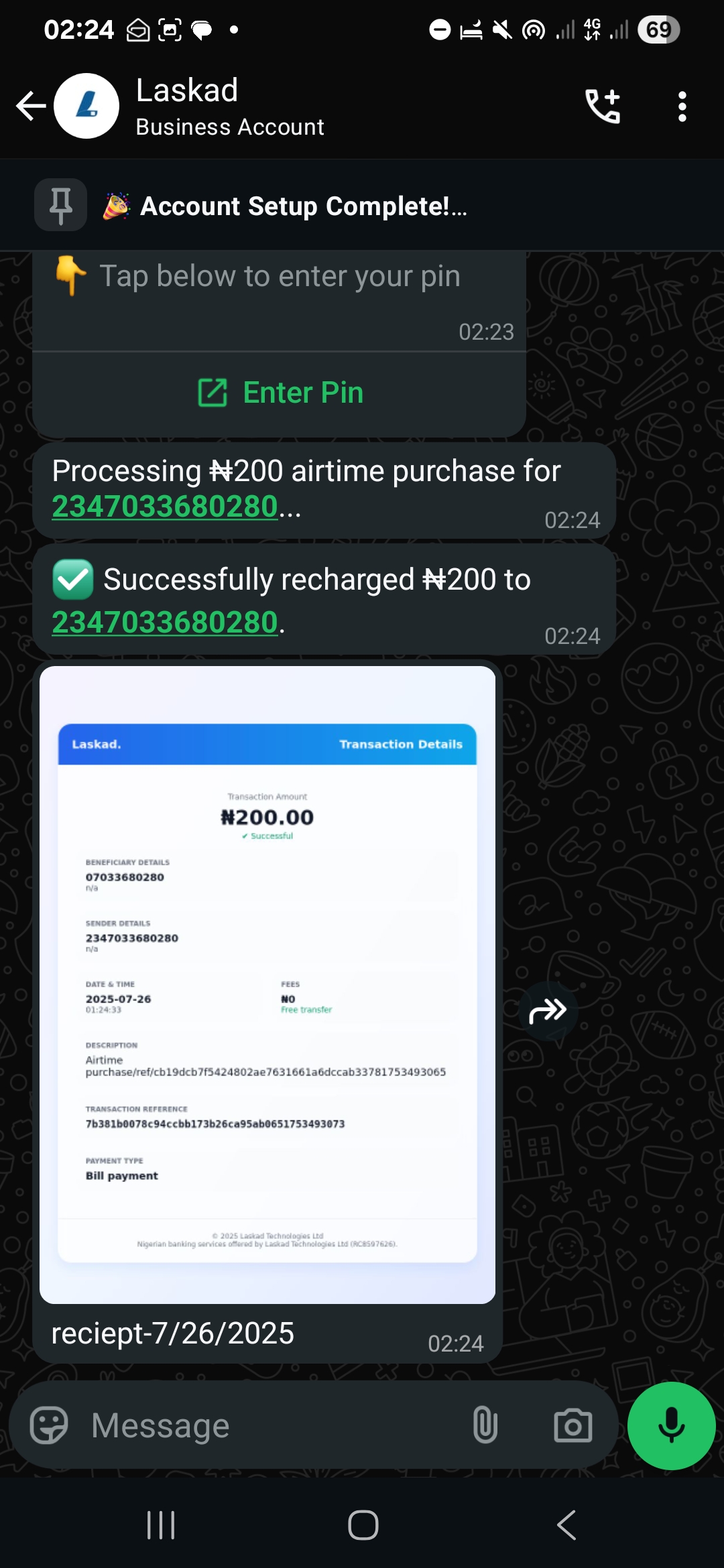
Laskad successfully processed request and sends a reciept
-
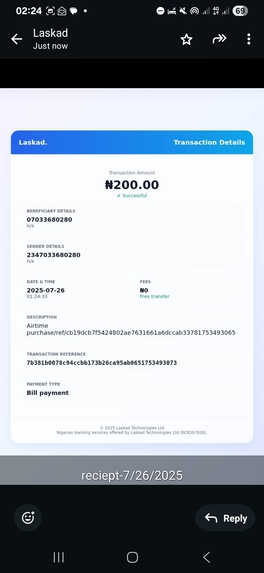
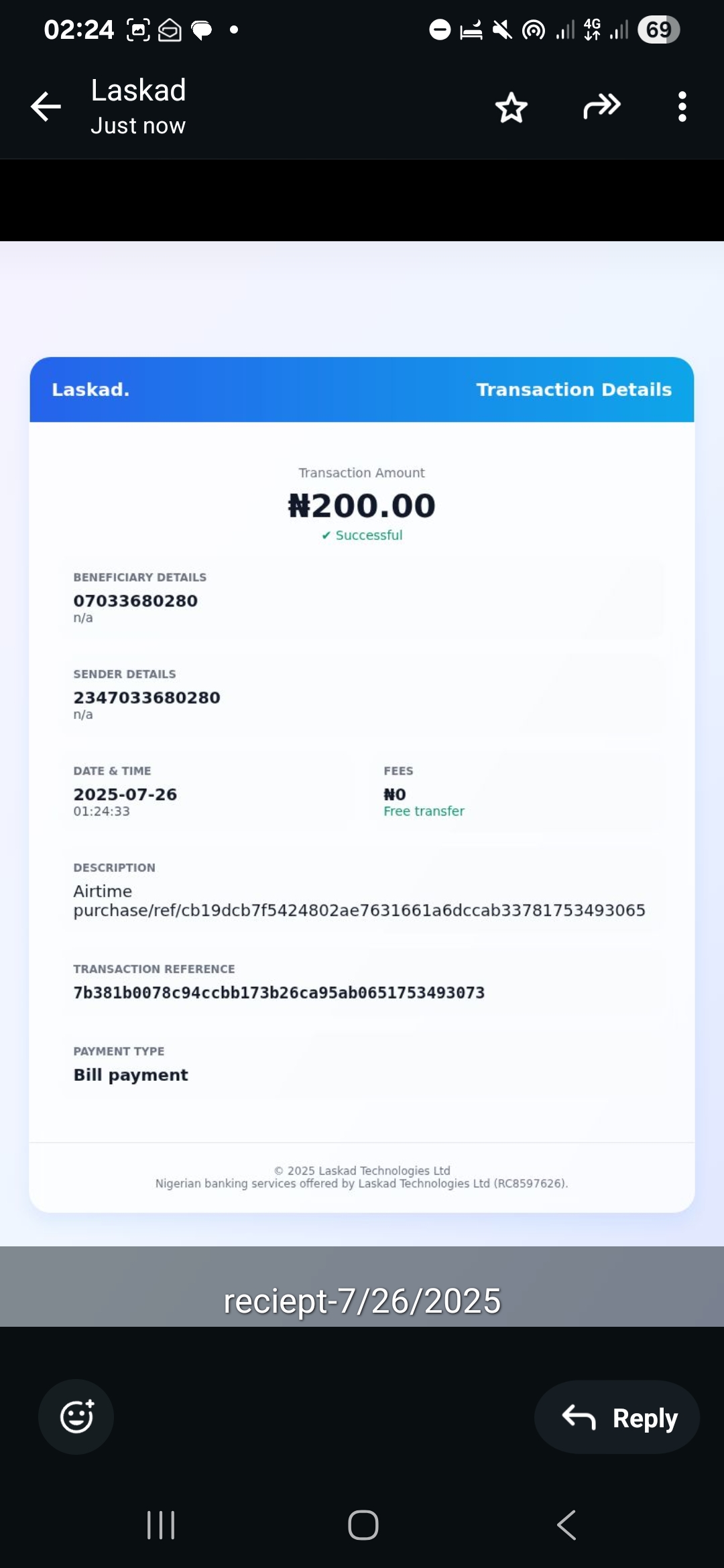
Reciept for airtime purchase sent by Laskad
-
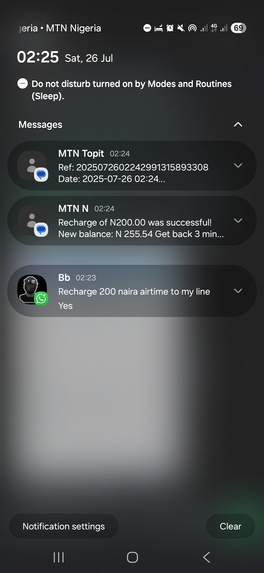
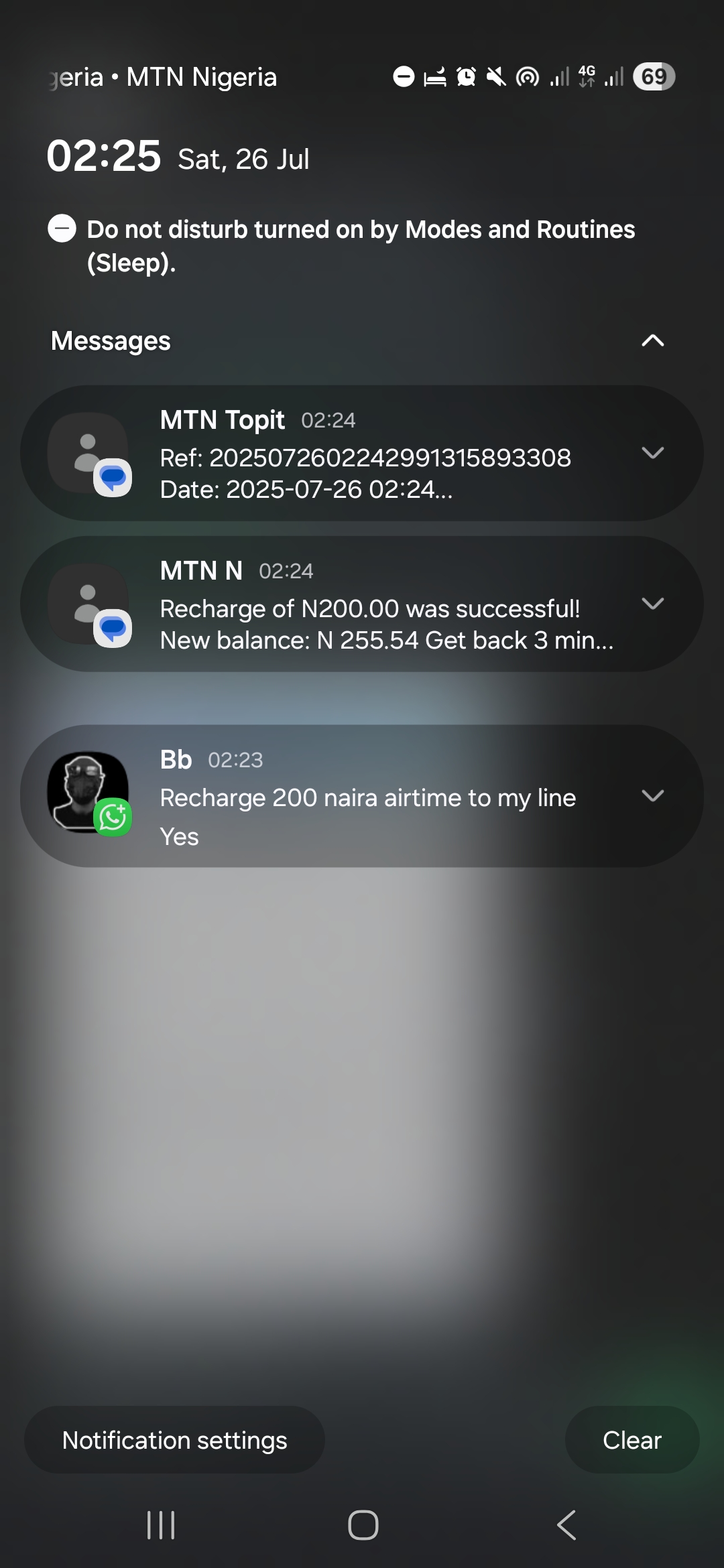
I get a message from network provider, my account is credited with 200 naira airtime
-
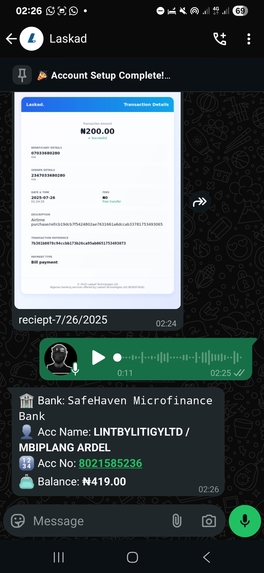
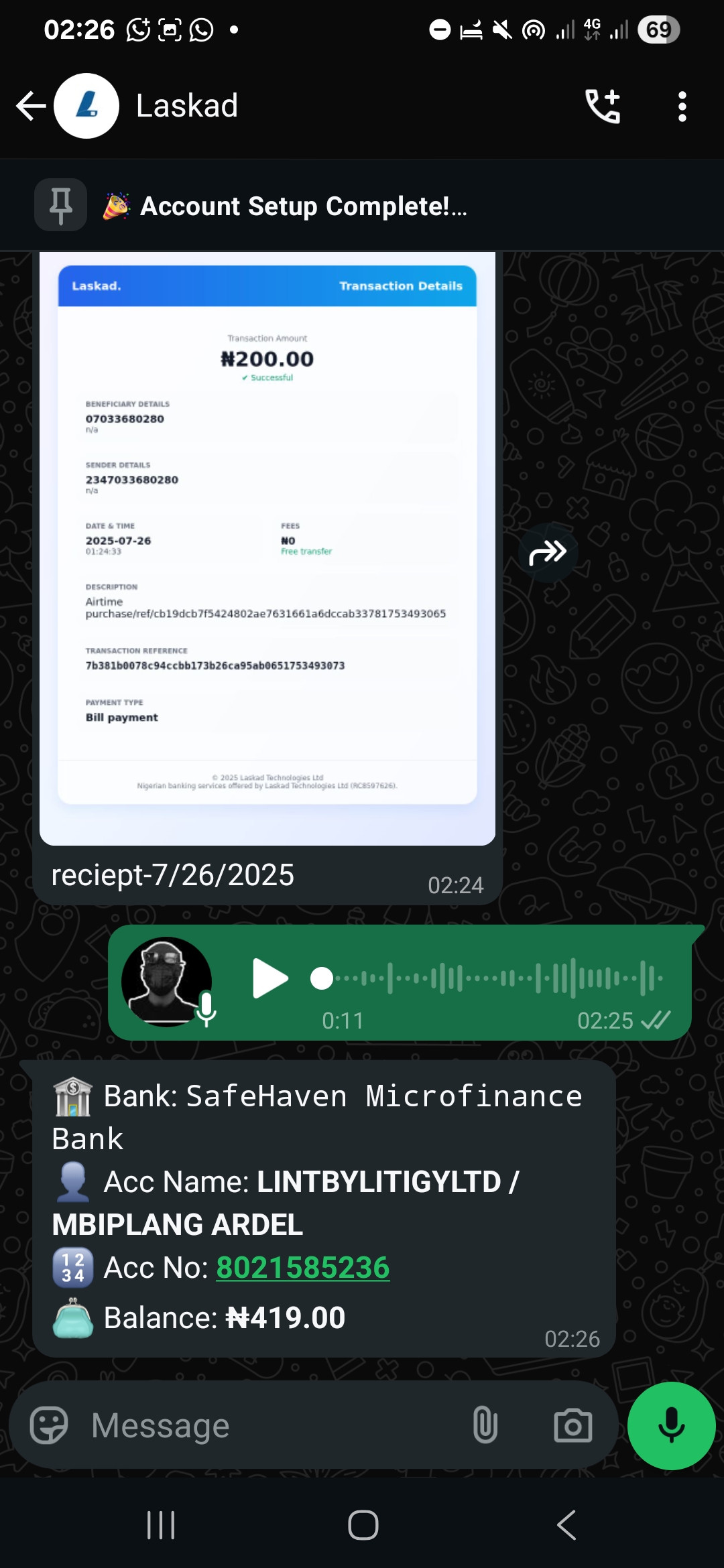
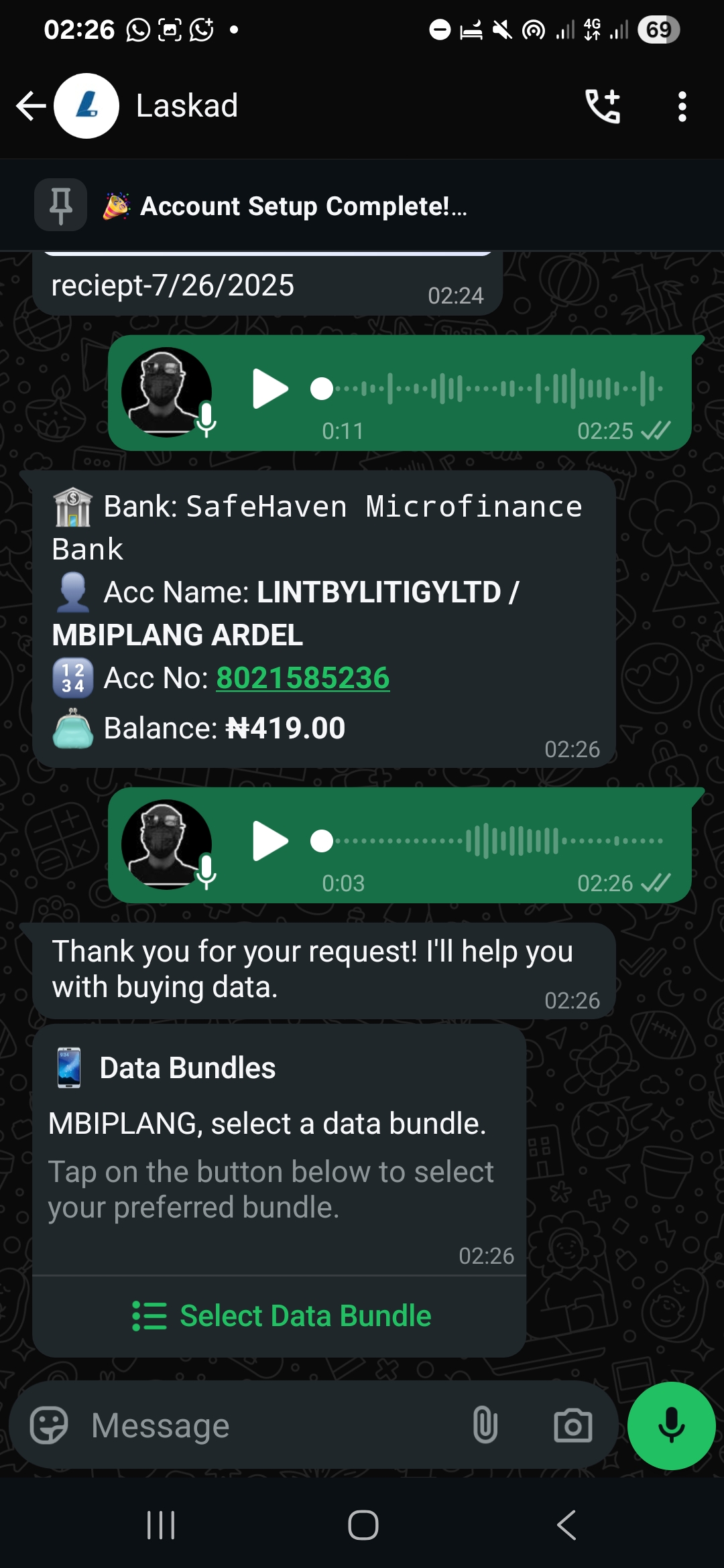
Sent a voice note to check my account balance.
-
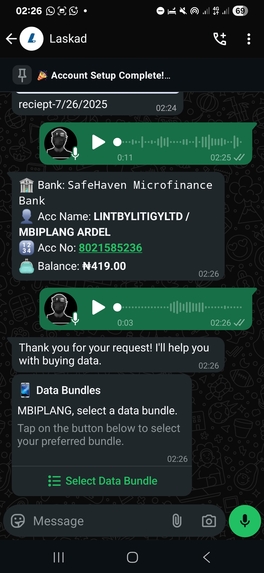
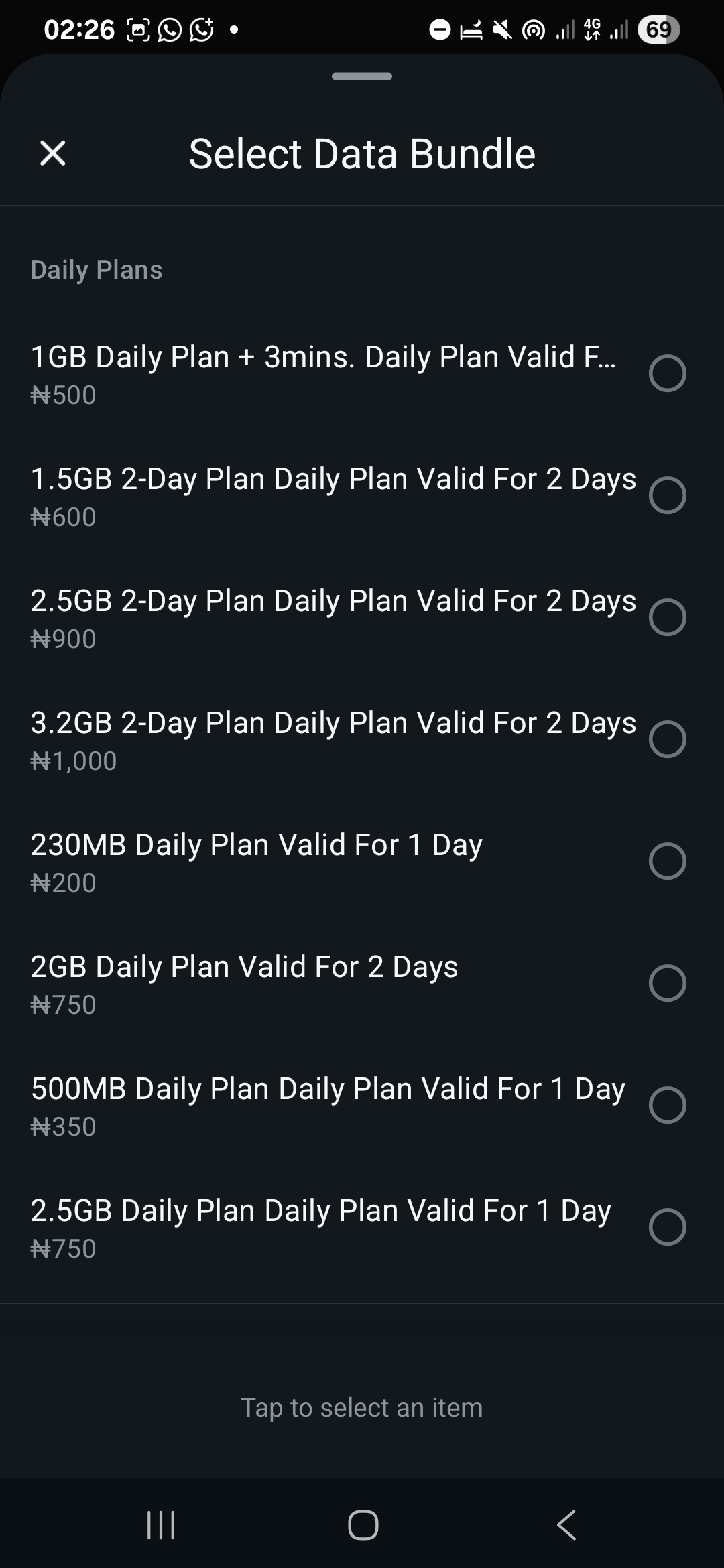
Requested Laskad to buy data using voice note. I get a list of data plans to select from
-
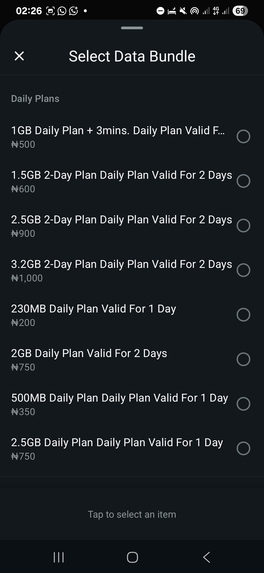
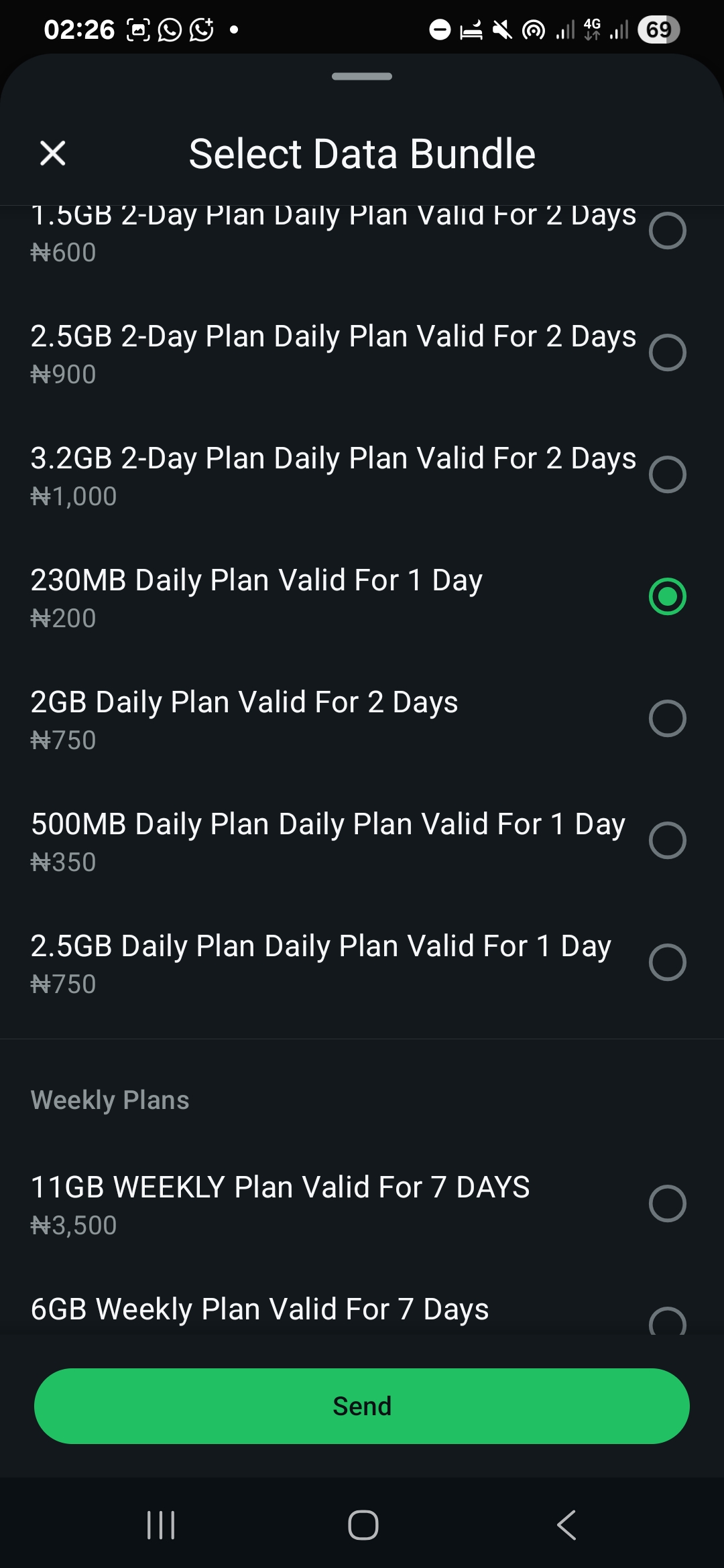
List of data plans, organised by week, month and year.
-
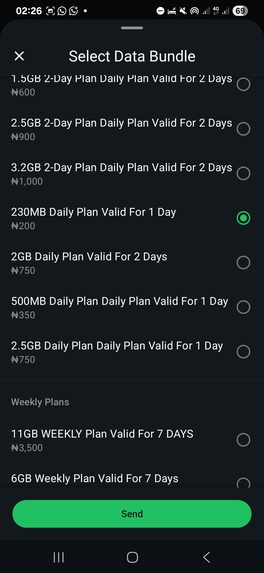
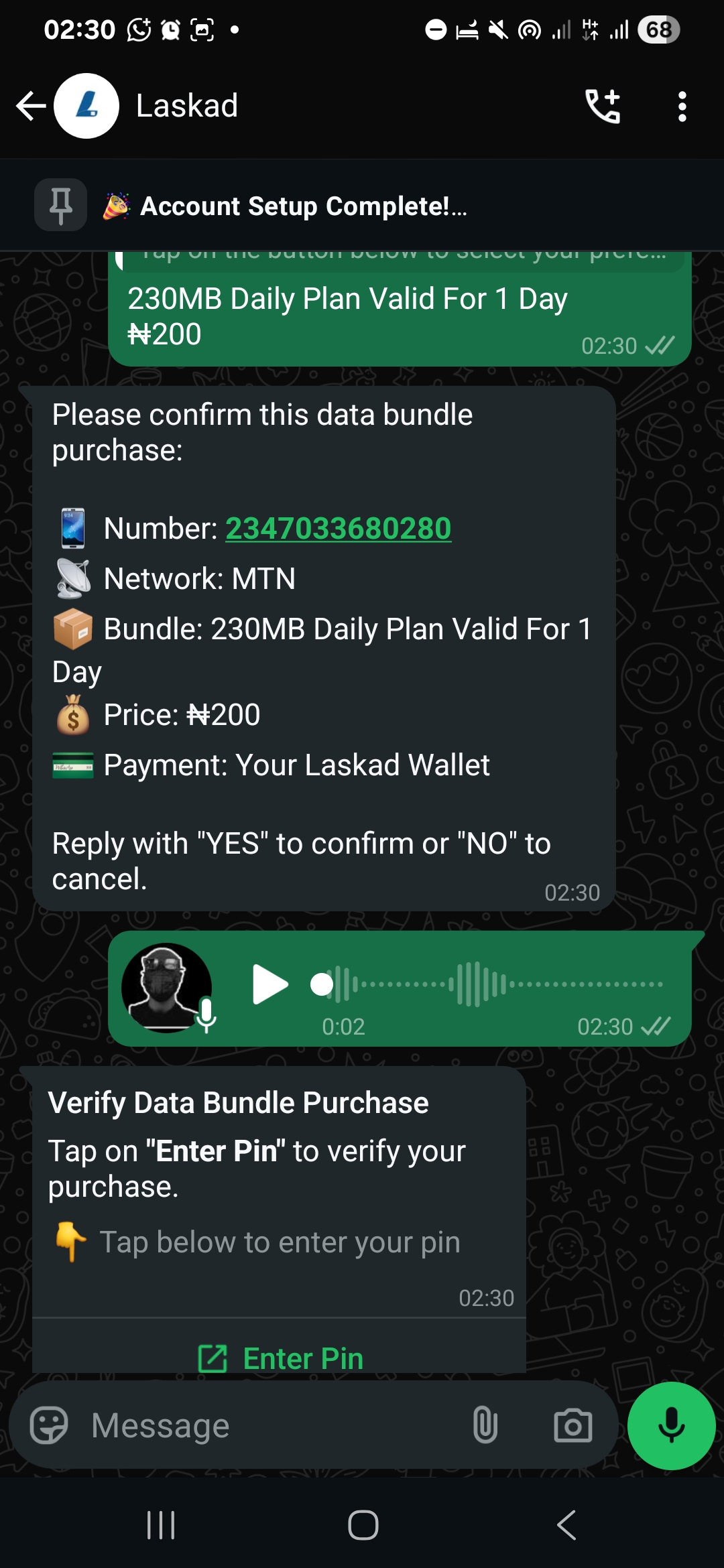
I select plan and send to Laskad
-
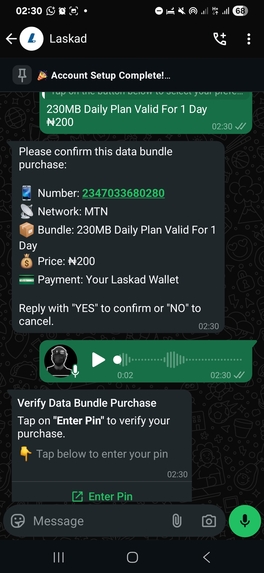
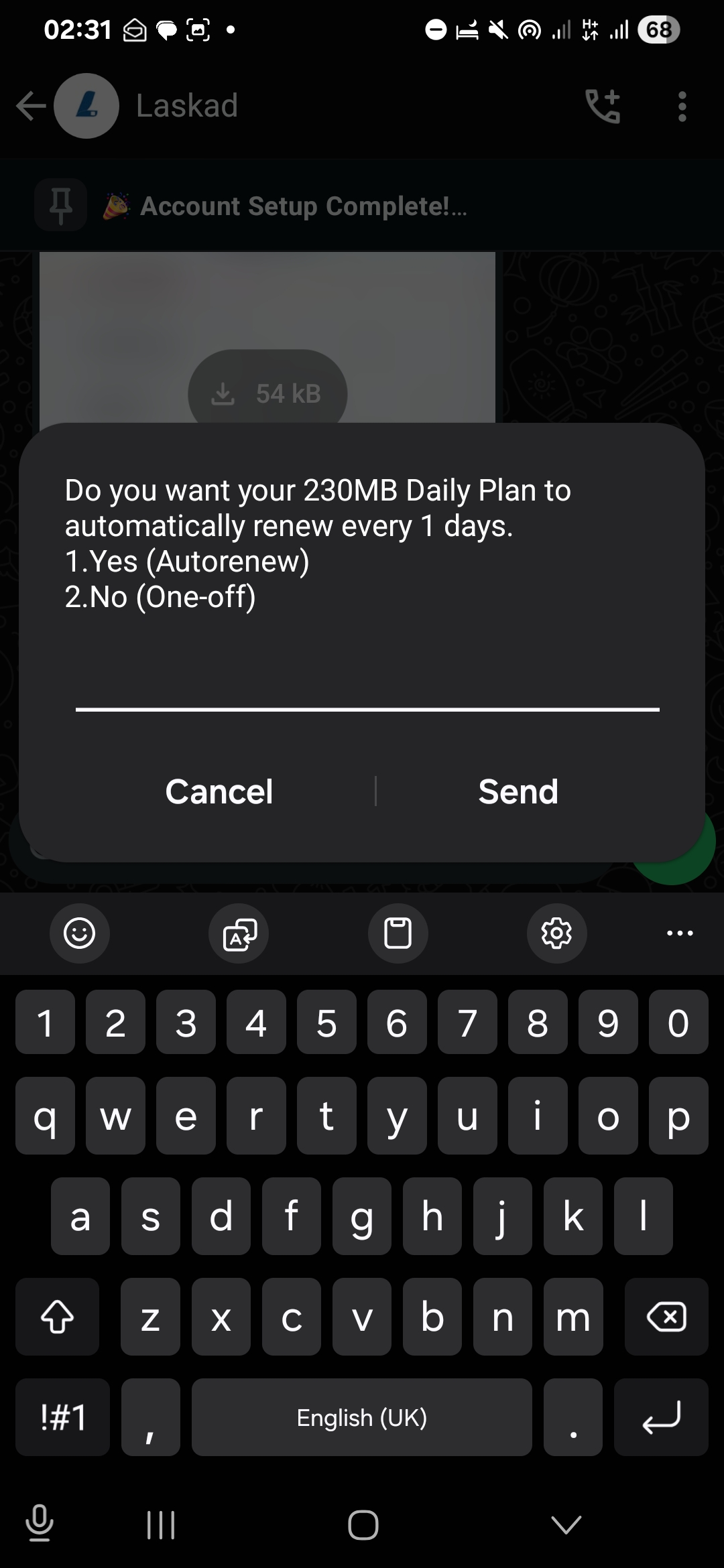
Laskad asks for to verify details and request i provide my transaction pin
-
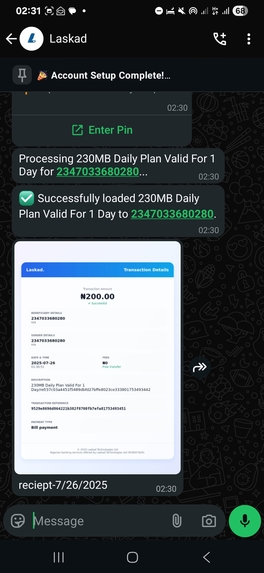
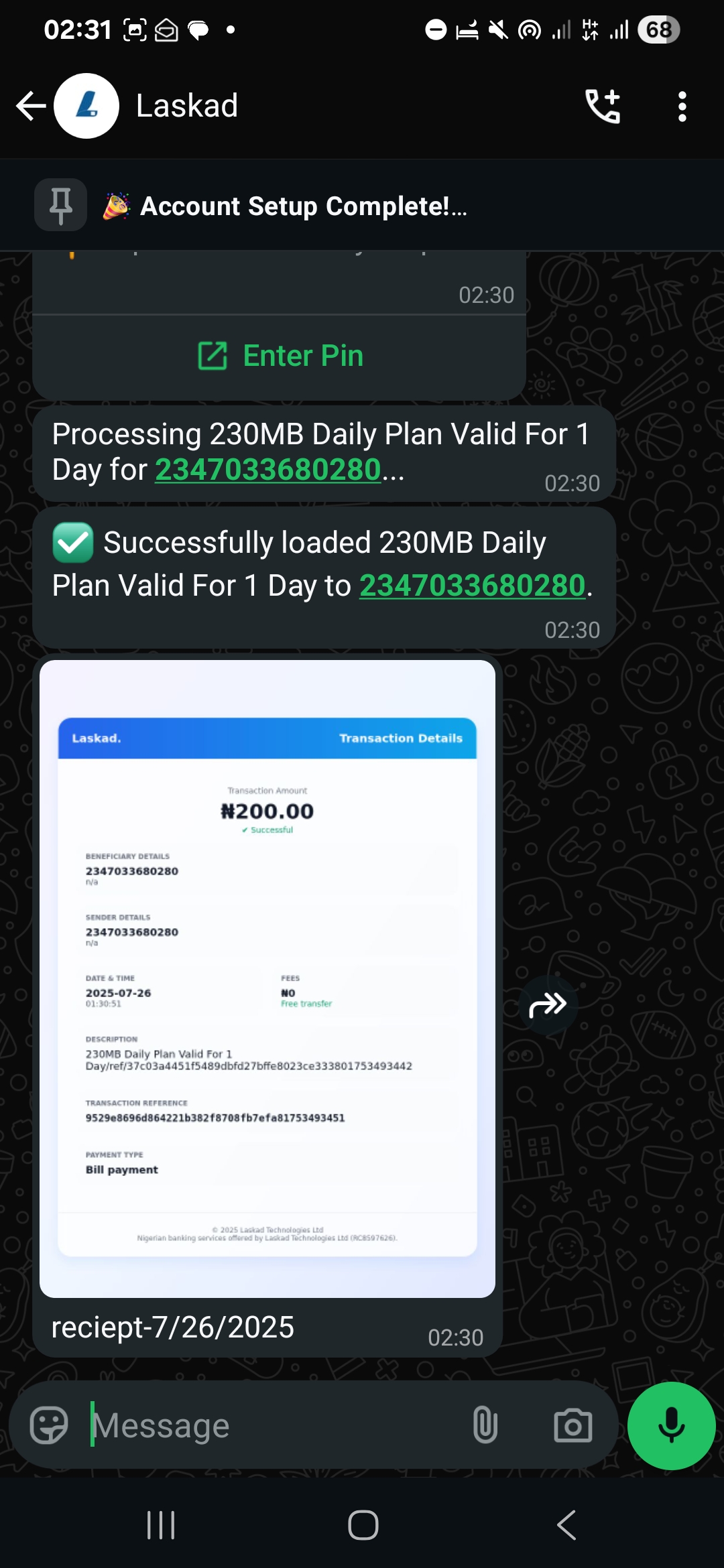
Request processed and a receipt is sent.
-
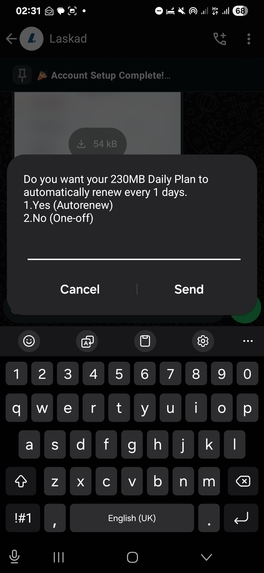
I get message from network provider
-
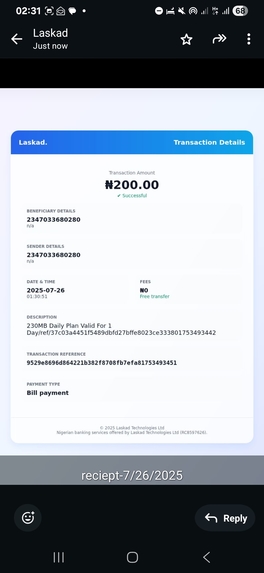
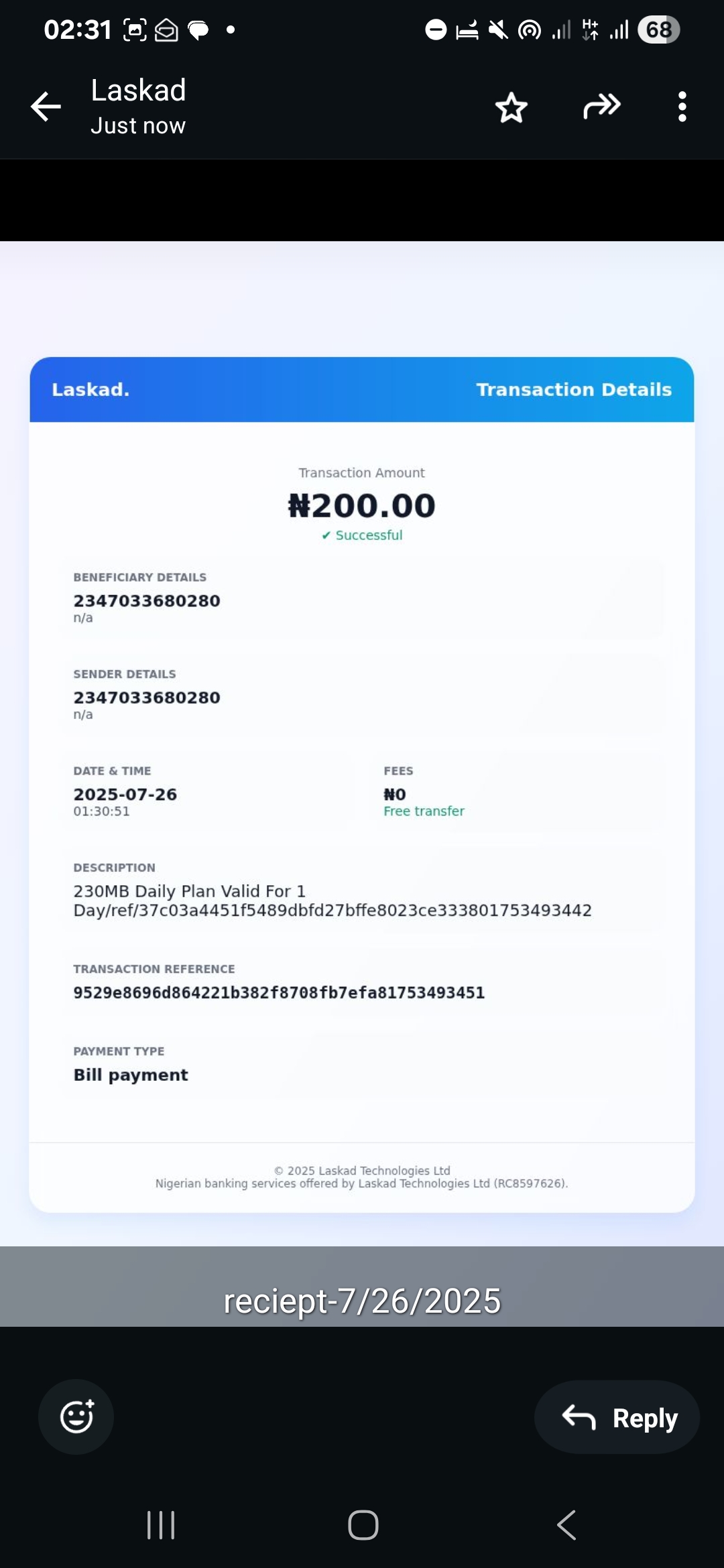
Receipt for data purchase
-
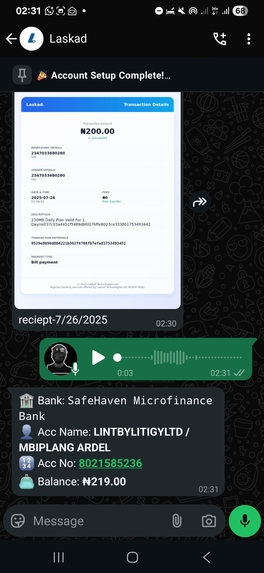
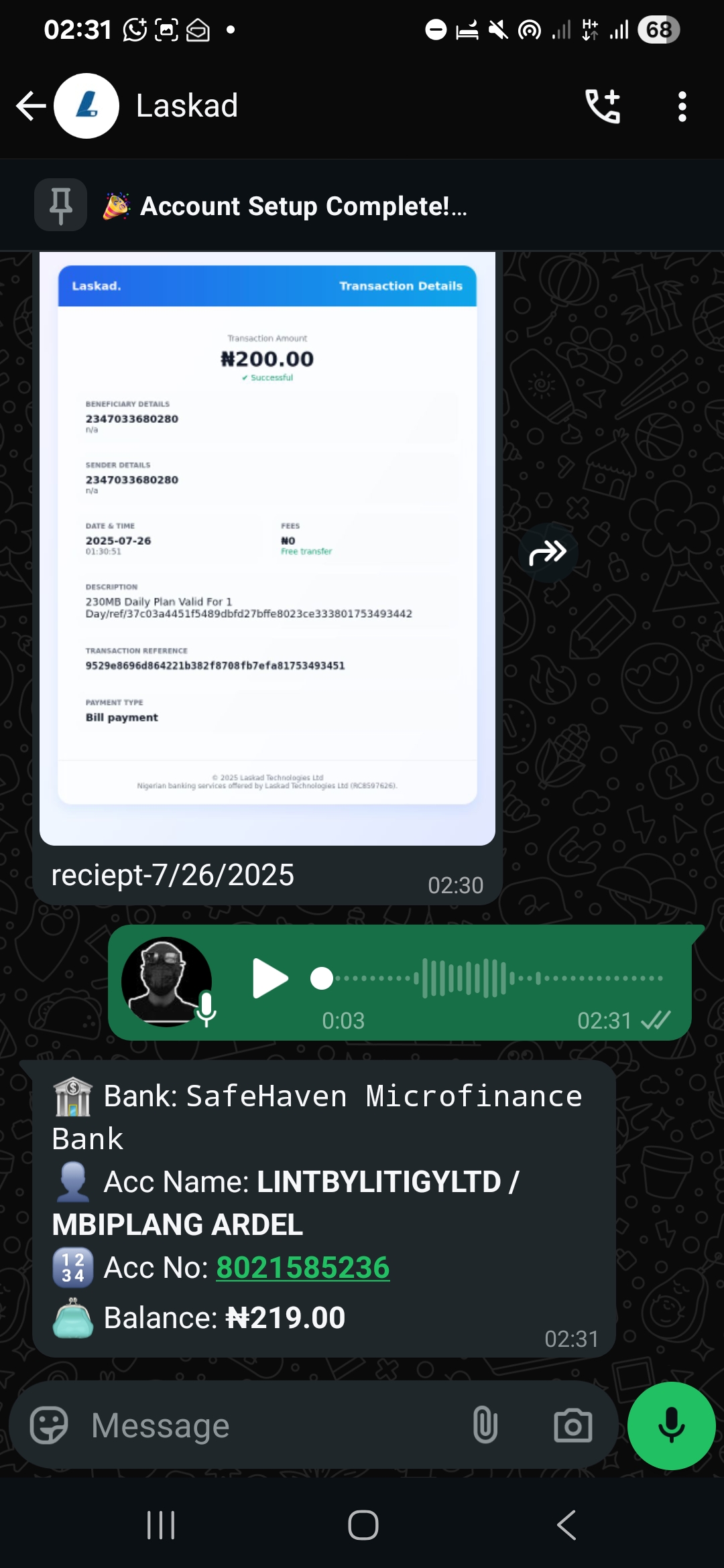
I check my balance
Inspiration
In many parts of Africa, access to digital financial services is limited, not because people lack the need, but because of infrastructure challenges, digital literacy gaps, and device limitations.
Modern fintech apps, while powerful, are often too complex for the realities on the ground. They assume high-end smartphones, strong internet access, and high digital literacy — all of which are still out of reach for millions. During our early interviews, we met people who couldn’t even remember how to dial a USSD code to recharge airtime — but they were actively chatting on WhatsApp daily.
That moment became the core insight for us: “What if you could access financial services the same way you send a message to a friend — just a chat, a voice note, or a photo?”
What Laskad Does
Laskad is a WhatsApp-based financial assistant designed to simplify everyday transactions and bring banking-level functionality into a familiar, simple platform.
How we built it
Laskad was designed to operate under real-world African constraints — poor network coverage, low-end devices, and varying levels of literacy. Here's an overview of how we built it:
-Frontend Interface: WhatsApp chat interface using the WhatsApp Business API for sending and receiving messages.
-Voice Note Processing: We integrated OpenAI Whisper (small model) for speech-to-text transcription of local accents over compressed audio.
-Image-to-Text (OCR): GPT-4 Vision for extracting information from snapped images or receipts.
-Intent Detection & Routing: A lightweight NLP model handles user input classification (text, audio, or image) and routes to the appropriate transaction handler.
-Backend: A fast, low-resource NestJS (Node.js) server handles logic, validation, retries, and integration with financial APIs.
-Security: Transactions are verified via a secure web interface using a unique, time-limited link where users must enter their 4-digit transaction PIN to confirm actions. This adds a crucial layer of safety when working with voice or image-based instructions.
Challenges we ran into
OCR accuracy on handwritten bank details was initially poor, especially under bad lighting. We had to add preprocessing (contrast enhancement, noise removal).
Voice recognition struggled with diverse accents. We improved results by using Whisper’s low-latency model.
Security concerns with non-text inputs meant we had to implement smart confirmation flows, including a secure web-based 4-digit PIN verification before completing high-risk actions.
WhatsApp API rate limits introduced edge-case errors. We built a queueing system with fallback alerts for users and retry logic to prevent failures.
Accomplishments that we're proud of
Laskad is now a resilient, low-bandwidth financial assistant that lets users:
Buy airtime and data
Pay bills (electricity, cable TV)
Transfer funds between banks
All of this — via chat, voice note, or photo. Every transaction is verified securely through a 4-digit PIN using a web link.
What we learned
-*Designing for constraints *. Every line of code was written to minimize compute, bandwidth, and friction.
-Simplicity wins. Most users just want to say or show what they want — no buttons, no forms, no menus.
-Multimodal inputs open doors. Many users prefer sending voice notes or photos over typing, especially in rural or low-literacy settings.
-Real users teach best. We learned more from observing people try (and fail) to use USSD than from any user persona.
What's next for Laskad
We're excited about the road ahead for Laskad, and we're already working on key improvements and new features:
Global Remittances We're expanding support to enable users to send and receive money across borders, starting with African corridors. Our goal is to simplify international transfers just like we’ve done for local payments — all through WhatsApp.
Indigenous Language Understanding We’re fine-tuning our AI models to better understand African indigenous languages like Hausa, Yoruba, Igbo, Tiv, and others — not just the words, but the cultural and contextual meanings behind them. This will help users interact naturally in their native tongue.
Business Features (Coming Soon) We're building features for micro and small businesses to:
Manage inventory and financial records
Access microloans based on transaction history
By keeping Laskad accessible, intelligent, and deeply local, we hope to create a system that truly works for everyone, especially those left out by traditional fintech platforms.
Built With
- docker
- financial-api
- github
- nestjs
- nextjs
- openai
- postgresql
- queue
- railway
- redis
- whapi
- whatsapp-api

Log in or sign up for Devpost to join the conversation.