-
-
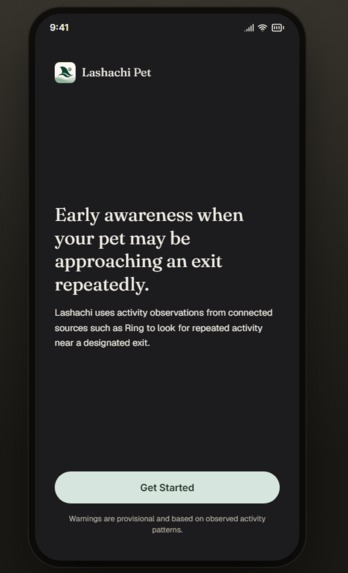
Lashachi Pet Welcome
-
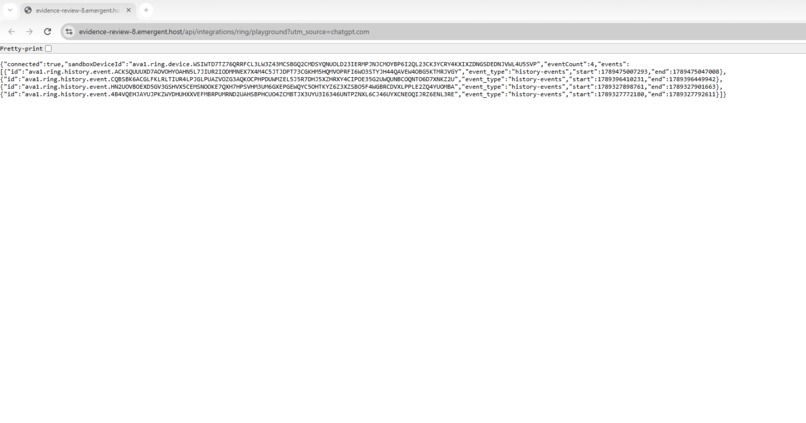
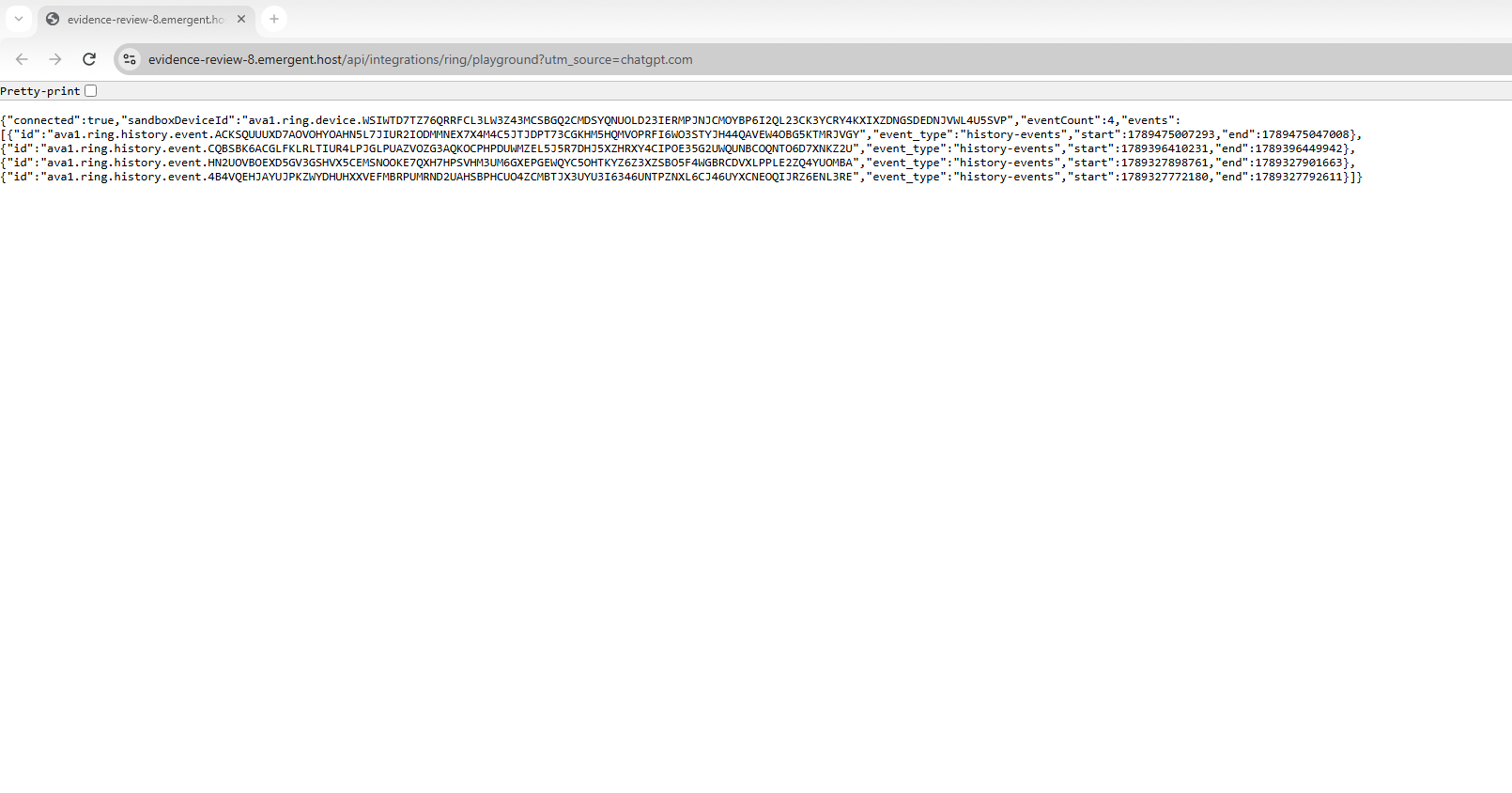
Ring Runtime Verification
-
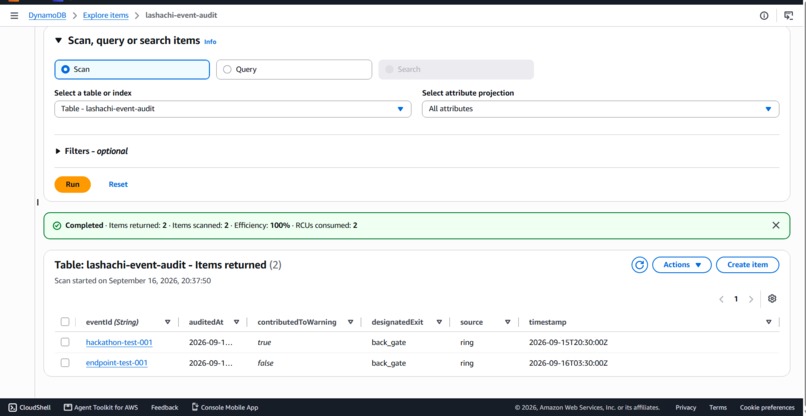
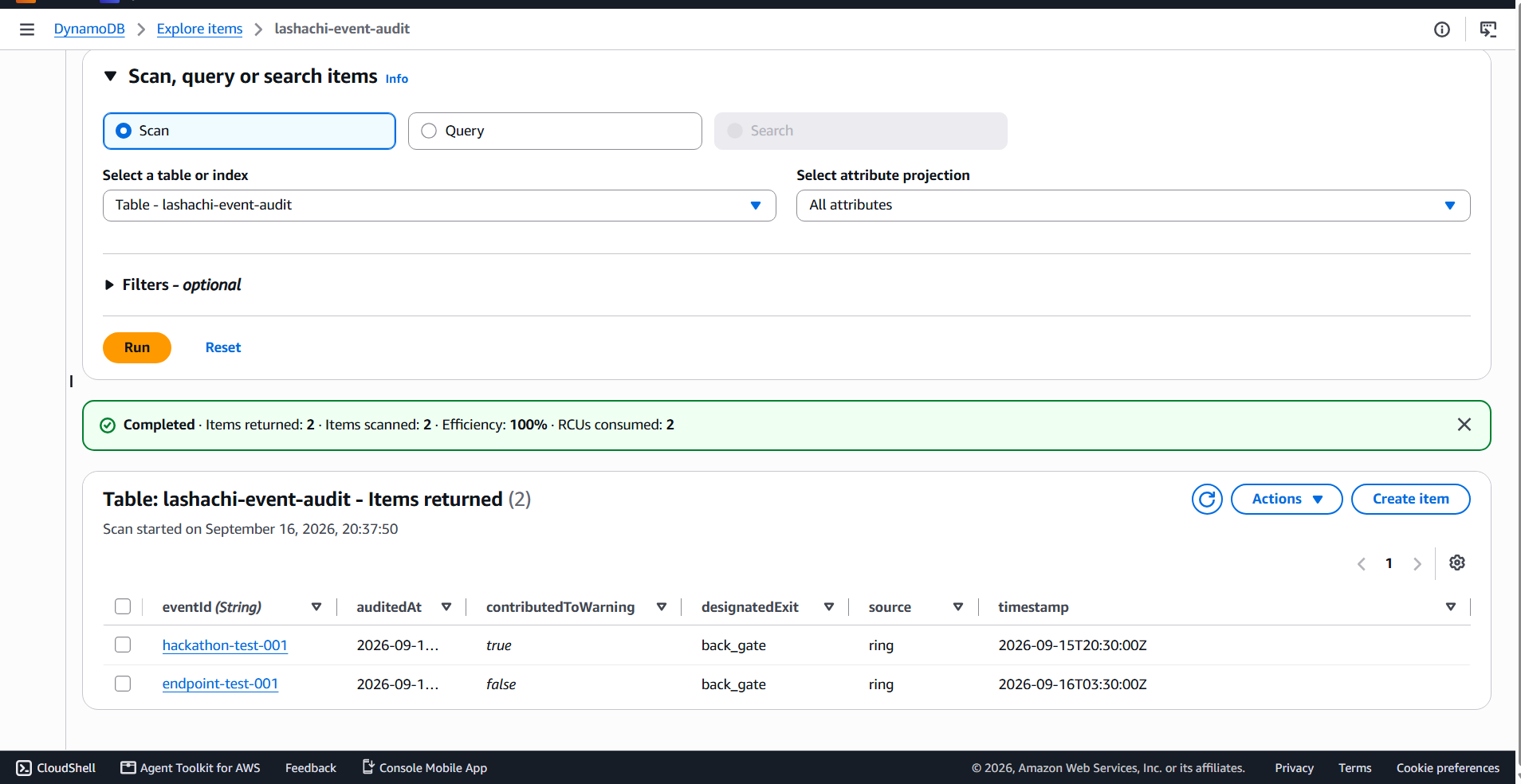
AWS Audit Trail
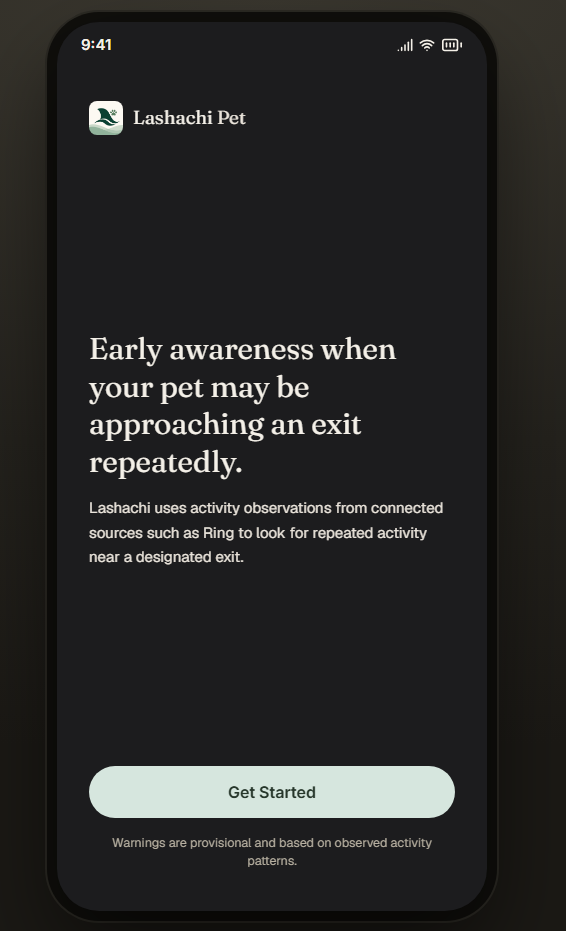
Inspiration
As a solo founder, I kept coming back to a simple worry for many pet owners, a pet can be safe in your yard and predictable, then suddenly can become very curious about an open door, gate, or another potential way out. Most of the time, the problem isn't that a pet owner isn't paying attention to this behaviour. It may be because certain small warning signs can happen unexpectedly before anyone realizes the pattern. That problem sparked my idea to enter the 2026 Build, Ship, Shape: Amazon Developer Hackathon and submit a concept for the Ring track that uses observations to help provide an early alert of a possible escape attempt warning. What if the activity that is already observed around the home could provide an earlier heads-up, combined together with other factors that could form a possible signal. While this concept provides no certainty, it is another tool that pet owners may use to and then decide what it means. Ring and Amazon are trademarks of Amazon.com, Inc. Lashachi is not affiliated with or endorsed by Amazon or Ring.
Lashachi Pet did not originally begin as an early warning pet escape prototype. Before this Hackathon, I was exploring developing a simple pet care MVP concept that tracked growth but did not move forward with that idea. When I found out about the Ring track of the Amazon Developer Build, I started to think how I could change the scope of the original idea and pivot to something that could incorporate using Ring motions related to pets. While Lashachi Pet is not a security use case, the concept shift towards using repeated activity signals with an explainable warning experience for pet owners who use Ring. During the evolution of the project, I had to not only change the UI screens but the workflow behind it to include evaluating patterns and secondary audit functionality.
While I am not a software developer or backend engineer, my experience is stronger in areas such as compliance and risk assessment. I relied on additional tools such as using AI-assisted development tools to help me understand information system concepts, process flows, review code, and help to transform my project requirements for Lashashi Pet into something that I could test and validate. Lashachi Pet does not use AI models to decide if a pet is escaping but rather this is based on a rule about repeated activity near designated areas or potential exit points determined by a pet owner. While AI helped with some technical gaps, I am accountable for deciding what the Lashachi Pet should do and what claims it could support or not support. I also used AI to help with narration of my video submission and identifying tools I could use to assemble a polished video for the Lashashi YouTube account.
What it does
Lashachi Pet allows a pet owner to designate an exit area that they can configure according to their home, such as a back gate or front door, and looks at activity observations associated with that area using Ring. For the prototype, I selected a simple rule that is centered around having three near-exit observations within a ten-minute window to produce a "Possible Escape Attempt" warning. The warning also explains why it appeared including multiple approaches to the exit area, and the activity repeated within a short time period, that gives the pet owner additional context to review.
While Ring is used as the observation source, Lashachi Pet connects to Ring's developer environment to retrieve activity information and then Lashachi Pet adds the early warning attempt interpretation, which is provisional. Lashachi Pet does not claim that the alleged pet escape is certain and also the prototype does not need to identify the pet to provide an earlier signal for the owner to check.
How I built it
As a solo founder, I wanted this prototype to focus on one pet concern instead of adding too many features. While the design may be built out in the future, should I decide to move towards potential production, I designed Lashachi Pet using a transparent repeated activity rule instead of a true predictability model. While the Lashachi Pet shows the designated exit(s), the observations using Ring may assist a pet owner in interpreting what those Ring observations mean.
During the testing and validation of the Ring integration, Lashachi Pet makes authenticated runtime calls to the official Ring Developer Sandbox. While this important milestone was achieved during the project, it was designed to retrieve the available device and event data. In addition, a production-shaped path for Ring's motion webhooks was created and that backend handles the HMAC signature verification, duplicate request ID protection, the motion event handling, and the persistence of accepted observations from Ring.
During the project development phase, I also added a very small AWS extension to act as a secondary audit trail. So that accepted Ring observations can provide a best effort audit write through to the AWS Lambda to Amazon DynamoDB. While this part is secondary, it was tested several times to make sure that it does not delay Lashachi Pet's acknowledgement of the webhook by Ring. As a result, the workflow is moves from: OBSERVE → ACCUMULATE CONTEXT → EVALUATE PATTERN → EXPLAIN → WARN.
Challenges I ran into
The biggest challenge was testing the Ring integration from Canada, where Lashachi Inc. is based. I initially configured the Ring staging authorization flow based on using my own real Ring device, had authenticated my personal Ring account, and then authorized the access using the Ring Developer Portal. However, I soon discovered a message that said that the Ring Appstore would be available outside the U.S. soon, which meant that I was not able to continue using my physical Ring device and staging path from Canada. To workaround this, I ended up using the Ring Developer Sandbox for the Hackathon runtime demonstration. Several times I had to go back to the official rules to ensure that my project was in compliance.
Another challenge was working with the Playground token access and testing time for trying to complete the signed motion-webhook to prove the flow from end to end. There were a few times that I had to pause testing to wait to generate a new token and then carefully repeat the steps over again to screenshot the evidence. I ended up really enjoying working in the Playground and would absolutely do it again, in the absence of using a physical Ring device. This feedback helped me learn and improve my process and documentation.
Accomplishments that I'm proud of
I think the most significant accomplishment is taking this idea and turning into a concept and integrating Ring's connectivity in the developer sandbox with Lashachi Pet in the demonstration, despite facing some friction upfront. I like that I was inspired to take a different concept that I had parked and transform it to something that I thought would help pet owners, use AI in a transparent and responsible way with human oversight, and gain hands-on experience with AWS.
What I learned
This experience of building something for the Hackathon helped me to appreciate that single observations individually may not cause concern but having a way to be informed of repeated patterns could be helpful in deciding if those patterns actually matter.
What's next for Lashachi Pet — Pet Escape Early Warning
While the Lashachi Pet prototype Ring track was developed for the Hackathon, this concept is part of a broader and longer term idea of using technology to better understand signals and repeated behaviours. While there could be potential to move towards production, Lashachi is considering exploring if the concept might prove useful to pet owners, which would also include obtaining real customer insight.
Built With
- amazon-dynamodb
- amazon-lambda
- amazon-web-services
- developersandbox
- emergent
- fastapi
- figma
- mongodb
- python
- react
- ringapi

Log in or sign up for Devpost to join the conversation.