-
-
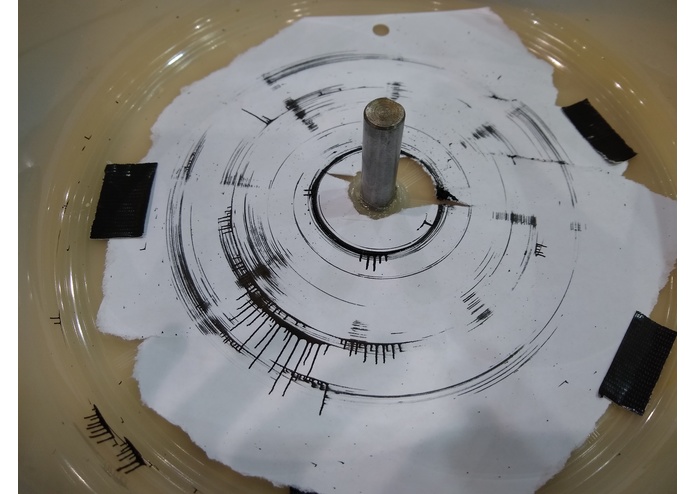
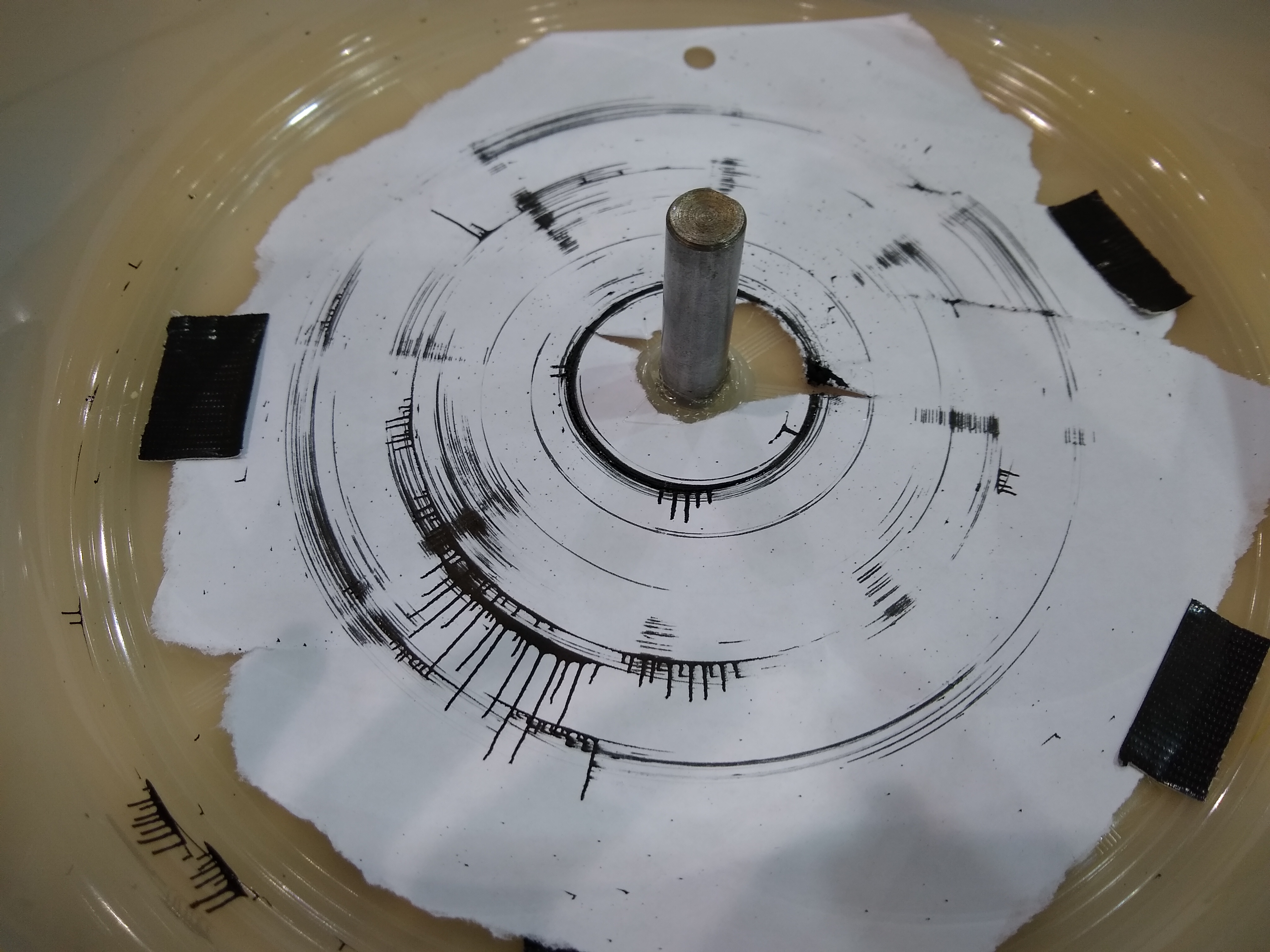
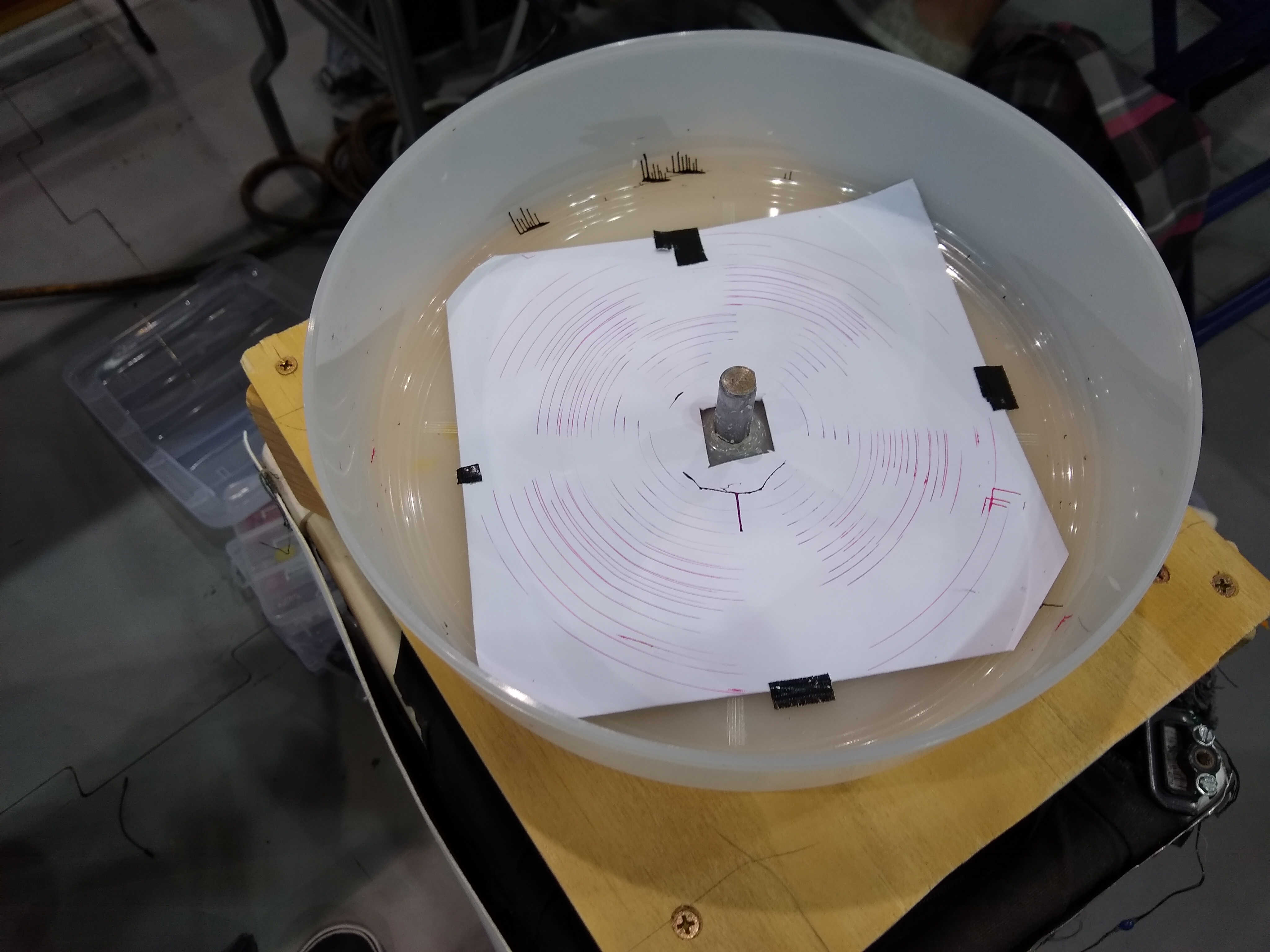
My pen experiment, it turned out very well!
-
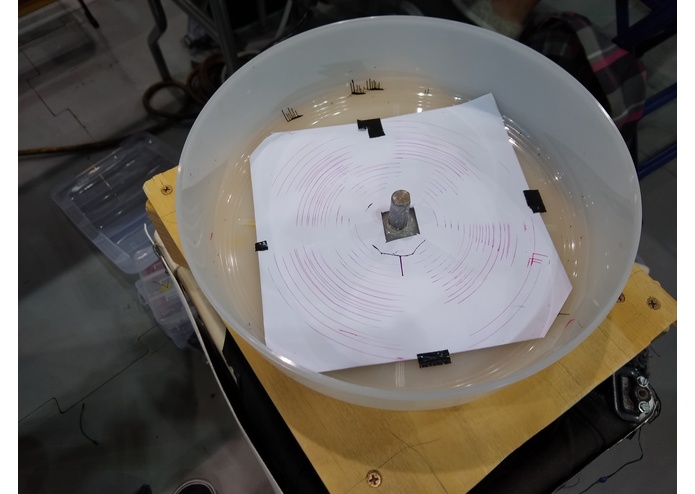
Taken shortly after the motor blew out
-
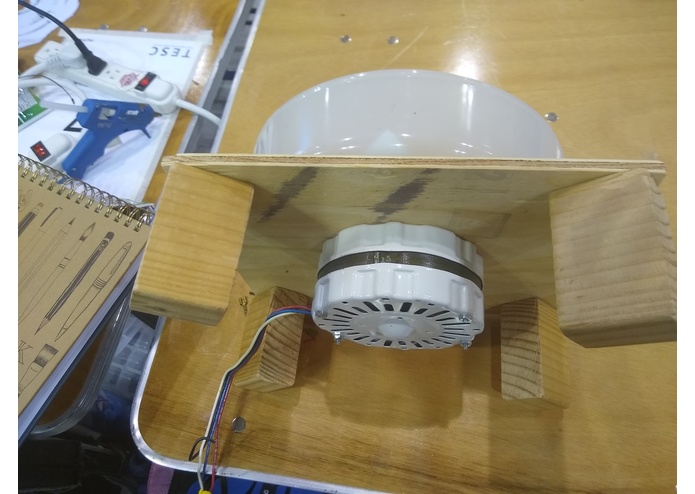
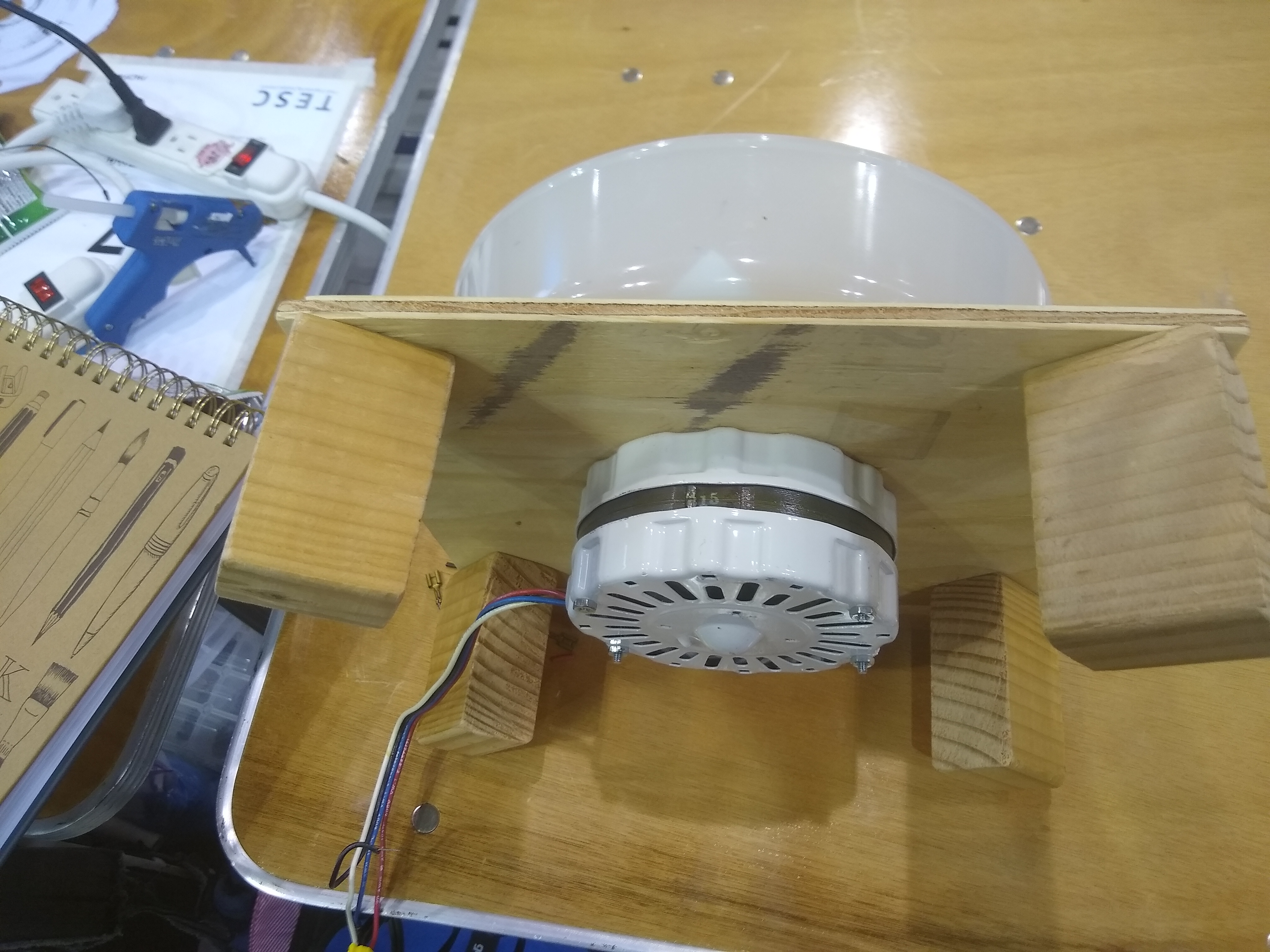
Underneath the turntable
-
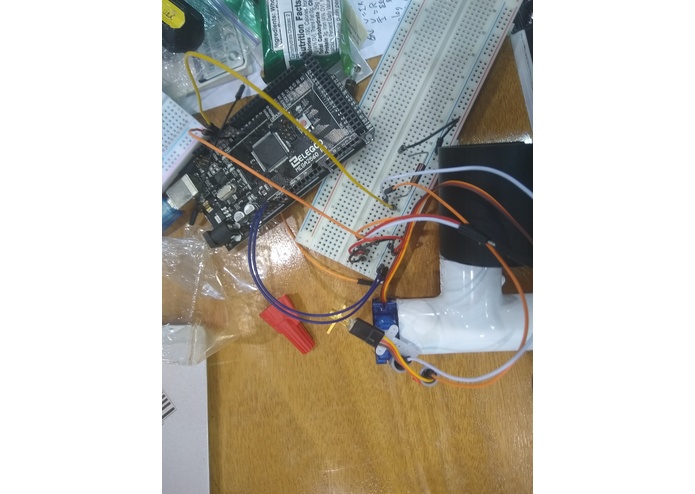
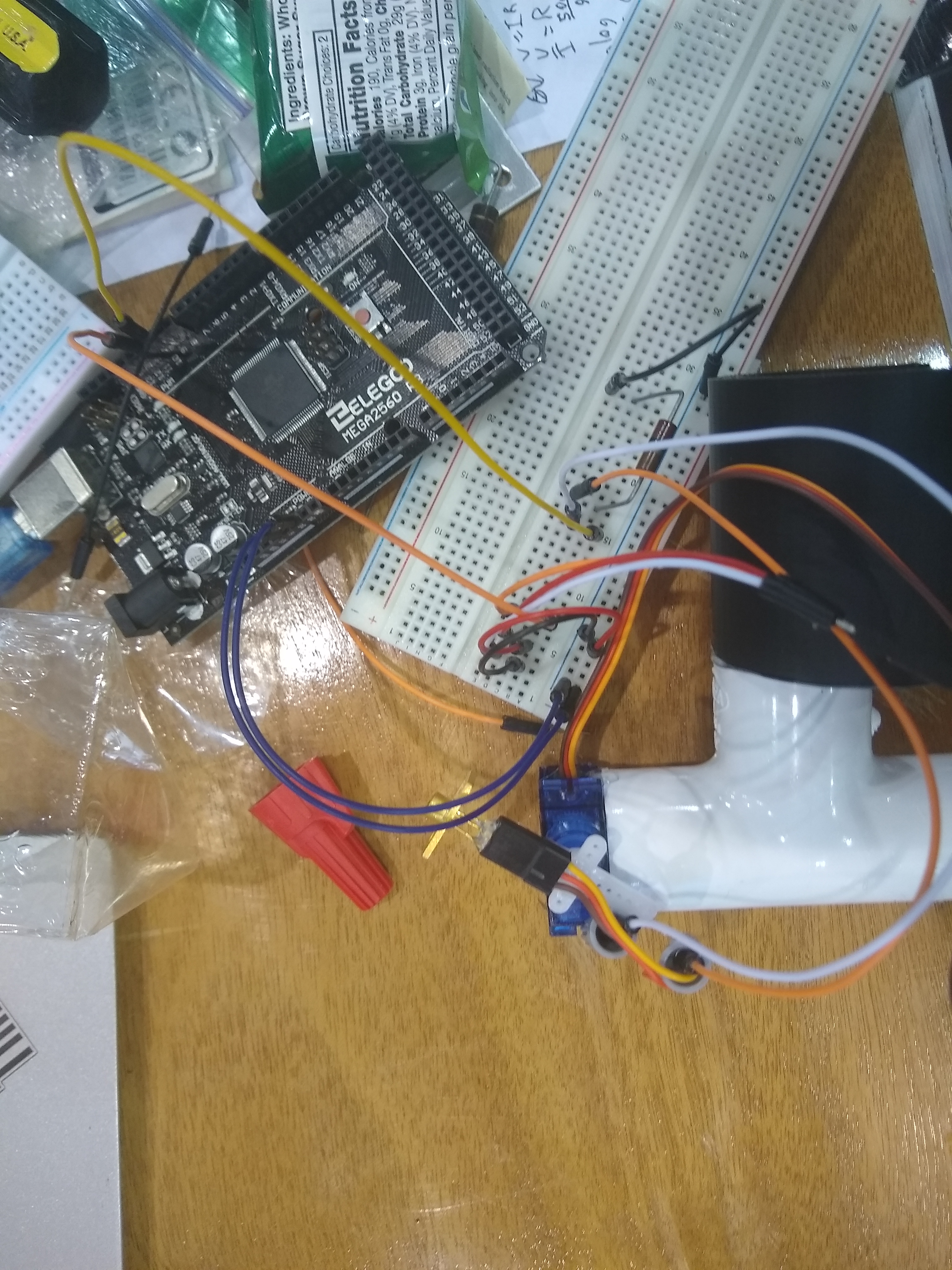
The circuit and Arduino
Inspiration
I'm really into visual art and at UCSD, they have a laser cutter/engraver but a lot of people are trying to use it and it takes a very long time to engrave something. Art is one of my hobbies so I decided I wanted to make a machine that could create a unique style of art similar to that of the laser engraver but faster.
What it does
A high RPM motor (I clocked it at 1161 RPM) spins a turntable (an inverted lampshade) with the material inside the turntable. A laser is mounted outside the turntable leaning over with an angle controlled by a servo motor. The laser maps input functions to the turntable making art.
How I built it
- Sawed 2x4s and 3/8'' plywood, drilled them together to create a frame.
- Attached the motor to the bottom of the base and drilled holes to countersink the bolts so that the surface is flat. Drilled the middle of the lampshade then melted the plastic onto the motor shaft to reduce slip
- The motor takes polyphase 120v AC at 60W, I used wire nuts to attach it to a wall outlet and ran it on single phase AC, I tested it, it worked well
- This is a really old laser diode (manufactured in 1984), so I had to run some tests to find the size of the resistor I would put in series with it. It capped out at ~88mA when in series with 22 ohms.
- Hotglued together a stand using a 3D part (did not design/print during the hackathon, it's a useless part for a class), a PVC pipe, the servo motor, and the laser diode
- Used jumper wires to attach the servo motor and the laser diode to a breadboard and an Arduino Mega 2560
- Wrote an example sine wave design to control the angular position of the laser and to turn the laser diode on at the right moments.
Challenges I ran into
- The laser diode runs in the infrared spectrum so there's no way for the visible eye to see it and I didn't think it was on but it's a more expensive component so I couldn't risk breaking it by making fast tests. I realized a camera would be able to sense the infrared output so I used that to test the diode
- The motor takes poly-phase AC so I originally tried creating a circuit that could power it because I lacked a poly-phase transformer. I built a rectifier by making a full bridge rectifier and attaching it to a filter and I used the Arduino to generate a 3 phase AC signal at 5v. I needed to design an amplifier circuit to amplify the Arduino signal to output 120v polyphase but that got complex; I ended up using single phase AC which reduced the motor power by 3x. This ended up being sufficient though as noticed by the crazy RPM although it caused a later unforeseen problem.
- The motor runs so fast, it's difficult to make some of the patterns I may have wanted. For example, to make a square, I would need the servo to move up and down 4 times in one revolution at a varying speed. However, I have about 6ms per revolution of the motor and the servo takes about 6-10ms to move the motor to a new position. I can still make art under the limitation that designs are all concentric.
- I was running tests on the motor, smoke came out from the sides and shortly after sparks. The motor blew out and there wasn't a way to fix it. It's a crucial component to the turntable design so until I switch out the motor, I'm putting a pause on this project.
Accomplishments that I'm proud of
Honestly, just involving a laser and a really fast motor makes this project insanely cool. I got both components of the project to work, I just didn't take a video of them working in tangen before the motor blew up unfortunately. However, while testing just for fun, I tried treading a pen on the rotating surface and the art it resulted with was spectacular. The surface was rotating so fast that the ink beaded all over the tip of the pen and when the paper absorbed a glob, it resulted in a cool pattern.
What I learned
- I researched after the motor blew up suspecting it was because I was running a poly-phase motor on single phase AC. I found out a charge buildup occurs on the unconnected wires and to avoid that, a capacitor needs to be attached between those ends. The next time I'm prototyping using a poly-phase AC motor, I'll get a capacitor if I don't intend to use the full power.
- I learnt that a laser diode isn't actually that hard to implement, but that it takes more power if I want to etch. For safety purposes, I decided during the hackathon I wouldn't try to switch it out for one powerful enough to burn stuff but I might later on.
- I learnt servo motors have a longer than expected delay time. This is because they rely on pulse width modulation and it takes time for the motor to read that the incoming signal has changed.
- Different materials take different optimal frequencies to be laser engraved. I realized this makes sense because the atoms would absorb only certain wavelengths for electrons to jump between orbitals.
What's next for Laser Spun Art
- The main motor needs to be switched out, a fan motor would suffice.
- The laser diode needs to be more powerful, I did some research and a 10W laser diode sufficient be enough to engrave up to wood.


Log in or sign up for Devpost to join the conversation.