
Inspiration
The concept was born from a desire to evolve the puzzle genre. I loved The Talos Principle and classic 2D mirror games like Fireboy and Watergirl 2: The Light Temple, but they were always trapped behind a flat screen. I asked: How can I leverage the unique capabilities of the Meta Quest 3 to break that barrier? Laser Lab XR answers this by taking the "laser puzzle" concept and moving it into Mixed Reality. It isn't just a VR game; it is a tool that turns your physical environment into the game board, offering an experience that simply isn't possible on traditional consoles or PC.
What it does
Laser Lab XR creates an intuitive, tactile playground for optics:
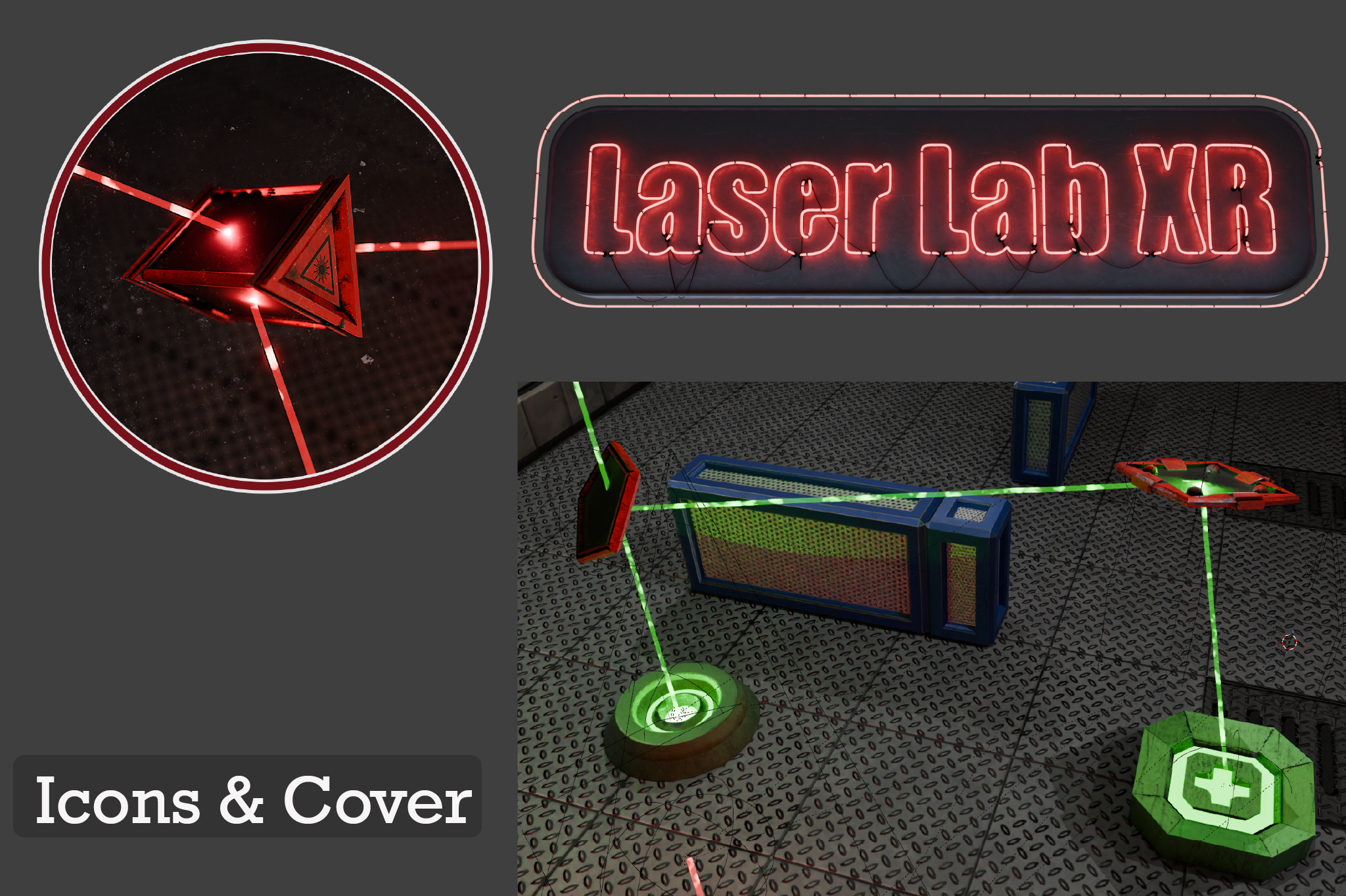
Mixed Reality Integration: Using Passthrough, the game recognises your real walls and places the origin of the level in the centre of your room. You can bounce a laser from a source to a receiver with the help of mirrors, splitters and other objects.
Zero-G Tactility: When you release an object (mirror, prism, splitter), it floats in zero gravity. This "toy-like" interaction makes solving the puzzles fun and rewarding.
Accessible Input: I designed the experience to support both Hand Tracking (for maximum immersion) and Controllers (for precision), ensuring players can "find the fun" regardless of their playstyle preferences.
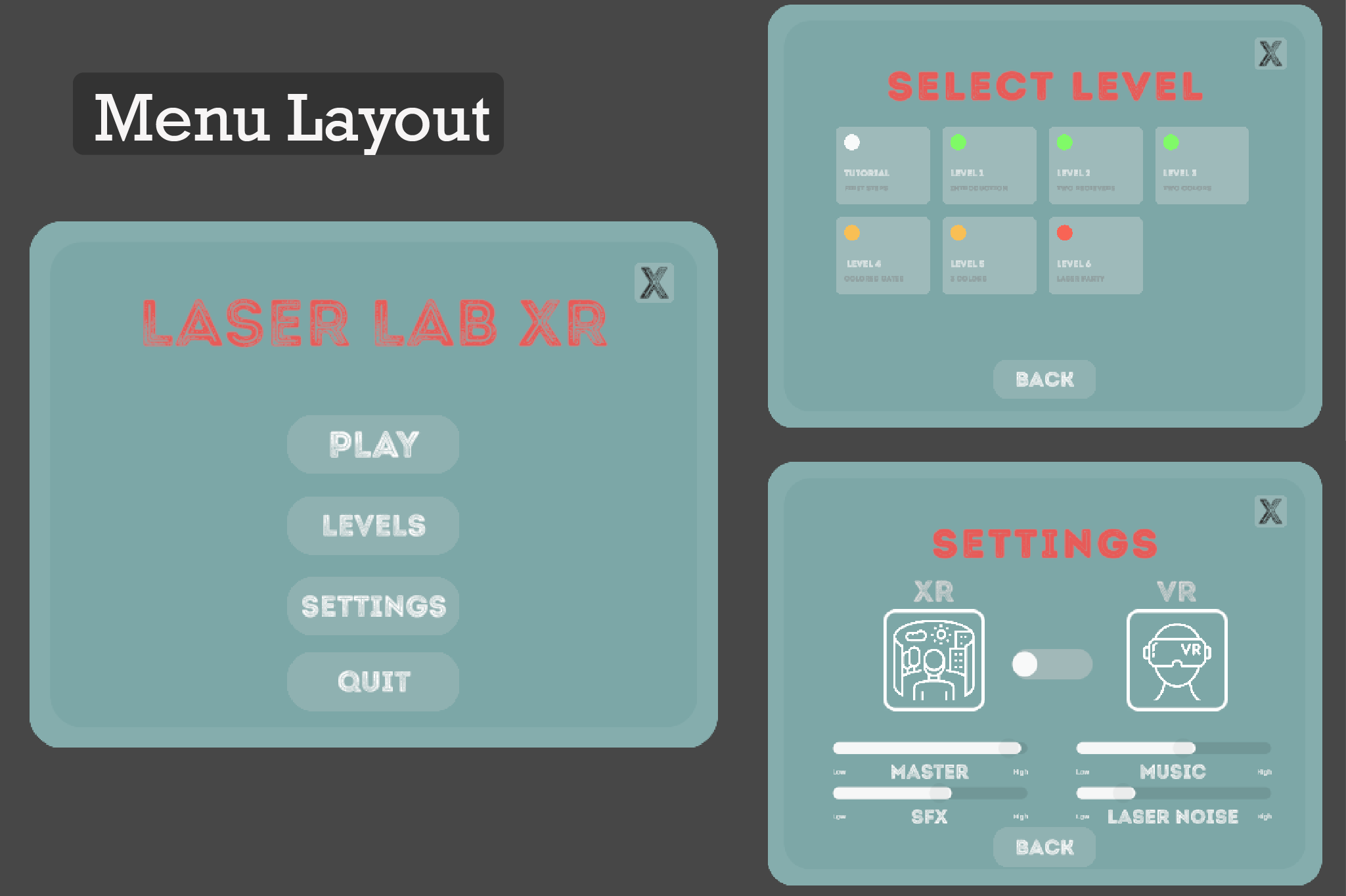
By using his hands, the player can grab and release to interact with the red colored mirrors. The menu is triggered to appear by looking at the palm for two seconds. Navigate the menu to switch between VR and MR.
With the Controllers, the player can use the left and right grip triggers to move objects. The menu opens by pressing Y or B. Use X for a quick swap between VR and MR.
Dual-Mode Immersion: The game is designed to respect player preference. Users can engage in Room-Scale MR— a setting where the puzzle is dynamically centred in their physical space ( at least 4m x 4m recommended ) —or toggle to a fully immersive VR mode that expands the playspace, allowing for free exploration via teleportation locomotion.
How I built it
I built the project in Unity using C#, starting with a focus on rapid prototyping and mechanics validation.
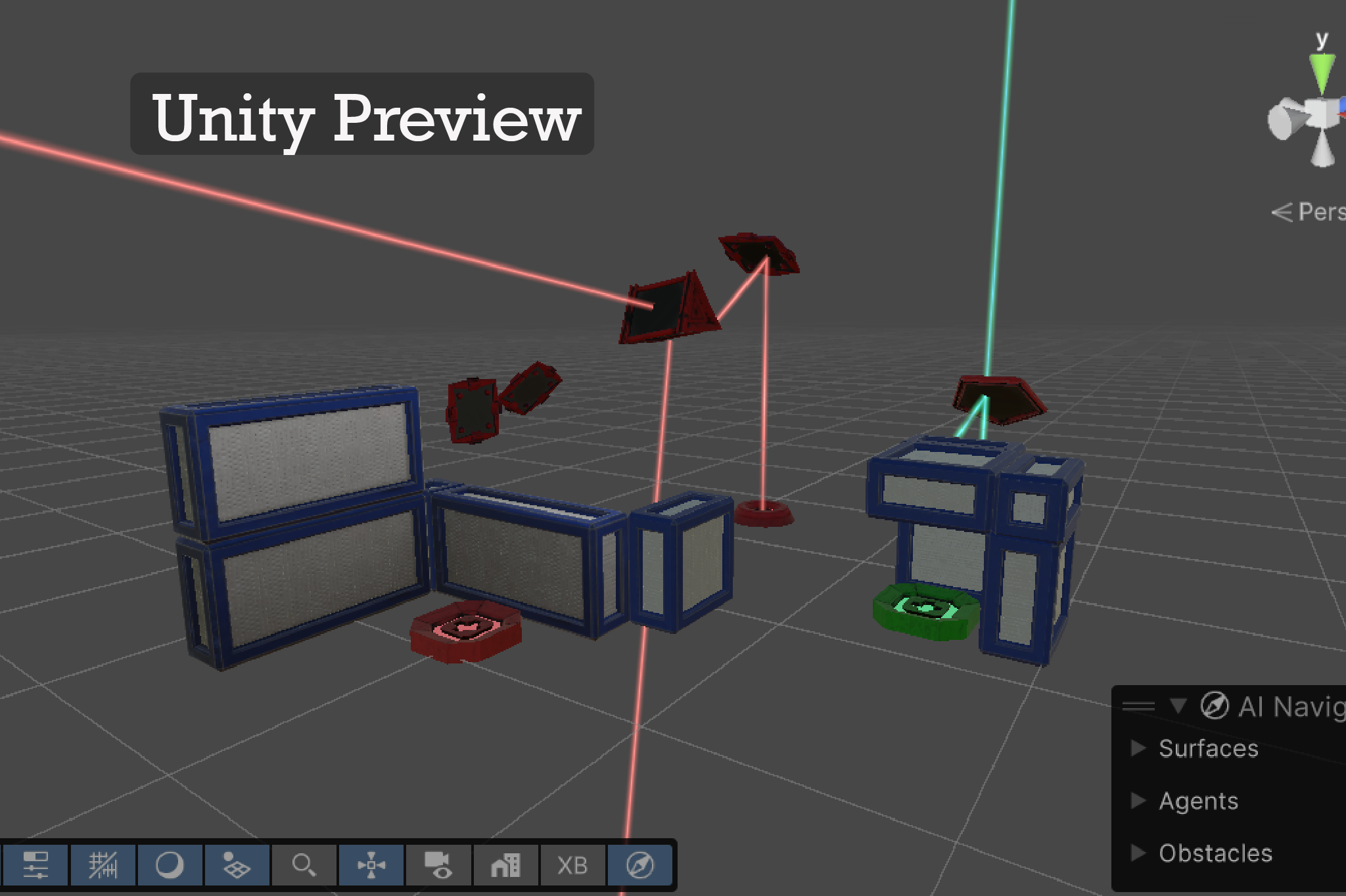
Core Physics Engine: I began by prototyping a custom recursive raycasting system. To prove the design in MR as quickly as possible, I used "greyboxing" techniques—using simple cubes and lines without graphics—to validate that the light-bending logic was fun before committing to art assets.
Interaction Implementation: For the grabbable objects, I leveraged Meta's Building Blocks (Interaction SDK). This allowed me to quickly implement high-quality hand tracking. I created a custom tagging system for these objects, allowing my raycaster to dynamically recognise and react to specific optical properties (reflection, refraction, splitting) based on what the user is holding.
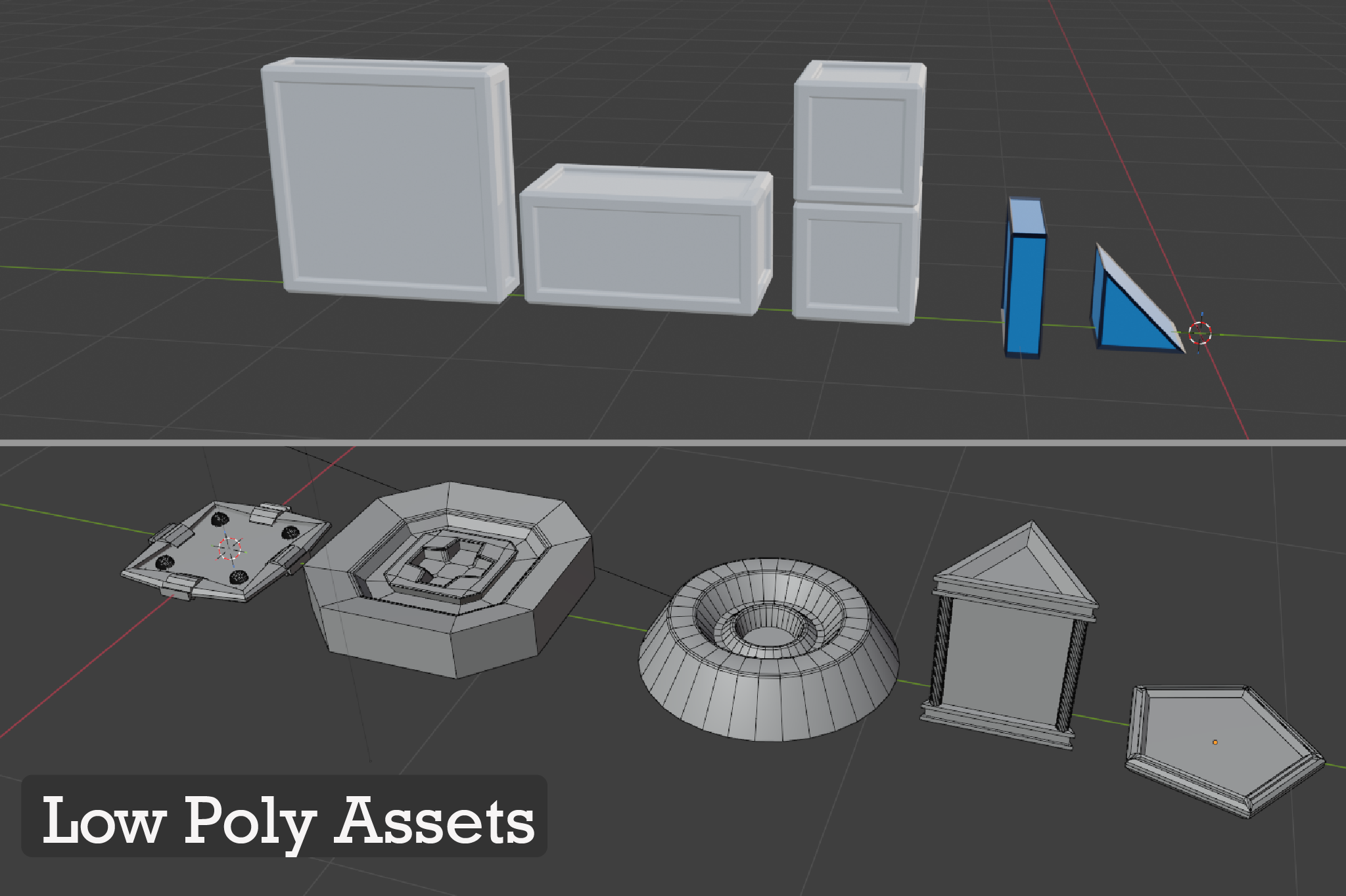
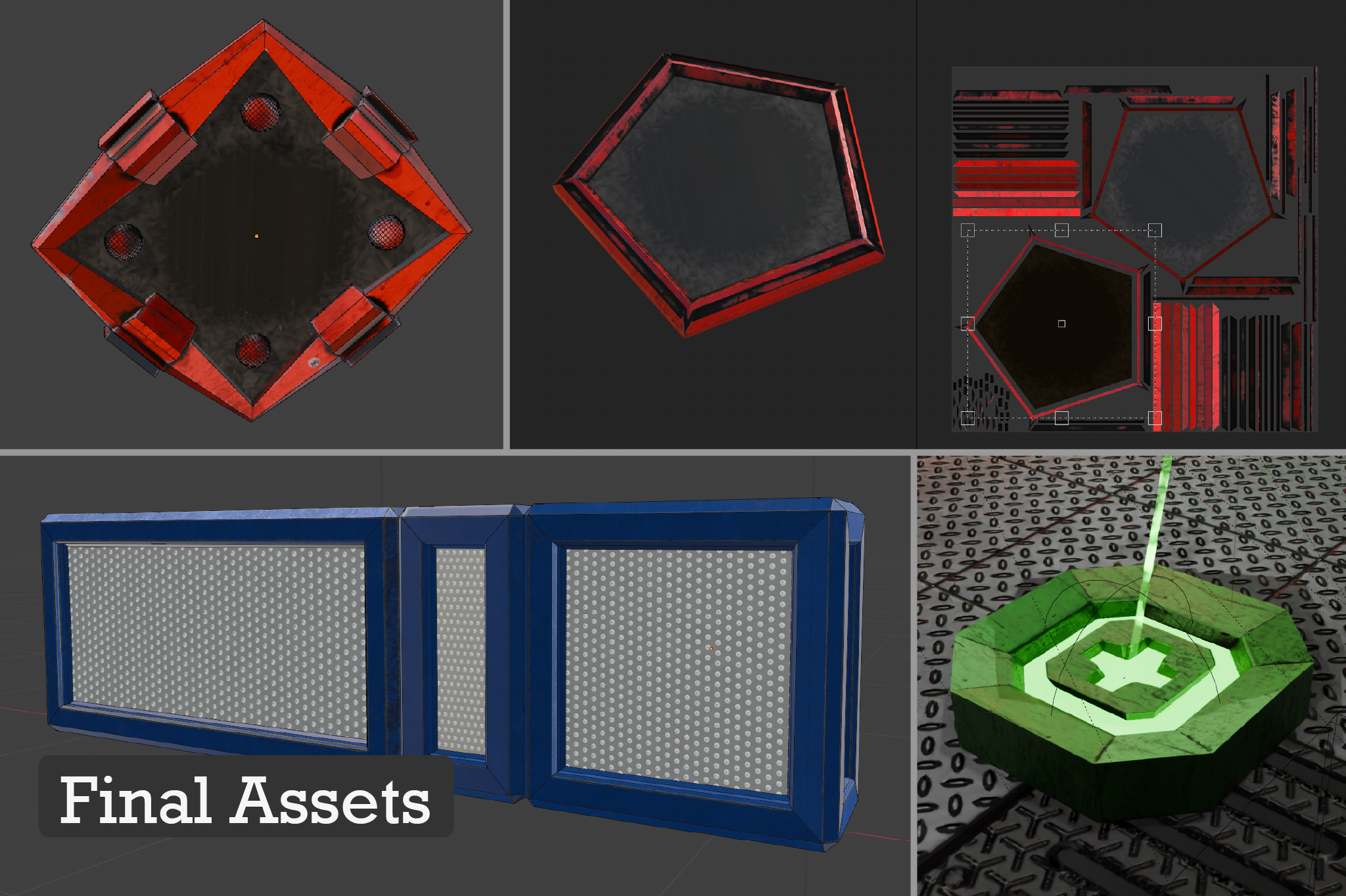
Custom Art Pipeline: I committed to a unique visual identity by creating all 3D assets from scratch. I modelled and UV-wrapped low-poly geometry for the optical tools, walls, and the VR environment in Blender. I then brought these assets into Substance Painter to hand-craft custom textures, giving them a cohesive visual style.
Iterative Design: Once the assets and core loop were ready, I expanded the mechanics. I implemented complex optical tools, including two-way mirrors, beam splitters, prisms, colour-specific laser blockers, and solid walls that completely occlude the beams.
Challenges I ran into
My biggest hurdle was Stereo Rendering. Early custom shaders for the lasers rendered differently in the left and right eyes and sometimes only on one of them, causing visual artefacts. I had to rewrite the shader logic to correctly support Single Pass Instanced rendering. I also faced challenges with Space Drift. Ensuring that virtual mirrors stayed "locked" to the real-world floor, I devised a custom script that places it in the centre of the room after you scan your environment. Another hurdle was handling collisions while the physics system needs the object colliders to work properly, the player would remain stuck in them, moving everything to a different layer solved the problem.
Accomplishments that I am proud of
I have delivered a highly polished Vertical Slice rather than just a prototype.
Visual Polish: I used Substance Painter to give the lab equipment a grounded, realistic aesthetic that contrasts beautifully with the glowing lasers.
Complete Loop: The build features a Main Menu, Tutorial and Six Career Levels that progressively get harder and implement new mechanics along the way.
User Validation: Early testers praised the intuitive nature of the controls and the "magic" feel of the MR features, confirming that my Experience Design goals were met.
What I learned
Throughout this competition, I learned that every outstanding experience must start with a simple, solid foundation. By beginning with basic concepts to validate the core mechanics and iterating constantly before applying the final layer of visual polish, I discovered that the key to a great XR app is patience in the process—proving the fun first, then making it beautiful.
What's next for Laser Lab XR
My immediate focus is on transforming this vertical slice into a content-rich commercial release for the Meta Store:
Content Expansion: I plan to design and build 30+ handcrafted levels in the coming months, introducing progressively complex optical challenges and logic-based puzzles.
Sandbox Mode: I am developing a dedicated Sandbox Mode that allows players to save and reload their custom puzzle configurations. This will turn the game into a creative tool, allowing users to design elaborate "Rube Goldberg" laser setups in their own homes.
Timed Levels and Leaderboards: In order to give the player something more challenging, I want to create variations of the levels with time constraints and leaderboards for the fastest completed level.
Meta Store Submission: My final goal is a full store release, ensuring that the UI/UX is fully polished and the performance is rock-solid for the broader Quest devices.


Log in or sign up for Devpost to join the conversation.