-
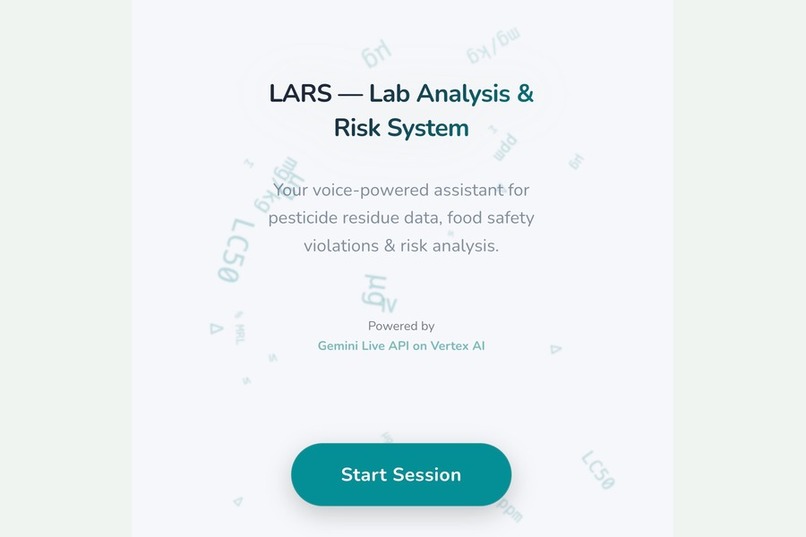
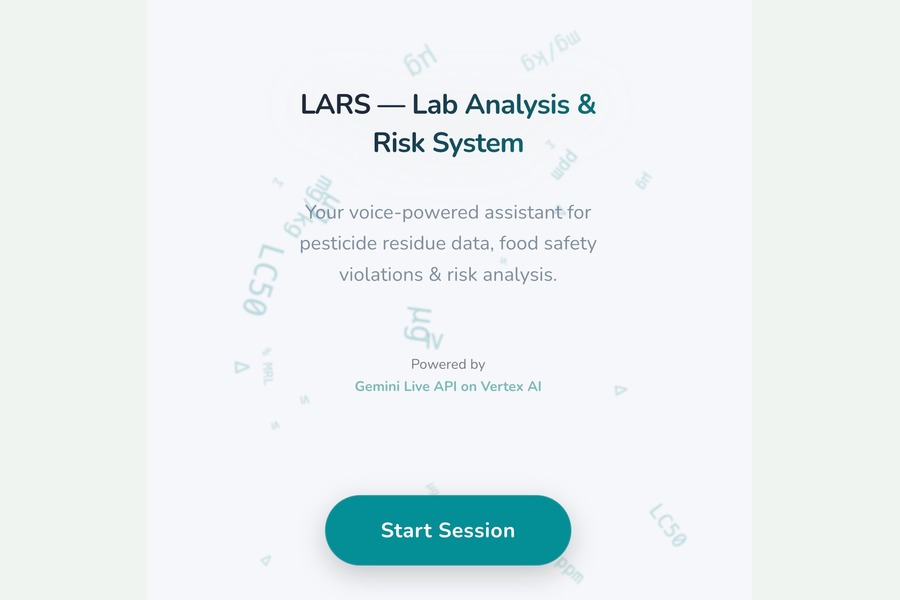
LARS splash screen — speak your question, get instant lab data insights
-
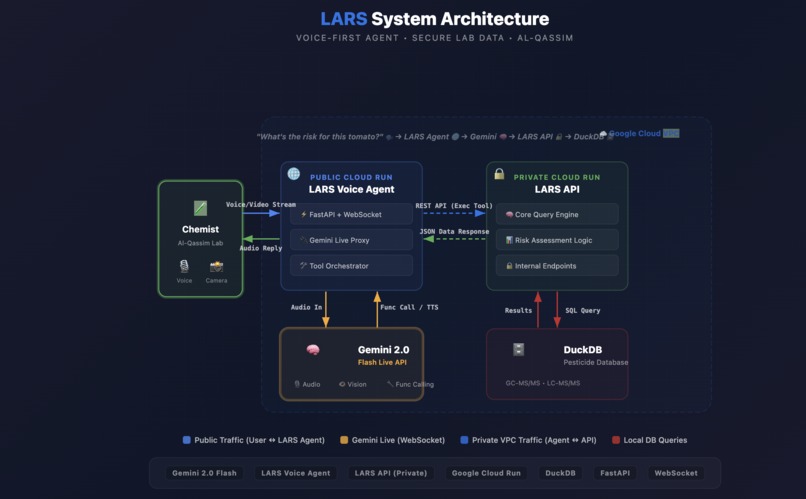
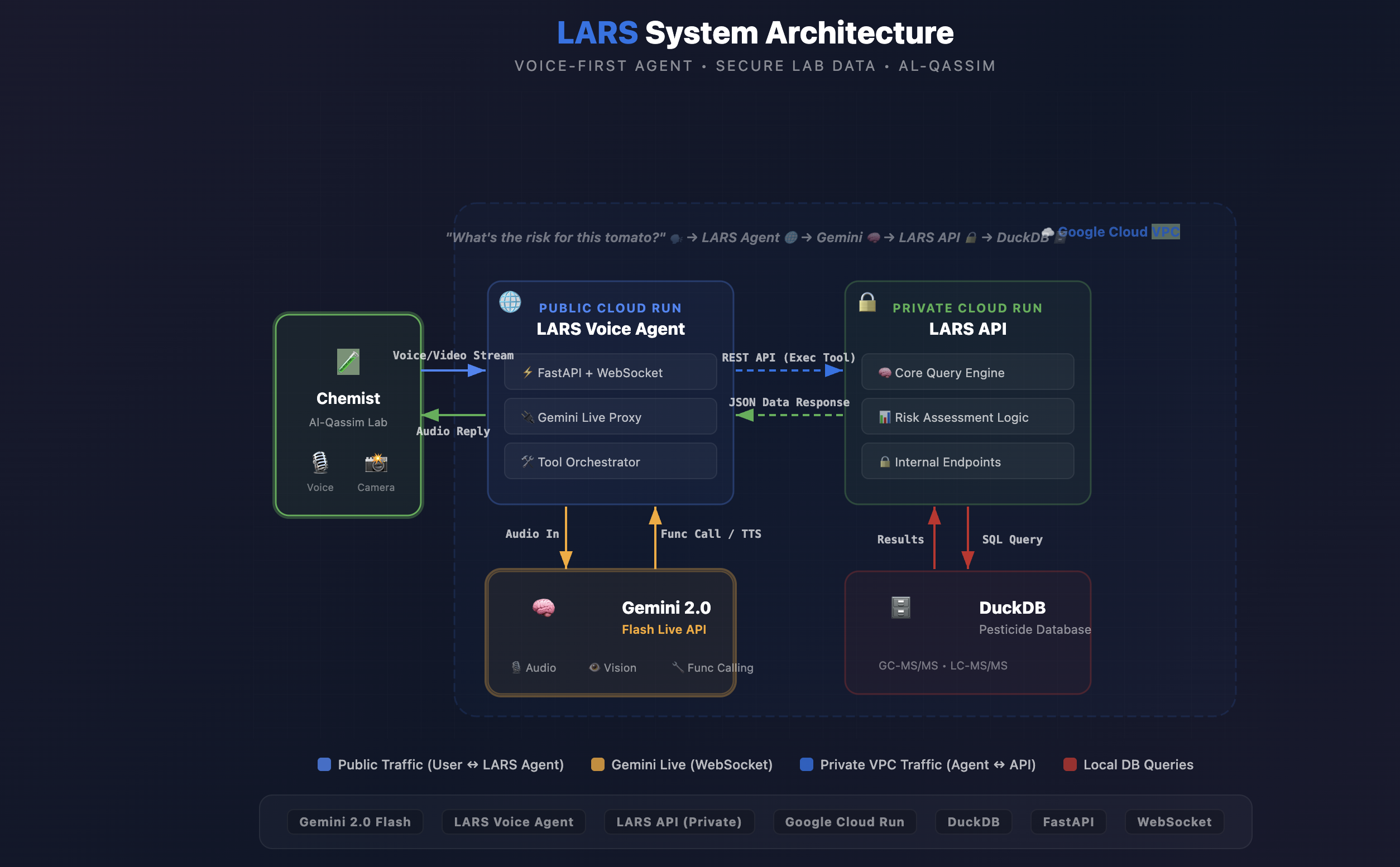
Architecture diagram
-
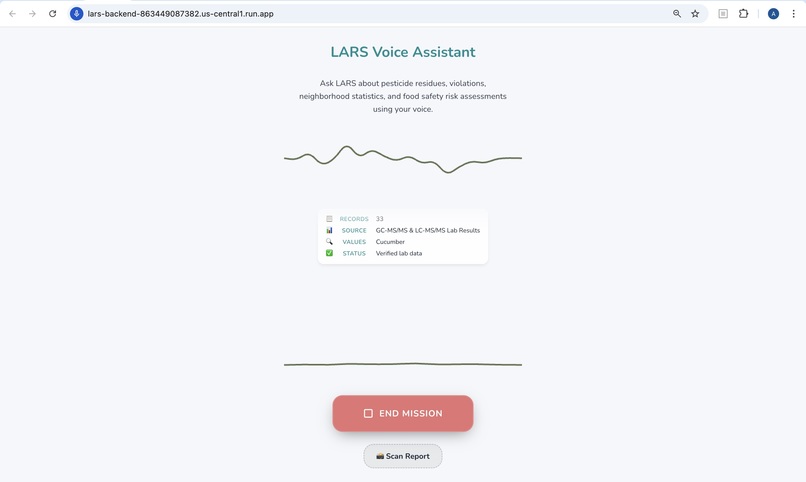
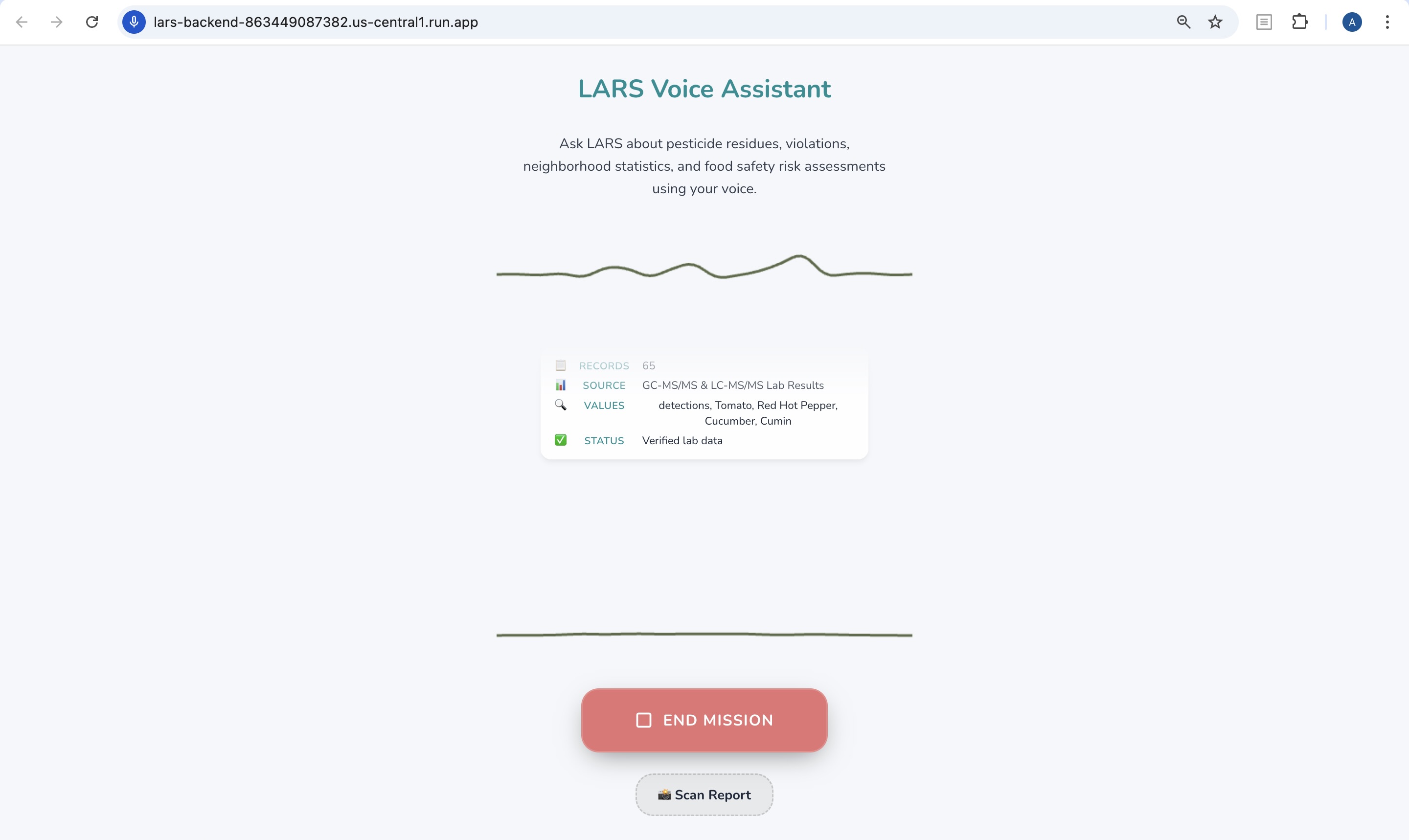
Provenance card 2
-
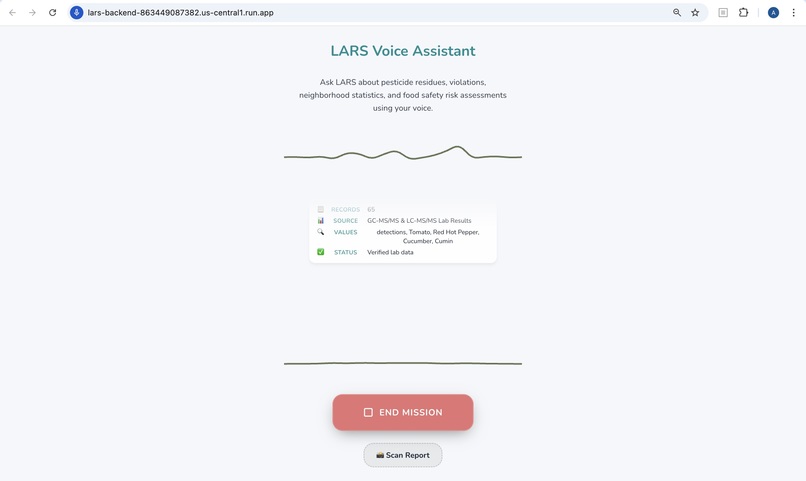
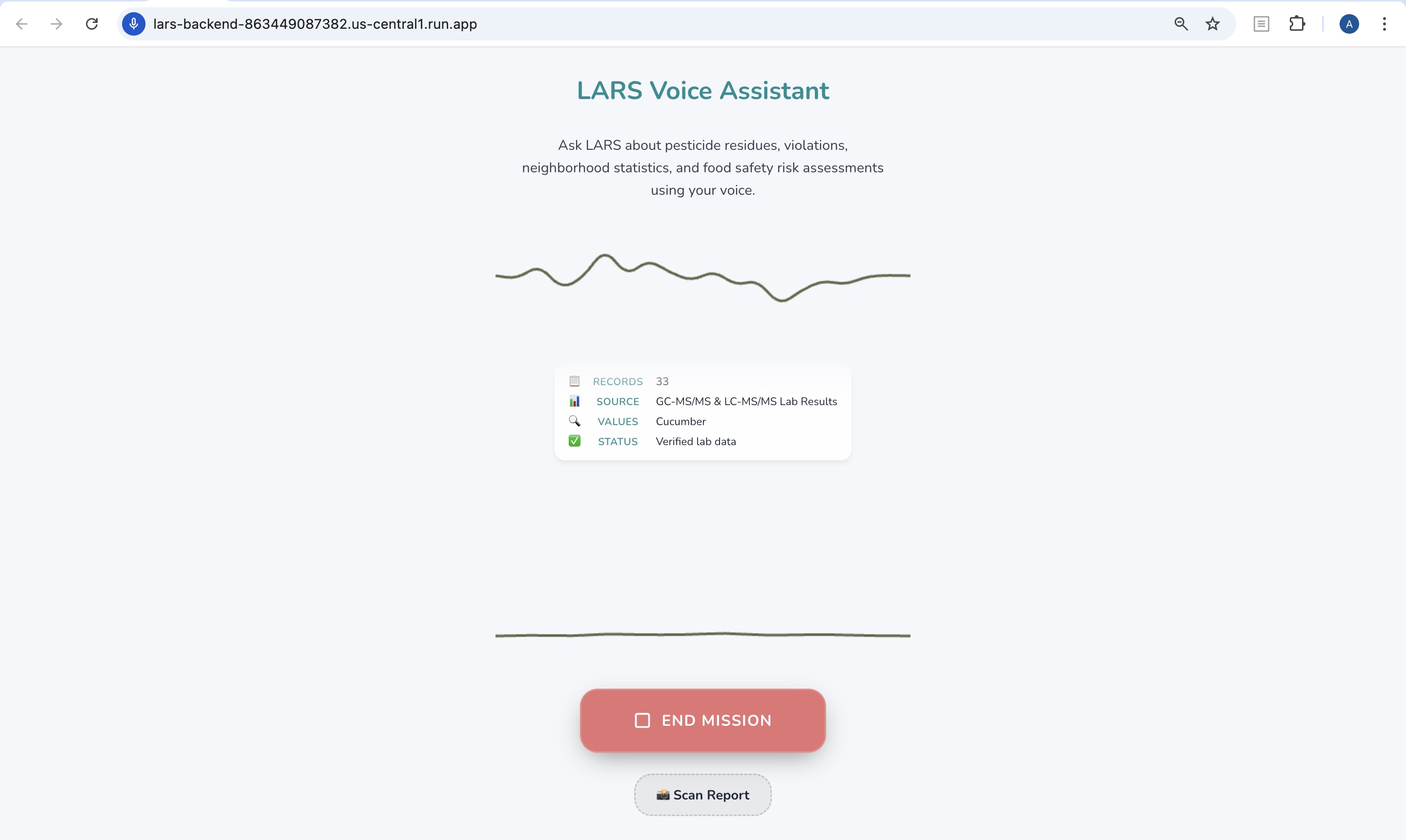
Provenance card 1
Inspiration It started with a very annoying task. Our quality manager asked me to go through all the Excel result files from the entire year and collect sample codes manually. As someone who studied data science and programming, I refused to do it by hand — so I wrote a quick script to loop through all the files and extract what we needed. But while the script was running, I stopped and thought: what if anyone in the lab could do this just by typing a question? No code, no Excel, no IT request. That thought became LARS — a voice-enabled analytics platform that lets lab staff query pesticide residue data in plain language. I built it for our lab, and it worked well. Seeing its potential, we developed it further: from a text chatbot to a real-time voice agent that lets a lab manager or chemist just speak their question and get an instant answer.
What it does LARS is a bilingual voice-enabled analytics platform for food safety laboratories. You speak naturally — in Arabic or English — and the system interprets your question, analyzes the underlying laboratory dataset, and returns a clear, data-driven answer. The system is designed for regulatory environments where trust and traceability matter: every answer includes a provenance card showing how the result was derived.
How we built it The system consists of two layers. The frontend leverages Google Gemini Live API for real-time bidirectional audio. The backend is a FastAPI server that bridges the voice interface to LARS Engine, a specialized query system that understands natural language questions about pesticide data and translates them into precise database queries against a DuckDB instance containing real laboratory results. The entire system runs on Google Cloud Run with Vertex AI handling the Gemini connection. The architecture is designed to maximize accuracy and minimize hallucinations, making it suitable for regulatory use.
Challenges we ran into Real-time voice AI is significantly more complex than text-based chatbots. Integrating Gemini Live's tool calling over WebSocket presented unique challenges around session management and response handling. Each issue required careful debugging. The other challenge was maintaining consistent bilingual performance — ensuring the system responds in the same language the user speaks (Arabic or English) required extensive prompt engineering and testing.
Accomplishments that we're proud of
- A real lab problem solved with real lab data, not a demo dataset
- A production-ready system deployed and live on Google Cloud Run
- Full bilingual support — Arabic and English in the same session
- Designed for trust with built-in provenance and traceability features
What we learned Real-time voice AI is much harder than it looks. Latency, interruption handling, tool call timing — every small detail affects the experience. I also learned that prompt engineering for a voice agent is completely different from a text chatbot. The responses need to be concise, natural to hear, and work in two languages at the same time. Most importantly, I learned that the best ideas come from real problems. I didn't start with a commercial product in mind — I started with an annoying Excel task.
What's next for LARS — Laboratory Analysis and Risk System
- Connecting LARS to more food safety datasets across the region
- Adding proactive alerts — LARS notifies managers when new violations are detected without being asked
- Making it available to other food safety labs in Saudi Arabia as an enterprise service
Built With duckdb fastapi google-cloud-run google-gemini-live-api javascript python vertex-ai vite web-audio-api
Built With
- duckdb
- fastapi
- google-cloud-run
- google-gemini-live-api
- javascript
- python
- vertex-ai
- vite
- web-audio-api


Log in or sign up for Devpost to join the conversation.