-
-
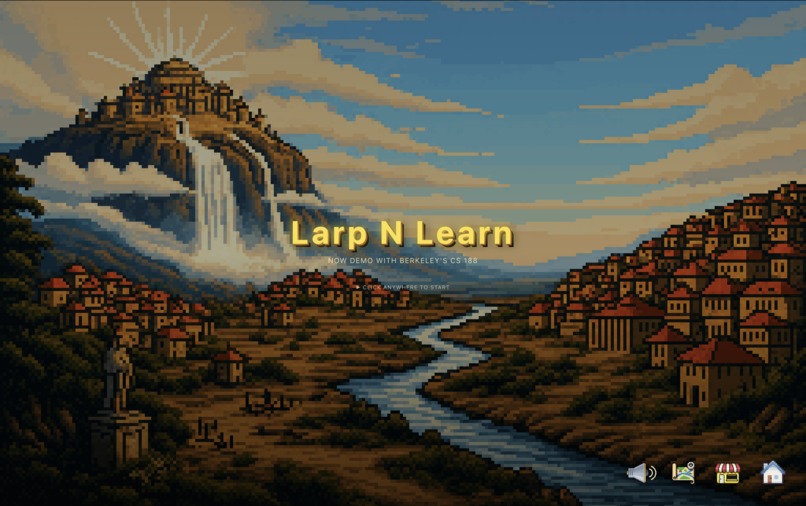
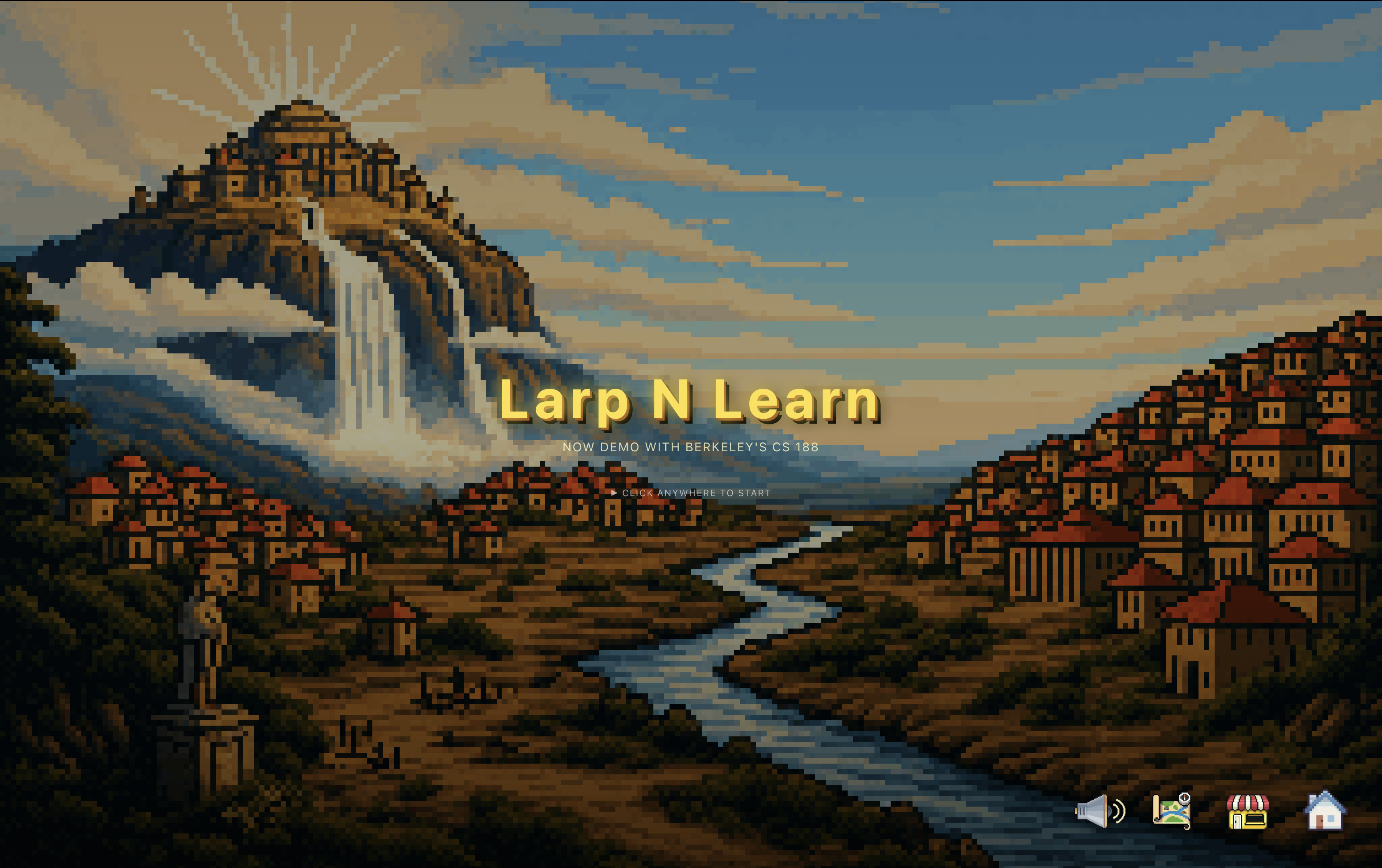
Landing Page
-
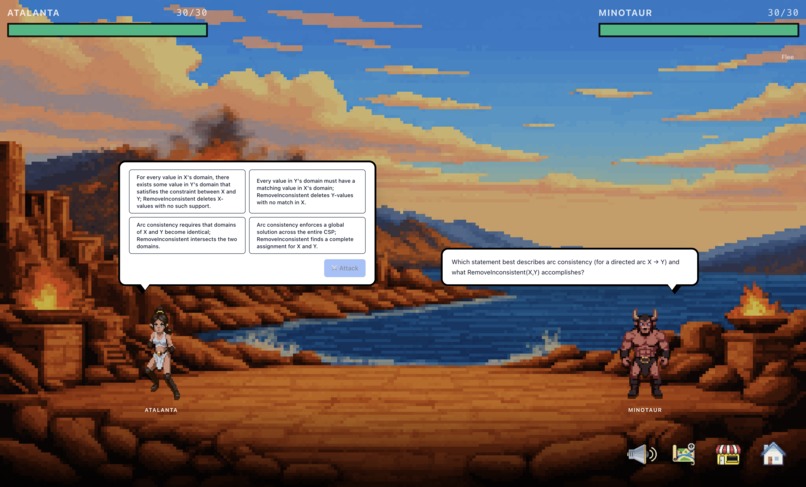
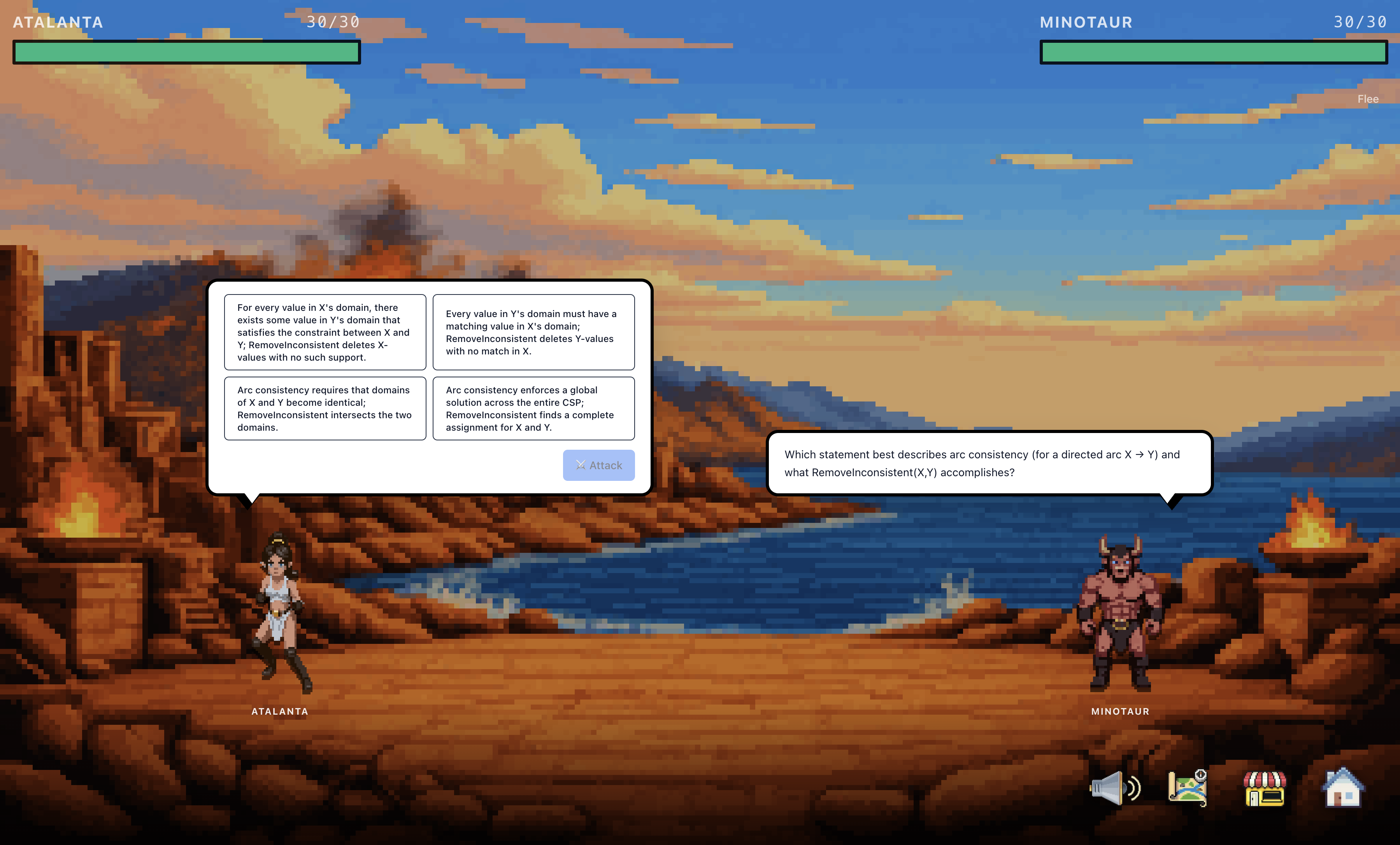
Battle where the monster asks the user a mcq question
-
Loading screen for going into battle
-
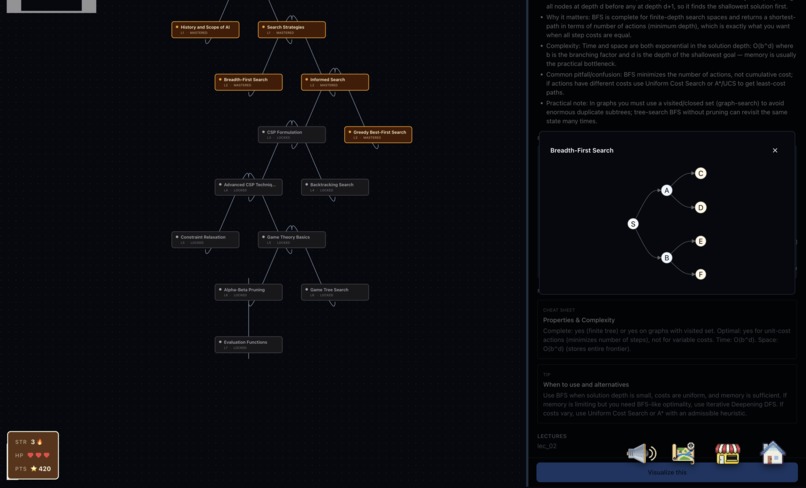
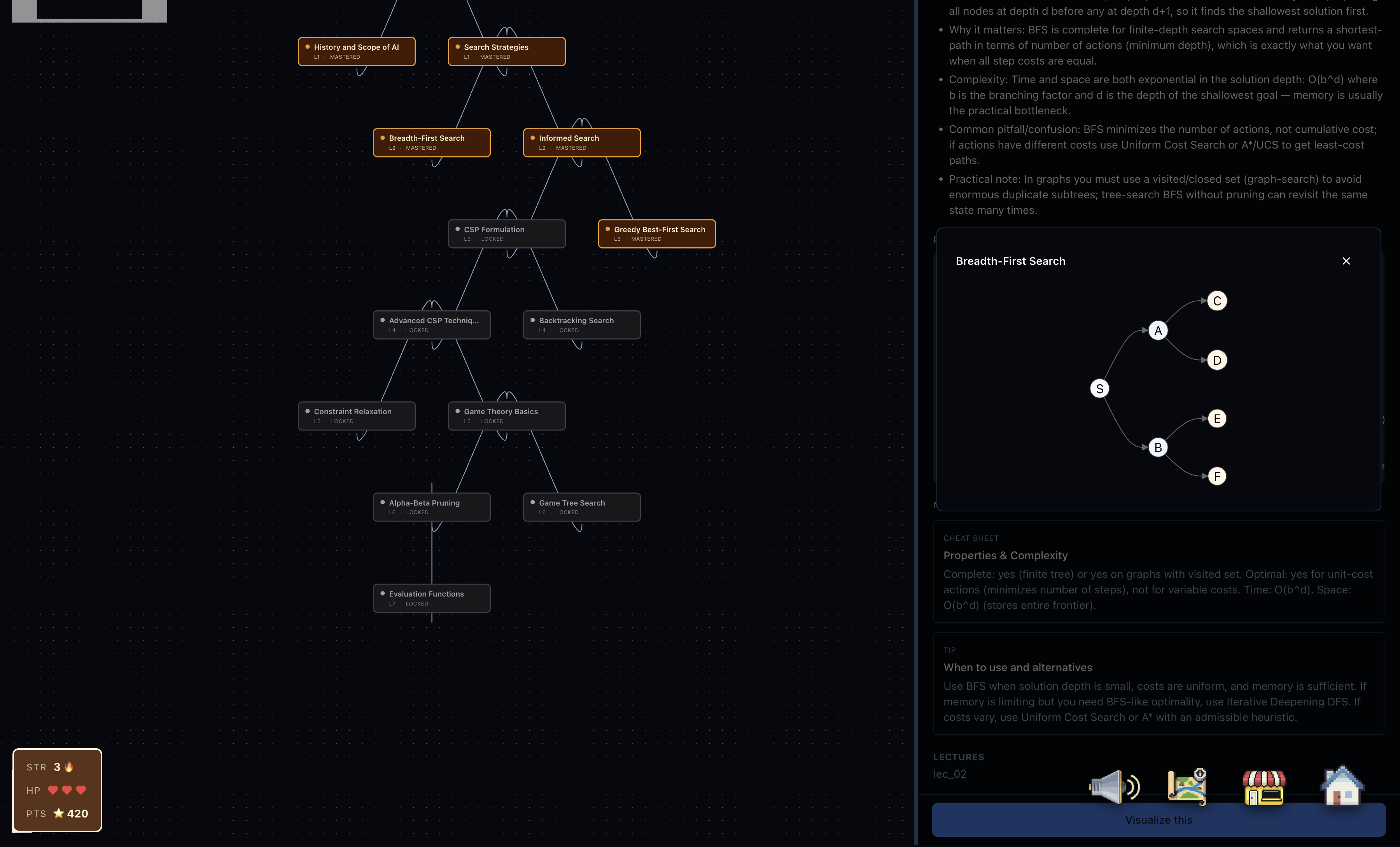
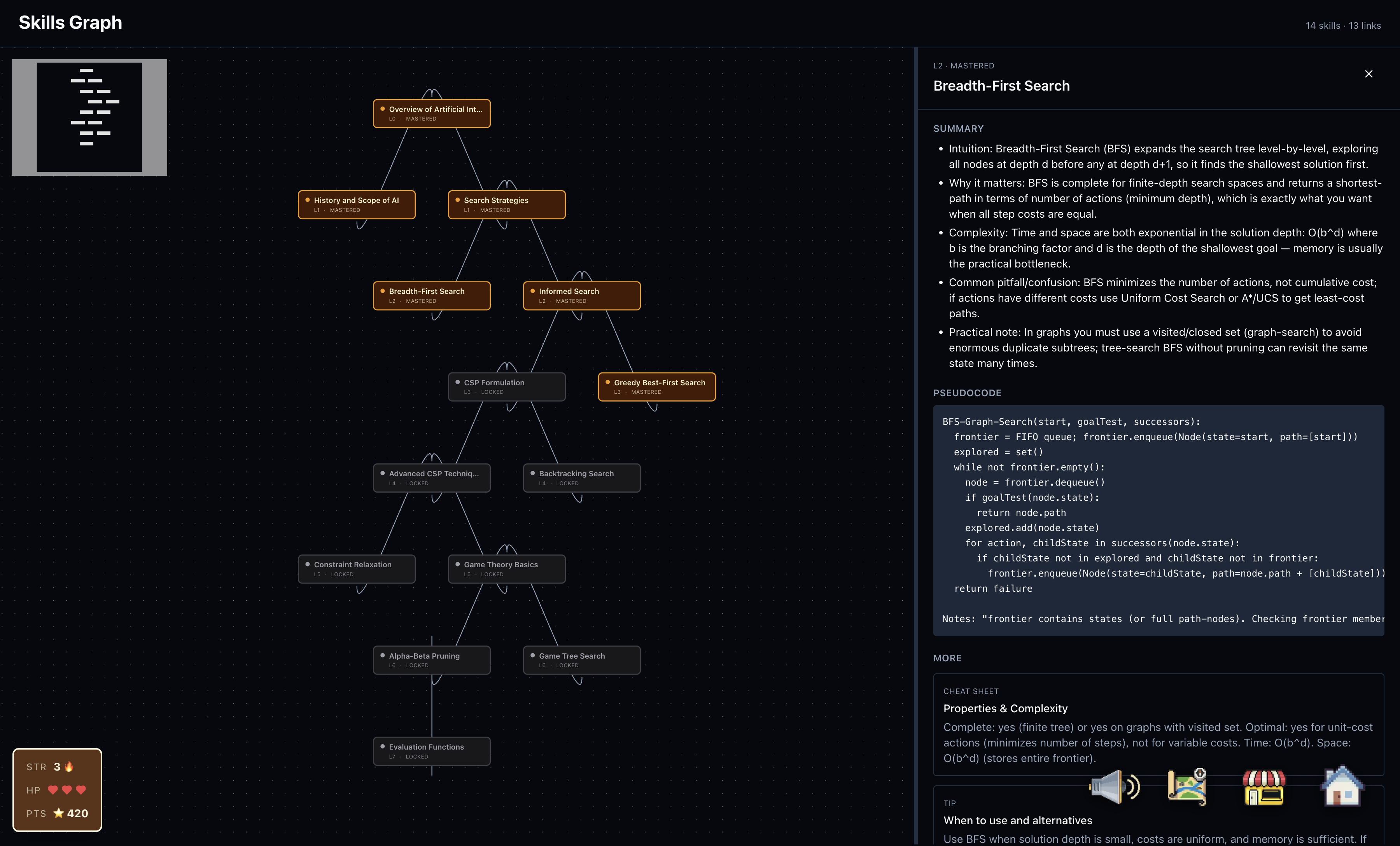
Skill graph + insights on specific concept with helping visualizations
-
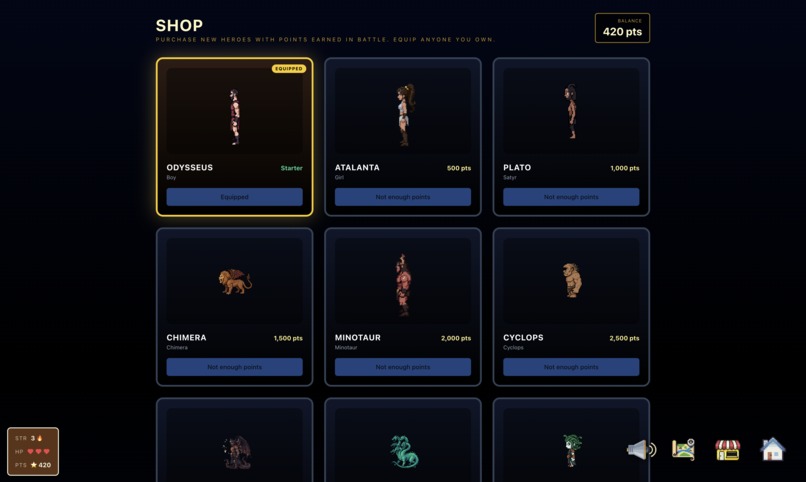
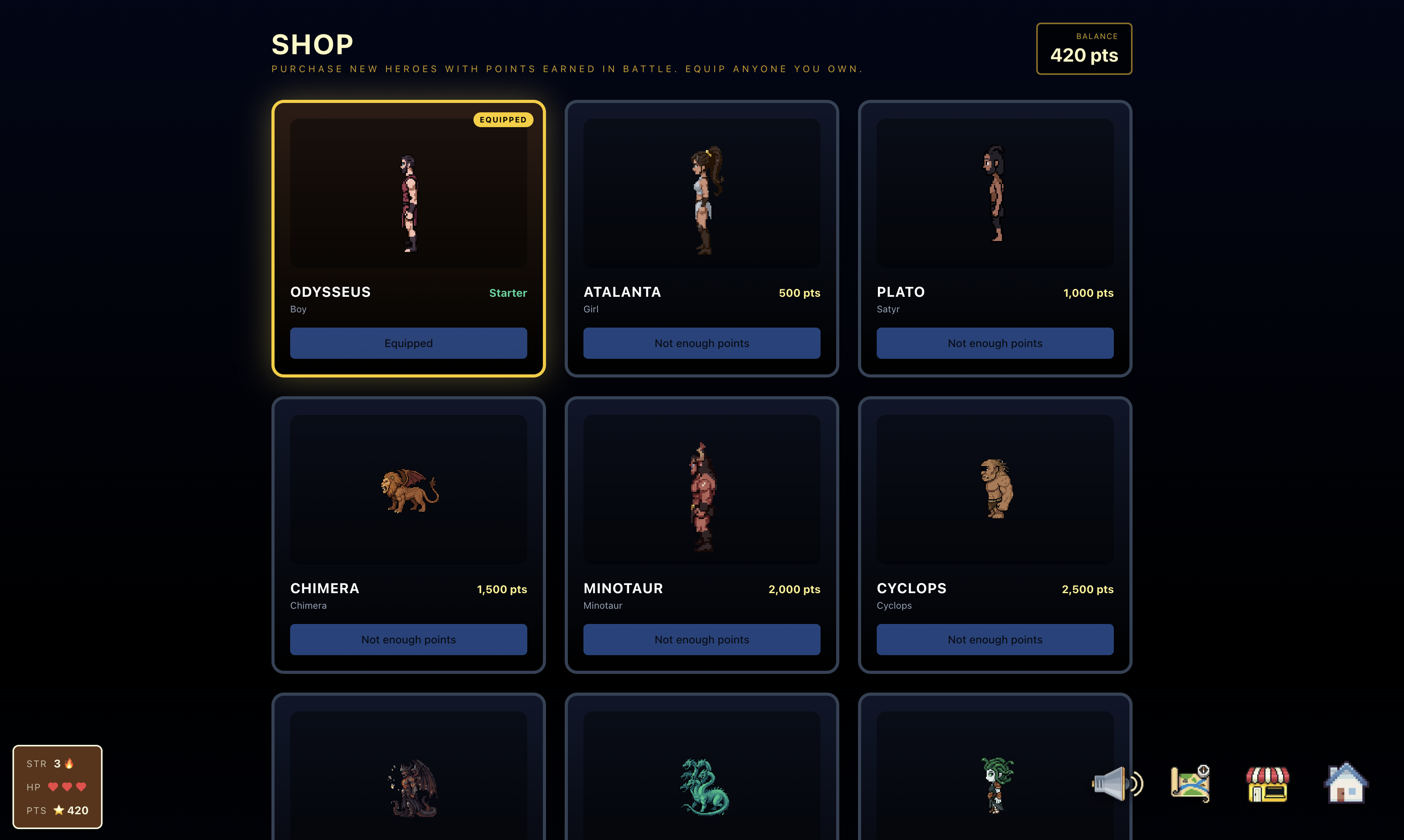
Shop where users can use game currency to buy new sprites
-
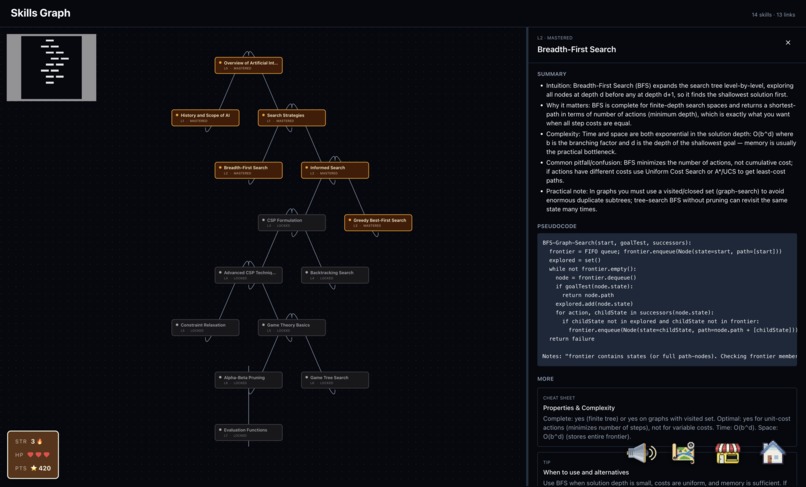
Skill graph + insights on specific concept with pseudocode
-
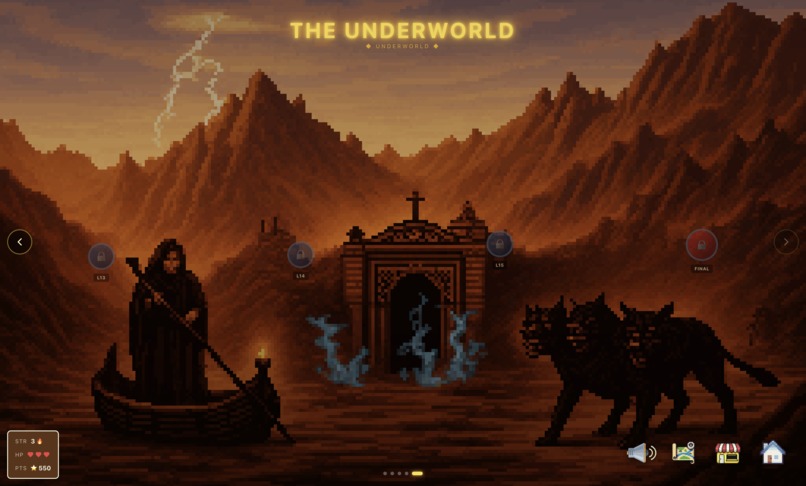
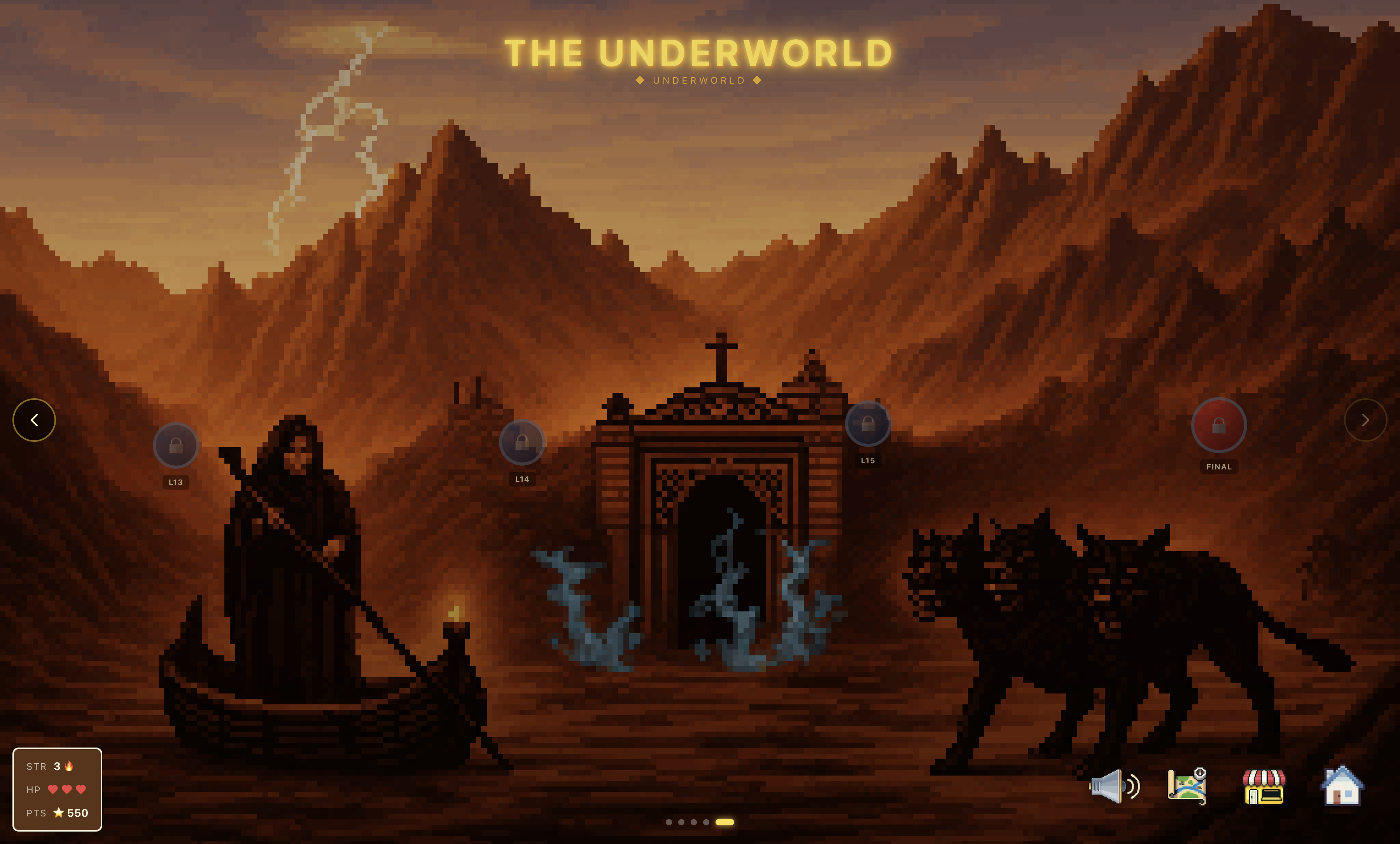
the underworld region of the map
-
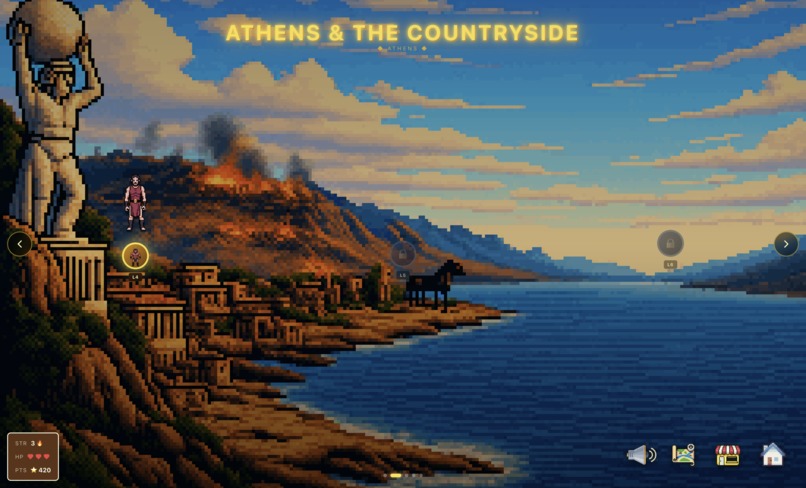
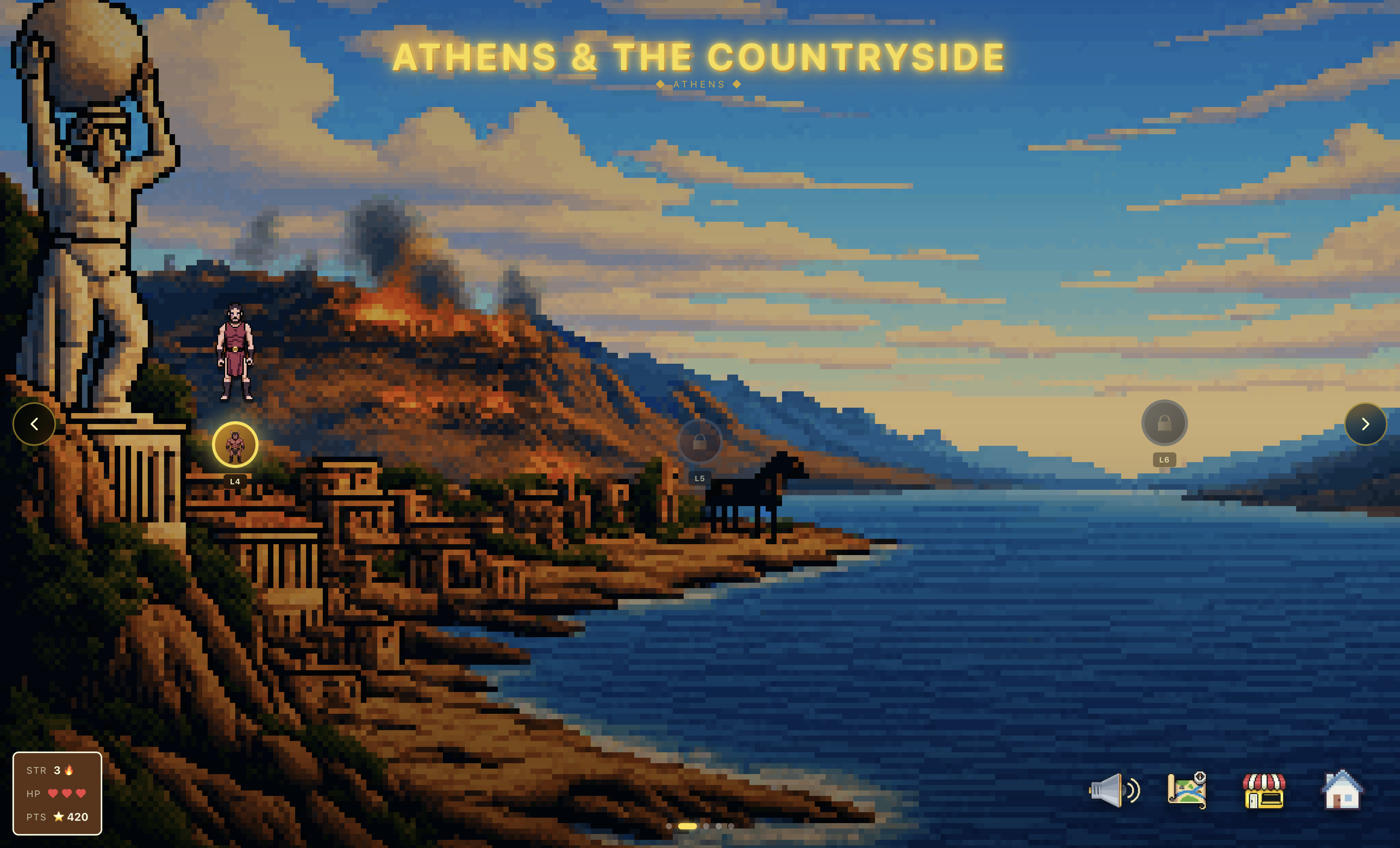
The athens region of the map
Inspiration
Every one of us has lived the exact same snowball. You miss one lecture, tell yourself you'll catch up over the weekend, blink, and suddenly it's week 10 and you're three lectures behind in two classes and pretending the midterm isn't next Tuesday. College takes away every structural guardrail high school gave you and hopes for the best — and the apps on our phones are engineered to pull our attention away from the thing we're actually paying $80,000 a year to do. That contradiction is what inspired Larp N Learn.
What it does
Larp N Learn turns your actual college courses into a video game. You connect your Canvas, pick a course, and our AI reads your syllabus, your slides, and your whole schedule to build you a personalized world themed around Greek Mythology. Every lecture becomes a level. Every level has a boss battle — a quiz generated from that specific lecture, where you attack monsters with right answers and take damage from wrong ones. Regular lectures are standard encounters, midterms are mini-boss fights, and the final exam is Hades himself in the Underworld. As you win battles, a live skills graph lights up showing every concept you've actually mastered, and streaks keep you coming back the way every app on your phone already does — except this time it's your GPA leveling up instead of a Snapchat score.
How we built it
We started by writing a detailed SRS before touching code, treating ourselves as product managers for our AI coding agents. From there we split the build into three parallel tracks: a Next.js frontend for the world map, battle view, and skills graph; a FastAPI backend with a LangGraph-orchestrated RAG pipeline powered by ChromaDB and Claude; and a content track for sourcing sprites, backgrounds, and audio. The RAG pipeline was the most interesting design problem — we engineered it so every piece of course knowledge (syllabus sections, lecture overviews, slide chunks, image captions, concept definitions, prereq relationships) gets embedded as self-contained natural-language documents rather than siloed by structured type, which is what lets tiered retrieval stay inside a bounded context budget even when a lecture is 60 pages of dense slides.
Challenges we ran into
The hardest part honestly wasn't the code. It was holding the line on finding an idea all four of us genuinely believed in — one that addressed a problem we'd each lived through as students, not just a problem that was technically interesting. We went through several completely different ideas before landing on this one, and resisting the urge to just "start building something" was harder than it sounds. A close second was the art pipeline: creating and stitching together the pixelated sprites and Greek Mythology backgrounds — Olympus, the Aegean, the Underworld — without the whole thing looking slapped together was a surprising time sink, and gave us a real appreciation for the game studios that do this for a living.
Accomplishments that we're proud of
We shipped a working end-to-end experience where a student can go from uploading a real course to fighting a boss generated from a real lecture, and it actually feels like a game rather than a quiz wrapper. We're especially proud of the live skills graph — watching a concept light up the moment you master it in battle is the exact moment we'd been chasing from the start. And we're proud that the four of us made every engineering decision together, disagreed productively, and came out of the weekend as a stronger team than we went in.
What we learned
Upfront clarity is worth an enormous amount. Writing the SRS before coding felt slow on day one and paid for itself ten times over by day two. We also learned how to argue against the spec rather than against each other whenever two of us disagreed on an engineering decision — it turned potential conflict into something productive. And on the technical side, we learned a lot about how to design a RAG system where retrieval quality holds up across wildly different query types: a battle generator asking about one lecture, a midterm generator spanning seven, and a "visualize this" request targeting a single concept.
What's next for Larp N Learn
The most exciting next step is expanding beyond Greek Mythology into the full theme system we originally designed — Mario and Pokémon worlds, each with their own monster rosters, soundtracks, and regional arcs. Beyond that: a leaderboard and avatar economy to push the social layer, and multiplayer raid-style boss fights for midterms where a whole study group can take down Hades together. Longer term, we want to open the platform to any LMS — Blackboard, Moodle, Brightspace — so any student at any school can turn any course into the best twenty minutes of their day.
Built With
- chromadb
- fastapi
- langgraph
- next.js
- react
- react-flow
- wispr


Log in or sign up for Devpost to join the conversation.