Inspiration
Africa is experiencing a growing demand for AI-driven education and automation, yet cloud-hosted Large Language Models remain heavily restricted by unstable fiber internet, high electricity costs, and expensive API fees. For university students, educators, and professionals relying on mid- and low-end commodity laptops—specifically 8GB RAM machines with integrated graphics—cloud dependence is a major bottleneck. We were inspired to build Local LLM Studio to bridge this gap, delivering a high-performance, completely offline AI workspace designed to run locally on the hardware Africans already own.
What it does
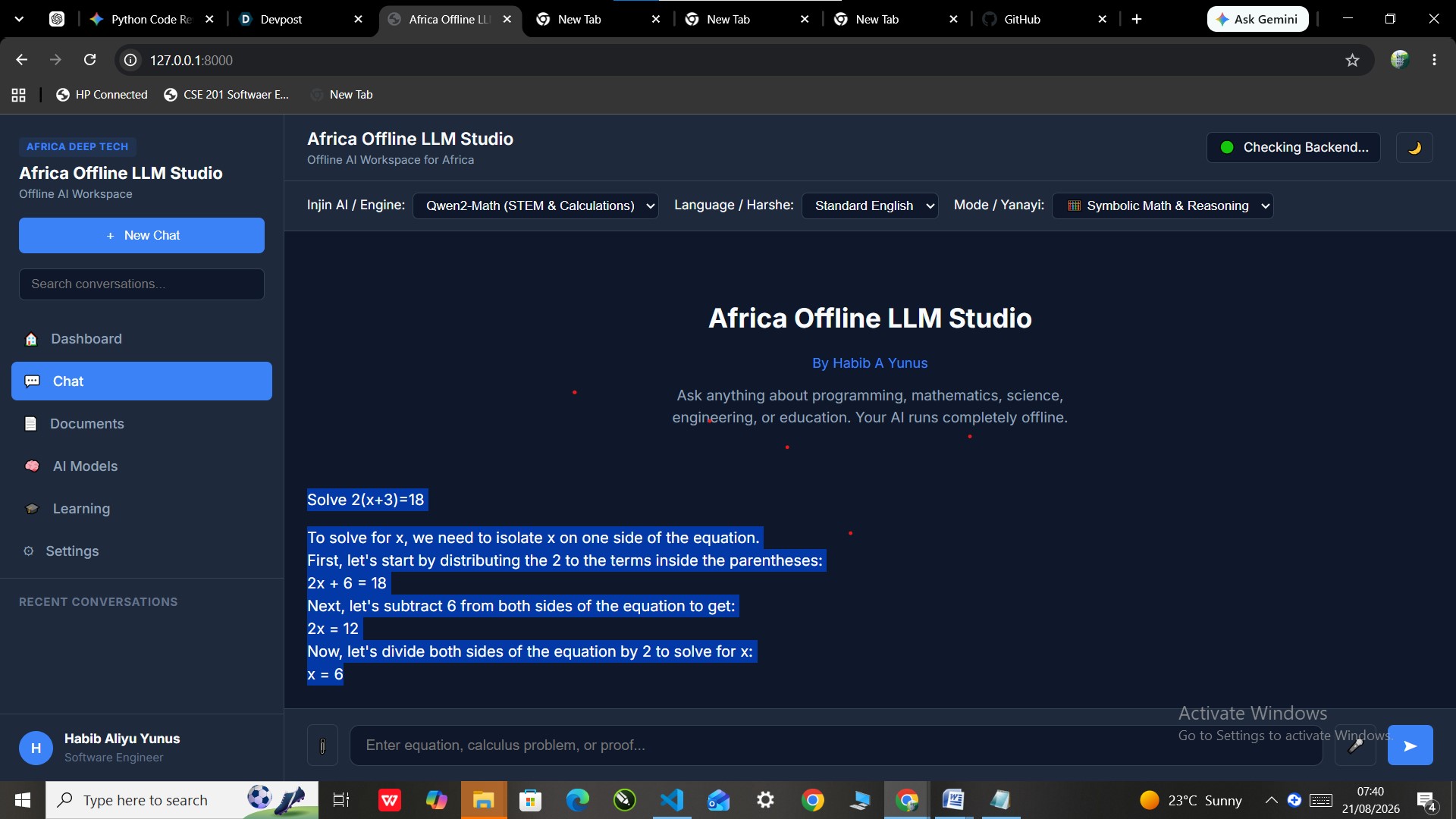
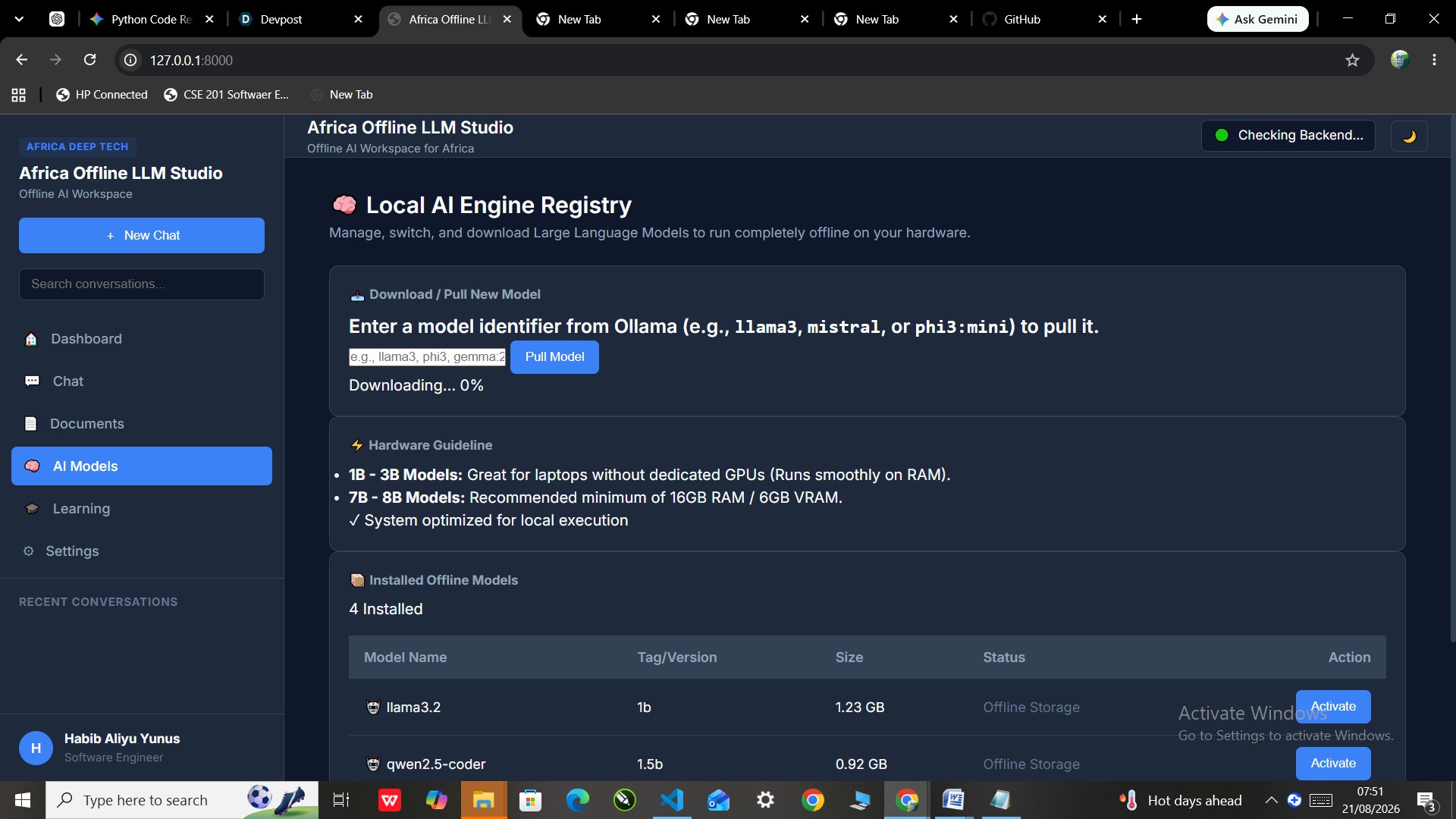
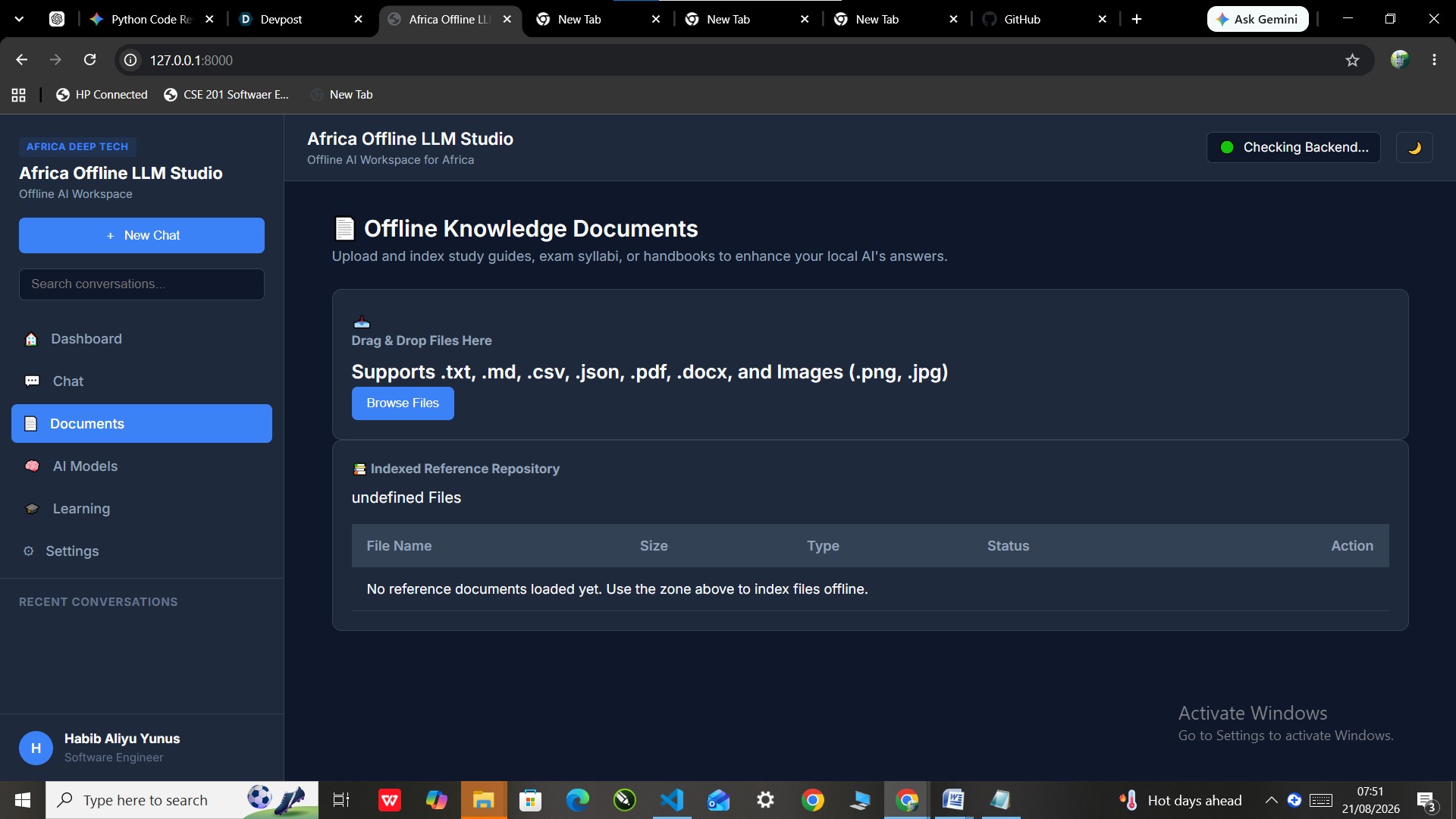
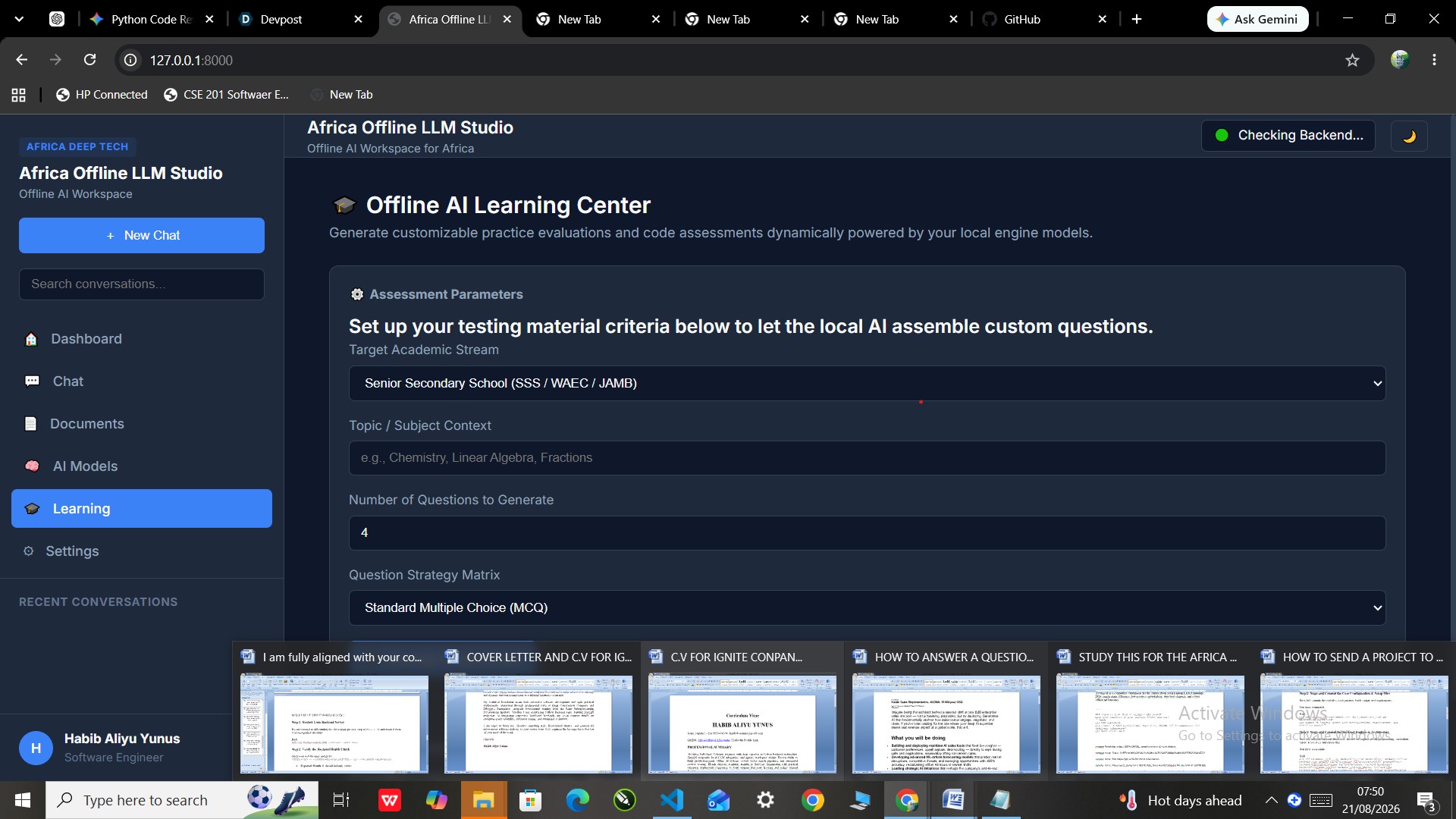
Local LLM Studio is an offline-first AI application optimized for mathematical reasoning and local data processing without cloud dependencies. Its core capabilities include:
How we built it
Backend Architecture: Built using Python and FastAPI, managed via Uvicorn servers to handle custom payload structures, document chunking algorithms, and embedding workflows.
Mathematical Processing & Routing: Integrated SymPy for symbolic computation to guarantee mathematical accuracy and structured output generation.
Frontend Integration: Crafted a responsive user interface connecting seamlessly with backend endpoints using clean JavaScript logic.
Developer Tooling & Version Control: Developed within Visual Studio Code and tracked via Git version control.
Challenges we ran into
Optimizing performance to run smoothly within tight memory and resource budgets on standard commodity laptops was our primary hurdle. Ensuring that local inference remained responsive while managing local memory footprints required careful tuning of payload sizes, efficient vector indexing with FAISS, and precise symbolic math routing to offload rigorous computations from the LLM onto a deterministic symbolic solver (SymPy).
Accomplishments that we're proud of
Successfully building and integrating a deterministic SymPy math reasoning engine that pairs with local LLMs to eliminate calculation errors.
What we learned
We gained deep expertise in full-stack offline AI engineering, mastering the intricacies of local model integration, memory-efficient RAG deployment, and precise symbolic routing to guarantee dependable reasoning on low-end hardware.
Implementing a fully functional offline RAG pipeline that operates seamlessly without internet access or API fees.
Packaging an end-to-end
What's next for Laptop-LLM-Project
Expanding the problem domain templates to fully support specialized offline workflows for Healthcare and Agriculture.
Further optimizing quantization and caching layers to achieve higher tokens-per-second performance on 8GB RAM laptops.
Deploying pilot testing among local students and professionals across Nigeria to gather real-world feedback on offline usability.
Built With
- faiss
- fastapi
- git
- javascript
- ollama
- python
- react
- studio
- sympy
- uvicorn
- visual

Log in or sign up for Devpost to join the conversation.