-
-
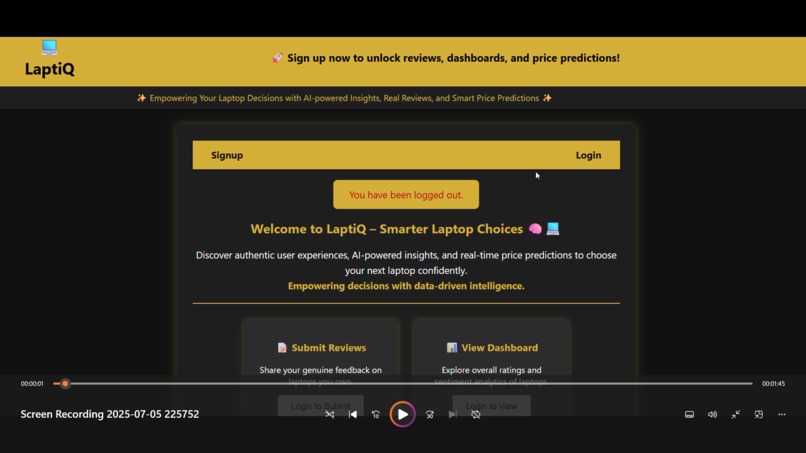
Front Page
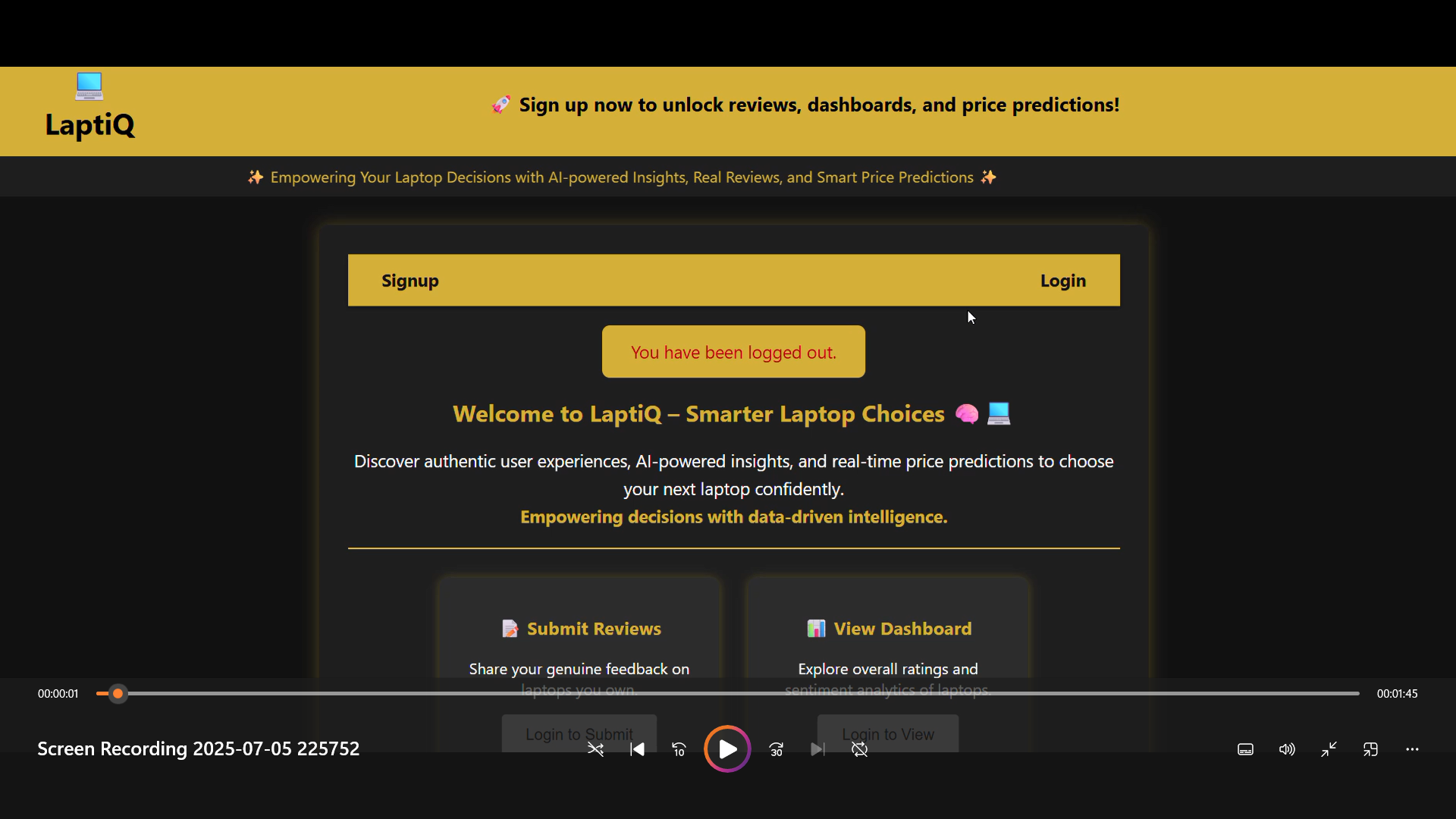
Inspiration
Buying a laptop is overwhelming with so many options, specs, and mixed reviews. Users often get confused about whether a laptop’s performance or battery life suits their needs, and they struggle to estimate if the price is fair. We wanted to build an AI-powered assistant that not only analyses reviews intelligently but also predicts laptop prices, making purchase decisions easier and more data-driven.
What it does
LaptiQ is a web application that:
Allows users to submit laptop reviews with ratings
Uses NLP-based sentiment analysis to detect if a review is positive or negative
Extracts aspect-based sentiments (e.g. battery, display, performance) to show what users liked or disliked
Predicts the approximate price of a laptop based on specifications using a trained ML regression model
Provides a dashboard summarising reviews, recent sentiments, and product ratings for quick insights.
How I built it
Frontend: HTML, CSS, JavaScript (jQuery) for dynamic forms and AJAX requests
Backend: Flask framework with user authentication using Flask-Login and SQLAlchemy ORM
Machine Learning Models:
Sentiment analysis: Trained Logistic Regression model on review text with TF-IDF vectorization
Price prediction: Regression pipeline using Random Forest trained on laptop specs dataset
Aspect extraction: Implemented with TextBlob polarity analysis on detected aspect keywords
Deployment: Hosted on Render with persistent CSV data storage for reviews
Challenges Iran into
NLTK punkt download errors during deployment and container builds
Extracting meaningful aspects from short reviews without false positives
Handling inconsistent product URLs from Amazon for automatic company and model extraction
Ensuring models trained locally work seamlessly on server environments with different scikit-learn versions
Accomplishments that I am proud of
Built a full-stack ML-powered assistant integrating NLP and regression models
Successfully deployed a working Flask app with user authentication and real-time model inference
Implemented aspect-based sentiment analysis that provides deeper insights beyond generic review polarity
Designed a clean, intuitive UI for users to submit reviews and predict laptop prices effortlessly
What I learned
Integrating multiple ML models into a single production-ready web app
Handling version compatibility issues when deploying scikit-learn models
The importance of aspect-level analysis in reviews to derive actionable insights
Practical skills in full-stack deployment, user session management, and pipeline structuring
What's next for LaptiQ
Upgrade to LLM-based aspect extraction for richer and more nuanced insights
Add a recommendation engine suggesting laptops based on user preferences and past reviews
Implement a comparison feature between laptops based on specs, price, and aggregated sentiments
Develop an admin dashboard for brands to analyse customer feedback trends
Build a mobile-friendly UI and deploy on cloud with scalable database integration

Log in or sign up for Devpost to join the conversation.