-
-
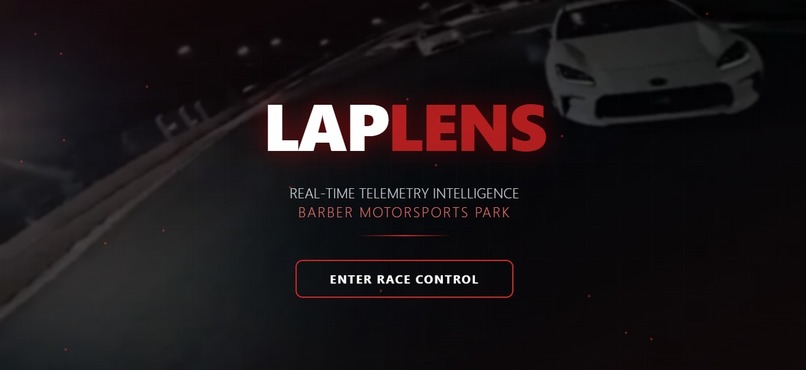
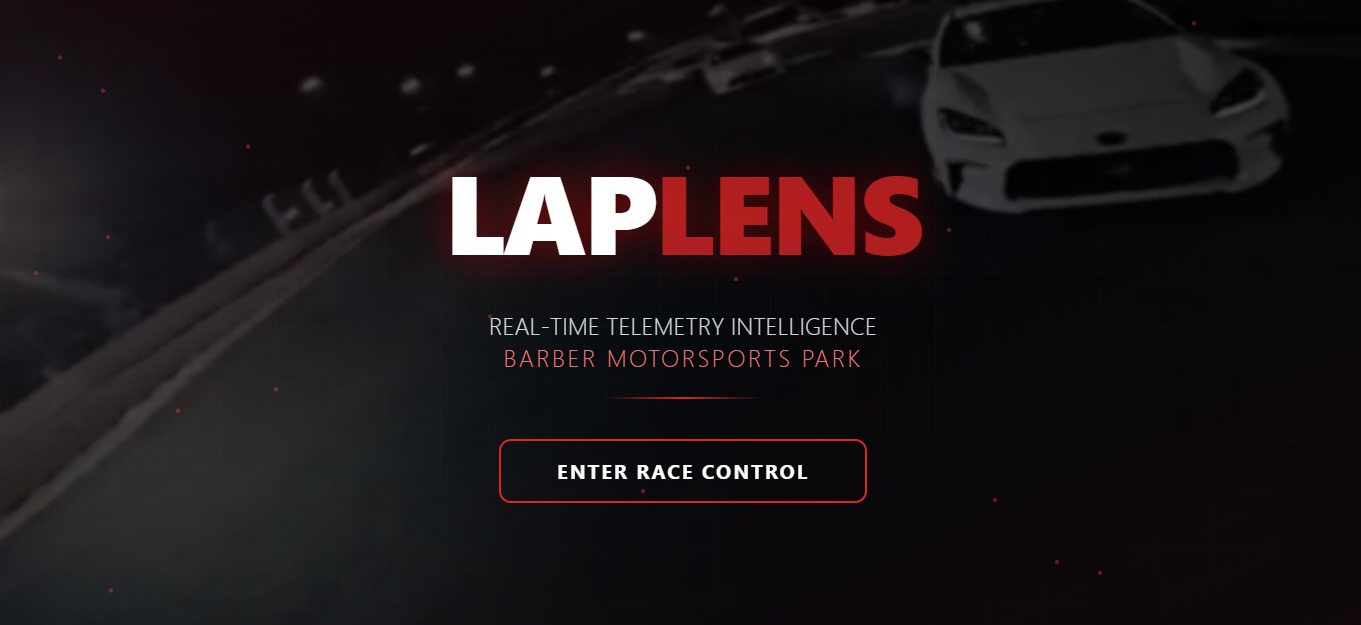
Landing Page - LapLens: AI-Powered Race Strategy Platform
-
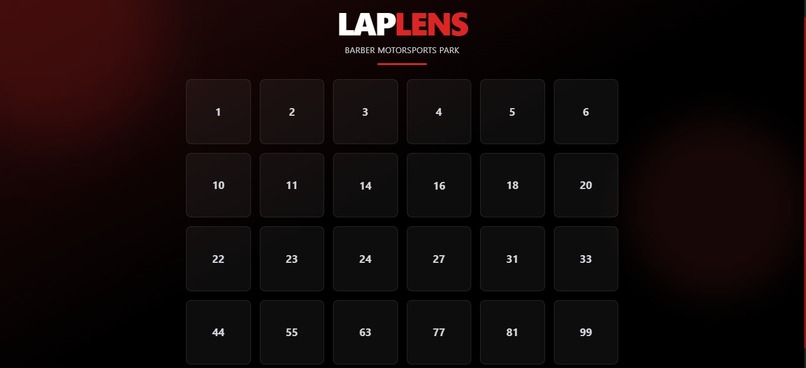
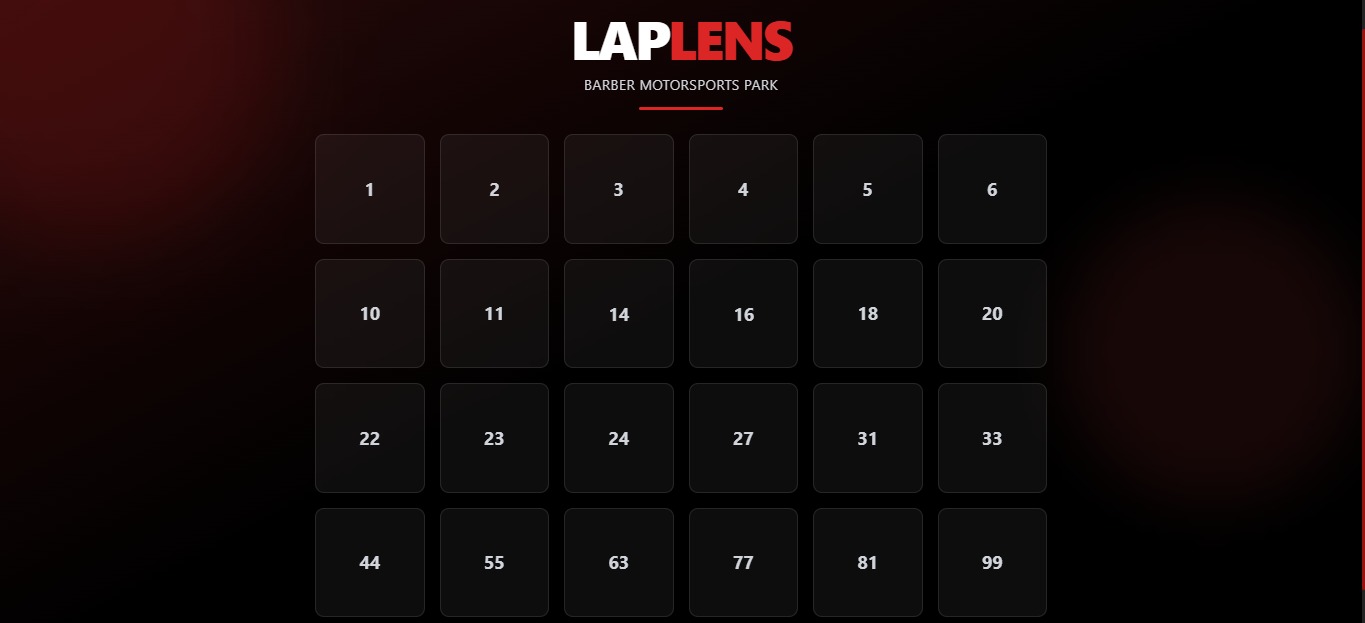
Vehicle Selection - Select Your Vehicle and Create New Racing Session
-
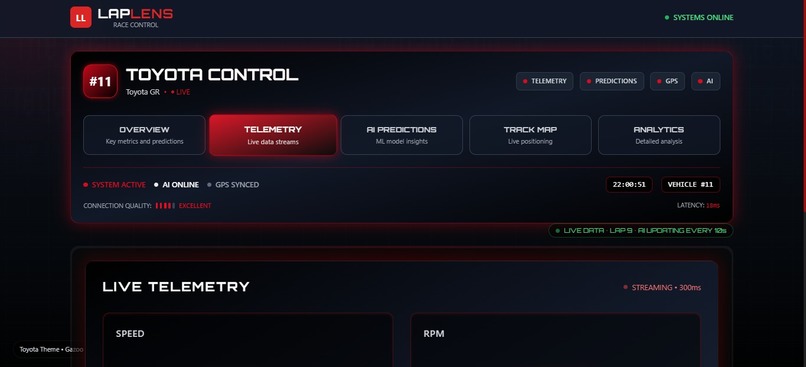
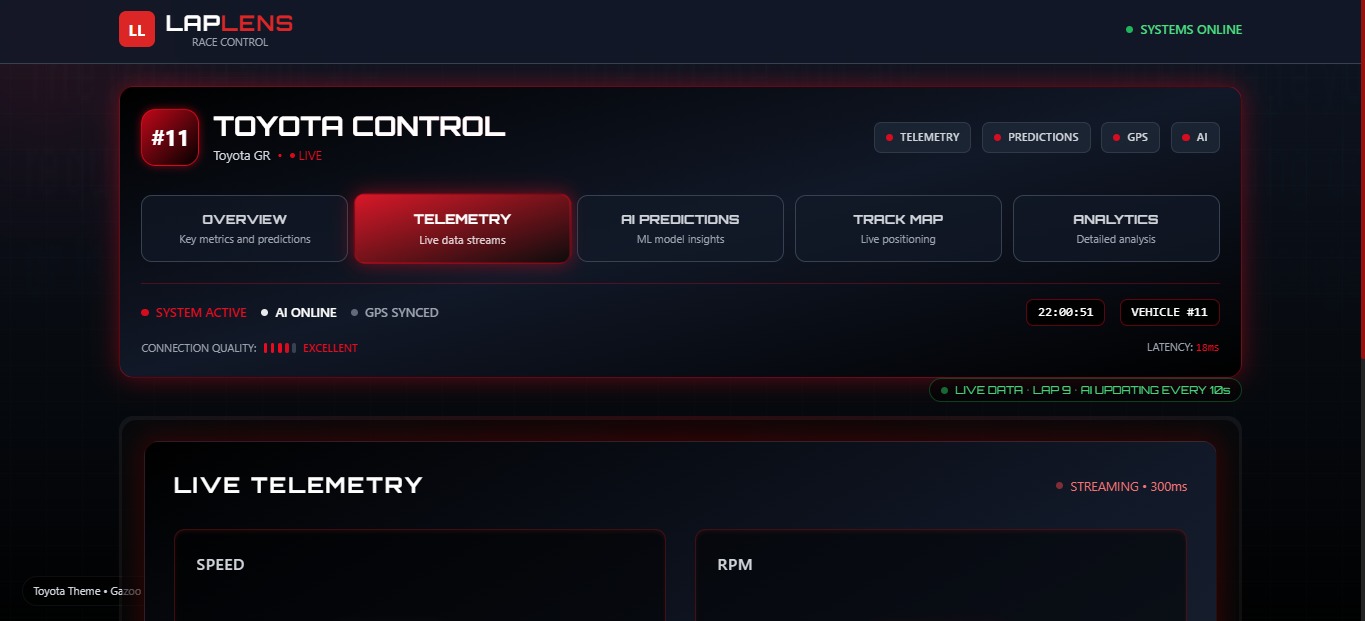
Control Panel - Navigation Between Different Analysis Views
-
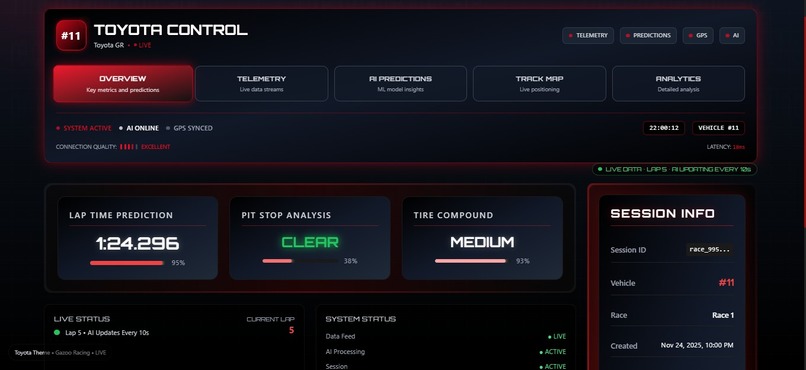
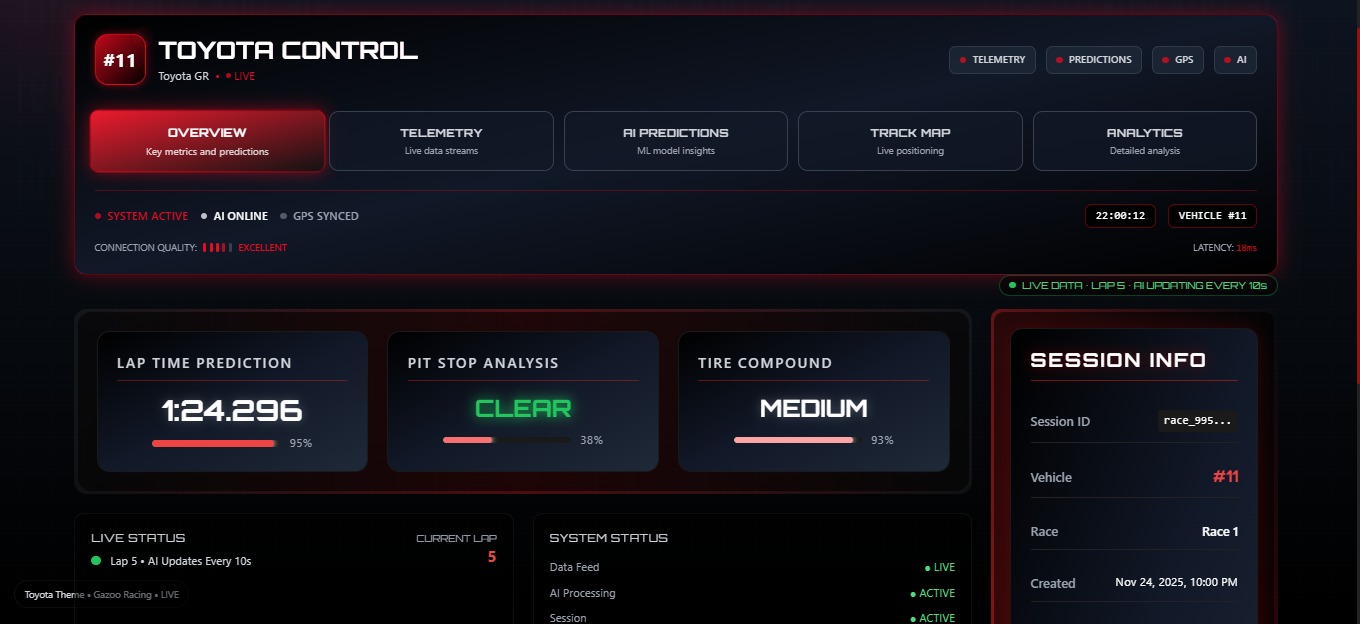
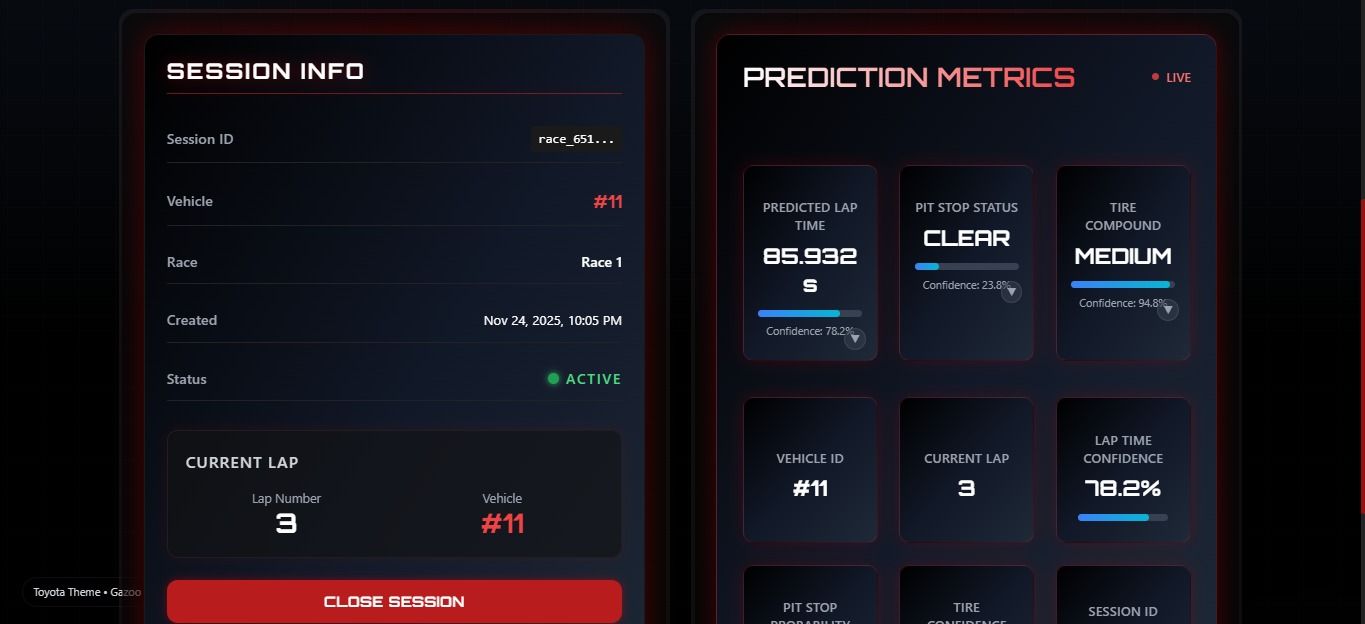
Overview Page - Main Dashboard with Live Predictions and Session Status
-
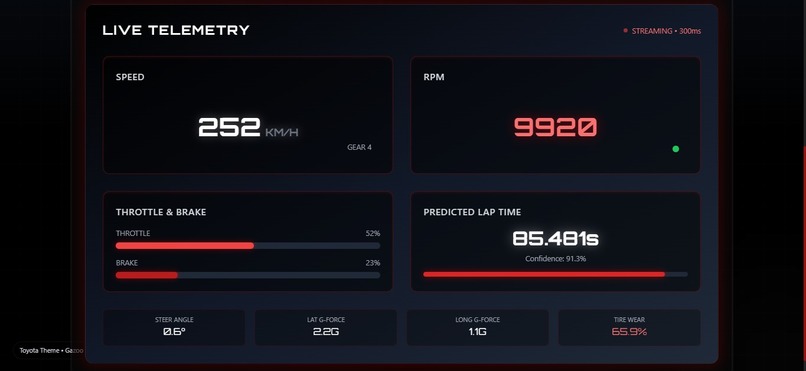
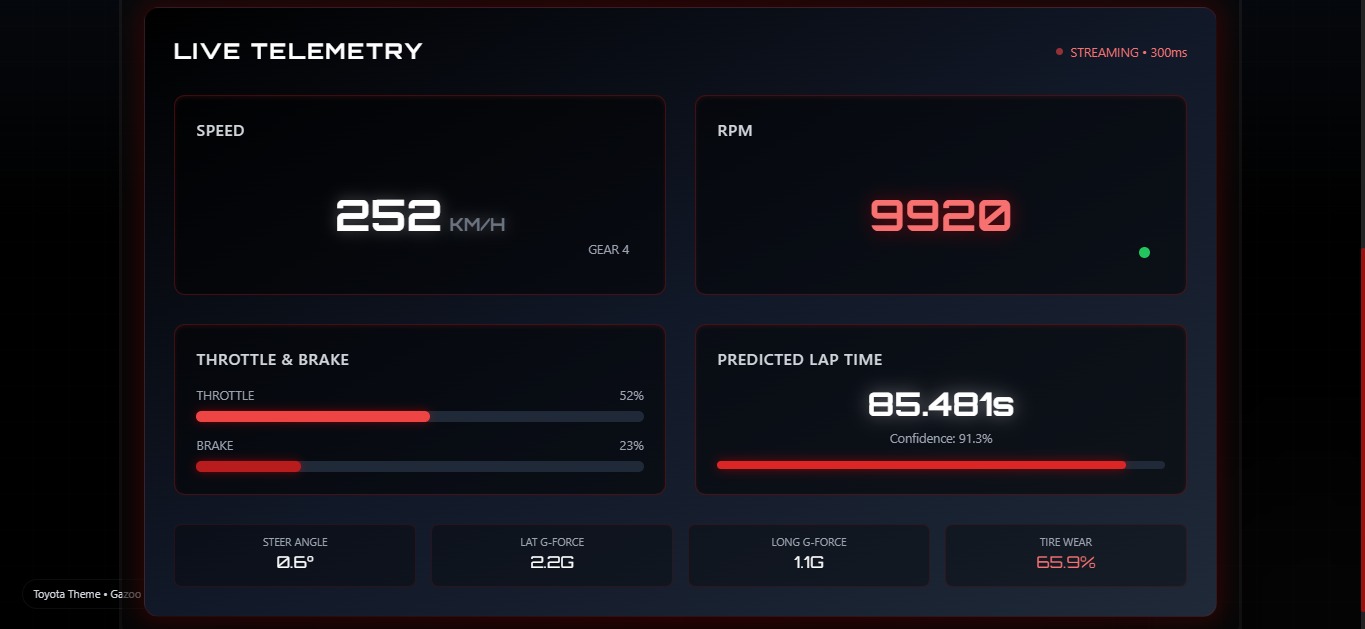
Live Telemetry - Real-Time Vehicle Data and Performance Metrics
-
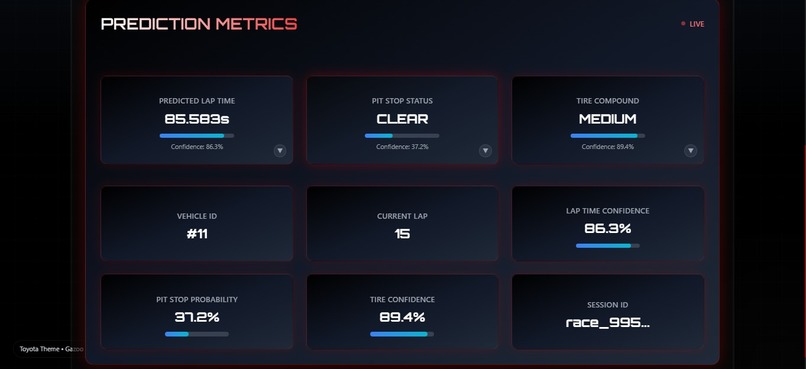
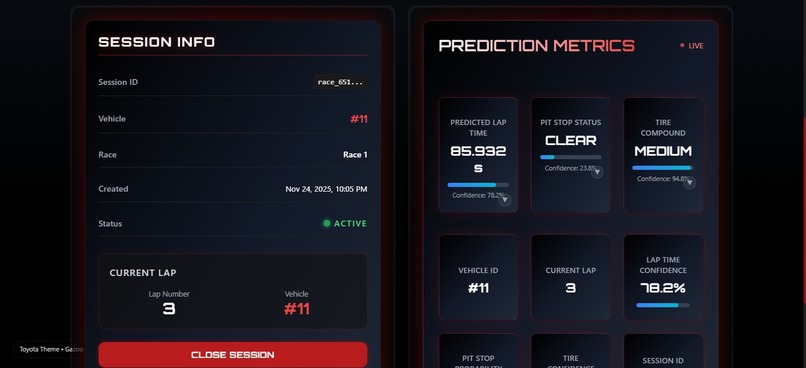
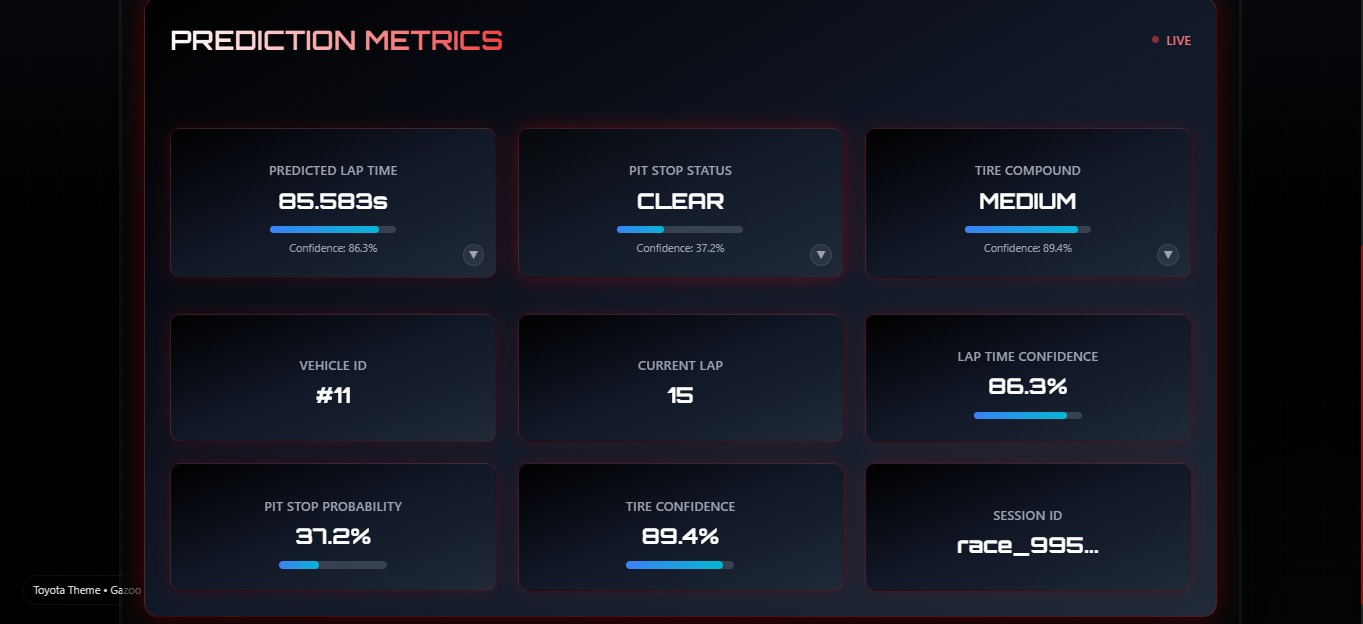
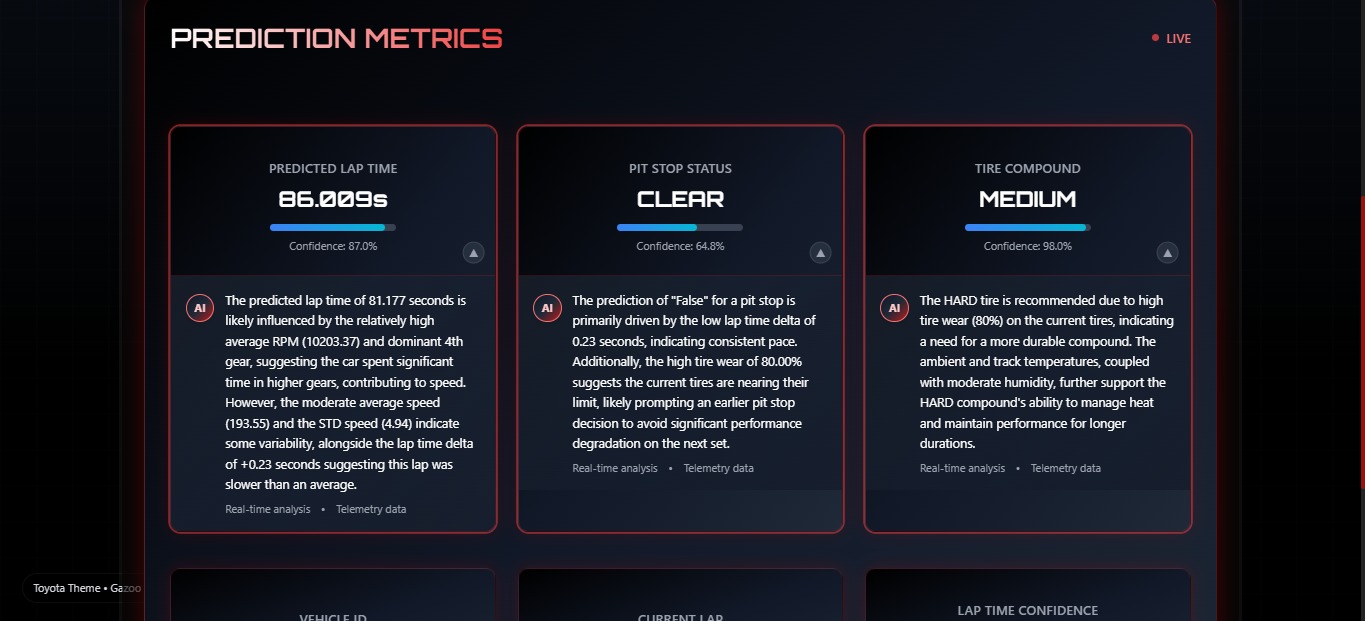
Prediction Metrics - Live Lap Time, Pit Stop, and Tire Strategy Predictions
-
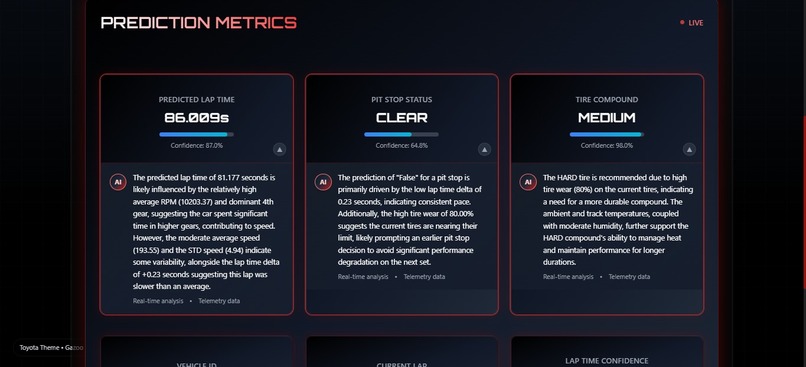
AI Predictions - Intelligent Forecasts with AI Explanations
-
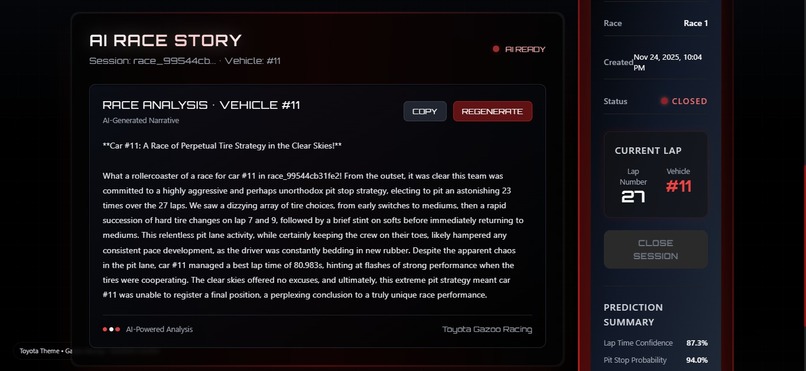
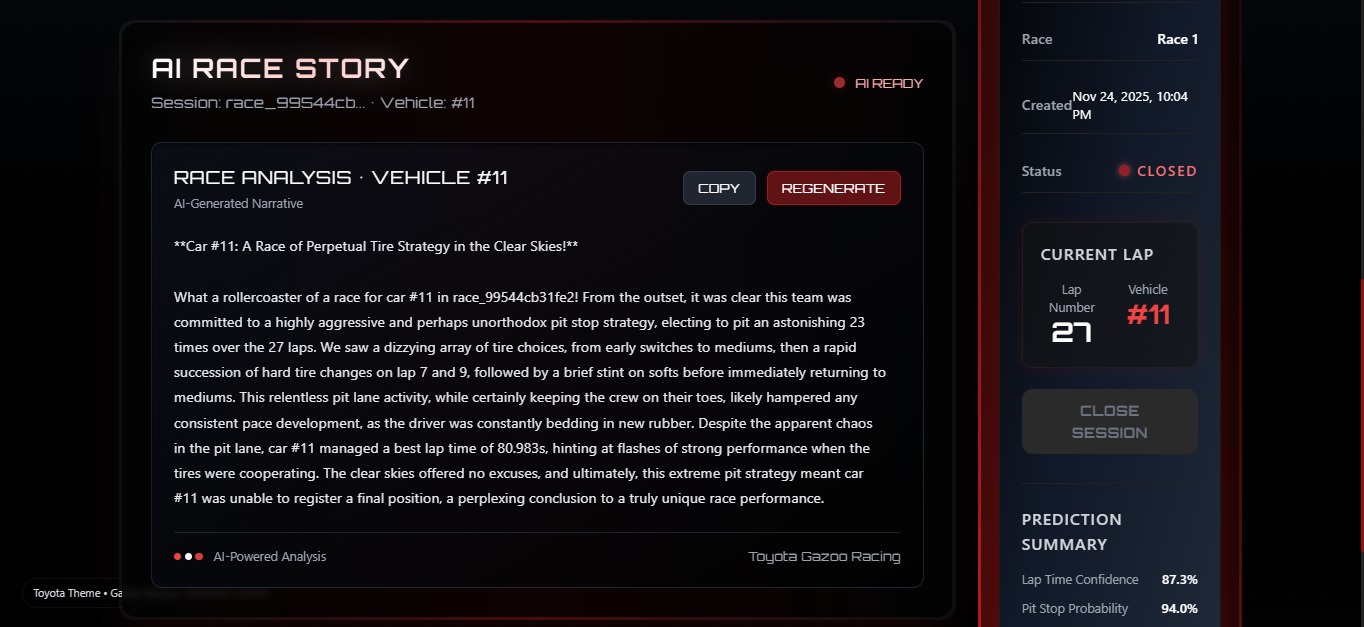
Story Generator - AI-Generated Race Analysis and Report
-
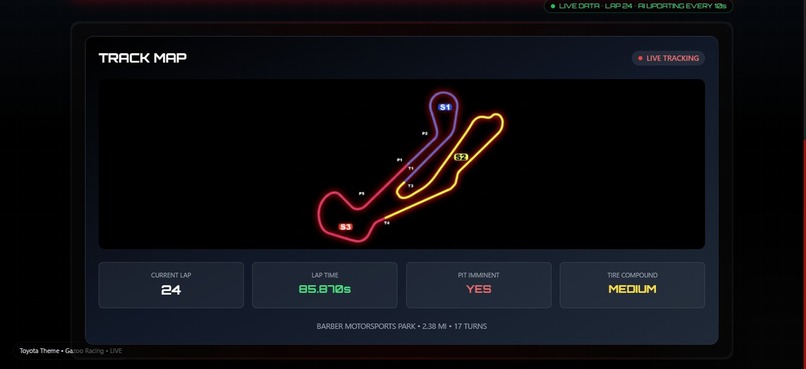
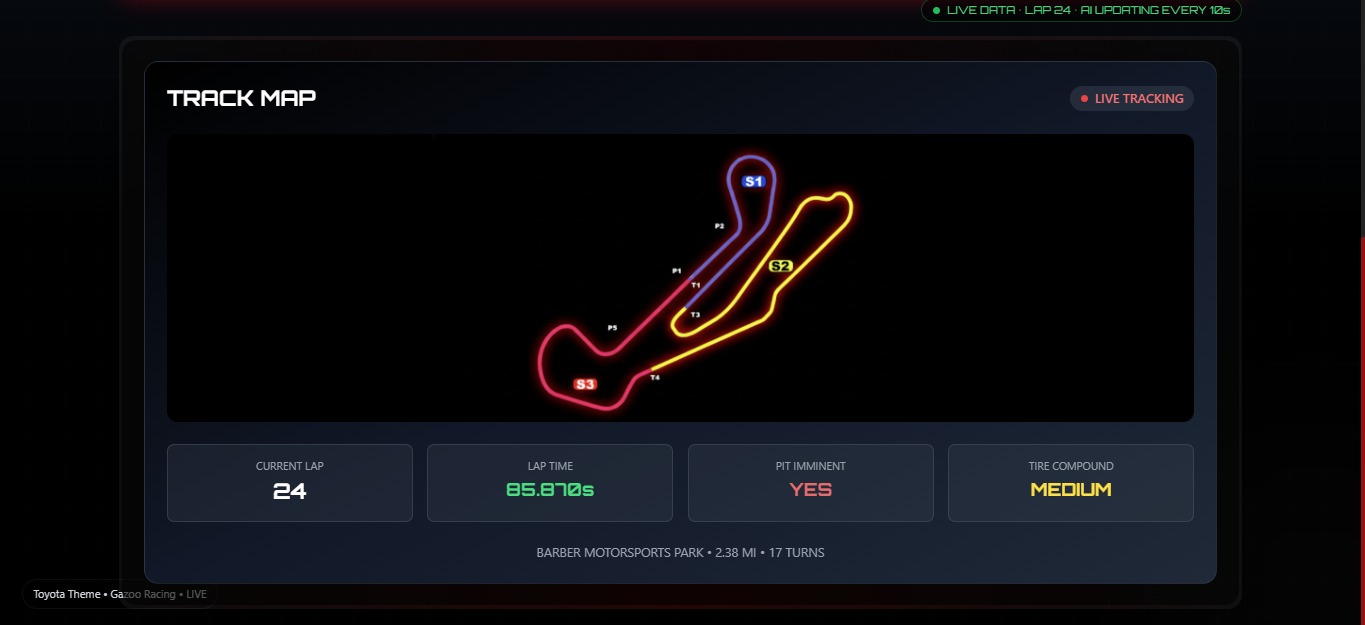
Track Map - Circuit Layout with Sector Visualization
-
Analytics - Session Performance Metrics and System Status
Inspiration
In motorsport, decisions happen faster than teams can process. Engineers, drivers, and pit crews all rely on data to manage tyre life, pace, pit windows, changing conditions, and race strategy - but real-time interpretation is overwhelming, and critical insights can appear too late to matter.
LapLens was built to bridge that gap. By analysing live telemetry and predicting what comes next -- from lap times to tyre choice and pit timing -- it gives teams clearer, earlier, and more actionable information. Instead of scrambling to react, LapLens helps the whole team stay ahead of the race.
What it does
LapLens takes live race telemetry and turns it into clear, actionable strategy decisions. Instead of just displaying raw data, it predicts what matters and explains why.
Lap Time Prediction - Forecasts next-lap performance using live telemetry
Pit Window Detection - Detects when pace loss or tyre wear indicates an optimal pit stop
Tyre Strategy Recommendation - Suggests Soft / Medium / Hard with confidence scoring
Session Tracking - Logs telemetry and predictions for each race session
Explainable AI - Provides short, readable reasoning behind each prediction
Race Story Generation - Summarizes session patterns into a readable race recap
How we built it
Data & Machine Learning
We trained LapLens using Toyota GR Barber Motorsports telemetry, engineering 23 lap-level features including speed trends, throttle/brake patterns, tyre degradation signals, and weather variables. Three machine learning models power the strategy engine:
RandomForest Regression → Lap time forecasting
RandomForest Classifier → Pit-stop likelihood
RandomForest Classifier → Tyre compound recommendation
A shared StandardScaler ensures consistent input normalization. Models are trained offline, exported as .pkl files, and loaded once at runtime for fast inference.
Backend
Built with FastAPI + Python, the backend handles:
• Telemetry validation and preprocessing
• Real-time inference and response generation
• Session tracking (in-memory)
• Explainable reasoning for each prediction
• Automated race story generation
• A REST API supports session creation, telemetry submission, prediction retrieval, and post-session summaries.
Frontend
The UI is built using Next.js 14, TypeScript, and TailwindCSS, designed for clarity and fast interpretation during race conditions. It includes:
• A live telemetry and prediction dashboard
• An analysis view for trend exploration
• A session/vehicle management interface
The interface prioritizes high contrast, low interaction friction, and real-time usability--making it suitable for pit-wall decision environments.
Challenges we ran into
• Cleaning high-frequency motorsport telemetry into reliable, lap-level signals
• Extracting meaningful features from noisy behaviour like tyre wear, braking patterns, and temperature shifts
• Keeping inference fast enough for real-time use while maintaining prediction stability
• Designing a dashboard that’s usable under race pressure--not just for post-event analysis
• Making the system explain its decisions clearly so teams can trust the output, not just read numbers
Accomplishments that we're proud of
• Built a working end-to-end race strategy system--from telemetry input to prediction, explanation, and visualization
• Trained three machine learning models on real motorsport data with performance that reflects actual racing behavior
• Designed a dashboard that feels usable in a race environment, not just as a prototype or demo
• Added explainability so predictions aren’t just numbers--they’re decisions teams can understand and trust
• Generated full race summaries automatically, turning telemetry and events into readable context for post-race review
What we learned
We learned that racing isn’t just fast - the decisions behind it have to be faster. Feature engineering mattered more than changing models, and clear explanations mattered more than perfect accuracy. The biggest takeaway was that a tool only becomes useful in motorsport when it’s simple, fast to read, and trusted under pressure.
What's next for LapLens
Now that the core system works end-to-end, we’re focusing on expanding capability rather than building fundamentals. Upcoming improvements include live telemetry streaming via WebSockets, multi-car comparison tools, and scenario simulation for pit timing and tyre strategy. We’re also exploring reinforcement learning for adaptive decision-making and adding persistent storage to support replay, long-term analysis, and driver coaching modes.
Built With
- csvtelemetrydataset
- fastapi
- github
- googlegeminiapi
- next.js14
- npm
- numpy
- pandas
- python
- react
- scikit-learn
- tailwindcss
- typescript
- uvicorn
- virtualenv


Log in or sign up for Devpost to join the conversation.