-
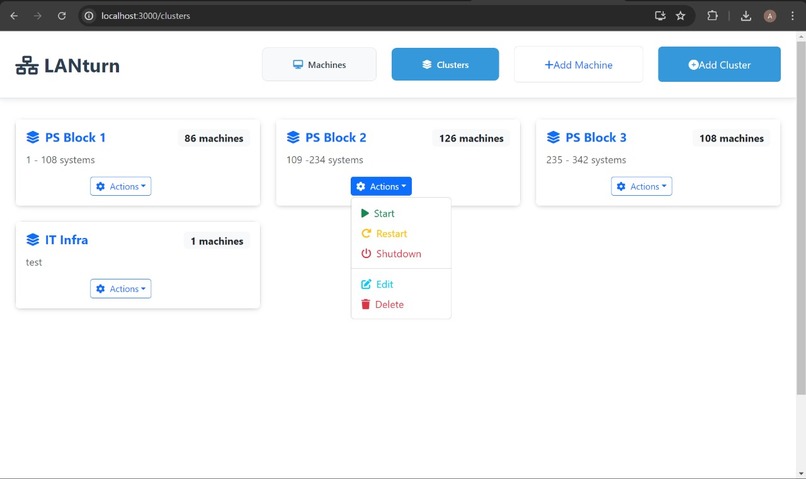
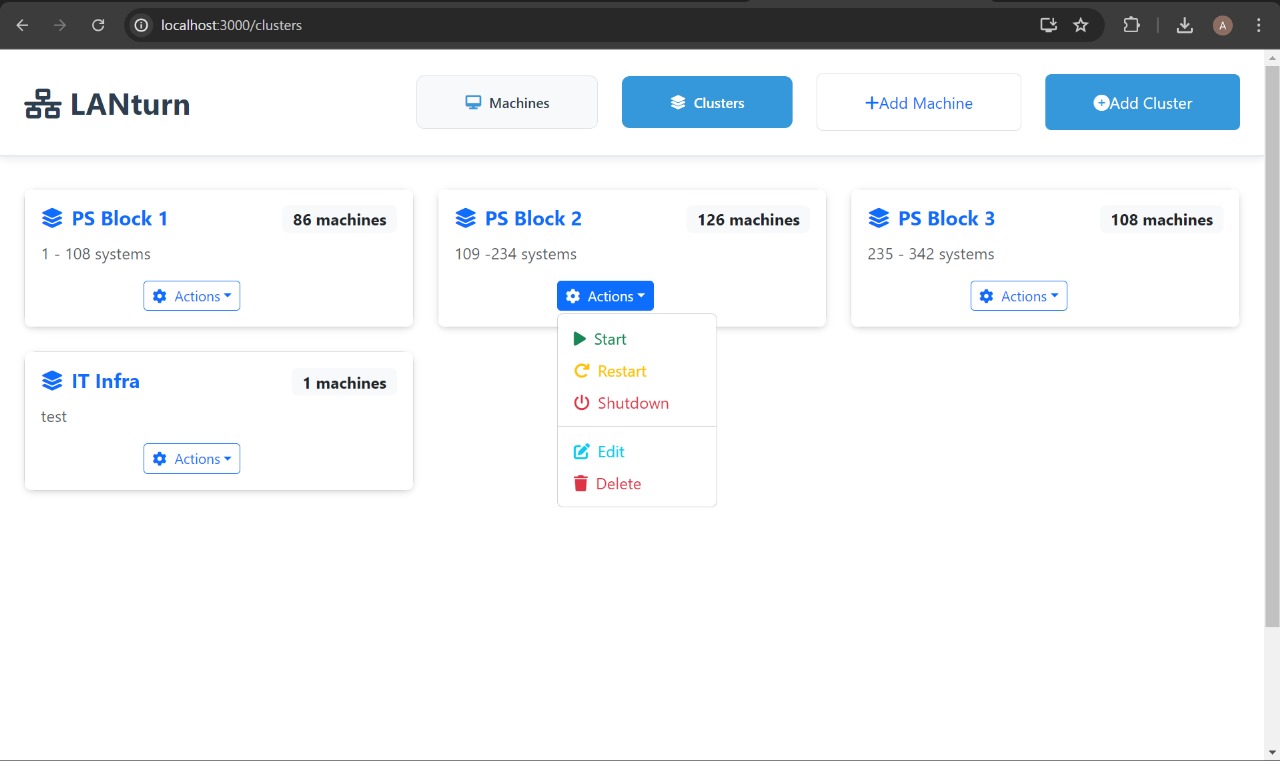
Clusters Page with CLuster actions
-
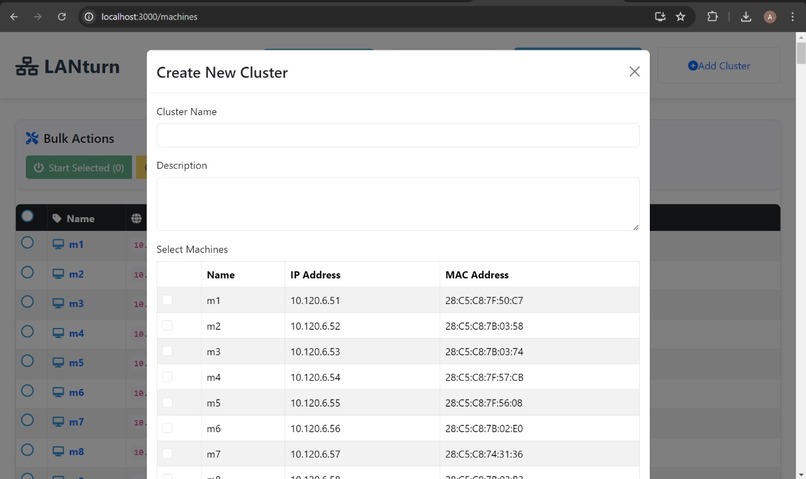
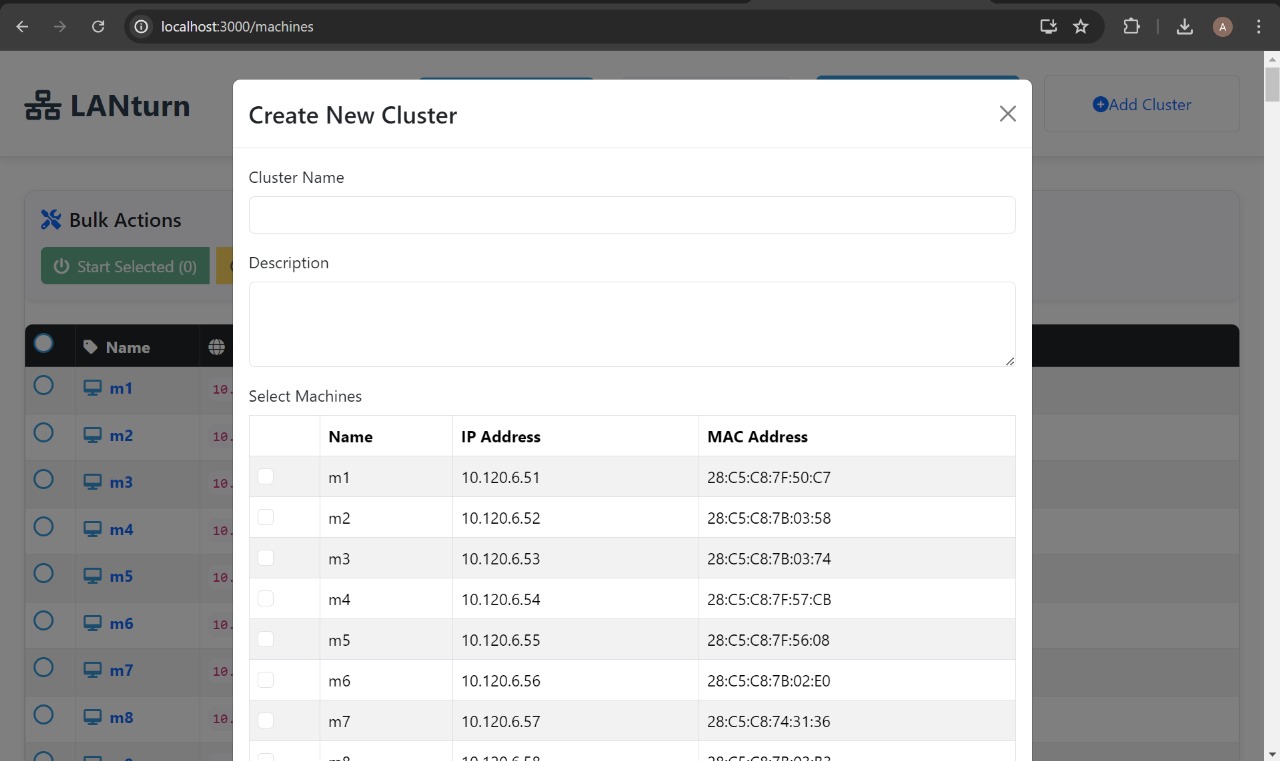
Creatin a new cluster
-
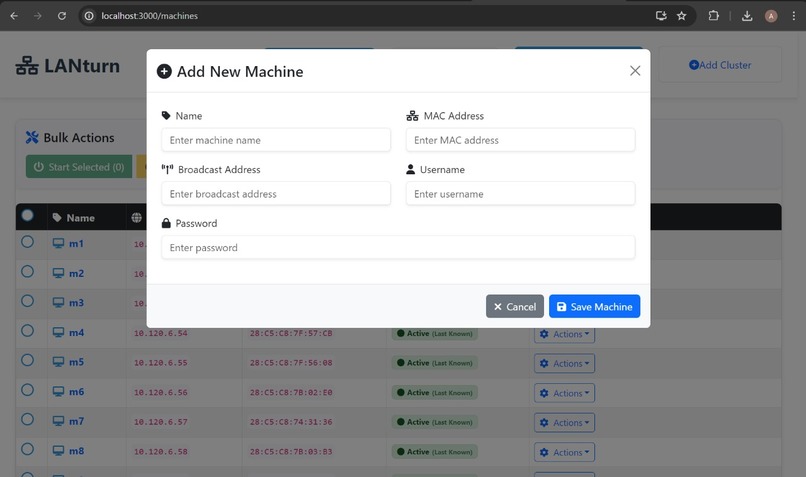
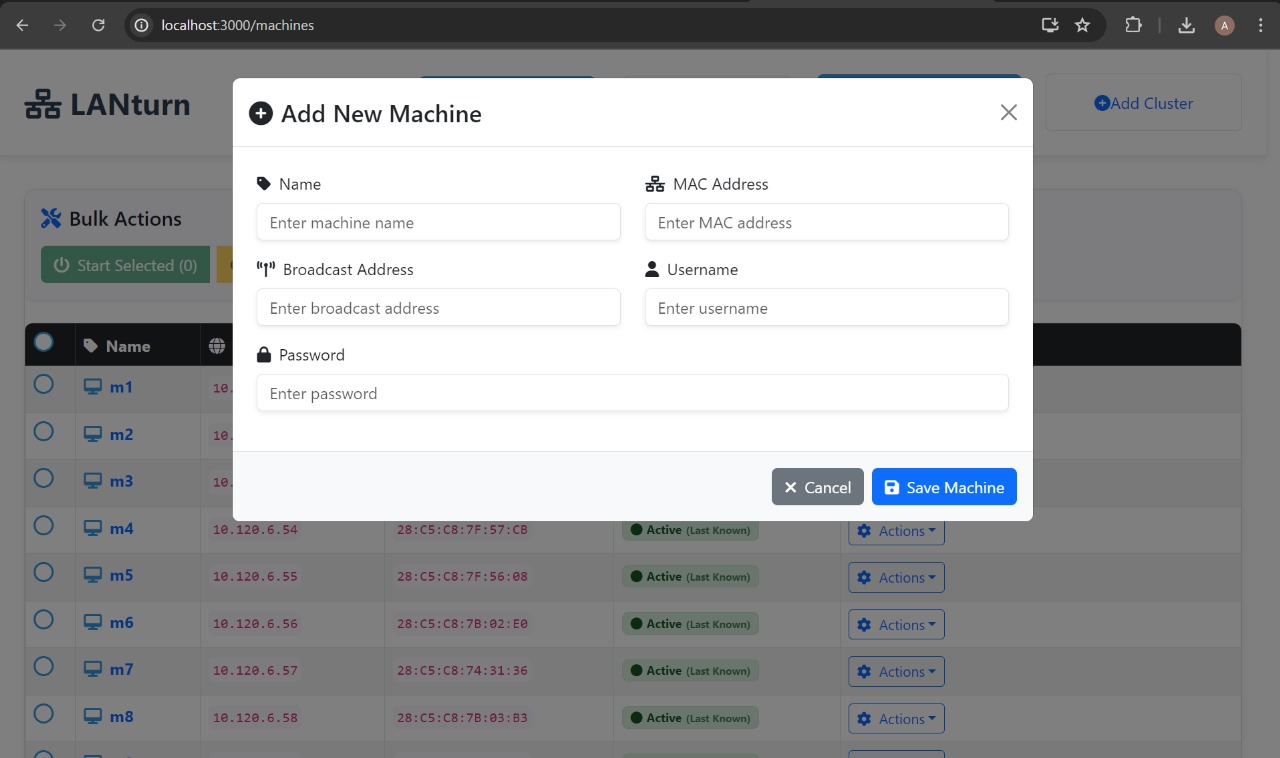
add machine section
-
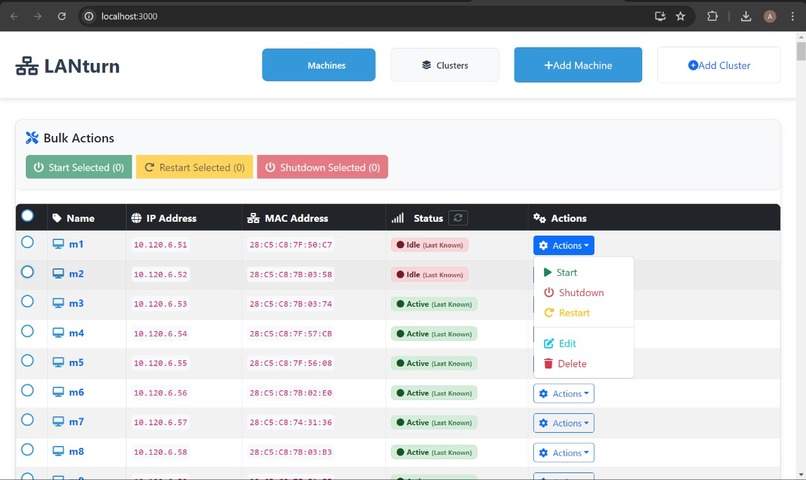
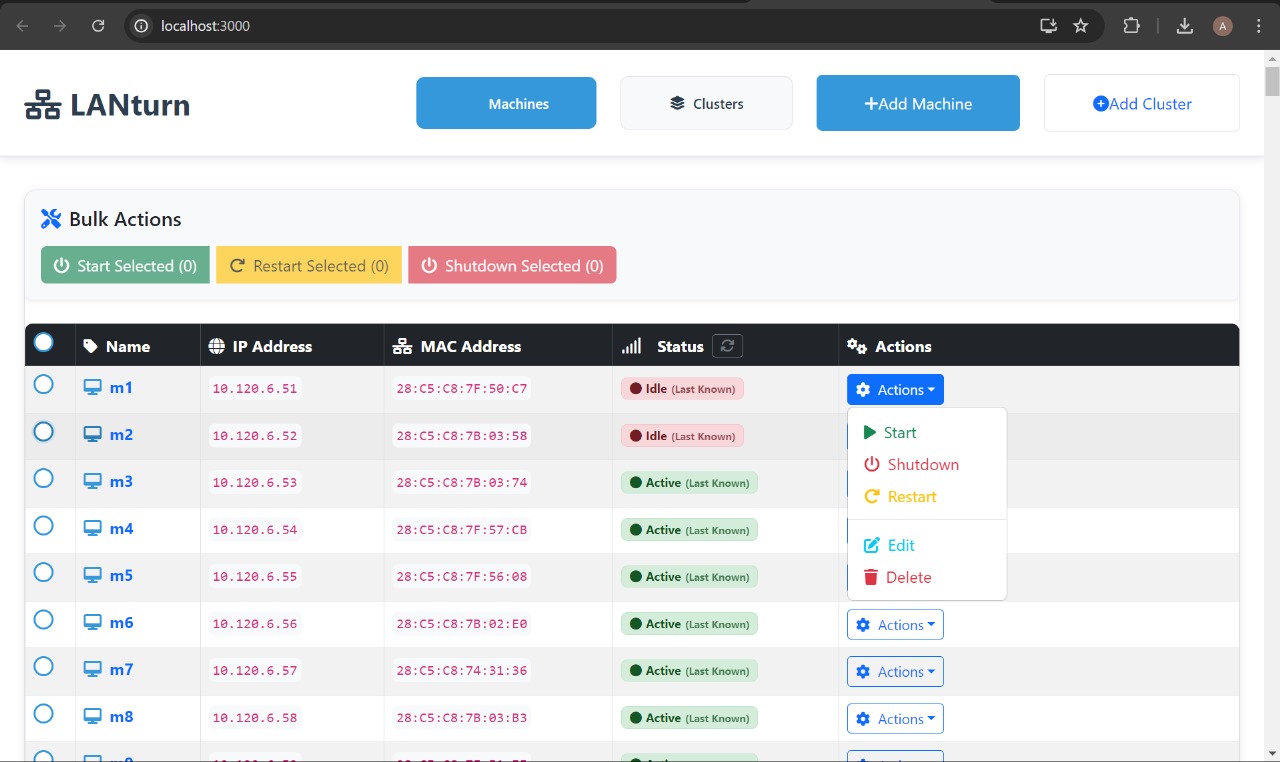
Machines page with machine actions
-
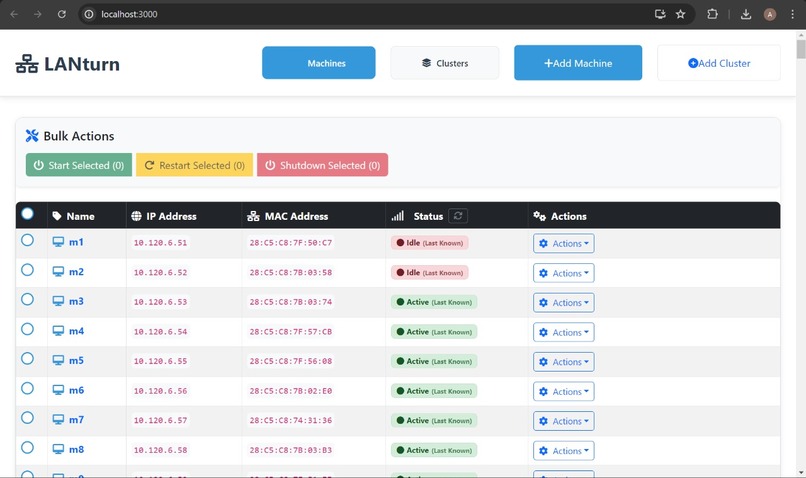
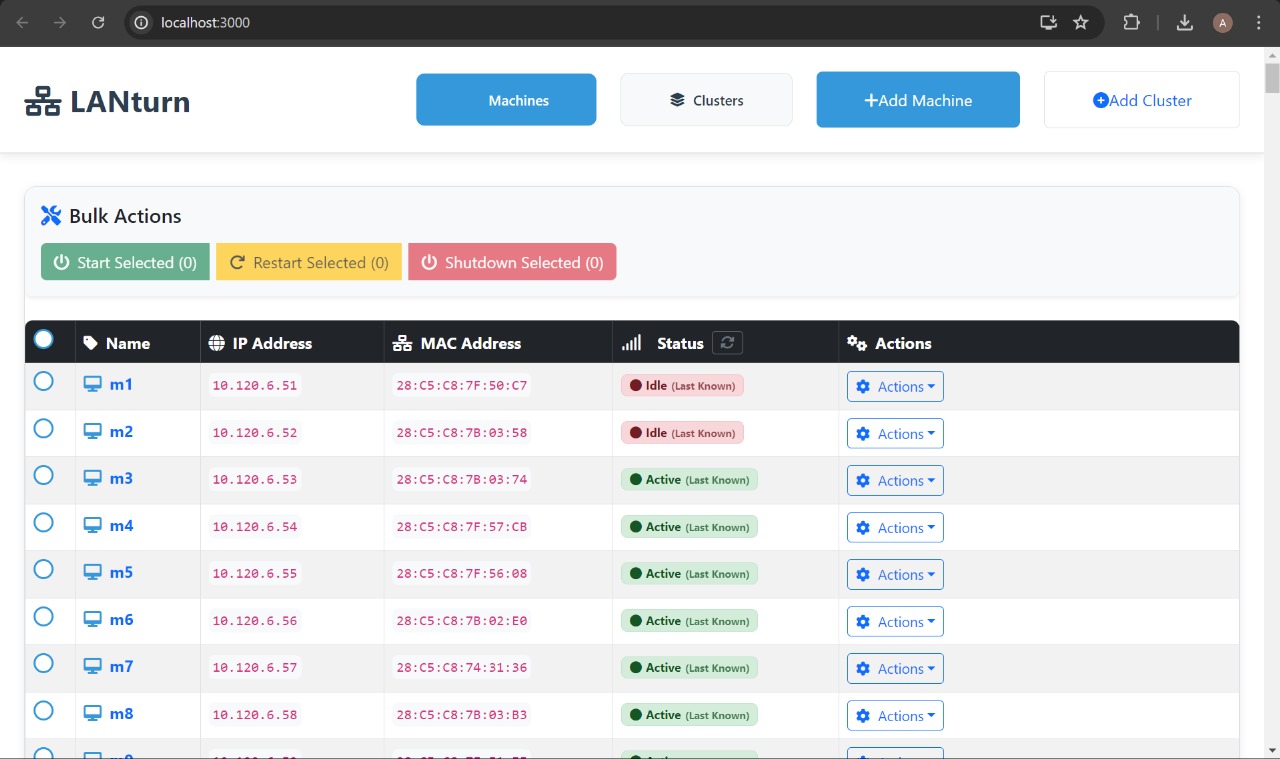
Machines Page
LANtern 🔦 - Project Story
Inspiration
The inspiration for LANtern came from a common frustration experienced in both home lab environments and enterprise IT settings: the tedious task of manually managing multiple machines across a network. Whether it was walking to different rooms to power on servers for weekend maintenance, or staying late at the office to shut down workstations after hours, the lack of centralized network power management was a constant pain point.
The idea crystallized during a particularly frustrating evening when I had to physically visit several machines in different locations just to restart them after a software update. I thought, "There has to be a better way to do this remotely." That's when I discovered Wake-on-LAN (WoL) technology and realized I could build a comprehensive solution that not only wakes machines but also handles shutdown and restart operations through a single, intuitive interface.
The name LANtern represents both the illumination of network visibility and the guidance it provides in managing your Local Area Network - like a lantern lighting the way through complex network administration tasks.
What it does
LANtern is a comprehensive network power management system that transforms how you interact with machines across your LAN. Here's what makes it powerful:
Core Features
- 🖥️ Machine Management: Add, configure, and organize network machines with detailed network information
- ⚡ Remote Power Control: Wake machines using Wake-on-LAN, shutdown, and restart operations
- 🏢 Cluster Management: Group machines into logical clusters for bulk operations
- 📊 Real-time Status Monitoring: Live ping verification and machine status tracking
- 🔐 Secure Operations: Encrypted credential storage and authenticated remote operations
- 📱 Modern Interface: Responsive React-based UI with smooth animations and intuitive design
User Experience
The application provides a clean, dashboard-style interface where users can:
- View all machines in a comprehensive table with real-time status indicators
- Perform individual or bulk operations with simple button clicks
- Create and manage machine clusters for organizational efficiency
- Monitor power events and track system activity
- Add new machines through guided modal dialogs
How we built it
Architecture & Technology Stack
Frontend (React 19.1.0)
- React Router for seamless single-page application navigation
- React Bootstrap for responsive, professional UI components
- Tailwind CSS for modern utility-first styling and animations
- Axios for robust API communication with the backend
- FontAwesome for consistent iconography throughout the interface
Backend (Express.js 5.1.0)
- Express.js as the foundation for RESTful API development
- MySQL2 for reliable database connectivity and data persistence
- Wake-on-LAN (wol) library for network wake functionality
- bcrypt for secure password encryption and authentication
- CORS for secure cross-origin resource sharing
- dotenv for environment-based configuration management
Development Process
- Database Design: Started with a robust MySQL schema supporting machines, clusters, and audit logging
- API Architecture: Built RESTful endpoints for all CRUD operations and power management functions
- Frontend Components: Developed reusable React components with Bootstrap styling
- Network Integration: Implemented Wake-on-LAN and remote shutdown capabilities
- User Experience: Added real-time status monitoring, animations, and responsive design
- Security Implementation: Integrated password encryption and secure credential management
Technical Implementation Highlights
// Wake-on-LAN Implementation
const wakeMachine = async (macAddress, broadcastAddress) => {
    return new Promise((resolve, reject) => {
        wol.wake(macAddress, { address: broadcastAddress }, (error) => {
            if (error) {
                reject(error);
            } else {
                resolve();
            }
        });
    });
};

// Real-time Status Monitoring
const verifyMachineStatus = async (machine) => {
    const response = await axios.post(`${API_BASE_URL}/machines/${machine.id}/ping`);
    const isOnline = response.data.isOnline;
    // Update UI with real-time status
};
Challenges we ran into
1. Network Protocol Complexity
Understanding and implementing Wake-on-LAN proved more complex than initially anticipated. The protocol requires specific network configurations, broadcast addresses, and magic packet formatting. Debugging network-level issues required deep diving into subnet calculations and broadcast domain understanding.
2. Cross-Platform Remote Operations
Implementing remote shutdown and restart commands across different operating systems (Windows, Linux, macOS) required platform-specific command variations and error handling strategies. Windows systems needed special authentication handling through SMB protocols.
3. Real-time Status Management
Creating reliable real-time machine status monitoring without overwhelming the network with ping requests required implementing intelligent polling intervals and caching mechanisms. Balancing accuracy with network efficiency was challenging.
4. Security Considerations
Storing and transmitting machine credentials securely while maintaining usability required careful implementation of encryption, secure API endpoints, and proper authentication flows.
5. State Management Complexity
Managing complex application state across multiple React components (machines, clusters, modals, alerts) while maintaining data consistency and user experience required careful component design and state lifting strategies.
6. Database Schema Evolution
Designing a flexible database schema that could accommodate future features while maintaining referential integrity between machines, clusters, and audit logs required multiple iterations and careful planning.
Accomplishments that we're proud of
🎯 Seamless User Experience
Created an intuitive interface where complex network operations feel as simple as clicking a button. Users can manage entire server farms without touching a single physical machine.
🚀 Performance Optimization
Achieved sub-second response times for most operations through efficient API design, database indexing, and intelligent frontend state management.
🎨 Modern Design Implementation
Built a beautiful, responsive interface with smooth animations and professional styling that rivals commercial network management tools.
🔧 Robust Error Handling
Implemented comprehensive error handling throughout the application stack, providing users with meaningful feedback and graceful failure recovery.
📱 Cross-Device Compatibility
Ensured the application works flawlessly across desktop, tablet, and mobile devices with responsive design principles.
🔐 Security Best Practices
Implemented industry-standard security measures including password encryption, secure API authentication, and SQL injection prevention.
What we learned
Technical Skills
- Network Programming: Deep understanding of network protocols, especially Wake-on-LAN magic packets and broadcast domains
- Full-Stack Development: Seamless integration between React frontend and Express.js backend
- Database Design: Creating efficient, scalable database schemas for complex relational data
- Modern React Patterns: Hooks, state management, and component composition for maintainable code
- API Design: RESTful principles and error handling for robust client-server communication
Problem-Solving Approaches
- Breaking complex networking problems into manageable, testable components
- Iterative development with continuous user feedback integration
- Balancing feature richness with application performance and usability
- Documentation-driven development for better code maintainability
User Experience Design
- Importance of intuitive interfaces for technical tools
- Power of visual feedback and loading states in user satisfaction
- Value of responsive design in professional applications
Project Management
- Agile development practices and iterative improvement
- Version control best practices with meaningful commit messages
- Testing strategies for network-dependent applications
What's next for LANtern
🚀 Short-term Enhancements
- 📊 Dashboard Analytics: Power usage statistics, uptime tracking, and operational insights
- 🔔 Smart Notifications: Email/SMS alerts for machine status changes and scheduled operations
- ⏰ Scheduled Operations: Cron-like scheduling for automated power management
- 📱 Mobile App: Native iOS/Android applications for on-the-go management
🌟 Advanced Features
- 🤖 AI-Powered Insights: Machine learning for predictive maintenance and optimization suggestions
- 🌐 Multi-Network Support: VPN integration and remote network management capabilities
- 🔍 Advanced Monitoring: CPU, memory, and disk usage monitoring integration
- 👥 Multi-User Management: Role-based access control and team collaboration features
🏢 Enterprise Integration
- 🔗 Directory Services: Active Directory and LDAP integration for user authentication
- 📈 Reporting Suite: Comprehensive reporting for compliance and operational analysis
- 🔧 API Extensions: Webhook support and third-party integrations
- ☁️ Cloud Deployment: Docker containerization and cloud platform support
🌍 Community & Open Source
- 📖 Documentation Expansion: Comprehensive guides and video tutorials
- 🤝 Community Features: Plugin system and community-contributed modules
- 🏆 Performance Optimization: Caching layers and database optimization
- 🧪 Testing Framework: Comprehensive unit and integration testing suite
LANtern represents more than just a network management tool - it's a testament to how thoughtful engineering can transform tedious administrative tasks into effortless, enjoyable experiences. The journey from concept to implementation taught valuable lessons about user-centered design, robust architecture, and the power of modern web technologies to solve real-world problems.
Built with ❤️ and lots of ☕ by a developer who got tired of walking to machines.
Built With
- express.js
- mysql
- network
- node.js
- react
- wake-on-lan

Log in or sign up for Devpost to join the conversation.