Inspiration
Families usually notice memory change months too late. Clinics test once a year, and the same test repeated teaches you the test. Research from Penn State (M2C2) and Washington University (ARC) shows that short, frequent tests at home are reliable, but they need an app and finger taps. Older adults already talk to Alexa every day. What if that everyday talk could quietly carry a measurement?
What it does
Lantern is an Alexa+ add-on built as a self-hosted MCP server.
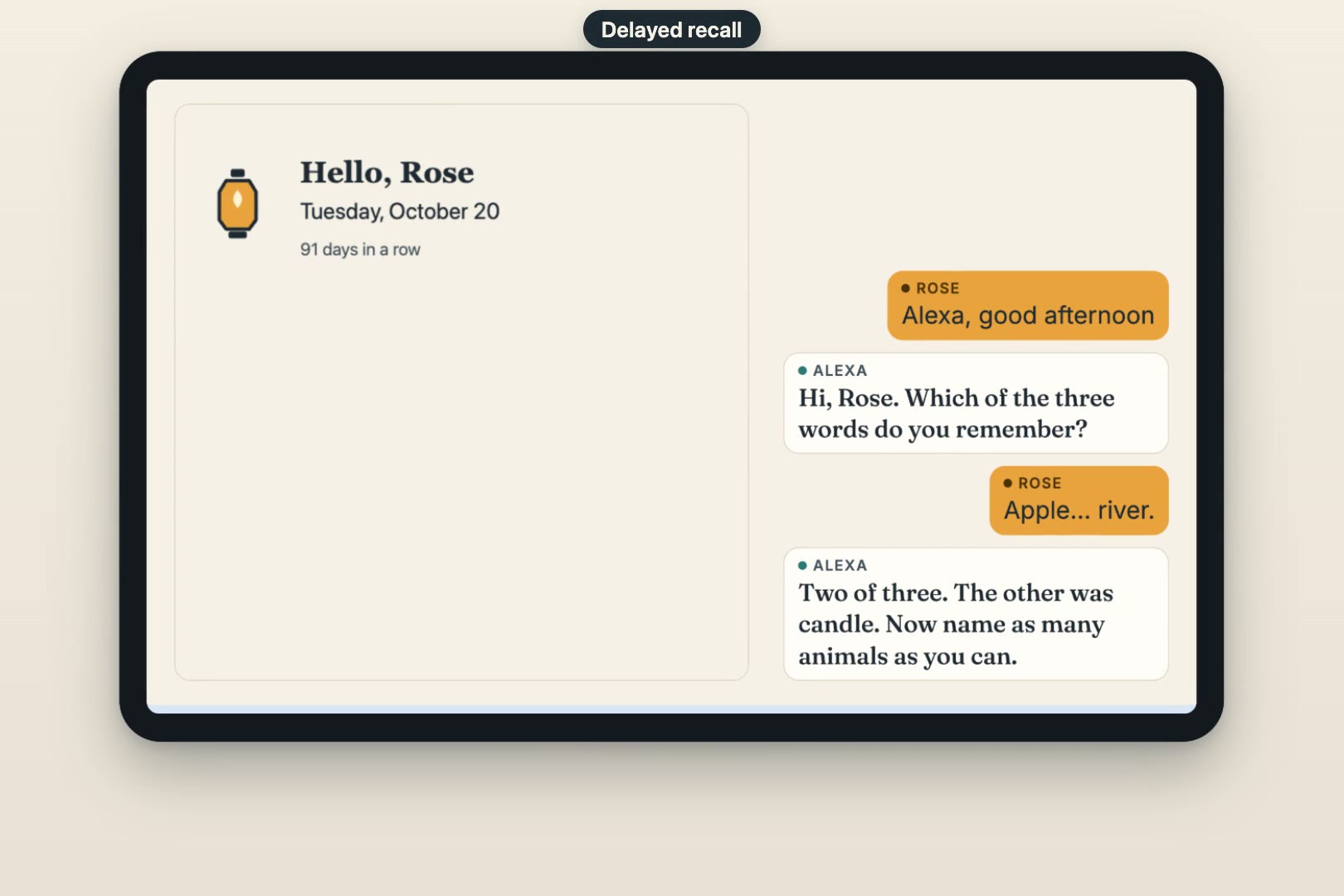
- Three tiny check-ins a day (under 45 seconds): orientation, delayed word recall with rotating word lists, naming animals, and something new: Lantern remembers what the person told it yesterday and checks whether today's story matches.
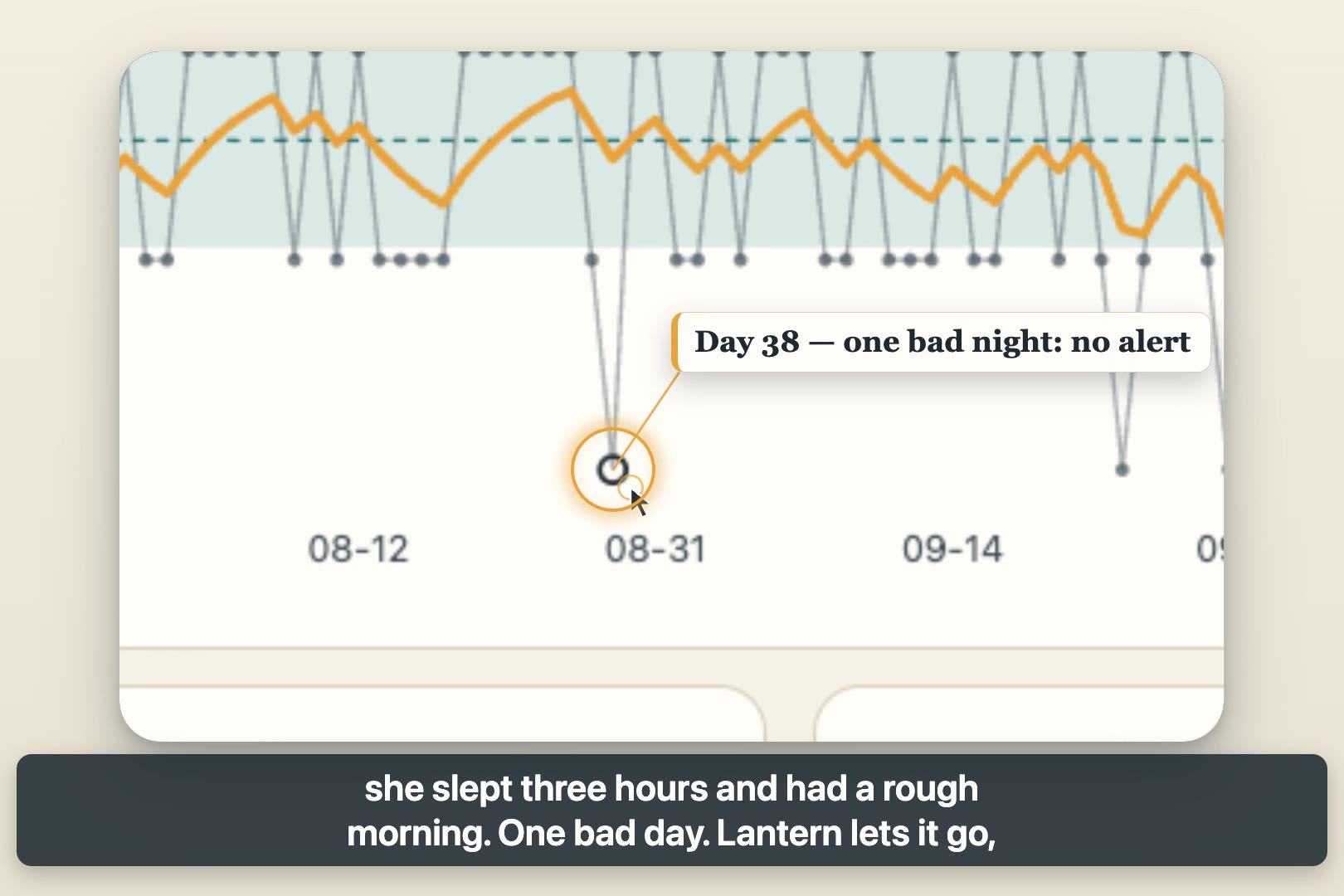
- Scored against the person's own normal. The first 14 days set a personal baseline. An EWMA control chart and Reliable Change Index look for a sustained drift, not a bad day. In the demo, day 38 (three hours of sleep) is ignored; a slow 10-day slide from day 60 raises one calm flag.
- Family gets a nudge, not a diagnosis. One plain email to the daughter, then Alexa books the doctor visit and sends the calendar invite. The person never hears the word "decline."
- A one-page doctor summary with change numbers, adherence, sleep, and what Lantern does and does not measure.
- Voice, experimental. In the simulator, the browser computes pitch range, speaking rate and pauses (numbers only, no audio stored). Flattened pitch can show up years before a Parkinson's diagnosis.
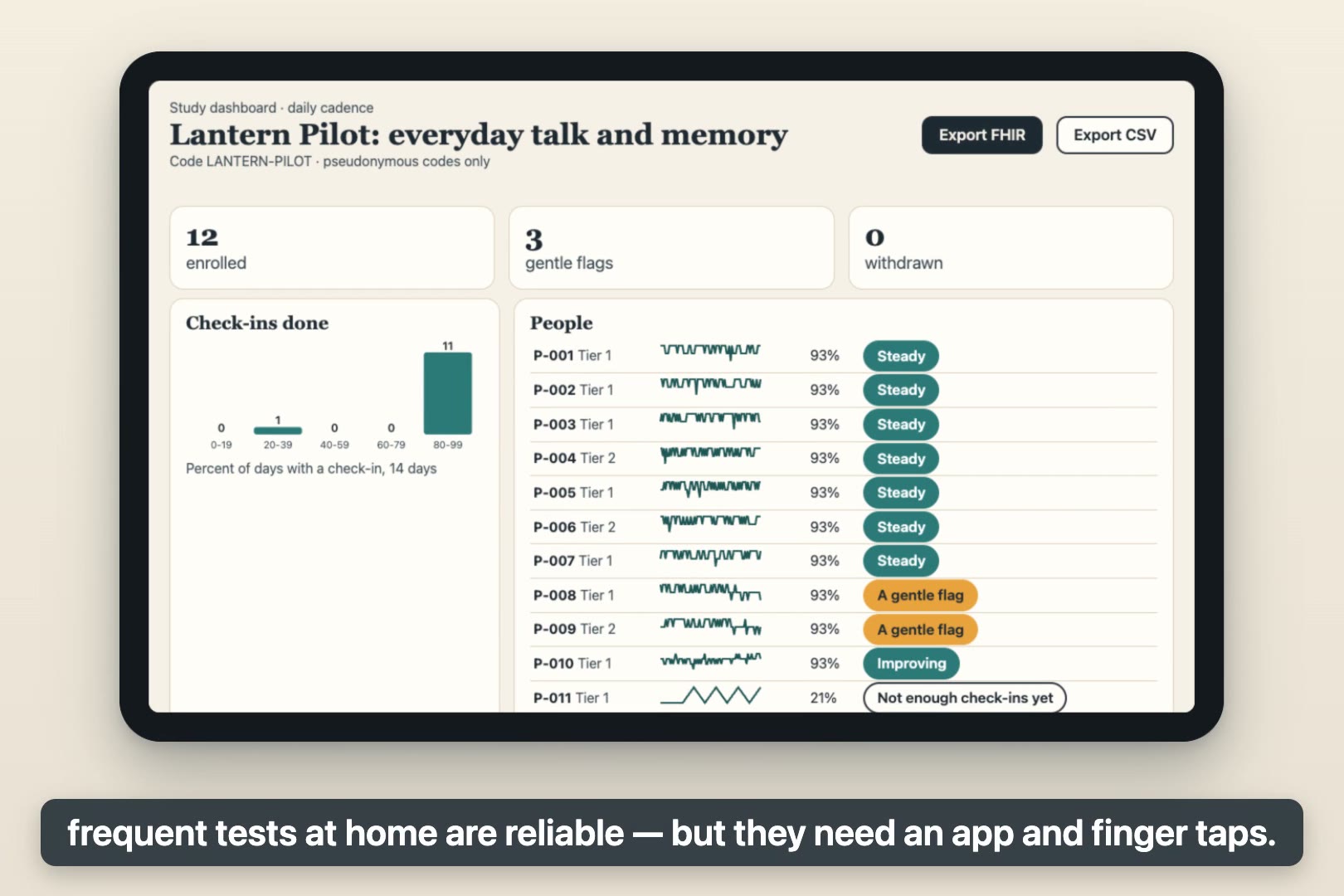
- Research layer. Study codes, versioned two-tier consent, withdraw by voice, and de-identified FHIR/CSV export (pseudonymous IDs, shifted dates).
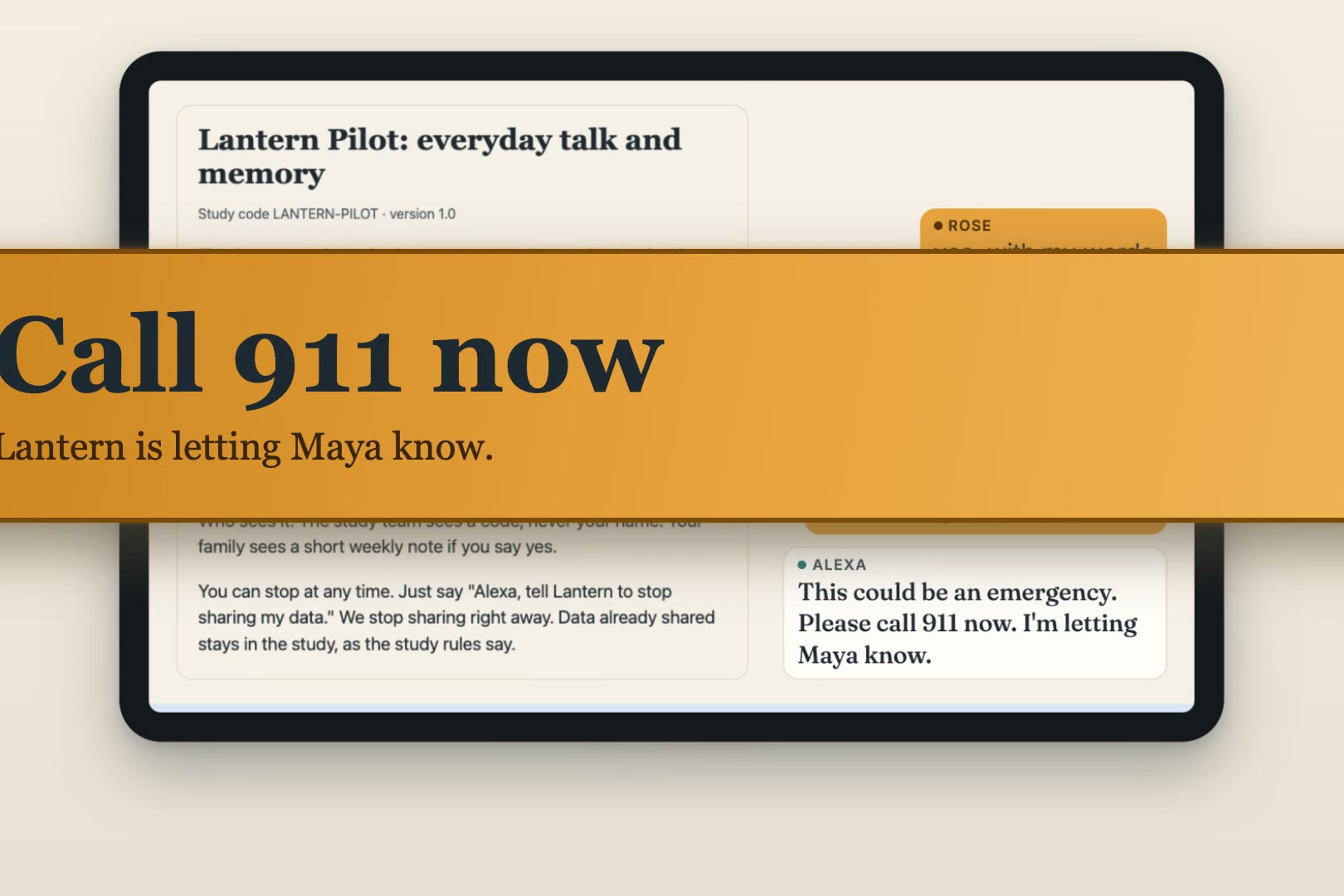
- Safety first. "I fell and my face feels numb" stops the check-in: "Please call 911 now. I'm letting Maya know." and an urgent note goes to family.
How we built it
- TypeScript monorepo. MCP server on the official TS SDK 1.32.1, stateless Streamable HTTP, protocol 2025-11-25 (2025-03-26 also accepted), 13 tools with input and output schemas.
- MCP Apps views served as
ui://lantern/...: check-in card, trend card, doctor summary (fullscreen), study dashboard, consent card. - An Agent Skill (
skills/lantern-checkin/SKILL.md) so Claude and other agent hosts use the same server. - Since hackathon participants don't get the Alexa+ toolkit simulator, we built an Echo-Show-style web simulator that is a real MCP client (initialize, tools/list, tools/call) with a live JSON-RPC drawer and an outbox.
- SQLite storage, deterministic scorers, a mock "Alexa brain" behind a provider interface, 98 vitest tests, and a one-command local run with no cloud account and no paid API.
Challenges we ran into
- Alexa+ add-ons receive text only, so voice-change signals can't be measured on-platform yet. We computed the features in the simulator and wrote it up as our top feature request.
- Making a drift detector that ignores one bad night but catches a slow slide, with synthetic data that is honest about it.
- Writing questions that never feel like a test to a 68-year-old.
Accomplishments that we're proud of
- Autobiographical consistency: checking today's story against what the person said yesterday is a new measure that only a conversational assistant can collect.
- The research path is real: consent tiers, withdrawal by voice, de-identified FHIR export.
- It runs fully on a laptop with one command.
What we learned
MCP is a good fit for health add-ons: data, not scripts. The host stays in charge of the voice, and the server stays in charge of scoring, consent and safety.
What's next for Lantern
A small pilot with a research partner to validate the measures against standard testing, and the Alexa+ acoustic-features API so voice changes can be tracked with consent.
Lantern is a wellness and research tool. It does not diagnose, treat, cure, or prevent any disease. The person in the demo, Rose Alvarez, is fictional, and all data is synthetic.
Built With
- agent-skills
- alexa
- express.js
- fhir
- mcp-apps
- model-context-protocol
- node.js
- react
- sqlite
- typescript
- vite
- vitest
- web-audio-api
- web-speech-api

Log in or sign up for Devpost to join the conversation.