Inspiration
As a frequent traveler and language enthusiast, I grew frustrated with rigid language apps that lacked natural conversation flow. I wanted a tool that felt like chatting with a native speaker—adapting to my level, correcting mistakes gently, and focusing on real-world scenarios (like ordering coffee or job interviews) that actually matter for daily use.
What it does
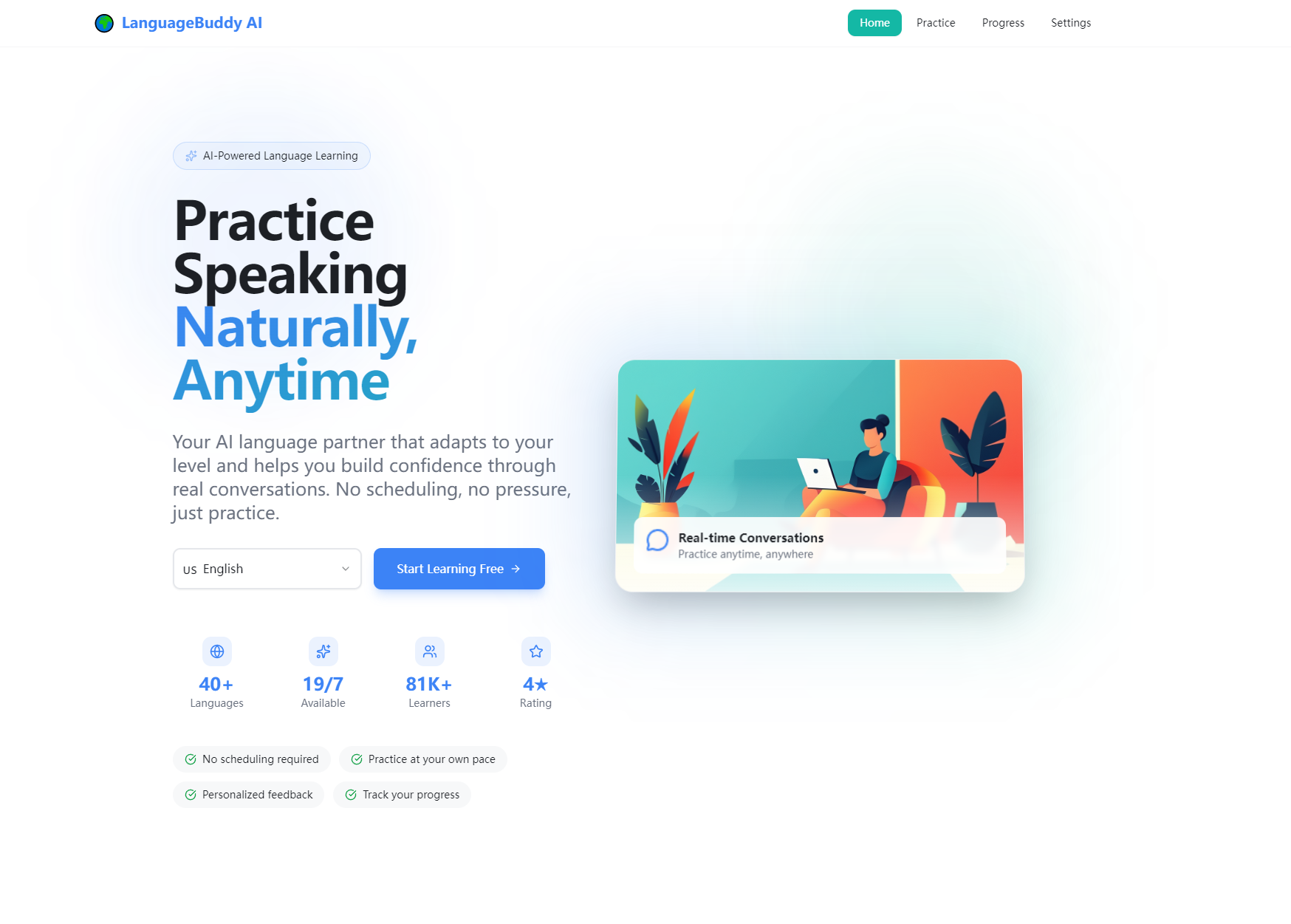
LanguageBuddy AI lets users practice 50 languages via open chat or guided scenario modes. It delivers real-time grammar corrections with explanations, scores pronunciation (1-10 scale) by analyzing clarity/intonation, and tracks progress through visual charts, milestones, and streak counts. The AI adapts speed/vocabulary to beginner/intermediate/advanced levels for natural learning.
How we built it
We started with core UX design to mirror familiar messaging app interfaces (for comfort), then built the backend with Python/TensorFlow for NLP-driven corrections. We integrated Google Cloud’s Speech API for voice analysis, used React for the frontend, and Firebase for lightweight progress data storage. Chart.js powered progress visualizations, and AWS Lambda handled AI response logic.
Challenges we ran into
The biggest hurdle was balancing real-time corrections with natural conversation flow—we didn’t want interruptions to break the chat rhythm. We also struggled with accurate pronunciation scoring across accents (e.g., Spanish from Spain vs. Mexico) and had to refine the AI to detect nuance without over-correcting.
Accomplishments that we're proud of
We created an AI that adapts to user proficiency automatically (no manual level selection required) and delivers corrections in a non-intrusive way. The scenario-based mode has been tested with beta users who reported feeling more confident in real-world conversations—our proudest win.
What we learned
We deepened our understanding of speech recognition limitations across languages and how cultural context shapes conversational norms. We also learned that user-centric design (e.g., familiar chat UI) matters more than technical complexity for adoption.
What's next for this project
We plan to add regional dialect support (e.g., British vs. American English), integrate short audio clips of native speakers for pronunciation comparison, and build a lightweight community feature for users to share practice tips. We’re also exploring offline mode for travelers without internet access.

Log in or sign up for Devpost to join the conversation.