- Inspiration
- What it does
- How we built it
- Challenges we ran into
- Accomplishments that we're proud of
- What I learned What's next for Language School Platform
My Inspiration- Many language-school students are working adults who cannot always attend fixed class schedules. Schools also need more than simple video hosting: they need payment-aware course access, assessment records, progress tracking, role permissions, and certificates that can be verified later. I started with a Korean language school use case, then designed the platform so other language schools can use the same foundation.
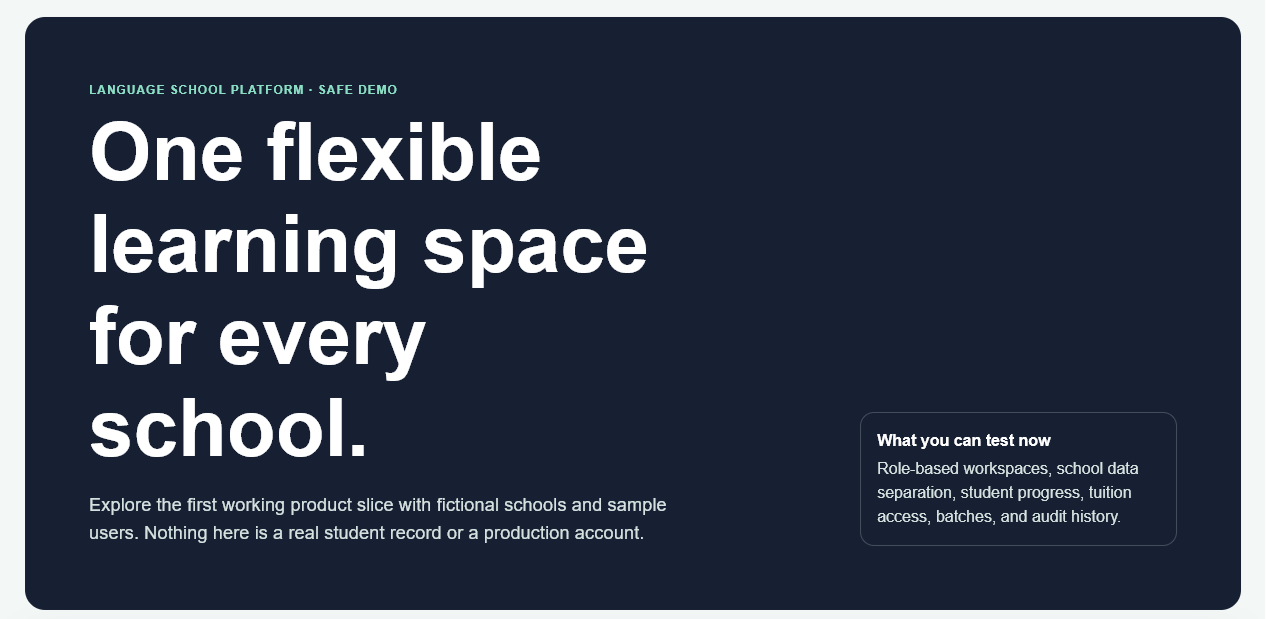
What it does? Language School Platform is a configurable education platform for independent language schools. Each school can have its own workspace, branding, courses, modules, lessons, staff roles, student records, tuition rules, quizzes, final-exam eligibility, and certificates.
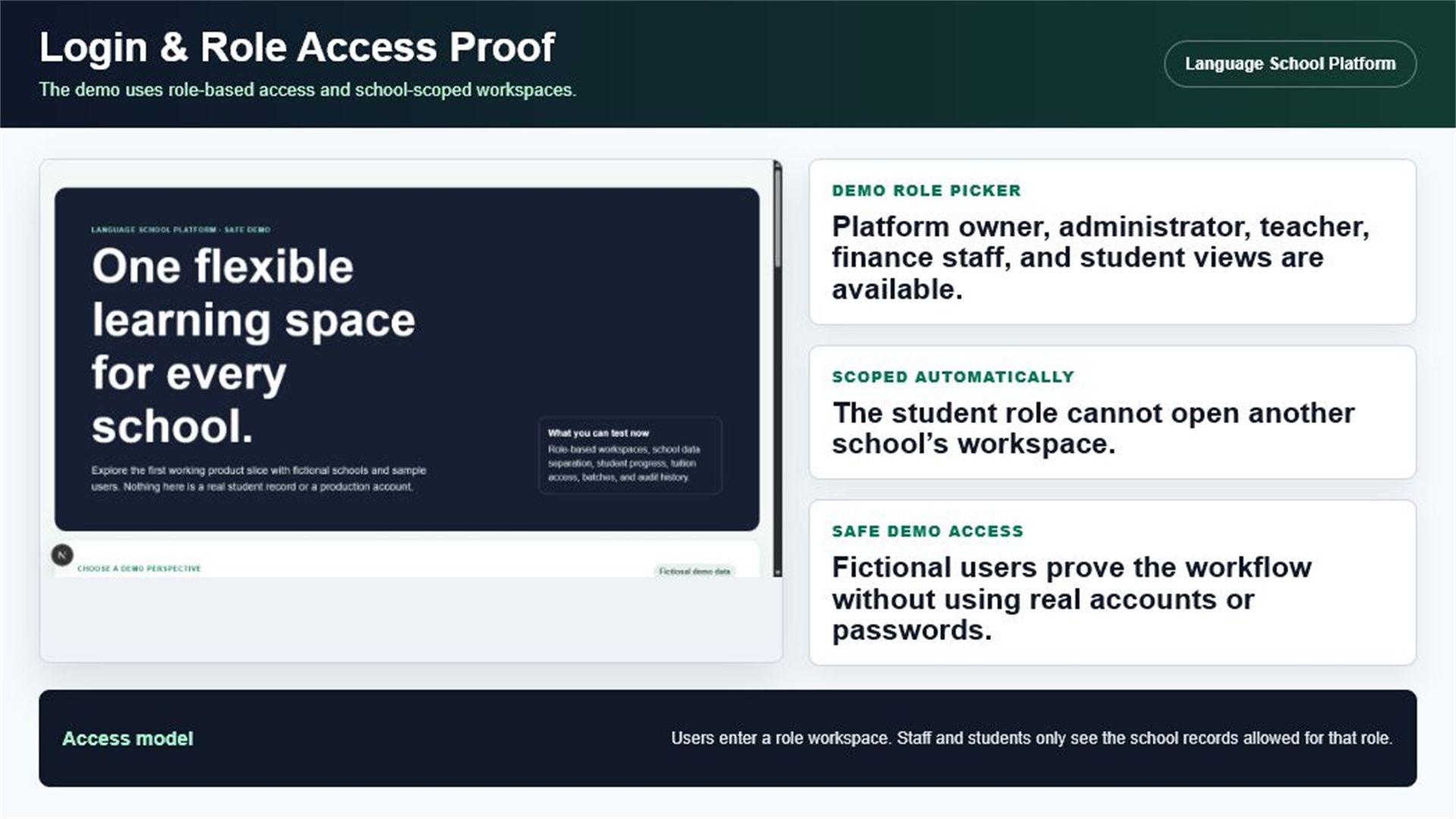
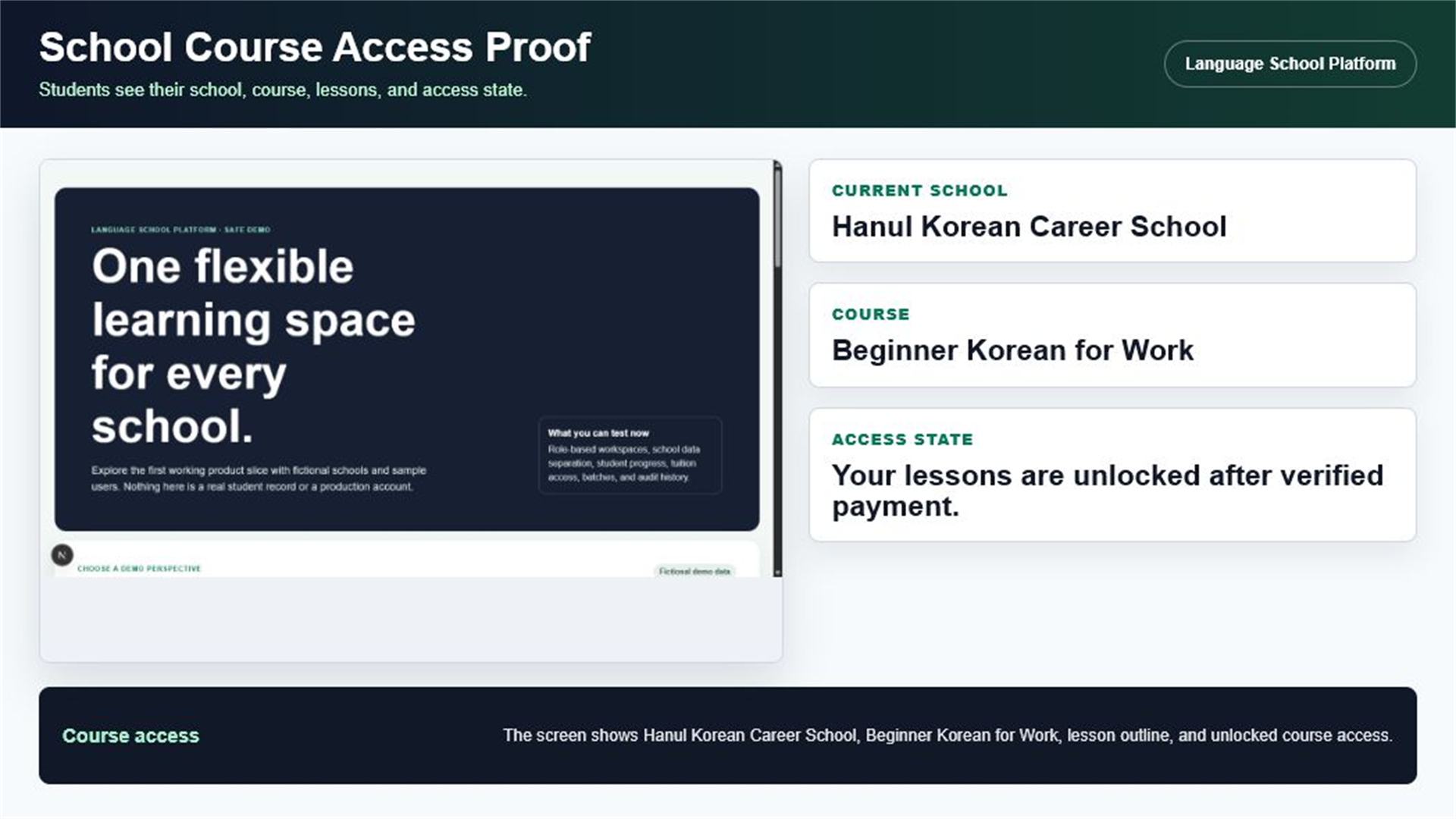
The current prototype includes a safe demo workspace with fictional schools and sample users. It demonstrates:
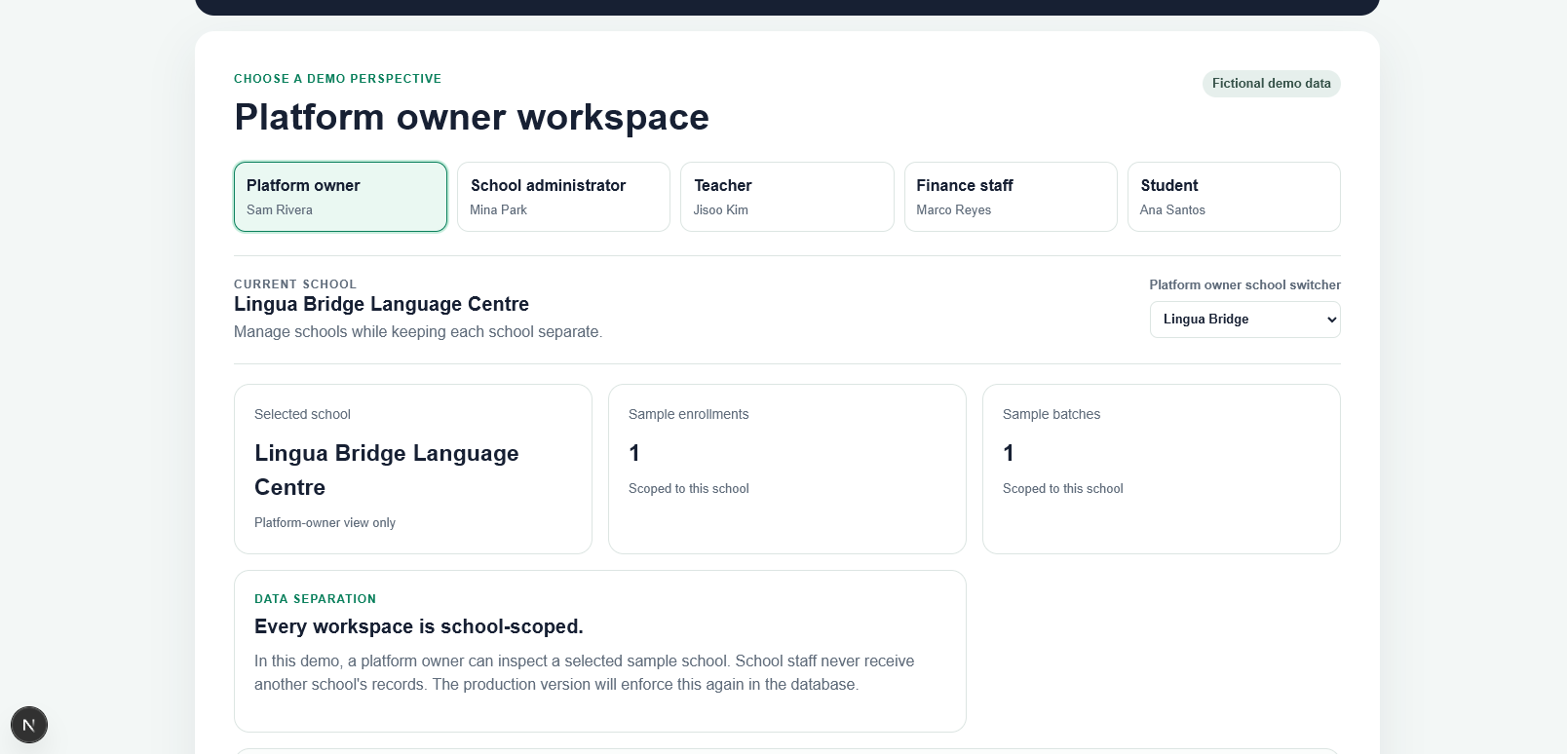
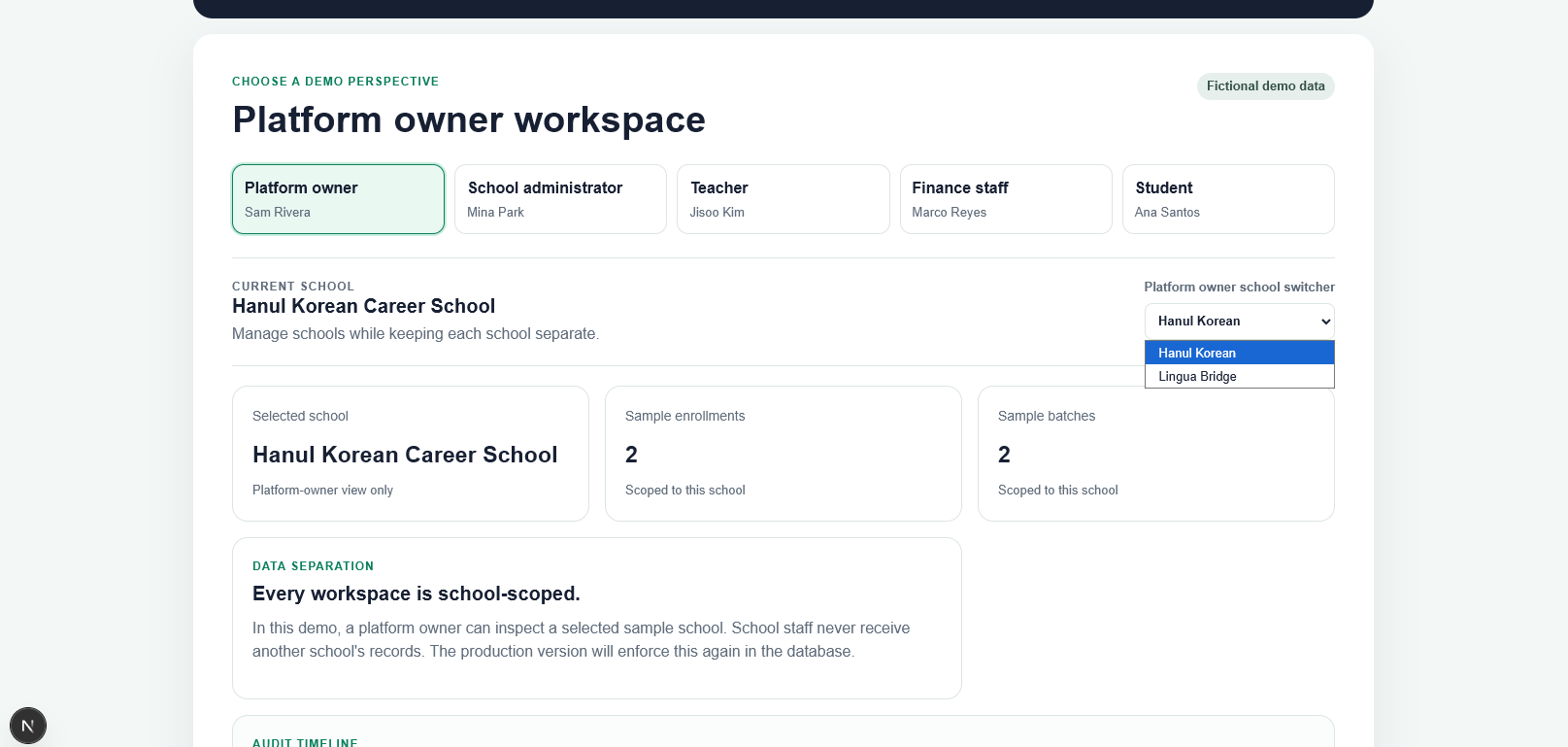
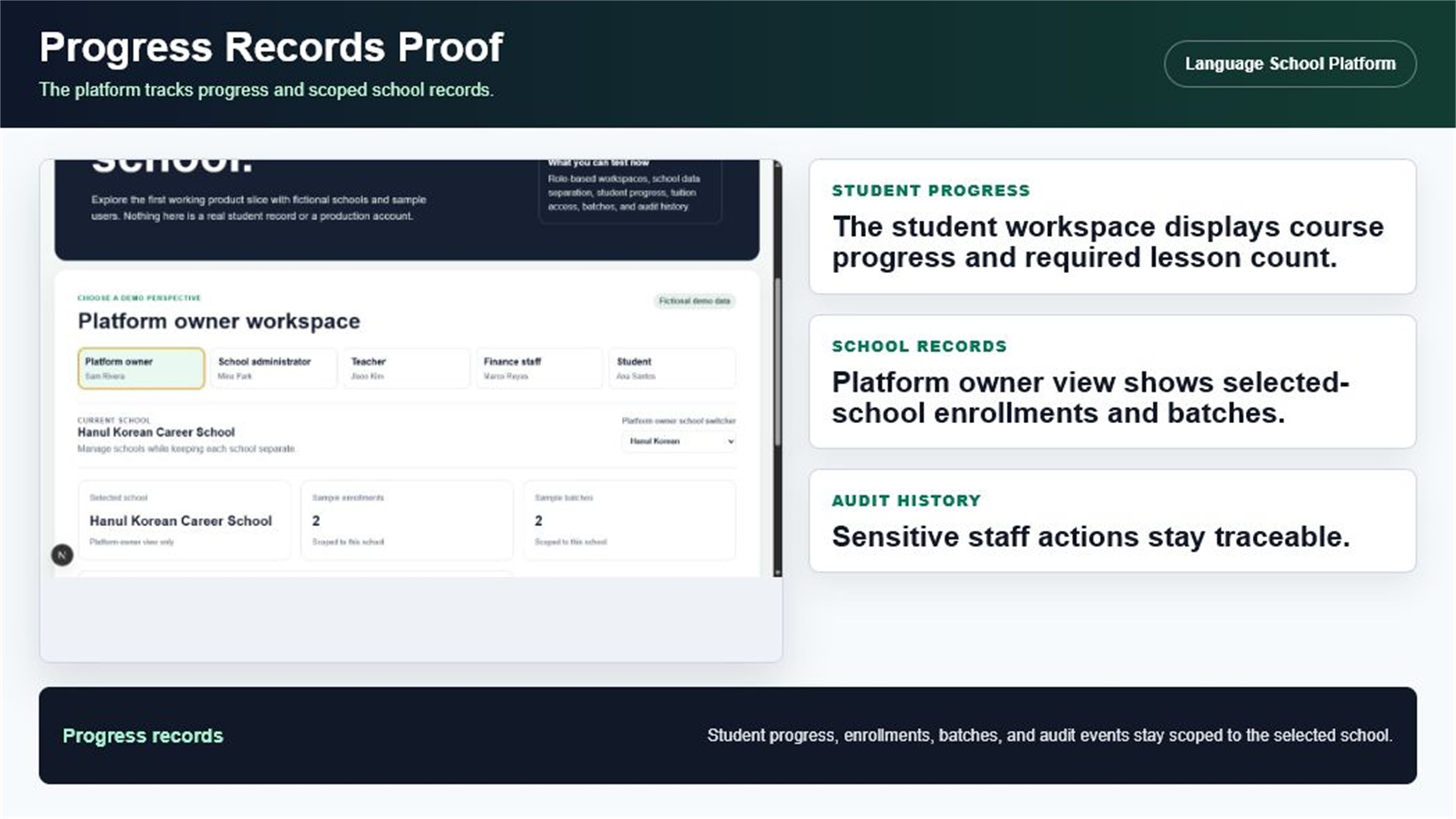
- Multi-school scoping so one school's data stays separate from another school's data.
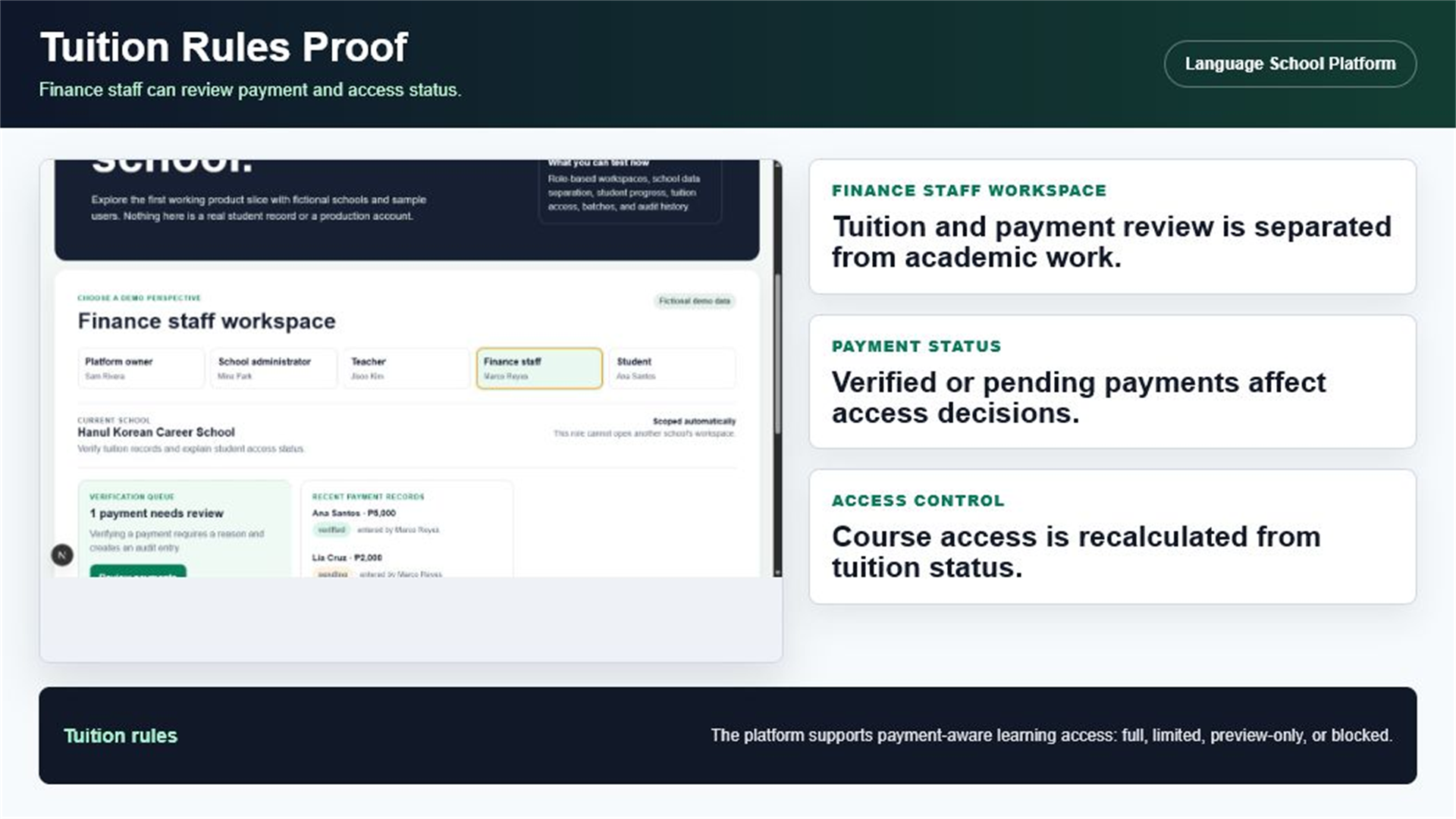
- Student, teacher, finance, administrator, and platform-owner views.
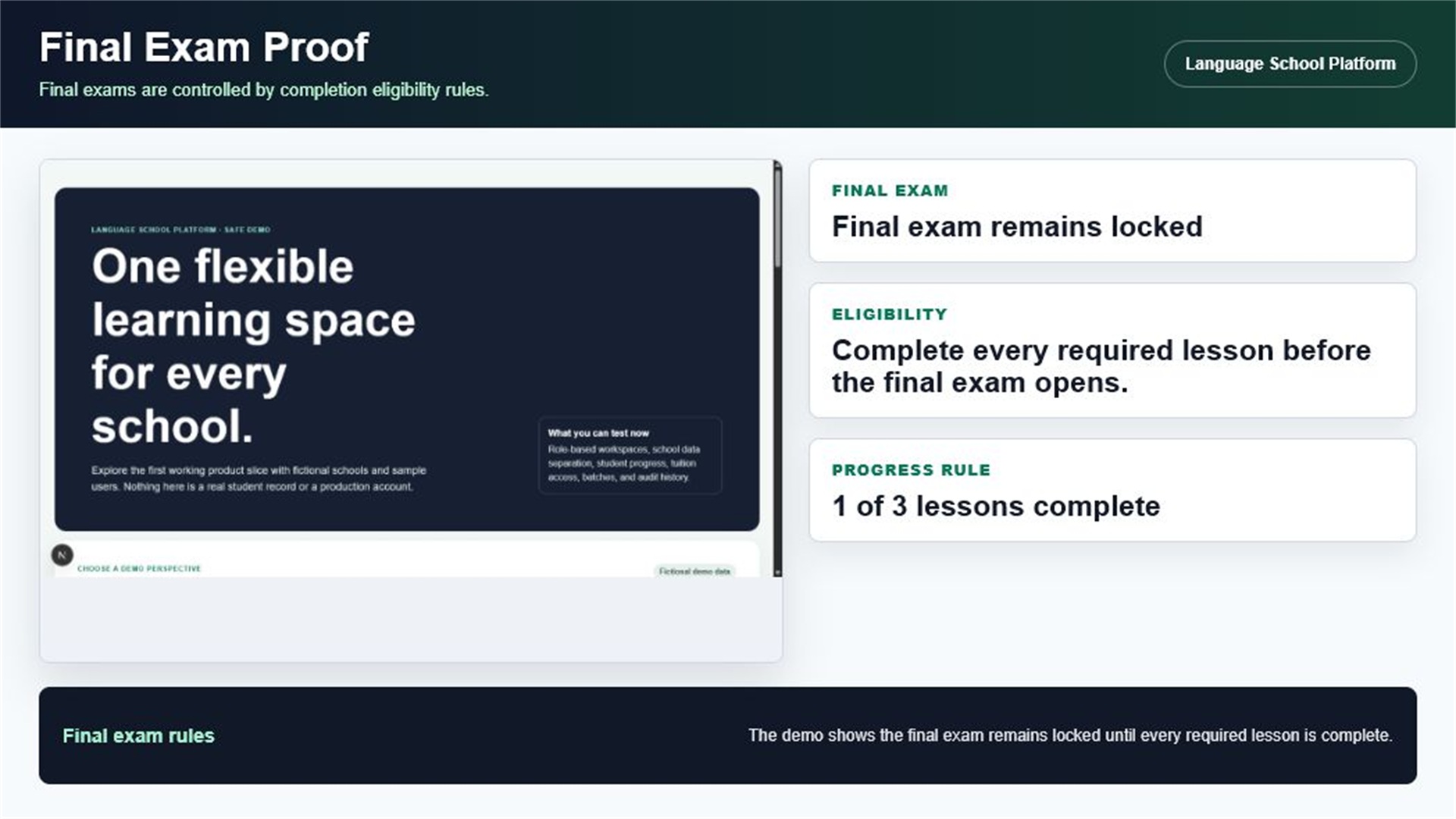
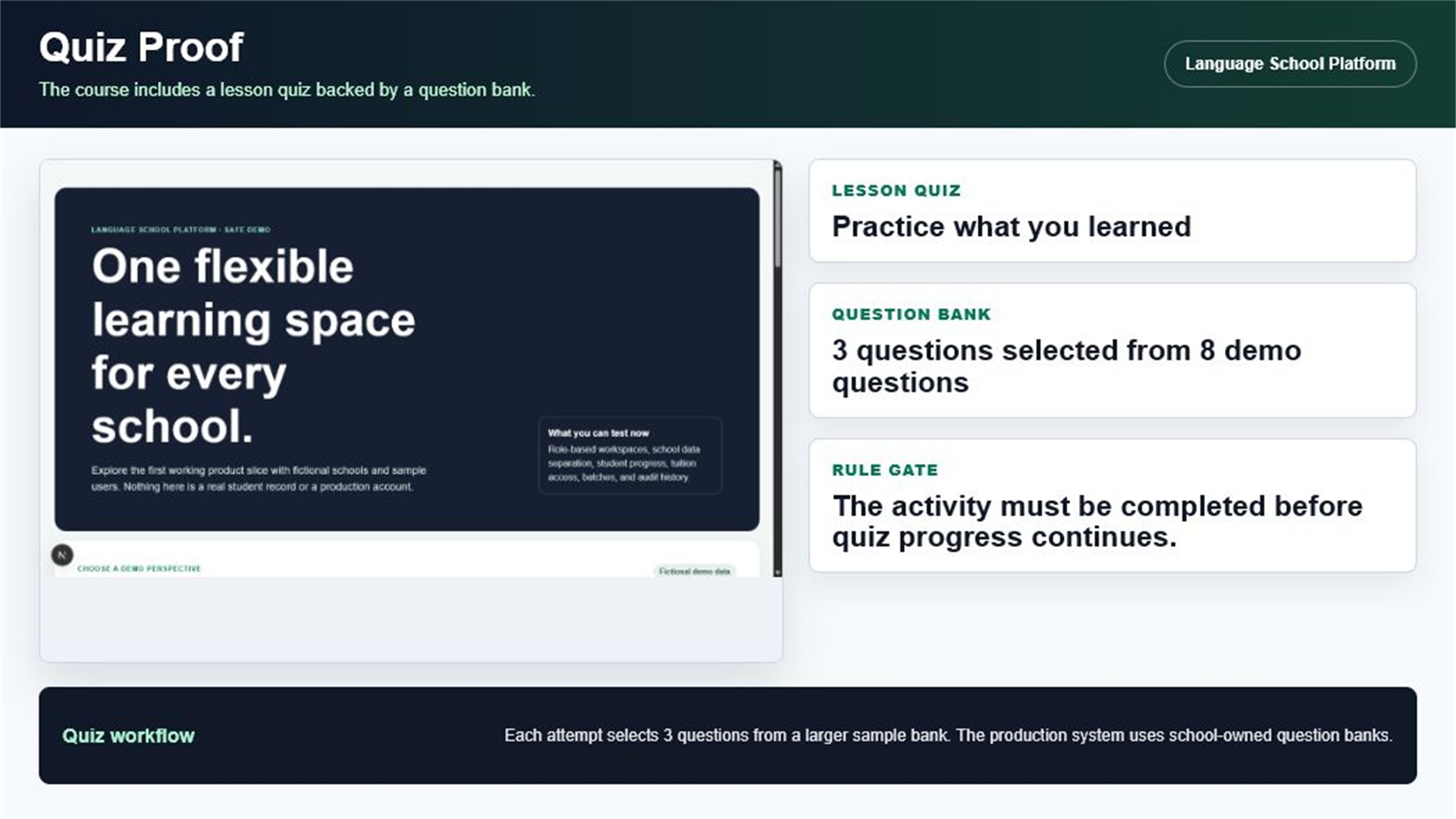
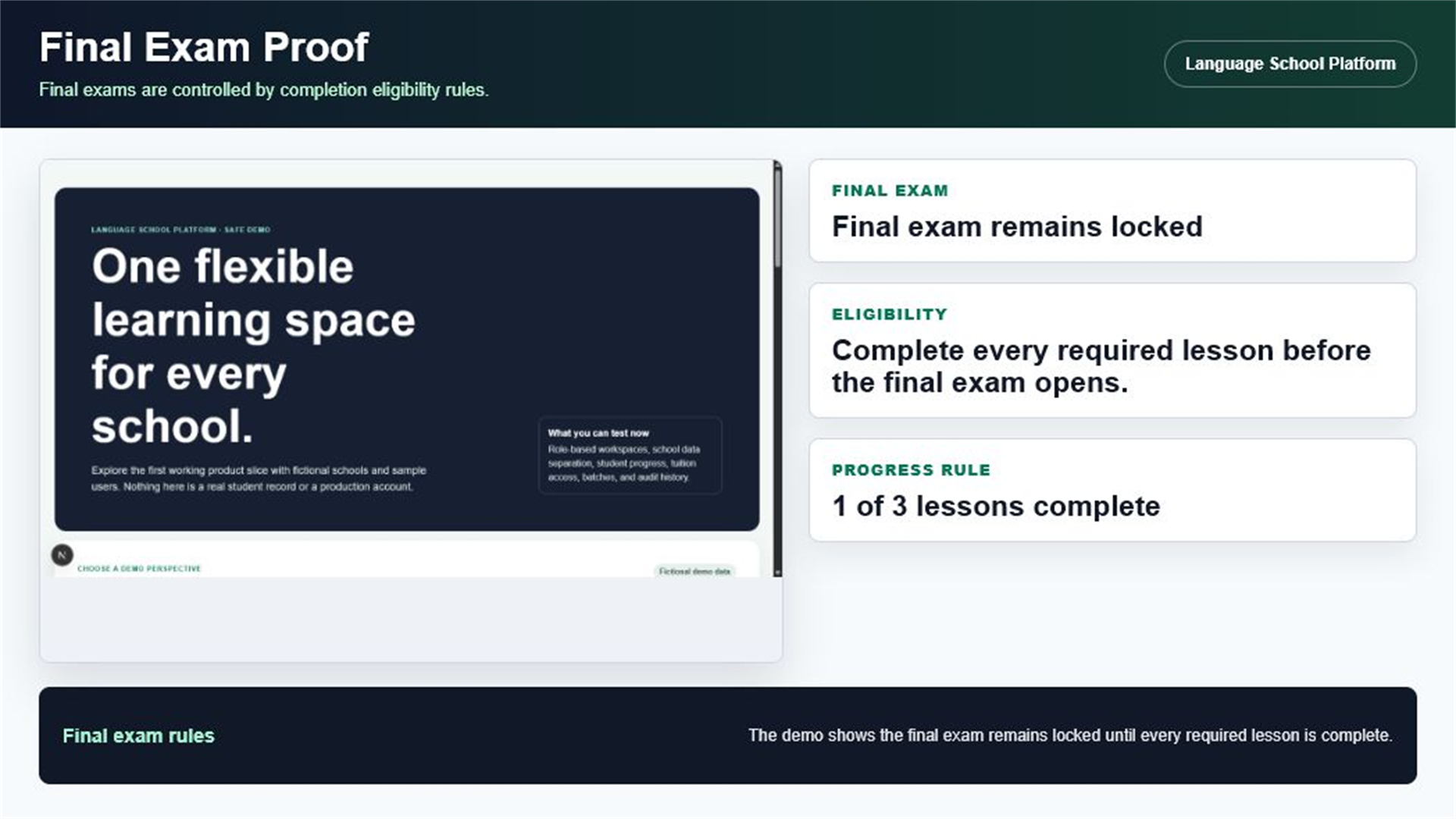
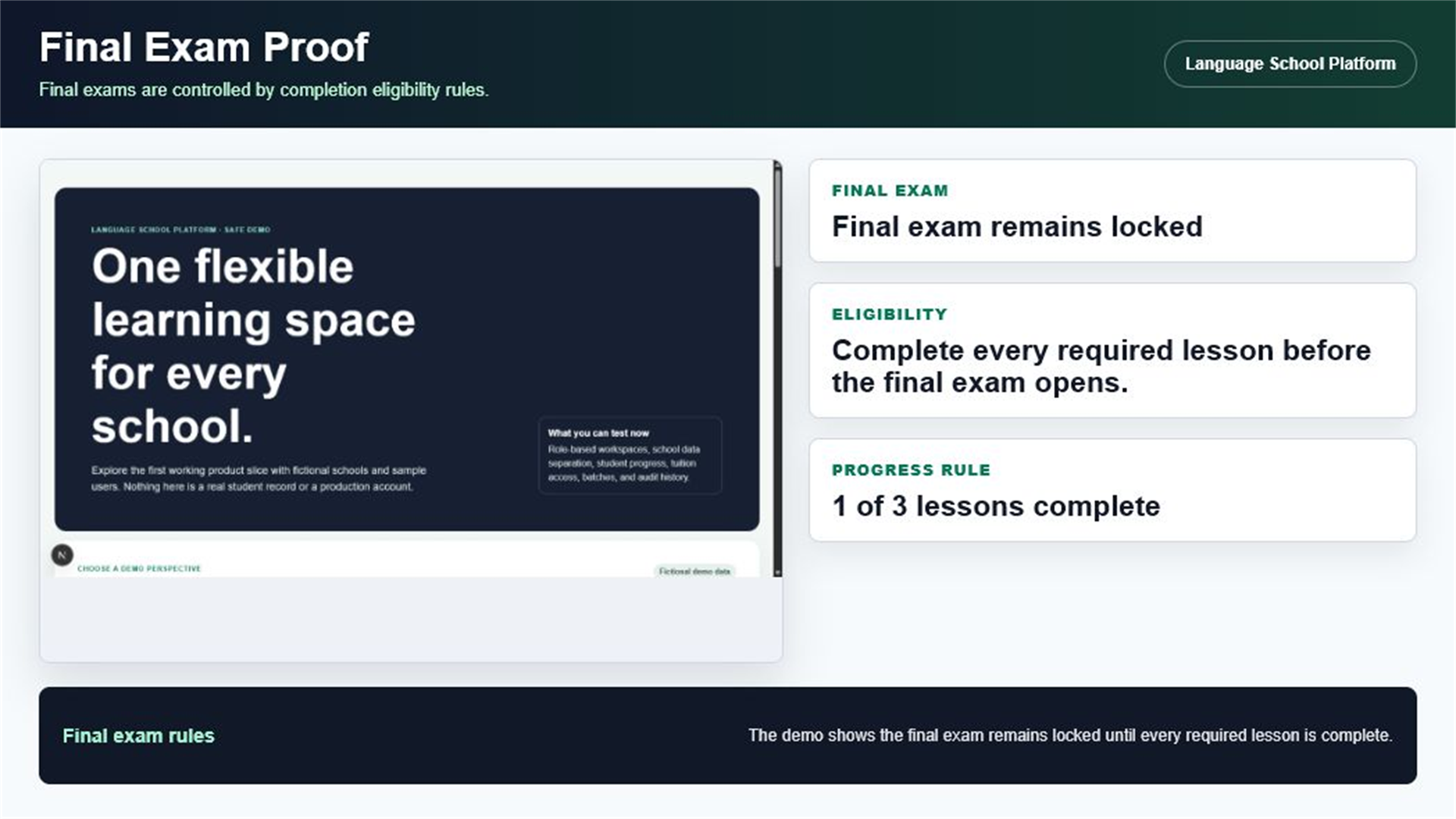
- Self-paced lesson flow, progress tracking, quiz scoring, and final-exam eligibility.
- Tuition-aware access states for full, limited, preview-only, or blocked learning access.
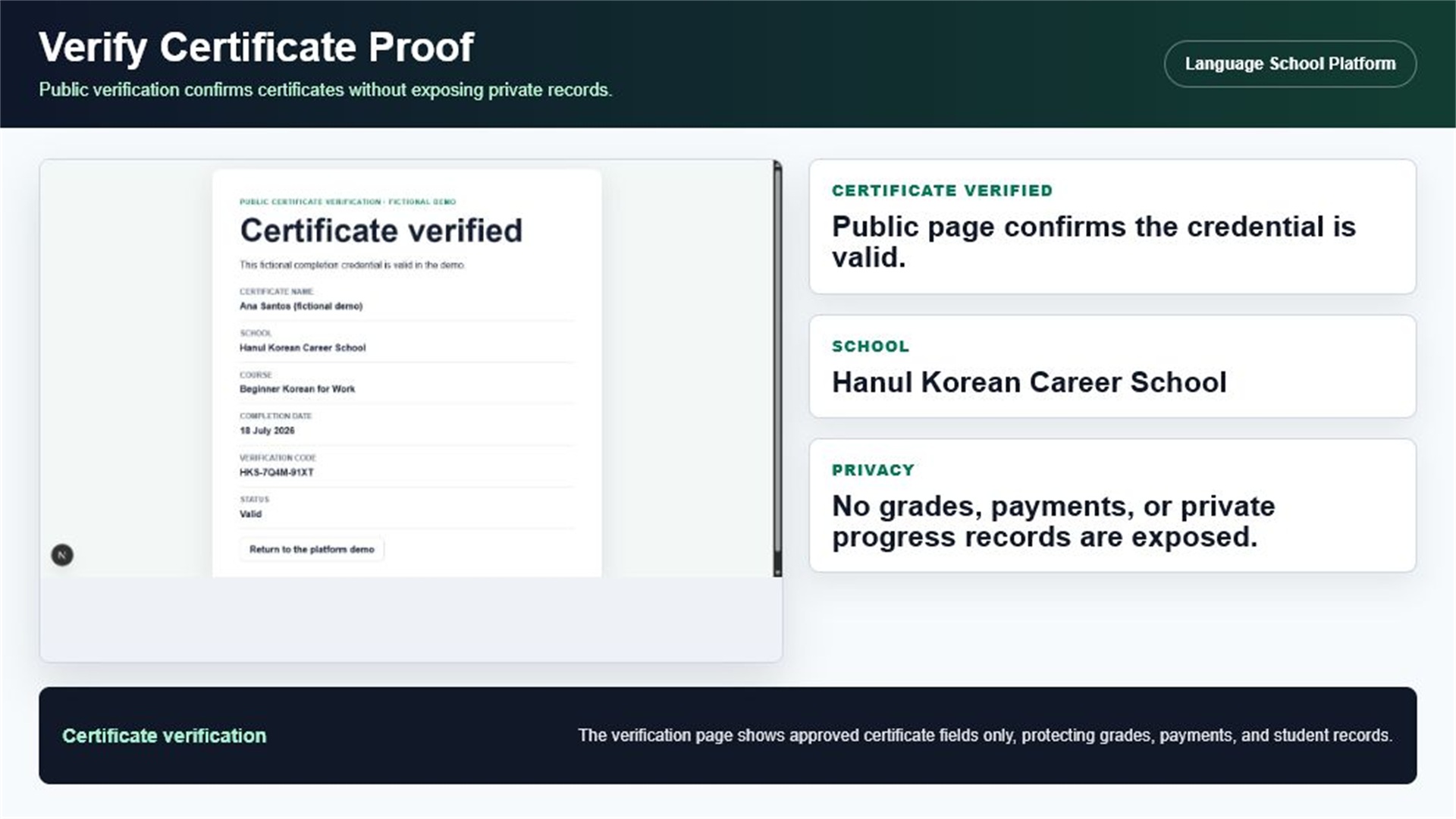
- A fictional certificate and public verification page that exposes only approved certificate fields.
- A PHP application foundation for the selected OVH hosting environment, including first-owner setup, sign-in, school dashboard, course creation, student registration, module setup, and resource setup.
How I built it? I used Codex to help turn the original idea into a structured product and implementation plan. The repository includes product vision, requirements, user roles, business rules, privacy notes, architecture decisions, roadmap, database migrations, a Next.js prototype, and a PHP application foundation for deployment on OVH hosting with PostgreSQL.
The prototype is built with Next.js, React, TypeScript, and automated tests. The live MVP foundation is being prepared as a modular PHP application because the selected production hosting plan supports PHP and an OVH PostgreSQL database. The architecture keeps school data isolated, stores important actions in audit-friendly flows, and separates student tuition from platform subscription concepts.
How Codex and GPT-5.6 helped?
Codex acted like a product analyst, architect, pair programmer, and reviewer. It helped me break a broad school-platform idea into scoped phases, define role boundaries, write documentation, create migrations, implement demo workflows, and add automated tests around critical rules. It also helped check privacy and safety concerns so the demo uses fictional data and does not collect real student, payment, password, or production information.
GPT-5.6 and Codex were especially useful for connecting product decisions to code. Instead of only writing screens, I used Codex to reason through tenant isolation, tuition access, assessment rules, certificate verification, and how the system should grow safely for real schools.
Challenges I ran into?
The hardest part was keeping the project practical. A language-school platform can quickly become too large, so I used Codex to separate the MVP from later ideas such as advanced pronunciation grading, online payment gateways, and full mobile apps. Another challenge was aligning the technology with the real hosting constraint: the selected OVH plan points the production MVP toward PHP and PostgreSQL, while the Next.js app remains a safe planning and demo prototype.
What I learned?
I learned how valuable it is to make product rules explicit before building too much UI. Codex helped me slow down in the right places: school boundaries, role permissions, tuition logic, assessment attempts, certificate privacy, and deployment constraints. I also learned how to use an AI coding agent for more than code generation: it can help maintain a clearer architecture and project memory.
What's next?
Next steps are to finish the production-ready PHP MVP, connect it to the approved PostgreSQL database, add real authentication and password recovery, complete course and lesson authoring, strengthen assessment and certificate workflows, and pilot the platform with the first Korean language school using real privacy and security review.
Built With
- codex
- eslint
- gpt-5.6
- next.js
- node.js
- php
- postgresql
- react
- tsx
- typescript

Log in or sign up for Devpost to join the conversation.