Inspiration
Language Cafe began with a problem I experienced myself.
When I was 18 and living in Afghanistan, I was trying to learn English, but there was no English-speaking community around me. I could study vocabulary and grammar, but I lacked the thing I needed most: a welcoming place where I could speak regularly, make mistakes, tell stories, read aloud, play language games, and learn through real conversation.
I started imagining an online language café where learners and fluent speakers could meet through live audio and help one another build confidence.
I received a scholarship to study business administration rather than computer science, and changing programs was not possible. I had the idea, but not the programming knowledge or money required to build it. Over the years, I contacted developers and software companies. Most considered it too ambitious, and their quotations were far beyond what I could afford. I also tried to find a technical partner, without success. Still, I kept the idea.
In 2022, I moved to Sweden and faced the same challenge while learning Swedish. There I discovered språkcafé: volunteer-organized gatherings where newcomers practice Swedish with members of the community. People speak, listen, help each other, and form real social connections. It reminded me immediately of the app I had imagined and gave it a name: Language Cafe.
When ChatGPT was released, I saw a path forward. I began learning programming through conversations with it. It explained unfamiliar concepts at my level, helped me understand code, and stayed with me while I experimented, failed, debugged, and rebuilt. Almost my entire journey into programming has happened alongside ChatGPT.
What it does
Language Cafe combines independent language practice with live human conversation.
Learners can:
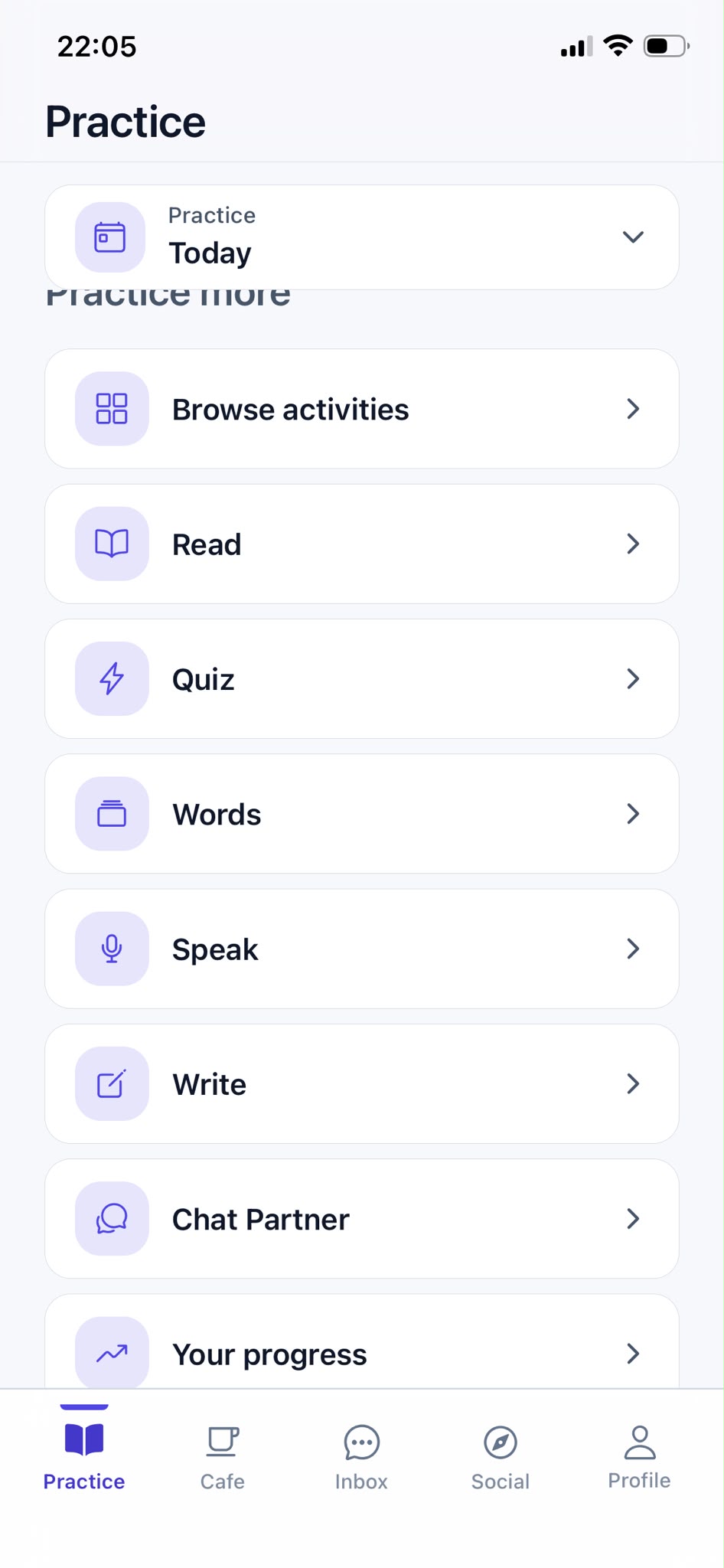
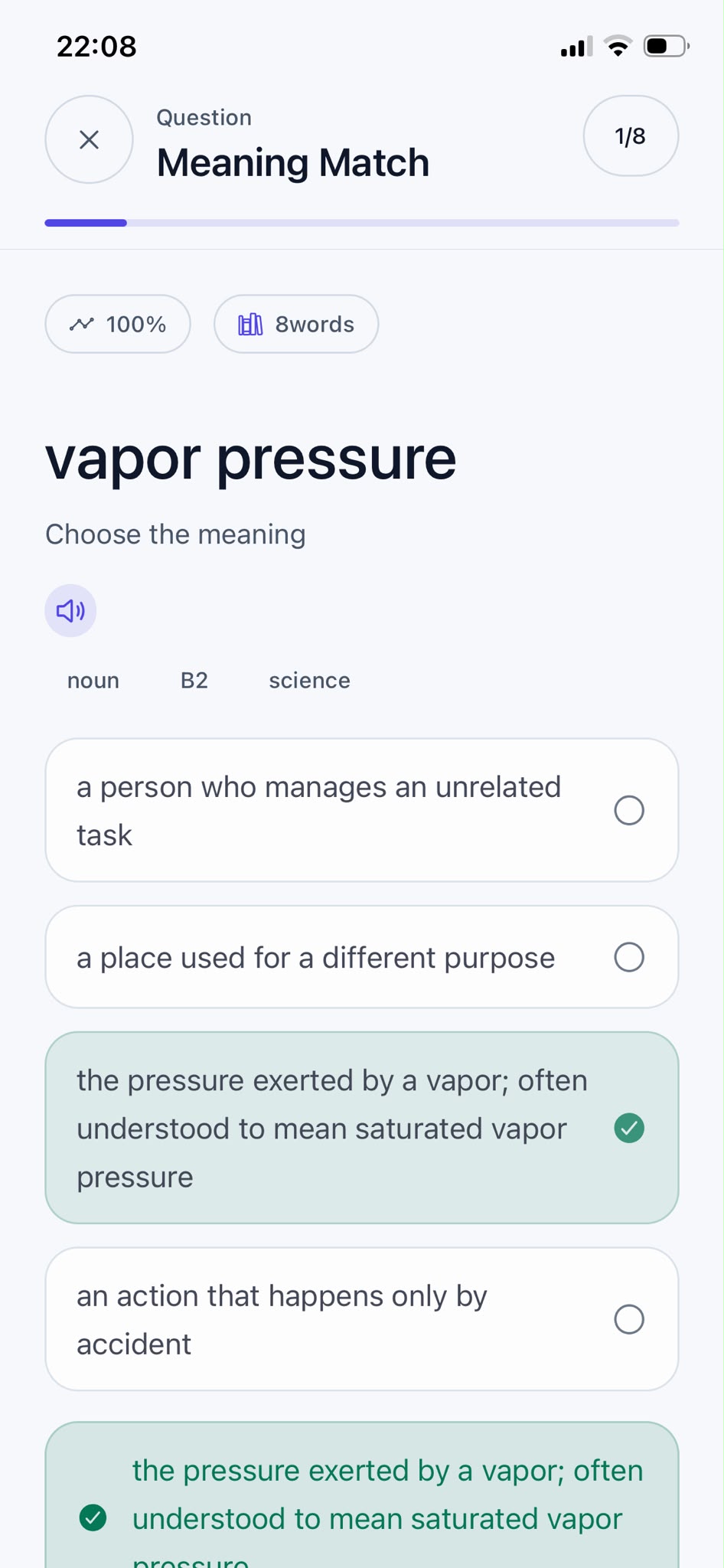
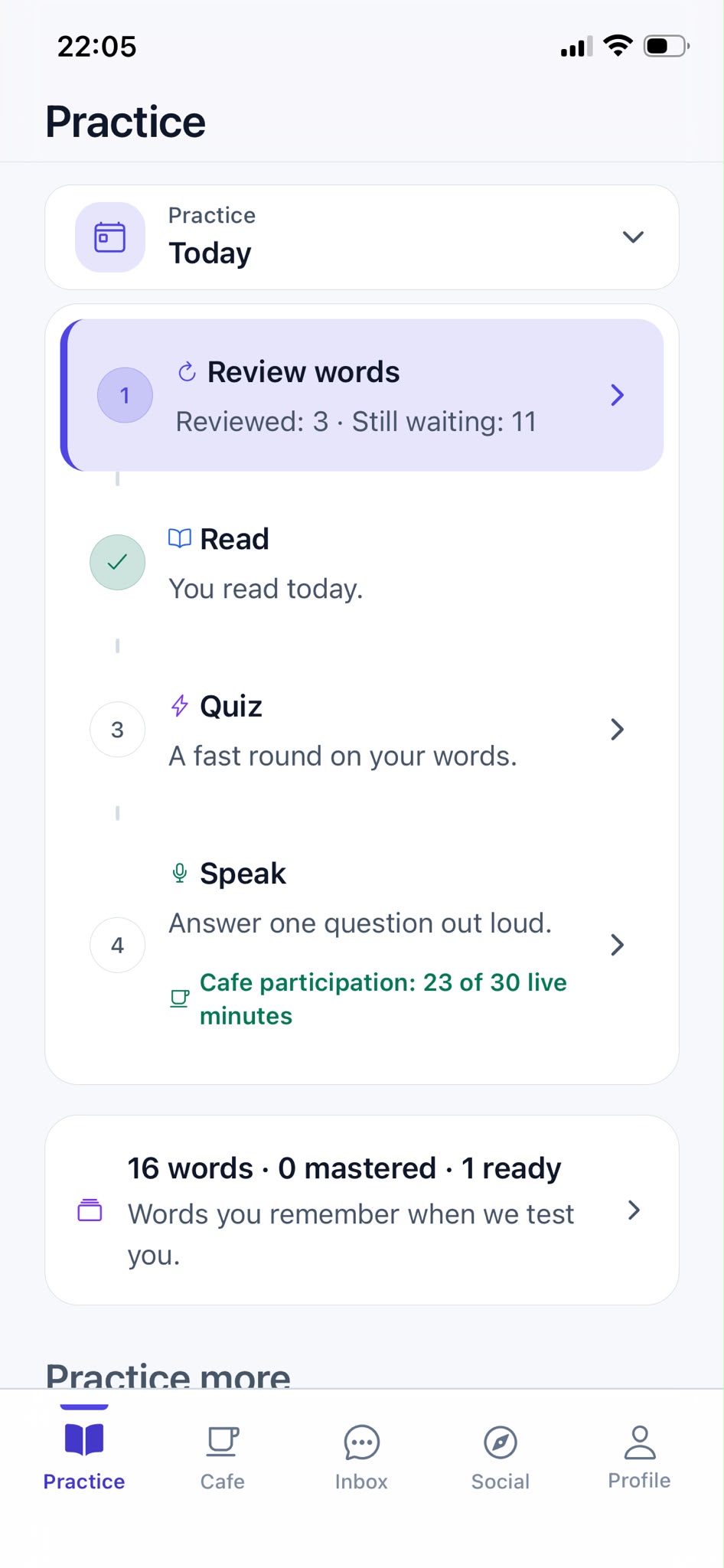
- Practice vocabulary, grammar, reading, listening, writing, and speaking at an appropriate CEFR level.
- Prepare privately before joining a conversation.
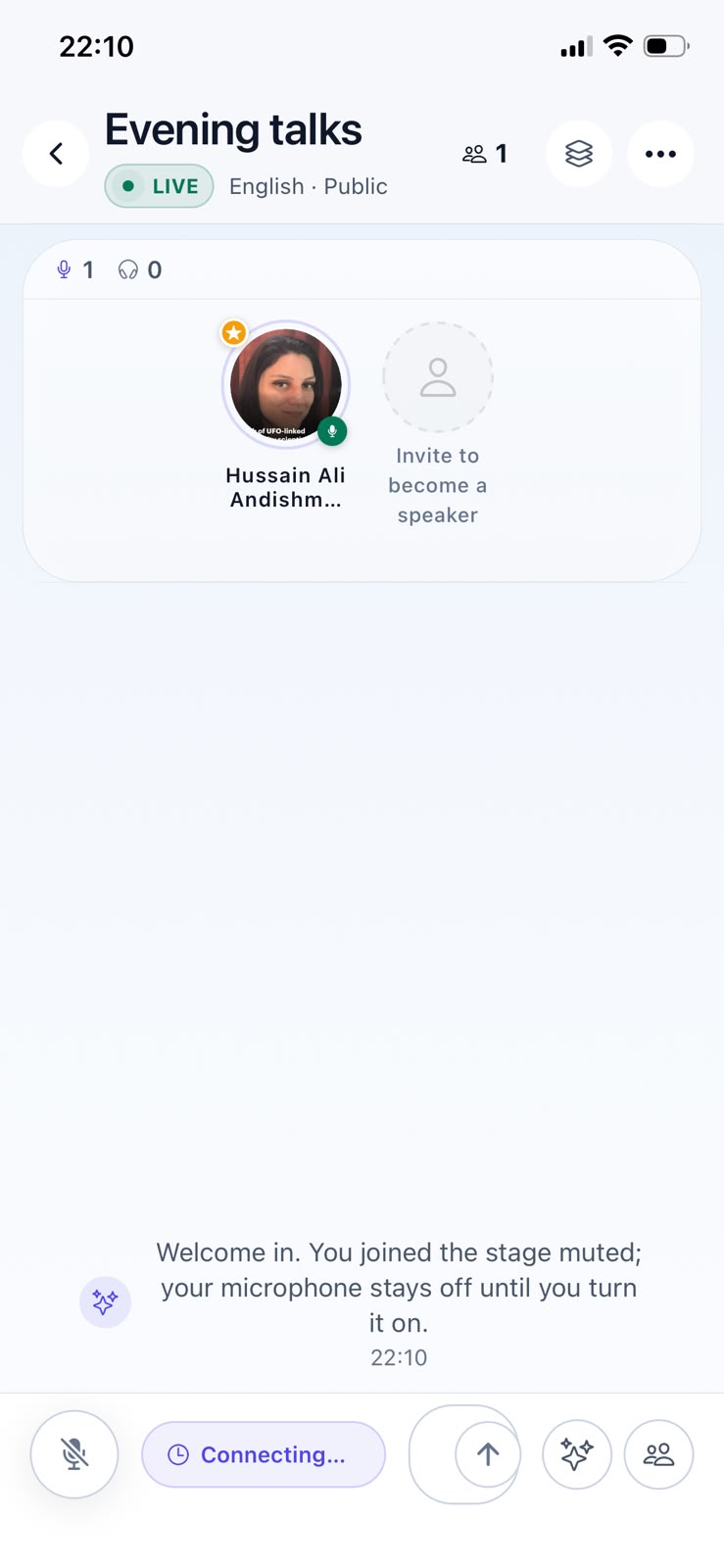
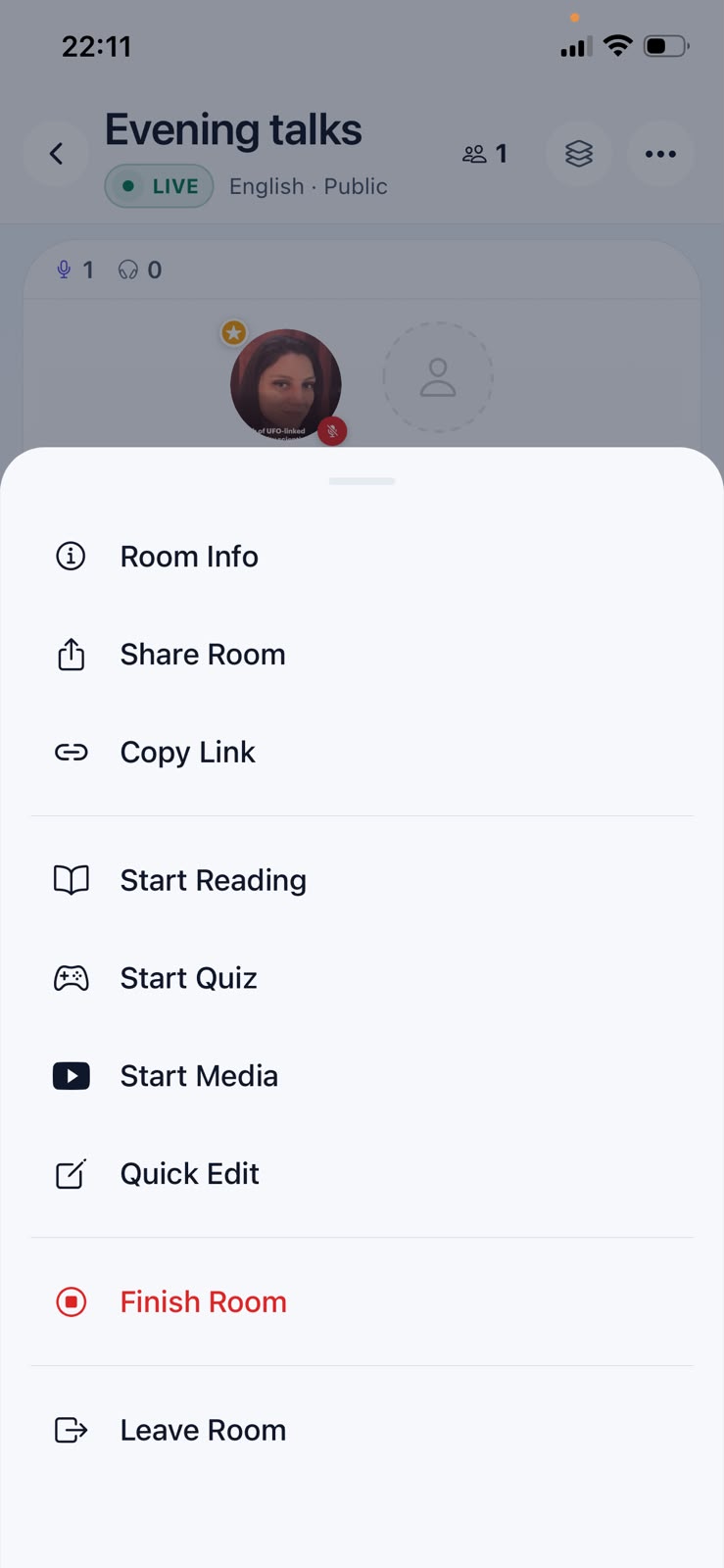
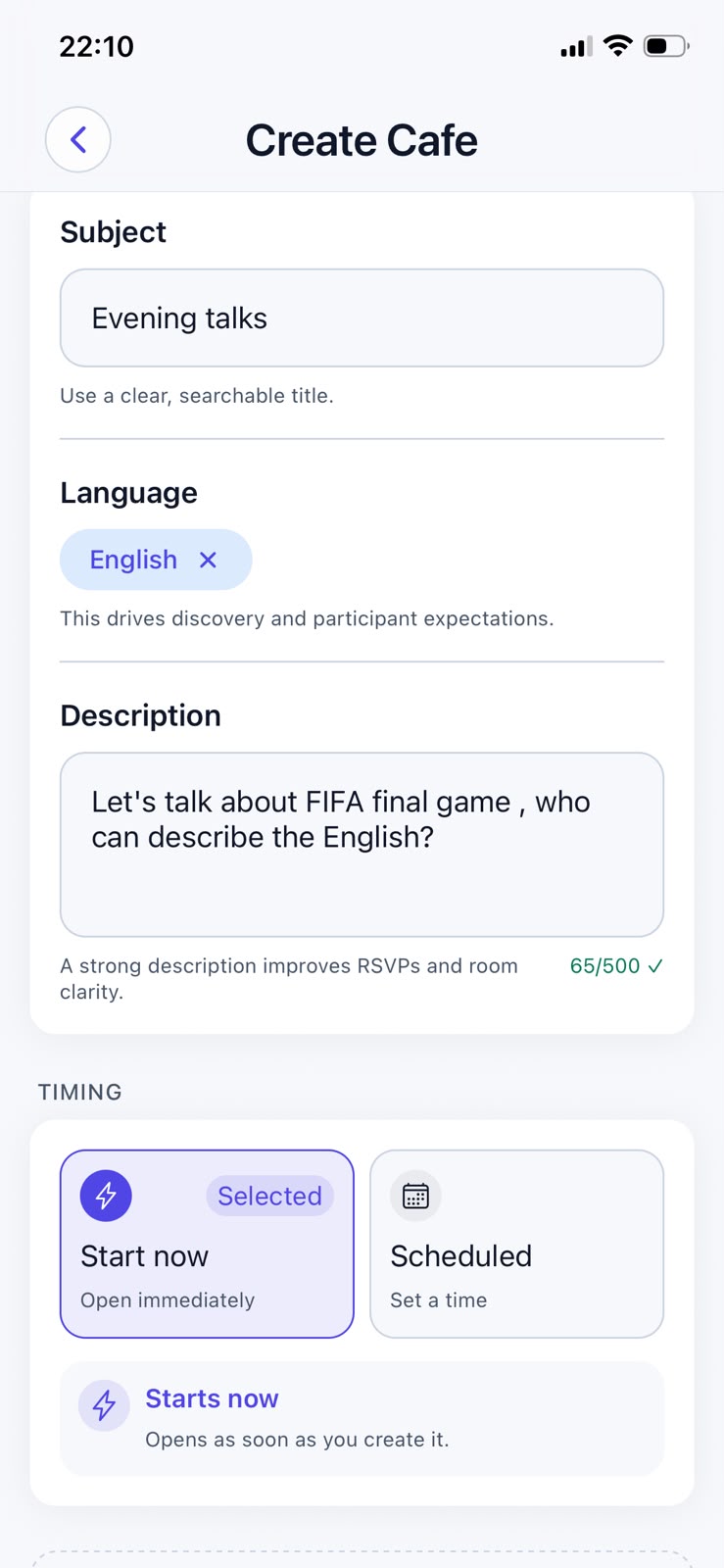
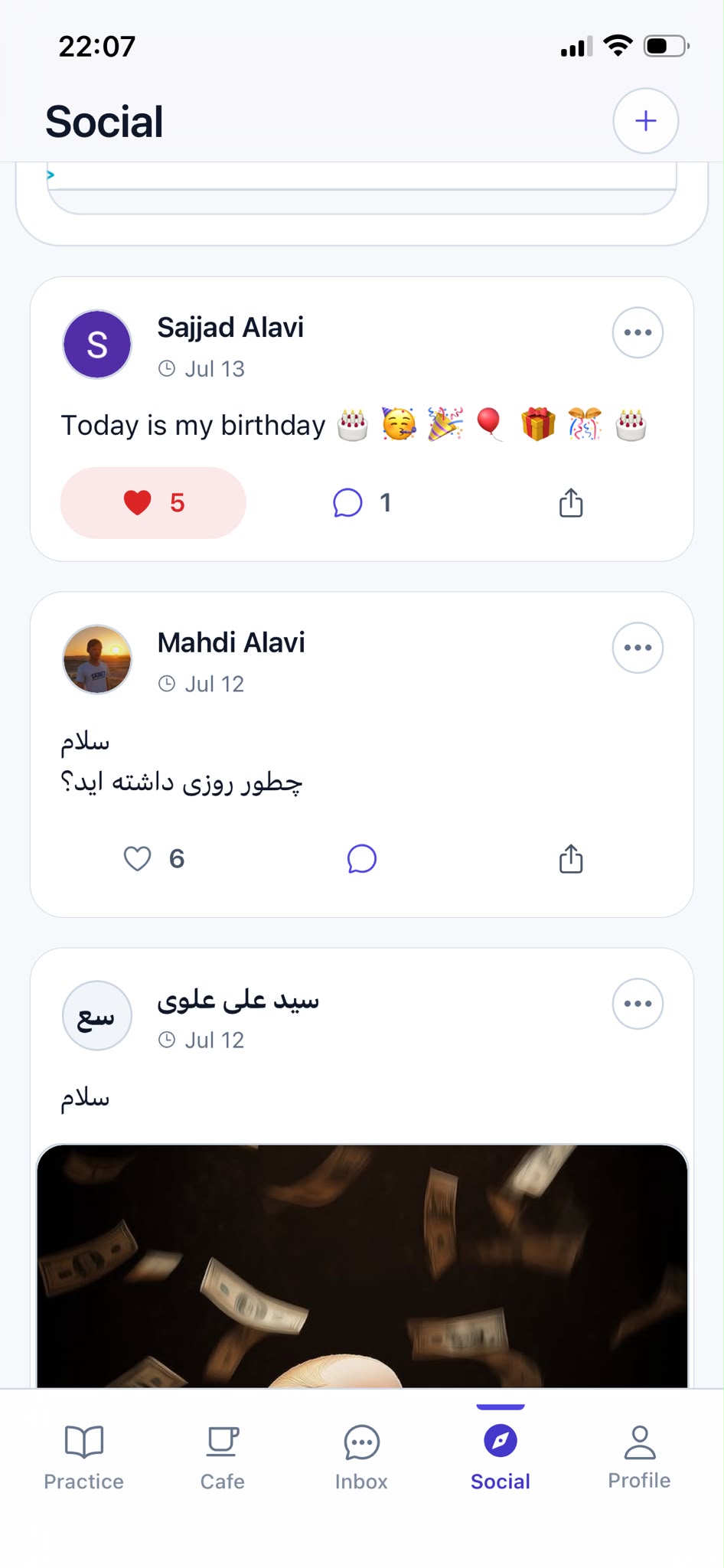
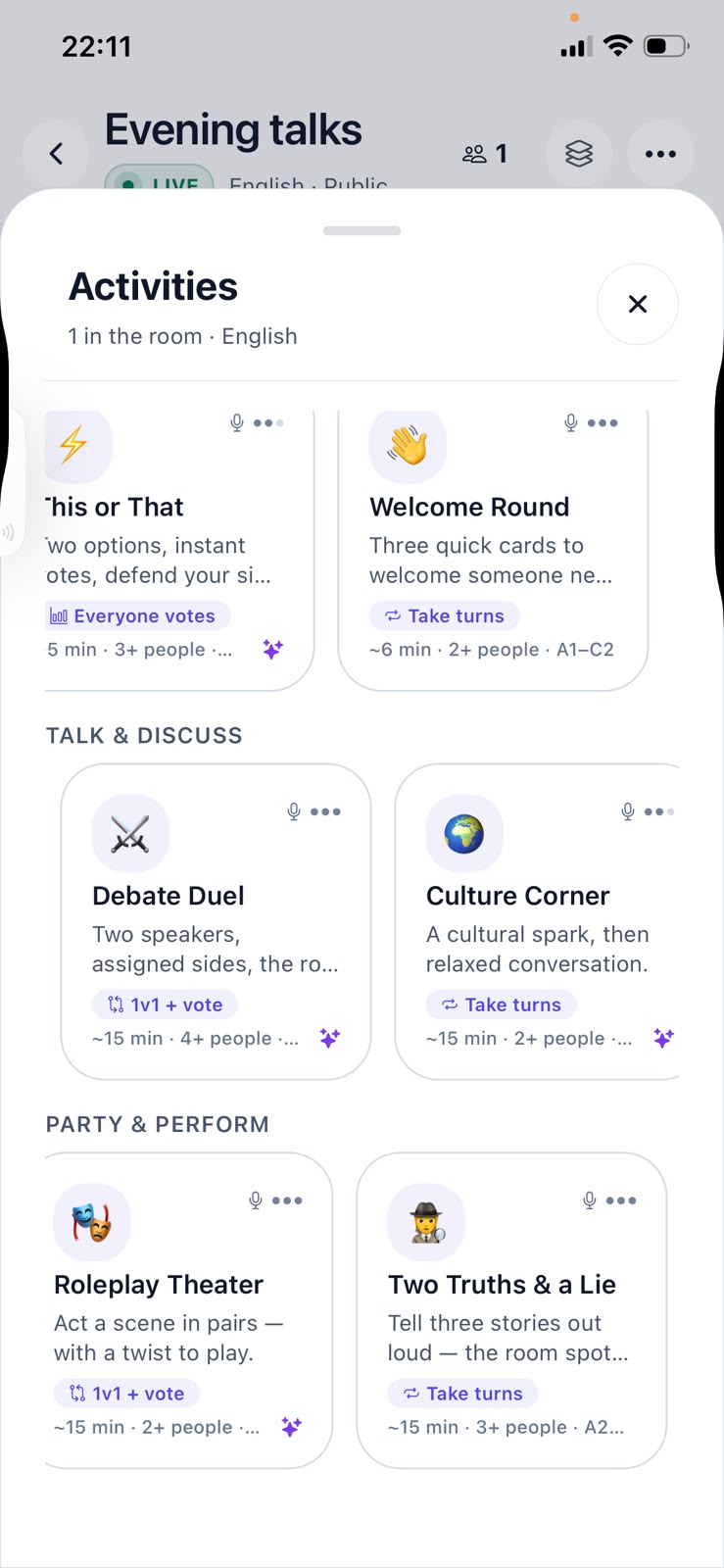
- Join live Voice Cafes and speak with real people.
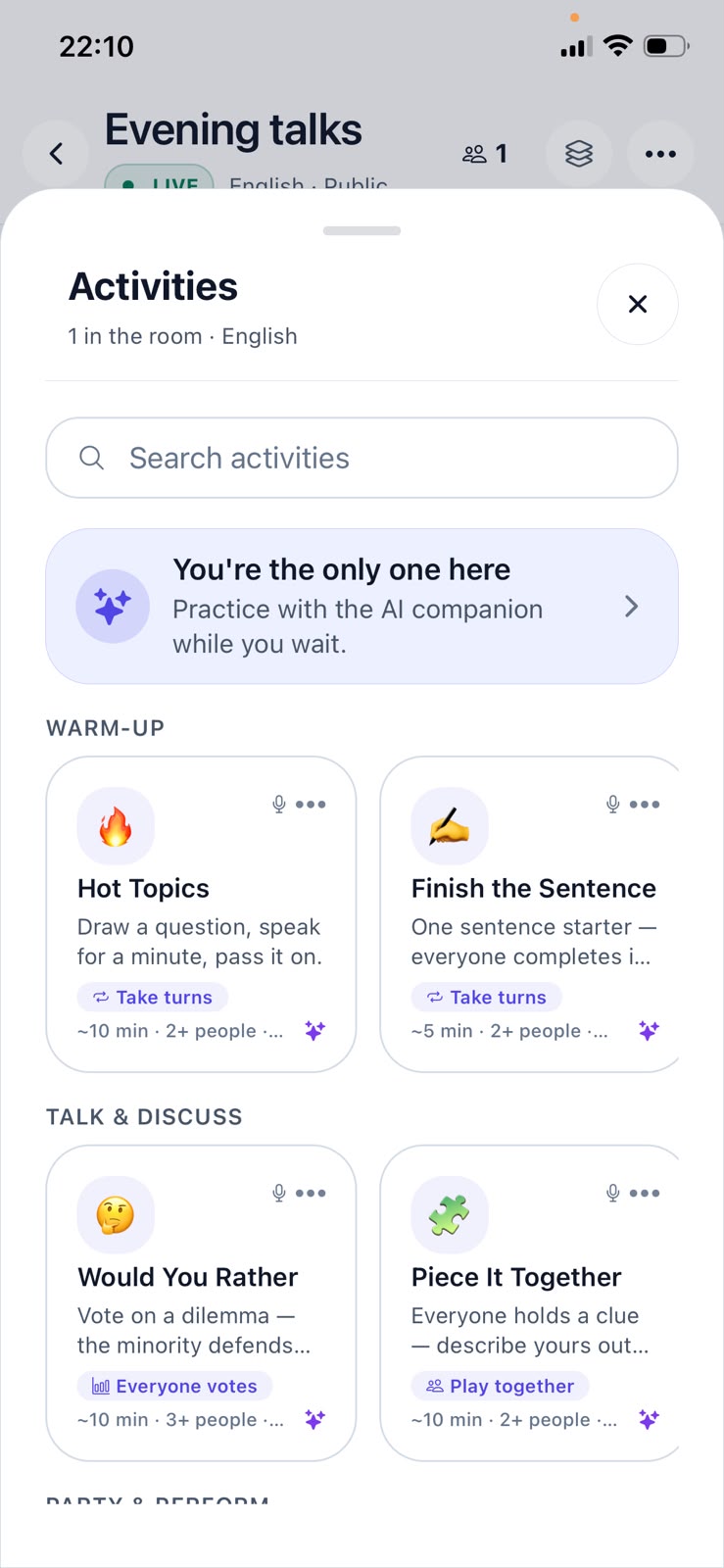
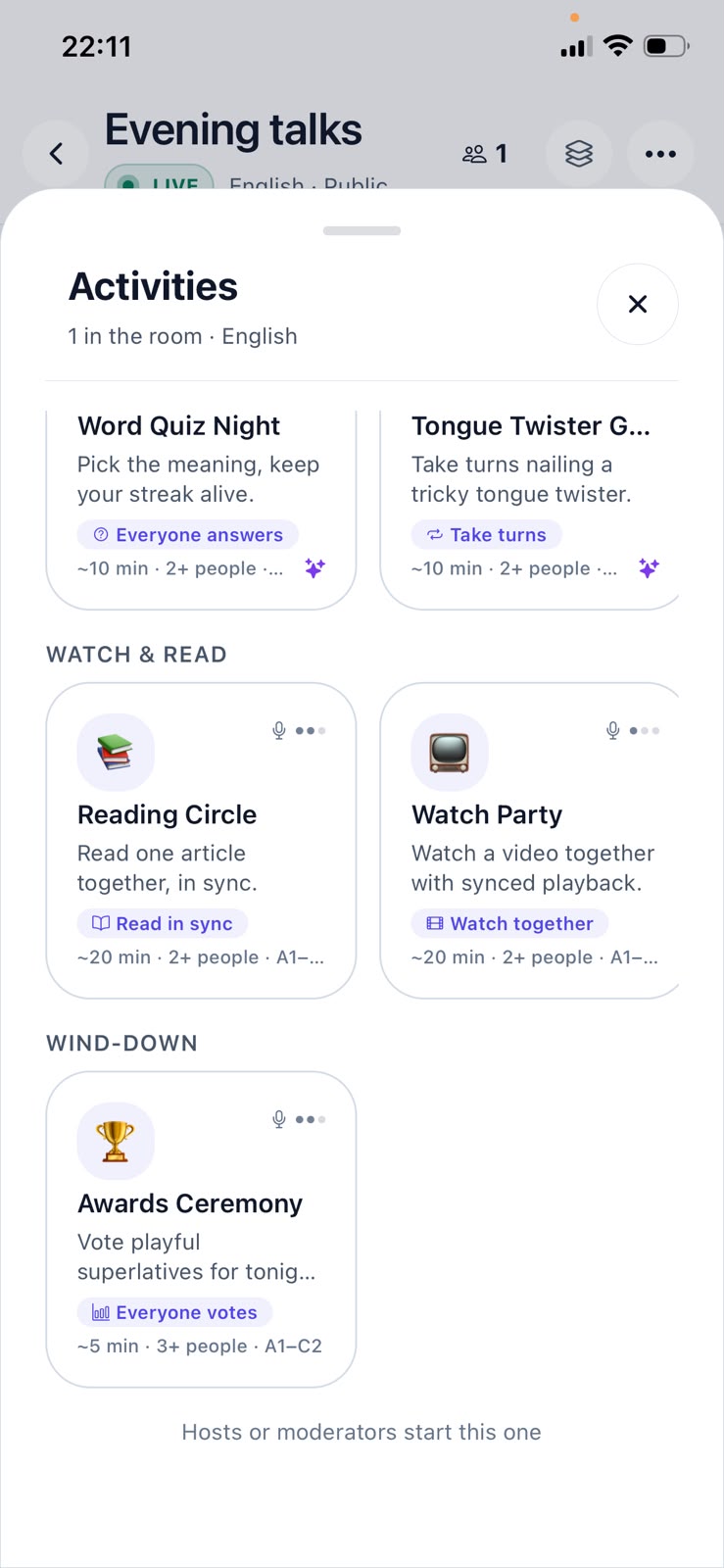
- Read aloud, tell stories, discuss guided topics, and play collaborative language games.
- Use structured activities that reduce awkward silence and help everyone participate.
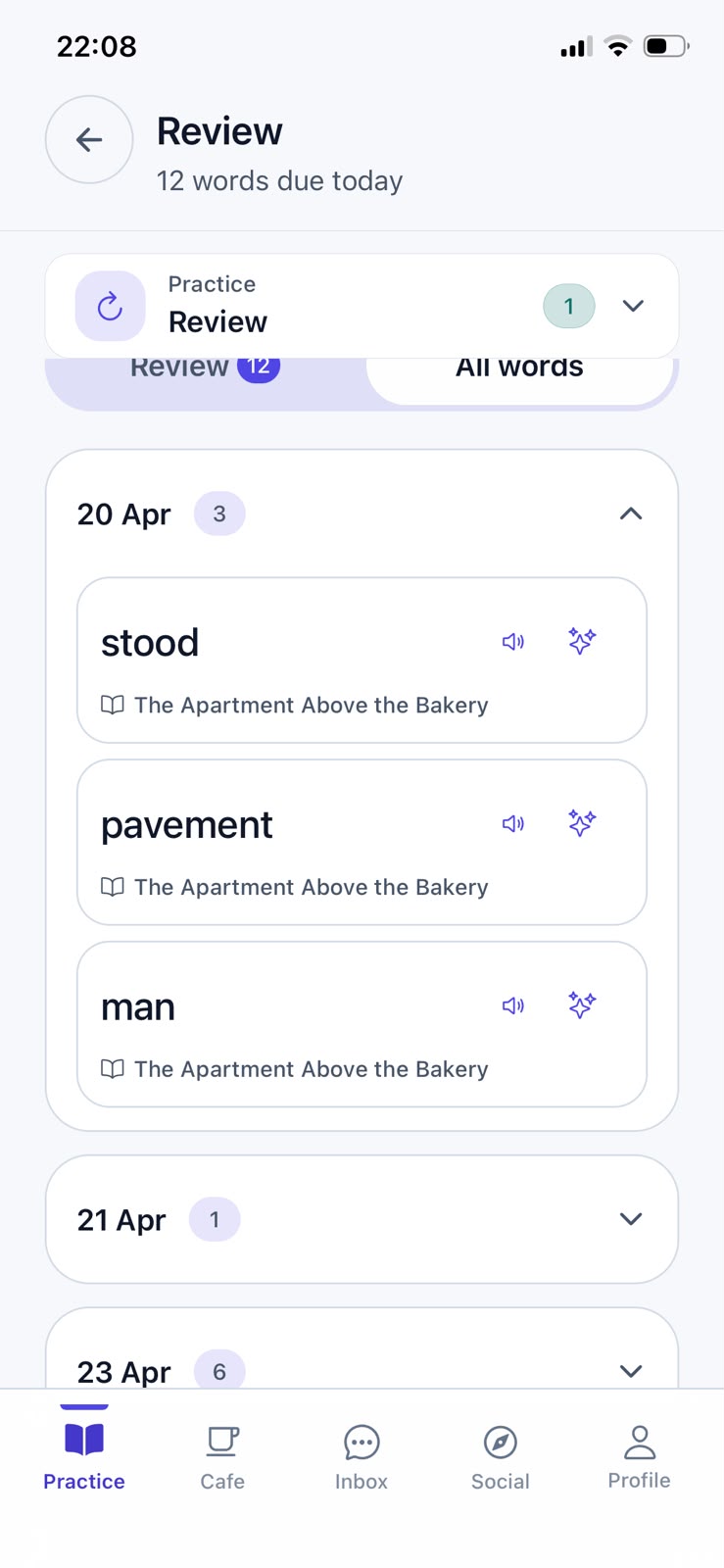
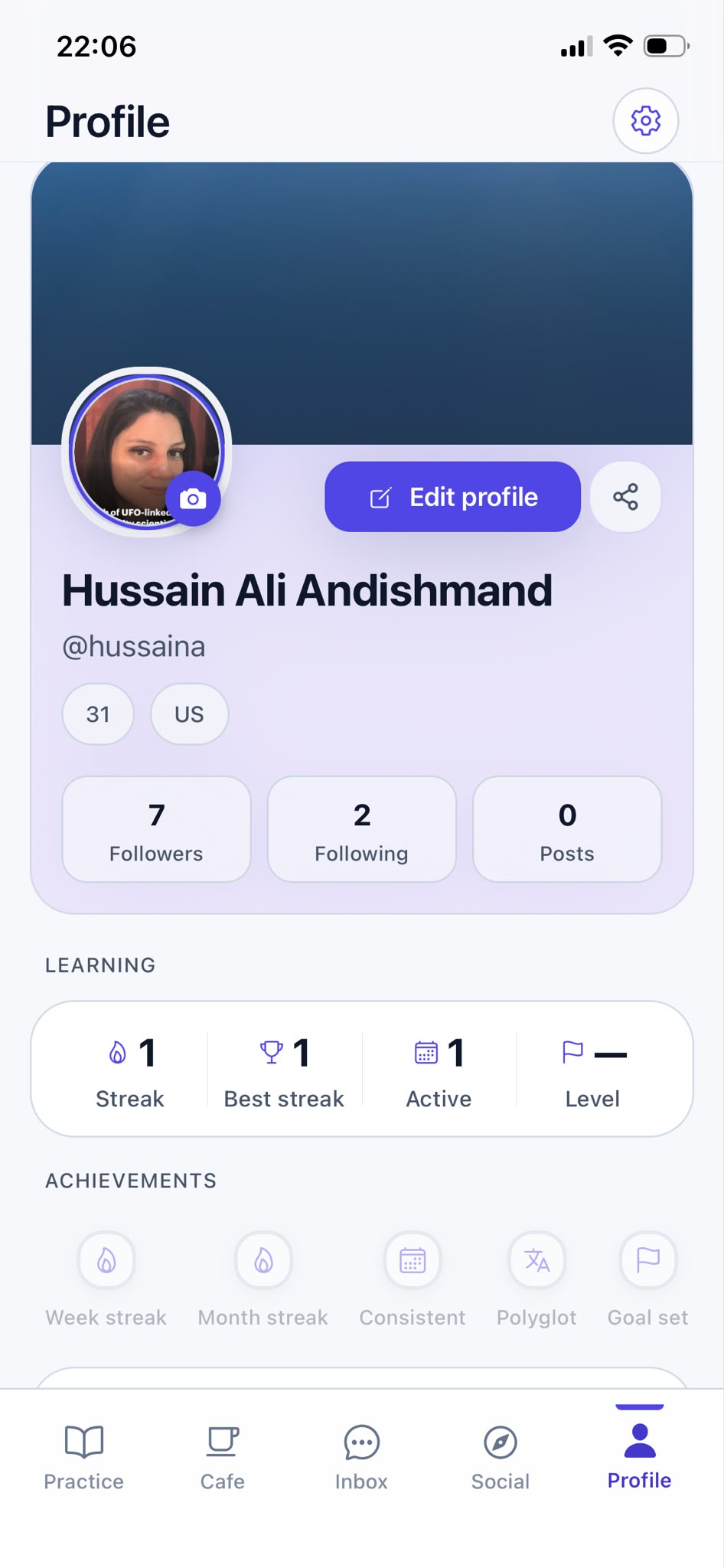
- Save words, review mistakes, follow personalized daily practice, and track their progress.
The central idea is simple: AI should help people prepare to communicate with humans, not replace human connection.
How we built it
Language Cafe is a cross-platform React Native and Expo application supported by Firebase, real-time voice infrastructure, and AI-assisted learning and content workflows.
I built it through a long-running collaboration with ChatGPT and Codex. I brought the lived problem, product vision, constant testing, and final decisions. ChatGPT became my programming teacher. Codex became the engineering partner that could examine the wider repository, connect decisions across features, implement changes, run tests, and find problems that were difficult to see one file at a time.
Together, these tools helped me work on:
- Product design and architecture
- React Native interfaces and accessibility
- Authentication, privacy, backend functions, and security rules
- Live Voice Cafe rooms and collaborative language games
- CEFR-aware learning paths across six language skills
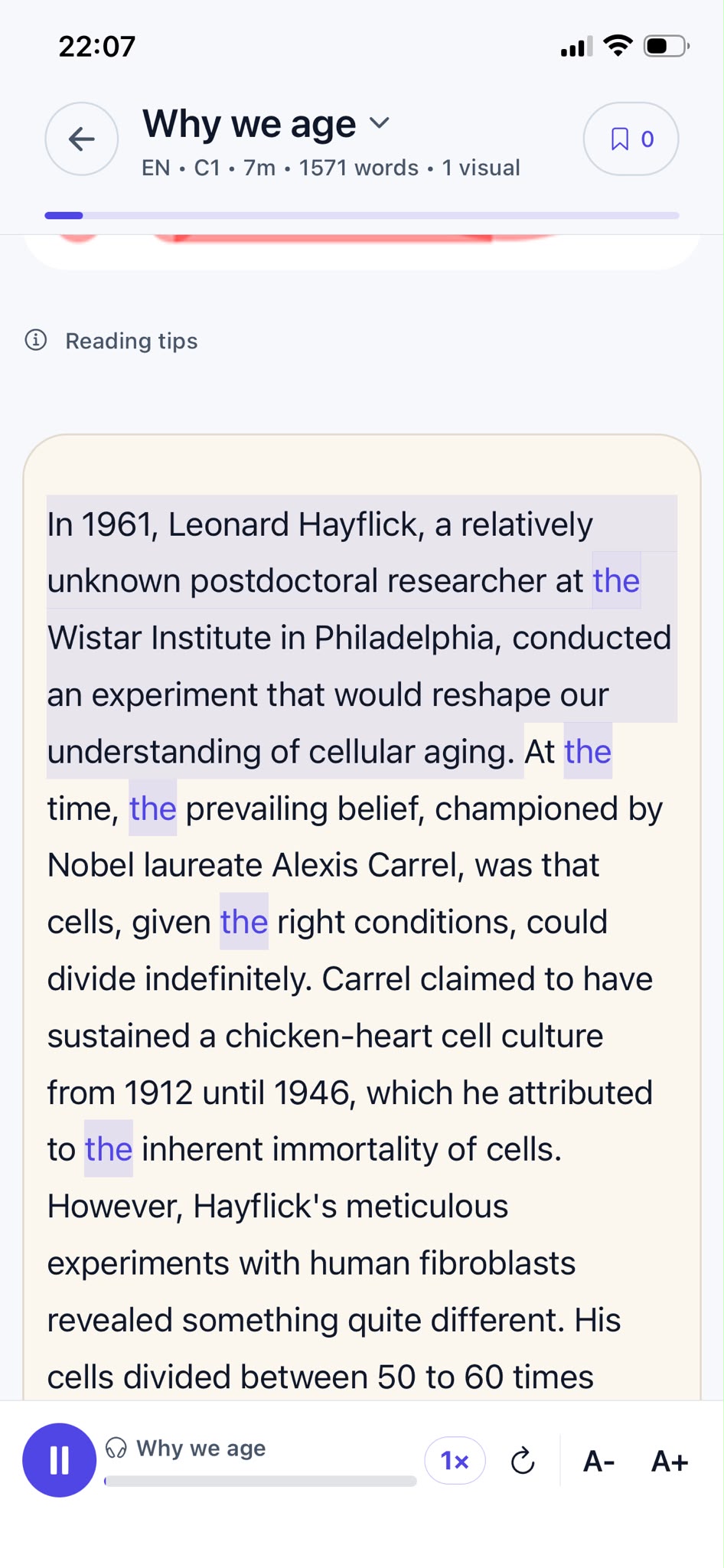
- Reading with narration, sentence tracking, saved words, and comprehension practice
- AI-assisted content-production and validation workflows
- Offline-learning foundations
- Testing, debugging, documentation, and release preparation
This was not a one-prompt prototype. I spent thousands of hours learning, reviewing results, testing the app, identifying problems, and deciding what should change. The application was built through my collaboration with ChatGPT and Codex: I directed the product and made the decisions, while OpenAI’s tools taught me and supplied much of the implementation capacity I could not otherwise access.
Language Cafe had an earlier foundation before OpenAI Build Week. During Build Week, Codex powered by GPT-5.6 helped me bring that work together and substantially extend it. The most important improvements included a redesigned Practice experience, stronger Voice Cafe and activity flows, repository-wide UI consistency, expanded reading and learning systems, backend reliability, clearer security boundaries, privacy improvements, tests, and release foundations.
Codex was especially valuable because it could work across the whole system rather than producing isolated snippets. It traced behavior between the mobile client, Firebase functions, data models, and security controls; found inconsistencies; implemented connected fixes; and verified work with builds and tests. The dated commit history and Codex session evidence show what changed during the Build Week period.
Challenges we ran into
The hardest challenge was not creating individual features. It was making everything behave like one product.
A learning and social app can contain many working screens and still feel disconnected. A learner’s language and proficiency must influence the right content. Progress must remain consistent across vocabulary, reading, listening, grammar, speaking, and writing. Live rooms must be understandable and safe. AI-produced material needs validation boundaries. Privacy preferences, offline behavior, notifications, accessibility, and backend authorization all have to agree.
The second challenge was learning while building. I did not begin as an engineer, so every unfamiliar system required me to learn enough to judge whether a proposed solution was safe and appropriate. I did not want to accept generated code blindly. ChatGPT made the knowledge accessible, and Codex helped me apply it across a codebase that had grown beyond what I could realistically manage alone.
Real-time voice, synchronized reading narration, cross-platform behavior, and Firebase security were particularly demanding because a feature could appear correct in the interface while still failing at another layer. Testing complete user journeys became as important as writing the code itself.
Accomplishments that we're proud of
I am proud that an idea I carried from Afghanistan, through my move to Sweden, and through years of unsuccessful attempts is now a working product that people can see and use.
Language Cafe also has its first real learner: my 14-year-old niece in Afghanistan. She works hard to learn English, but under the current restrictions she cannot attend school. She is using the app to continue learning and to hold on to her hope of one day studying at a university. If this project receives a prize, my first priority will be helping support her education and keeping that path open for her. For me, that would make the purpose of Language Cafe very real: giving someone a way to keep learning when the community and opportunities they need are not available around them.
I am also proud that Language Cafe is more than a collection of generated screens. Live conversations, structured activities, personalized practice, reading, review, safety, and backend systems now support the same purpose: helping someone gain enough confidence to speak.
For me, the project shows a deeply important side of OpenAI’s tools. They do not only help experienced engineers work faster. They can give someone without a traditional technical background a path to learn, build, and pursue an idea that would otherwise remain unaffordable.
What we learned
I learned that AI does not remove the need for human judgment. It changes where that judgment is applied.
My role became defining the real problem, protecting the purpose of the product, evaluating trade-offs, testing the experience, and deciding what “good” means. ChatGPT and Codex provided patient teaching, implementation capacity, repository-wide analysis, and the ability to iterate much faster than I could alone.
I also learned that software is not finished when a feature appears on screen. It has to survive errors, different devices, accessibility settings, incomplete data, security boundaries, and real users doing unexpected things.
Most importantly, I learned that learning and creation do not have to happen separately. I became capable of building because I was building something I had cared about for years.
What's next for Language Cafe
The next step is to prepare Language Cafe for growth: expanding awareness, welcoming more learners and volunteer conversation hosts, carefully monitoring reliability and safety, and maintaining the application as usage increases. I want to begin with focused community pilots and measure whether structured preparation and guided Voice Cafes help people speak more often, return consistently, and become more confident in real conversations.
I also want to keep improving moderation, content quality, accessibility, offline support, and the connection between personal practice and live conversation.
My long-term goal is still the same as it was when I was 18: a learner should never be prevented from practicing a language simply because no speaking community exists around them.
Links
- GitHub: HSN010101/LangCafe
- iOS: Language Cafe Hub on the App Store
- Android: Language Cafe on Google Play

Log in or sign up for Devpost to join the conversation.