🧠 Project Story: Evolution of Gen Z Slang
Inspiration
As a member of Gen Z, I am not just an observer of slang but part of the environment where it forms, spreads, and fades. Many of the terms in this dataset are words I have personally used, seen go viral, and then disappear within a few years.
This lived experience raised a natural question: Is slang really random, or does it follow measurable patterns shaped by technology, culture, and emotion?
I was inspired to treat slang not as casual internet noise, but as a serious cultural signal, a fast moving language layer that reflects how digital generations think, feel, and communicate in real time.
What I Learned
This project reshaped how I think about language in digital spaces.
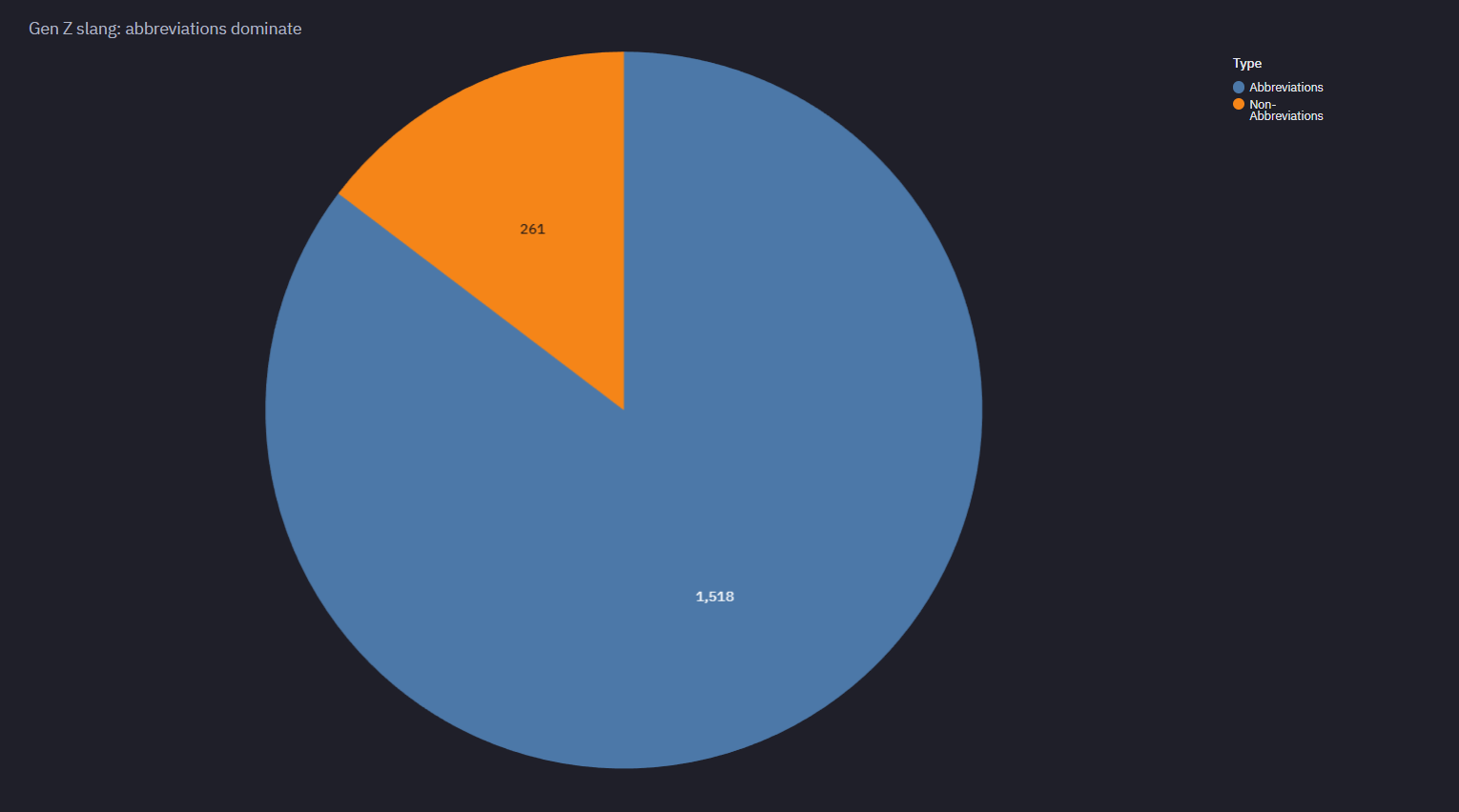
First, I learned that form is surprisingly stable. Despite massive changes in platforms and culture, the average slang word length remains remarkably consistent across eras. Language structure adapts slowly.
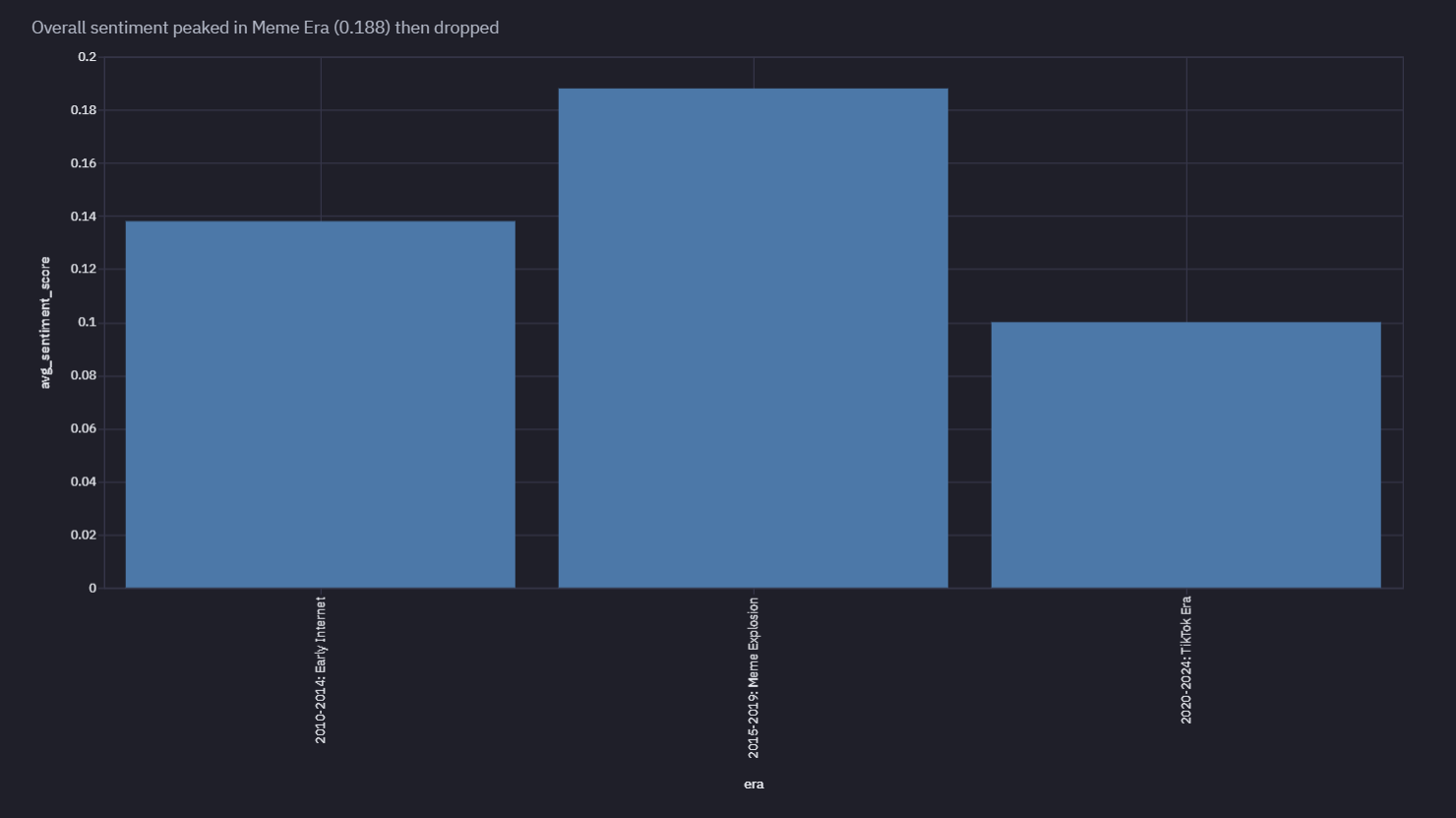
Emotion, however, changes rapidly. Slang sentiment mirrors the mood of the internet itself. Periods of global tension and online polarization coincide with clear shifts toward negative and ironic slang. In this sense, slang acts as a real time barometer of collective emotion.
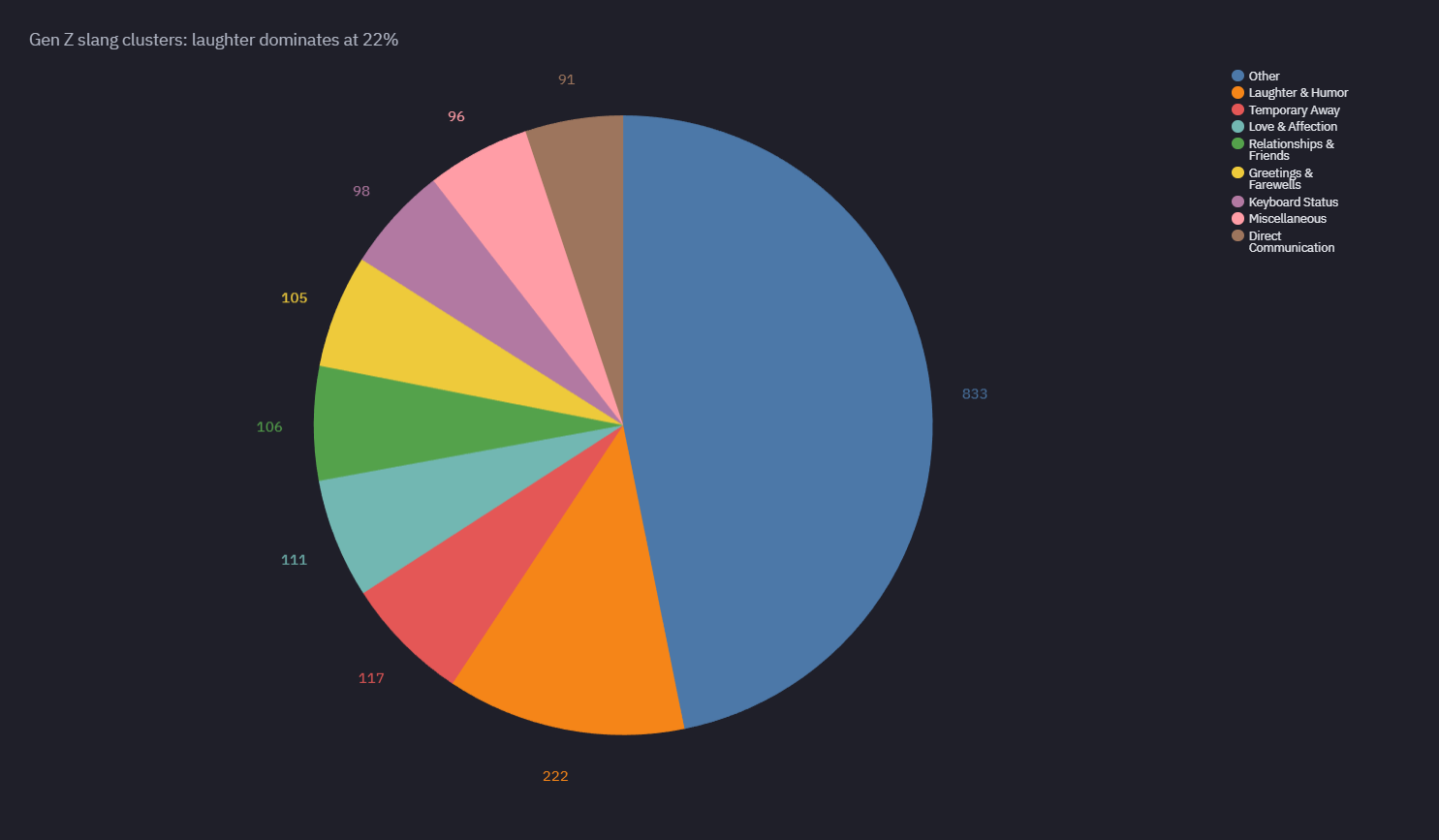
I also learned that slang survival is driven more by function than by humor. Terms that fill practical communicative roles, signaling agreement, relationships, availability, or reactions, last much longer than joke driven or meme based expressions.
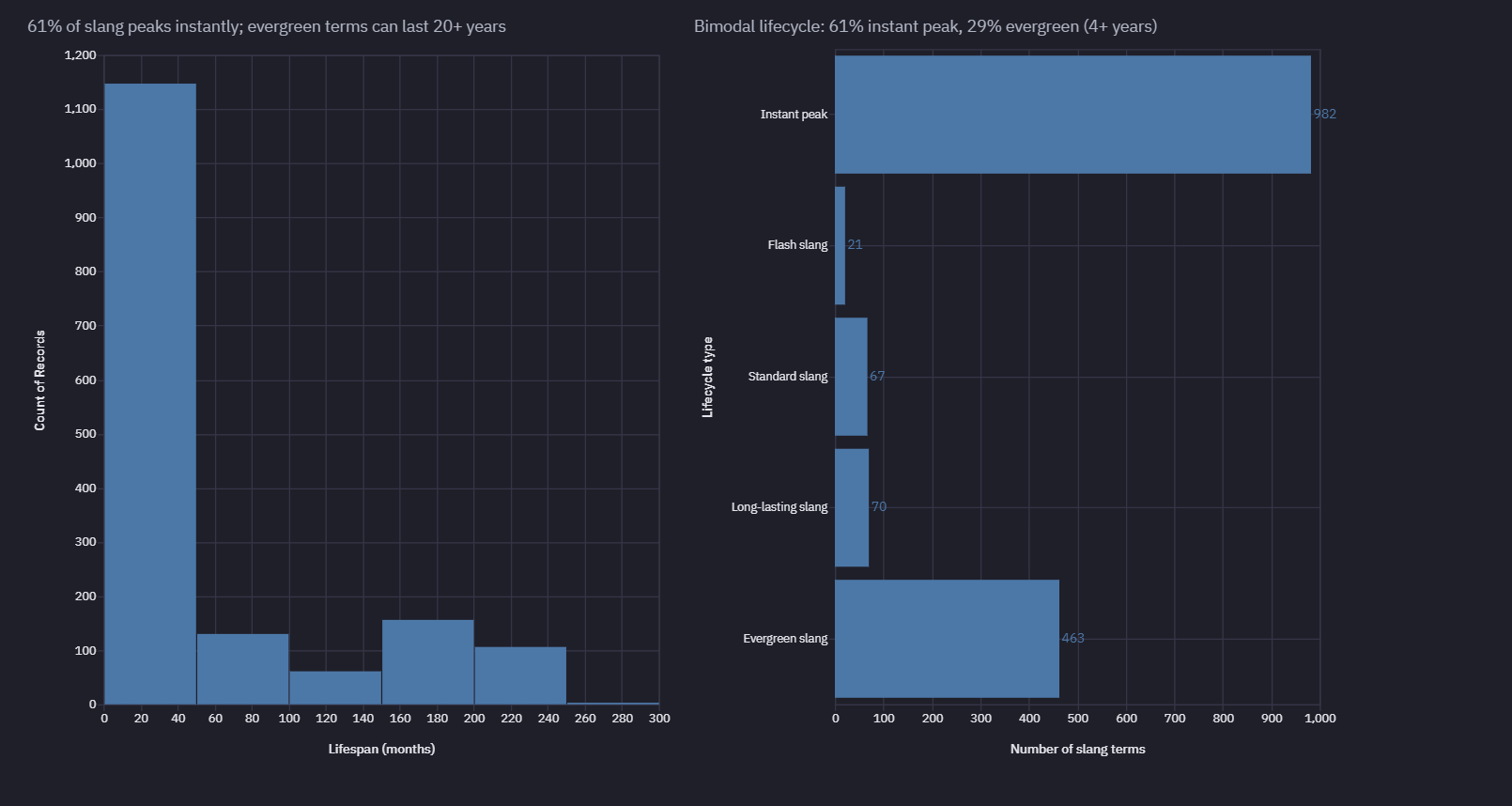
Finally, I learned that most slang is disposable by design. Over 60% of terms peak almost immediately, behaving more like viral content than enduring vocabulary. Only a small fraction become evergreen.
How I Built the Project
The project combines linguistic analysis, sentiment modeling, and temporal trend reconstruction.
I began with a structured dataset of Gen Z slang terms and enriched it using two complementary signals.
1. Sentiment Modeling Each term was processed through PySentio to generate:
- A numerical sentiment score
- A categorical label (Positive / Neutral / Negative)
- A short contextual explanation
This allowed me to analyze not just what slang means, but how it feels emotionally over time.
2. Trend and Popularity Reconstruction Because no clean public dataset exists for slang popularity curves, I derived temporal signals using Urban Dictionary metadata.
- First appearance dates
- Peak usage months
- Definition volume as a proxy for cultural relevance
This served as an approximate measure of how slang emerges, peaks, and fades.
From this enriched dataset, I engineered features such as:
- Word length and compression
- Lifespan and time to peak
- Category based longevity
- Era wise sentiment shifts
Finally, I structured the analysis around three major internet eras and used visual storytelling to connect linguistic form, emotional tone, and cultural context.
Challenges Faced
The biggest challenge was the absence of reliable trend data. There is no official time series for slang popularity, and platform APIs rarely expose historical linguistic usage in a clean way.
To overcome this, I had to be creative.
- I used Urban Dictionary definition volume as a proxy for popularity
- I reconstructed lifecycles from first appearance and peak metadata
- I treated these as probabilistic signals rather than exact measurements
Another challenge was noise and ambiguity in slang meaning. Many terms are highly contextual, ironic, or polysemous. Sentiment models often struggle with this, so I had to rely on aggregate patterns rather than individual term accuracy.
Finally, connecting quantitative patterns to cultural explanations required careful interpretation. The goal was not just to show charts, but to tell a coherent story about how platforms, emotion, and human behavior shape language.
Closing Reflection
This project taught me that slang is not chaotic. It is structured, adaptive, and deeply shaped by technology.
Gen Z slang evolves not only through creativity, but through platform constraints, emotional climate, and communicative necessity. In many ways, it is one of the clearest signals we have of how digital culture rewires language in real time.
Built With
- hex
- pysentio
- python
- urbandictionary


Log in or sign up for Devpost to join the conversation.