-
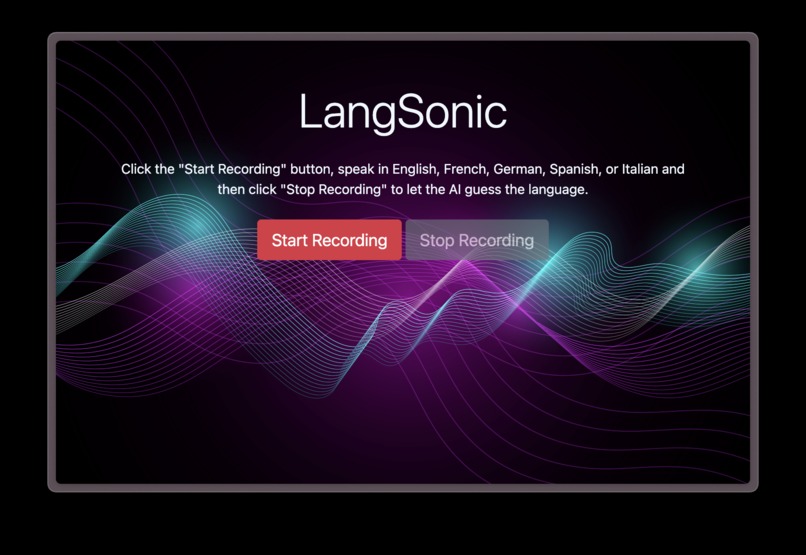
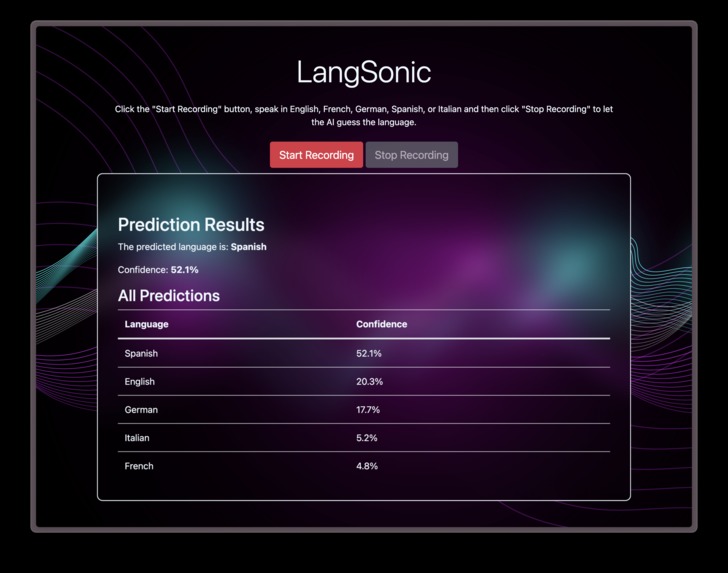
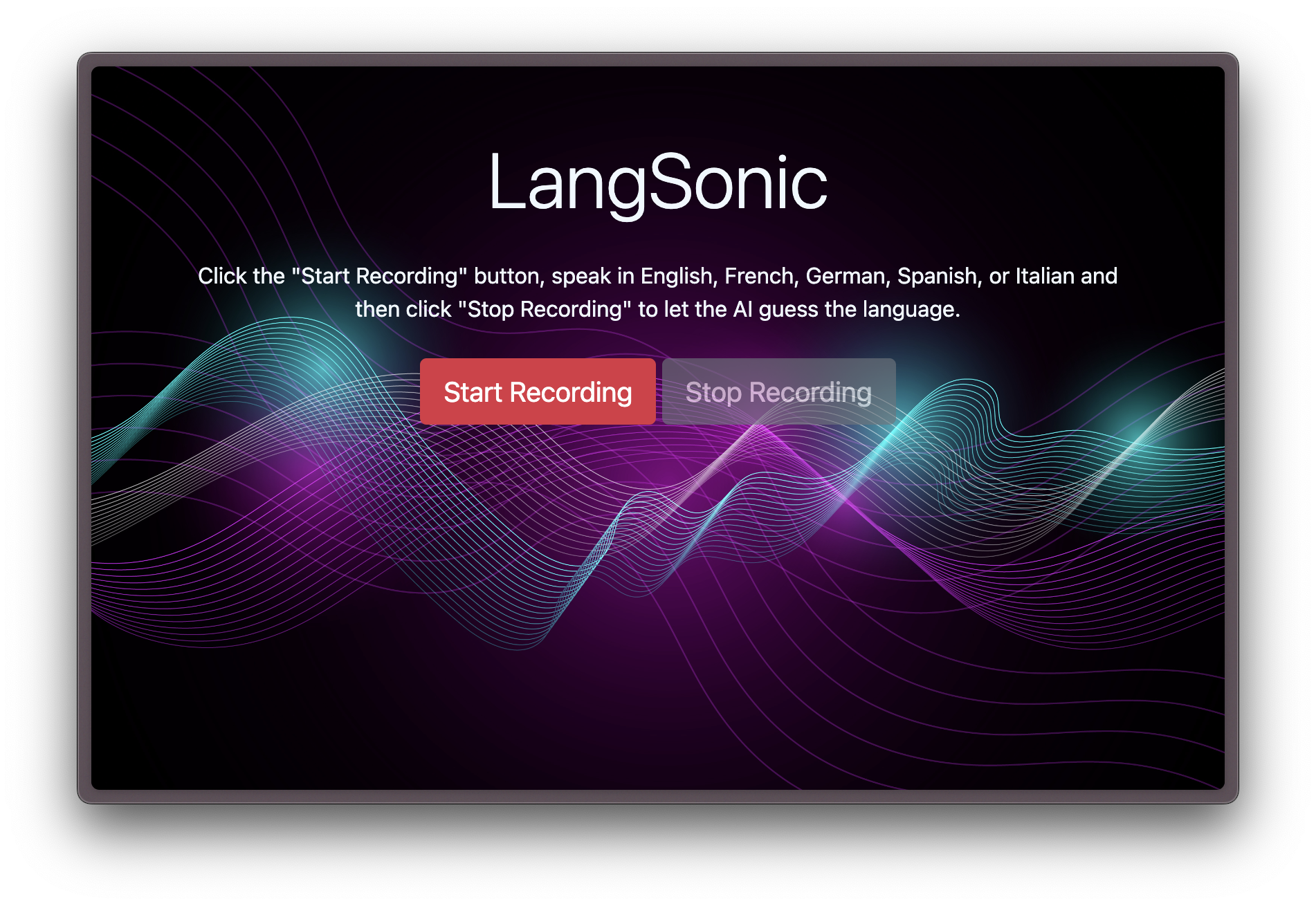
LangSonic's Landing Page
-
-
-
-
Inspiration
In a world where borders fade and communication knows no bounds, the inspiration behind LangSonic stems from a profound belief in the power of understanding. Language is not just a tool for expression; it's a bridge that connects diverse cultures and fosters meaningful connections. By creating a system that can identify the language a person is speaking, we aim to break down linguistic barriers and bring people closer together. This project is fueled by the vision of a global community seamlessly sharing ideas, stories, and dreams, regardless of the languages they speak. It's not just about recognizing words; it's about building a world where understanding is universal.
What it does
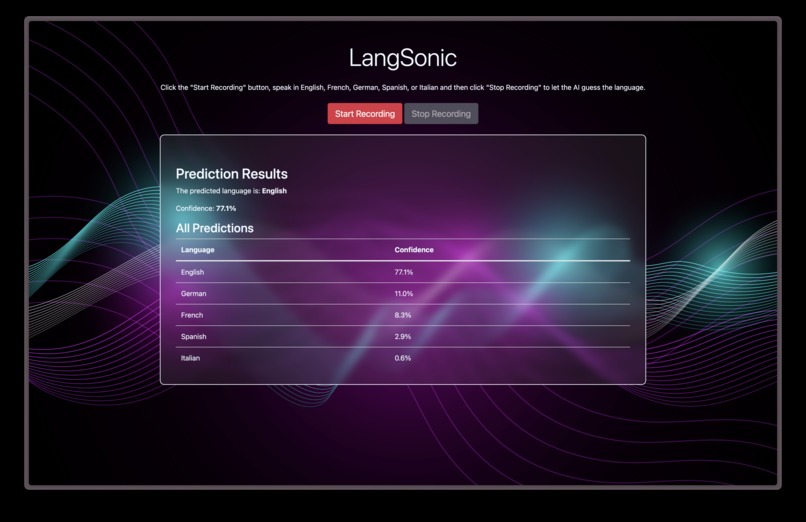
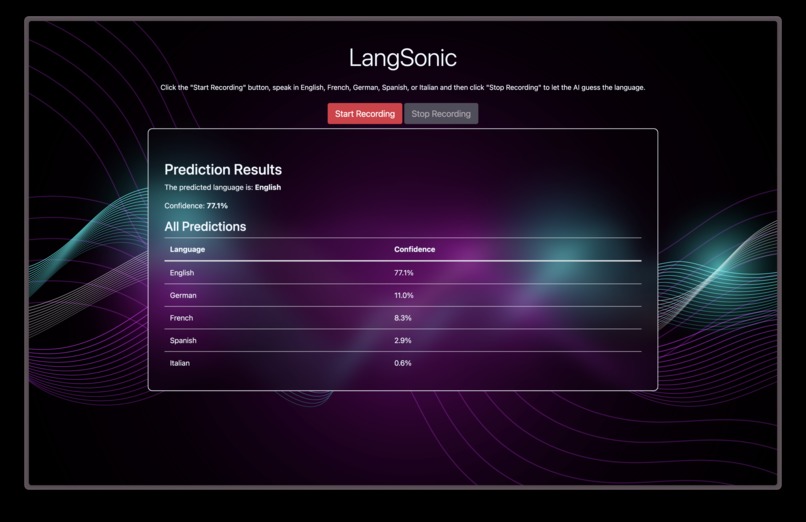
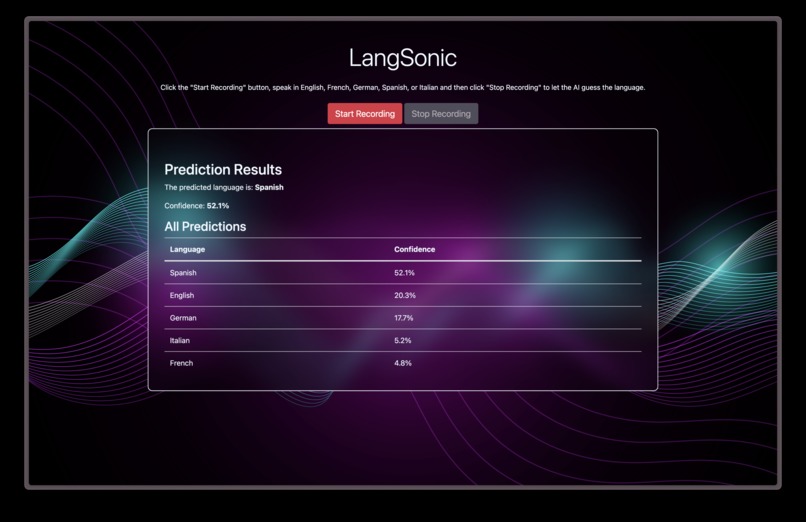
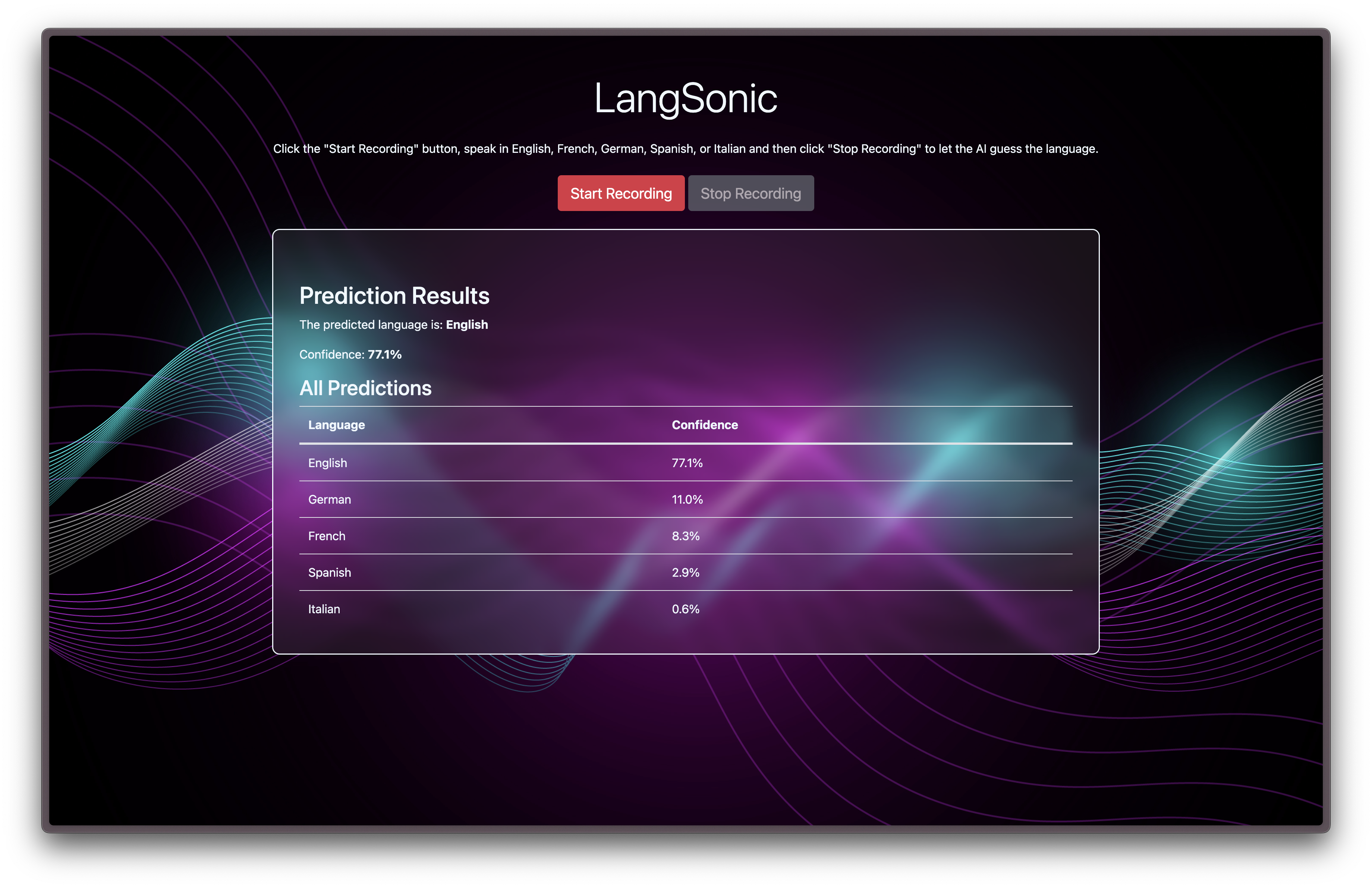
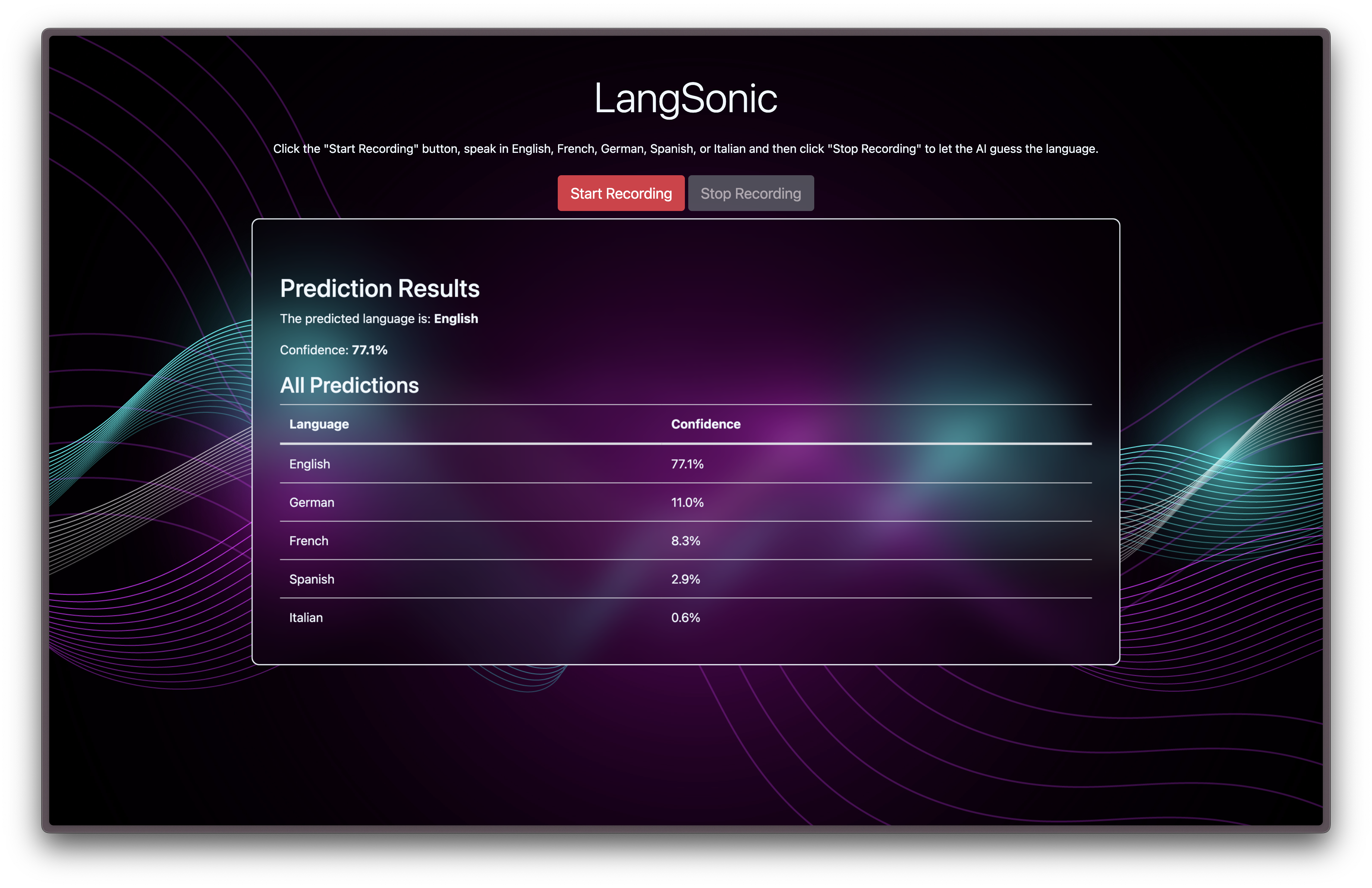
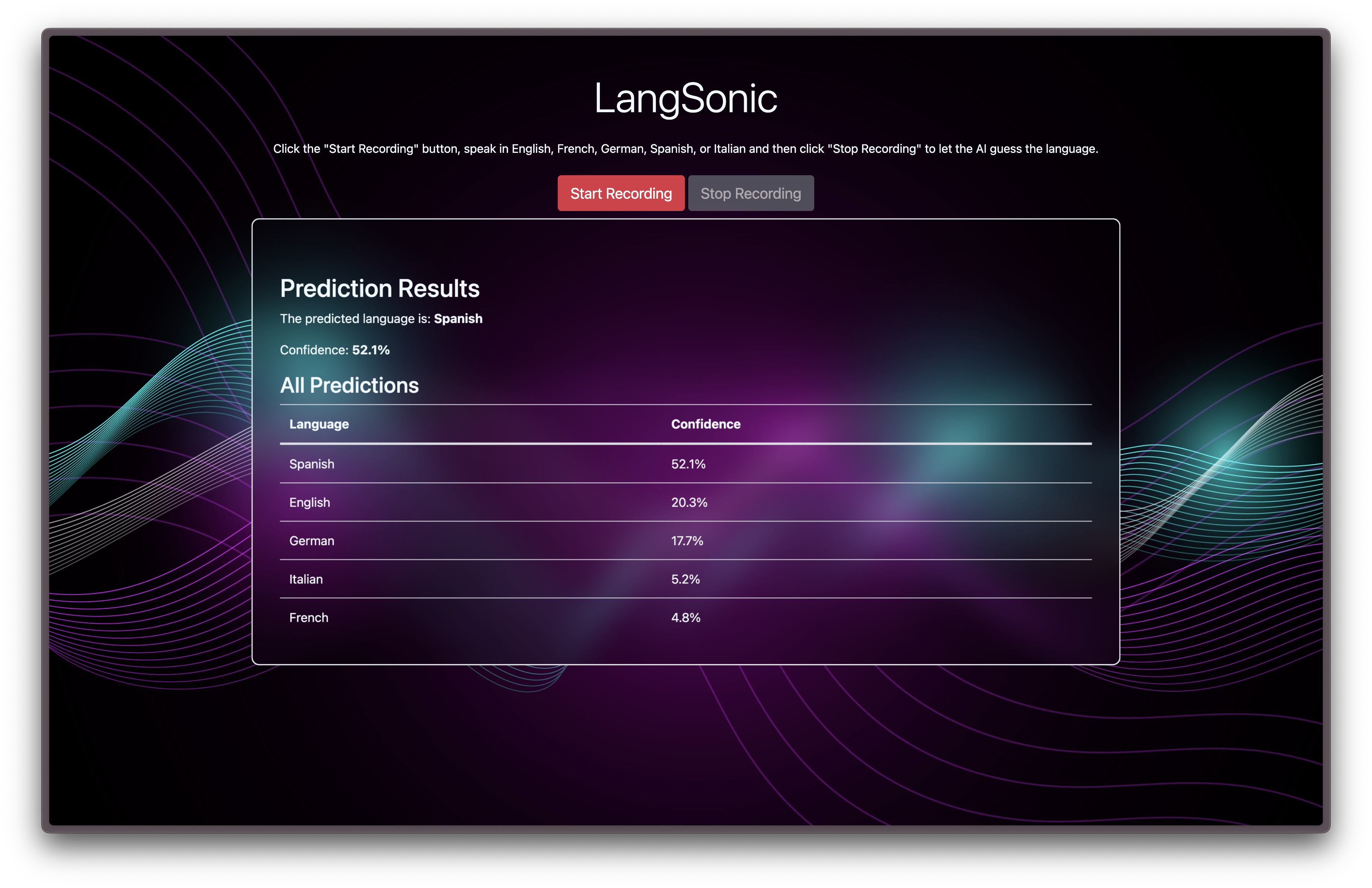
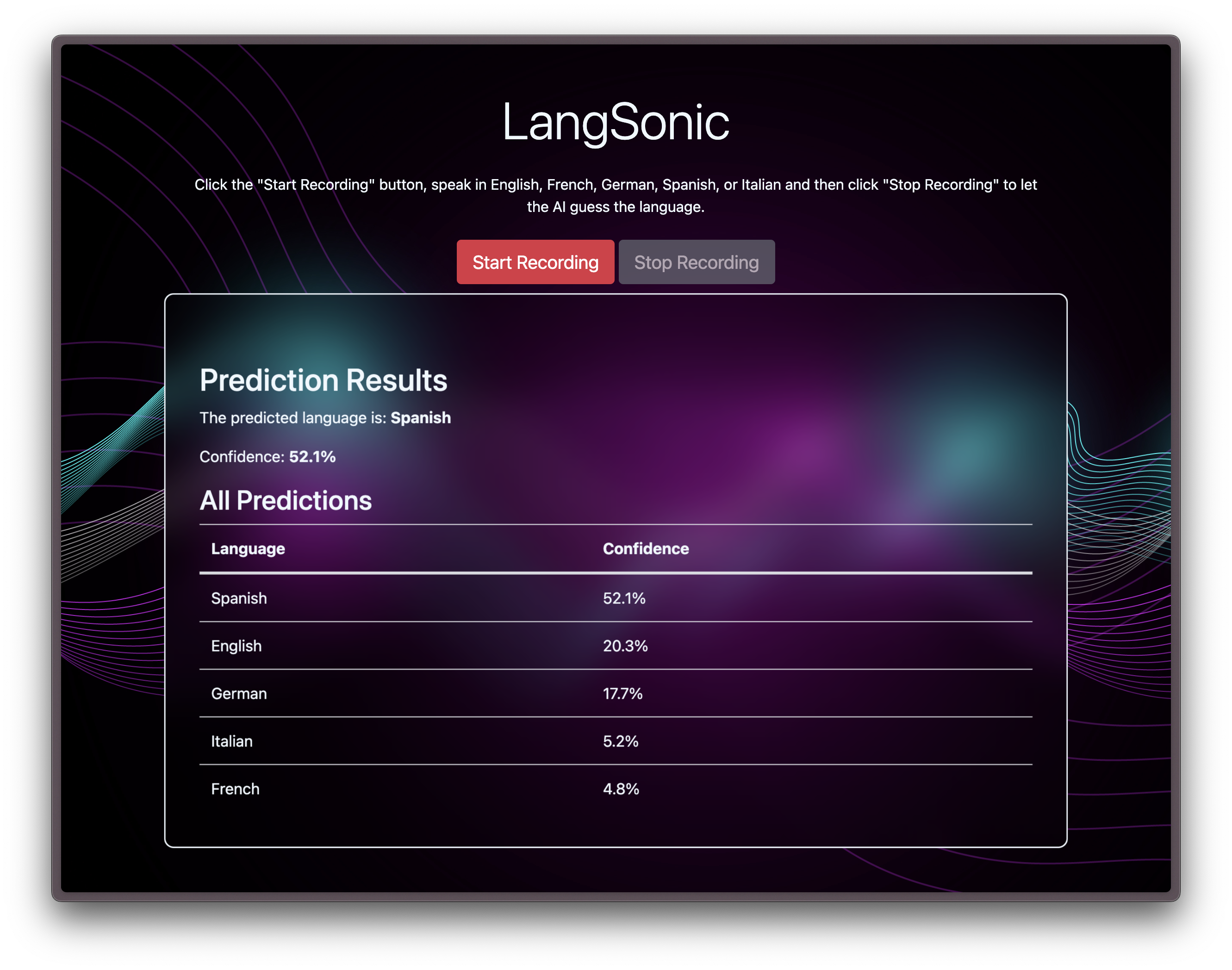
LangSonic is a reliable Convolutional Neural Network (CNN) model designed for rapid spoken-language classification. It processes audio files, represented as spectrograms, to accurately identify the language embedded within the sound waves. LangSonic demonstrates proficiency in the following languages:
- English (🇺🇸)
- German (🇩🇪)
- French (🇫🇷)
- Spanish (🇪🇸)
- Italian (🇮🇹)
How we built it
The foundation lay in the implementation of a Convolutional Neural Network (CNN), a powerful tool that required careful crafting and iterative refinement. The model's training process involved the extraction of features from spectrograms generated from MP3 files. The Flask framework served as the backbone for our web application, providing a seamless interface for users to interact with the model in real-time. Continuous testing, feedback loops, and an unwavering commitment to excellence defined our 'how we built it' narrative, resulting in a robust language detection model poised to transcend linguistic barriers. The languages used were Python, Flask, HTML, CSS, JavaScript.
Challenges we ran into
Embarking on this language detection journey presented its unique set of challenges, each met with determination and innovation.
One of the pivotal challenges encountered during the project involved the transformation of MP3 files into spectrograms for training the CNN. The richness of audio data in MP3 format posed a unique hurdle, requiring us to explore innovative methods to convert this audio data into a format suitable for our model. This journey involved diving deep into signal processing techniques, exploring libraries, and developing a robust pipeline to generate meaningful spectrograms from the raw MP3 files.
Moreover, the initial dataset we had at our disposal proved to be imperfect, with inconsistencies and inaccuracies that could potentially compromise the model's performance.
Integrating a Convolutional Neural Network (CNN) into the project demanded meticulous fine-tuning, navigating the delicate balance between accuracy and computational efficiency. We'd face overfitting issues and after sorting everything out, we found out the model was for Spanish and Italian at all and it took us quite a while to figure the issue out.
The development of the web application using Flask brought its own set of challenges. Creating a seamless user experience while efficiently communicating with the underlying model necessitated careful consideration of design and functionality. From handling user inputs to delivering real-time language predictions, every step in the web application development process posed unique hurdles that were overcome through collaborative problem-solving and a commitment to delivering a user-friendly interface. We had to self-learn flask from scratch and faced issues trying to integrate it into our frontend. We'd then get undefined values instead of the expected output, which was the language being spoken by the person.
Despite these challenges, each obstacle became an opportunity for growth and learning. The result is not just a language detection model but a testament to the resilience and ingenuity of the team in the face of complex technical challenges.
Accomplishments that we're proud of
As we reflect on the journey of creating our language detection model, there are several accomplishments that stand as testament to our team's dedication and innovation.
First and foremost, the successful integration of a CNN for language detection showcases not only the technical prowess of our team but also our commitment to self-learning and working as a team. It was our first time developing a machine learning model and having created an impressive project such as LangSonic in just 2 months is something we did not expect we'd do given all the challenges we faced along the way.
Beyond the code, our proudest achievement lies in the potential impact of this project – breaking down linguistic barriers and fostering global connections. We take pride in not just building a model but contributing to a vision of a more connected and understanding world. This is a project that can be used in real life scenarios, helping millions!
What we learned
Firstly, grappling with the intricacies of audio data processing taught us valuable lessons in signal processing and the nuances of handling diverse file formats like MP3. The challenges faced in curating a reliable dataset underscored the importance of data quality and thorough validation. Working with a CNN deepened our understanding of neural network architectures and the delicate balance between model complexity and efficiency. The development of the web application using Flask, HTML, and JavaScript honed our skills in creating websites, user-friendly interfaces and handling real-time interactions. Importantly, this project taught us the significance of collaboration, persistence, and the iterative nature of problem-solving in the realm of machine learning.
What's next for LangSonic
As we celebrate the milestones achieved in building our language detection model, our gaze is firmly set on the horizon of what's next. The immediate future holds a roadmap of refinements and optimizations, fine-tuning our model to enhance accuracy and versatility across a broader spectrum of languages and dialects. User feedback will be a guiding compass, steering our development efforts towards creating a more intuitive and seamless experience within the web application, as well as making it look more attractive. We also plan to add another feature - Language detection via text. Since our model currently works via a person speaking into their microphone, we also want to add another option where uses can write anything they want and see what language the text contains.
Beyond that, our vision extends to potential collaborations, seeking partnerships that could amplify the impact of our model in real-world scenarios. As technology evolves, so do the opportunities, and we remain committed to pushing the boundaries of what our language detection model can achieve, ensuring it continues to be at the forefront of fostering global connectivity and understanding. The journey doesn't end here; it's a stepping stone to even greater possibilities.
Built With
- css
- flask
- html
- javascript
- keras
- python
- tensorflow


Log in or sign up for Devpost to join the conversation.