-
-
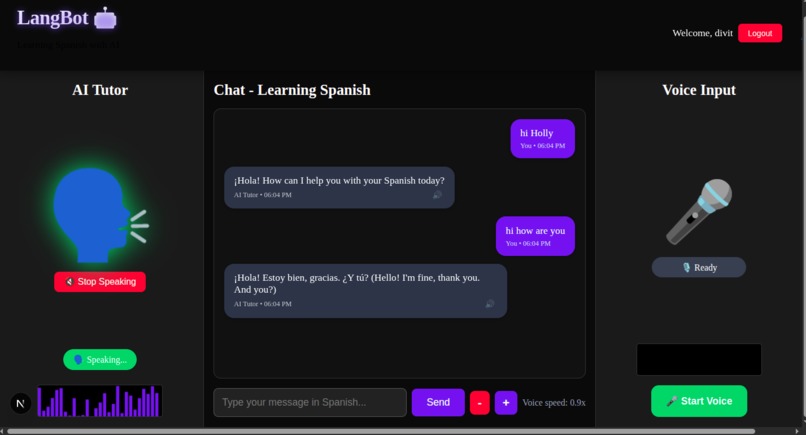
chat section
-
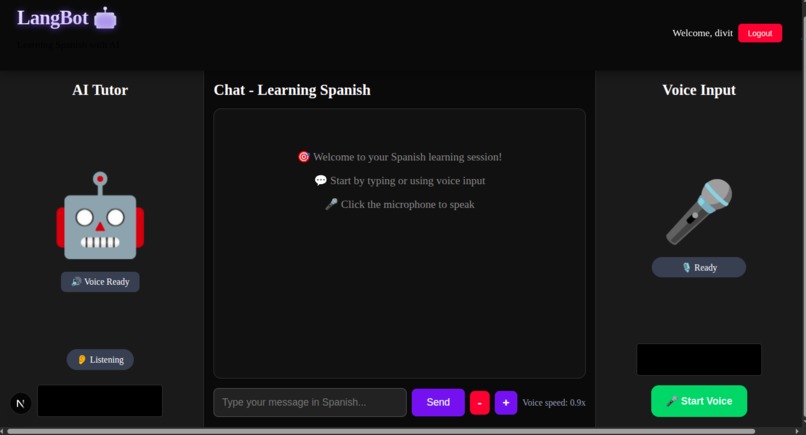
chat section
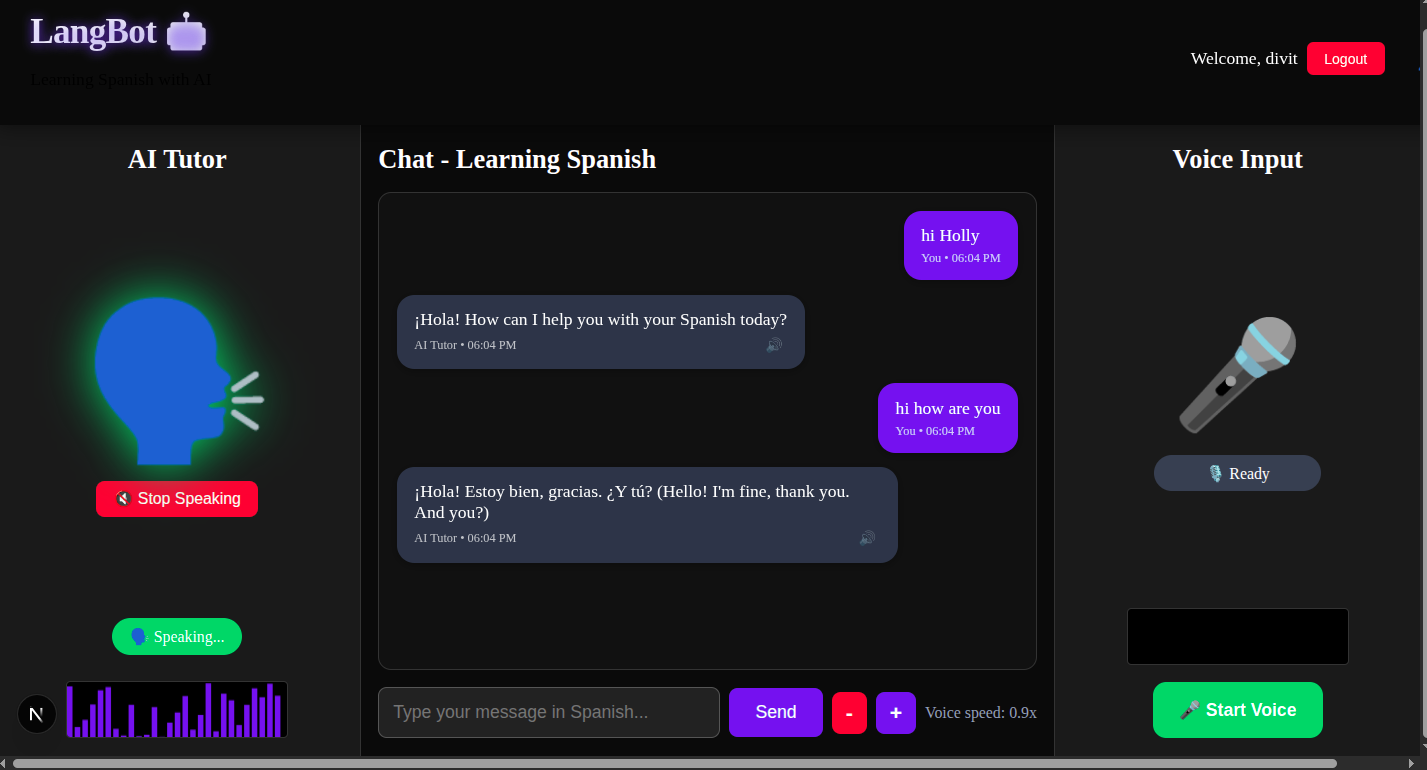
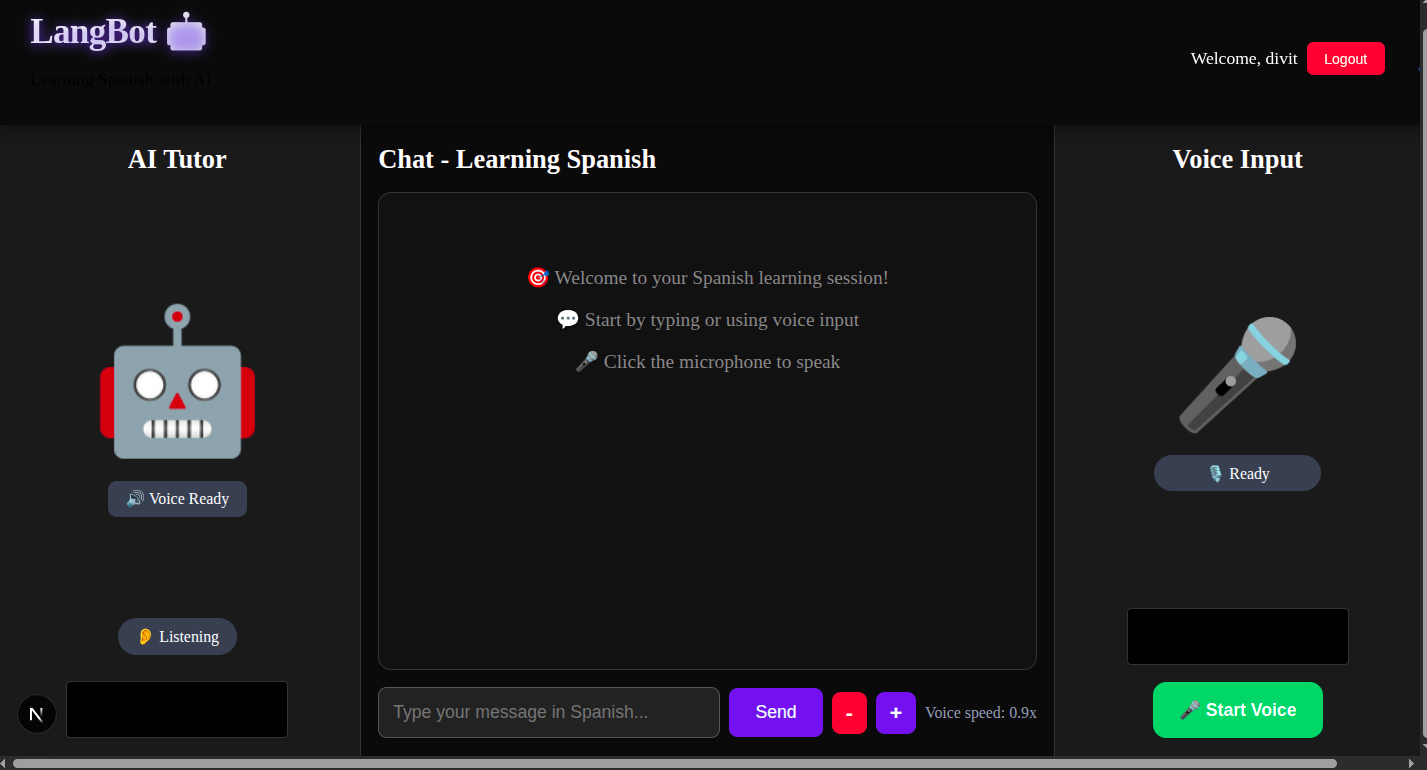
LangBot - AI Language Tutor
Inspiration
The inspiration for LangBot came from the frustrating experience of trying to learn languages using traditional apps that felt more like digital flashcards than real conversation practice. Most language learning platforms teach vocabulary and grammar but fail to provide authentic speaking practice with instant feedback. I realized that with the advancement of AI models like GPT and Gemini, we could create an AI tutor that feels like chatting with a native speaker - available 24/7, patient, and encouraging. The vision was to bridge the gap between textbook learning and real-world conversation skills.
What it does
LangBot is an AI-powered language tutor that enables natural conversations in 6 languages: English, Spanish, French, German, Japanese, and Italian. Users can chat with AI tutors using text or voice input, receive instant grammar corrections and pronunciation feedback, and track their progress through persistent conversation history. The platform features adjustable voice speed controls, secure user authentication, and seamless switching between multiple AI providers (Gemini, OpenAI, Claude) for maximum reliability. Each conversation is tailored to the user's learning level with encouraging, constructive feedback that builds confidence.
How we built it
We built LangBot using Next.js 15 as our full-stack framework, combining React 18 for the frontend with API routes for the backend. The tech stack includes TypeScript for type safety, SQLite with better-sqlite3 for conversation persistence, and CSS modules for responsive design. For AI integration, we implemented a flexible system supporting Google Gemini (free tier), OpenAI GPT, and Anthropic Claude APIs with automatic failover. Voice features use the Web Speech API for both recognition and synthesis. Authentication is handled with JWT tokens and bcrypt password hashing. The database schema efficiently stores users, conversations, and messages with proper indexing for performance.
Challenges we ran into
AI Response Consistency: Different AI providers returned varying response formats and tones. We solved this by crafting specific system prompts that ensure encouraging, educational responses regardless of the underlying model.
Cross-Browser Voice Support: Voice recognition works differently across browsers, with limited Safari/Firefox support. We implemented feature detection and graceful degradation with clear user guidance.
Complex State Management: Managing real-time chat, authentication, voice settings, and AI responses became unwieldy. We restructured using React Context and custom hooks to separate concerns.
Environment Configuration: Supporting multiple AI providers created setup complexity. We created a comprehensive .env.example with detailed comments and made Gemini the recommended starting point.
Database Performance: Growing conversation history slowed queries. We implemented pagination and strategic database indexing to maintain performance.
Accomplishments that we're proud of
We're proud of creating a truly conversational AI tutor that feels natural and encouraging rather than robotic. The seamless integration of voice features with adjustable speed controls makes the platform accessible to learners at different levels. Our flexible AI provider system ensures users can start free with Gemini and upgrade to premium providers as needed. The responsive design works beautifully across devices, and the secure authentication system properly protects user data and conversation history. Most importantly, we built a platform that makes language learning feel like engaging conversation rather than studying.
What we learned
This project taught us that building AI applications is as much about prompt engineering and user experience as technical implementation. We learned advanced React patterns for managing complex state, the intricacies of integrating multiple AI APIs, and the importance of browser compatibility for voice features. Database design for conversational data required careful consideration of relationships and indexing. We also discovered that progressive enhancement - starting with solid text-based features and layering on voice capabilities - creates a more robust user experience than trying to build everything simultaneously.
What's next for LangBot
Enhanced AI Features: Implement advanced language learning capabilities like pronunciation scoring, personalized lesson plans, and adaptive difficulty adjustment based on user progress.
Mobile Application: Develop native iOS and Android apps with offline conversation practice and push notifications for daily learning reminders.
Community Features: Add peer-to-peer conversation matching, language exchange partnerships, and leaderboards to gamify the learning experience.
Advanced Analytics: Build comprehensive progress tracking with vocabulary retention metrics, conversation fluency scores, and personalized improvement recommendations.
Expanded Language Support: Add support for Mandarin, Arabic, Russian, and other high-demand languages with specialized cultural context training.
Integration Platform: Create APIs for educators and institutions to integrate LangBot into existing curricula and learning management systems. Added Rag based Context memory to summarize the chats to be able to show the user at what level he is currrently nand what he can learn.
The ultimate vision is to make LangBot the world's most natural and effective conversational language learning platform, helping millions of people achieve fluency through authentic AI-powered conversations.
Built With
- gemini
- nextjs
- python
- requesty
- roocode
- typescript

Log in or sign up for Devpost to join the conversation.