Inspiration
Land ownership in Ghana is a cornerstone of economic and social identity, yet it remains one of the most contested domains. We were inspired by the staggering reality that land disputes dominate court dockets, often leading to "locked" assets that cannot be developed or used as collateral. Seeing how information asymmetry—where complex legal jargon and fragmented customary and statutory systems leave average citizens vulnerable to fraud and double sales—we set out to create a tool that levels the playing field and demystifies the land administration process.
What it does
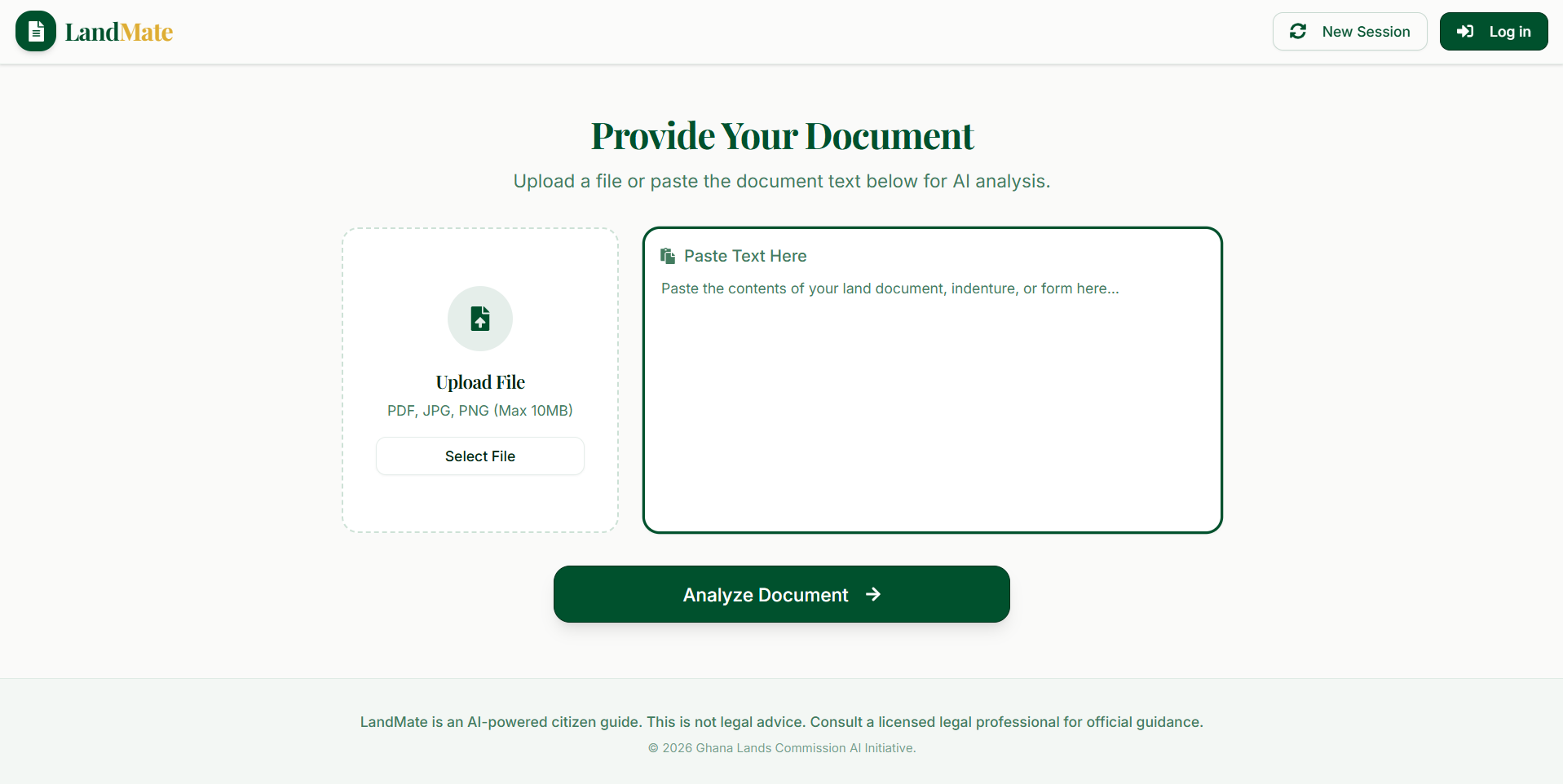
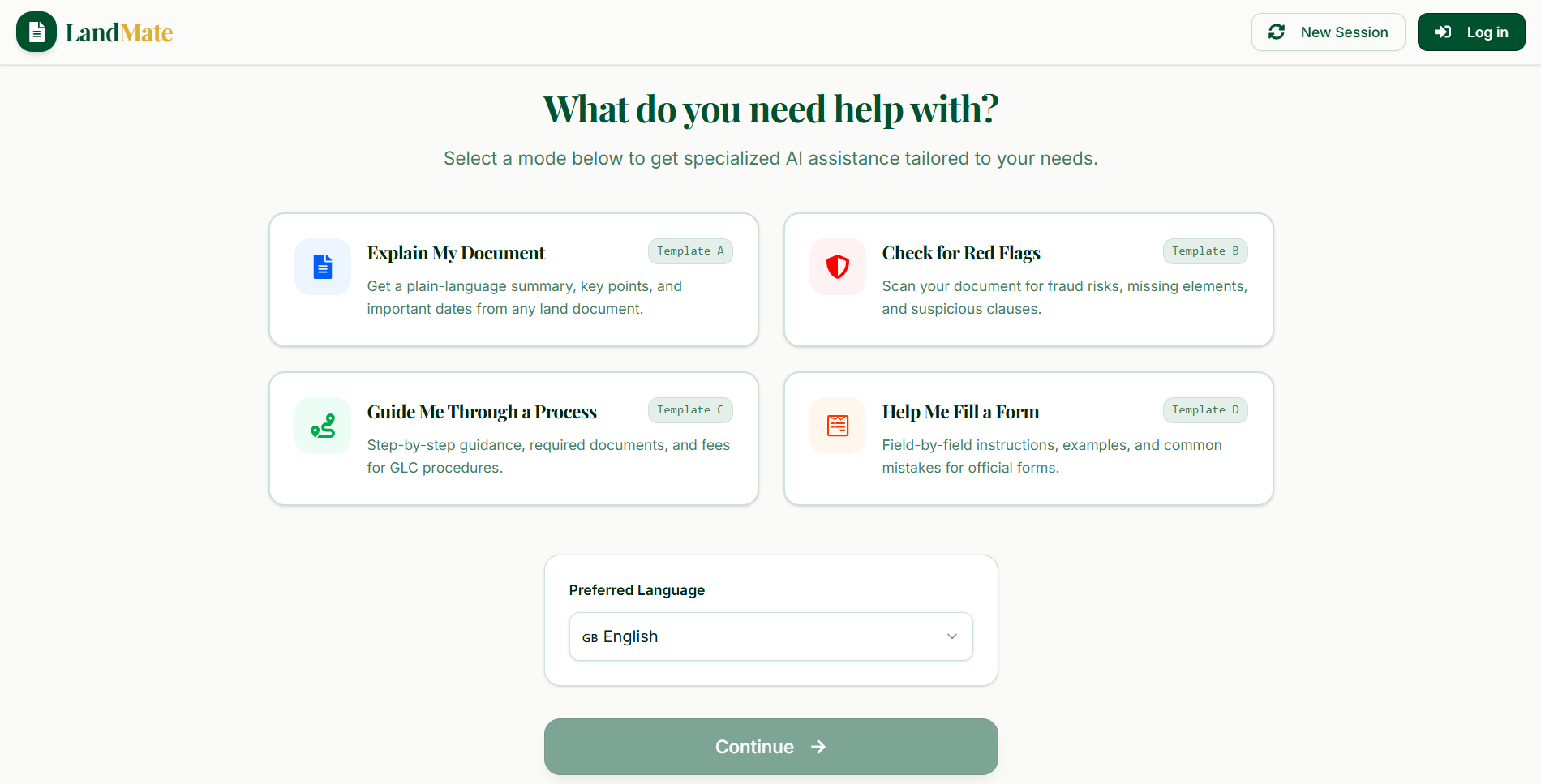
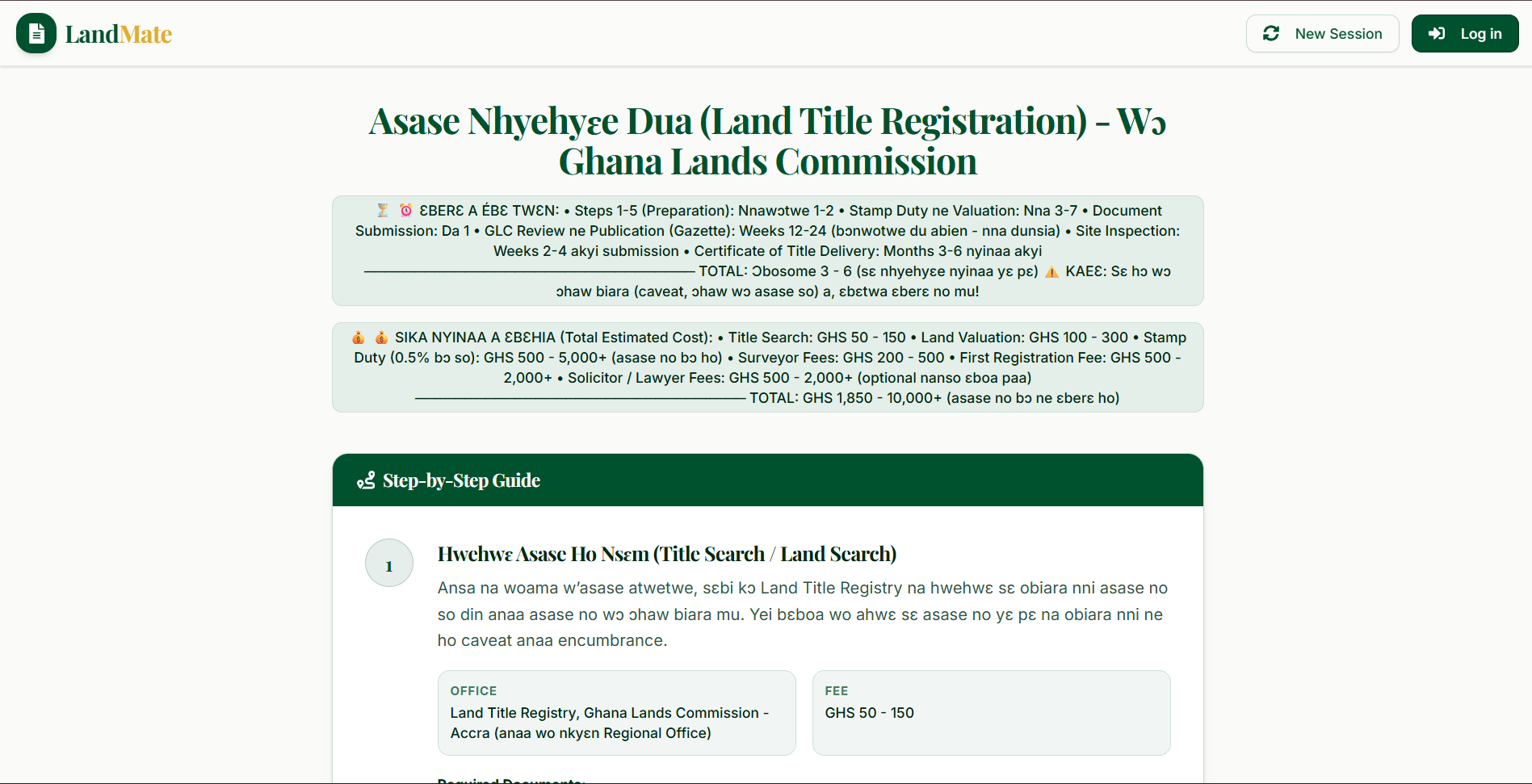
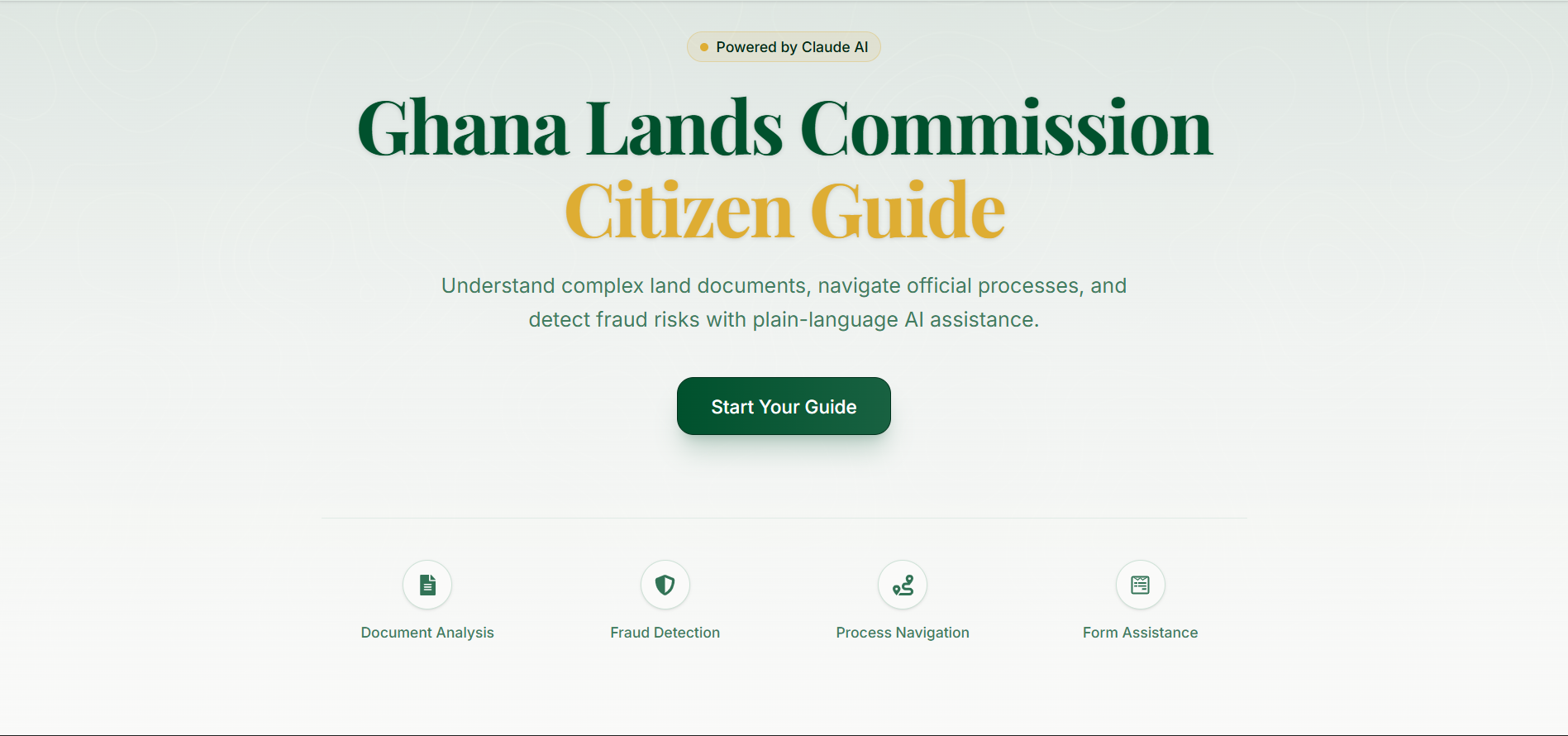
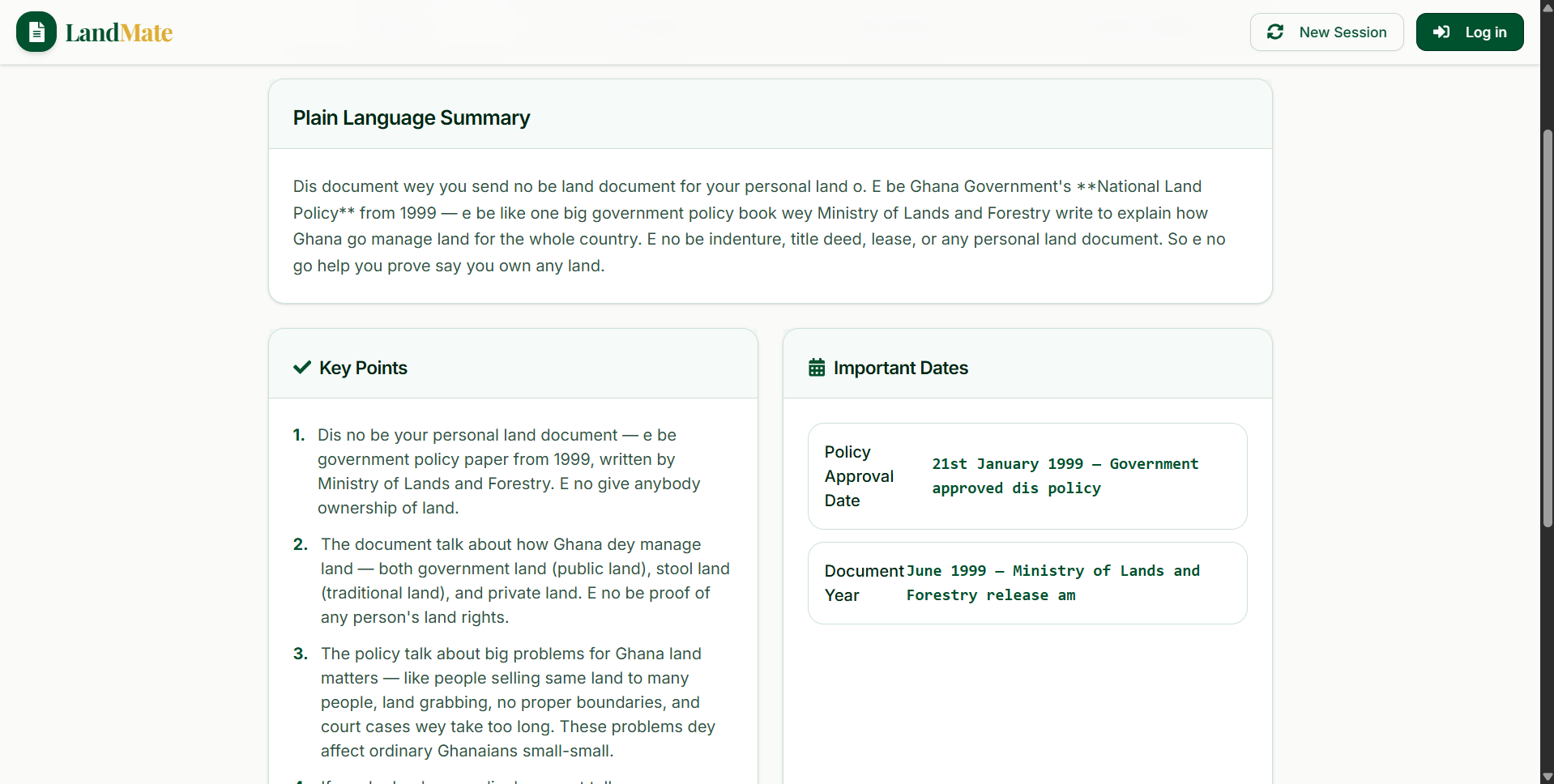
LandMate acts as an AI-powered decision-support co-pilot for land transactions. Users can upload documents like indentures, leases, or official forms to receive structured, plain-language explanations. The system performs a risk analysis to flag suspicious terms or missing elements that might indicate fraud. Additionally, it provides step-by-step process guidance for tasks like title transfers and stamp duty payments, all while supporting multilingual interaction in English, Twi, and Pidgin to ensure broad accessibility.
How we built it
We built LandMate using a modern, modular stack designed for speed and security. The frontend is a mobile-first React architecture, ensuring accessibility for users on the go. The backend is powered by a Node.js API that handles document processing and communicates with the Claude API (Anthropic). We utilized carefully engineered prompt templates specifically tailored to the Ghanaian legal context to ensure the AI's outputs are accurate, structured, and actionable.
Challenges we ran into
One of the primary challenges was handling the duality of Ghana’s land system, which blends customary traditional ownership with statutory state regulation. Engineering the AI to understand this specific context—and the nuanced terminology associated with it—required significant refinement. We also faced the technical challenge of ensuring absolute data privacy, which led us to implement a stateless processing model where user documents are processed in-memory and never permanently stored.
Accomplishments that we're proud of
We are incredibly proud of developing a tool that can translate high-level legal "legalese" into Twi and Pidgin, making professional-grade land literacy available to those without legal training. Successfully building a system that doesn't just digitize records but actually provides "contextual intelligence" to identify potential land fraud is a major milestone for our team in our effort to protect citizen assets.
What we learned
Through this project, we learned that the biggest barrier to land security isn't just a lack of records, but a lack of interpretation. We gained deep insights into the intricacies of the Land Act 2020 and the National Land Policy. Technically, we deepened our expertise in building secure, AI-integrated applications and learned how to fine-tune LLM responses to adhere strictly to localized legal frameworks.
What's next for LandMate
Our vision is to move from a standalone application to a core piece of national infrastructure. The next phase involves seeking collaboration with the Ghana Lands Commission to integrate LandMate directly into official registration workflows. We aim to enable real-time document validation and eventually contribute to a digitally unified land administration framework where every transaction is transparent, fast, and secure.
Built With
- javascript
- node.js
- typscript


Log in or sign up for Devpost to join the conversation.