Inspiration
Many virtual tours today are passive, flat, and solitary, limiting engagement and accessibility. MonuVerse VR was created to provide an immersive, social, and interactive alternative, enabling users to experience cultural heritage in a more engaging and intuitive way.
What it does
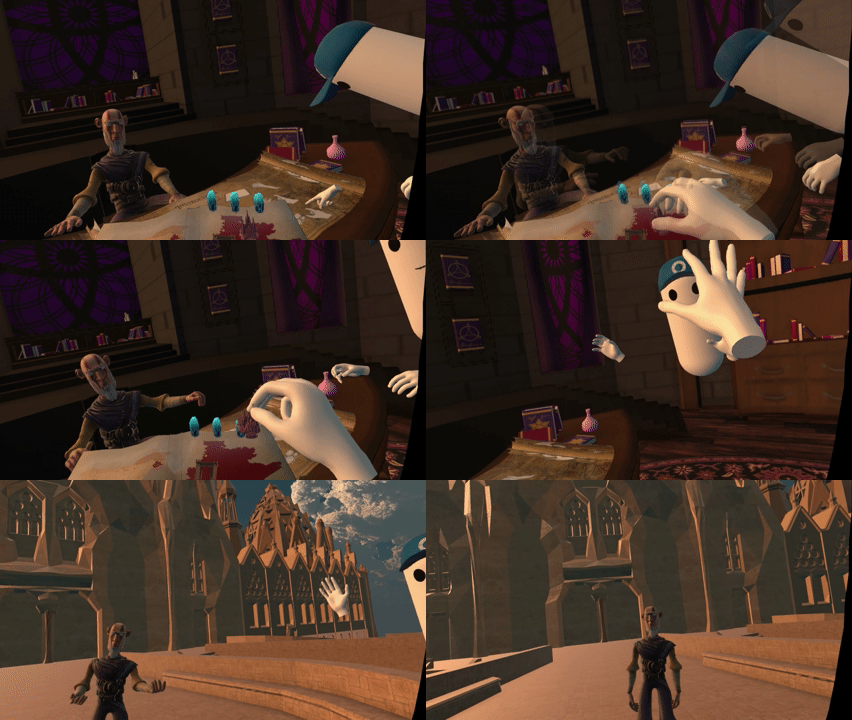
Upon entering the experience, users spawn in an enchanted library where a virtual Librarian introduces intuitive hand gestures:
- Opening the palm displays a holographic book.
- Pinching picks up miniature representations of monuments.
- Dropping miniatures on the ground launches full-scale tours.
- Picking up a crystal and placing it on the ground allows users to exit the experience.
How we built it
- Environment and Concept Design: Created the enchanted library, miniature monuments, and tour spaces.
- VR Development: Implemented hand tracking, gesture recognition, and holographic book UI using Unity and the Meta XR SDK.
- Tour Logic: Developed rotation and façade transitions, synchronized narration, and highlight systems for visual emphasis.
- Multiplayer Integration: Enabled real-time avatar synchronization, shared interactions, and networked scene transitions using Photon/Unity Netcode.
- Optimization: Reduced mesh complexity, baked lighting, and ensured VR performance and comfort.
Challenges we ran into
- Precision in hand tracking and gesture recognition under varying conditions.
- Synchronizing multiplayer interactions and tour progression.
- Optimizing high-detail 3D assets for smooth VR performance.
- Timing narration and highlight animations to match the user’s perspective.
Accomplishments that we're proud of
Developed a fully functional gesture-based VR interface, allowing intuitive interaction with holographic books and miniature monuments. Implemented multiplayer synchronization, enabling multiple users to explore monuments simultaneously with real-time gesture awareness. Designed a narrative-driven guided tour system with dynamic highlights that visually emphasize elements described by the virtual guide. Optimized high-poly 3D assets for VR, maintaining visual quality while ensuring smooth performance on Meta Quest devices. Designed an immersive library onboarding environment, providing an intuitive introduction to hand gestures. Delivered a scalable platform, easily extendable to additional monuments, cities, or educational content.
What we learned
The project demonstrates best practices for gesture-based VR interfaces, multiplayer synchronization, VR performance optimization, and narrative-driven immersive experiences. It highlights the potential of VR for shared cultural education and social engagement.
What's next for Landmarks
- Expand the platform to include more global monuments and historical sites, making it a comprehensive virtual travel platform.
- Integrate context-aware explanations and Q&A capabilities.
- Develop educational tools for schools, museums, and cultural institutions to leverage VR tours for learning.
- Add customizable avatars, social features, and guided group tours for enhanced multiplayer engagement.

Log in or sign up for Devpost to join the conversation.