-
-
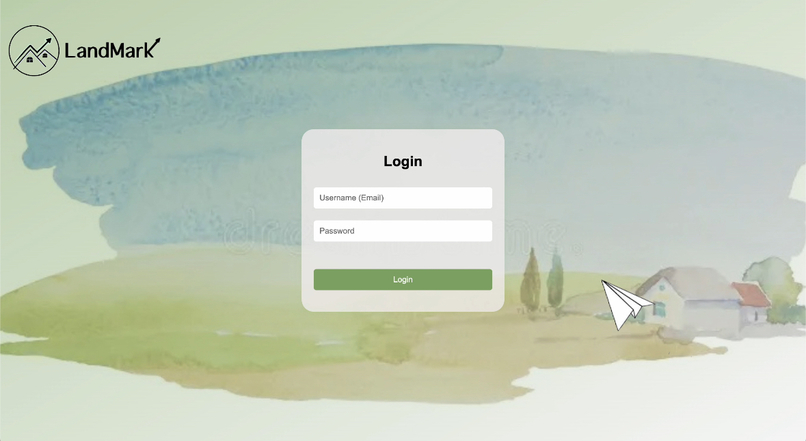
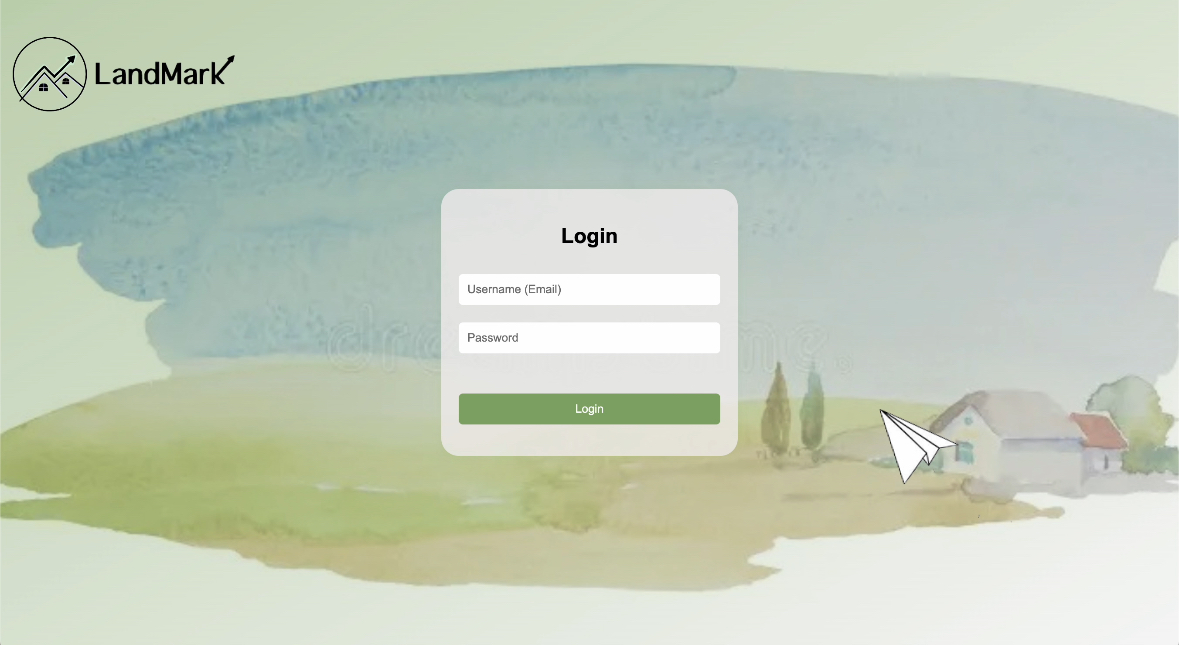
login page
-
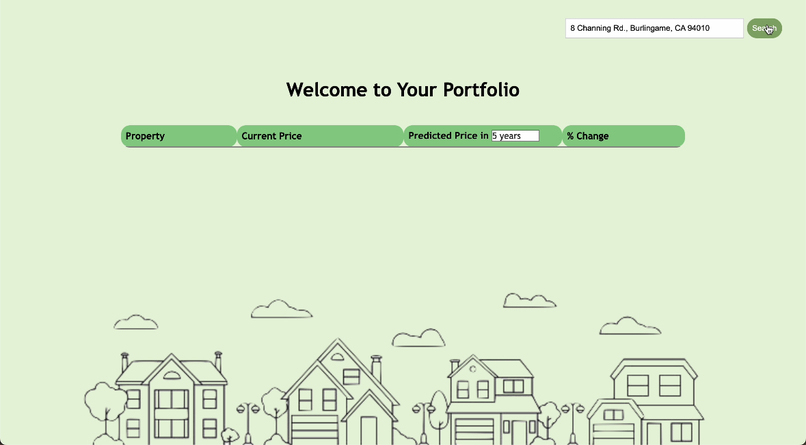
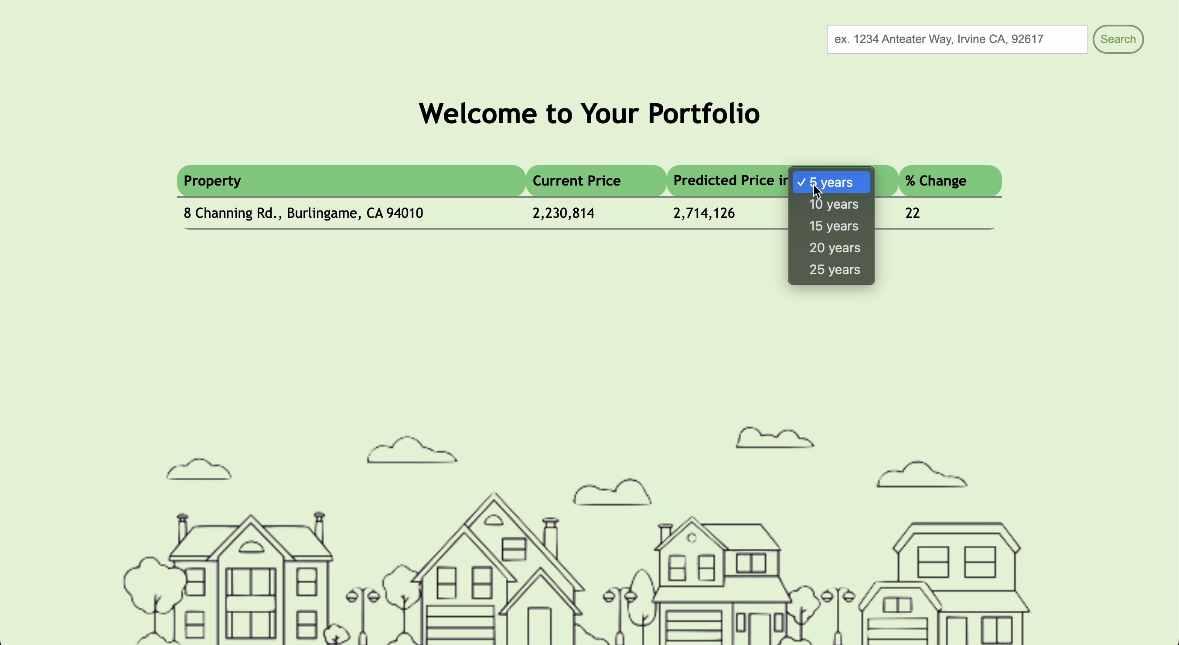
user portfolio
-
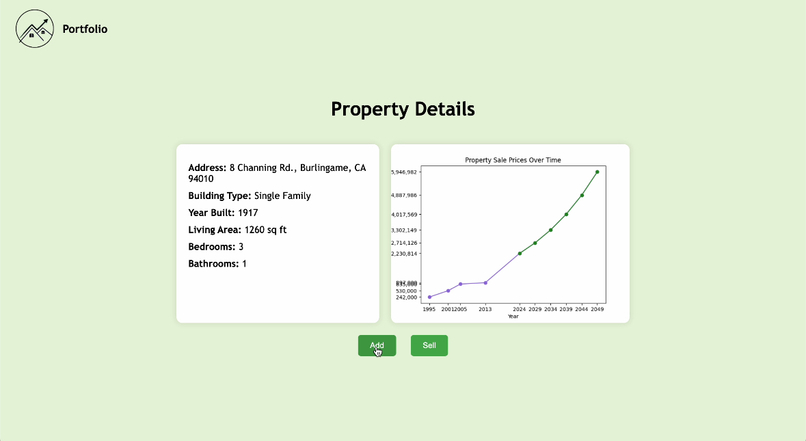
property details
-
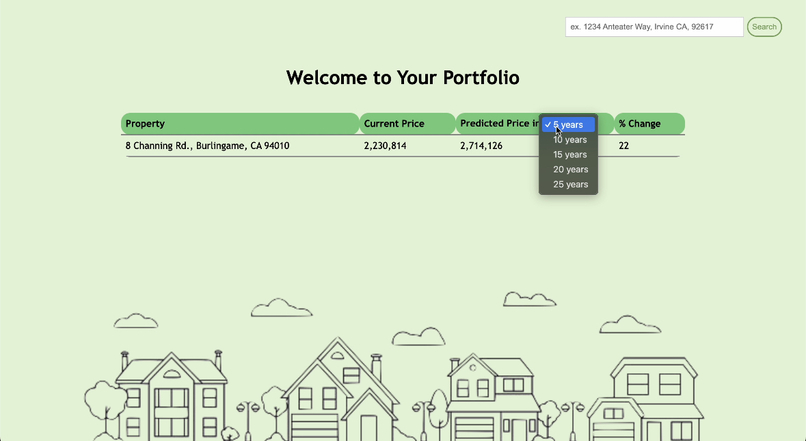
price prediction
-
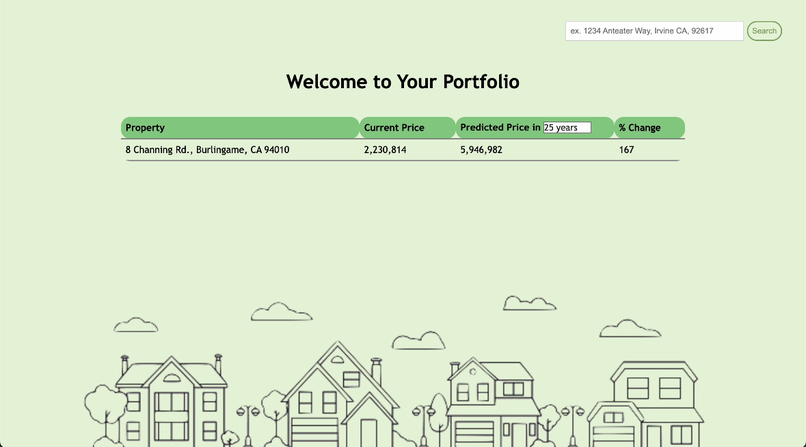
updated predicted prices
-

team photo




What is LandMark?
The process of buying a house can be a daunting task, especially in today's real estate market. Fortunately, LandMark can educate users on the details of the real estate market and help them make informed decisions about their choice of residence, and when to sell. Our goal is to educate users on the intricacies of the real estate landscape. LandMark offers detailed insights into market trends, property information, and projected property values up to the next 25 years.
How LandMark works
When users visit LandMark, they are prompted to enter their email address and password. The email address is verified using Melissa Education’s Email Verification API, and the password is also validated. Once logged in, users are greeted with an interface displaying their current portfolio of selected houses, which is initially empty if they haven’t added any properties yet. Users can search for a residential address of their choice, which is also verified using Melissa Education’s Address Search API. Upon address verification, Rentcast’s API is leveraged to fetch a list of properties available for sale within the same city. This dataset serves as the basis for training an XGBoost model, enabling accurate price predictions for properties in the corresponding area. The model incorporates various house features into its predictions, such as building type, year built, square footage, and the number of bedrooms and bathrooms. After the model predicts the current property price, the expected prices for the property over the next 25 years are calculated. This calculation is based on the historical annual average national appreciation rate of 4% provided by the Federal Housing Finance Agency (FHFA). The resulting prices are then displayed on a graph for user visualization. Users can then choose to add the property to their portfolio.
Obstacles we overcame
Our biggest challenge was connecting the front end and the back end. More specifically, we struggled with populating the portfolio table with residential property information. None of us were familiar with how to achieve backend and frontend integration, but with the help of the VenusHacks mentors, we figured out how to populate and display the portfolio table on our web app. We also had some struggles with git involving committing our changes and making sure that everyone's environment was up to date and working, but we ended up dividing up the work so that the most up-to-date version of the web app was on the most updated computer. We also had to figure out a way to sustainably use our Melissa Education API credits so that we wouldn’t run out by the time it was time to submit. To address this, we found a clever workaround by initially saving our requested data to JSON files during testing. This allowed us to conserve our API credits by testing using stored data until we submitted our project to the judges.
Accomplishments that we celebrated
A notable accomplishment is that half of our team had never participated in a hackathon before! Throughout this process, we learned how to work with the Melissa Education API and RentCast API, how to incorporate AI for data prediction and analysis, and how to visualize data effectively. We also did well on time - we had an idea by day 1 and had a functioning log-in page by the end of the night. This set a strong foundation for day 2, which was also utilized productively. Even though none of us weren’t too familiar with the inner workings of implementing AI, we were all willing to learn and spent the majority of day 2 creating this successful and vital feature of LandMark. This project has been an incredible learning experience for all of us, and we are proud and excited about the new skills and knowledge we gained.
What’s next in store
We would like to add additional functionality to the login page, such as differentiating between logging in/creating an account and keeping track of the user’s portfolio for the next time they log in. An idea we also had was to further leverage AI technology by adding an AI scoring feature to each asset. This feature will analyze property sale prices over time and provide users with insights on whether it's a good time to sell a property. Another feature we're yet to implement is the selling aspect of LandMark. The user would have the option to sell any property they add to their portfolio and see the analytics of net gain/loss if they decide to sell it. This gives them insight into when the best/worst times are to sell their properties and come to a decision just like they would in the real world.
Built With
- css
- flask
- github
- html
- javascript
- kaggle
- melissa-data-email-object
- python
- rentcast-api
- tensorflow


Log in or sign up for Devpost to join the conversation.