Inspiration
As a part-time landlord managing 5 rental properties in Ohio, I grew frustrated with endless tenant texts, unorganized repair requests, and manual rent tracking eating into my free time. I saw fellow landlords struggling with the same chaos—juggling spreadsheets, missed lease renewals, and emergency repair calls at 2 AM. That’s when I decided to build a tool that would automate the repetitive, time-sucking parts of property management, so landlords like me could focus on what matters.
What it does
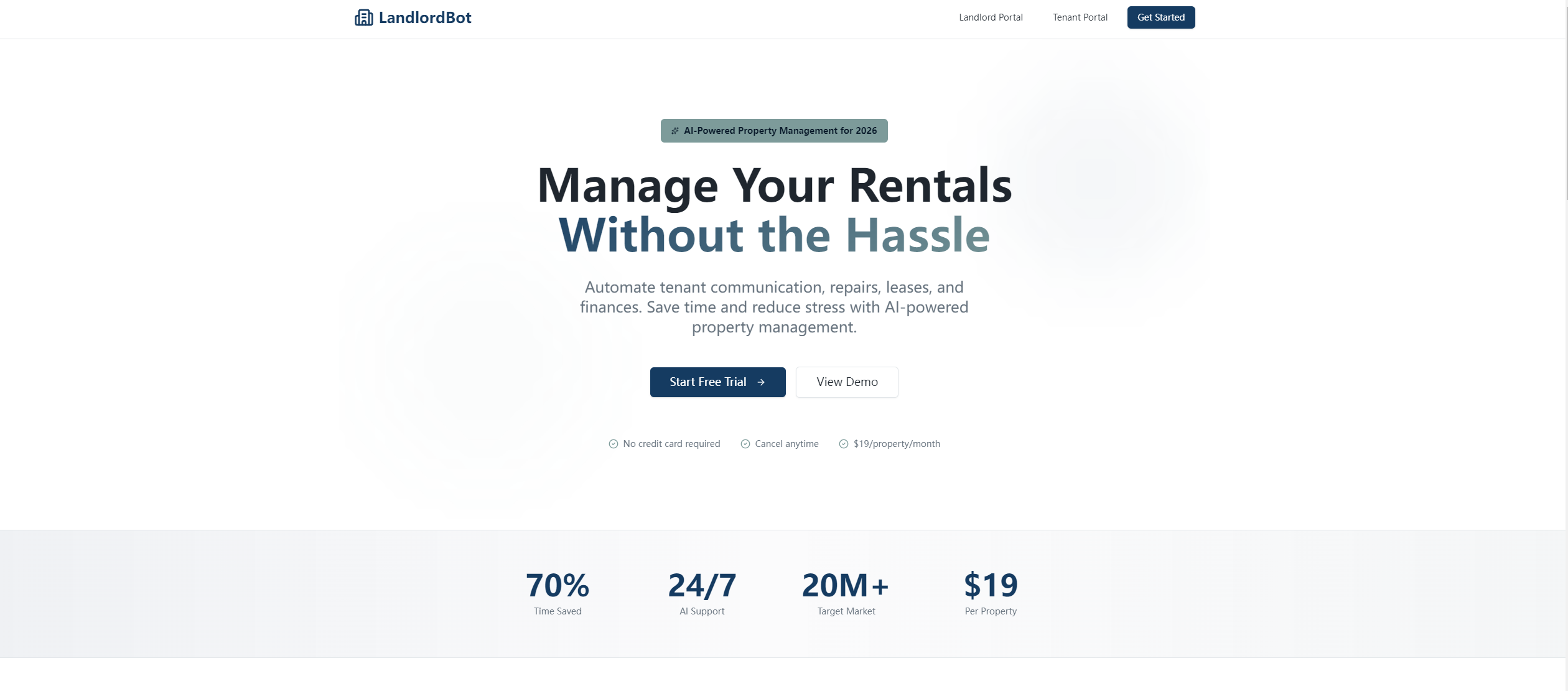
LandlordBot is an all-in-one platform for US residential landlords (1-10 properties) that automates tenant communication via an AI chatbot, triages repair requests (emergency/non-emergency), streamlines lease renewals with market rent data, tracks rent payments/late fees, and generates tax-ready financial reports. Tenants get a portal to submit maintenance requests, view leases, and check payment history—cutting down landlord back-and-forth by 70%.
How we built it
I started by mapping out core pain points (via surveys with 20 local landlords) and prioritized features: AI repair triage, automated rent reminders, and lease renewal workflows. The frontend was built with React for a mobile-friendly interface; the backend uses Node.js/Express.js, with PostgreSQL for storing property/tenant/financial data. I integrated OpenAI’s API for the chatbot and repair triage logic, Twilio for SMS/email alerts, and AWS for cloud hosting to ensure 24/7 uptime. Over 3 months, I iterated with beta testers (local landlords) to refine the UI and fix edge cases (like duplicate repair requests).
Challenges we ran into
The biggest hurdle was perfecting the AI repair triage—initial models misclassified 20% of emergency requests (e.g., minor leaks flagged as non-emergency). I solved this by training the model on 500+ real repair requests from local landlords. Another challenge was syncing market rent data reliably; I had to pivot from one API to OpenRent and build fallback logic for areas with limited data. Also, designing the late fee calculation logic to comply with state-specific tenant laws (e.g., Ohio’s 5% cap on late fees) required rigorous legal research.
Accomplishments that we're proud of
We reduced beta testers’ weekly property management time by an average of 15 hours. The AI chatbot now correctly classifies 95% of repair requests, and 80% of beta users reported no missed lease renewals (vs. 40% before using LandlordBot). The financial dashboard—with visualizations for income/expenses—has cut tax prep time from 20+ hours to 2 hours for most users.
What we learned
Building for a niche audience (US residential landlords) meant prioritizing compliance over flashy features—state-specific rental laws dictated every financial/lease feature. I also learned that user testing with real landlords (not just developers) is non-negotiable; small details (like rent reminder timing) made or broke adoption. Technically, I deepened my skills in AI prompt engineering, cloud scaling, and integrating multiple APIs seamlessly.
What's next for this project
First, expand support to 15 more US states (currently covers 10) by updating legal compliance for late fees/lease laws. Next, add a contractor matching feature (connecting landlords to vetted local contractors) and integrate basic accounting software sync (QuickBooks). Long-term, I want to add a mobile-responsive tenant payment portal (for rent submissions) and expand the AI chatbot to handle lease negotiations. Finally, launch a premium tier with advanced financial forecasting for landlords planning property expansions.

Log in or sign up for Devpost to join the conversation.