Inspiration
Starting over in a new country involves much more than finding a place to live. It means understanding unfamiliar documents, keeping track of important dates, navigating employment requirements, and finding people you can trust, all while potentially facing a language barrier.
The idea behind Landed is simple: help already exists, but finding it, understanding it, and knowing which part applies to you can be overwhelming. We wanted to bring those steps together in an accessible app that helps newcomers turn uncertainty into action.
What it does
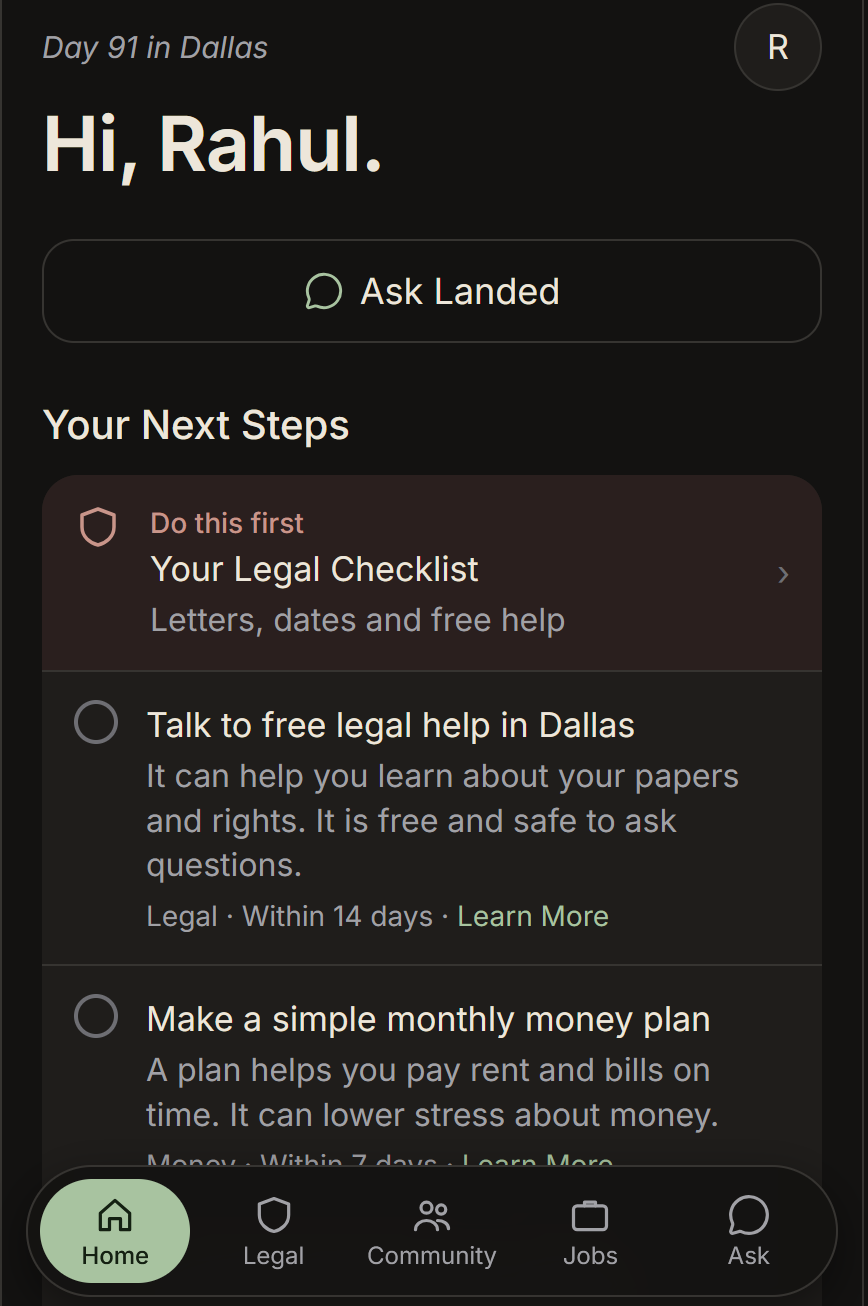
Landed helps newcomers navigate their first year in the United States through personalized guidance, document understanding, and community connections.
- Personalized plans: Onboarding uses your language, city, background, and needs to create practical next steps.
- Document understanding: Scan a letter, review and cover sensitive details before uploading, and receive a plain-language explanation with important dates and unfamiliar terms.
- Document chat: Highlight a confusing passage and ask questions about it while keeping the document visible.
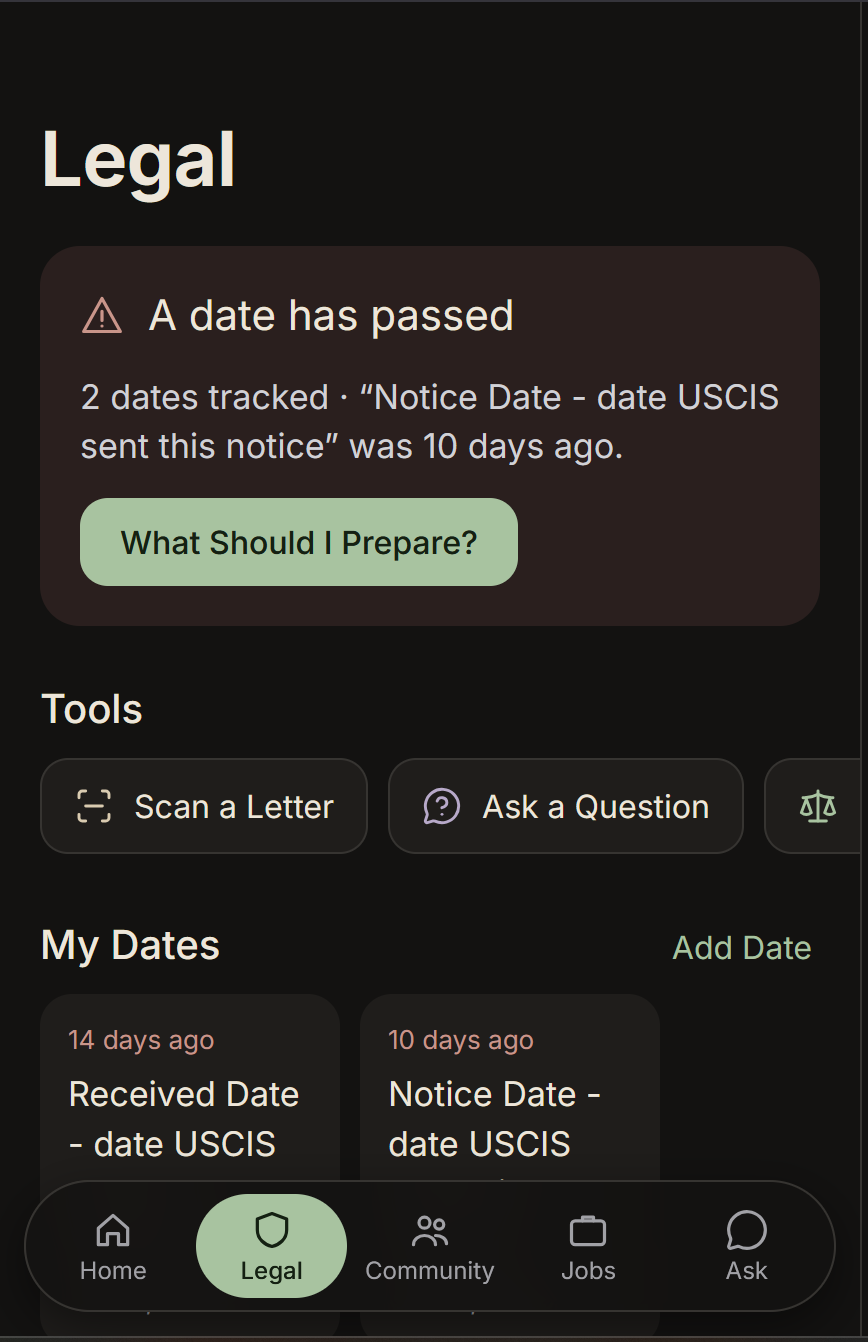
- Legal organization: Save extracted dates, track checklist progress, find nearby legal-help providers, and generate bilingual appointment-preparation summaries.
- Accessible information: Use 23 bundled languages, request additional language translations, and read trusted webpages through an in-app translation view.
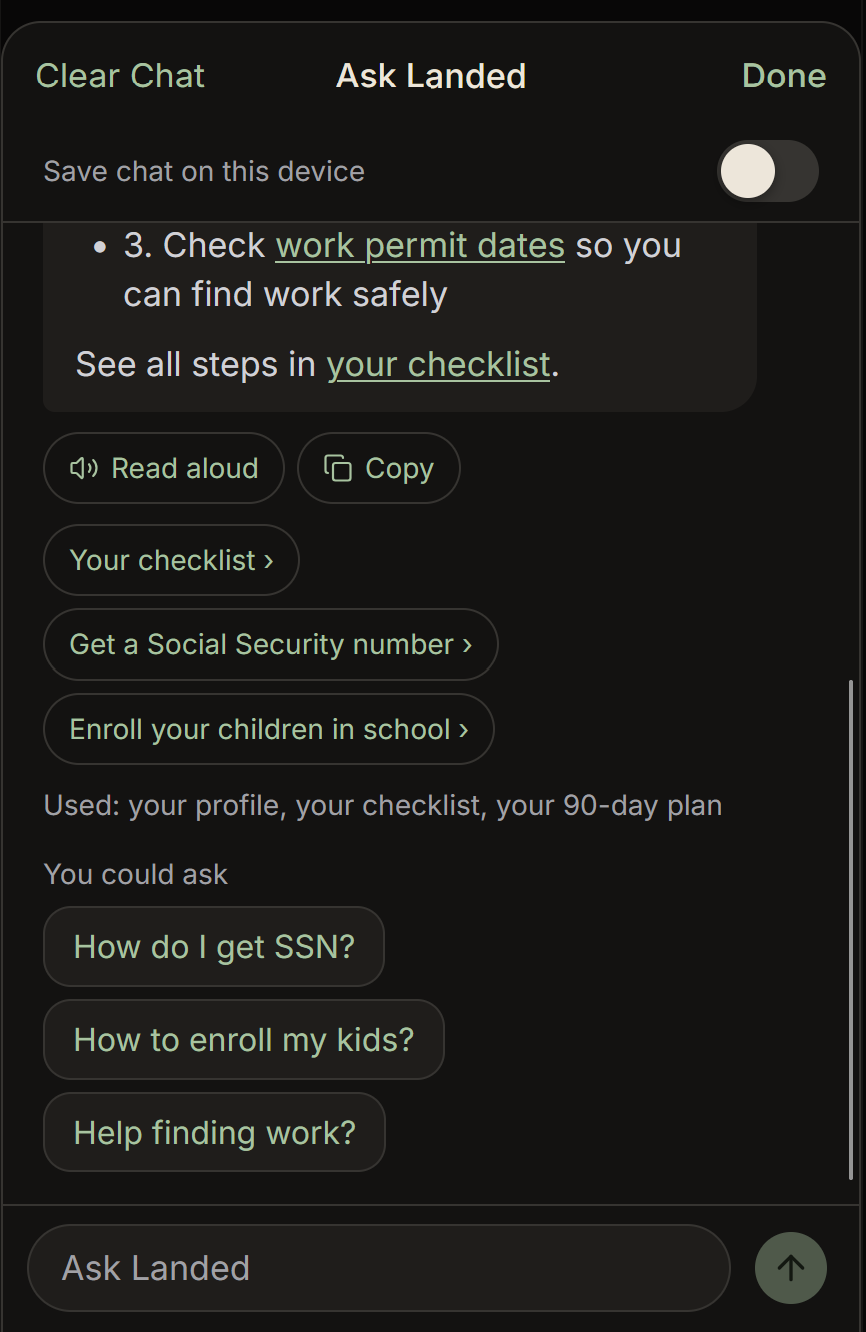
- Ask Landed: Ask questions grounded in trusted resources and relevant saved information. Suggested changes to dates or checklist items require confirmation.
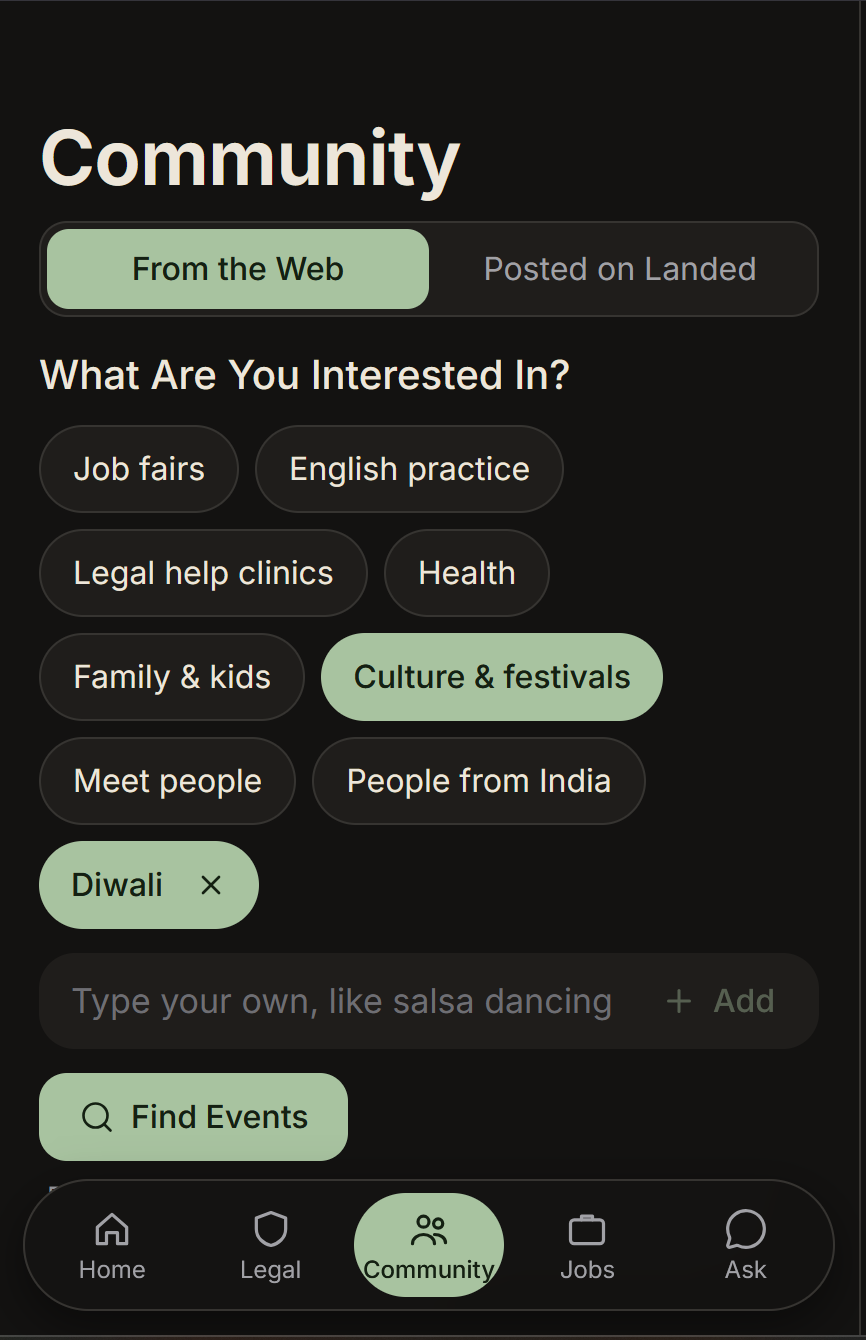
- Community: Discover events by interest, inspect the search and verification history, RSVP to posted events, draft an event from a flyer, and participate in a community forum.
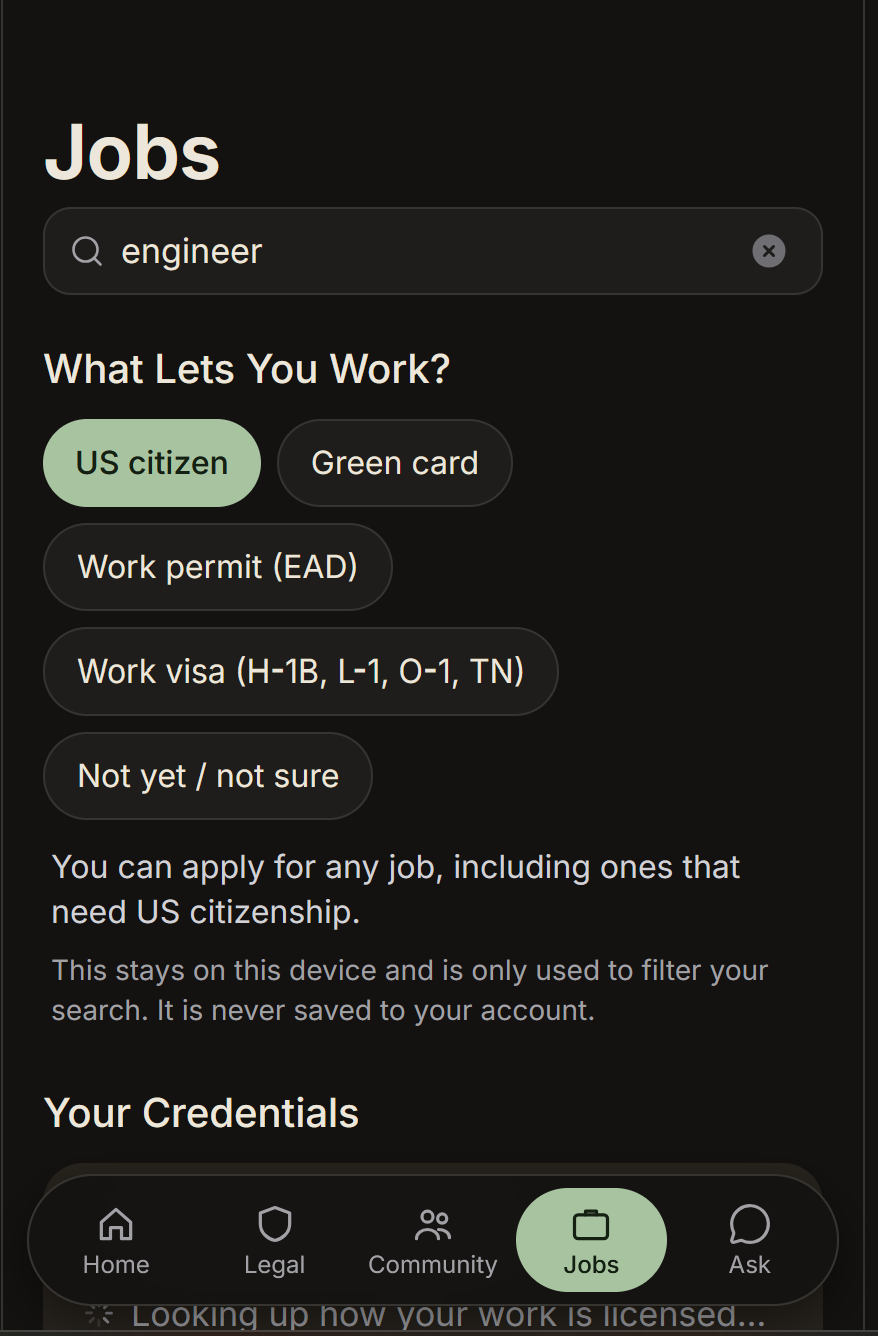
- Career support: Explore credential guidance, licensing-board resources, and job listings with work-authorization filters and sponsorship indicators.
Landed explains information and connects people to qualified help; it does not provide legal advice.
How we built it
We built Landed with Next.js, React, TypeScript, and Tailwind CSS, using Radix UI and Framer Motion for accessible controls, sheets, and interactions.
Meta Muse Spark powers chat, document analysis, personalized planning, and interest-based event discovery. Gemini handles translation, including the app’s on-demand language support and trusted webpage reading views.
For document privacy, Tesseract.js runs OCR in the browser to help identify sensitive details. Users review the suggested redactions and can add their own before a covered copy is sent for analysis.
SerpApi supplies general event listings, nearby legal-help results, job listings, and additional trusted-source searches. Muse-discovered events pass through a separate verification step that checks their webpages before displaying them.
We use Supabase for authentication and account data, with row-level security policies. IndexedDB supports local persistence and synchronization, while Redis/Valkey caching hosted on Vultr reduces repeated translation and discovery work.
Challenges we ran into
One major challenge was increasing event-search coverage without sacrificing accuracy. Asking an AI for more results was insufficient: we needed complementary searches, deduplication, and checks against event webpages.
Multilingual support also extended beyond translating buttons. Page content, notices, navigation, and generated answers needed to follow the appropriate language consistently.
Document privacy also took some time as well,. We built a review step so users can inspect and adjust redactions before sending an image.
Accomplishments that we're proud of
We’re proud of building a connected experience that takes someone from “I don’t understand this letter” to an explanation, a saved date, and a practical next step. The document interface brings together privacy review, visual analysis, text highlighting, contextual questions, and date extraction. That makes the AI useful within a concrete workflow.
What we learned
We learned that useful AI depends on the surrounding product decisions: what information it receives, how results are checked, how uncertainty is communicated, and what users can control.
We also learned that accessibility also includes language, reading complexity, navigation, and clear next steps. A translated answer becomes much more useful when someone can act on it.
Finally, we learned that progress, caching, and reliable recovery matter alongside the quality of an AI response.
What's next for Landed
Our next priority is testing Landed with newcomers and organizations that support them, then using that feedback to improve its language, navigation, and usefulness.
We also want to:
- Have native speakers and qualified domain experts review translations and informational content.
- Strengthen document extraction and redaction across more document formats and languages.
- Expand reliable local resources through community and legal-aid partnerships.
- Add dependable deadline notifications and stronger offline support.

Log in or sign up for Devpost to join the conversation.