-
-
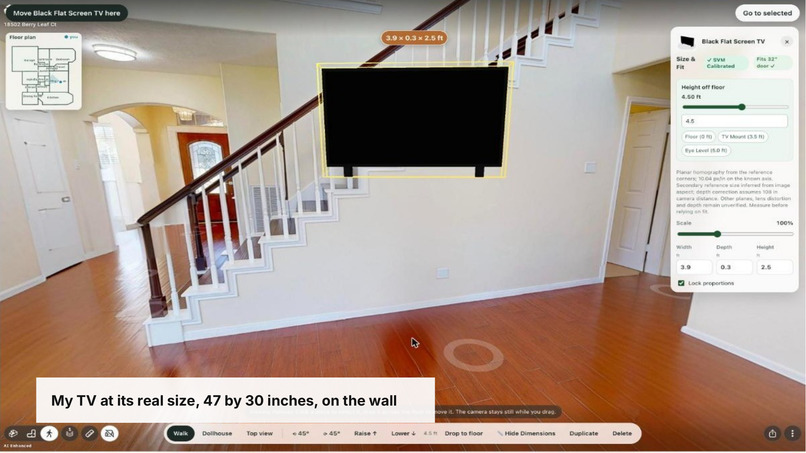
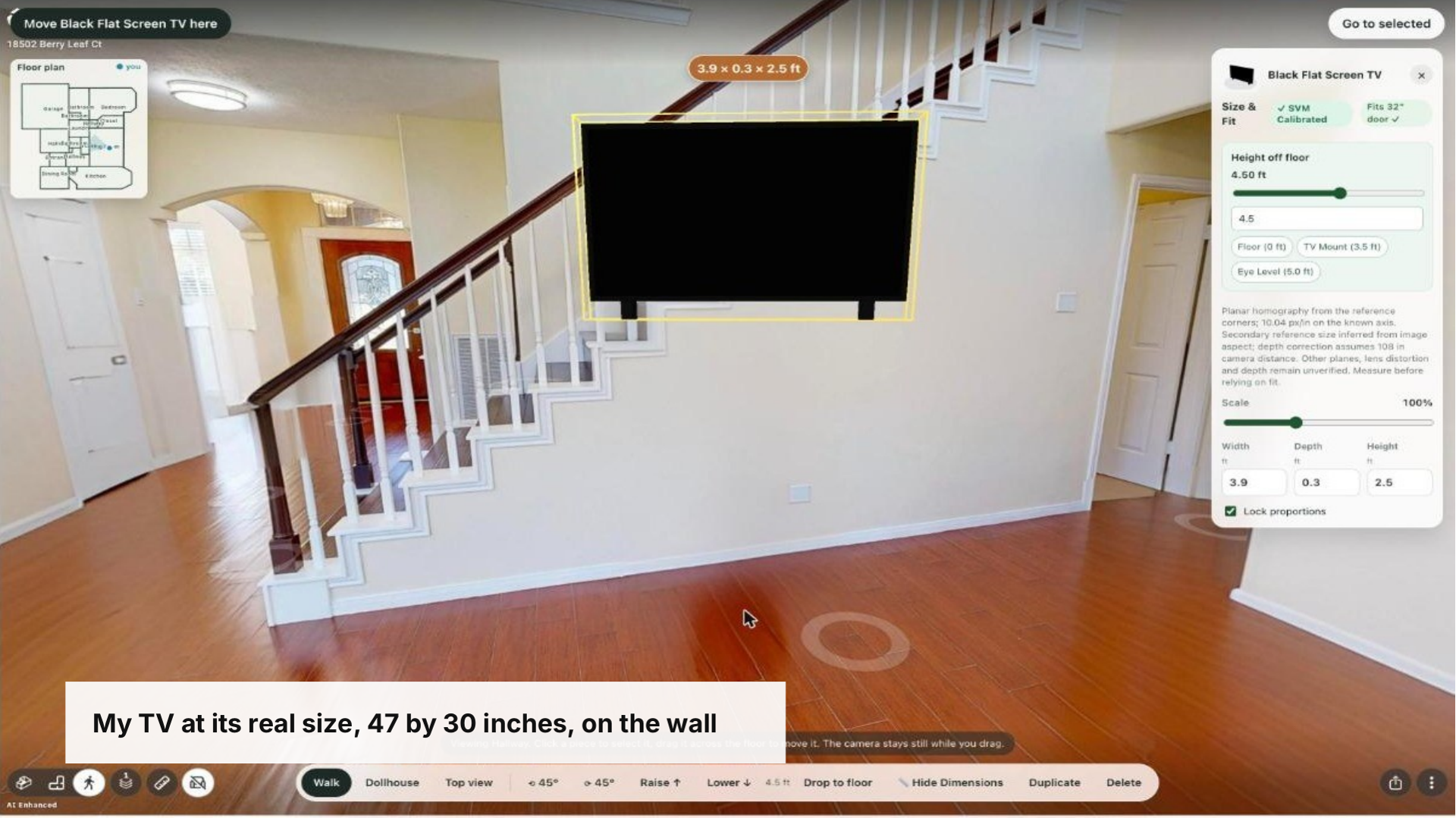
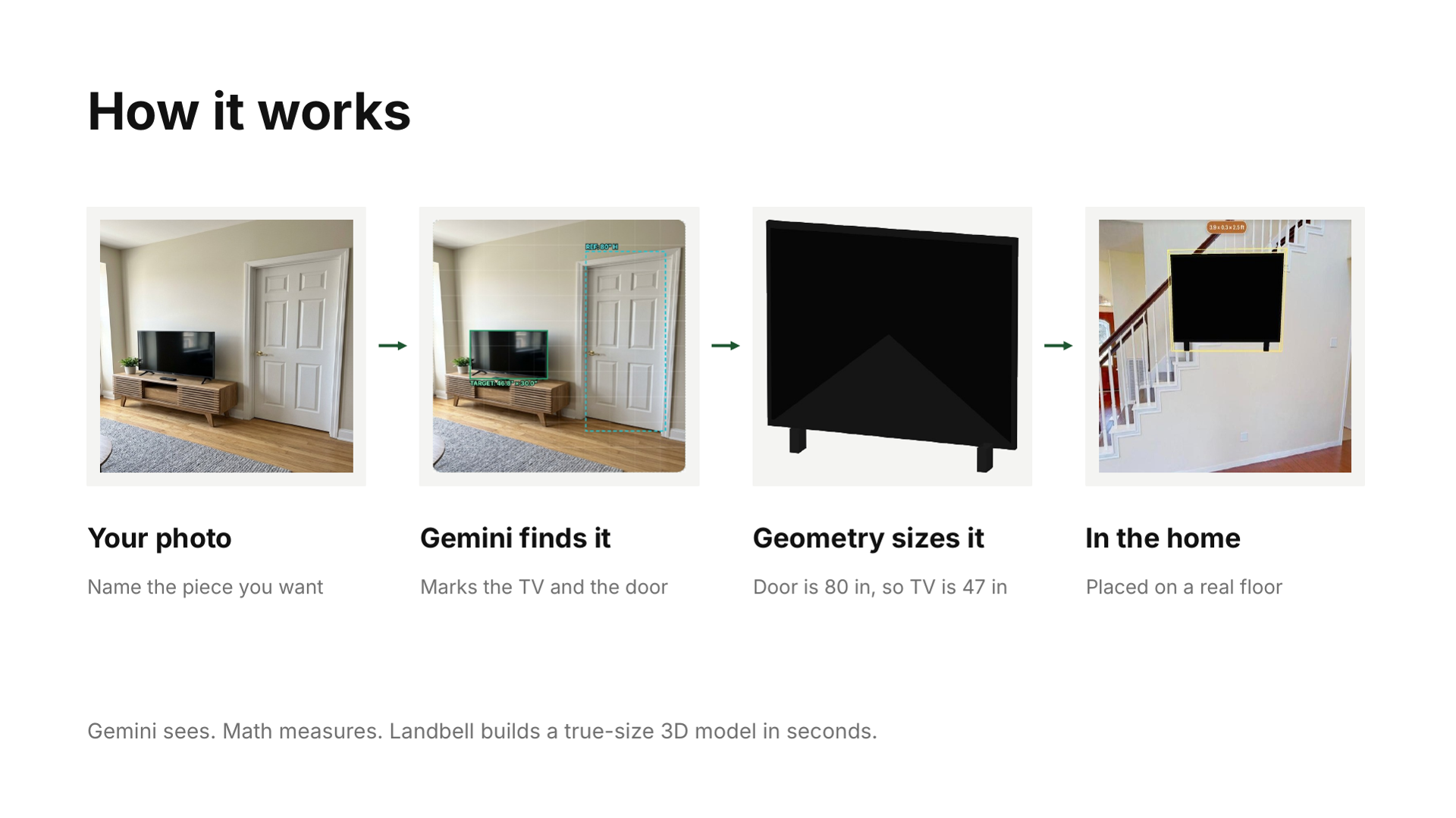
My TV, about 47 by 30 inches, placed at its real size inside a Matterport home tour.
-
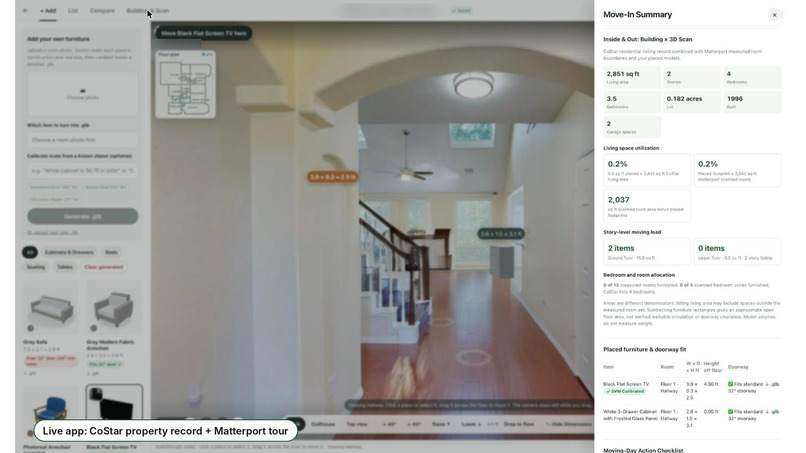
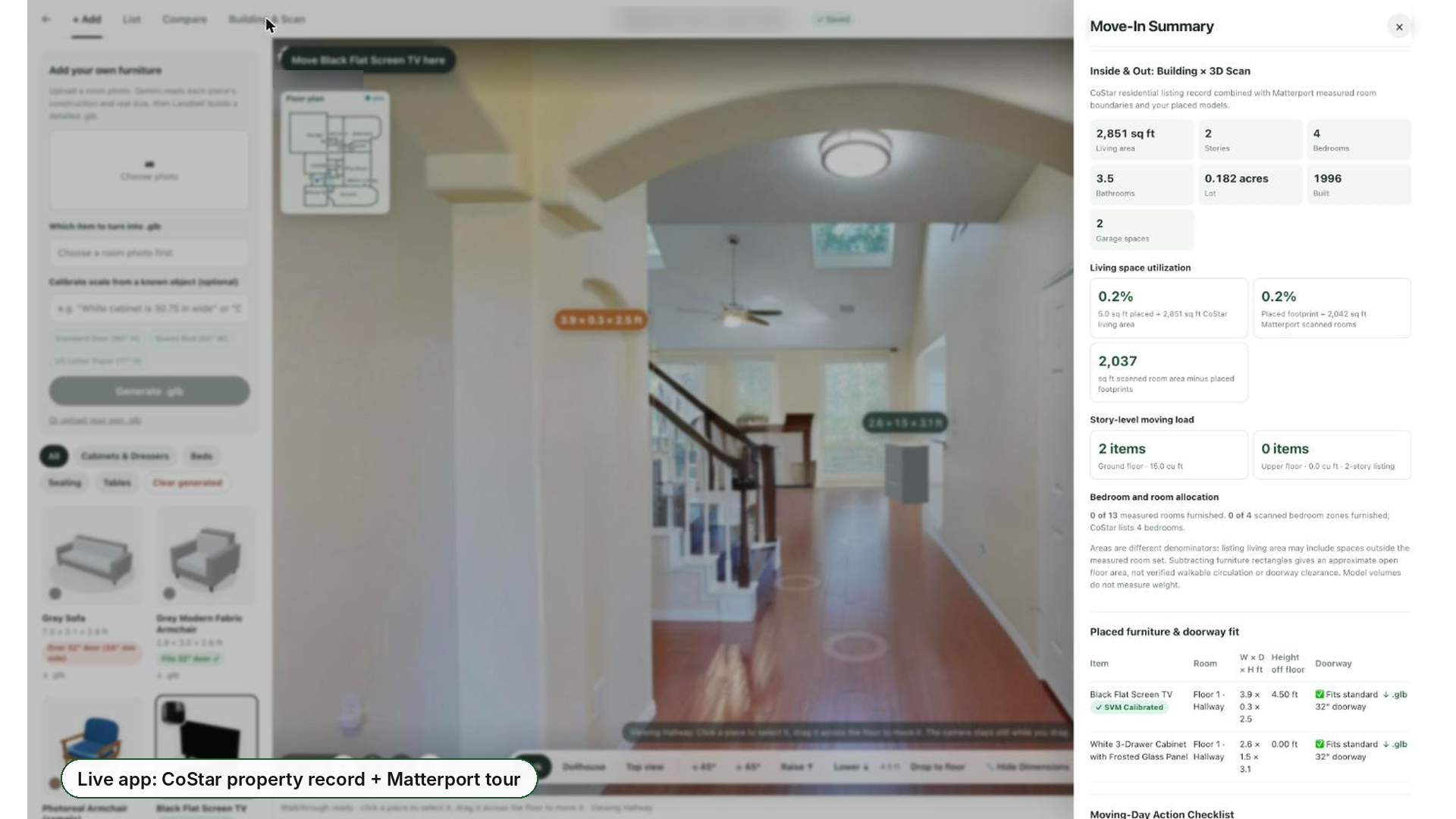
The CoStar property record combined with the Matterport scan: living area, stories and bedrooms, plus which floor every piece lands on.
-
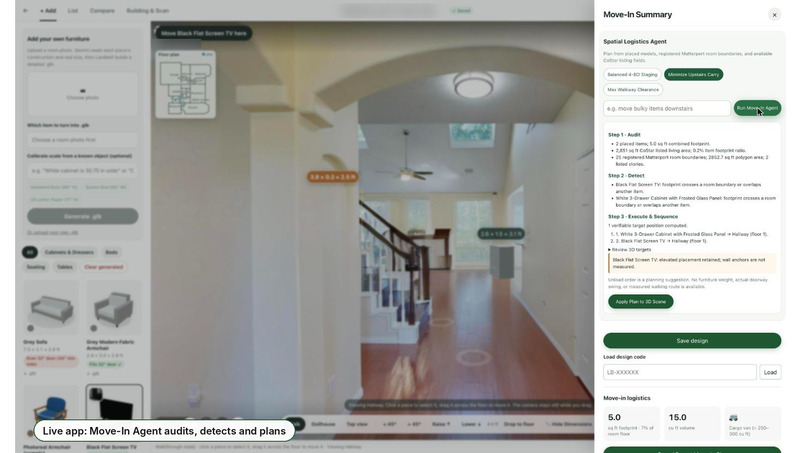
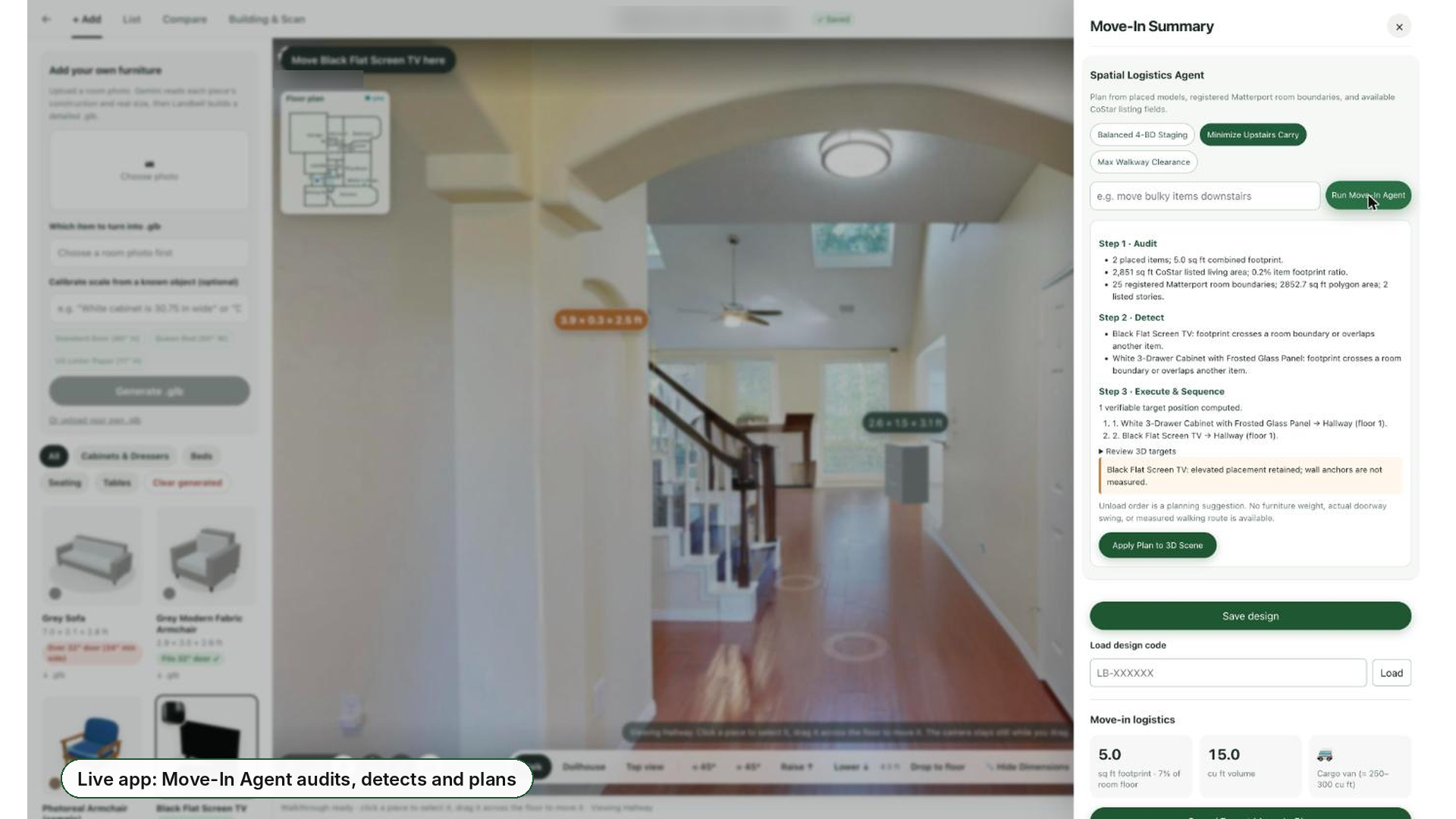
The Move-In Agent audits the CoStar record and Matterport rooms, detects conflicts, and plans the unload order.
-
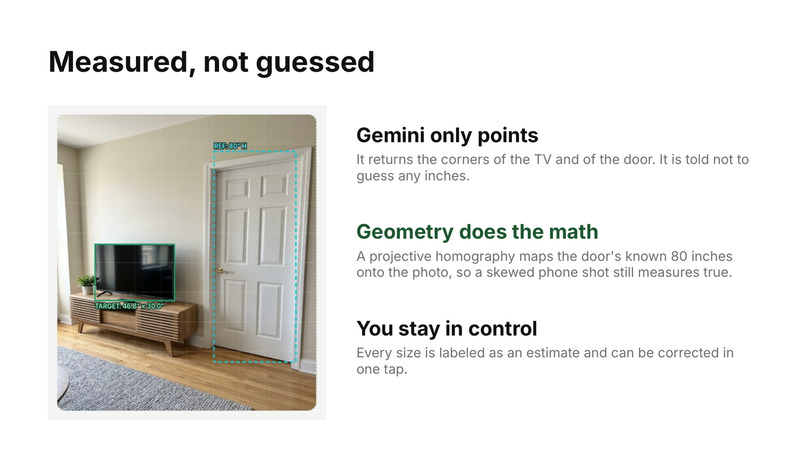
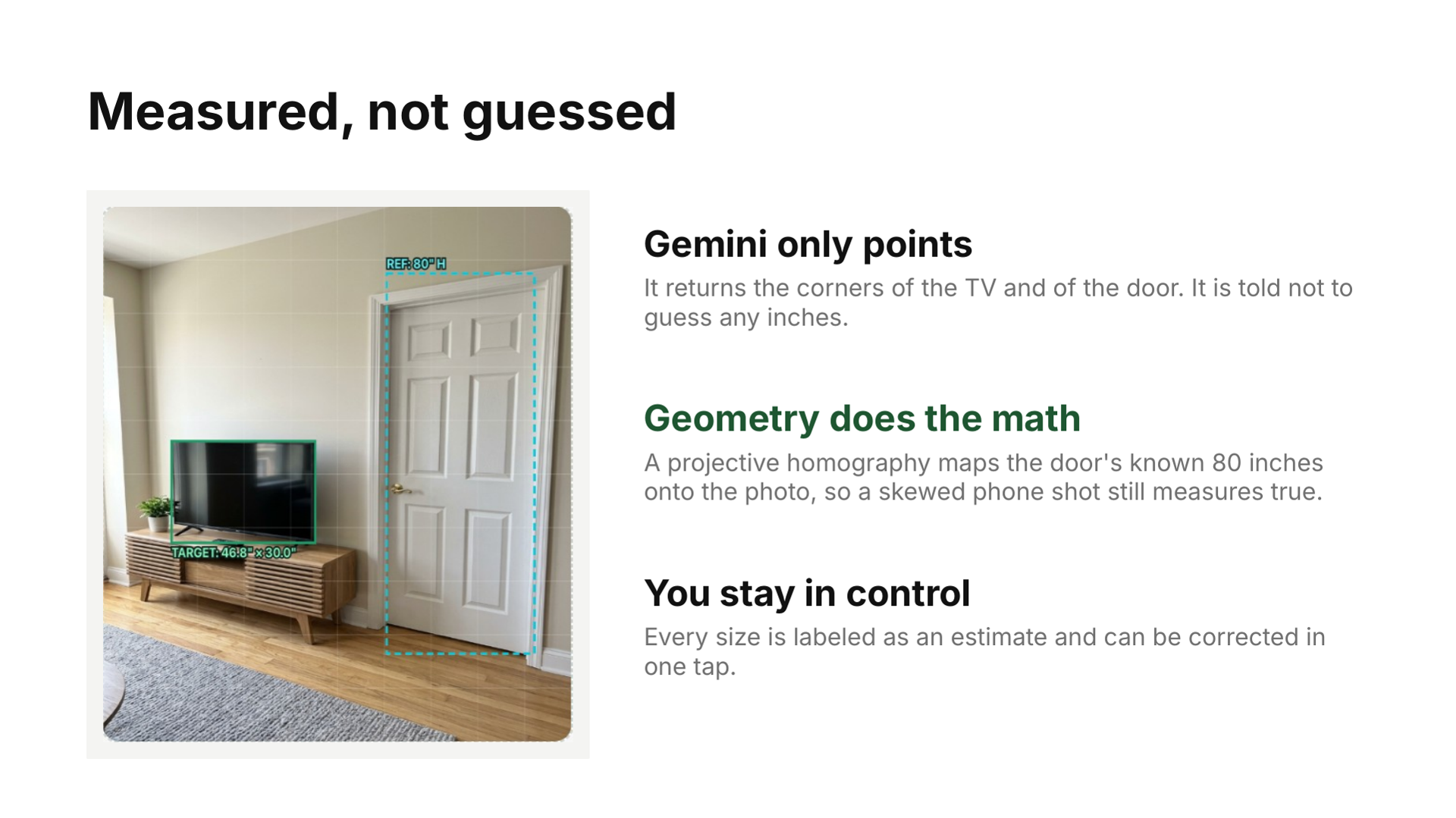
Gemini only marks corners. A homography uses the 80 inch door as a ruler, so the AI never guesses inches.
-
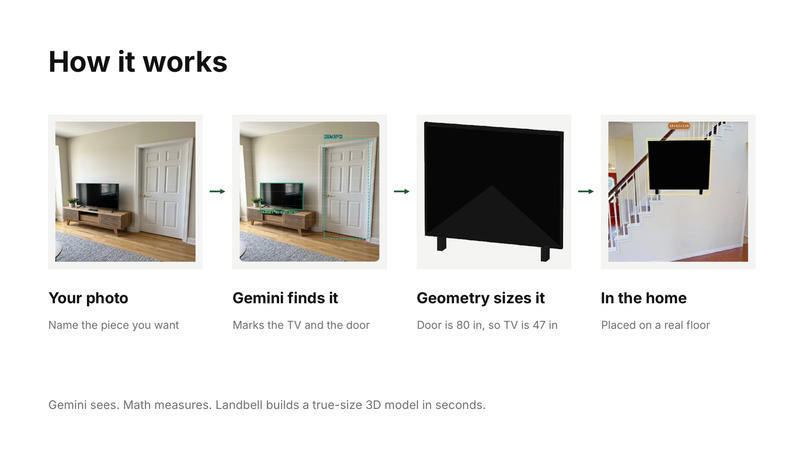
Take a photo, name the piece, and Landbell builds a true-size 3D model and places it in the home.
-
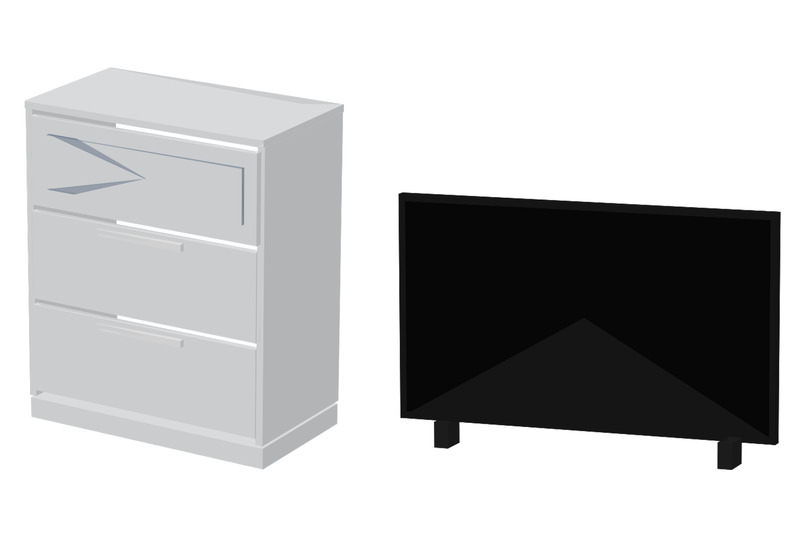
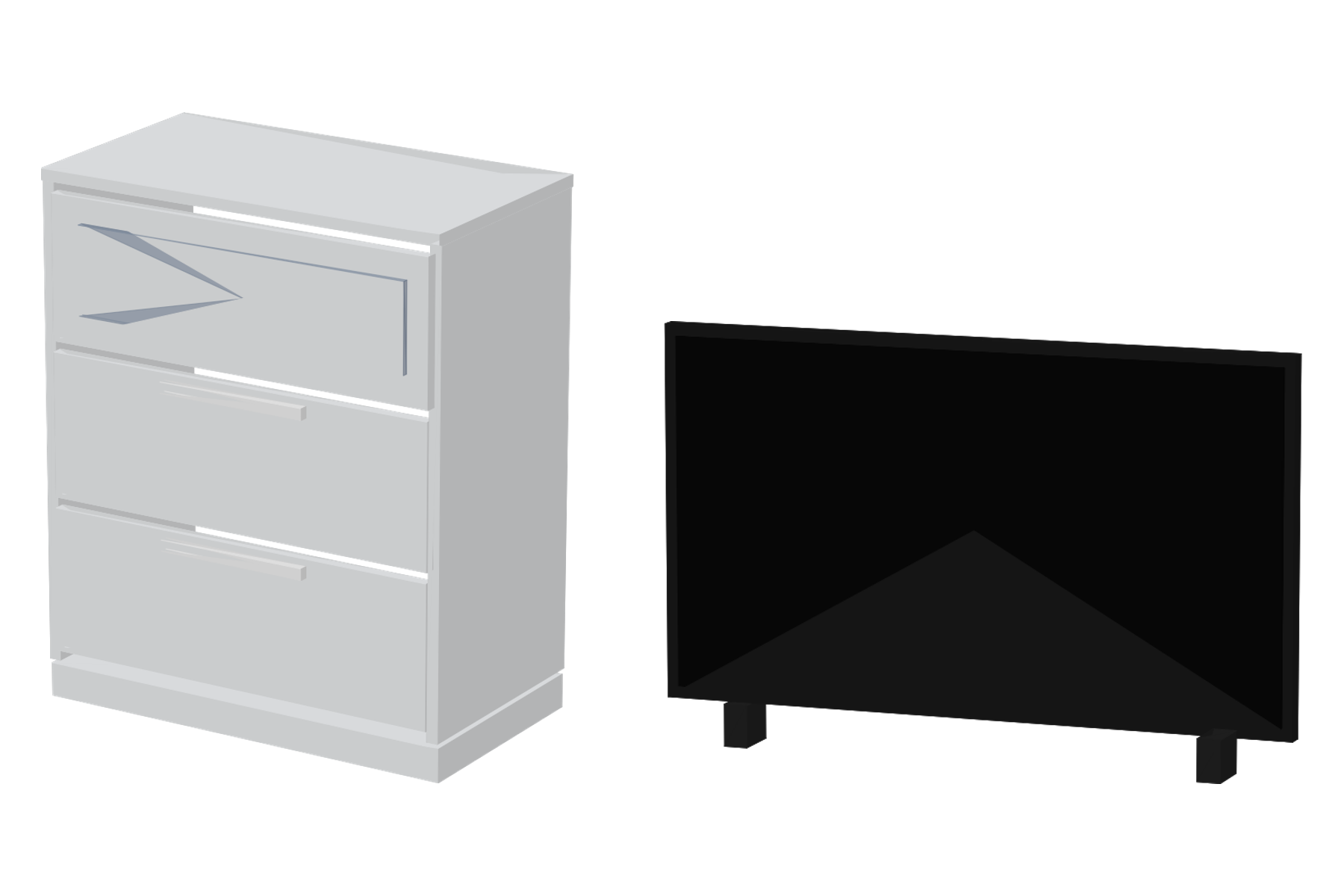
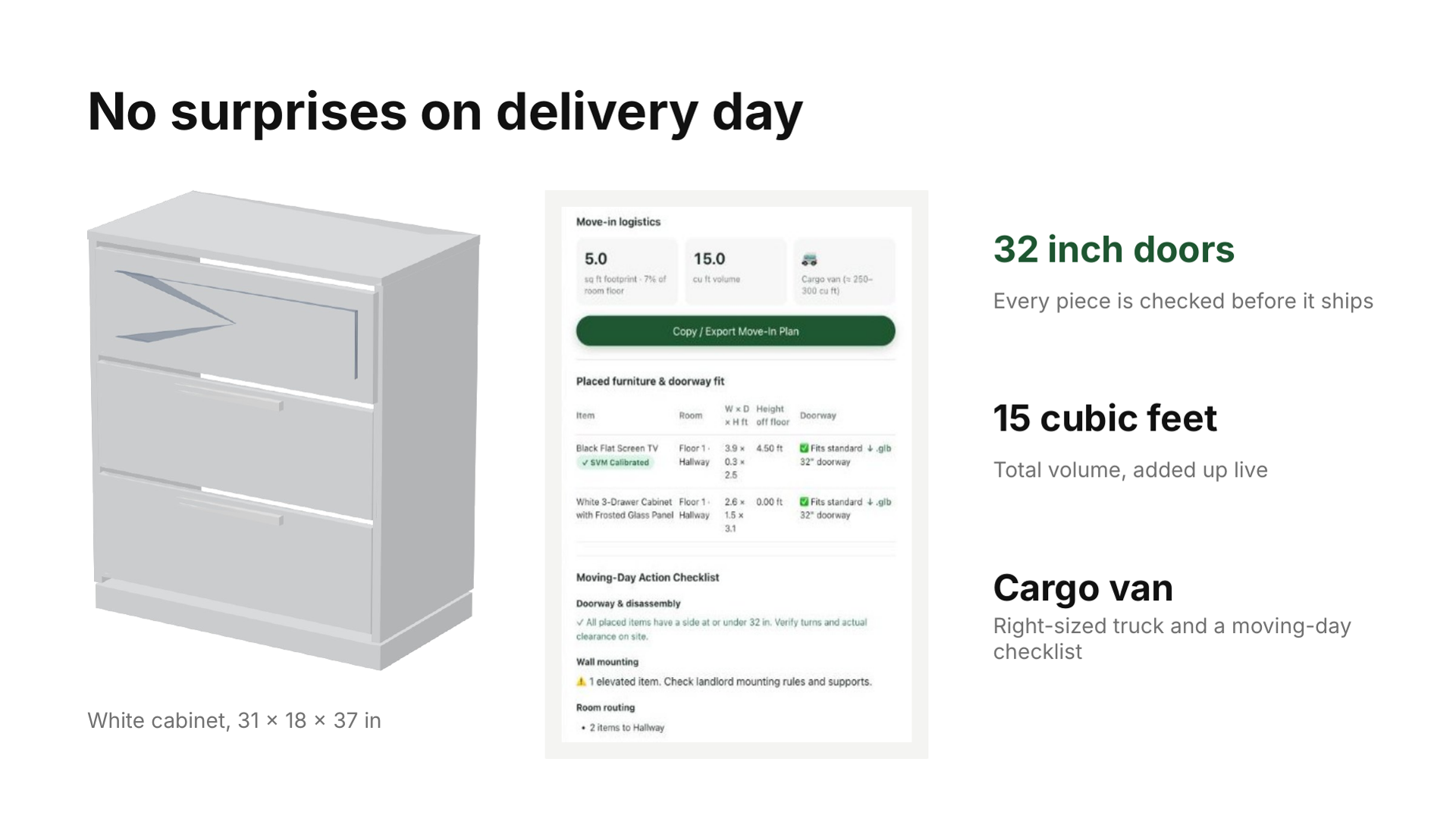
3D models Landbell generated from my photos: a white 3-drawer cabinet and a flat-screen TV.
-
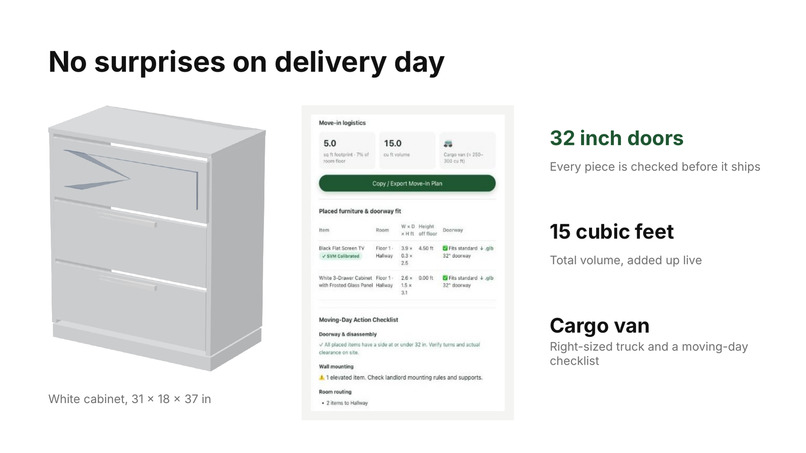
Every piece is checked against a 32 inch door, with total volume and a truck recommendation for moving day.
-
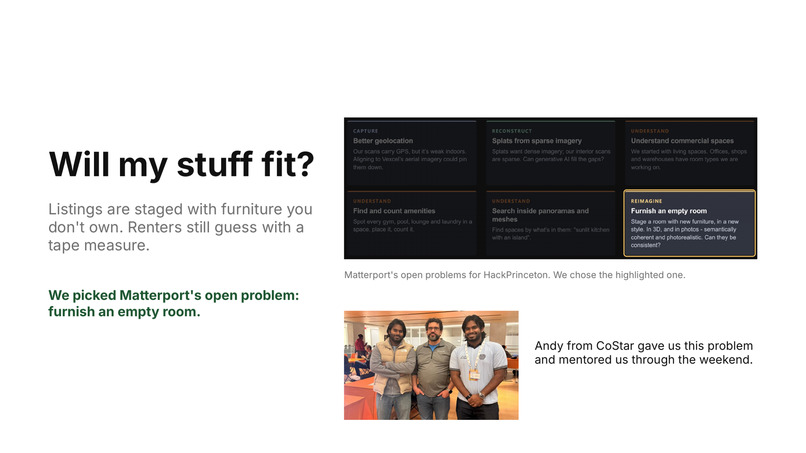
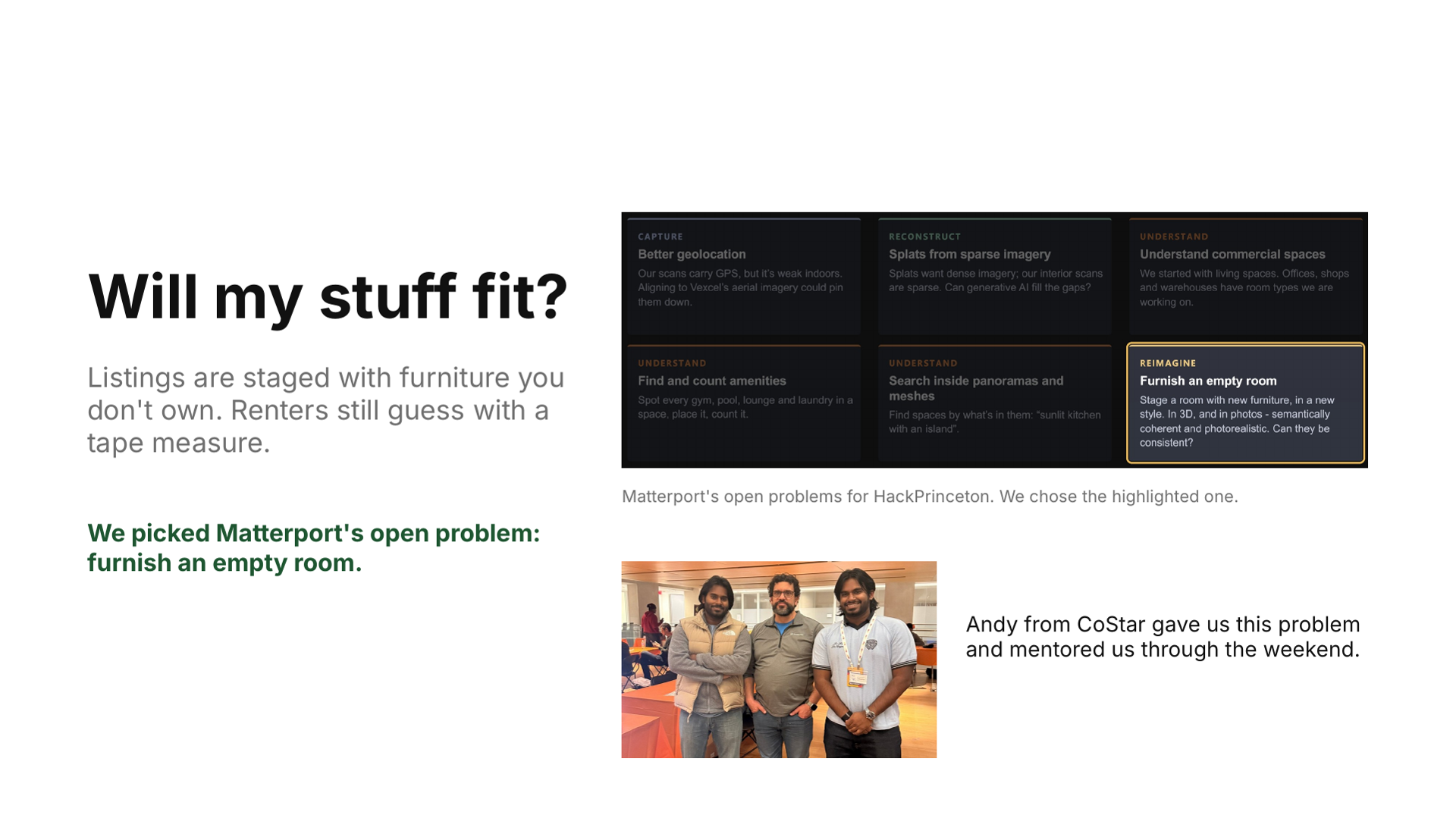
We took on Matterport’s “Furnish an empty room” challenge, with Andy from CoStar as our mentor.
-
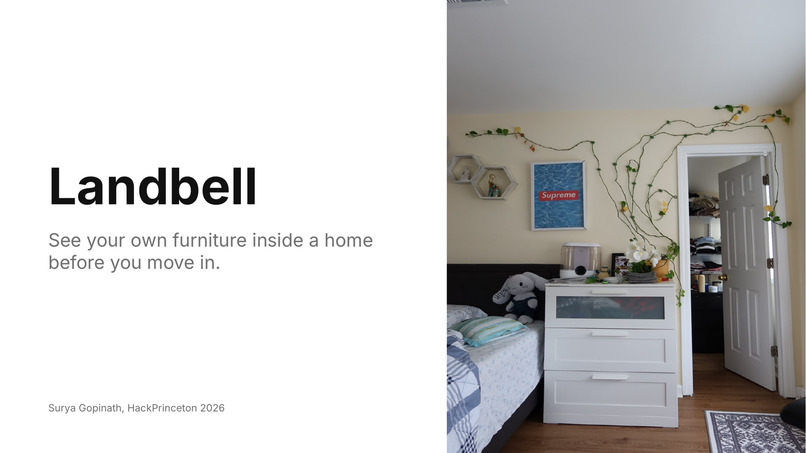
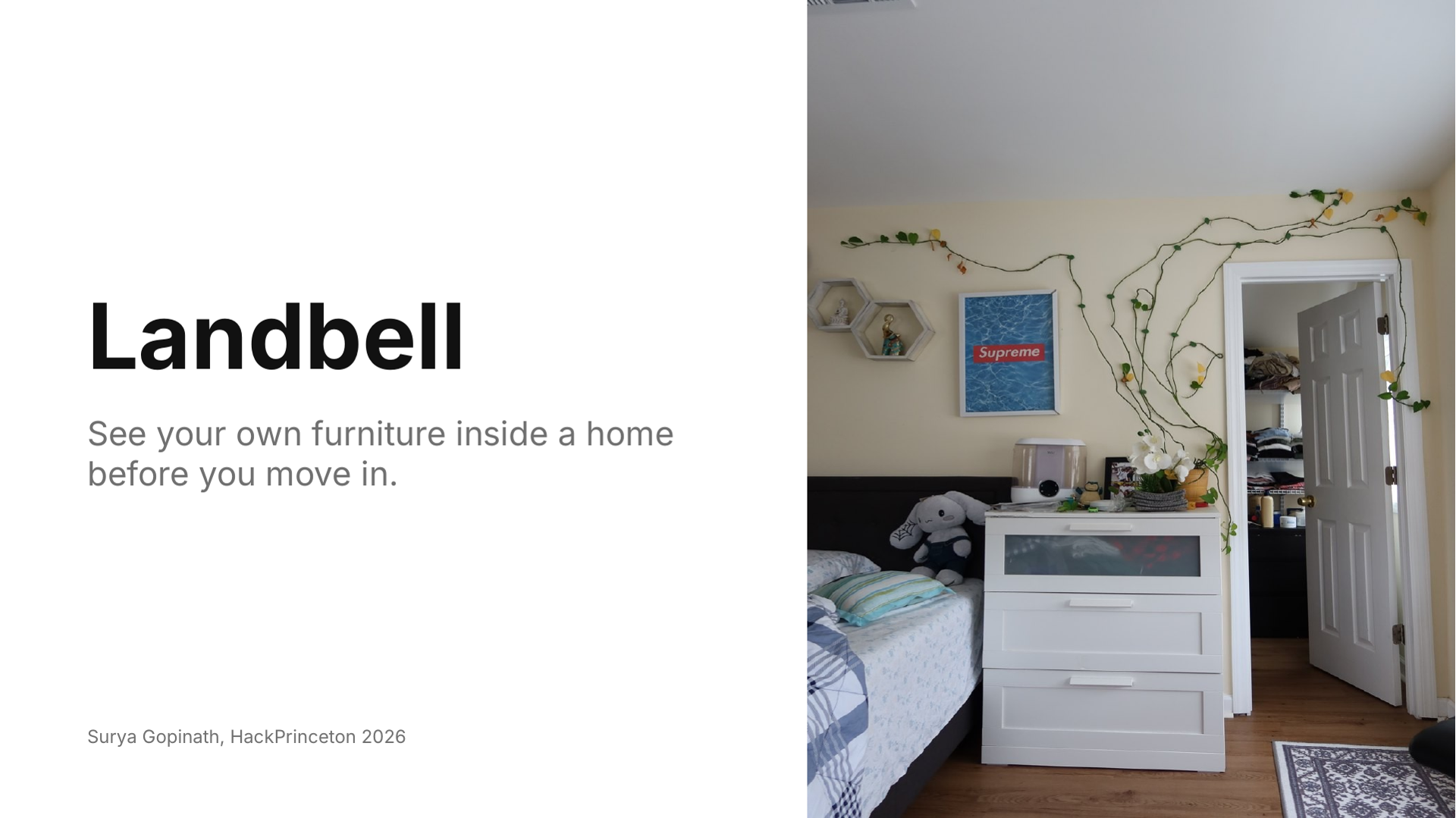
Landbell lets you see your own furniture inside a home before you move in.
-

Landbell would live inside existing tours and earn through per-tour licensing and mover and retailer referrals.
-
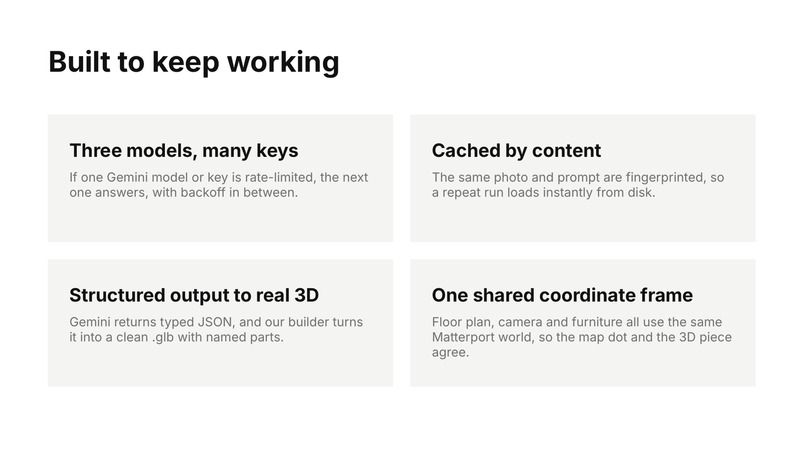
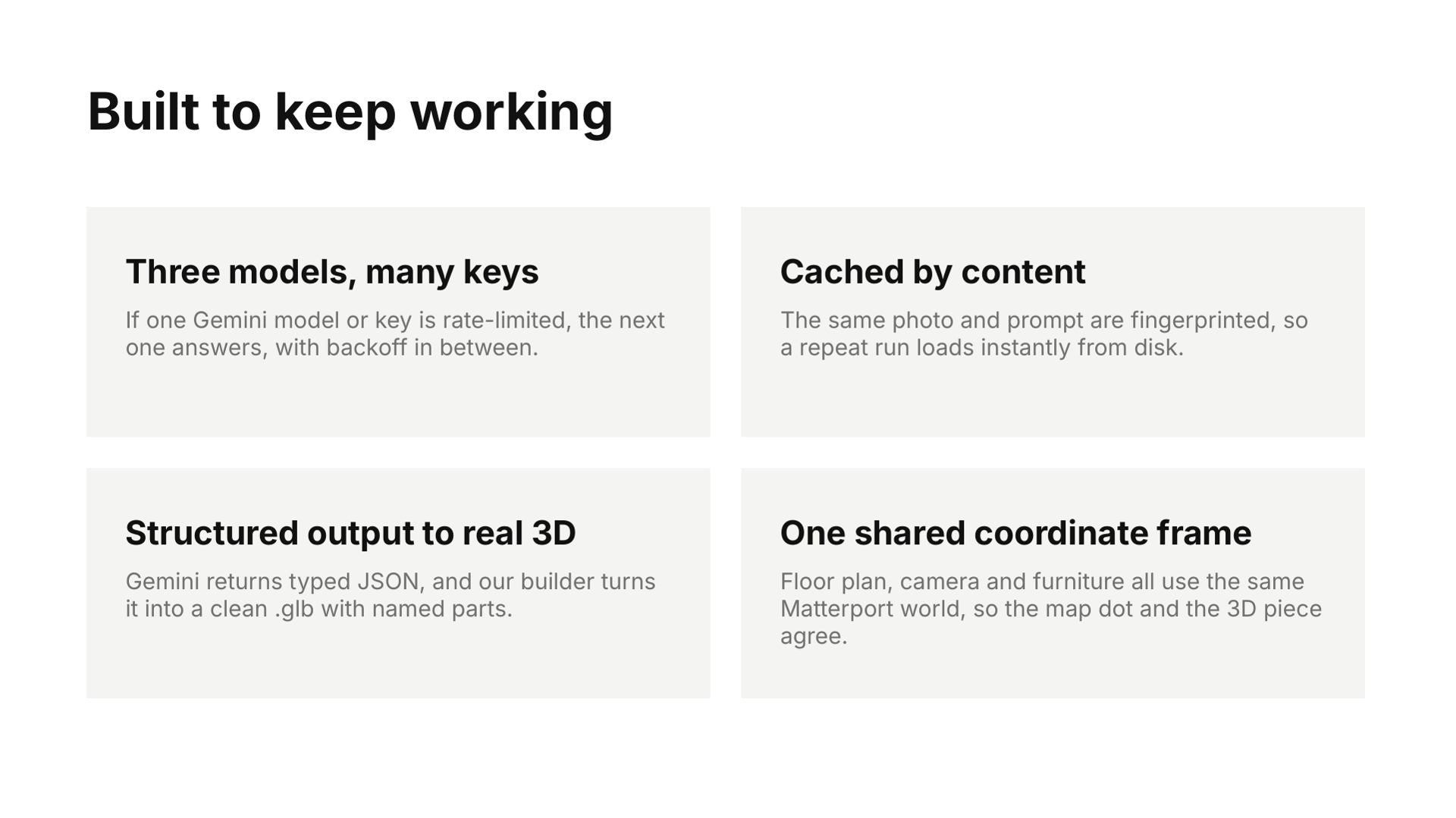
Model and key fallback, a content cache, structured output and one shared coordinate system keep the demo reliable.

Inspiration
Every renter has stood in an empty apartment holding a tape measure and guessing. Will my couch make the turn into the hallway? Will my 65 inch TV look ridiculous on that wall? A 3D tour shows you every room, but it cannot answer the only question that matters on moving day: will my stuff fit?
Listings get staged with furniture nobody owns. The furniture people actually own never makes it into the tour. So the answer shows up on moving day, when it is too late and too expensive to change anything.
CoStar and Matterport posed an open problem for HackPrinceton: furnish an empty room. We took it literally and personally. Not furniture from a catalog. Your furniture.
What it does
Landbell turns one photo of something you own into a true size 3D piece you can place inside a real Matterport tour of your next home, then plans the move for you.
- Snap a photo of the piece in your current room.
- Say which object you mean, like "just the black flat screen TV" and not the console under it.
- Give one known size in the photo, like a standard 80 inch door. Landbell uses it to calibrate real scale.
- Landbell builds a multi part 3D model (GLB) at true size, with real parts like drawers, legs and handles.
- Walk the tour and place it. Drag it across the floor, rotate it, mount a TV at eye level, and see live dimensions floating over it.
- Run the Move-In Agent. Pick a goal and the agent audits your layout against the CoStar property record and the Matterport rooms, detects conflicts, and plans the unload and staging order.
- Get a move in summary. Door fit checks against a 32 inch doorway, which floor every piece lands on, total volume, and a vehicle recommendation from a cargo van to a box truck.
You leave the tour knowing what fits, what does not, what goes in first, and what to sell before you move.
How we built it
Frontend: React and TypeScript on Vite, with the Matterport Bundle SDK for the walkthrough. We use the SDK's world position data to drop pieces on real floor surfaces, and camera control to jump back to any placed item.
Object understanding: Google Gemini reads the photo and returns a strict structured spec: the object category, its construction (how many drawers, legs, panels), materials and colors, plus pixel bounding boxes for the target object and the reference object. We validate every response and retry on a cascade of Gemini models with exponential backoff and multiple keys, so the demo survives rate limits.
Measurement: this is the part we are proudest of. Instead of trusting a language model to guess sizes, we use single view metrology. We fit a planar homography from the reference object's corners, so a door of known height gives us pixels per inch on that plane, and we project the target's corners through it to get real width and height. Depth comes from category priors with sanity caps (a wall mounted TV is never two feet deep). Every result shows how it was measured and what it assumed.
3D generation: a deterministic builder written with glTF Transform turns the spec into a multi part GLB. The same spec always produces the same model, so sizes are exact and reproducible, with no generative mesh noise.
Placement: Landbell converts the model into the tour's coordinate system, snaps it to the floor or to a wall height, and lets you move, rotate, duplicate, undo and redo. A mini floor plan shows where every piece sits.
Inside and Out (CoStar + Matterport): Landbell links the CoStar property record (living area, stories, bedrooms, bathrooms, lot, year built, garage spaces) to the rooms Matterport scanned. That combination tells us which floor every placed piece lands on, how much of the home's living space your furniture uses, and how the moving load splits between the ground floor and upstairs. Where a measurement is not in the record, like stair turns or driveway length, Landbell marks it unknown and lets the mover enter the verified value on site. We never fill gaps with invented numbers.
Move-In Agent: pick a goal (balanced staging, minimize upstairs carry, or max walkway clearance) and the agent works in three steps. It audits every placed piece against the CoStar record and the Matterport room boundaries, detects conflicts like pieces blocking a hallway, and plans an unload and staging order. It can apply the plan to the 3D scene, and one click undoes it. When it cannot verify something, like weight or a door swing, it says so instead of guessing.
Challenges we ran into
- Language models are bad at measuring. Asking Gemini "how big is this TV" gave confident wrong answers. Moving the actual measurement into deterministic geometry (homography from a known reference) was the turning point.
- The model sometimes grabbed the wrong object, like the TV console instead of the TV. We added a target prompt, category family checks and bounding box validation so Landbell rejects a bad read instead of building the wrong thing.
- Coordinate systems. Our generated models were Z up while the Matterport scene is Y up, and the mini map had its own orientation. Getting a piece to sit on the floor, face the right way and match the map took real debugging.
- An agent that acts has to be safe. Letting the agent move furniture in the scene meant every plan had to stay inside real room boundaries, leave pieces alone when no valid spot exists, and be fully undoable.
- Rate limits during a live demo. We built a model fallback chain, key rotation and caching so a single API hiccup never breaks the walkthrough.
Accomplishments that we're proud of
- An end to end pipeline from one phone photo to a true size piece inside a real home tour in under a minute.
- Measured, not guessed. Landbell calibrates scale from a known reference in the photo, like an 80 inch door, using planar homography, and shows every assumption it made, so users can see exactly how each size was derived.
- Two CoStar layers working together. The CoStar property record and the Matterport scan combine into a floor by floor move plan that neither layer could produce alone.
- An agent that audits, detects and acts, with an undo button and honest limits.
- Generated models are real multi part objects, not blobs. A dresser has drawers you can count.
What we learned
- Use AI for understanding and geometry for measurement. Splitting the job that way made the system both smarter and more honest.
- Showing your assumptions builds trust. Telling users "this depth is estimated" is more convincing than pretending to be exact.
- A great mentor changes a weekend. Andy from CoStar pushed us to focus on the one question renters actually ask.
What's next for Landbell
- Multi photo capture for real depth instead of category priors.
- Vexcel aerial imagery for curb to door routing: where the truck parks and which entrance to use.
- Path checks, not just door checks: will the couch make the turn up the stairs?
- Partner integrations: listing platforms let renters bring their furniture into any tour, and movers quote from Landbell's volume, item list and unload plan instead of a phone estimate.
- Furniture resale suggestions for pieces that will not fit.
Built for
- CoStar and Matterport, Furnish an Empty Room: your own furniture, at true size, inside a real Matterport tour, combined with the CoStar property record, and an agent that audits, detects and plans the move.
- Best Use of Gemini: structured multimodal understanding with validation, a model cascade and deterministic geometry on top.
- Logistics and moving: door fit checks, total cubic feet, vehicle sizing and an unload order before a single box is packed.
- Business: fewer bad leases, fewer failed deliveries and a new engagement layer for every listing with a 3D tour.
Built With
- 3d
- 3d-modeling
- computer-vision
- css3
- express.js
- gemini-api
- gltf
- gltf-transform
- google-gemini
- html5
- javascript
- logistics
- matterport
- matterport-sdk
- node.js
- proptech
- react
- real-estate
- spatial-computing
- tailwindcss
- three.js
- typescript
- vite
