Inspiration
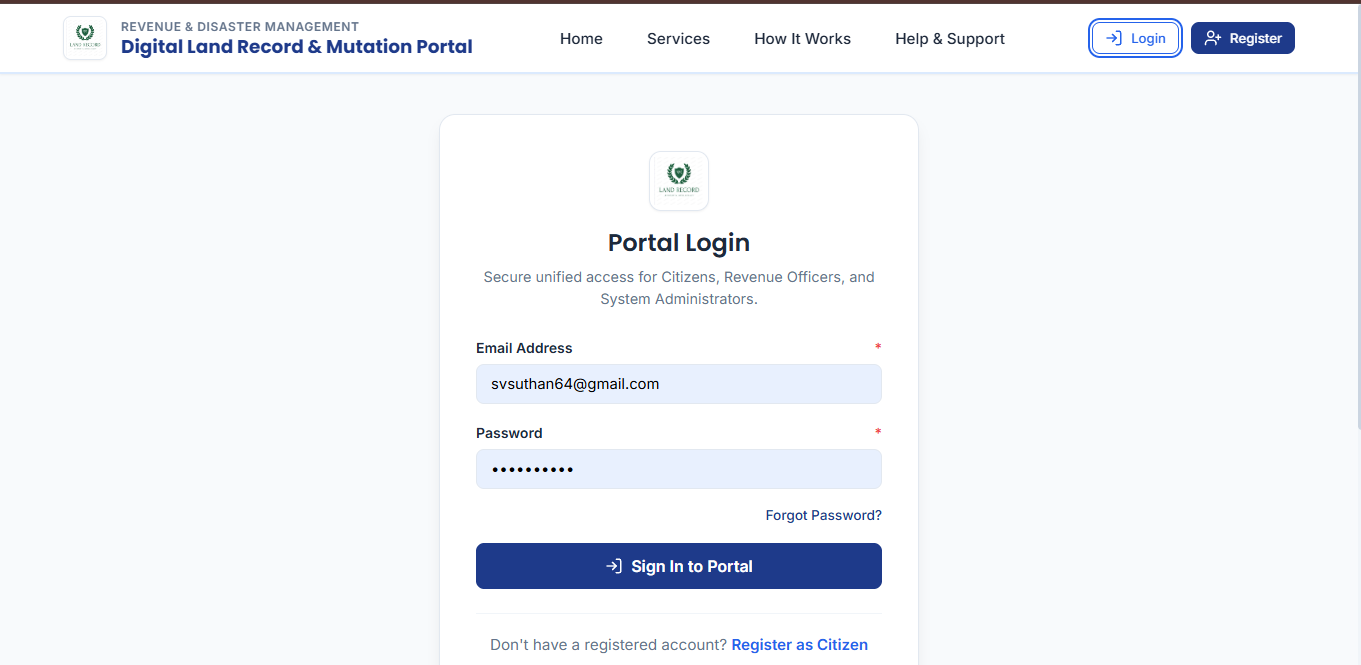
Land mutation is an important process for maintaining accurate land ownership records, but traditional processes can involve paperwork, manual verification, delays, and limited visibility for citizens. We wanted to build a digital platform that makes land mutation easier to track while also providing additional support for identifying unusual application patterns. This inspired us to combine a land record management system with role-based access, document management, notifications, and AI-based anomaly detection.
What it does
Land Record Mutation and Fraud Anomaly Detection is a full-stack digital platform for managing land records and mutation applications.
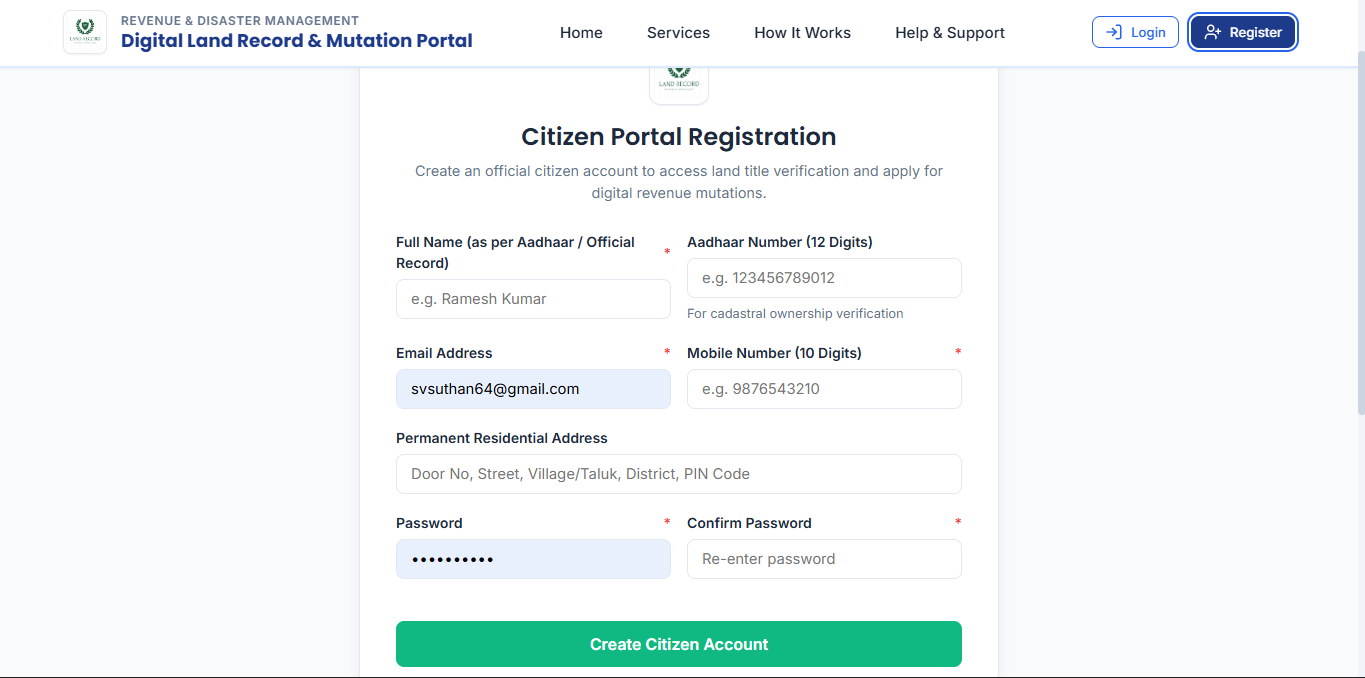
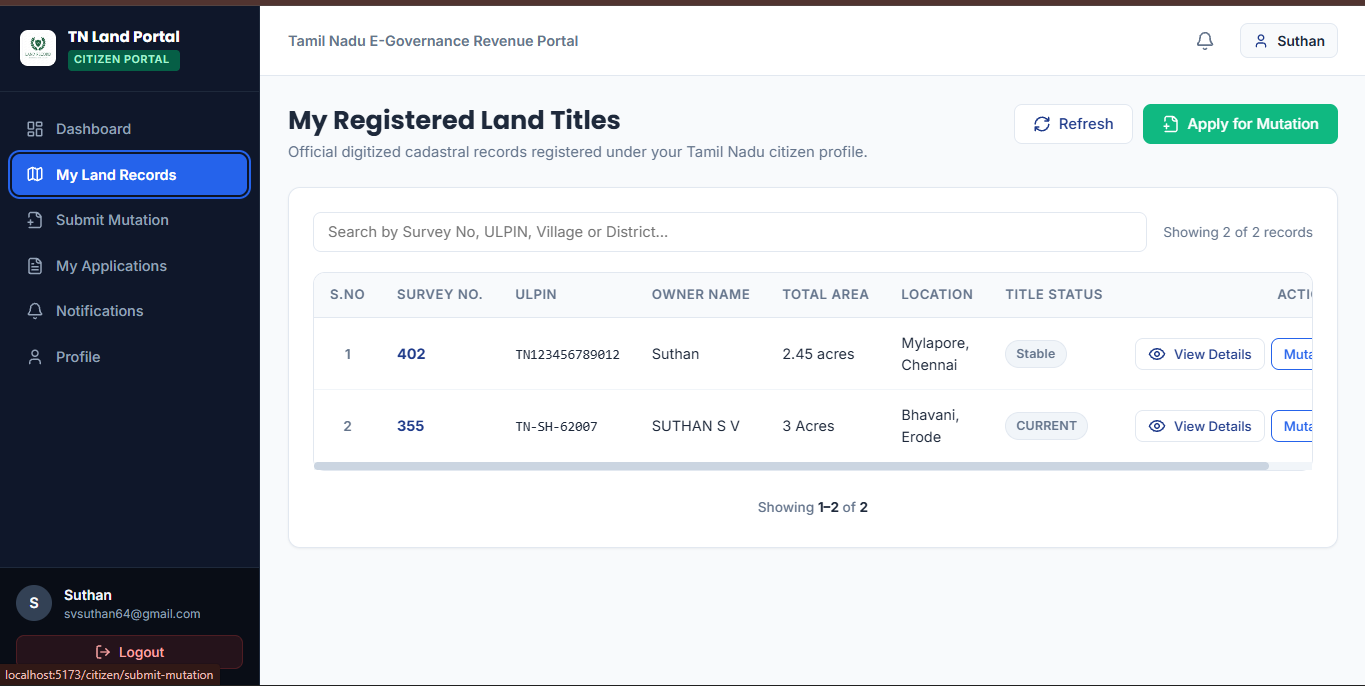
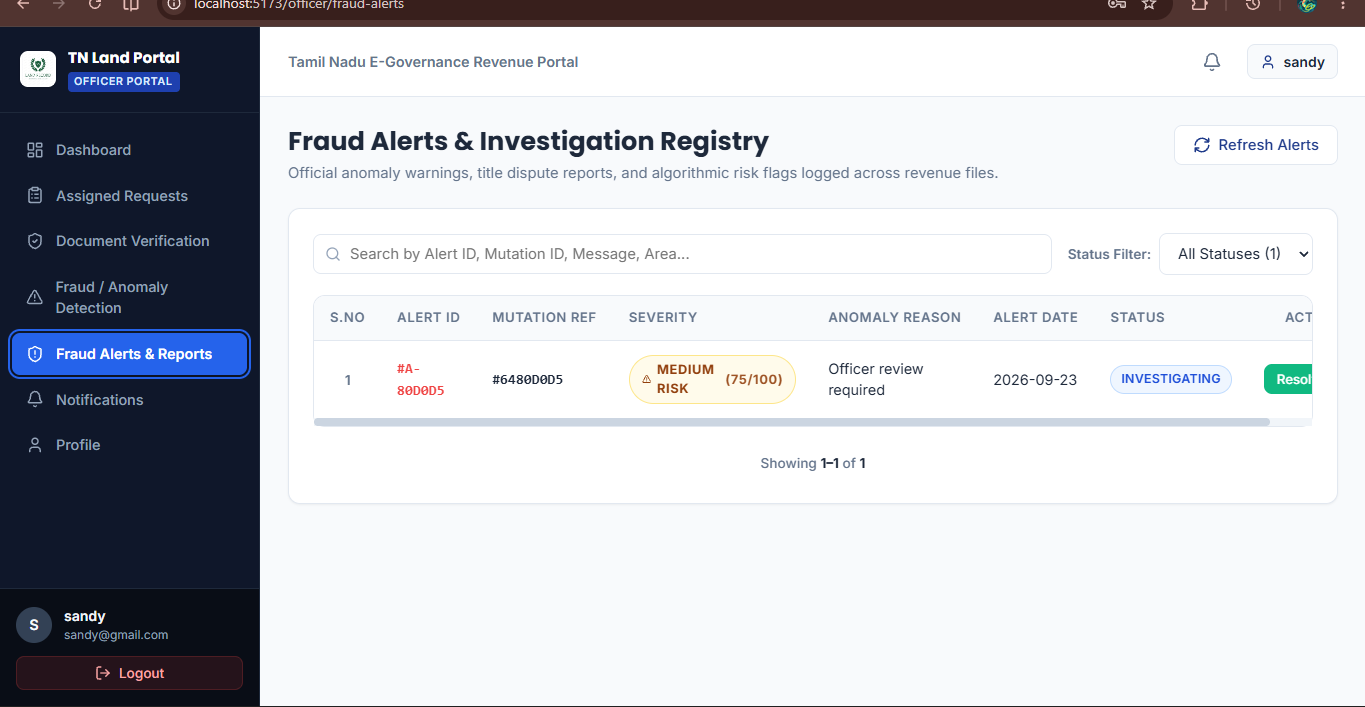
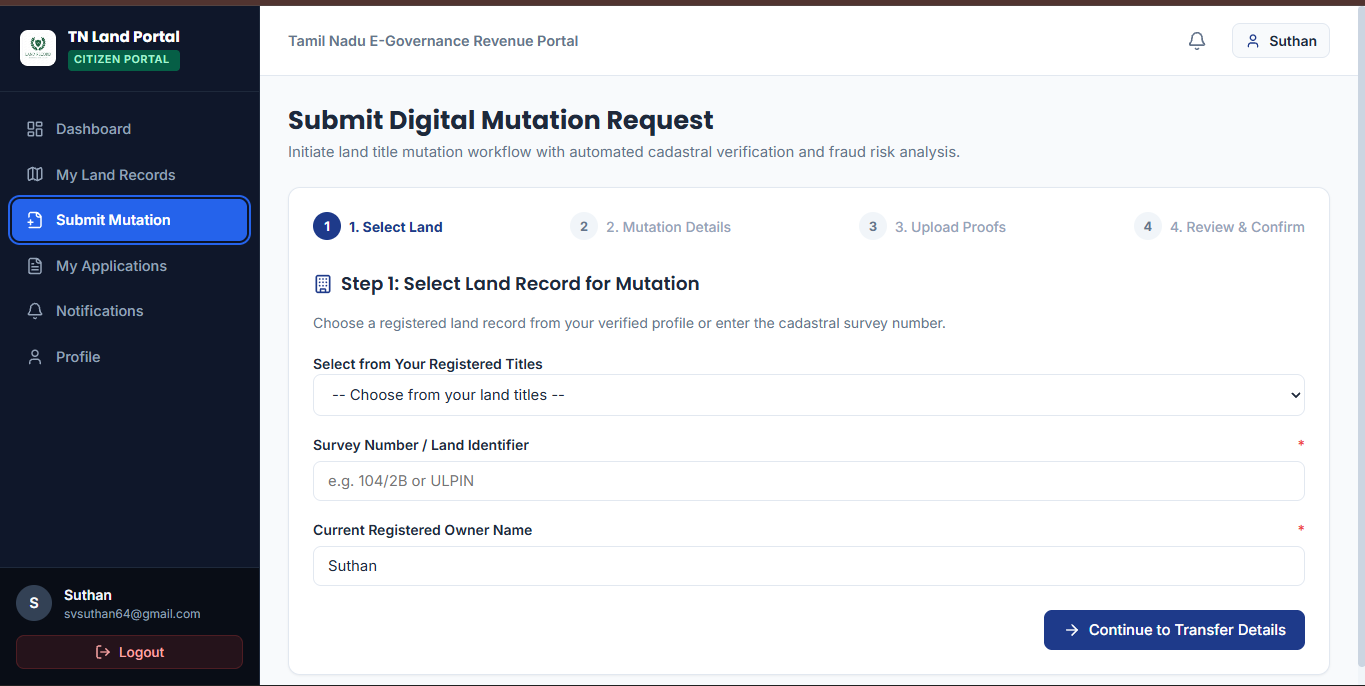
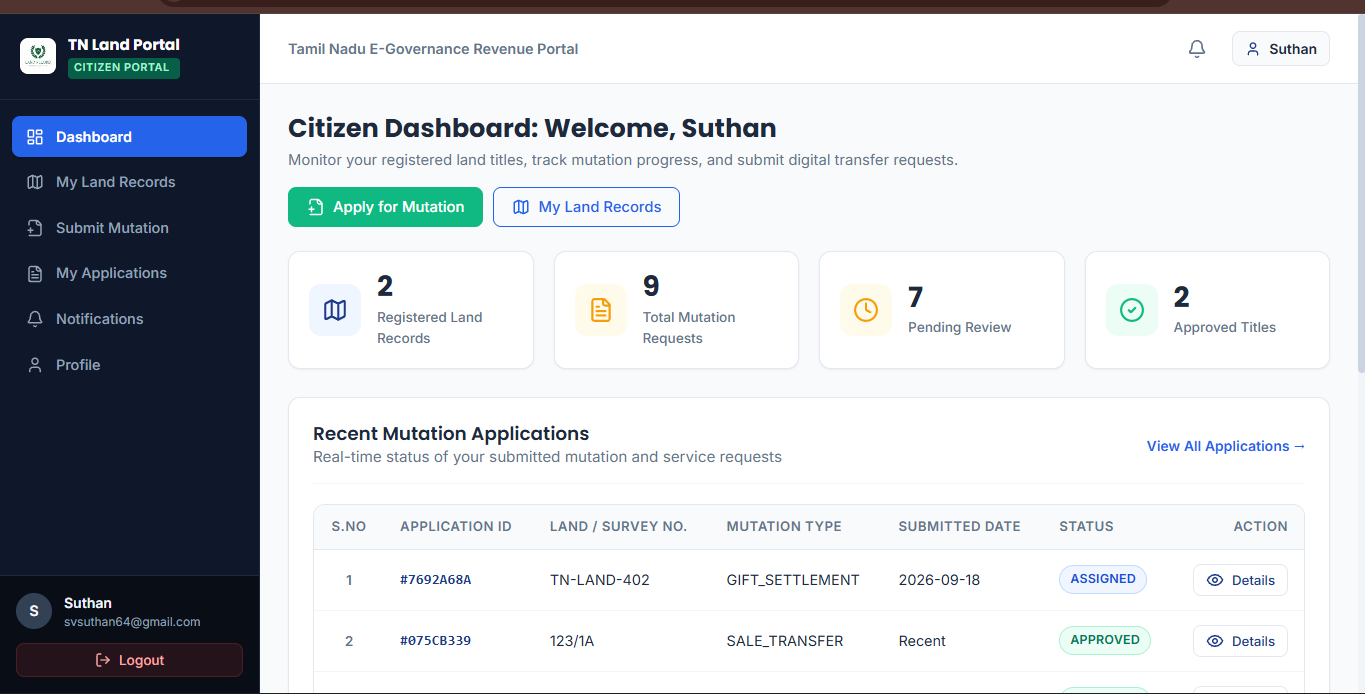
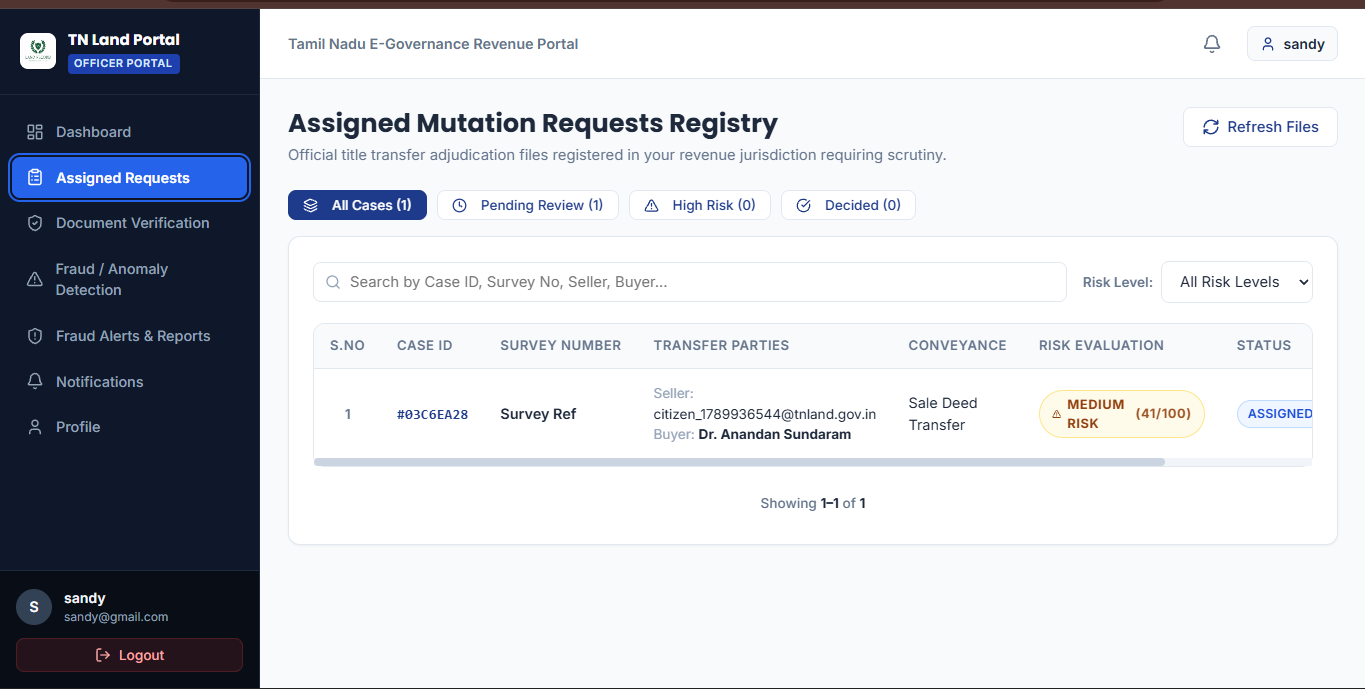
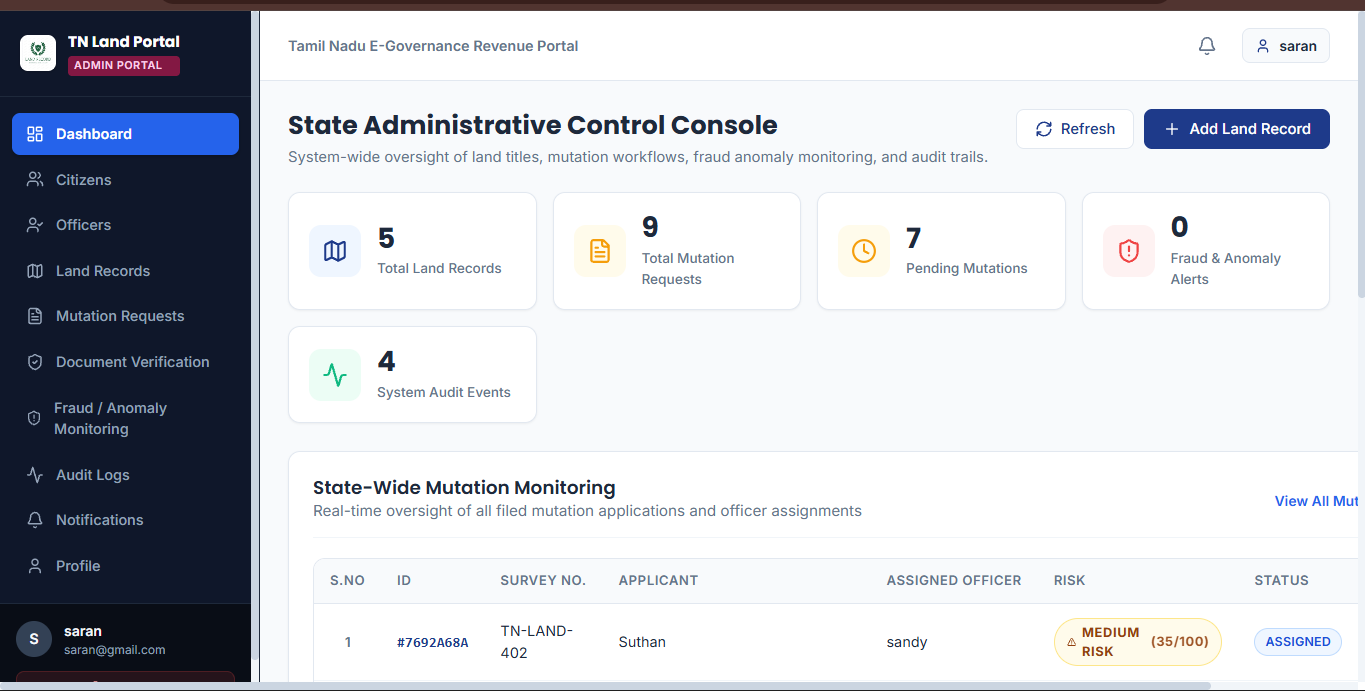
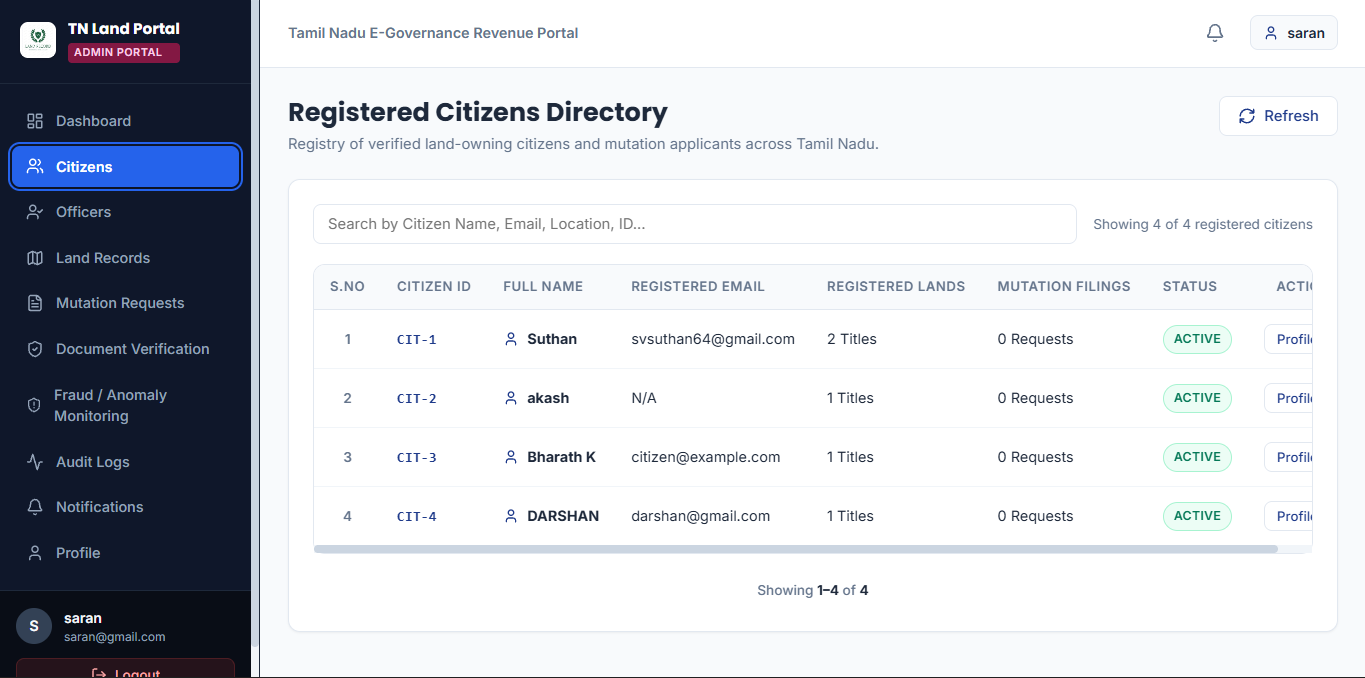
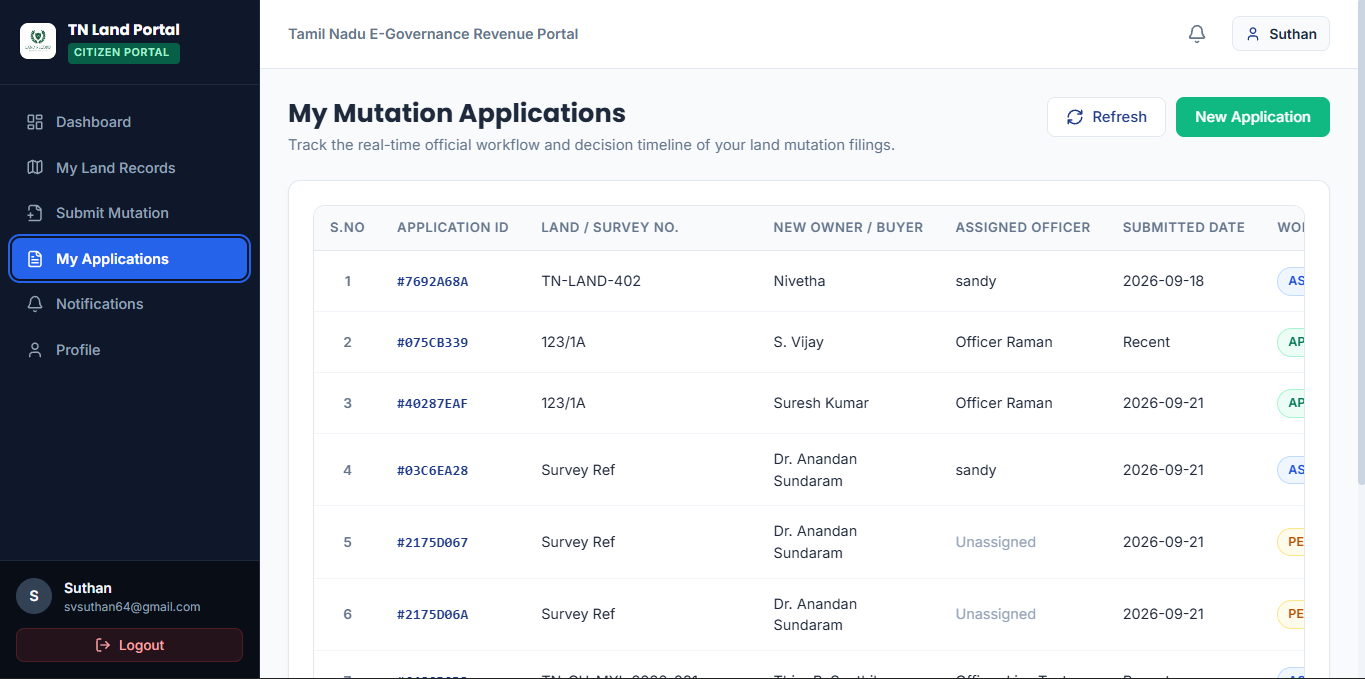
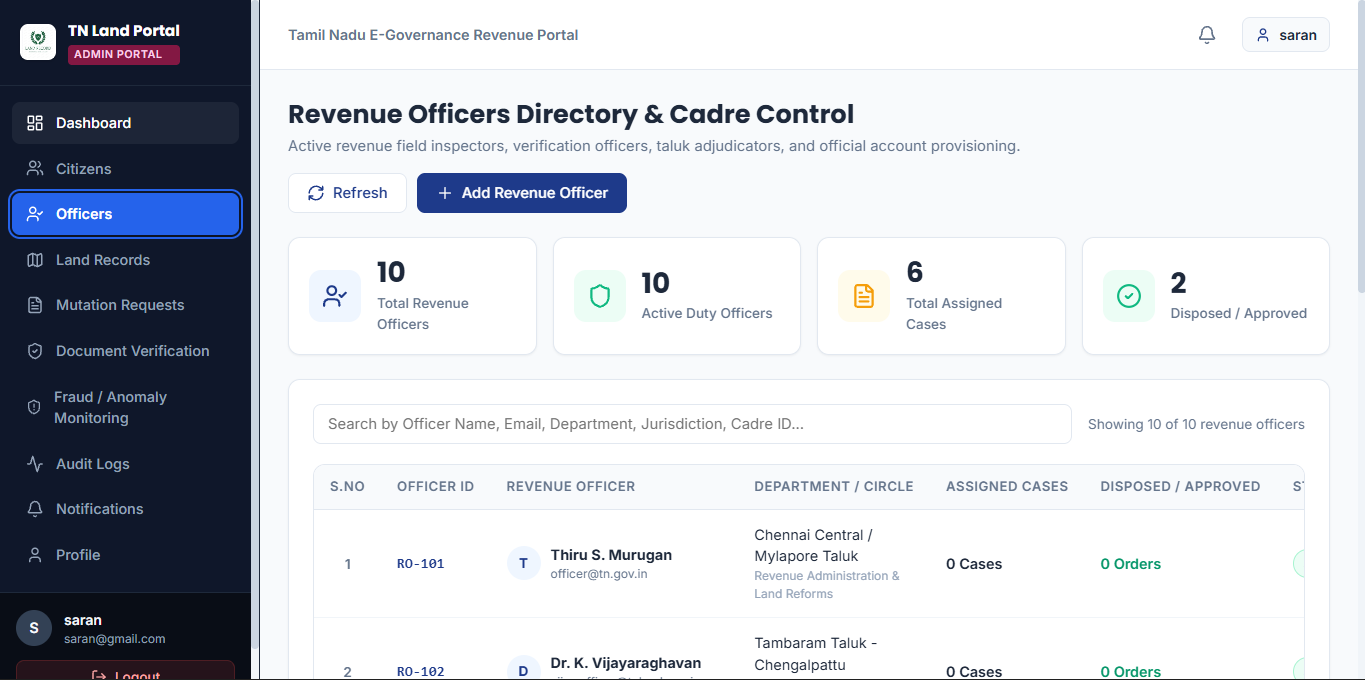
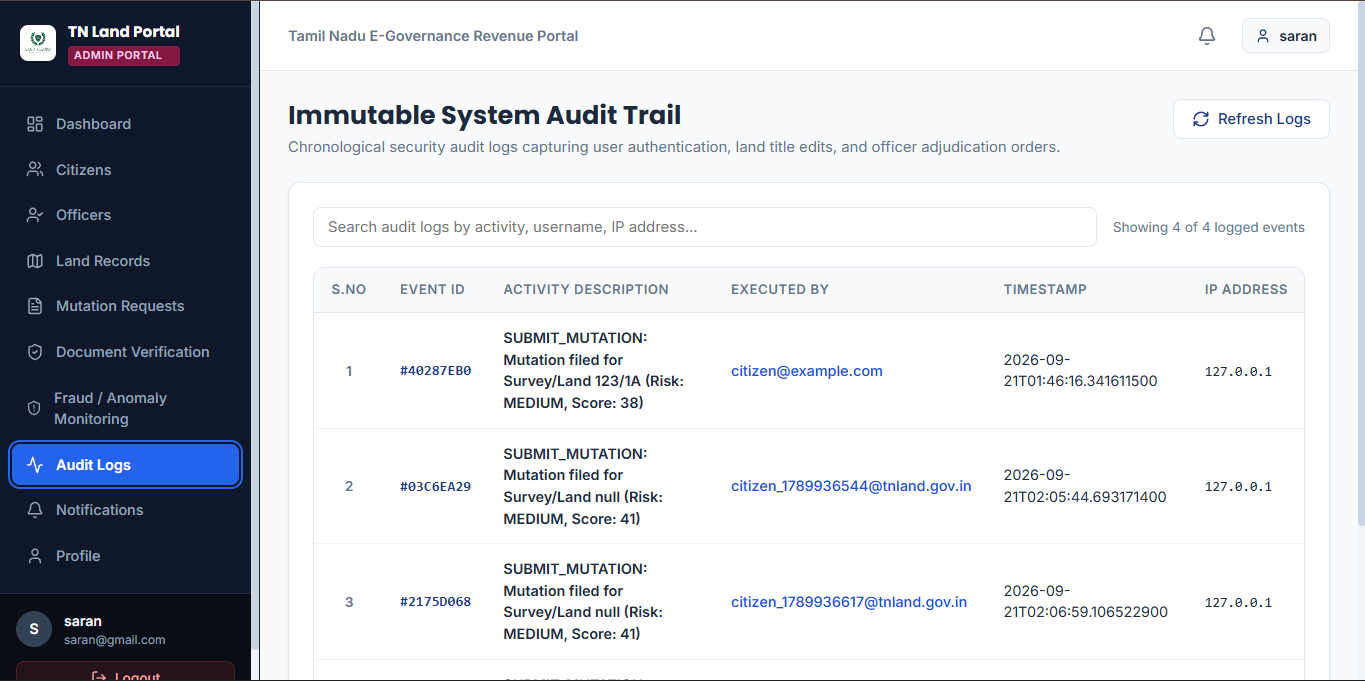
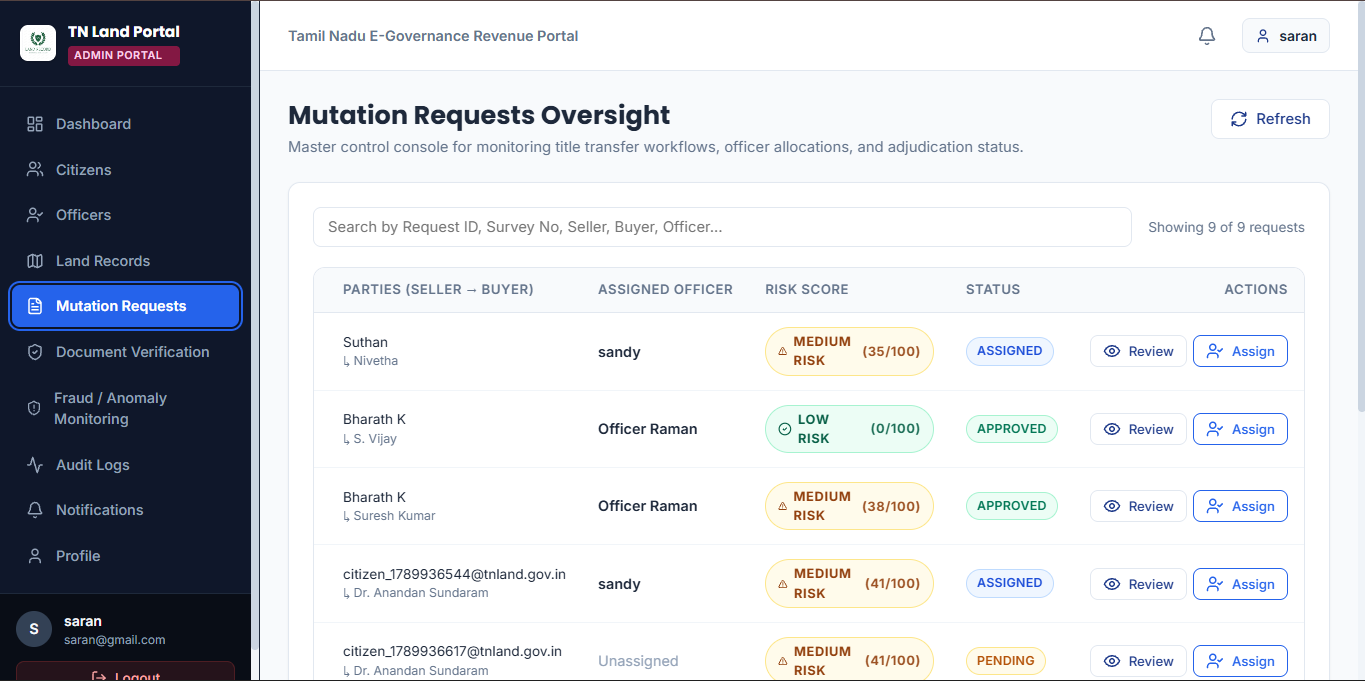
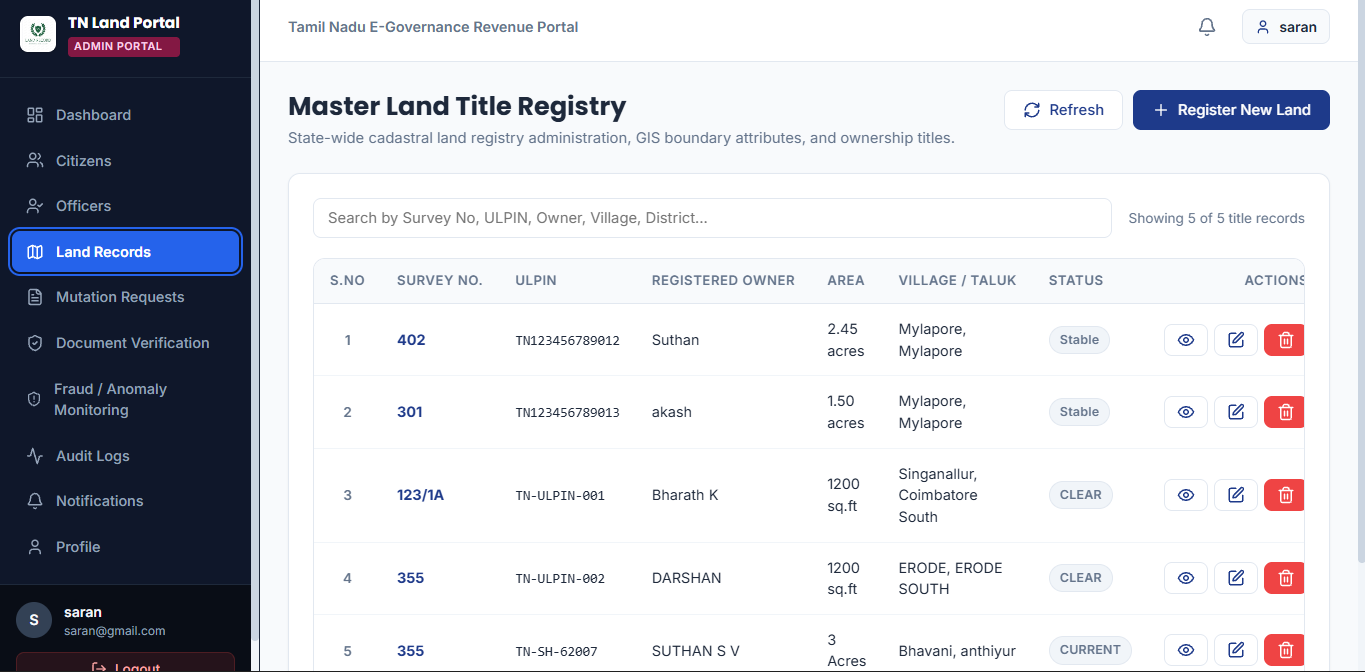
Citizens can view land records, submit mutation applications, upload supporting documents, and track application status and notifications. Revenue officers can review applications, verify documents, manage mutation requests, and view AI-generated anomaly risk information. Administrators can manage users, officers, notifications, and system activities.
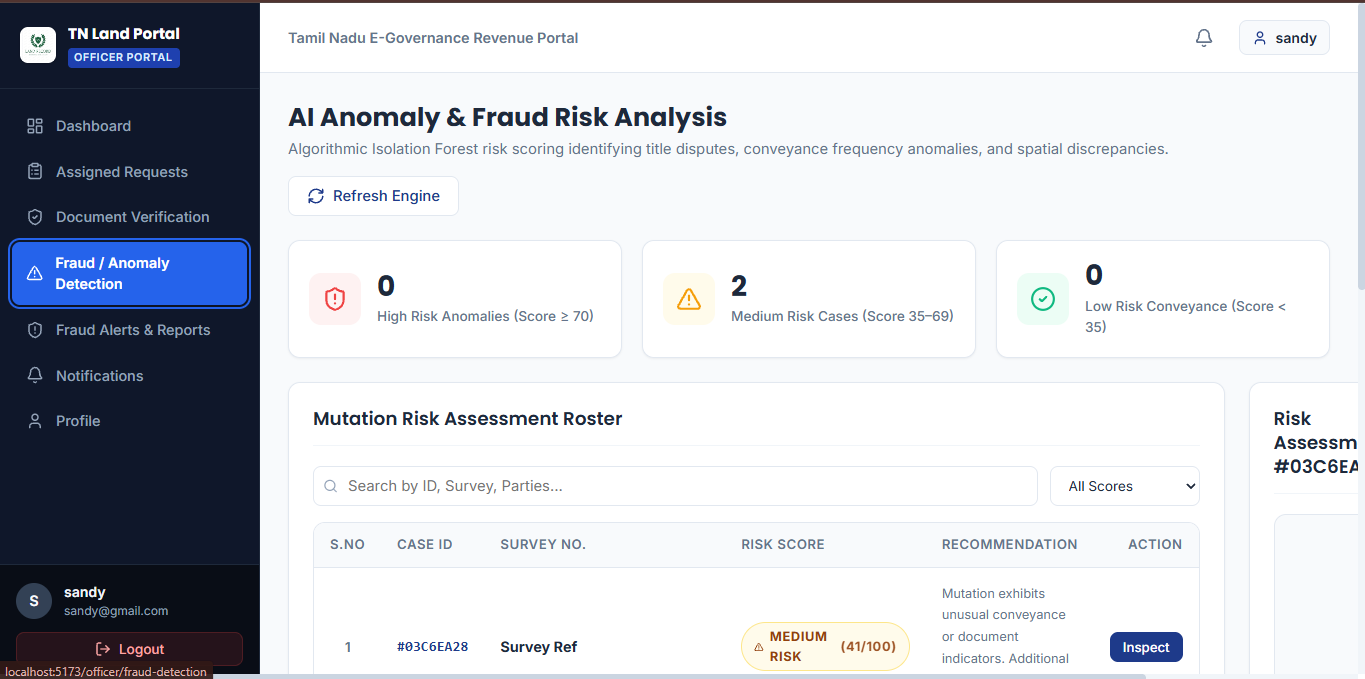
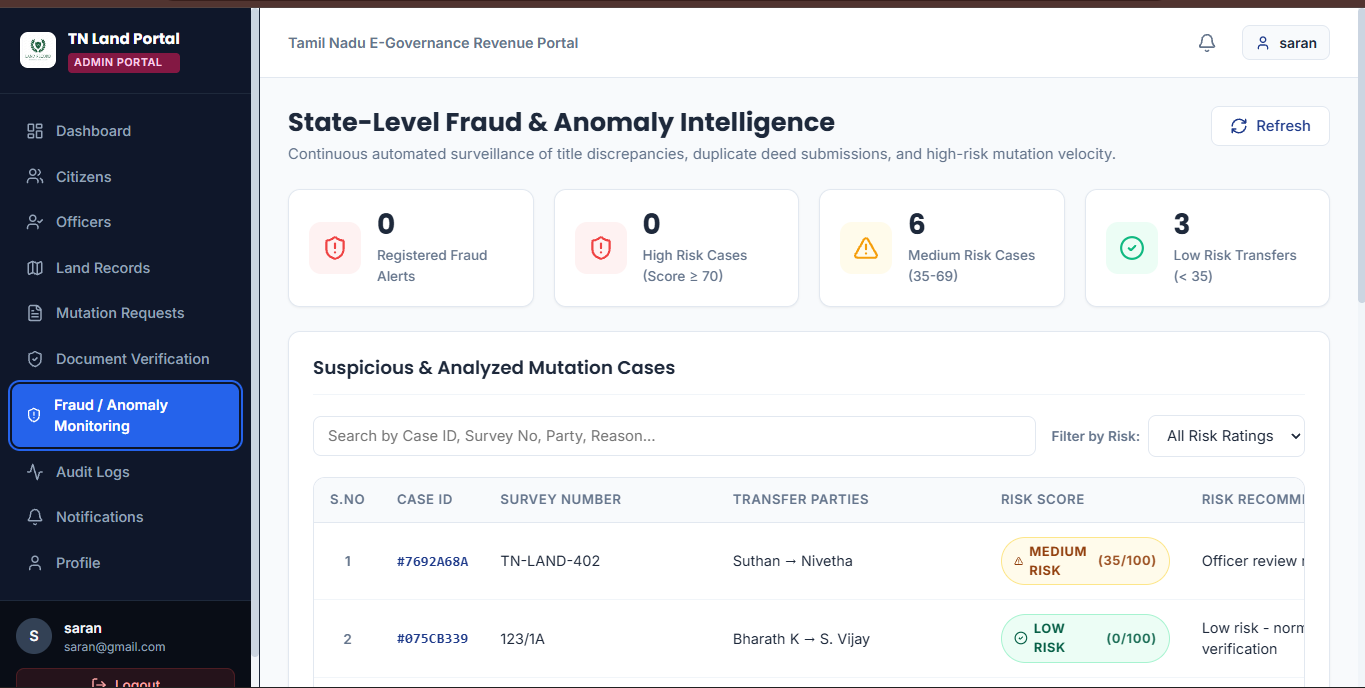
The AI module analyzes mutation-related features and identifies potentially unusual patterns. It generates an anomaly score and risk level to help officers identify applications that may require additional verification. The AI output is used as a decision-support mechanism and does not independently determine whether an application is fraudulent.
How we built it
We built the application using a full-stack microservice-based architecture.
The frontend was developed using React and provides separate interfaces for citizens, officers, and administrators. The backend services were developed using Java and Spring Boot and expose REST APIs for authentication, land records, mutation processing, documents, notifications, and other application functions.
MongoDB is used for land-record and application-related document data, while MongoDB GridFS is used for storing uploaded documents. JWT-based authentication and role-based authorization are used to protect the application and provide access according to the user's role.
For anomaly detection, we developed a separate Spring Boot AI service using Java and the Smile machine learning library. The AI service uses the Isolation Forest algorithm to analyze seven mutation-related features. A development/synthetic training dataset is loaded when the AI service starts, the model is trained, and the trained model is then used to generate anomaly scores and risk levels for new mutation applications.
We tested the AI service using unit tests and REST API tests, including model readiness, normal and anomalous feature inputs, invalid model states, service status, prediction, and model training endpoints.
Challenges we ran into
One of the major challenges was integrating multiple backend services while maintaining secure communication and role-based access between different parts of the application.
Another challenge was designing a reliable document-upload and storage workflow while connecting uploaded documents with the appropriate mutation applications.
Developing the anomaly detection component was also challenging because anomaly detection is different from traditional binary classification. We needed to transform mutation information into meaningful numerical features and create appropriate thresholds for interpreting anomaly scores.
We also had to test the complete workflow across the frontend, backend services, database, document storage, and AI service to make sure that information was correctly transferred between each component.
Accomplishments that we're proud of
We built a complete digital workflow that connects citizens, revenue officers, and administrators in a single land-record platform.
We implemented land record management, mutation application tracking, document management, role-based authentication, notifications, and officer-side verification workflows.
We are also proud of integrating a dedicated AI anomaly detection service into the application rather than keeping the machine learning component separate from the actual mutation workflow.
The AI service can analyze mutation-related features and provide anomaly scores and risk levels that can support additional manual verification by revenue officers.
What we learned
Through this project, we learned how to design and integrate a full-stack application using multiple Spring Boot services, React, MongoDB, document storage, authentication, and REST APIs.
We also learned how an anomaly detection model can be integrated into a real application workflow. In particular, we learned about feature extraction, model training, prediction, anomaly scoring, threshold-based risk classification, and testing machine learning APIs.
Another important learning was that an AI model should support human decision-making rather than automatically making sensitive decisions. In our system, the AI identifies potentially unusual patterns while the final verification remains with the authorized revenue officer.
What's next for Land Record Mutation and Fraud Anomaly Detection
In the future, we plan to improve the training dataset using larger and more representative land-mutation data, improve feature engineering, and continuously evaluate the anomaly detection model.
We also plan to enhance the system with stronger document verification, improved geospatial analysis, better audit trails, advanced reporting, and additional notification mechanisms.
The long-term goal is to make the platform more scalable and useful for digital land administration while maintaining transparency, security, and human oversight throughout the mutation process.

Log in or sign up for Devpost to join the conversation.