-
-
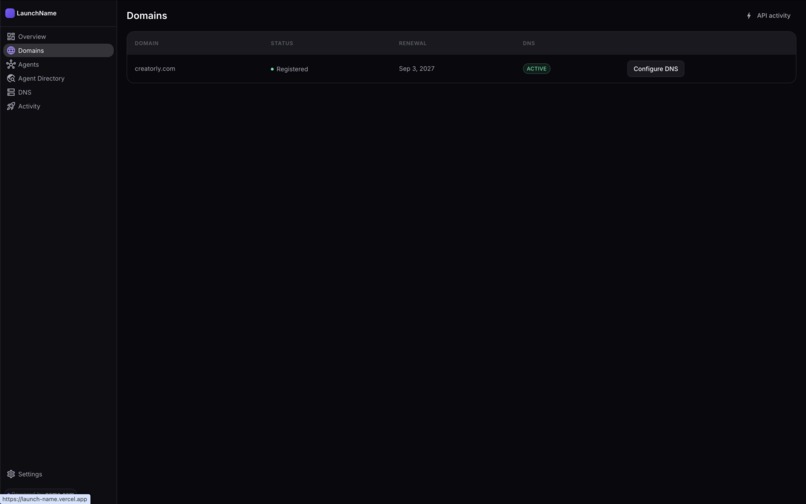
Active domains
-
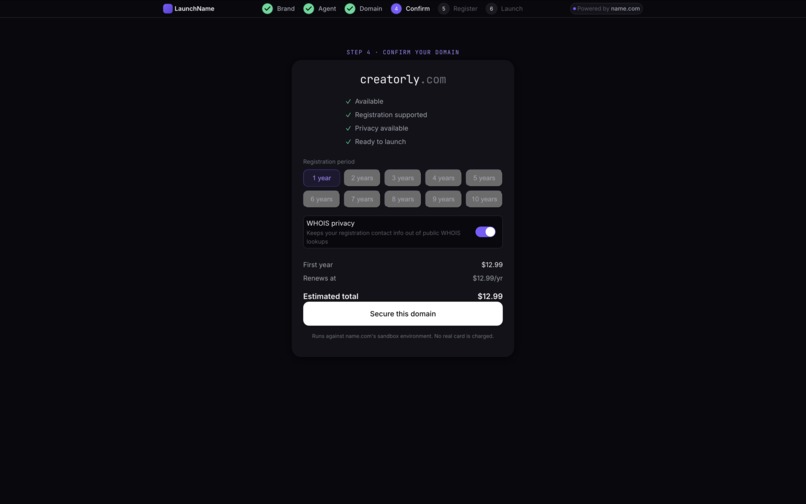
Add paraments
-
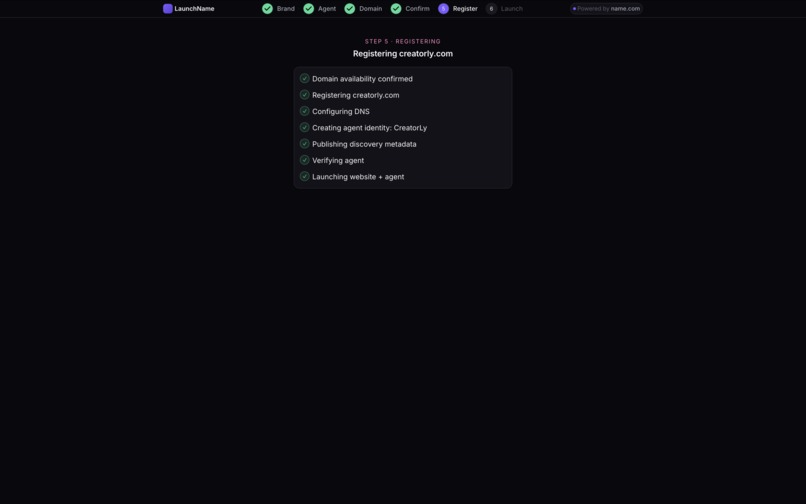
Purchase going live
-
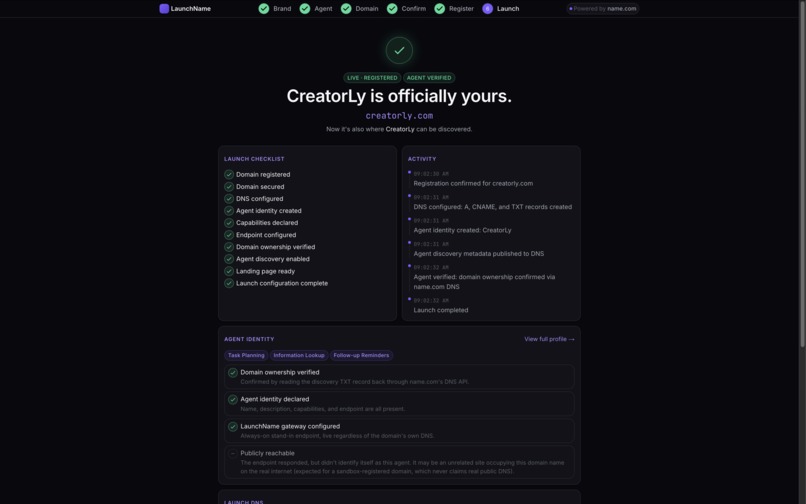
Domain Name Live
-
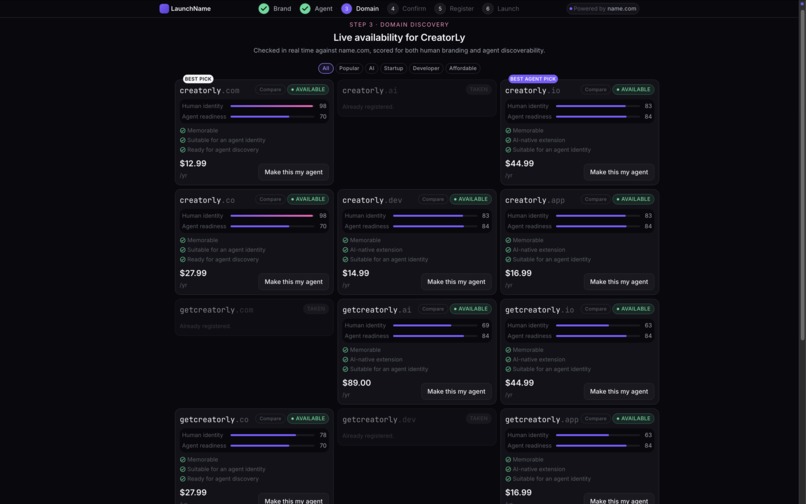
Choose Domain Name
-
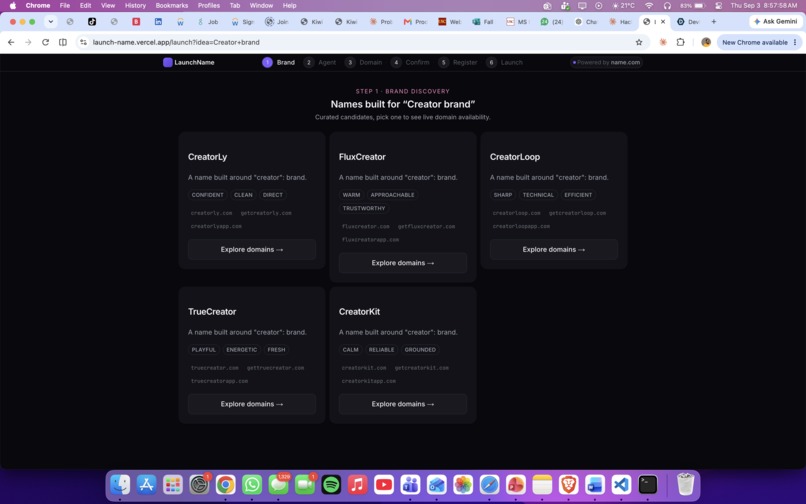
Step 1 · Brand discovery
-
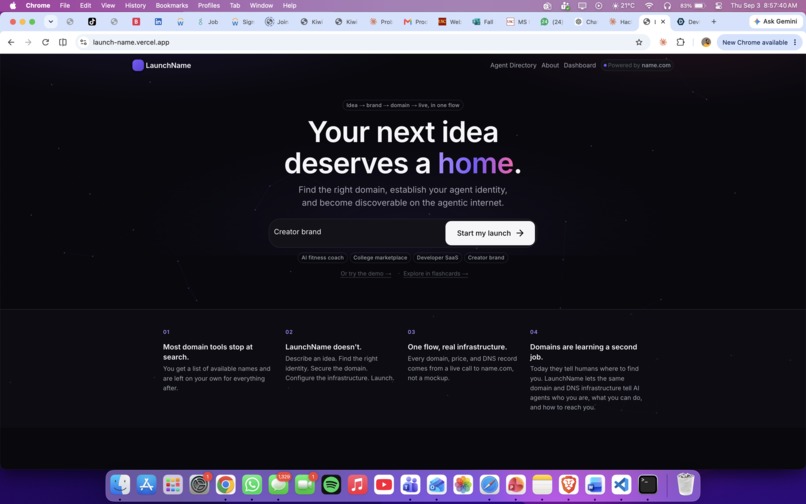
Launch Page,(Agent , about and dashboard)
-
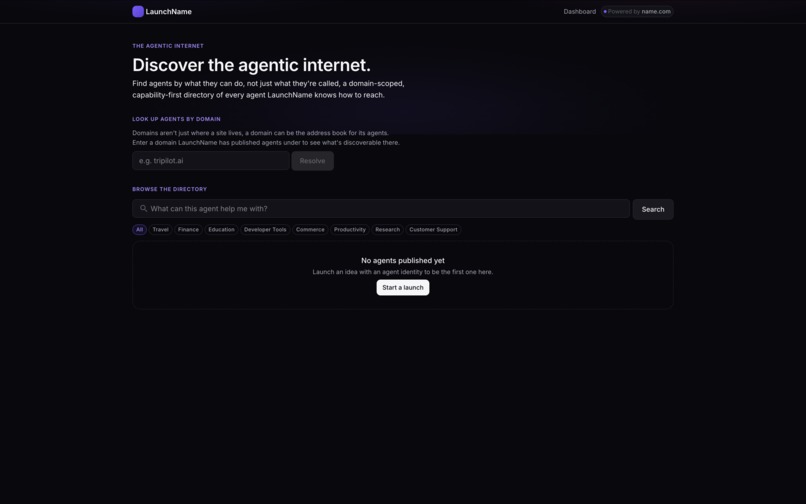
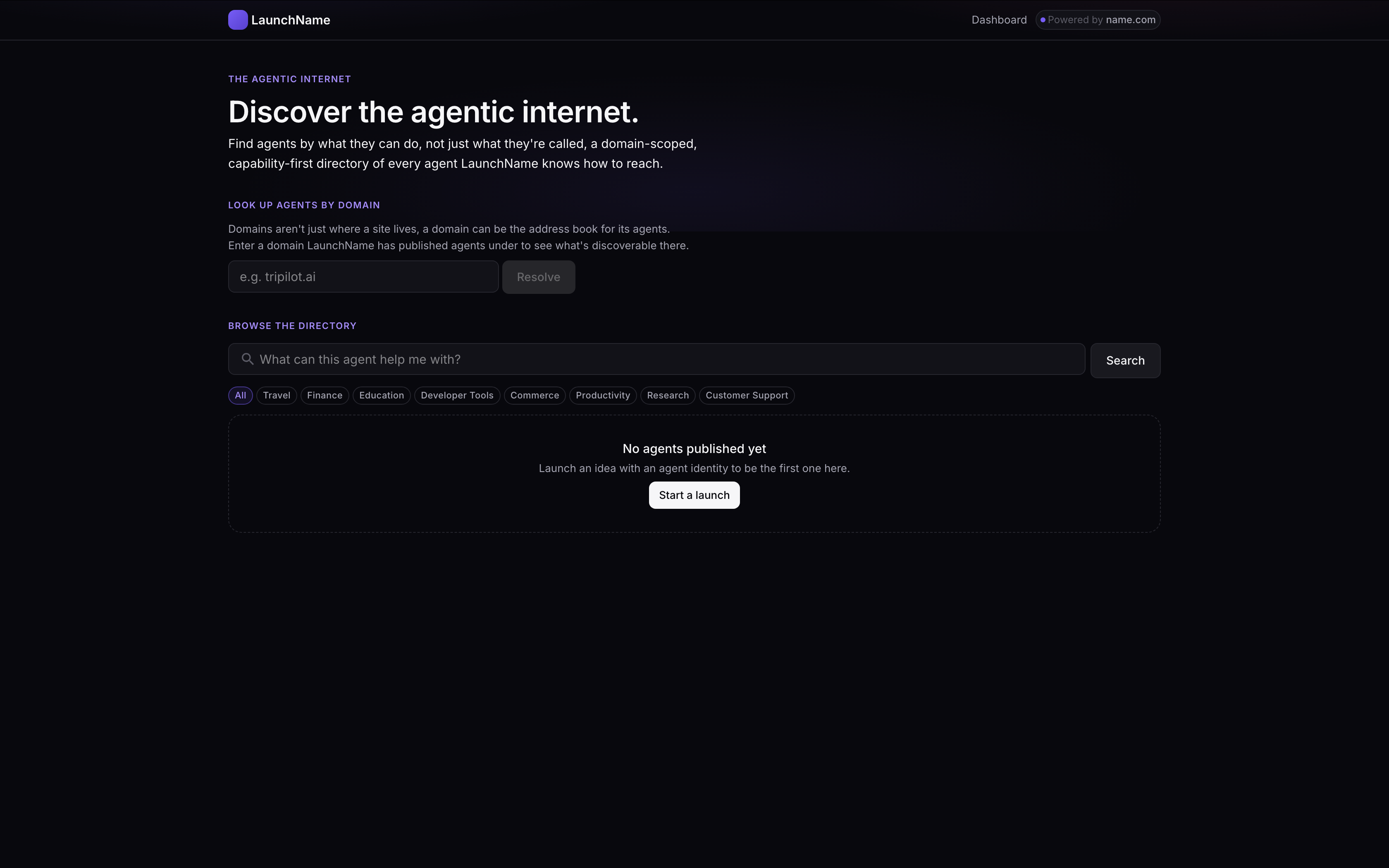
Agent Directory
-
About
Inspiration
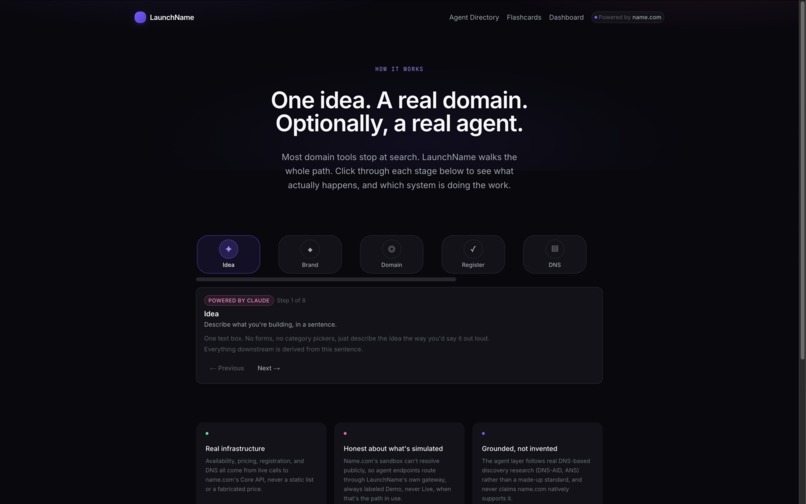
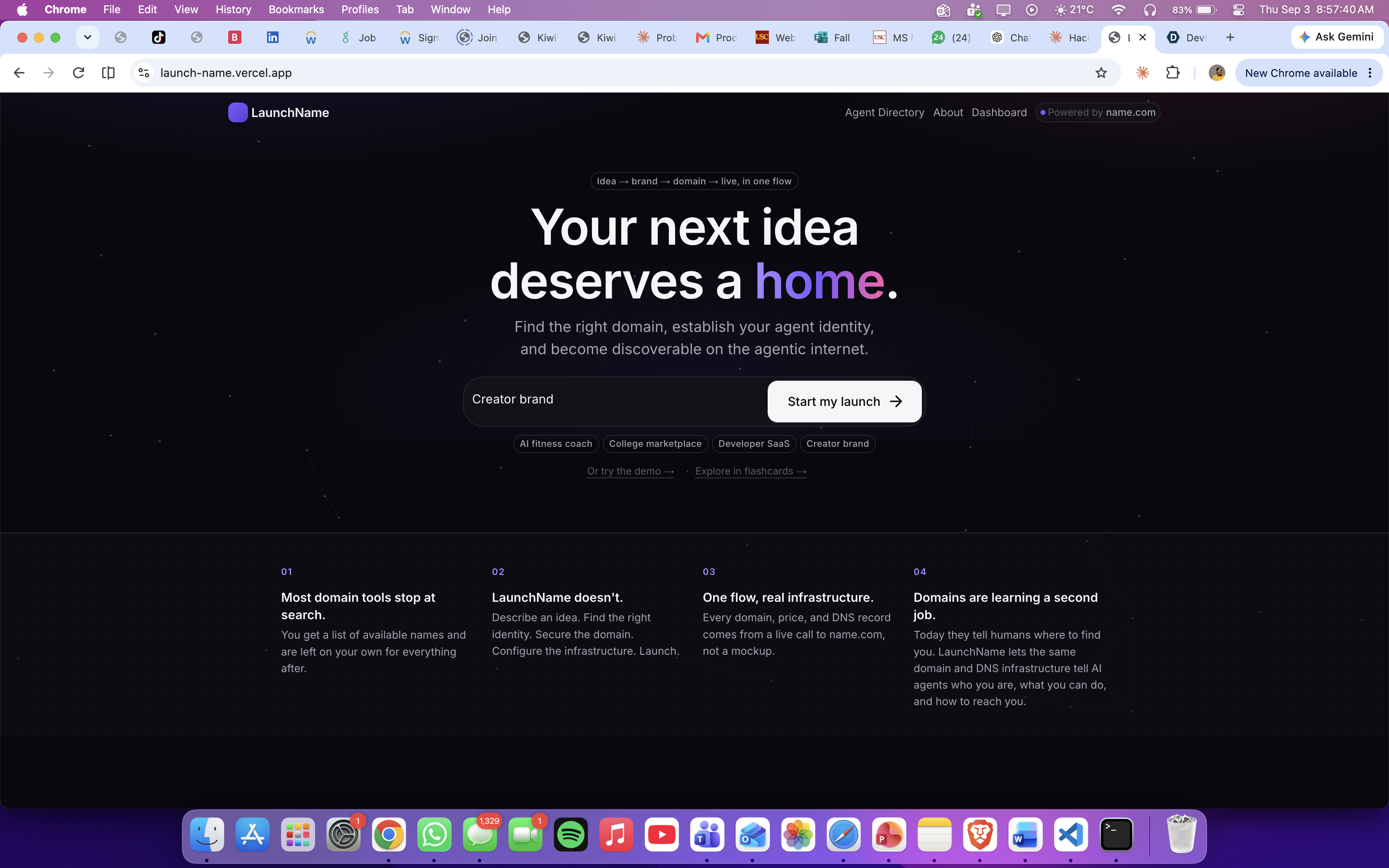
Every domain tool stops at search. You type a keyword, get a list of available names, buy one, and then you are on your own: DNS records, hosting, and everything after is a manual scavenger hunt across three or four dashboards.
At the same time, we kept reading about the "agentic internet," where AI agents need to discover and talk to each other across platforms. A Verisign paper, Discovering Agents for Discovery: The Case for DNS, made an argument that stuck with us: the metadata an AI agent needs to be found (endpoint, capabilities, protocol, proof of authenticity) fits inside a single DNS response, and DNS already runs the whole internet. Domains are learning a second job. Today they tell humans where to find you. Tomorrow they will tell AI agents who you are, what you can do, and how to reach you.
So we asked: what if buying a domain and giving it that second job happened in one flow? That is LaunchName.
What it does
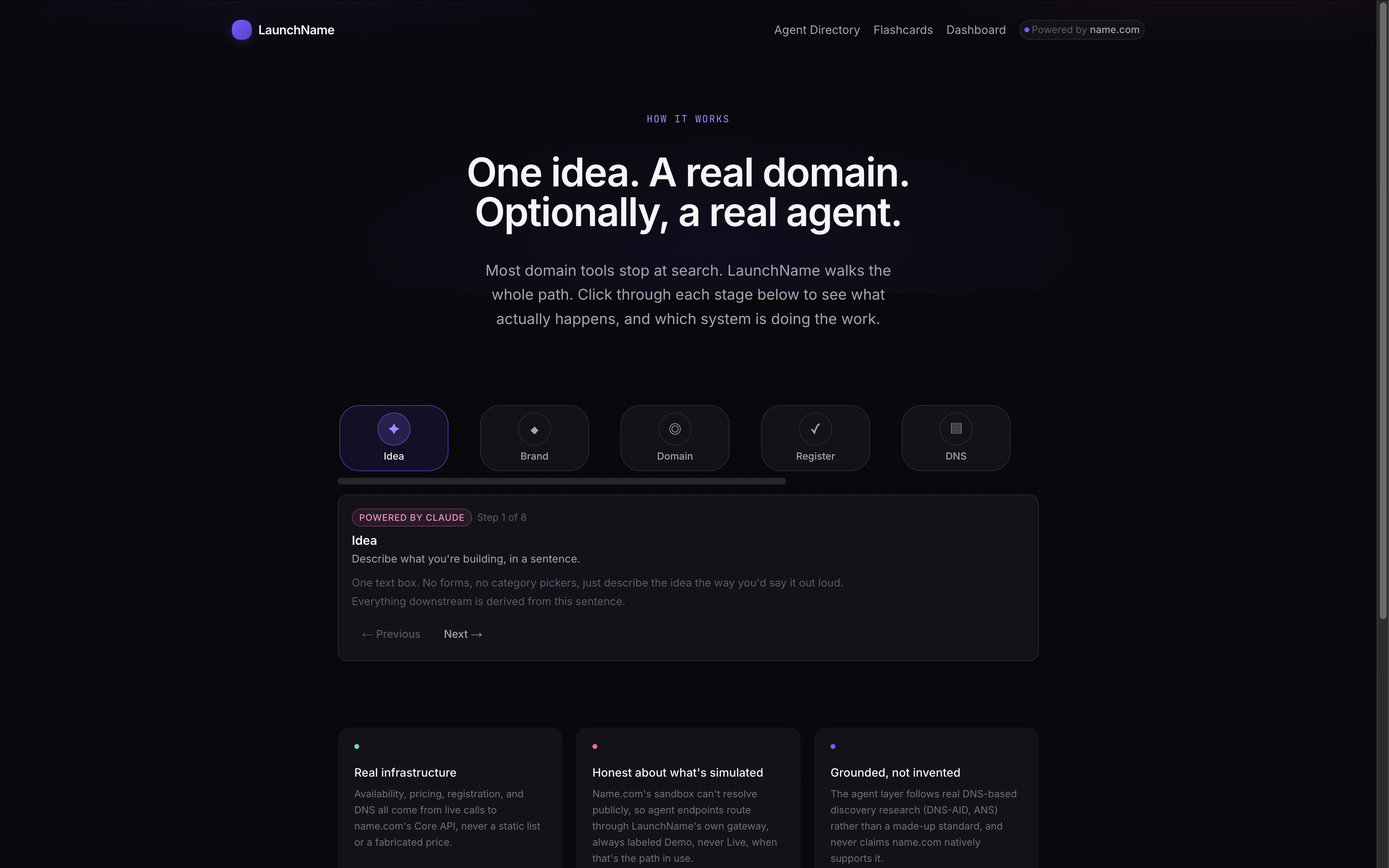
LaunchName takes an idea and turns it into a registered, DNS-configured, AI-agent-discoverable domain in six steps:
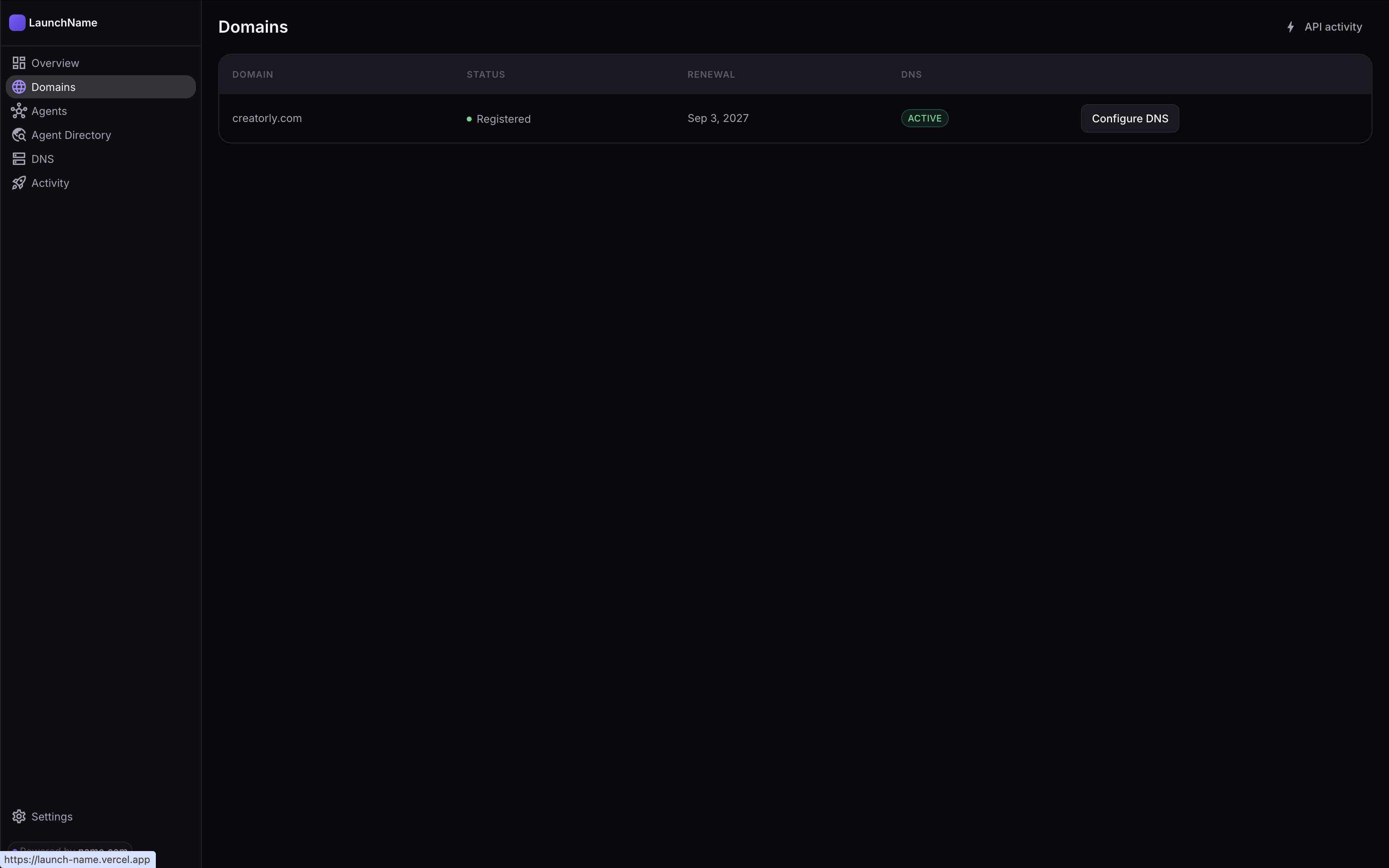
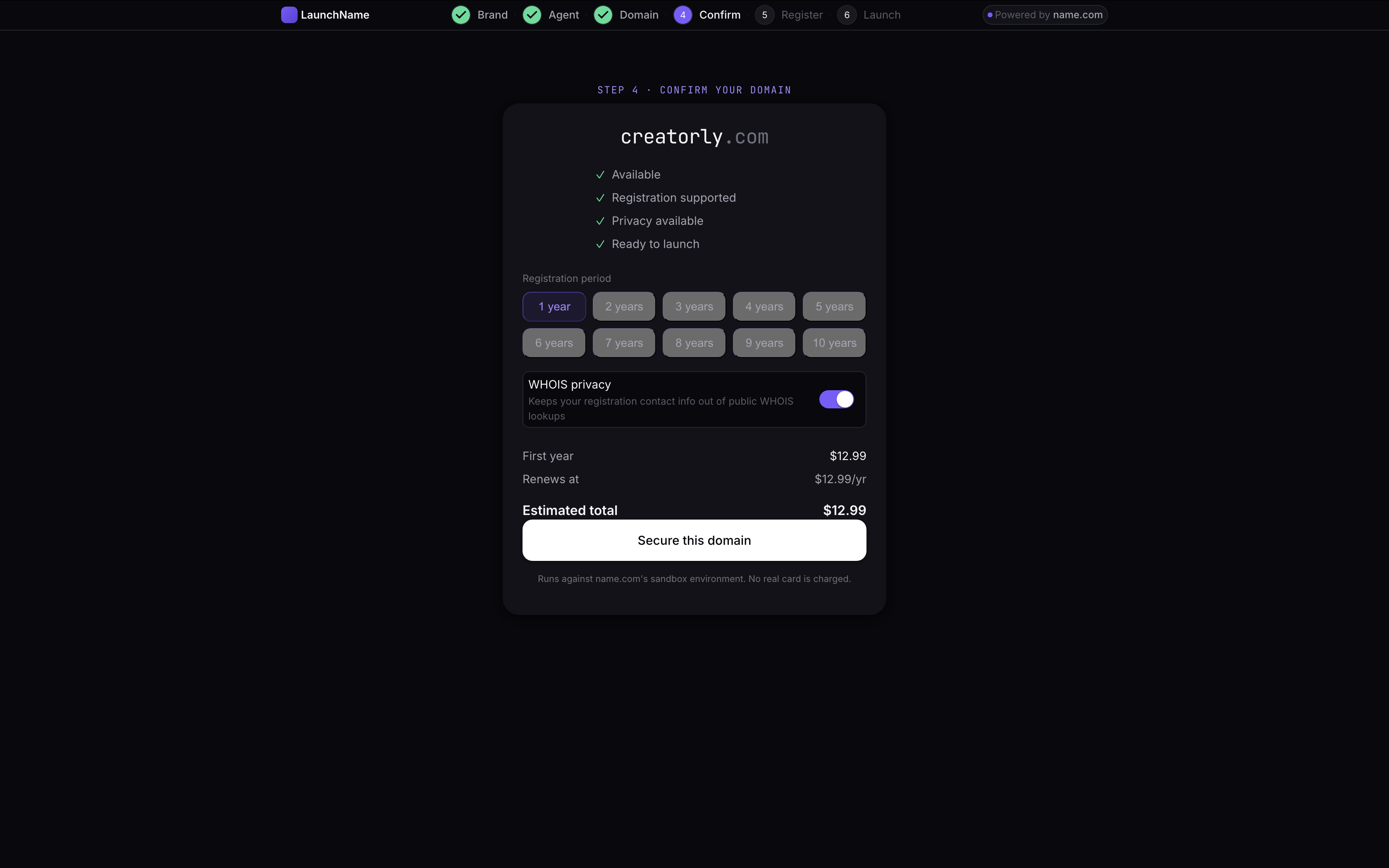
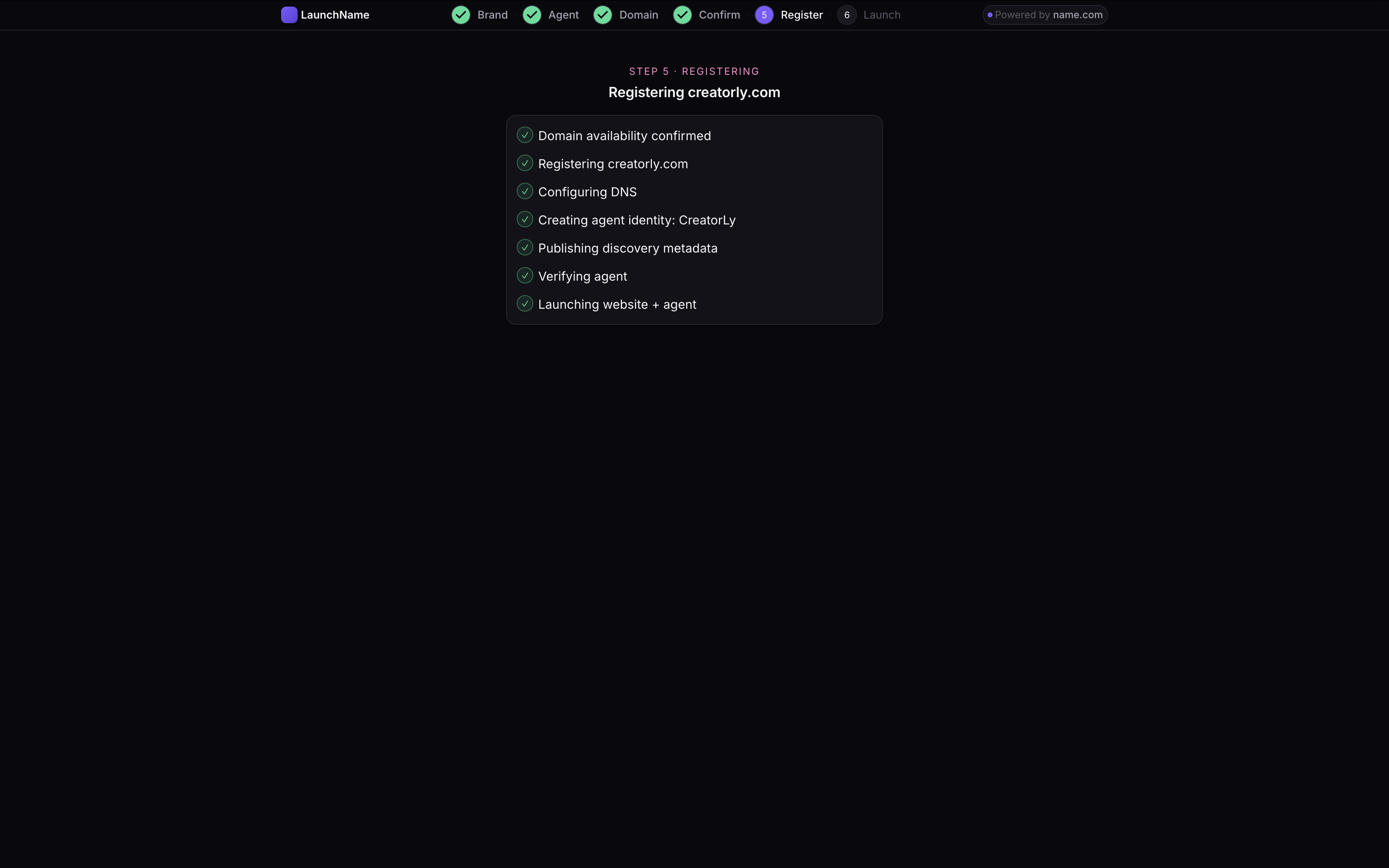
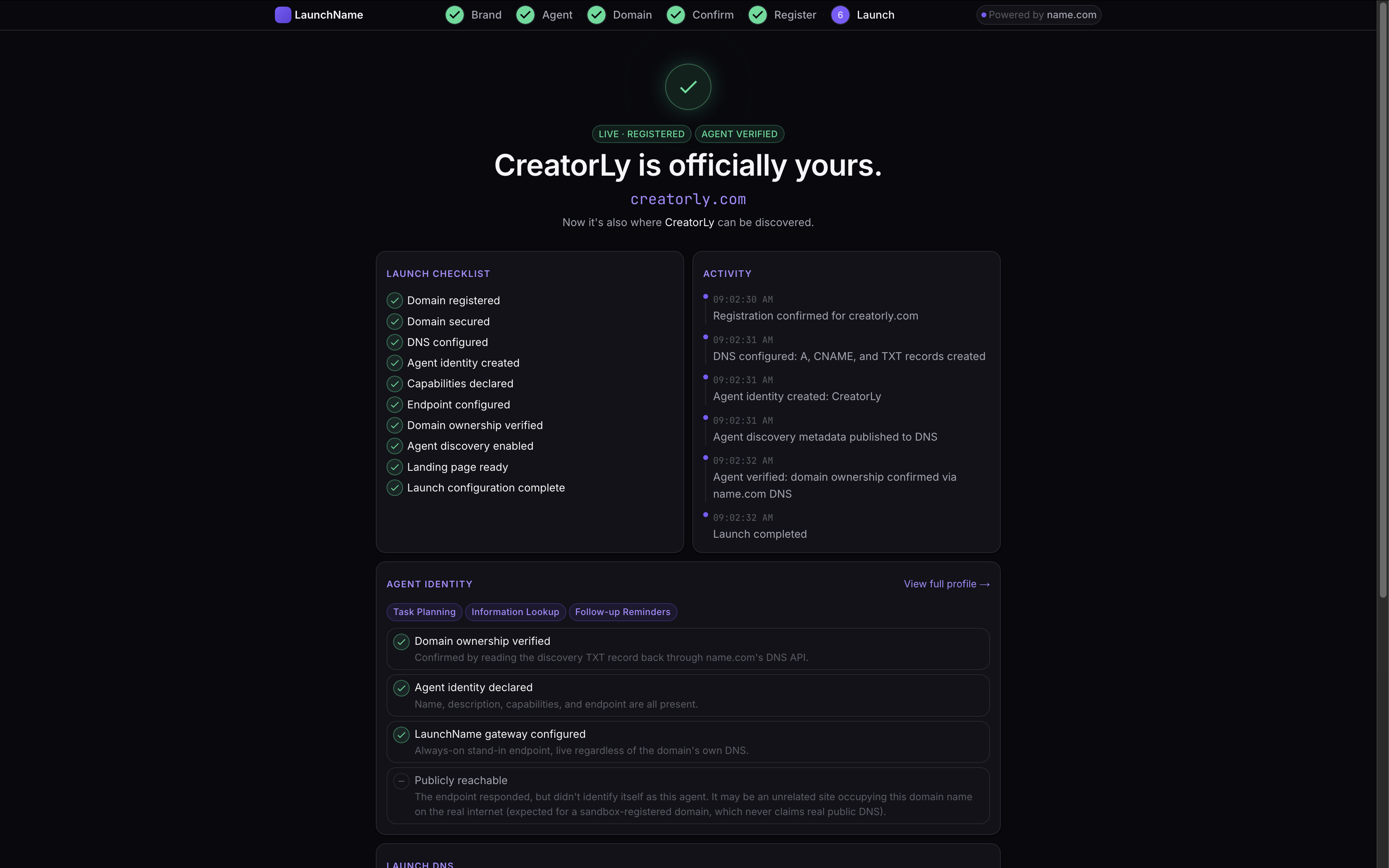
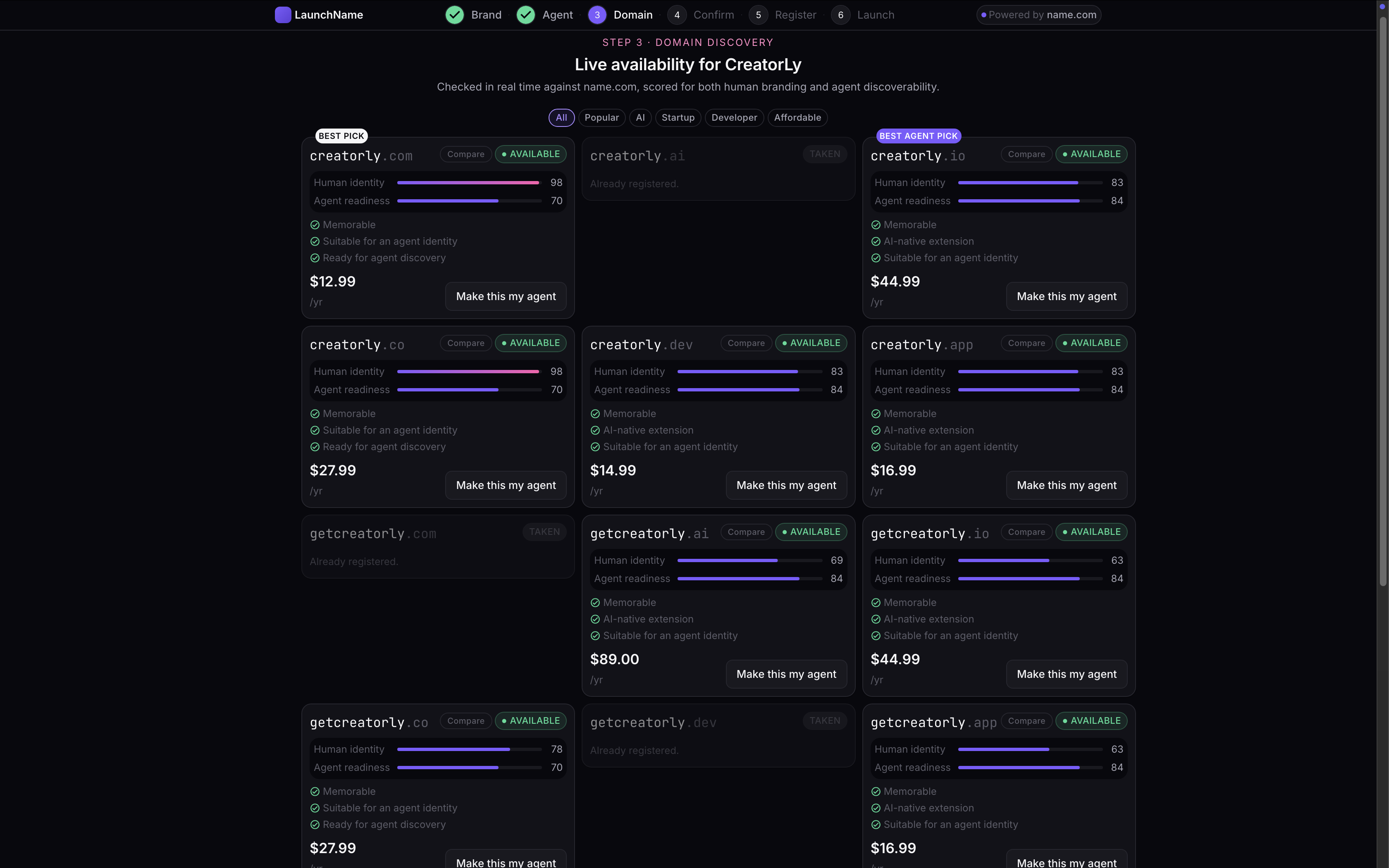
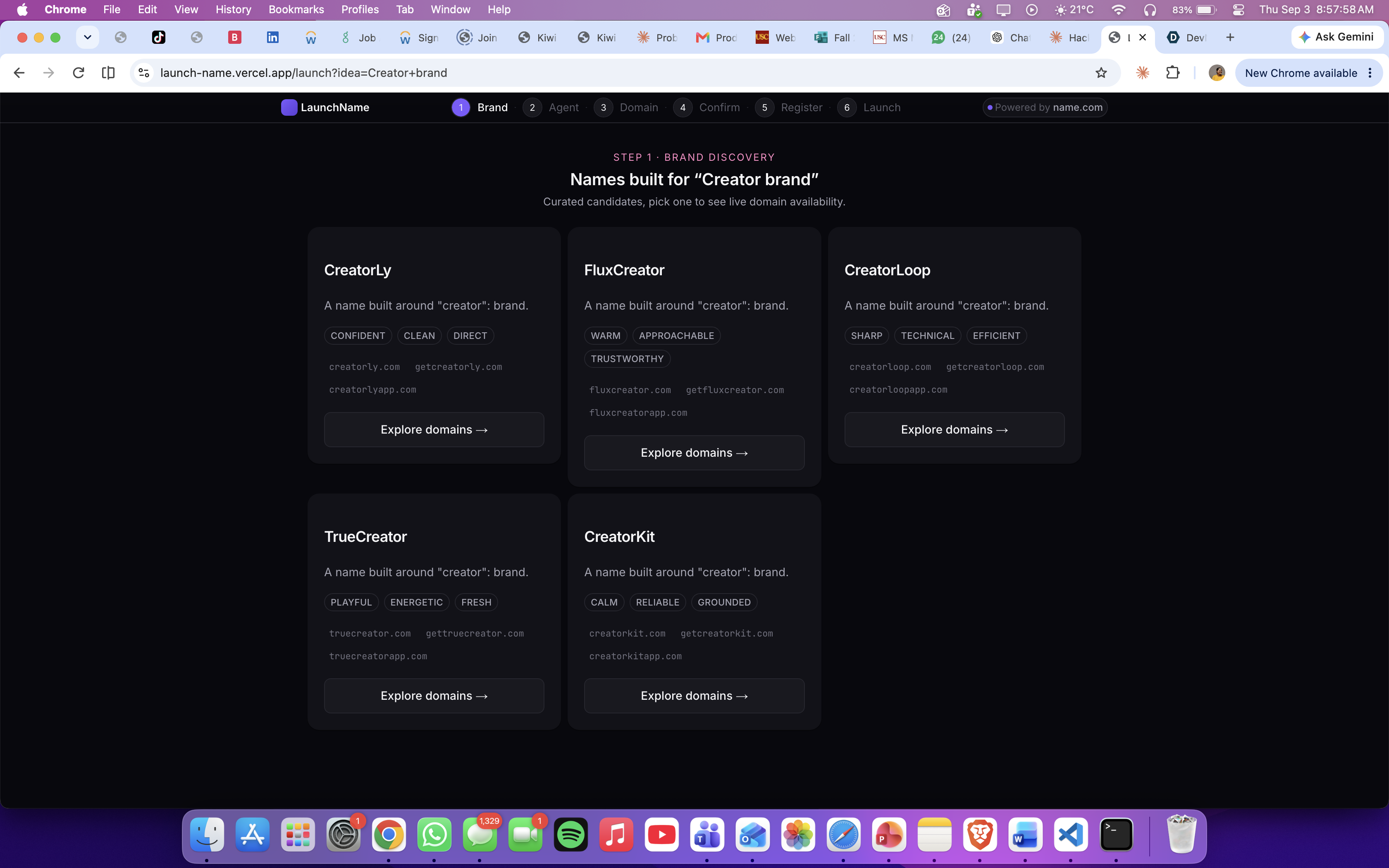
Brand. Describe what you are building ("Creator brand", "AI fitness coach"). LaunchName generates curated brand candidates, each with a personality profile and the domain patterns it will check. Agent. Declare the agent identity that will live on the domain: description, capabilities, and how agents can reach it (HTTP, streaming, or MCP-compatible). Domain. Every TLD variant is checked live against name.com. Each result is scored twice, once for human identity (memorability, brand fit) and once for agent readiness (AI-native TLD, discovery suitability). Taken domains are shown honestly as taken. Confirm. Registration period, WHOIS privacy, and real first-year and renewal pricing. Register. An automated pipeline re-confirms availability, registers the domain, creates A, CNAME and TXT records, publishes the agent discovery metadata to DNS, and verifies ownership by reading that record back. Launch. The domain is yours, the agent is verified, and it appears in the public Agent Directory. A dashboard manages domains, DNS, agents, and a full log of API activity, with a built-in assistant to help resolve issues.
How we built it
The name.com API is the backbone, not a feature. Each step of the wizard depends on a live call:
Capability Where it is used Domain search and availability Step 3, for every TLD variant of the chosen brand Pricing Steps 3 and 4 Domain registration Step 5 DNS record creation (A, CNAME, TXT) Step 5 DNS read-back for ownership verification Steps 5 and 6 Domain and DNS management Dashboard
The frontend is a React / Next.js wizard deployed on Vercel. All name.com calls run through server-side API routes so credentials never reach the browser. Wizard state carries the brand and agent identity forward so nothing is re-entered, and every API step is timestamped into an activity log you can watch during the demo.
The agent identity layer encodes the metadata set the Verisign paper calls "navigational completeness" (locatability, capability awareness, protocol awareness, authenticity) into a compact discovery record written to the domain's DNS. Because the paper shows all of it fits in one DNS response, we chose a single record rather than scattering data across services.
We built and tested against the name.com sandbox, so no real card is charged.
Challenges we ran into
Honesty in a sandbox. Sandbox-registered domains never claim real public DNS, so the "publicly reachable" check could not turn green. Instead of faking it, we report it as partial and explain why, and we added an always-on LaunchName gateway so the agent identity resolves even before the owner's own DNS is live. Race conditions. A domain can be taken between the moment it is shown as available and the moment the user clicks "Secure this domain." The register pipeline re-confirms availability as its first step. Turning raw availability into a recommendation. A list of available TLDs is not useful on its own. Designing the dual human / agent scoring, and the Best Pick and Best Agent Pick tags, took several iterations. Chaining six API surfaces into one dependent pipeline while keeping every failure state visible to the user.
Accomplishments that we're proud of
A complete idea-to-live flow that runs end to end in under a minute, with every domain, price, and DNS record coming from a real name.com call. Giving domains a second job: agent identity, capabilities, and endpoint published to DNS and verified through the registrar. Handling edge cases honestly instead of hiding them.
What we learned
How to orchestrate search, pricing, registration, DNS write, and DNS read as one dependent pipeline. Why DNS is a credible identity layer for AI agents, and how much can fit in a single response (from the Verisign research). That the best demo moment is not a pretty screen but a timestamped log of real infrastructure changing in real time.
What's next for LanchName
Move from sandbox to production registration with real checkout. One-click hosting so the landing page and agent endpoint go live on the new domain immediately. Publish an open discovery spec so any agent can resolve any LaunchName domain. Renewal reminders, transfers, and bulk launches for agencies.
Built With
- dns
- http
- mcp
- name.com-api
- next.js
- node.js
- react
- tailwind
- typescript
- vercel

Log in or sign up for Devpost to join the conversation.