-
-
Slide 1
-
Slide 2
-
Slide 3
Inspiration
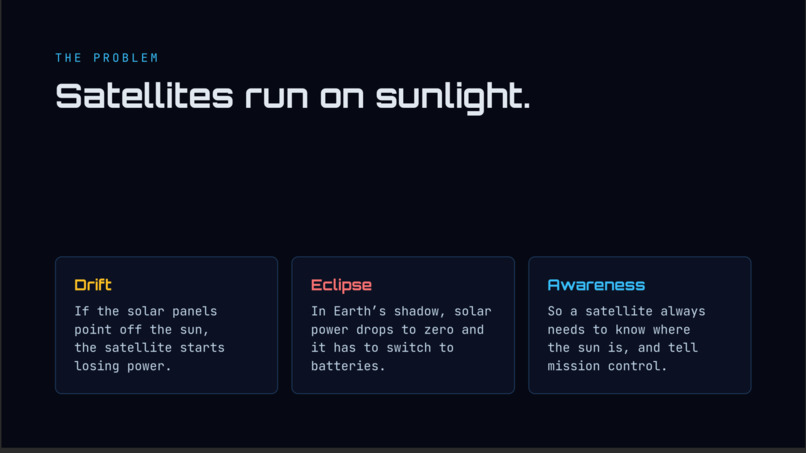
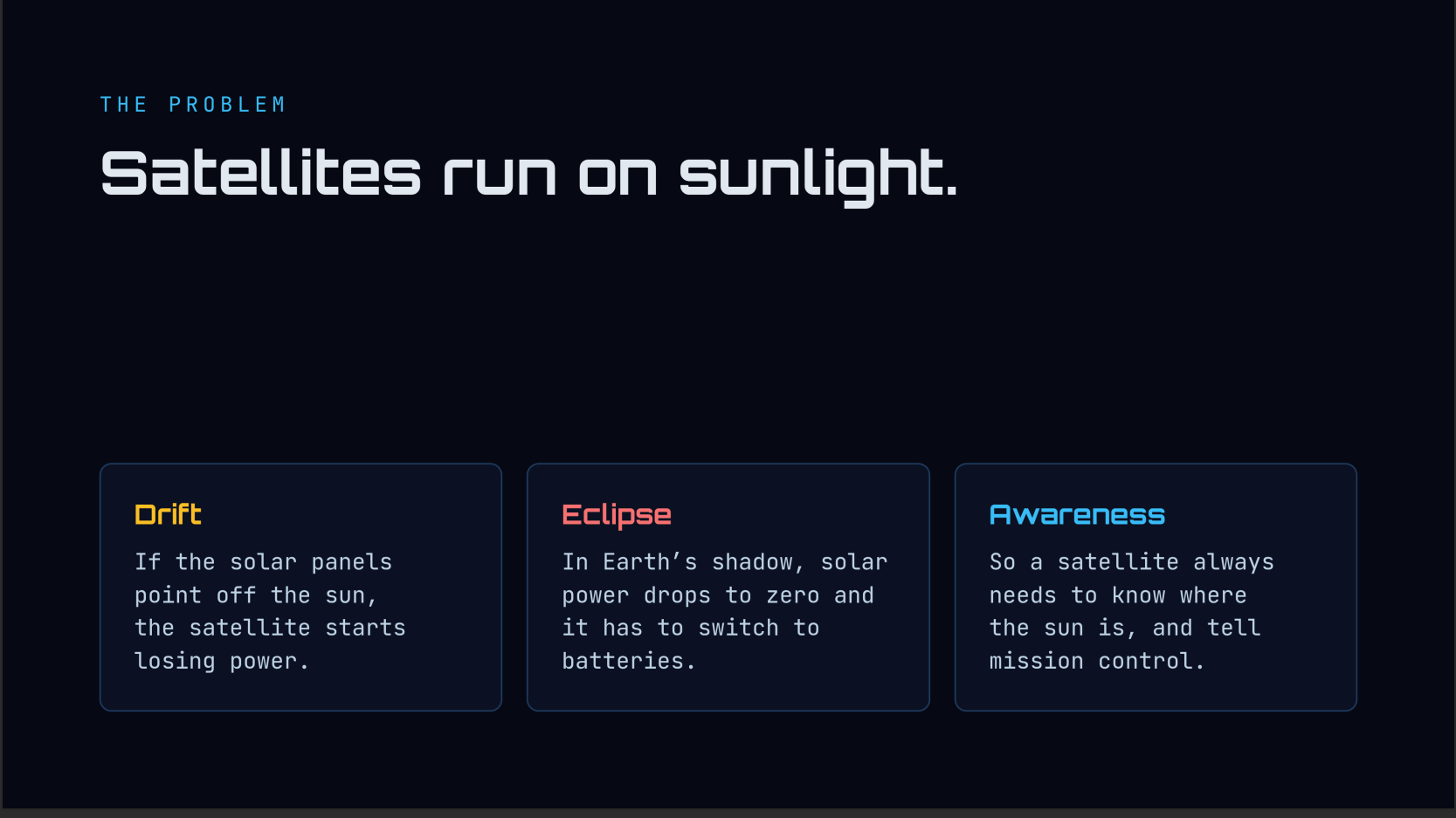
Solar panels only work when they're facing the sun. Satellites deal with this all the time, especially when they pass into Earth's shadow during an eclipse and lose solar power completely. Same thing happens on Earth with solar panels on houses or farms when they drift or get blocked. The data that warns you is usually just numbers on a screen, and honestly nobody reads those fast enough. So we wanted to make something that finds the sun by itself and just tells you what's going on, kind of like mission control talking to a satellite.
What it does
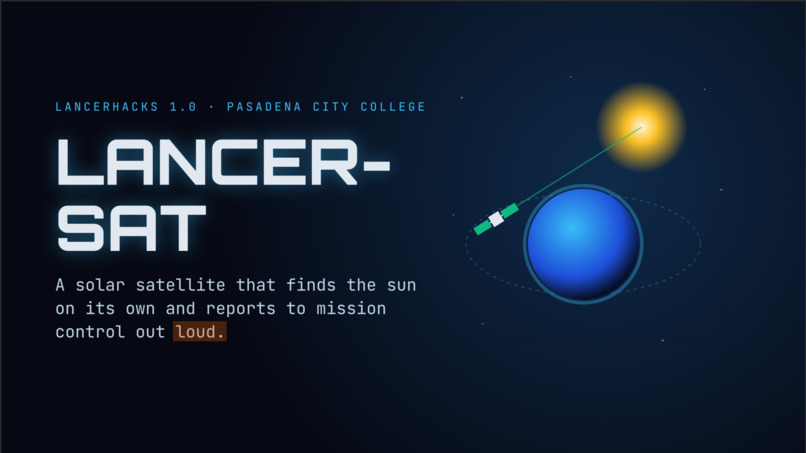
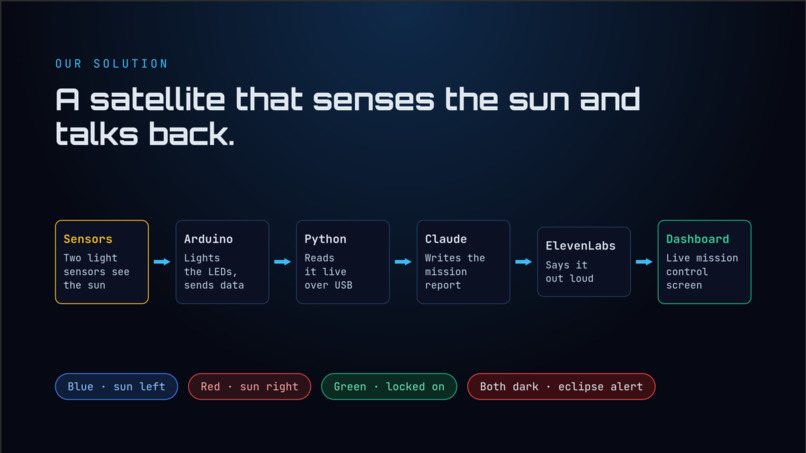
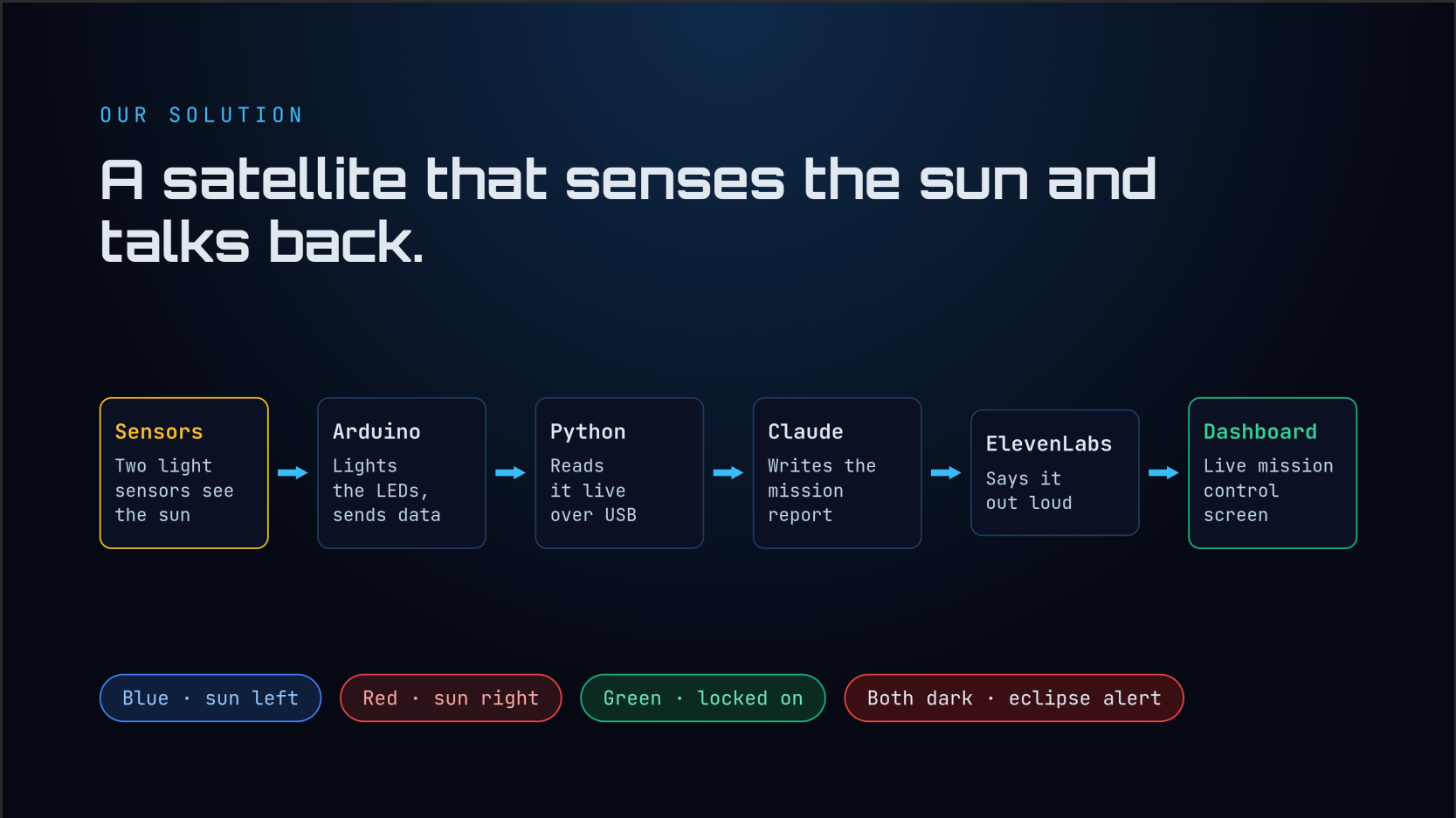
LANCER-SAT is a little satellite that tracks the sun with two light sensors. The Arduino figures out which side the light is coming from and lights up an LED, blue if the sun's on the left, red if it's on the right, and green when it's locked on. All the data goes to a mission control dashboard we made that shows the satellite orbiting, the power level, and both sensors live. Then an AI writes a status report and reads it out loud in a commander voice. If you cover both sensors it thinks it's in an eclipse, flashes a big alert and says it's switching to battery power. We built it as a satellite but the same idea could work for solar panels on homes or farms.
How we built it
The hardware is an Arduino Uno with two photoresistors and three LEDs. It calibrates itself to the room light when it starts up. A Python script reads the sensor numbers over USB, sends them to Claude to write the mission reports, and uses ElevenLabs for the voice. The dashboard is HTML and JavaScript and it updates a few times a second off the real sensors.
Challenges we ran into
A lot lol. We didn't have a servo so we couldn't make the panel actually turn, so we switched to LEDs to show the direction. At one point a sensor and a resistor were touching on the breadboard and it shorted the whole board. Then two of the LEDs were on the wrong pins and it took us a while to figure out why the colors made no sense. The room lights also hit the sensors unevenly so we had to add calibration. And then the laptop died halfway through and we had to move everything to my partner's laptop.
Accomplishments that we're proud of
Getting everything to react together. You move the flashlight and the LEDs, the screen and the voice all change at the same time. Also this was my first hackathon so getting hardware, AI and a dashboard all working in one day felt really good.
What we learned
How to wire sensors on a breadboard, how the Arduino talks to Python over serial, how to hook up AI APIs to real hardware, and a lot about debugging when stuff breaks.
What's next for LANCER-SAT
Adding a servo so the panel actually turns toward the sun, hooking it up to a real solar panel, and logging the power over a whole day.
Built With
- anthropic
- arduino
- c++
- claude
- elevenlabs
- html
- javascript
- python

Log in or sign up for Devpost to join the conversation.