-
-
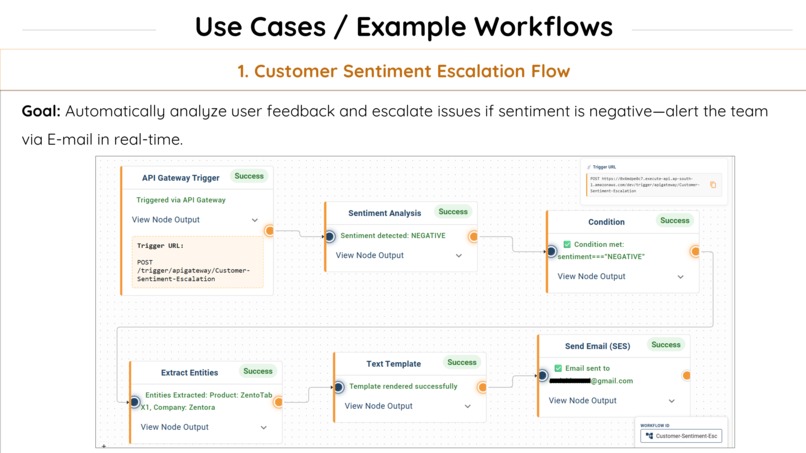
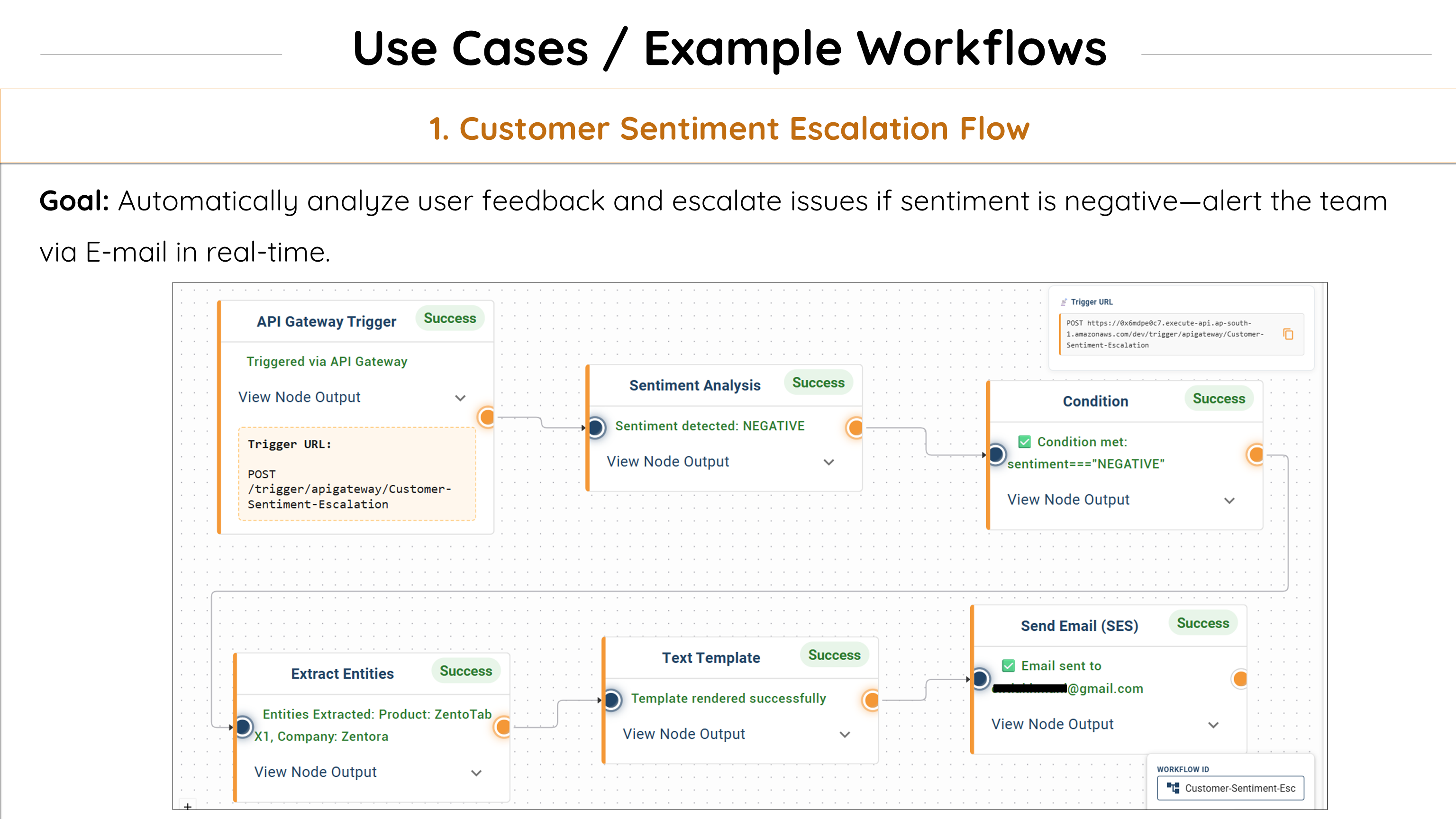
Use Case 1 : Customer Sentiment Escalation Flow
-
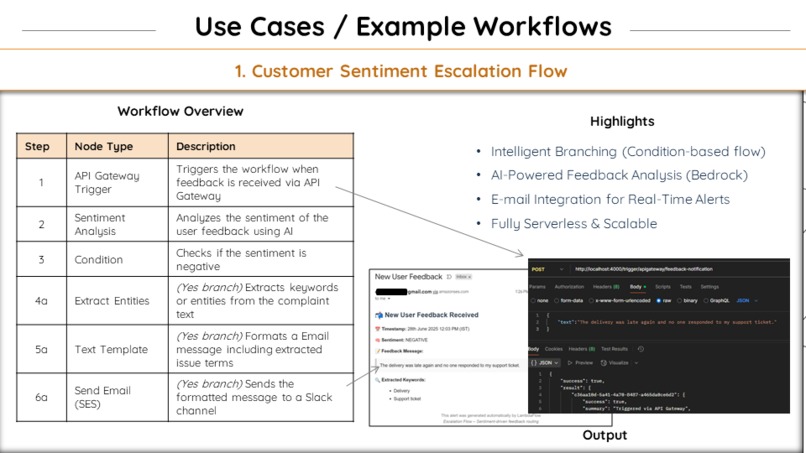
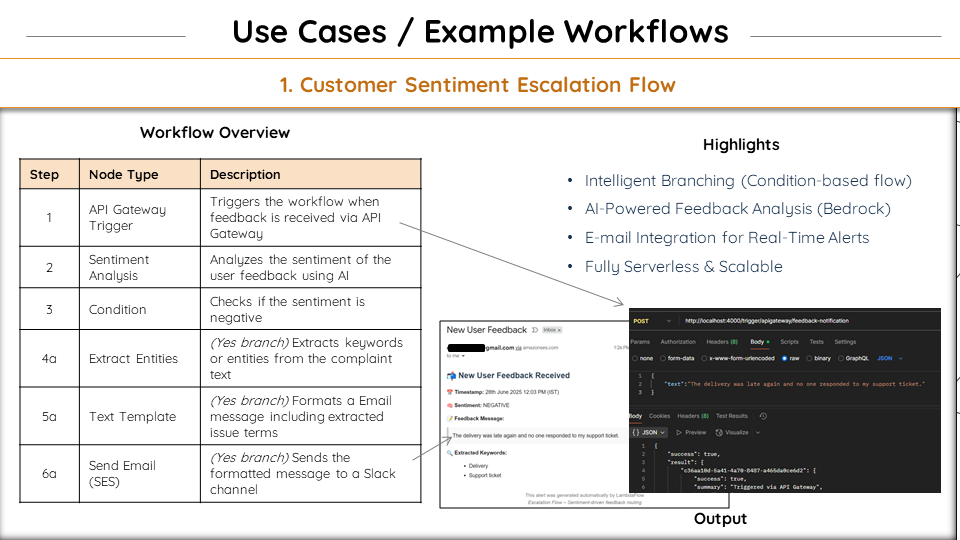
Use Case 1 : Workflow Output
-
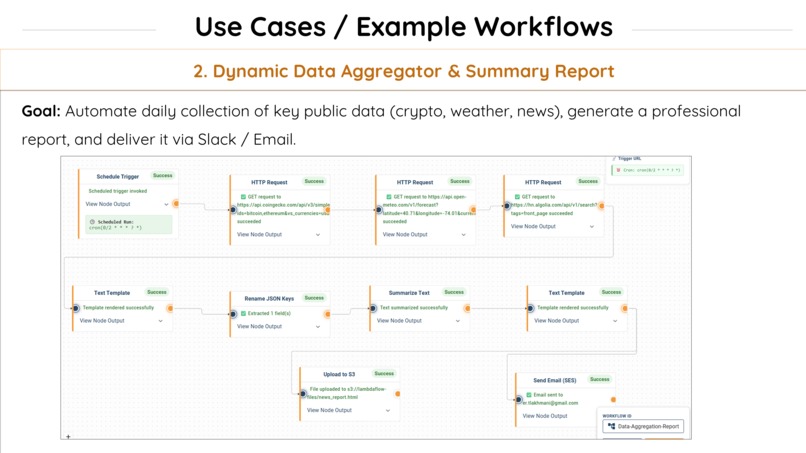
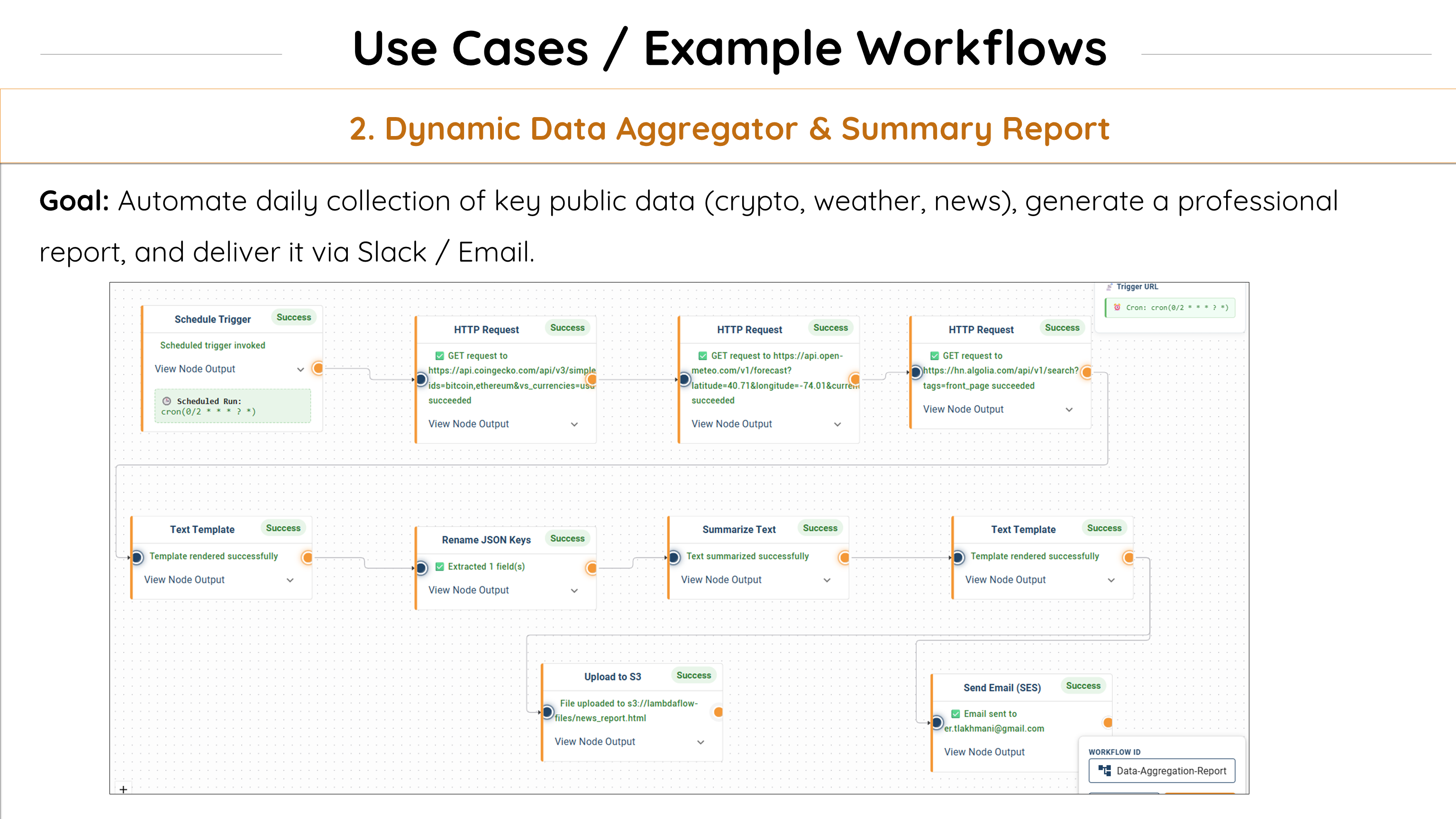
Use Case 2 : Dynamic Data Aggregator & Summary Report
-
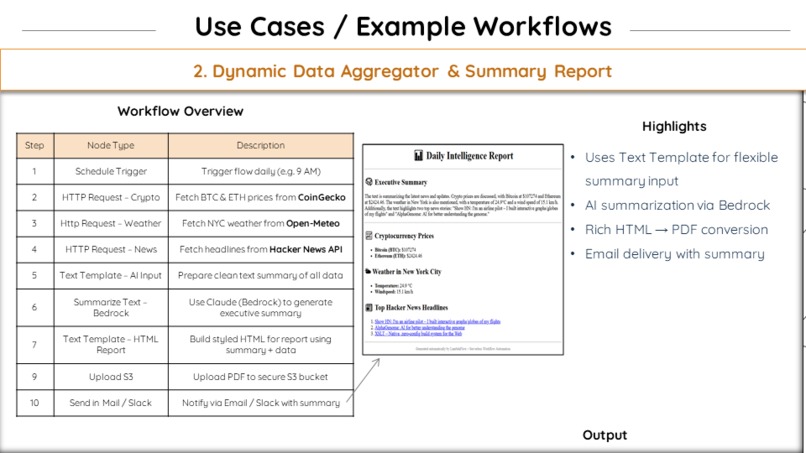
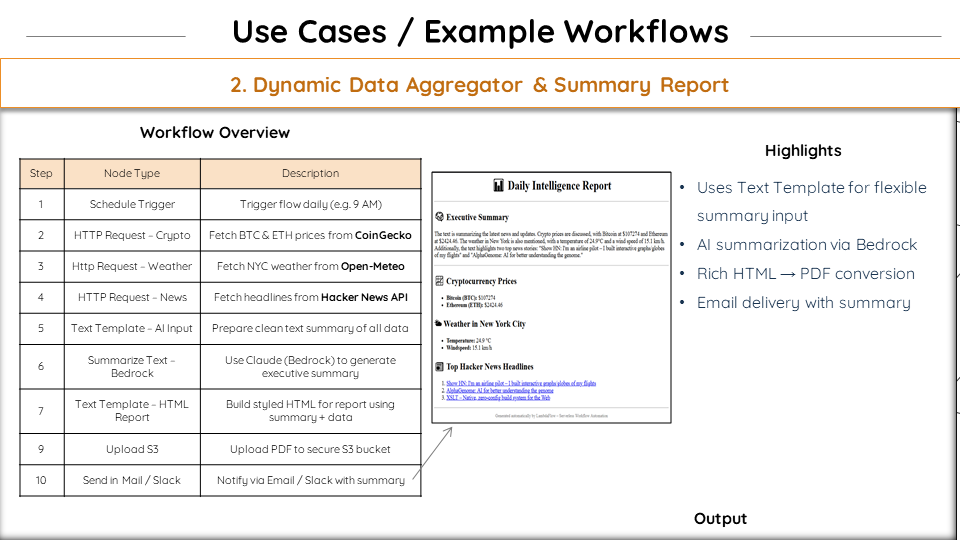
Use Case2 : Workflow Output
-
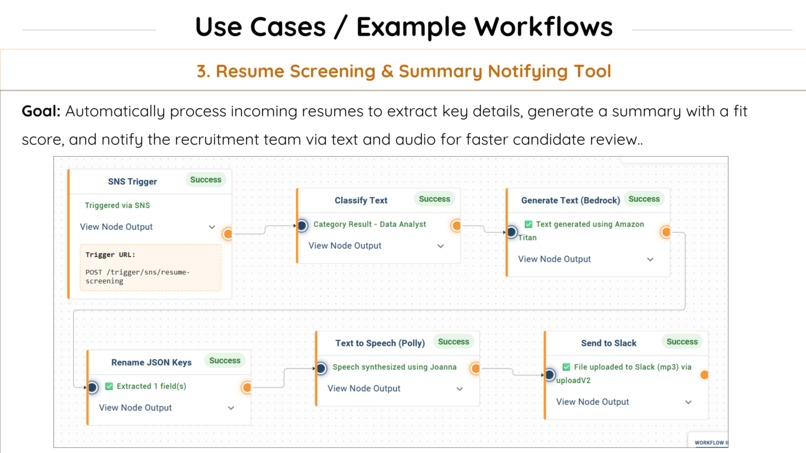
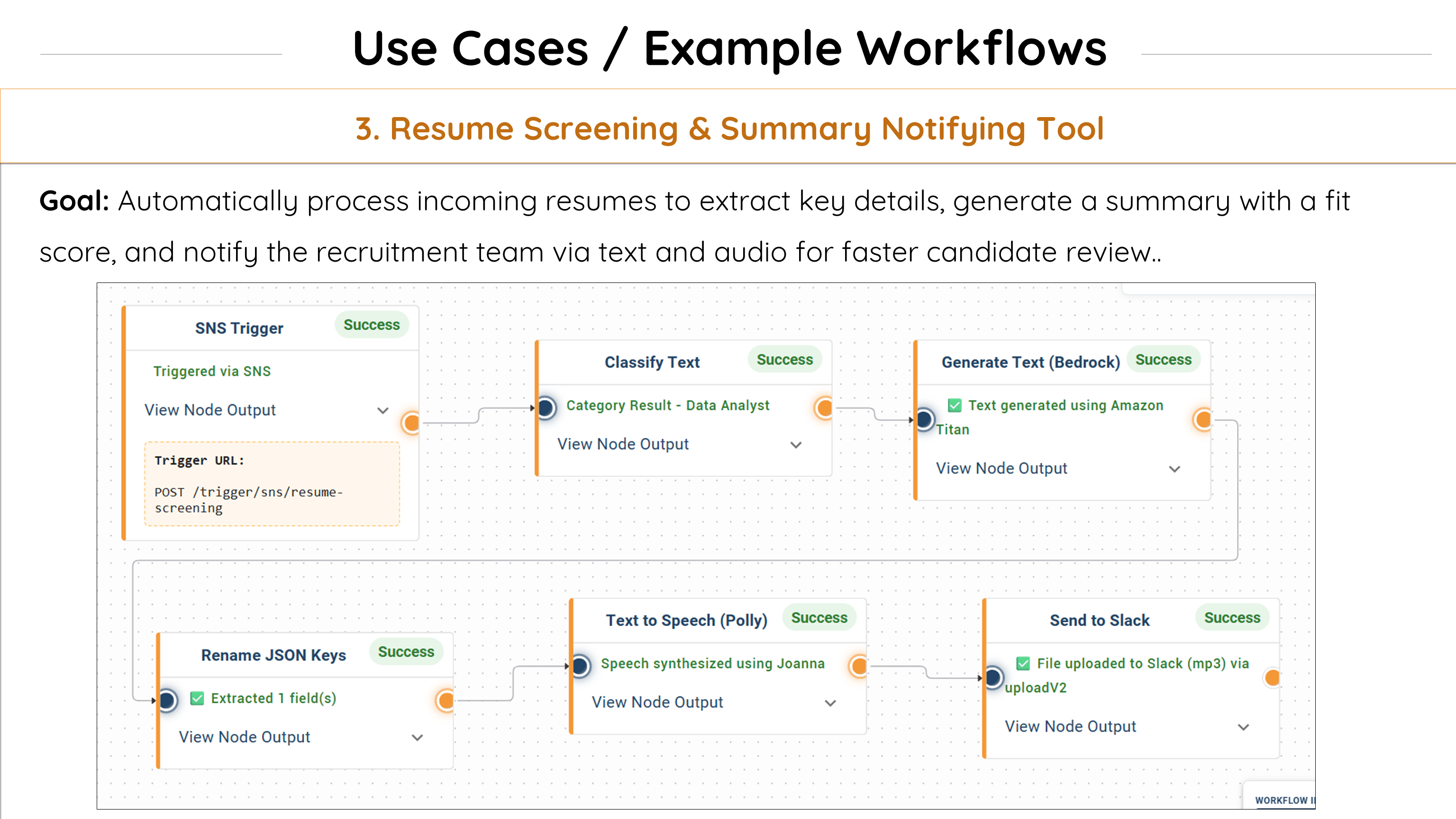
Use Case 3 : Resume Screening & Summary Notifying Tool
-
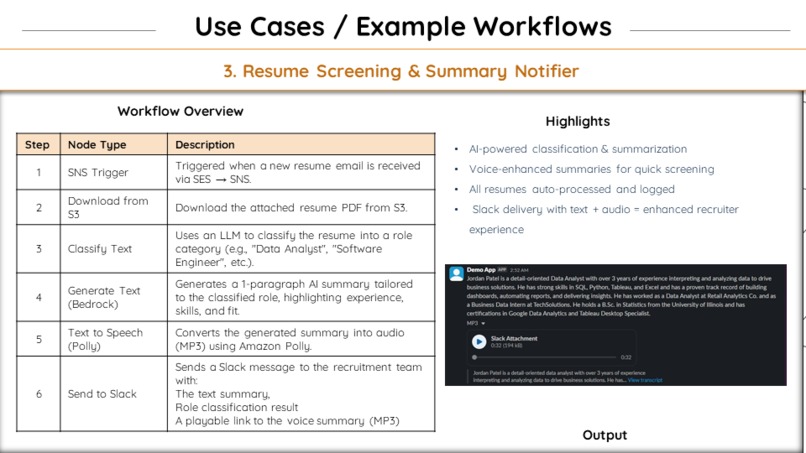
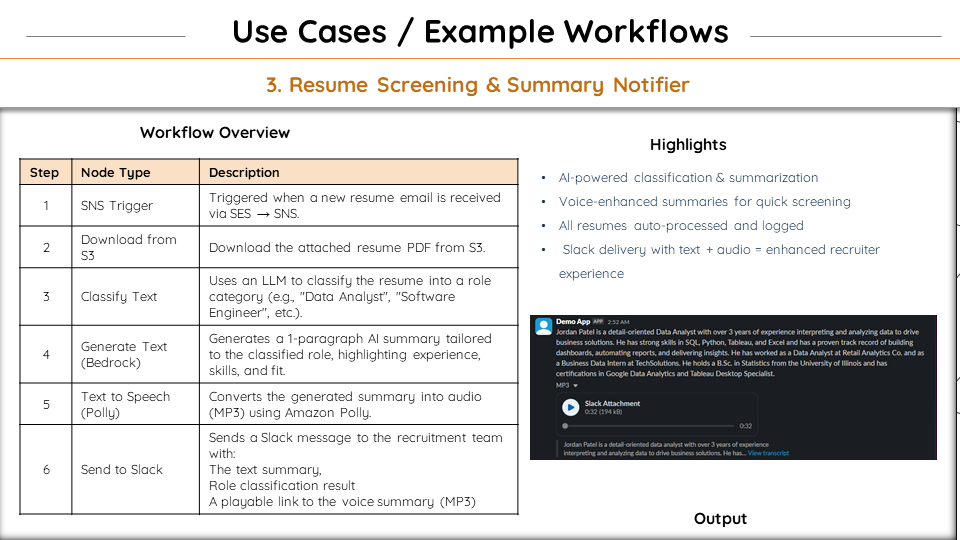
Use Case 3 : Workflow Output
-
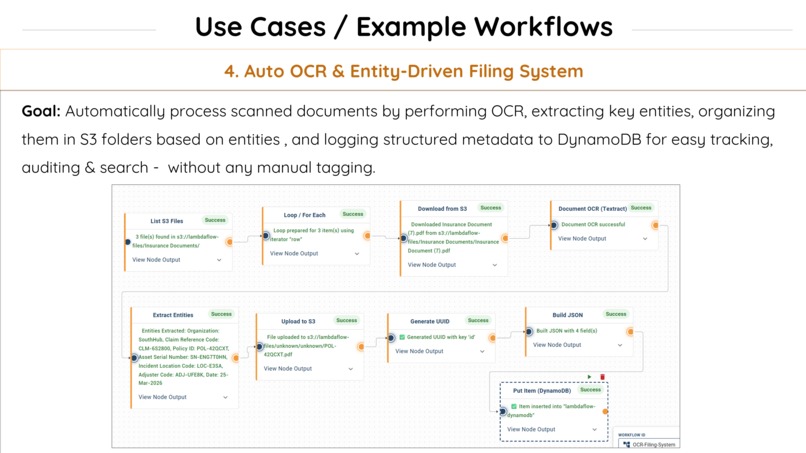
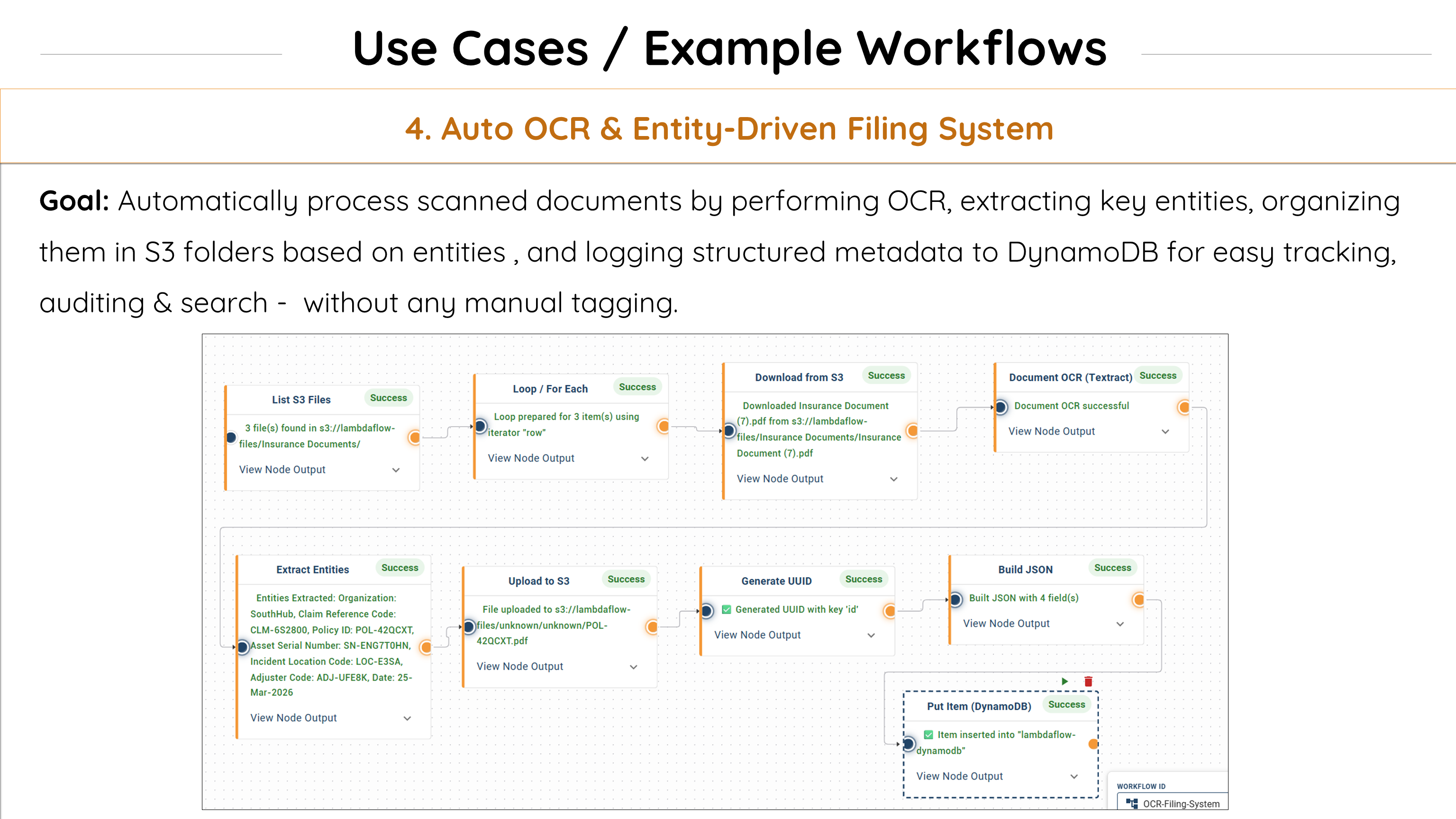
Use Case 4 : Auto OCR & Entity-Driven Filing System
-
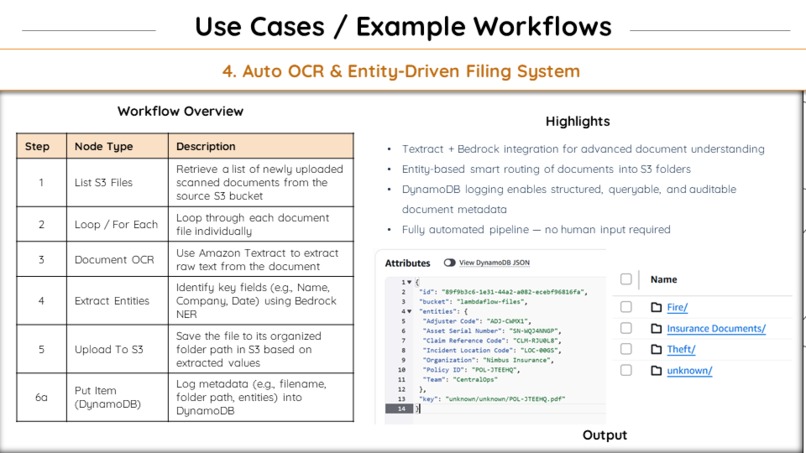
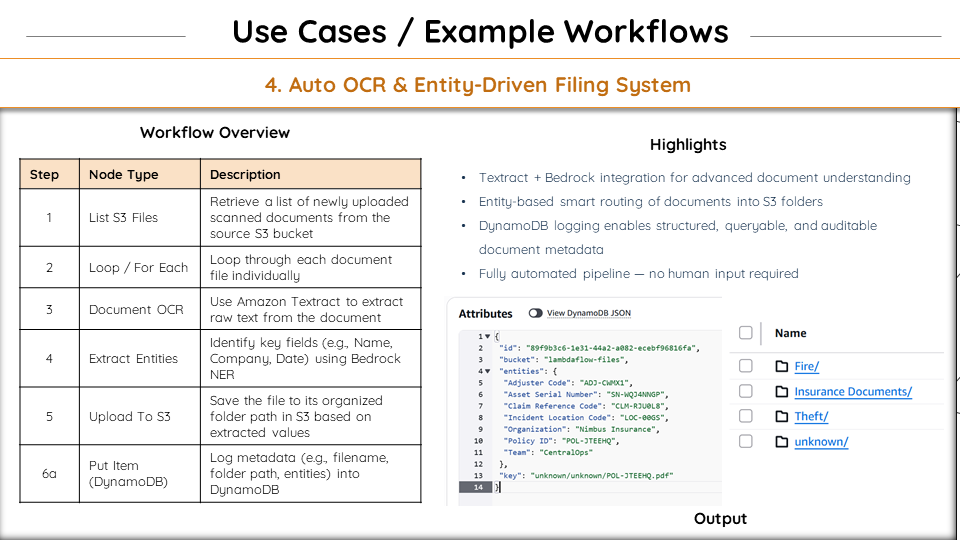
Use Case 4 : Workflow Output
-
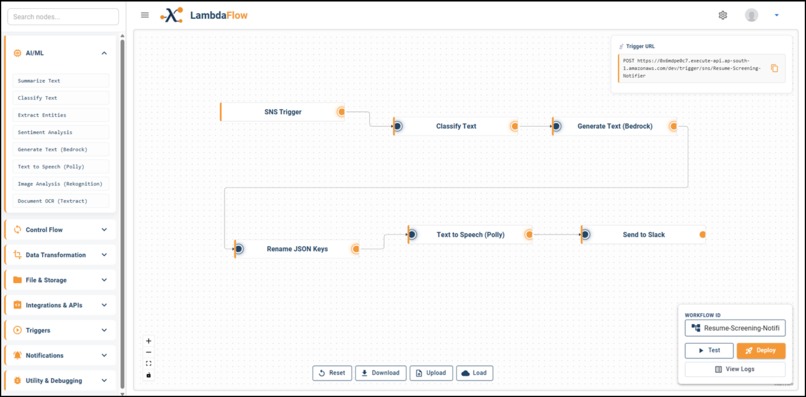
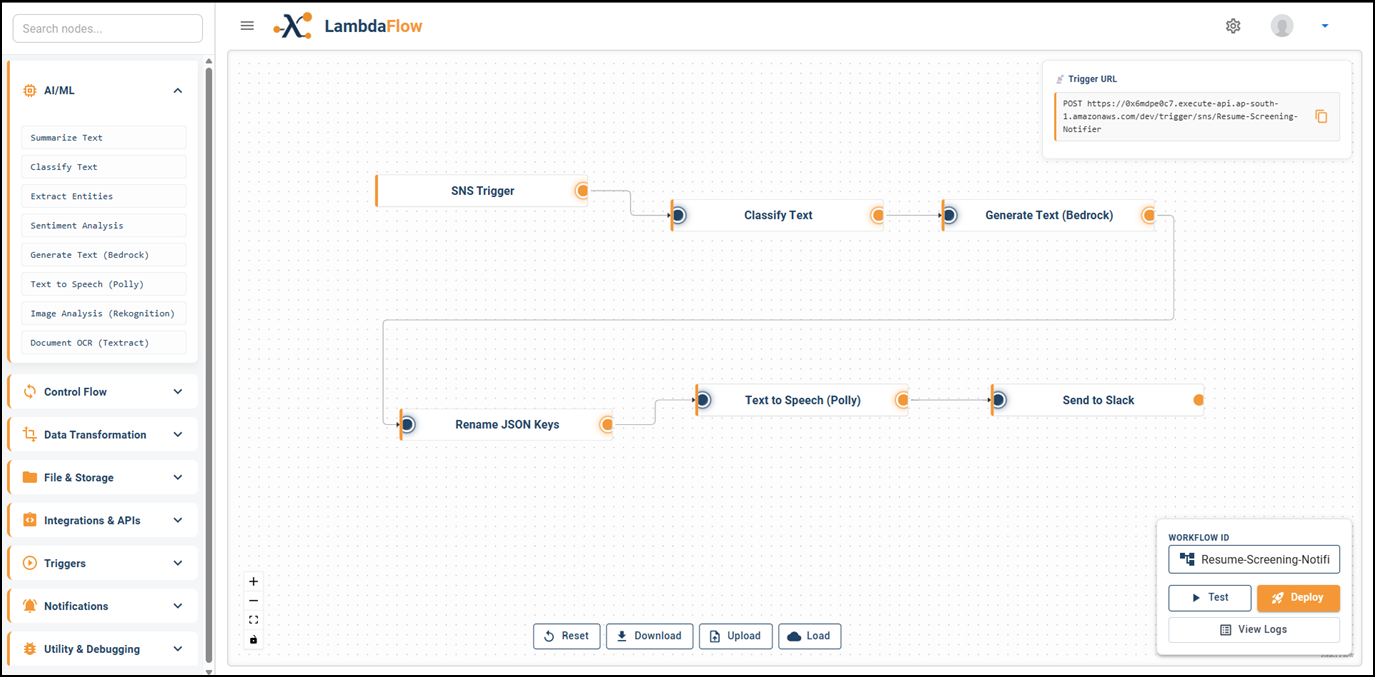
New Workflow View
-
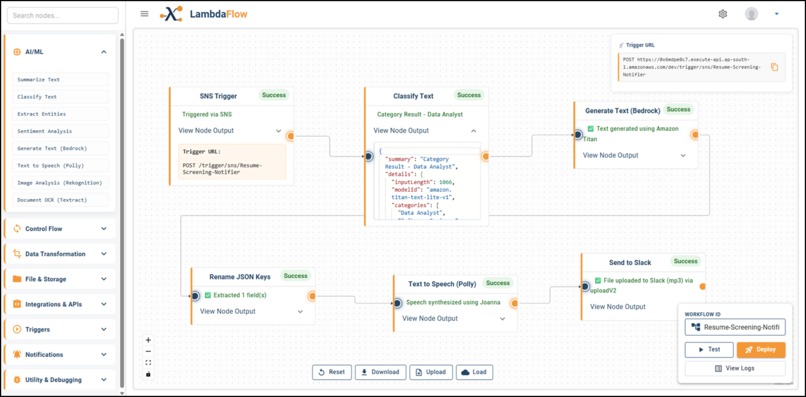
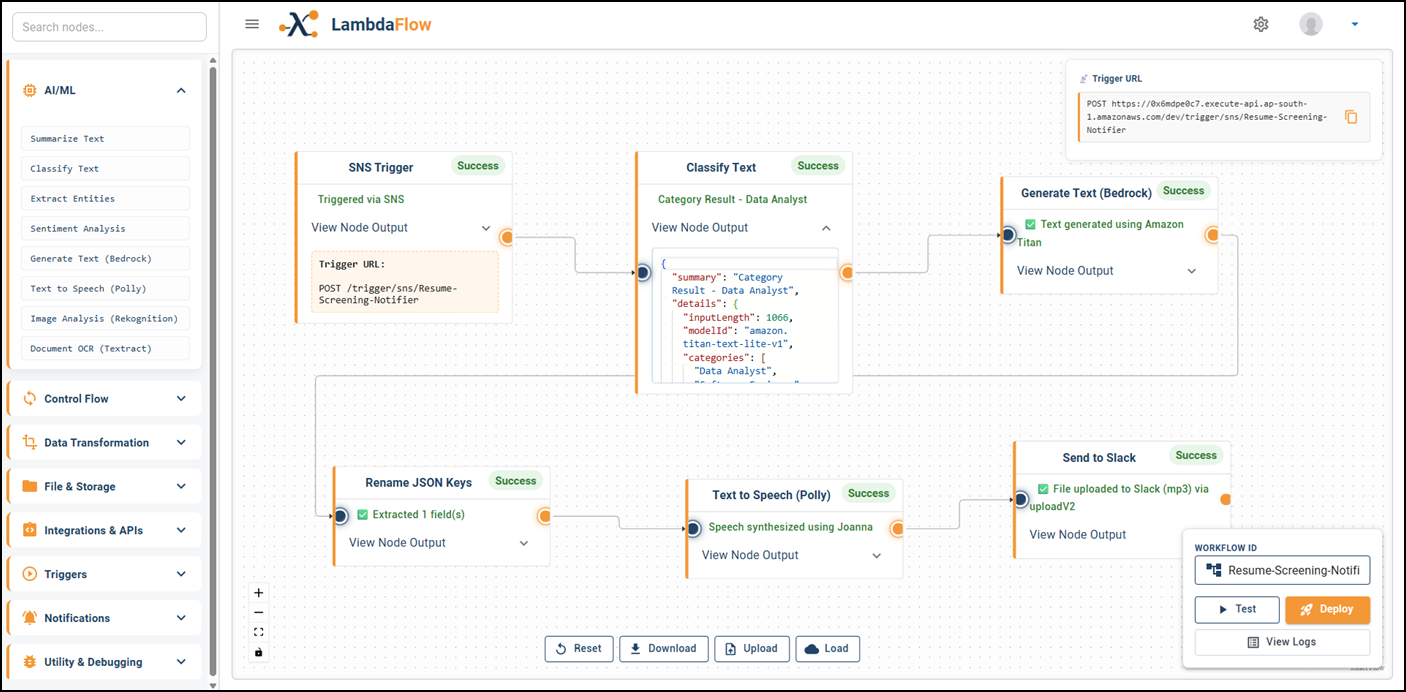
Post Workflow Execution View
-
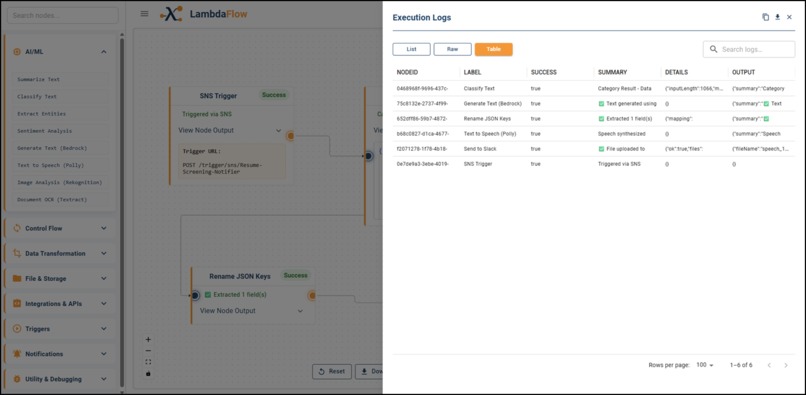
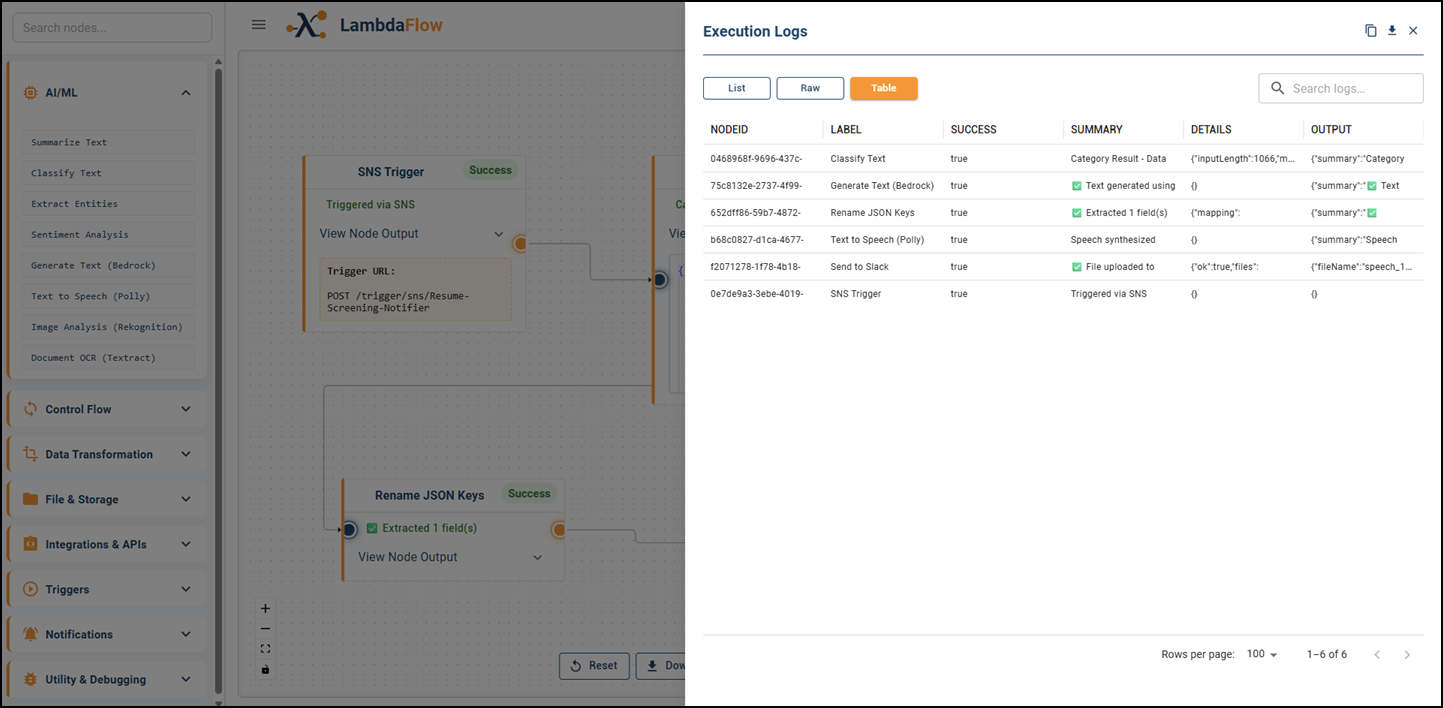
LambdaFlow Execution Logs Drawer
-
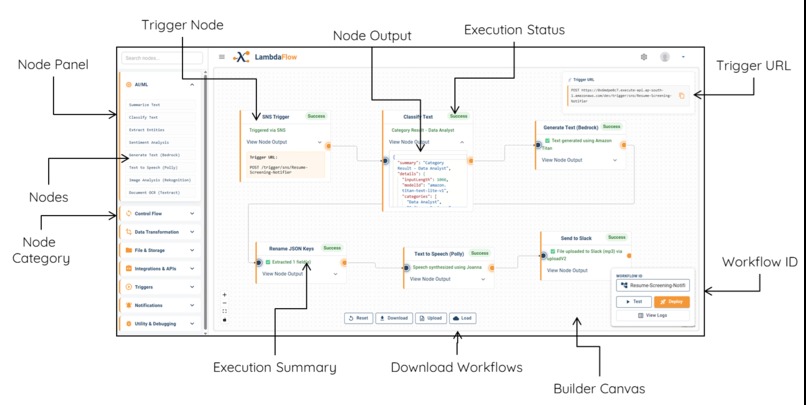
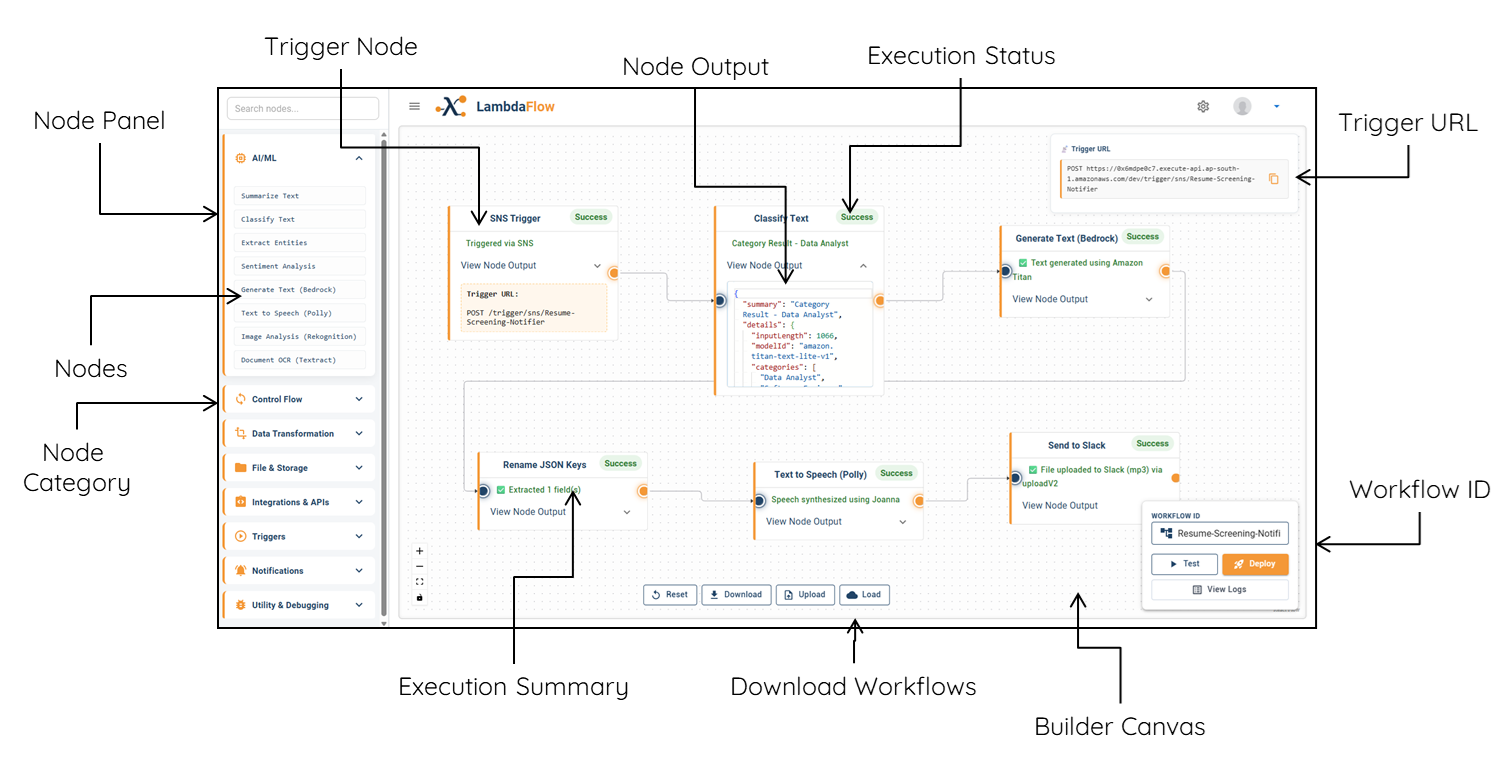
LambdaFlow Builder Components
🛠️ From Friction to Flow: Building LambdaFlow, a Visual Serverless Workflow Builder for AWS
When you think of AWS automation, you probably picture a few Lambda functions, some S3 events, maybe API Gateway, and if things get more advanced — Step Functions. It’s a powerful toolkit.
Over time, I kept running into the same pattern: every time I needed to automate something in the cloud, it meant wiring together multiple services, writing glue code, and managing IAM permissions. It worked — but felt repetitive. I kept thinking there should be a simpler, more visual way to build these workflows without giving up the power of AWS.
That idea sat in the back of my mind for a while — and this hackathon was the perfect excuse to finally build it.
That’s how LambdaFlow came to life: a low-code, serverless-native workflow builder that lets you visually design AWS automations using per-node Lambda functions. Everything runs natively on AWS, just with a lot less friction.
⚡ Why AWS Still Needs a Visual Layer
AWS gives you everything — Lambda, EventBridge, DynamoDB, S3 — but stitching them into something reusable and easy to understand still takes effort.
Step Functions are great for complex workflows and state management, but they can feel like too much for simpler tasks — like reacting to a file upload or running scheduled jobs. And tools like SAM and CDK are powerful, but not always accessible to those who just want to automate something without diving deep into YAML or TypeScript.
So I asked myself:
What if you could drag, drop, and deploy AWS workflows — with the same power, but less friction?
🌟 Meet LambdaFlow: Drag. Drop. Deploy.
LambdaFlow is a visual builder for AWS workflows, powered entirely by serverless architecture.
Each node in the flow runs as its own AWS Lambda function, triggered by events like S3 uploads, API calls, scheduled jobs, or downstream node outputs. You can create anything from a real-time alerting system to a multi-step AI document pipeline — without writing boilerplate code or wiring up services manually.
👥 Who Is LambdaFlow For?
LambdaFlow isn't just for cloud architects. It was designed to serve a broad audience:
🧑💻 DevOps Engineers
Automate infrastructure events using API Gateway, S3, EventBridge, and more. Great for backup automation, log processors, or operational alerts.
🤖 ML Engineers
Build document and AI pipelines using Amazon Bedrock, Textract, Rekognition, and Polly — all connected visually.
🔧 Developers
Write custom logic as self-contained Lambda functions and plug them into bigger flows. Perfect for microservice-style development.
📈 Analysts
Trigger data fetches, apply filters, run transformations, and generate reports — all without touching backend code.
👨🏫 Hackathon Teams & Educators
Prototype ideas or teach cloud workflows in minutes. It’s a perfect hands-on tool for exploring event-driven architecture.
🧱 Under the Hood: How It Works
🖥️ Frontend
- React Flow powers the drag-and-drop visual editor.
- Material-UI ensures a clean, user-friendly experience.
- Node Types correspond to AWS services (e.g., S3 upload, Bedrock prompt) or logic blocks (conditionals, loops).
☁️ Backend (All Serverless!)
- AWS Lambda handles all node execution — each step runs independently and scales on demand.
- API Gateway connects frontend requests to backend logic.
- DynamoDB stores workflows, inputs, and logs.
- Serverless Framework orchestrates deployment and infrastructure.
🔁 Trigger System
LambdaFlow supports native AWS triggers including:
- API Gateway (HTTP events)
- EventBridge (schedules, custom events)
- S3 (object events)
- SNS and DynamoDB Streams
💡 What I Learned
Building LambdaFlow taught me a lot about designing user-friendly serverless platforms:
- Modularity Matters: Treating every node as an isolated Lambda made workflows scalable, debuggable, and reusable.
- Simplicity is Power: The visual interface lowered the barrier for non-technical users without compromising control for developers.
- Observability is Key: Users need detailed logs, per-node status, and intuitive error handling — all of which are baked into the UI.
🔥 Solving Real Problems
Here’s what LambdaFlow simplifies:
✅ Orchestrating AWS services with minimal config
✅ Writing reusable, independently deployable Lambda blocks
✅ Debugging workflows with clear visual feedback
✅ Bridging no-code and pro-code seamlessly
🚀 What’s Coming Next
- ✨ AI Copilot: Build flows from natural language prompts
- 👯 Collaboration Mode: Real-time multi-user editing
- 📦 Reusable Templates: Save and share common flows
- 🔔 More Triggers: Support for CloudWatch Logs, SNS, SQS, and more
✅ Wrapping Up
LambdaFlow is a serverless-first, AWS-native automation tool built to make your cloud workflows faster, cleaner, and more intuitive. It’s not just a visual editor — it’s a rethink of how automation should feel on AWS.
If you're building automation in the cloud — whether you're managing infrastructure, running ML pipelines, or just automating reports — LambdaFlow is here to accelerate you.
No servers. No YAML. Just flow.
Built With
- amazon-bedrock
- api-gateway
- aws-lambda
- axios
- dynamodb
- eventbridge
- express.js
- javascript
- mui
- node.js
- polly
- react
- react-flow
- rekognition
- s3
- serverless
- sns
- textract

Log in or sign up for Devpost to join the conversation.