-
-
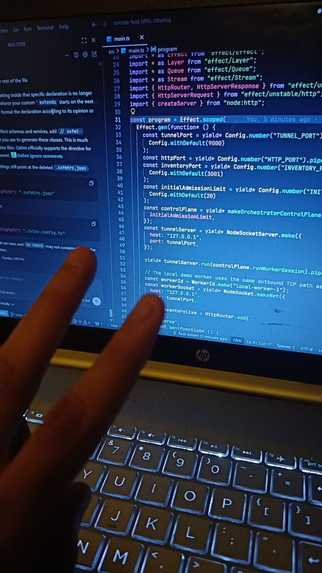
10 hr straight ;)
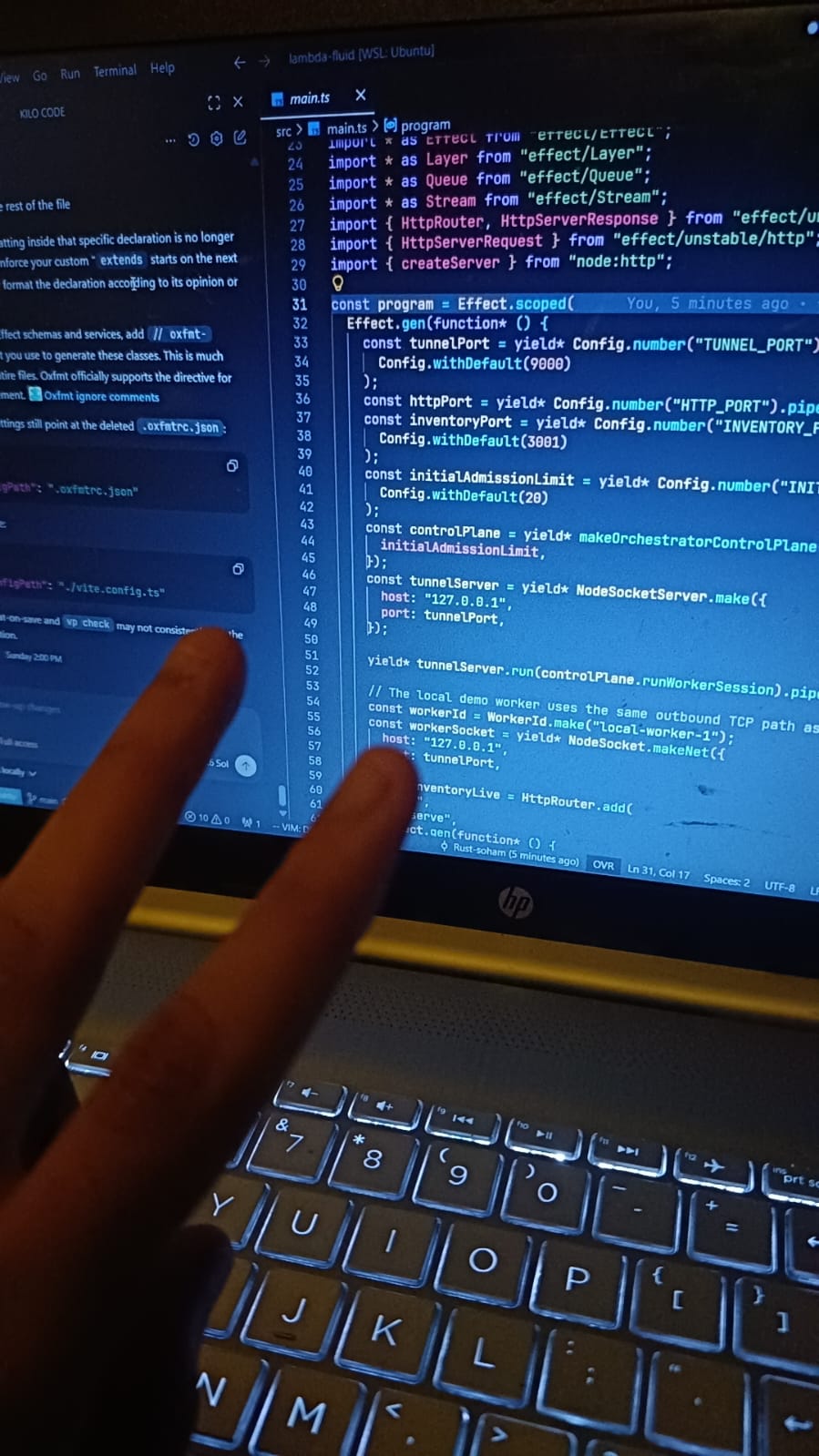
Inspiration
came across Vercel’s Fluid Compute and got curious about how it works under the hood. Lambda Fluid started as an attempt to rebuild the core idea on AWS Lambda.
What it does
Normally, a Lambda sits around doing very little while its request waits on a database or API. Lambda Fluid lets that same running Lambda work on other requests during the wait.
How I built it
It’s written in TypeScript with EffectTS. There’s an orchestrator that receives requests, tracks worker health, and routes work to Lambda workers through a persistent tunnel. I also built local and AWS demos so the behavior can be compared.
Challenges I ran into
TCP framing, concurrent routing, retries, cancellation, and Lambda’s 15-minute lifetime all caused some headaches. The AWS deployment tooling also had a couple of beta-related surprises.
Accomplishments that I'm proud of
The full pipeline works locally, and the same worker runtime also runs on a real AWS Lambda. The demos show concurrent requests, streaming responses, health-based routing, and fewer Lambda environments.
What I learned
The main challenge isn’t starting more Lambdas. It’s figuring out how much work an existing Lambda can safely take without overwhelming it.
What's next for lambda-fluid
improve the AWS benchmarks, support normal HTTP handlers, make scaling smarter, and package the whole thing so it’s easier to drop into an existing project.
Built With
- alchemyapi
- effectts
- typescript


Log in or sign up for Devpost to join the conversation.