-
-
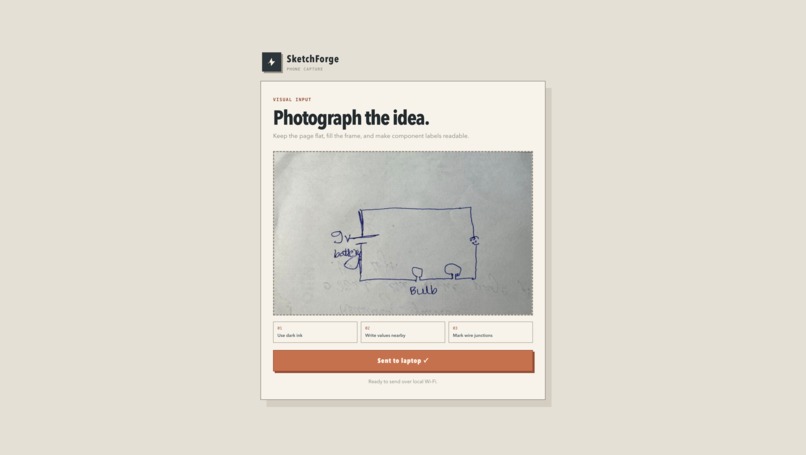
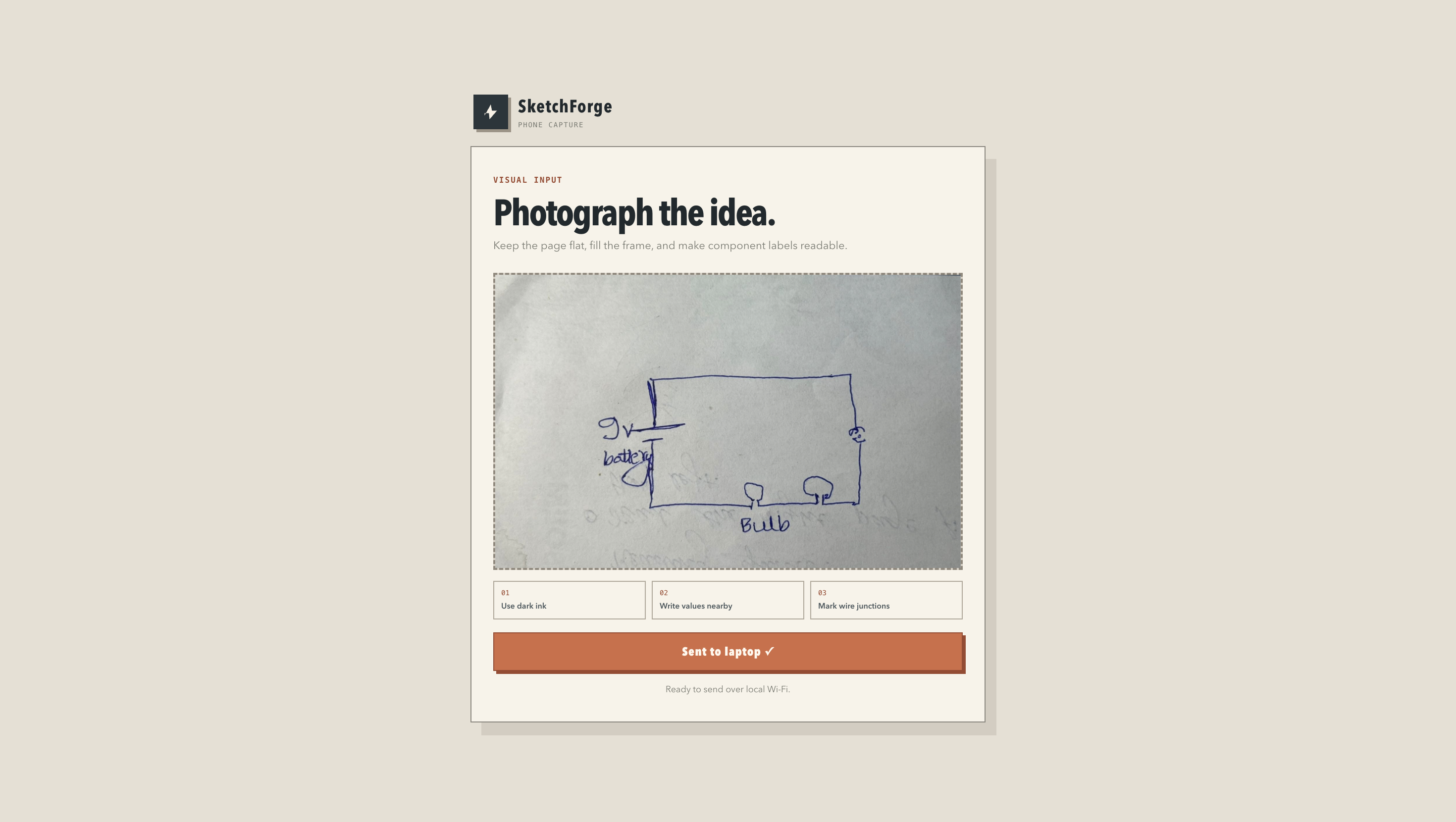
Upload your circuit image from your phone.
-
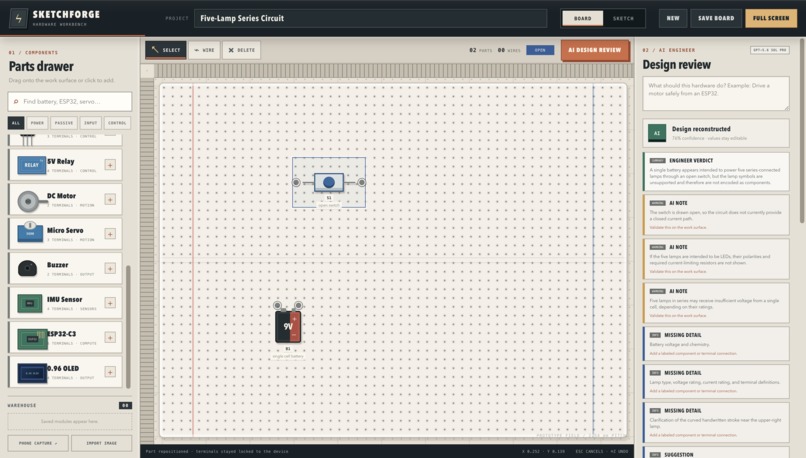
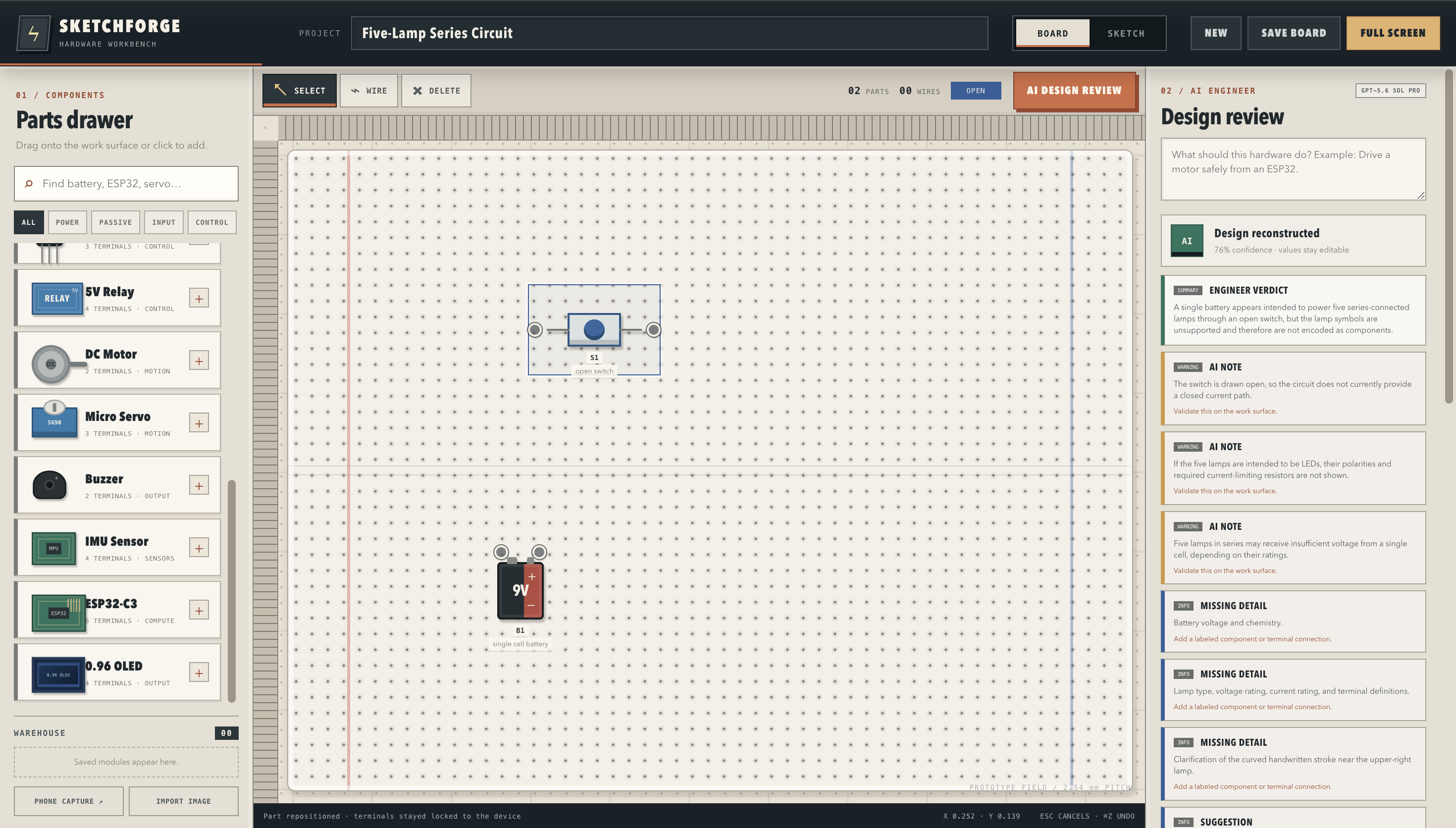
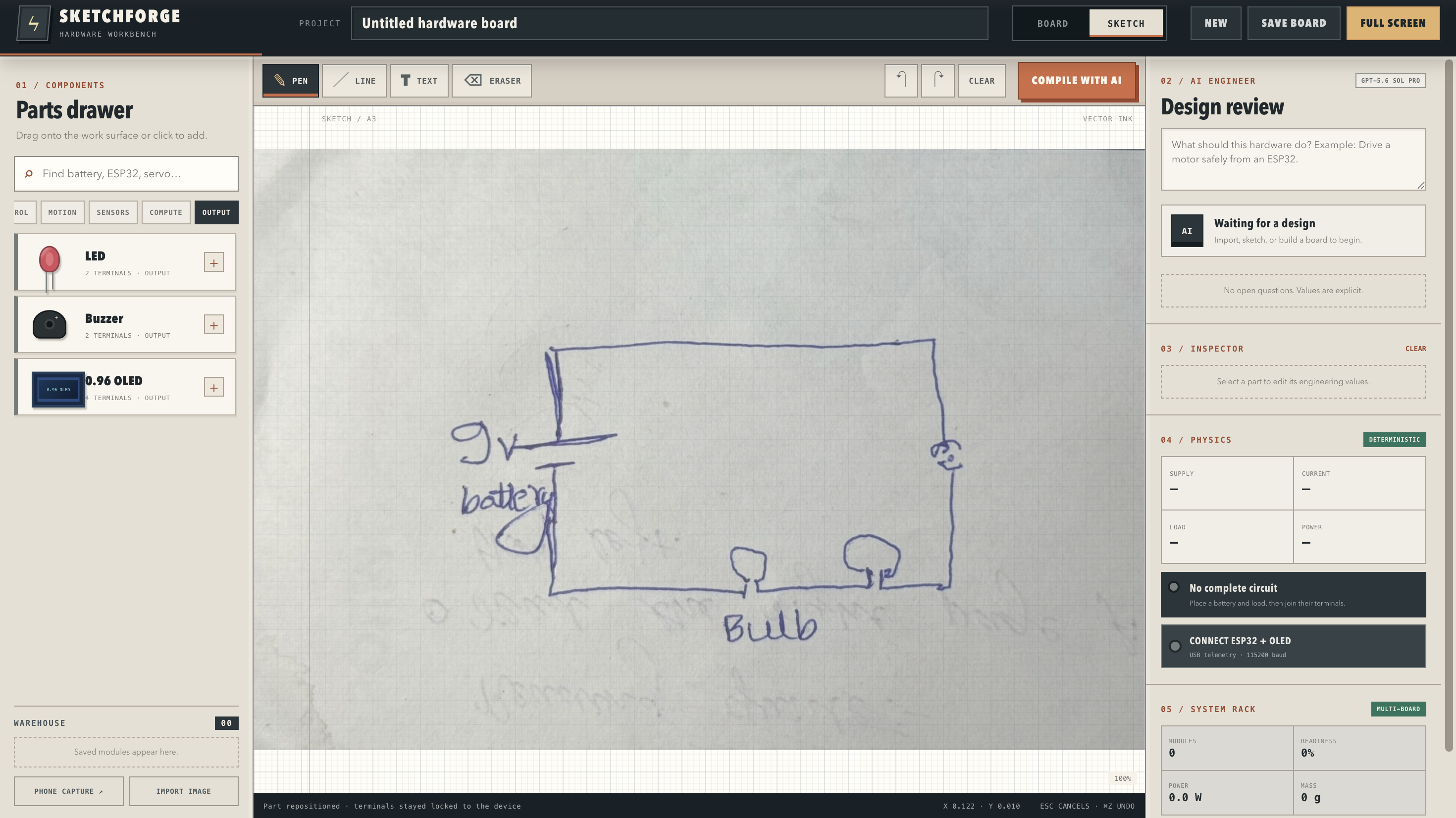
open the main panel in your laptop
-
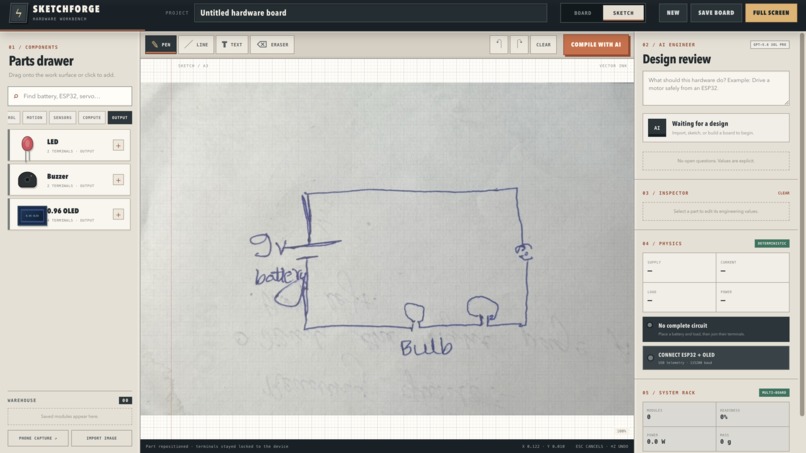
Use "compile with AI" to make a simulation
-
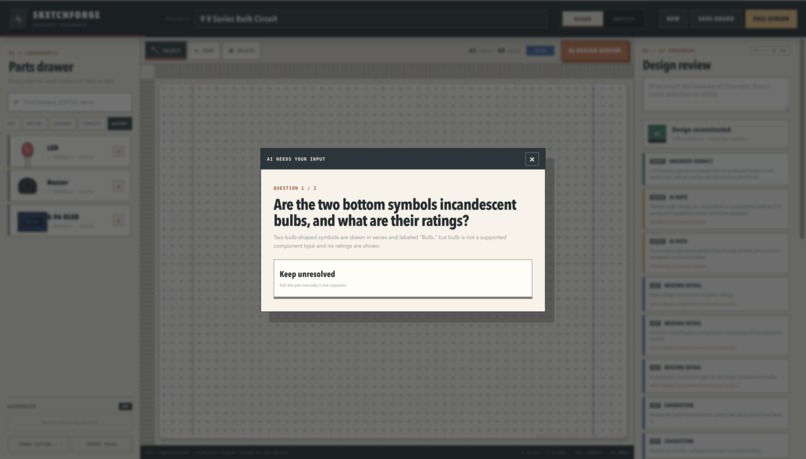
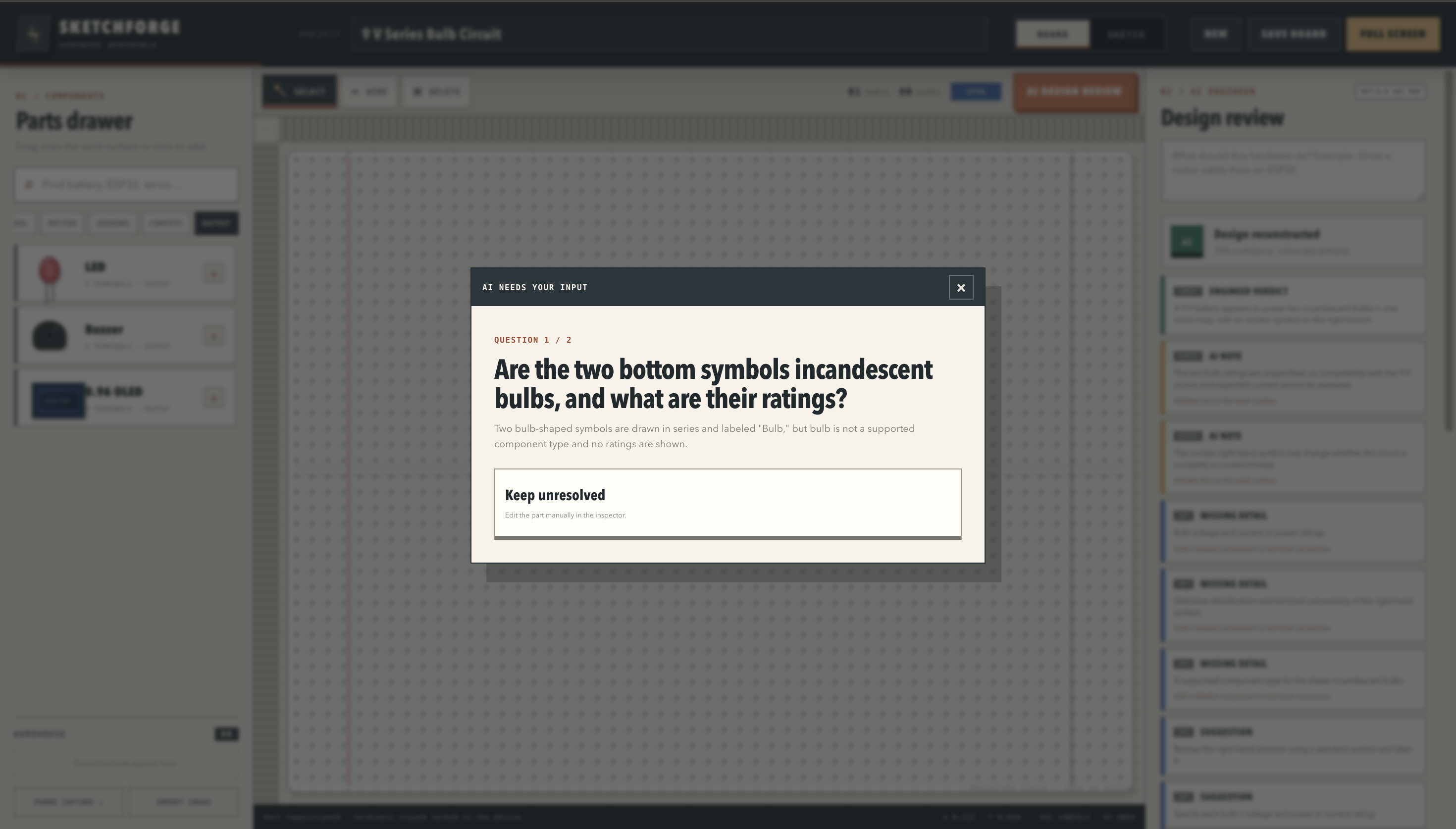
AI asks questions based on your drawing
Inspiration
The idea came from our school electronics classes. Teachers would draw circuits on the board and explain how they worked, but we rarely got the chance to actually build or test them. We wanted a way to instantly turn those drawings into something interactive, so students could experiment, make mistakes, and learn without needing physical components.
What it does
Our project uses AI to recognize hand-drawn circuit diagrams from an image and convert them into an editable digital circuit. Instead of redrawing everything manually, users can upload a photo and start simulating it immediately.
The platform also includes a drag-and-drop circuit builder, allowing users to create circuits from scratch using common electronic components. Once built, they can simulate the circuit to verify connections and understand how it behaves before building it in real life.
The goal is to make electronics easier to learn and reduce the time between an idea on paper and a working prototype.
How we built it
This was a solo project. I built the frontend, circuit editor, and simulator, while using Gemini and Codex to speed up development of a few features and solve implementation problems. For the AI-powered circuit recognition, I used Hack Club AI, which provided free model access during development.
The biggest challenge was making the AI reliably understand hand-drawn circuits. Instead of asking the model to generate a simulation directly, I designed a two-step pipeline where it first converts the image into a structured textual representation of the circuit and then generates the simulation from that description. This significantly improved accuracy.
Challenges we ran into
The hardest part was getting the AI to correctly identify components and, more importantly, the connections between them. Small drawing differences, overlapping wires, or unclear images could completely change a circuit. We spent a lot of time improving prompts and handling ambiguous cases so the generated simulations were more reliable.
Accomplishments that we're proud of
- Turning a hand-drawn circuit into a working digital simulation.
- Building a simulator that lets users edit and test circuits before making them physically.
- Seamlessly sending circuit images from a phone to the desktop simulator.
- Creating something that can genuinely help students understand electronics through experimentation instead of just theory.
What we learned
We learned that good AI products are less about choosing the "best model" and more about designing the right workflow around it. Breaking the problem into smaller steps dramatically improved results. We also gained experience building interactive simulation tools and integrating AI into a real-world application.
What's next
We're working on making the AI more accurate and reliable across different drawing styles. We also plan to support a much larger library of electronic components and hardware, improve the simulator's accuracy, and make the platform useful for classrooms, hobbyists, and anyone learning electronics.
ps - ran out of AI credits for AI vision


Log in or sign up for Devpost to join the conversation.