-
-
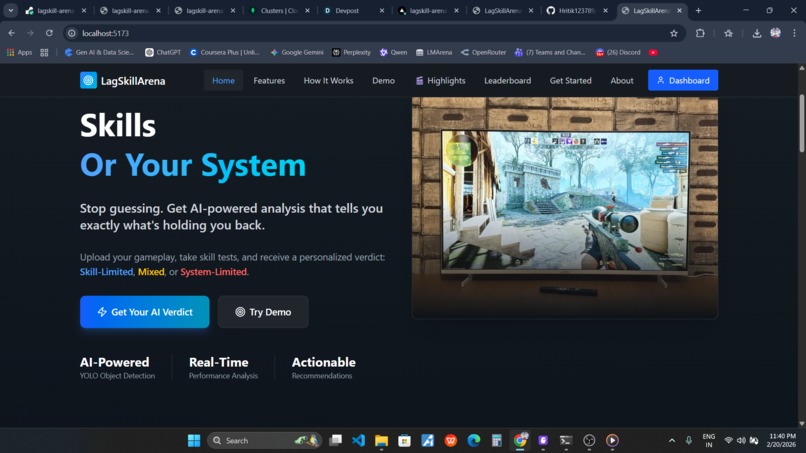
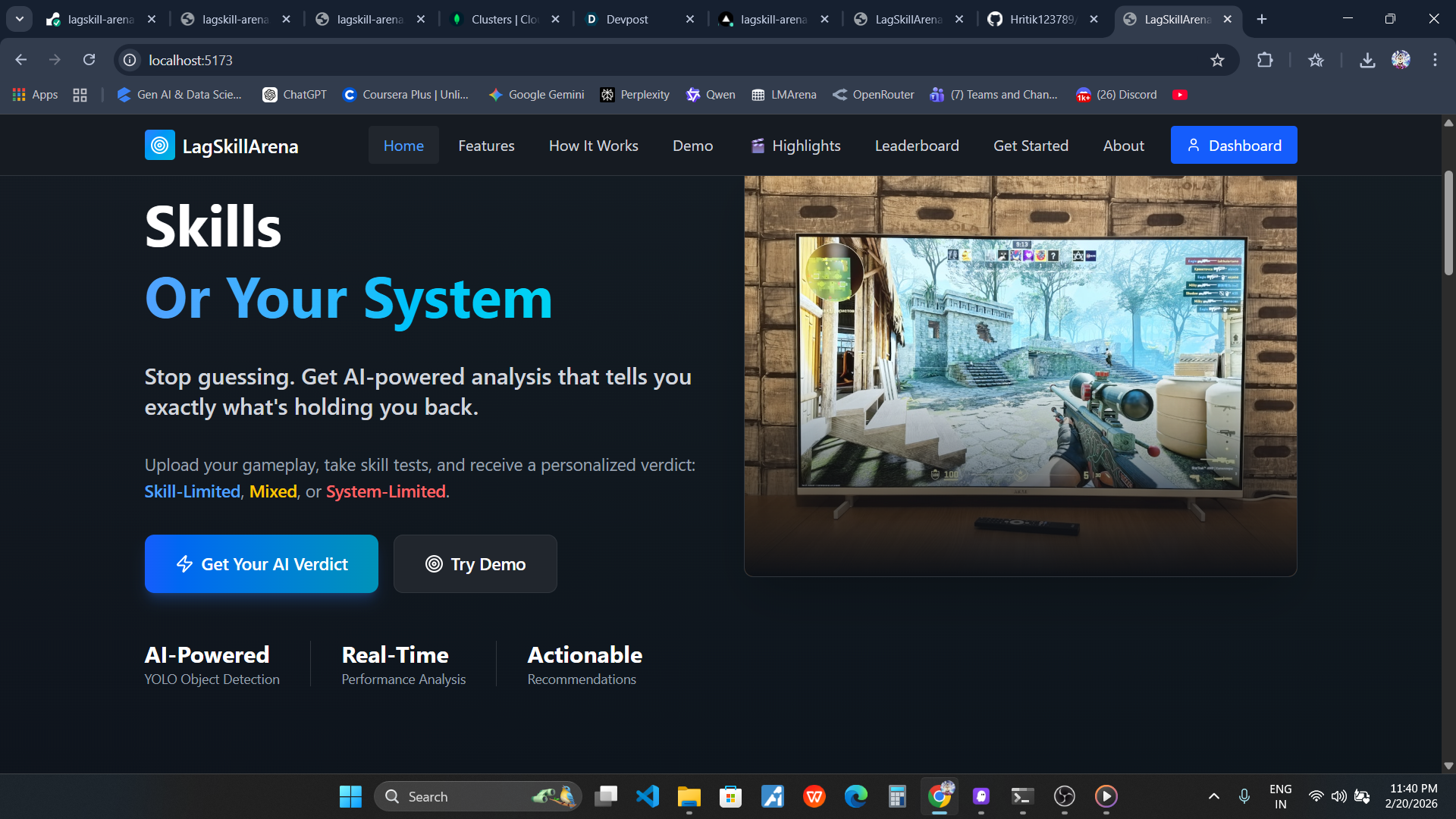
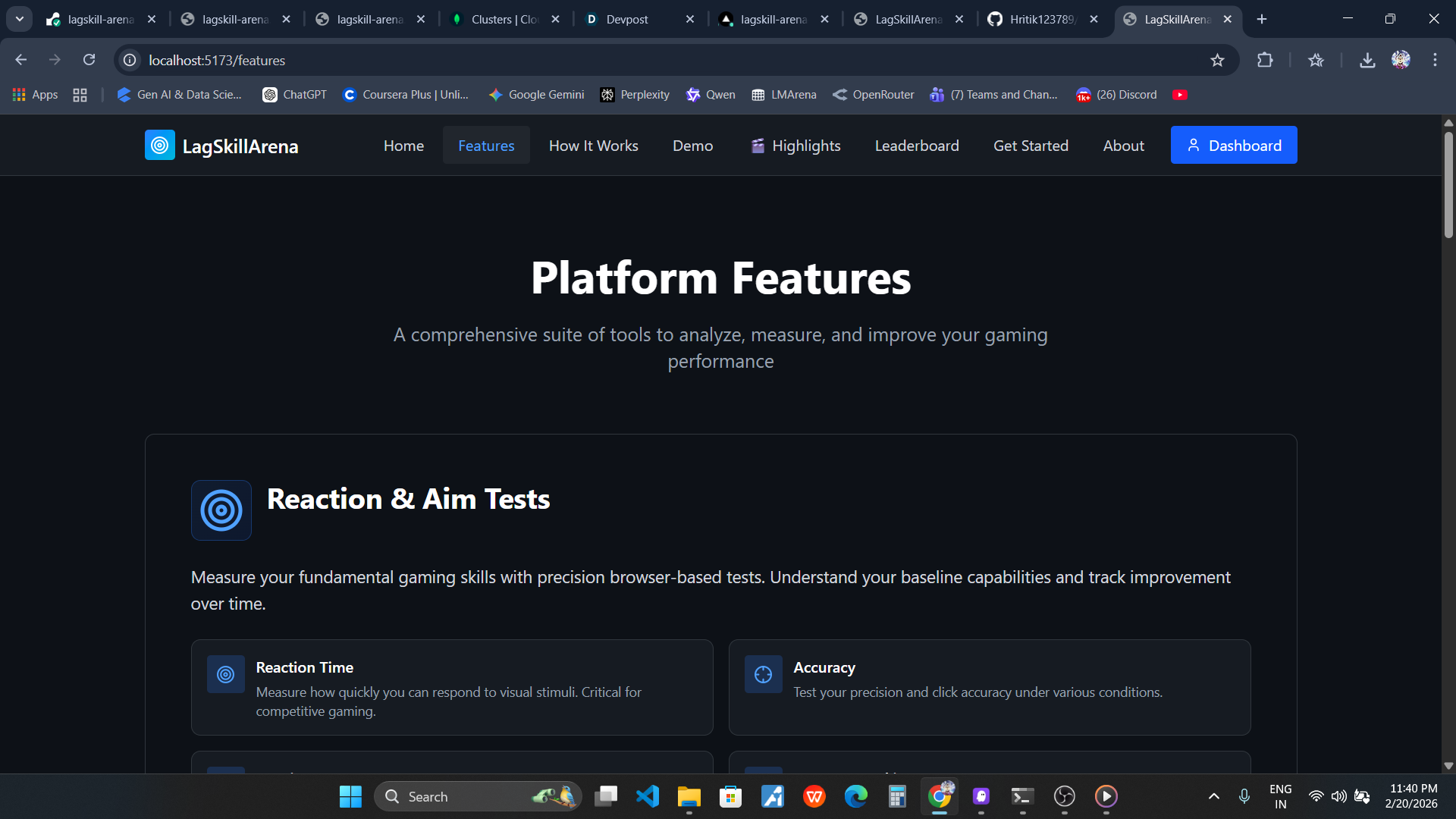
Home page
-
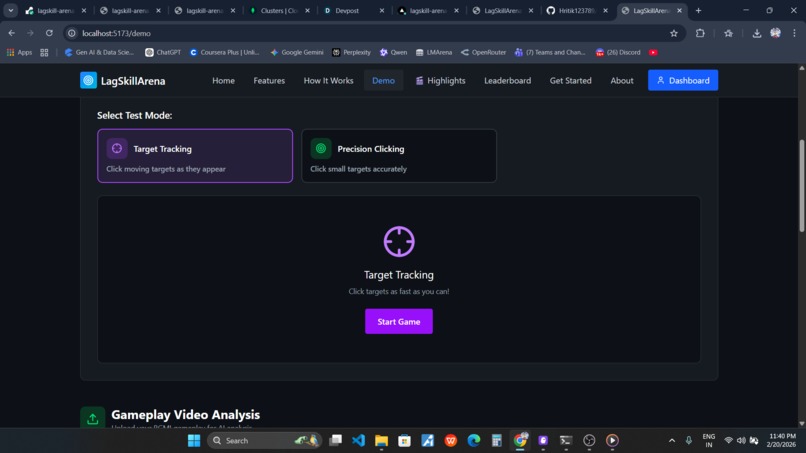
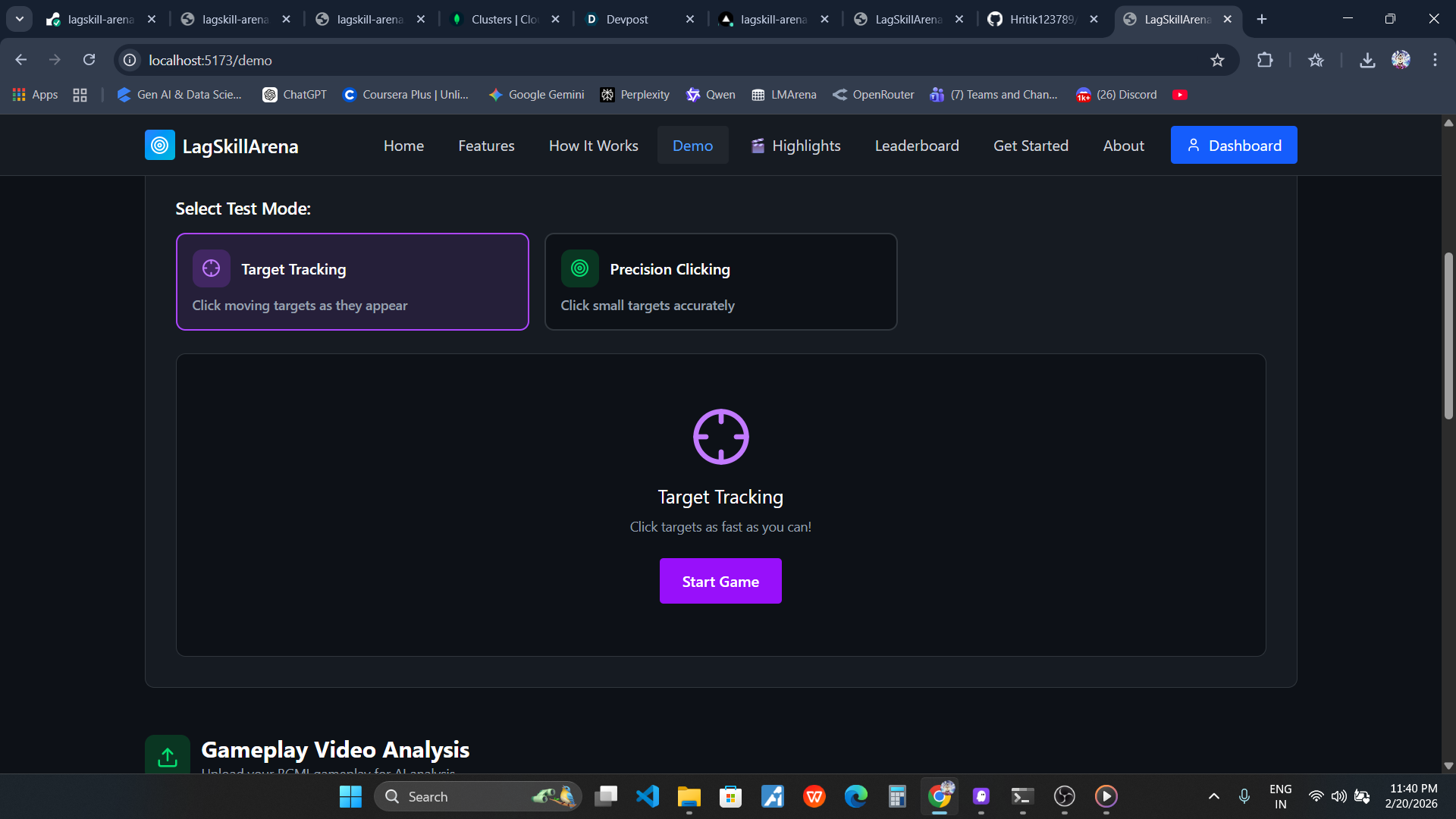
Demo section(Has mini games which shows reaction time and device fps/ping and gives analysis)
-
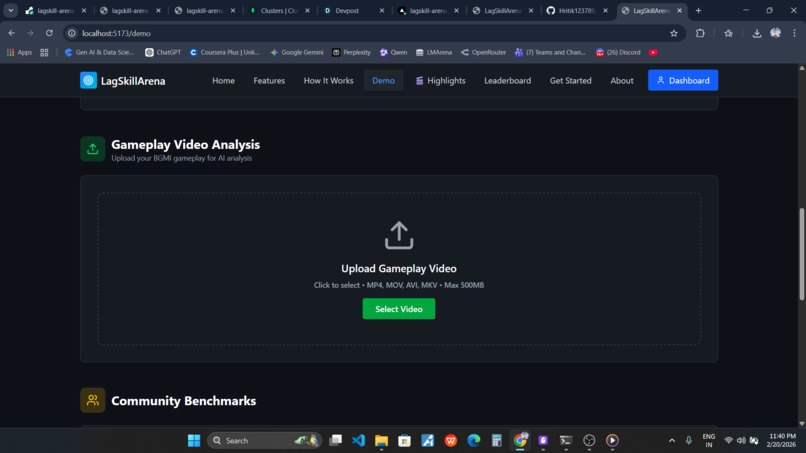
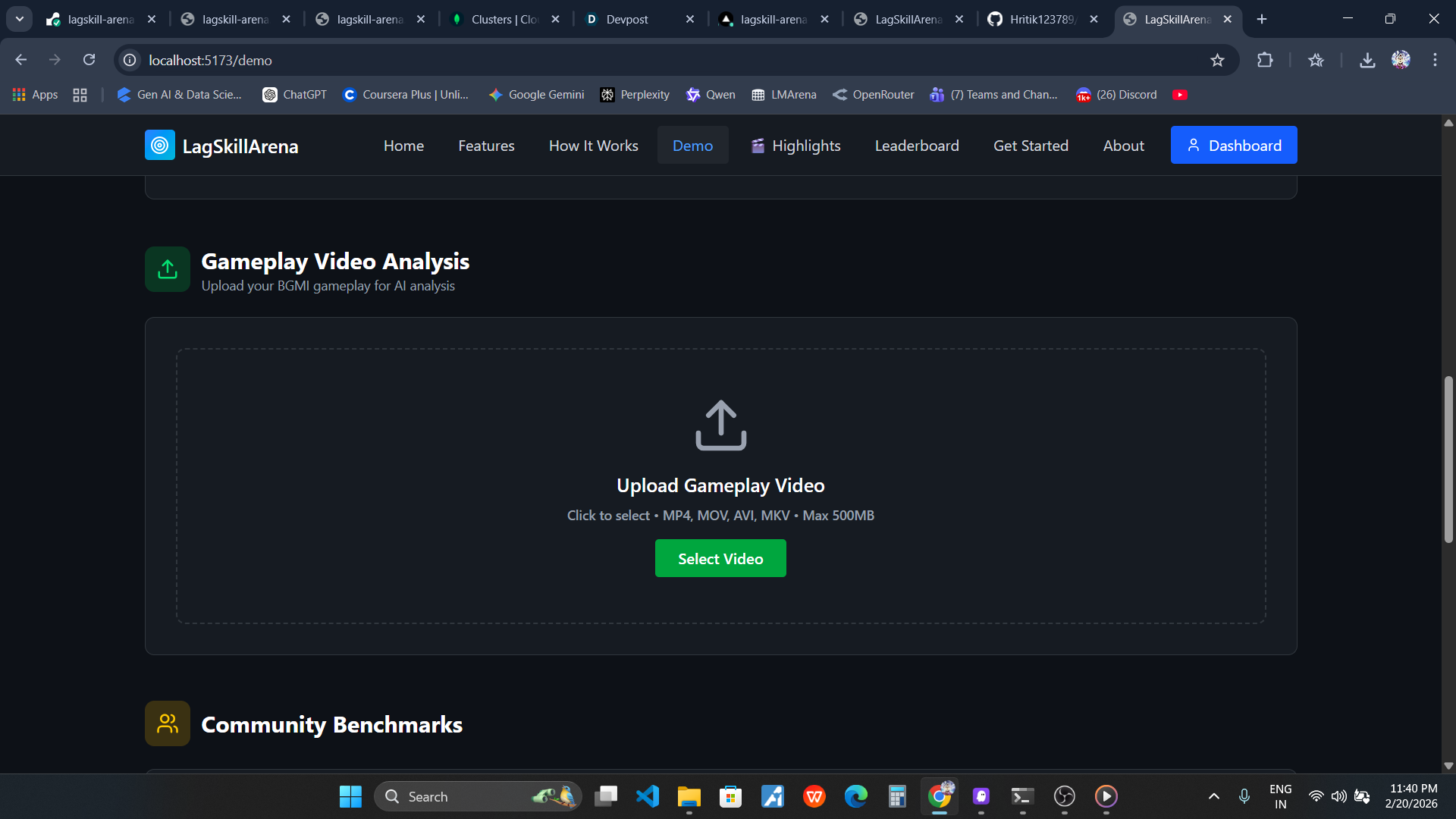
Demo Video section(Upload videos to get detailed analysis about device and player skill with model made anotated video back)
-
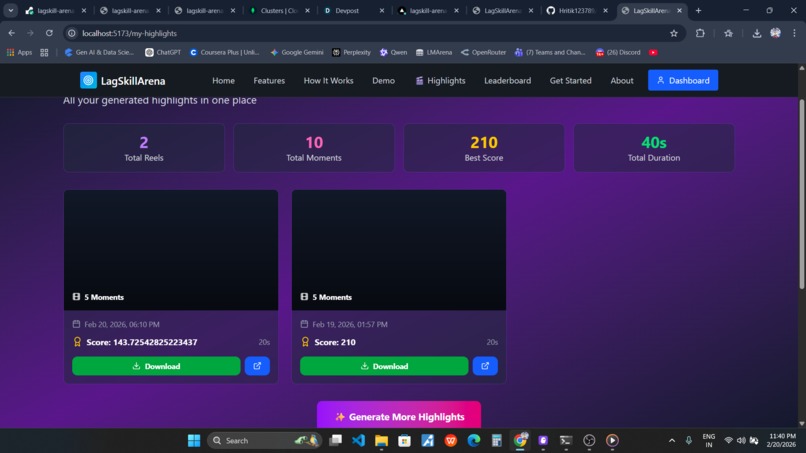
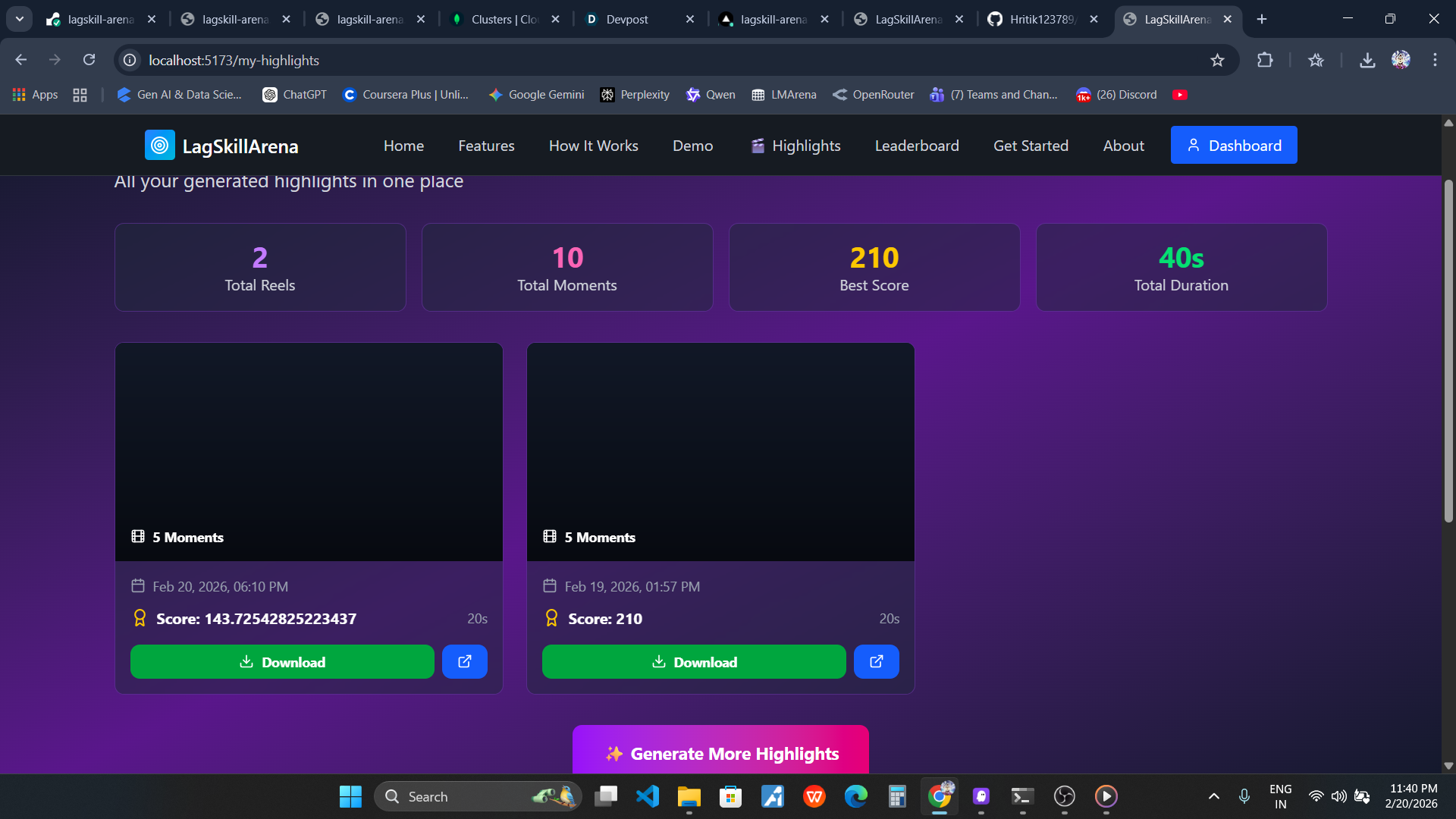
Highlight section(based on uploaded video it gives only the highlight moment video back where enemy is encountered)
-
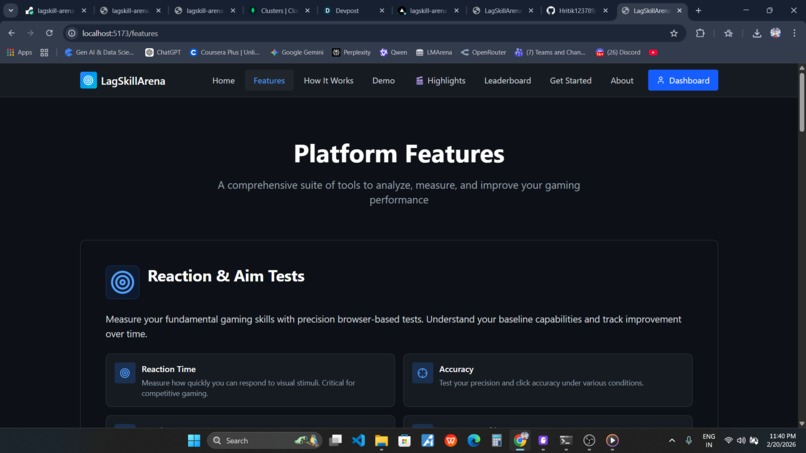
-
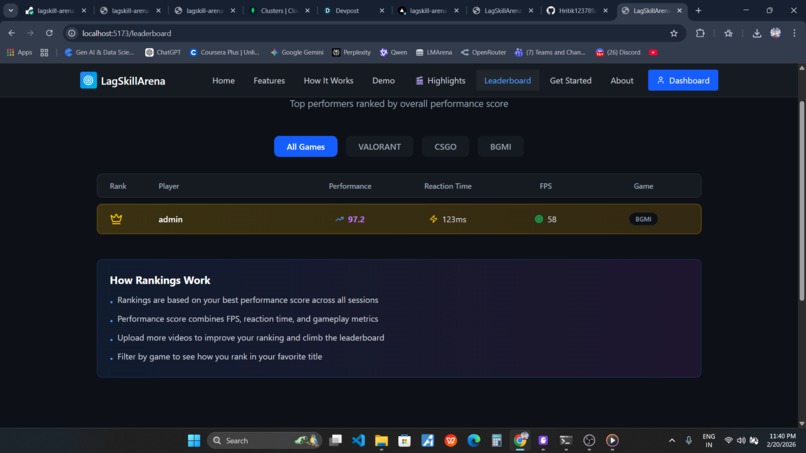
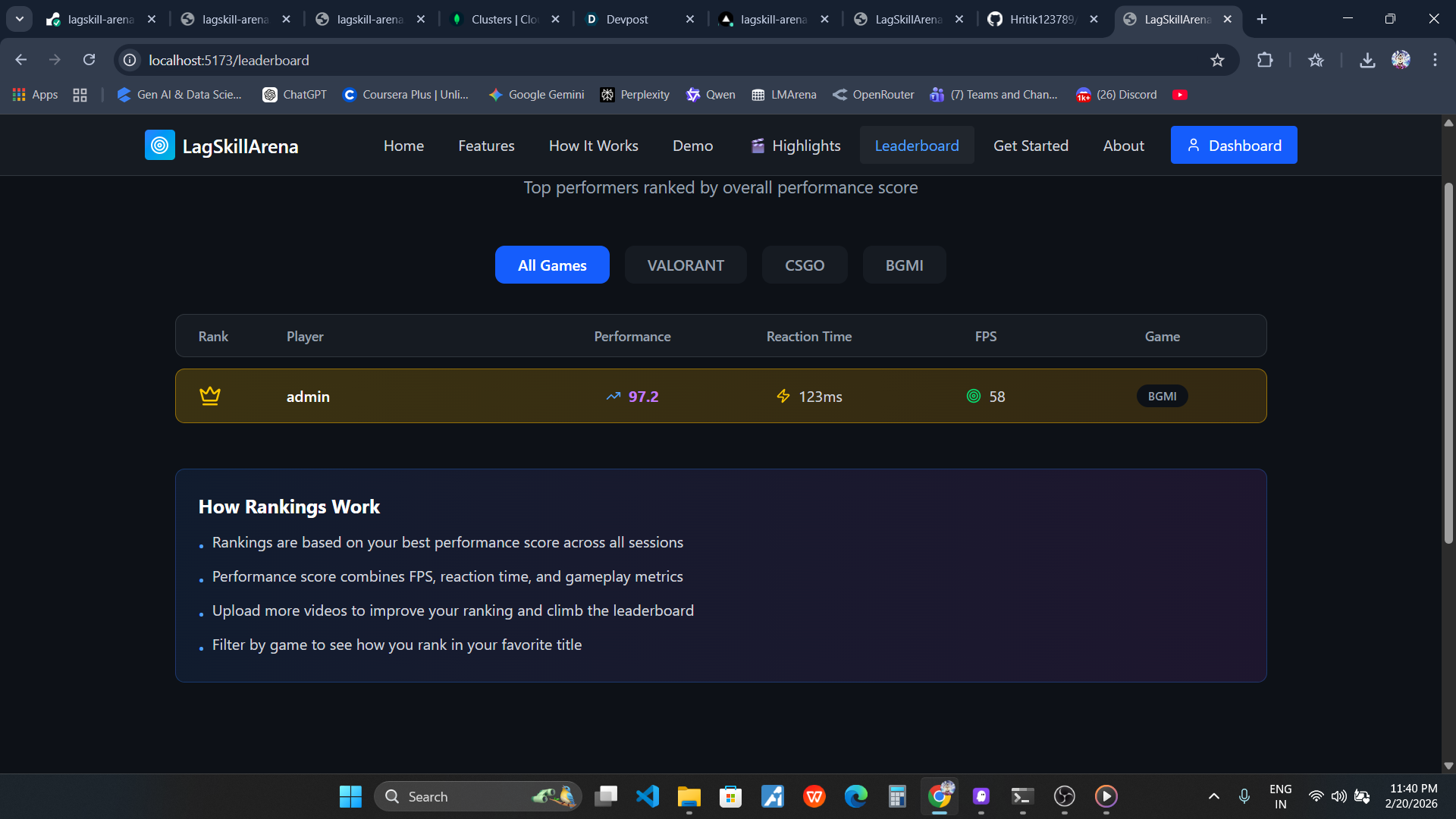
Leaderboard
-
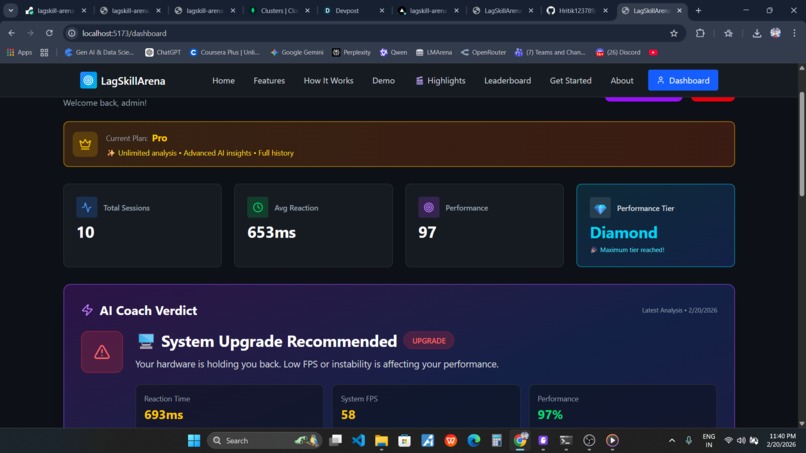
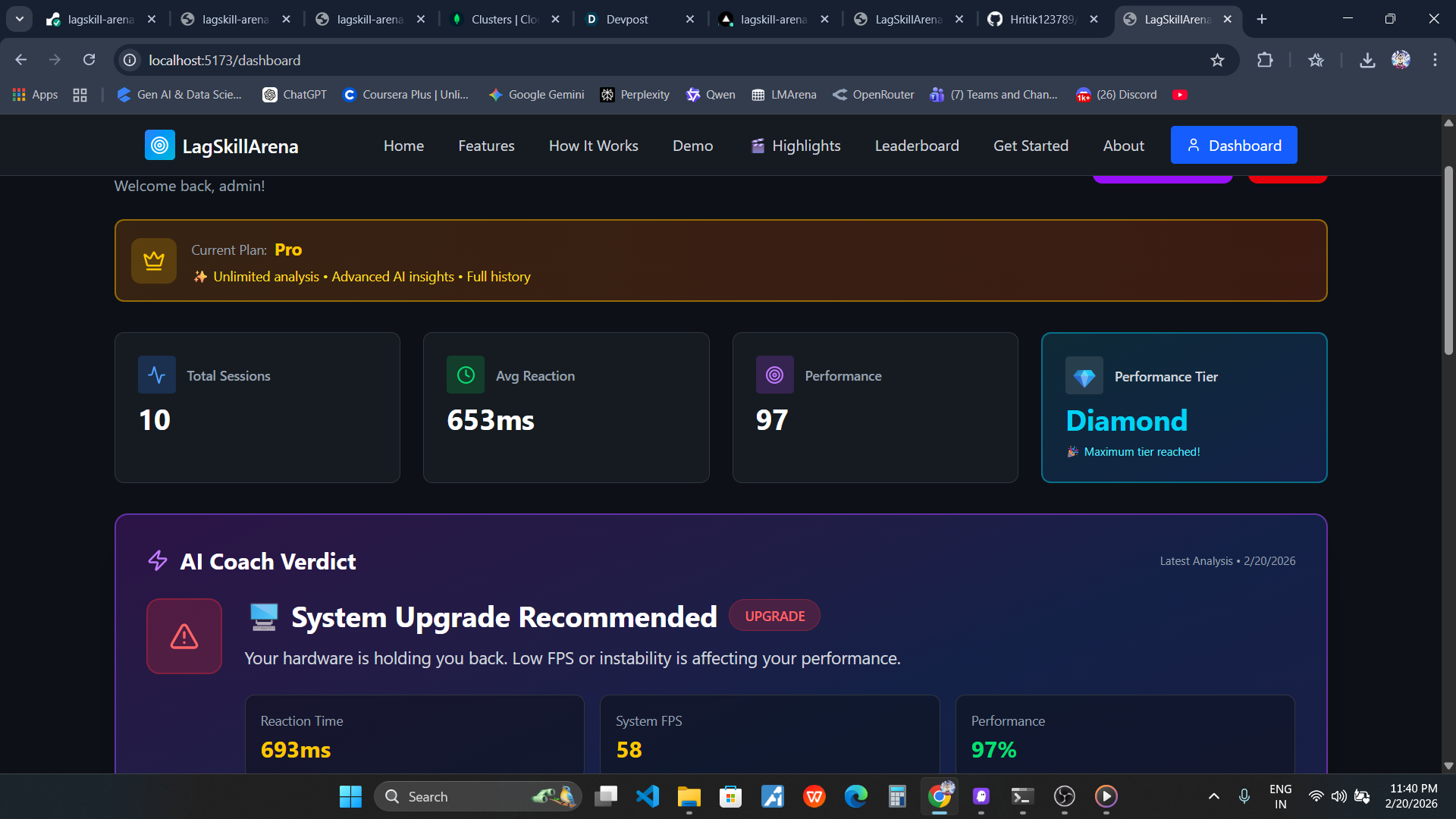
Dashboard
-
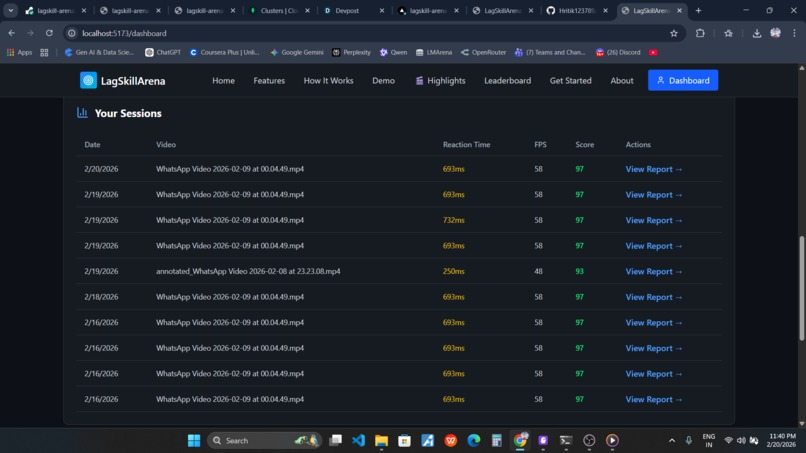
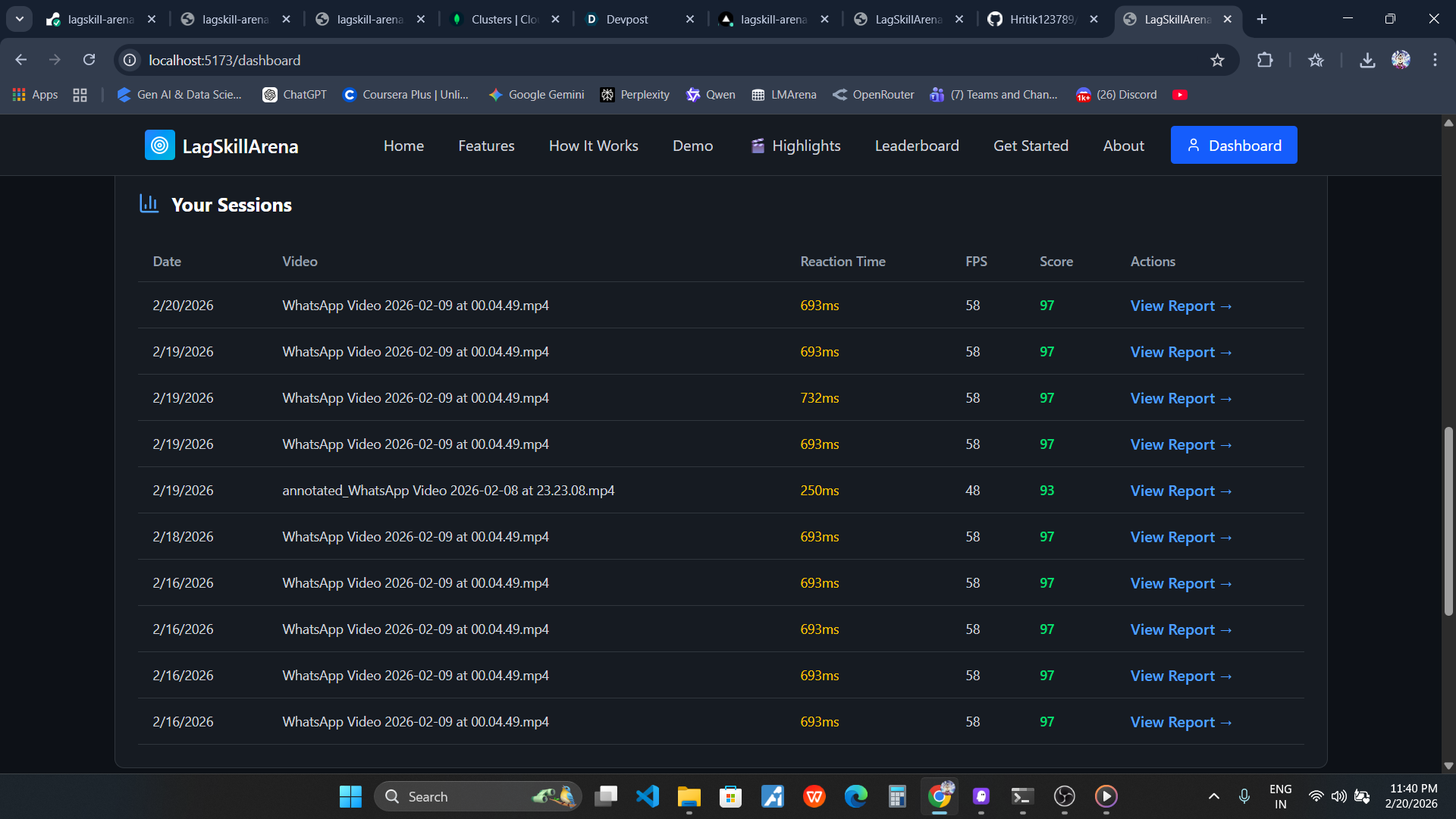
Dashboard(Showing history of videos uploaded by user)
-
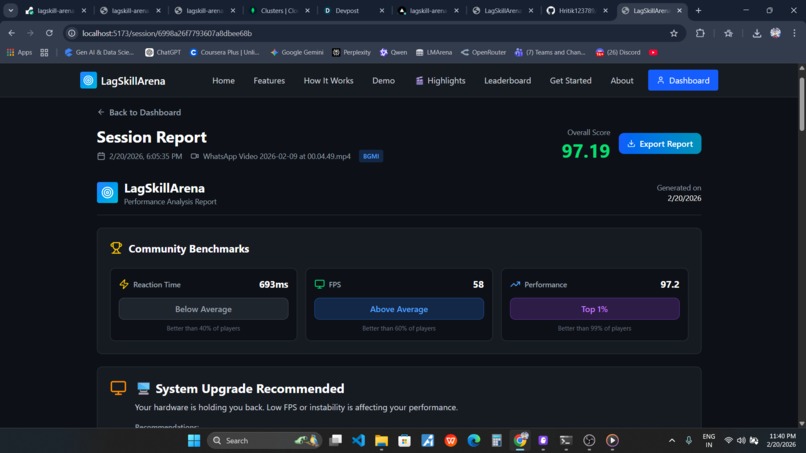
Dashboard
-
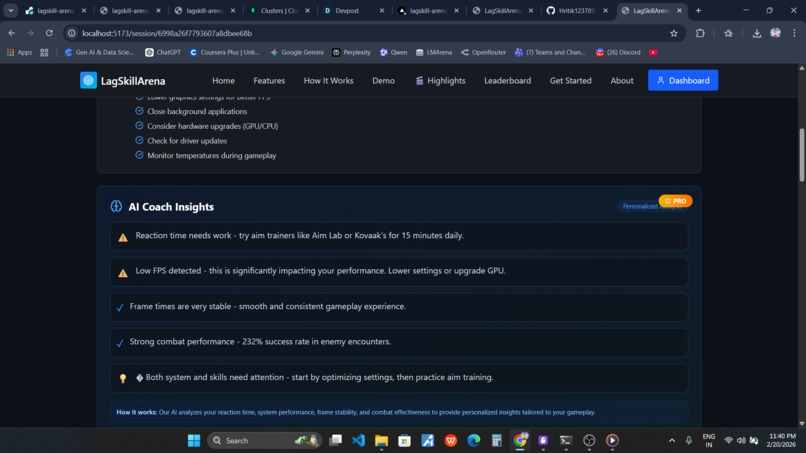
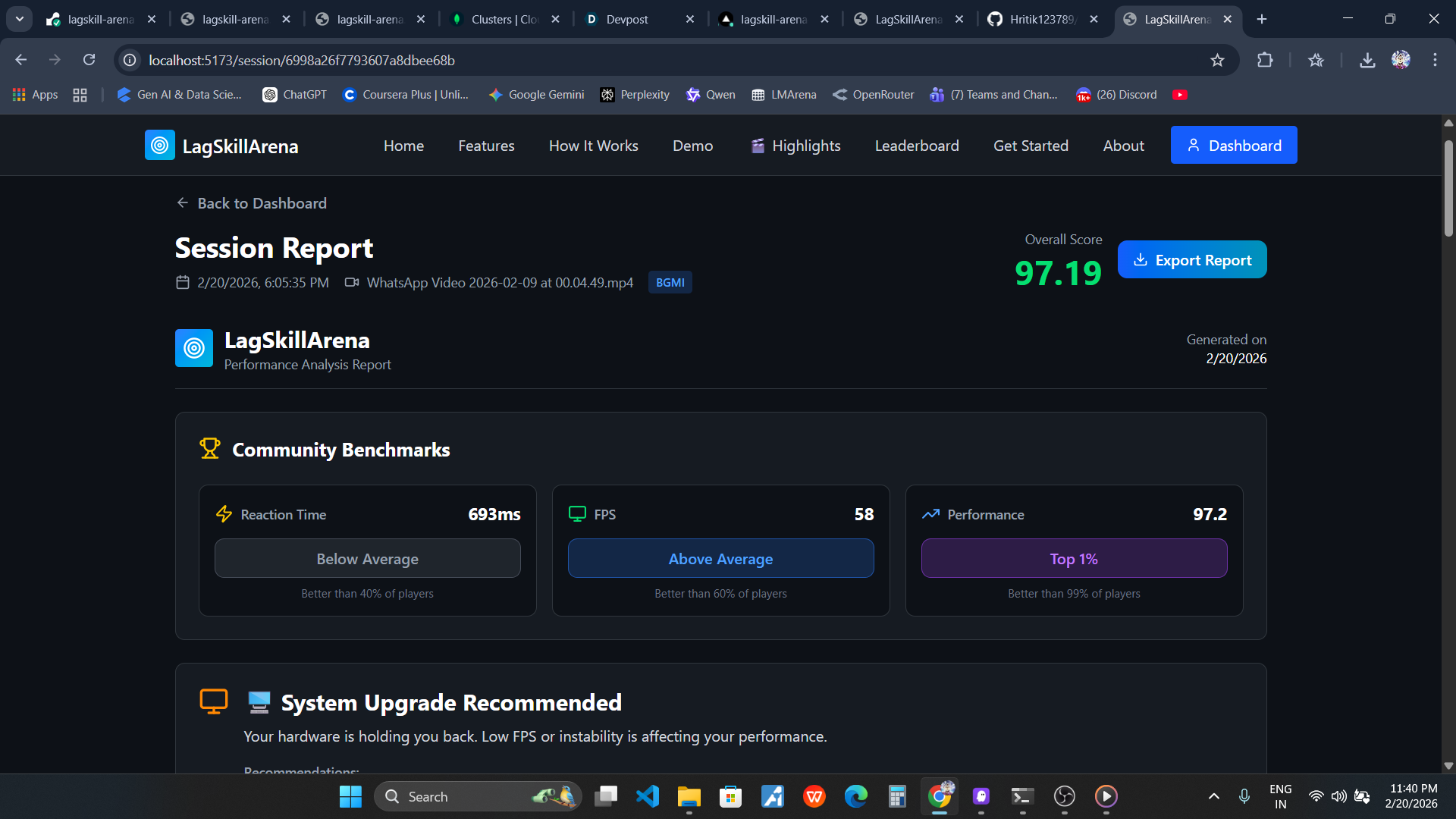
Dashboard View Analysis Report Section
-
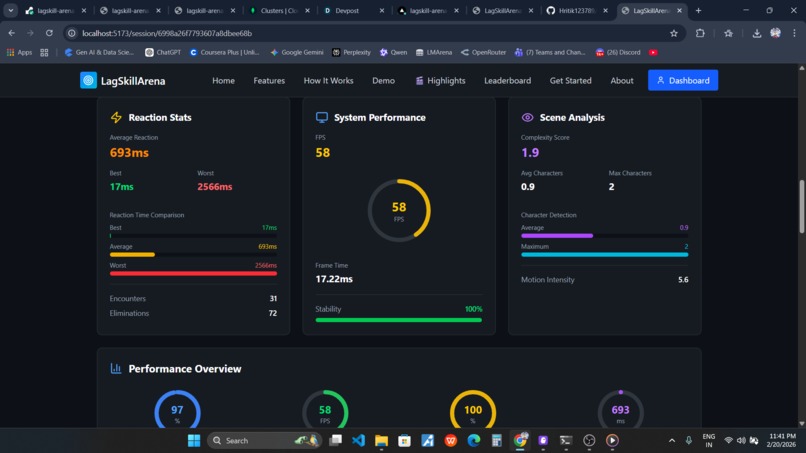
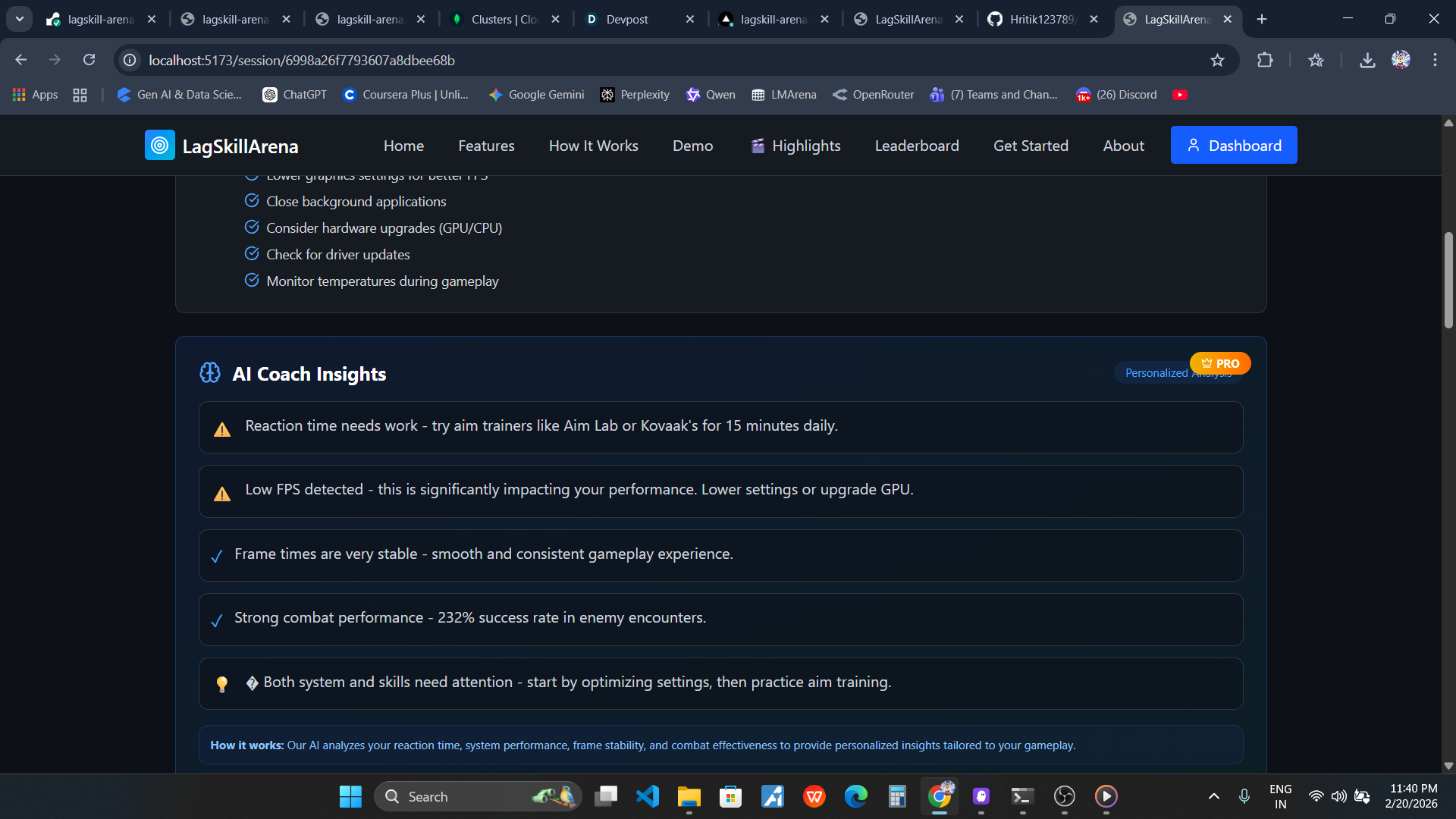
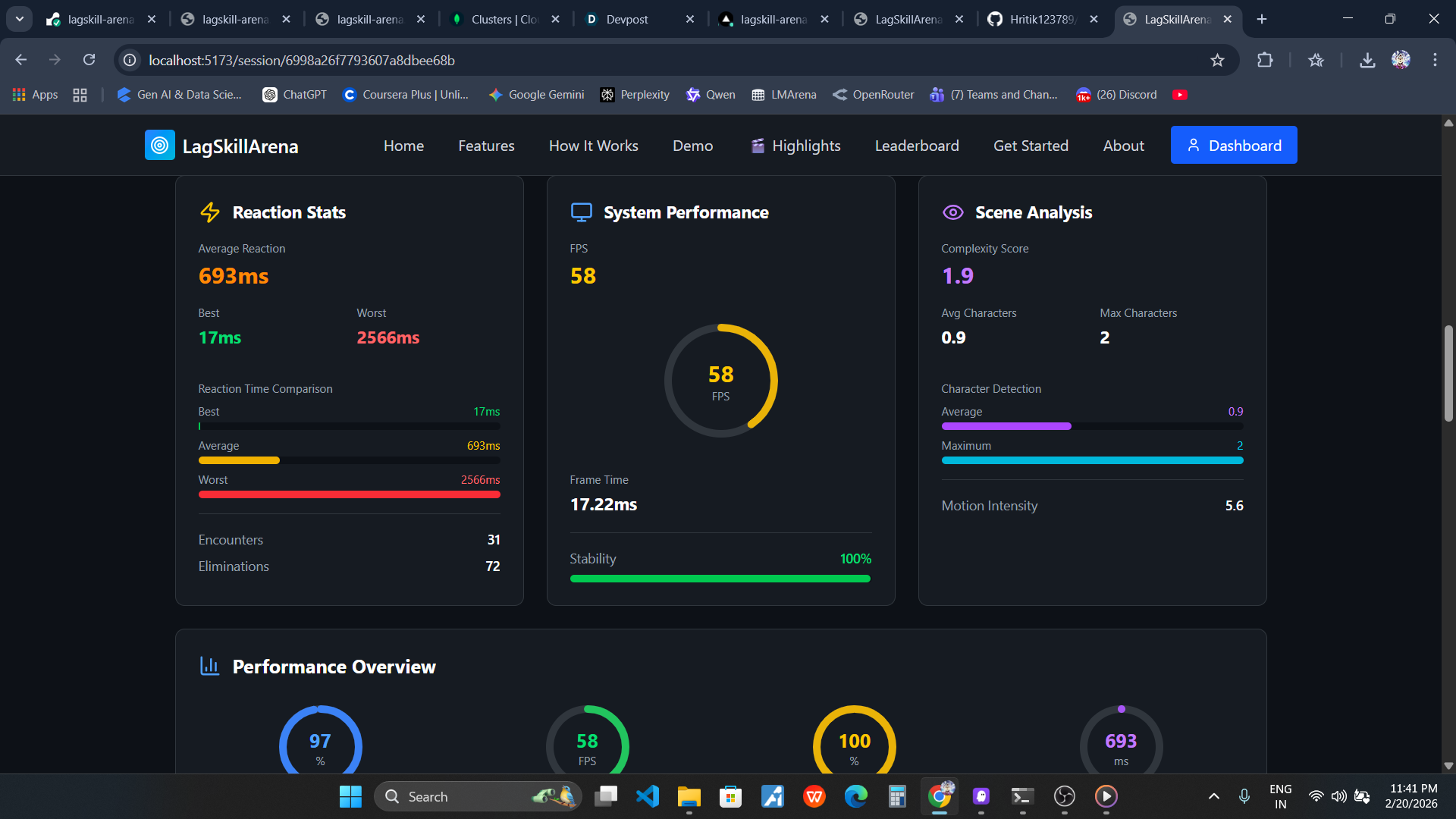
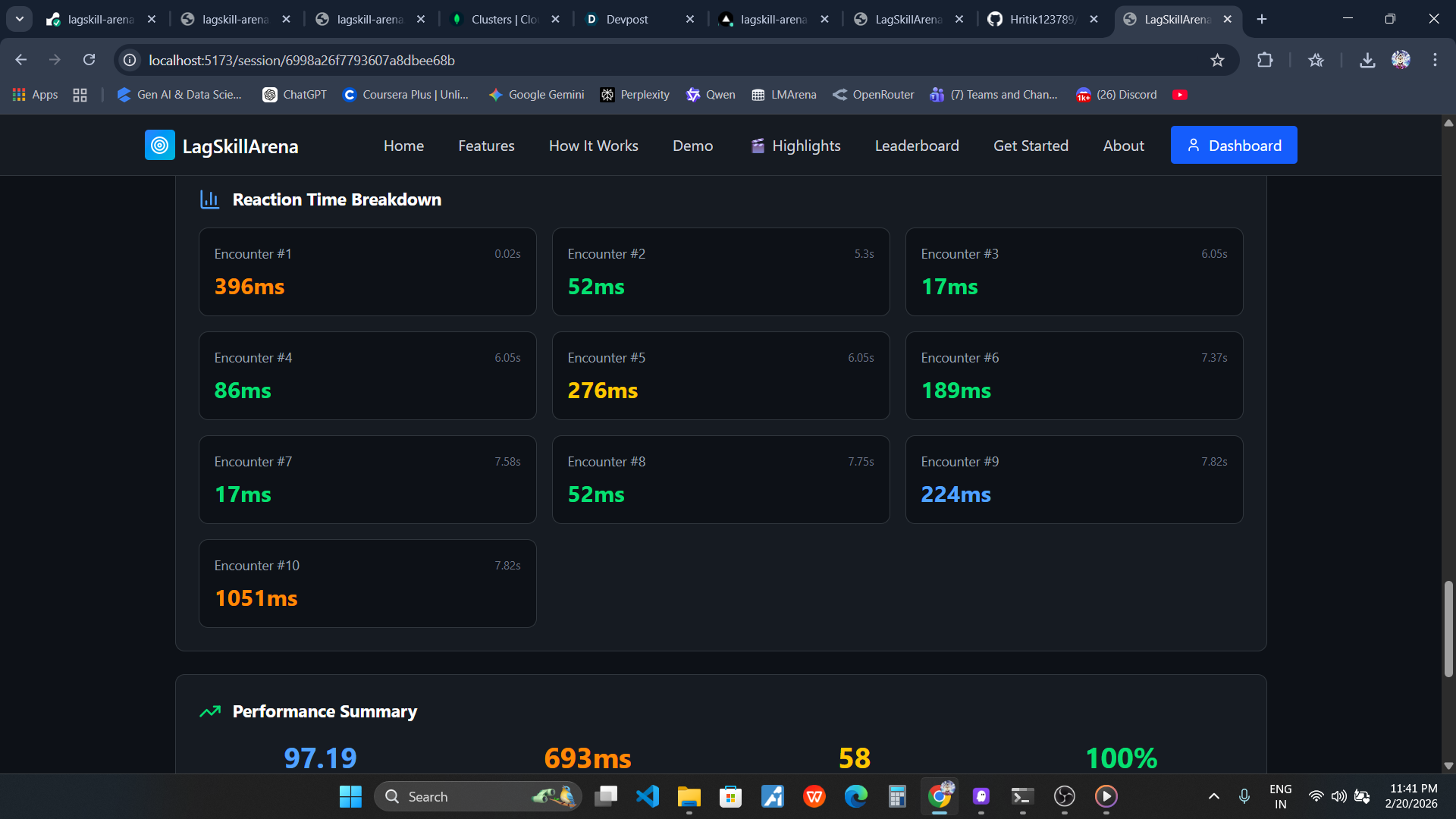
Dashboard View Analysis Report Section(Showing detailed analysis as per user uploaded videos adn games played)
-
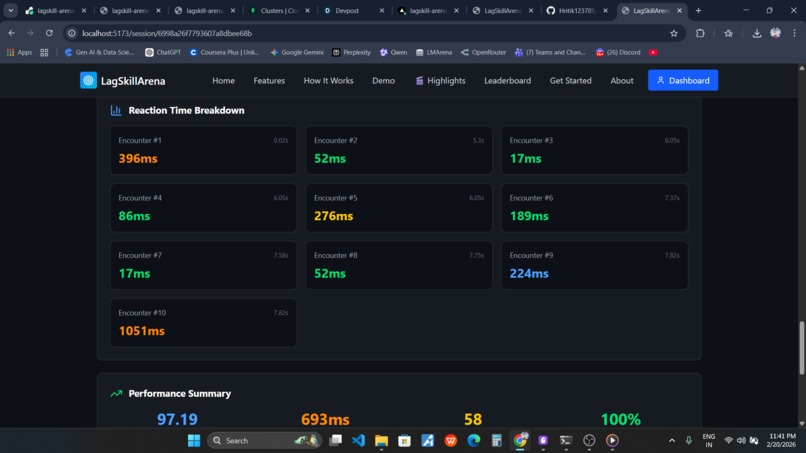
Dashboard View Analysis Report Section(Showing more details)
LagSkillArena
Inspiration
- As a competitive gamer, I often wondered: “Why did I lose that match?”
- Most existing gaming analytics tools are expensive or only provide surface-level stats.
- I wanted to democratize professional-level performance analysis using AI.
- The goal was to make serious performance analytics accessible to every gamer.
What it does
- LagSkillArena is an AI-powered gaming performance analyzer.
- Users upload gameplay videos for analysis.
- The system uses YOLOv8 to process videos frame by frame.
- Features:
- Tracks player movement and generates heat maps.
- Detects enemy encounters and analyzes reaction times.
- Calculates performance metrics such as accuracy, positioning, and decision speed.
- Automatically generates highlight reels.
- Provides AI coaching insights with personalized improvement suggestions.
- Ranks players on a global leaderboard.
- The platform supports Free and Pro tiers.
- Pro users get advanced analytics, unlimited video processing, and priority AI coaching.
How I built it
Tech Stack
- Frontend: React, TypeScript, TailwindCSS
- Backend: FastAPI (Python)
- AI/ML: YOLOv8
- Computer Vision: OpenCV
- Database: MongoDB
- Authentication: JWT with bcrypt password hashing
- Visualization: Custom React components for heat maps and timeline analysis
Architecture
- Full-stack application with REST API architecture.
- Backend processes videos frame by frame using YOLO.
- Detects players and enemies in each frame.
- Computes spatial and temporal performance metrics.
- Stores users, sessions, and results in MongoDB.
- Frontend dashboard allows users to:
- View performance history.
- Compare statistics.
- Watch AI-generated highlights.
Challenges I ran into
- Real-time video processing was computationally expensive.
- Optimized by sampling every 3rd frame and using batch processing.
- Reduced analysis time by about 60%.
- Object detection accuracy issues.
- YOLO confused UI elements with players.
- Fixed by tuning confidence thresholds and adding spatial filtering.
- Deployment complexity due to large ML dependencies (PyTorch, CUDA).
- Deploying ML models on free tiers was challenging because of heavy dependencies.
- I solved this by deploying the frontend on Vercel and the backend on Render.
- Heat map generation.
- Implemented Gaussian kernel density estimation.
- Added custom color gradients for better visualization.
- Authentication flow complexity.
- Implemented JWT with refresh tokens.
- Took multiple iterations to balance security and UX.
Accomplishments I’m proud of
- Built a complete full-stack AI application solo.
- Integrated YOLOv8 for real-time object detection.
- Created heat maps and timeline-based visualizations.
- Implemented a freemium model with Pro features.
- Achieved 95%+ player detection accuracy across different games.
- Built automatic highlight generation using scoring logic.
- Implemented a global leaderboard system.
- Designed a clean and intuitive user interface.
What I learned
Technical
- How to optimize YOLO models for video processing.
- How to build high-performance APIs using FastAPI.
- How to handle large datasets efficiently in React.
- Computer vision techniques for spatial analysis and heat map generation.
- How to use MongoDB aggregation pipelines for analytics.
Product
- The importance of starting with a minimum viable product (MVP).
- How user feedback changes which metrics are actually useful.
- Why performance and speed are critical for user experience.
Deployment
- Deploying ML models is challenging due to heavy dependencies.
- Using Vercel for the frontend and Render for the backend simplified deployment.
- Handling environment variables, CORS, and build limits was a key learning.
What’s next for LagSkillArena
Short-term
- Add multi-game support (MOBAs, battle royale, racing games, etc.).
- Add team and squad analytics.
- Build a mobile app (iOS and Android).
- Add social features for sharing highlights.
Long-term vision
- Add live stream analysis for Twitch and YouTube.
- Build an AI coaching chatbot.
- Add tournament mode with automated brackets.
- Allow custom model training per game.
- Add VR and AR support.
- Explore partnerships with esports organizations.
Technical improvements
- Migrate to GPU-accelerated cloud infrastructure.
- Add WebSocket support for real-time progress updates.
- Add video compression to reduce upload times.
- Build a recommendation system for personalized training exercises.
Yotube video has pinned timlines in description and comments👍 Also the website might take a bit of time to load things up but it will eventually get loaded👍

Log in or sign up for Devpost to join the conversation.