-
-
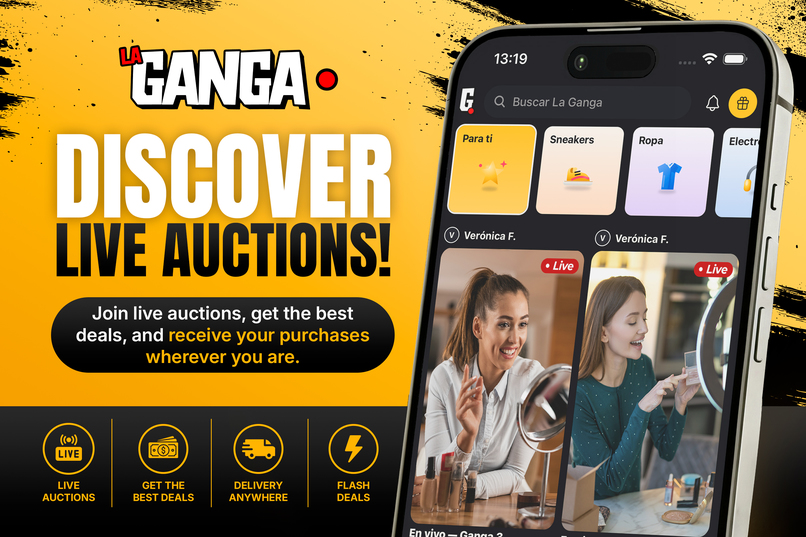
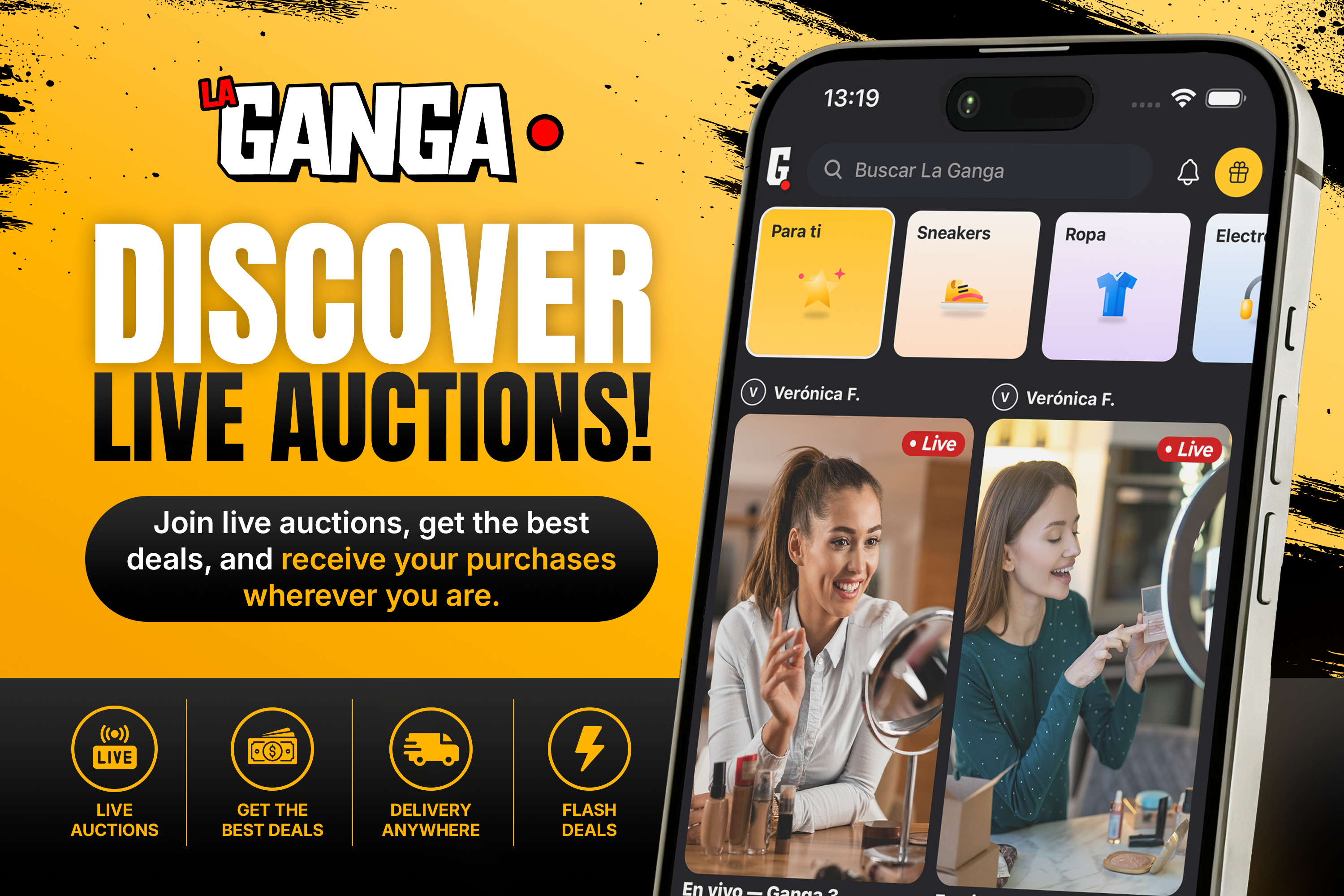
Home/discovery view showcasing live auction categories and featured items users can browse and join.
-
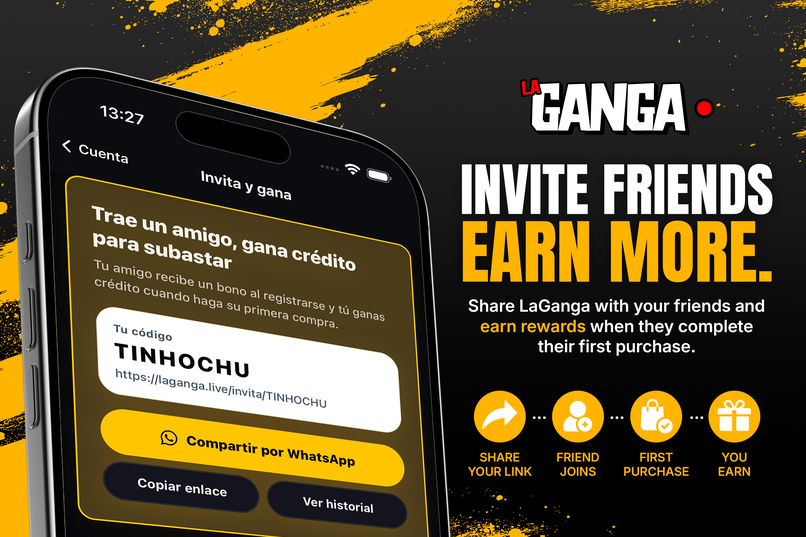
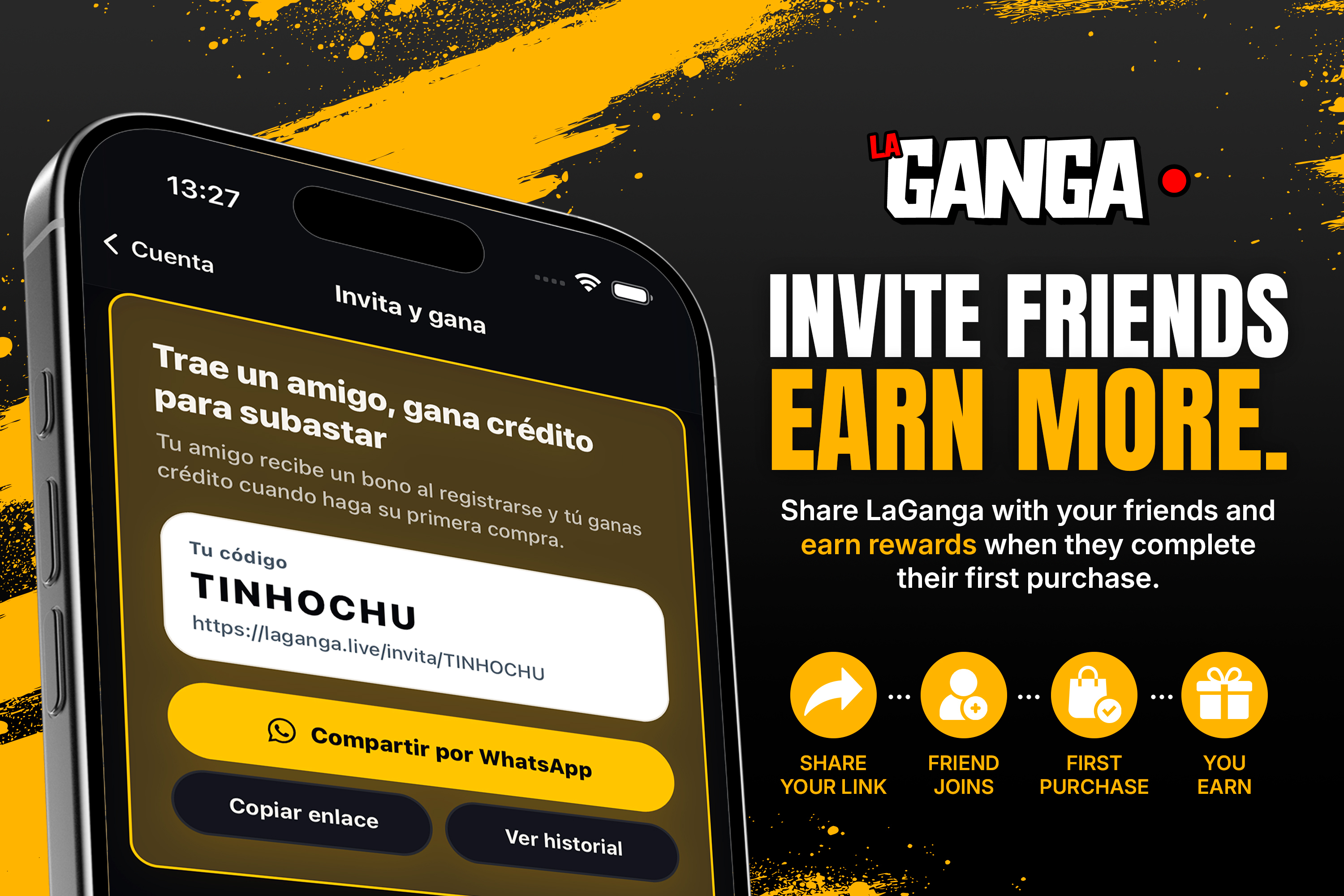
Referral screen showing how users can invite friends
-
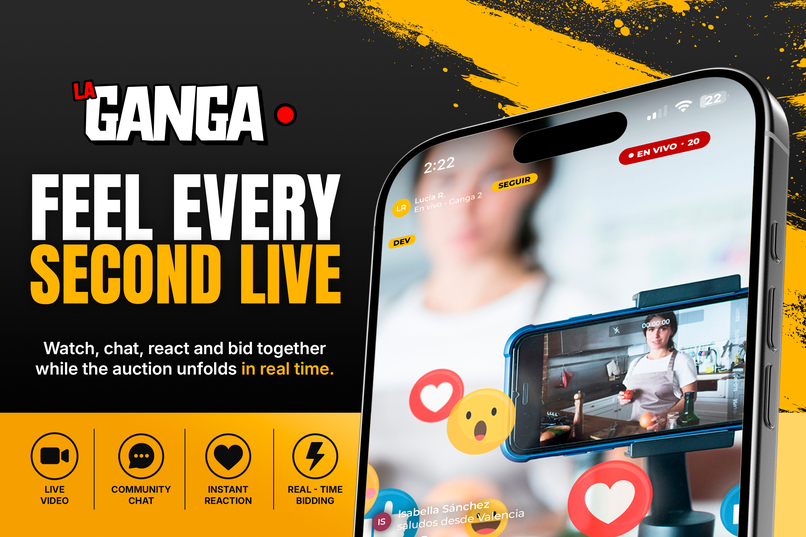
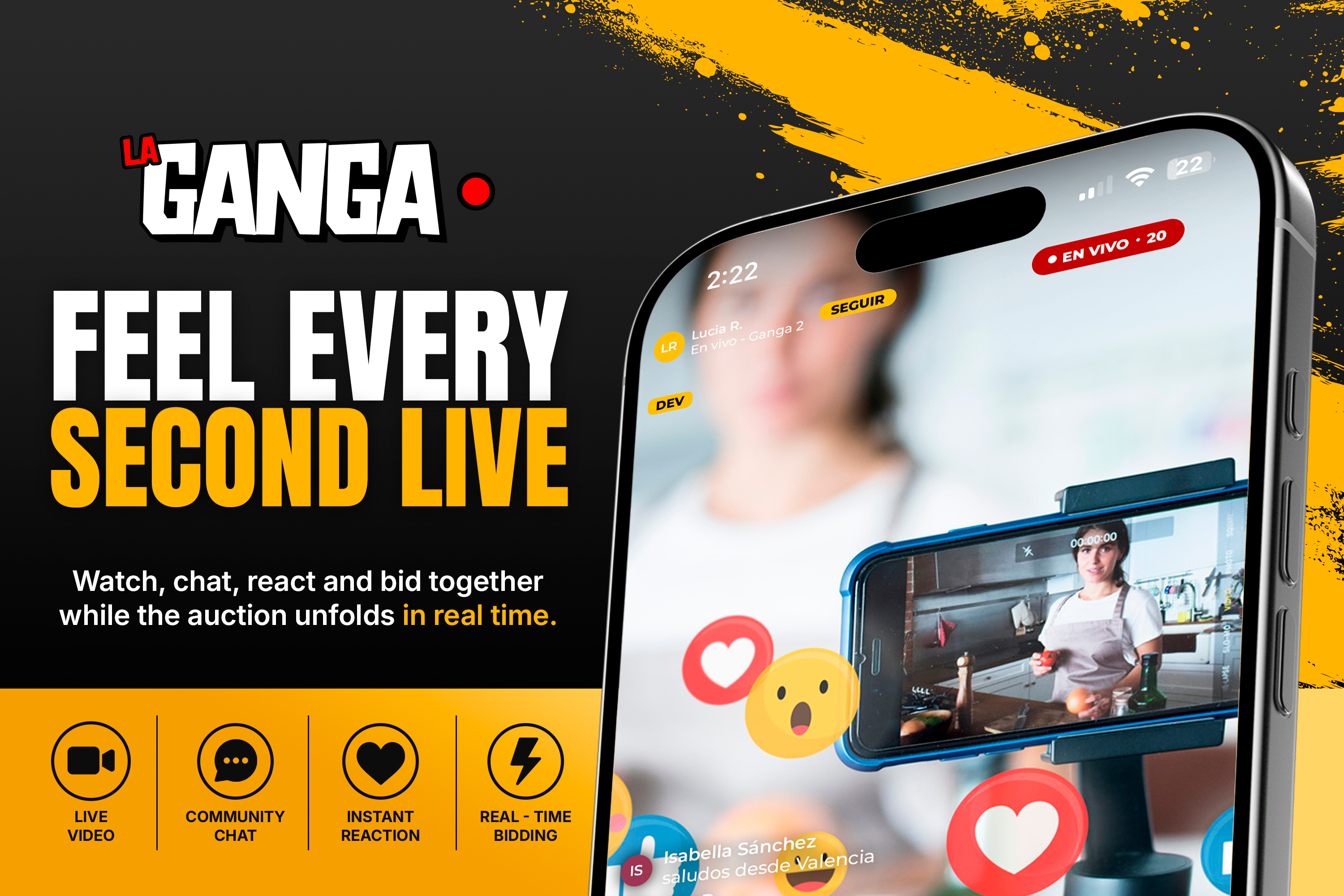
Real-time auction stream with reactions, chat, and bidding controls so users can participate live.
-
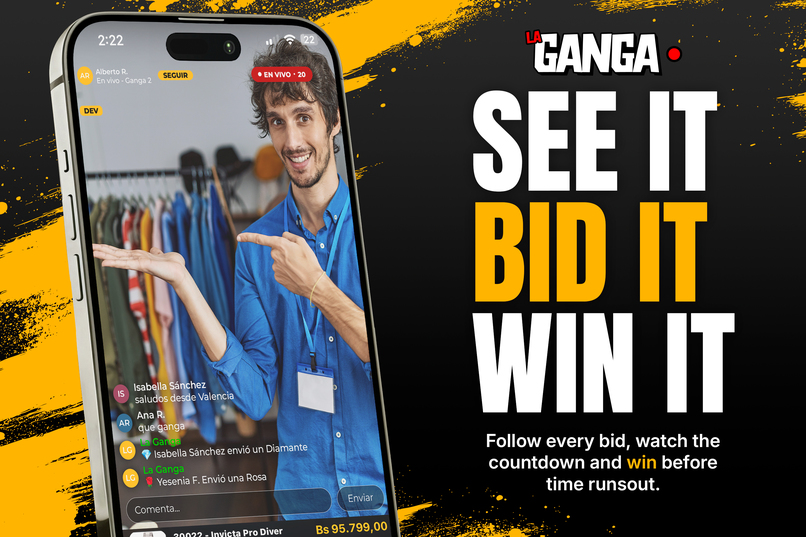
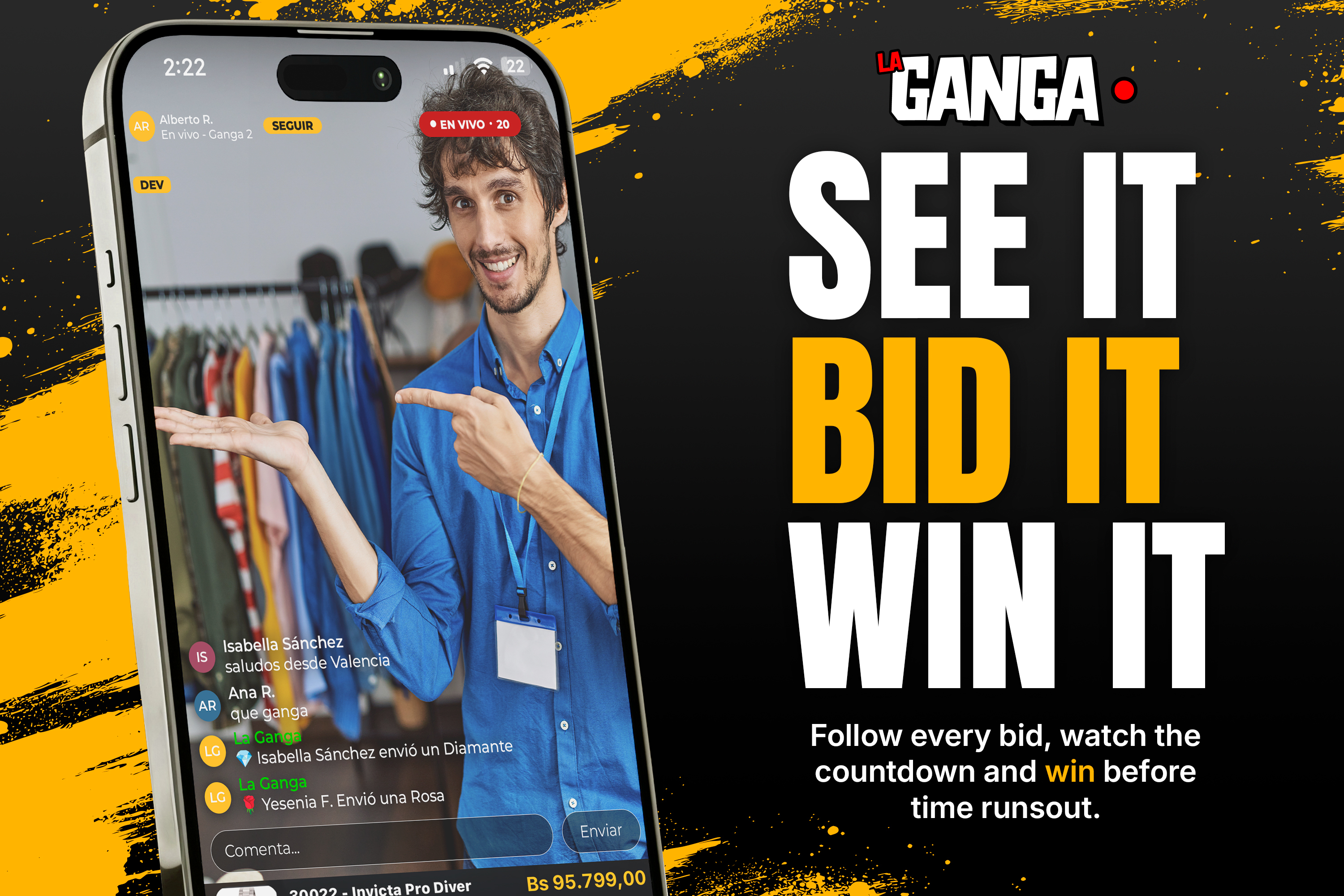
Core auction action: a seller presenting a product while users place bids to win it.
-
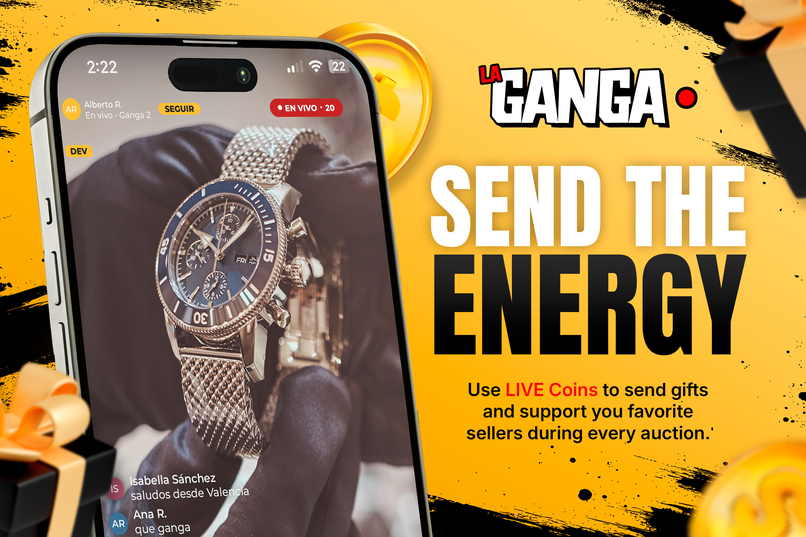
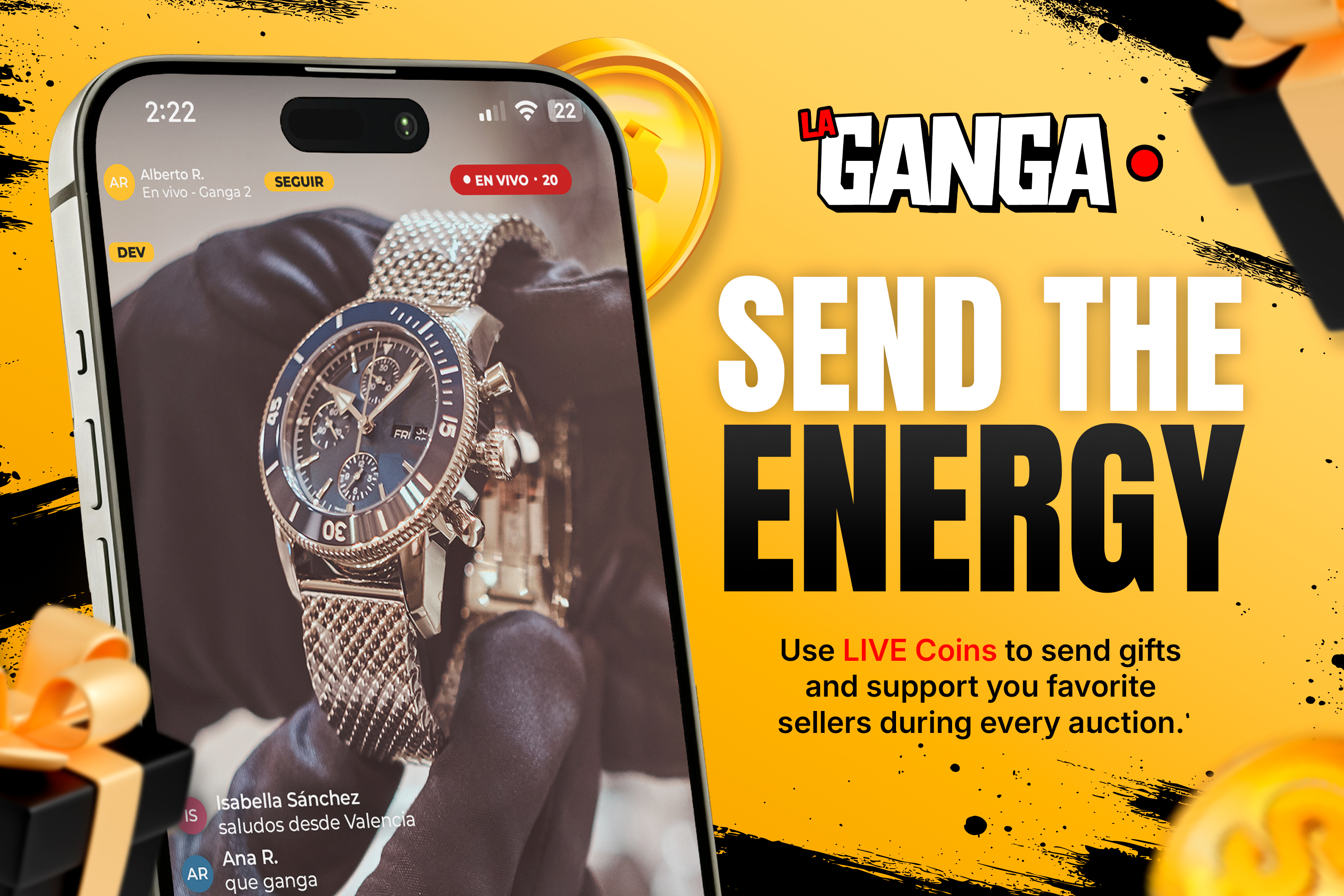
Live gifting feature where viewers send gifts/support to sellers using in-app credits during streams.
-
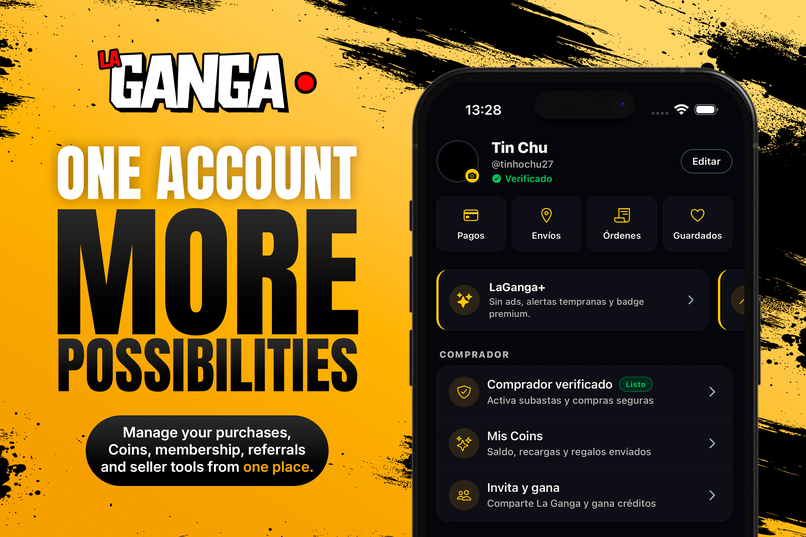
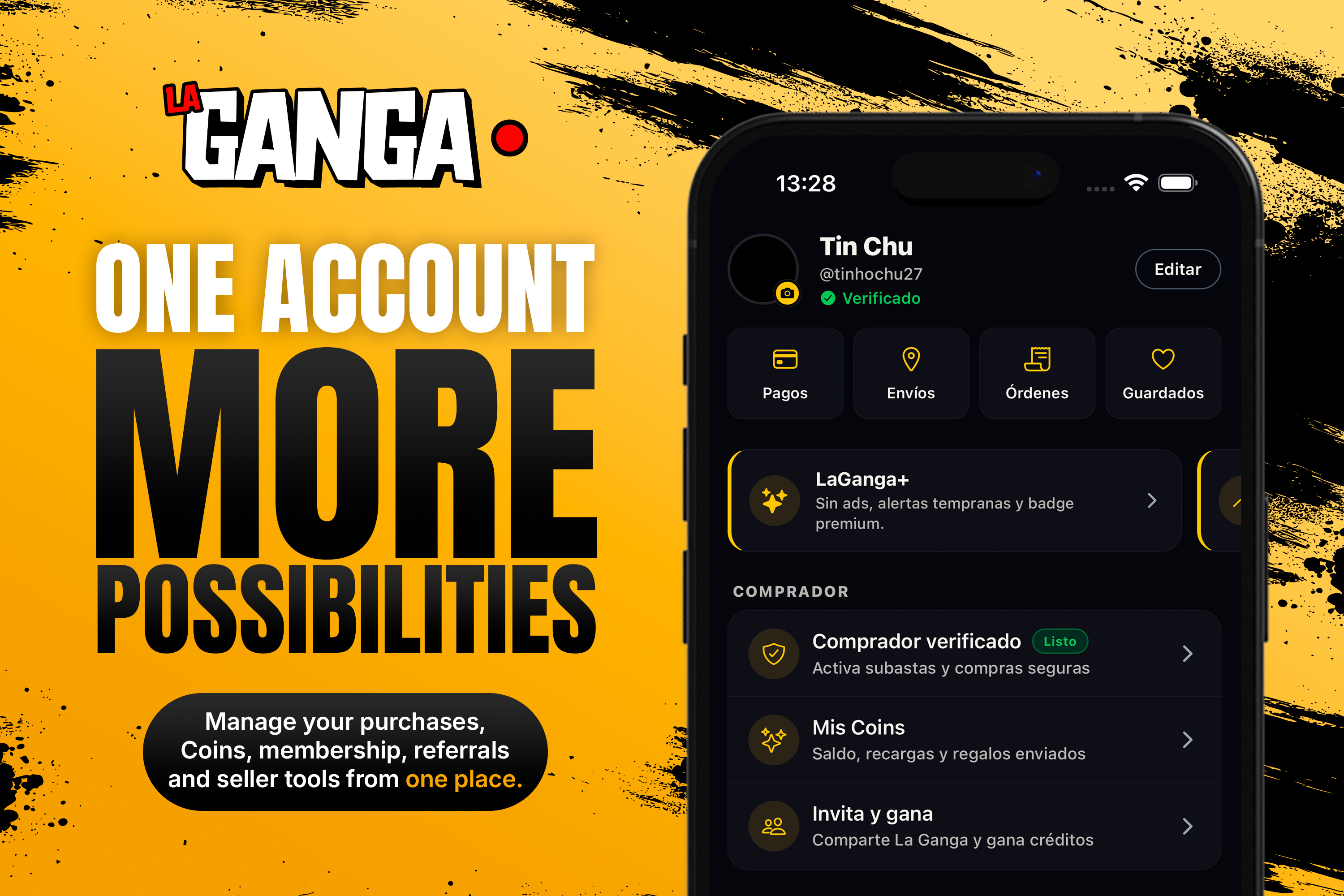
Profile dashboard consolidating purchases, auctions, bids, and account settings in one place.
Inspiration
Live commerce has exploded around the world. Whatnot turned collectibles into entertainment in the US. Taobao Live transformed shopping in China.
But in Latin America, much of online selling still happens differently.
Sellers already build audiences on Instagram, WhatsApp, and social media. They post products, answer DMs, negotiate manually, confirm payments, and coordinate delivery one buyer at a time.
The behavior already exists. The infrastructure doesn't.
Most global live-commerce platforms weren't designed around LATAM's payment methods, currencies, banking rails, logistics, or seller behavior.
And traditional marketplaces solve only part of the problem. They make products easy to list, but they don't recreate the excitement of watching a product live, competing against another buyer, and placing the winning bid with two seconds left.
That feeling is the product.
We built LaGanga — ganga means bargain in Spanish — to bring that experience to Venezuela and, eventually, the rest of Latin America.
Spanish-first. Mobile-first. Real-time. Built around local payments and payouts.
LaGanga isn't Whatnot translated into Spanish. It's live commerce rebuilt for LATAM.
What it does
LaGanga turns shopping into a live event.
A seller opens the app, starts a stream, shows a product on camera, and launches an auction. Buyers watching the stream can bid with one tap while chatting and reacting in real time.
When the timer reaches zero, the highest bidder wins.
The entire experience happens inside the live room.
Seller goes live → Product appears → Buyers bid → Winner pays → Seller gets paid
For buyers
- Discover live auctions and sellers.
- Bid with one tap while watching the stream.
- Chat and react with the community in real time.
- Pay for won auctions using a saved USD card.
- Pay in Bolívares through Débito Inmediato, using bank authorization via SMS confirmation or OTP.
- Send LIVE Coins and gifts to creators.
- Unlock additional benefits through Ganga+.
For sellers
- Go live directly from the app.
- Present inventory on camera.
- Launch and manage auctions while streaming.
- Extend an auction when competition heats up.
- Track orders and sales.
- Request payouts to a registered bank account.
- Unlock advanced seller tools through Seller Pro.
LaGanga combines the discovery and entertainment of live streaming with the transaction infrastructure of a marketplace.
Built for LATAM from day one
We didn't want to take a US marketplace and simply translate the interface into Spanish.
Payments, payouts, currencies, banking infrastructure, seller workflows, and buyer expectations are different across Latin America.
So we designed LaGanga around those realities.
A buyer might pay in USD while another pays in Bolívares. A Venezuelan seller needs to receive money through infrastructure that actually works locally. Many sellers are already comfortable selling through live video and WhatsApp but don't have tools for structured bidding, checkout, orders, or payouts.
LaGanga brings those pieces together.
The audience is already there. The sellers are already there. We're building the infrastructure between them.
How we built it
LaGanga is built as a pnpm/Turborepo monorepo containing an Expo/React Native mobile app, a Next.js 16 web application, and shared TypeScript contracts across mobile, web, and backend.
But the difficult part wasn't building screens.
It was making a live auction feel instant while keeping every participant synchronized.
Real-time auctions
LiveKit powers the video rooms while a WebSocket connection drives bidding state, chat, reactions, and auction events across mobile and web.
A bid isn't a normal database update.
If multiple people bid during the final seconds of an auction, every connected device needs to converge on the same price, timer, bid history, and winner — while still making the interaction feel immediate to the person tapping the button.
That real-time synchronization became one of the most important engineering problems in LaGanga.
Payments and marketplace checkout
Physical auction purchases use a dedicated marketplace payment flow.
Cards are saved through Stripe PaymentSheet using SetupIntents and can be charged off-session exactly once when a buyer wins.
Bolívar payments use a completely separate local rail through Débito Inmediato.
Sellers don't just select a settlement method. They register their banking information and can request real payouts through the platform.
We built the complete flow:
Auction win → Payment → Order → Seller balance → Payout
Subscriptions
RevenueCat manages our digital subscription benefits.
We intentionally created separate products for the two sides of the marketplace:
- Ganga+ for buyers.
- Seller Pro for sellers.
Each persona has its own offering and entitlements.
RevenueCat handles the purchase experience, Customer Center, renewals, cancellations, and refunds, while subscription state synchronizes with our backend.
Features are gated using backend subscription state rather than trusting the client.
LIVE Coins
LIVE Coins are our consumable in-app gifting economy.
RevenueCat confirms the purchase and our backend applies an idempotent credit to an append-only ledger.
The system is implemented end-to-end and remains protected behind server-side receipt verification before being enabled in production.
Experience
Reanimated powers bid confirmations, the SOLD moment, and gifting animations.
NativeWind keeps the design system consistent across the experience.
The rest of our stack is intentionally boring:
Zustand, MMKV, FlashList, Sentry, and EAS.
We wanted complexity where the product actually required it — real-time auctions, payments, and synchronization — rather than everywhere else.
Challenges we ran into
Making bidding feel instant and fair
Every client needs to converge on the same authoritative auction state while still giving bidders immediate feedback.
That sounds simple until several users bid during the final seconds.
We had to synchronize bid events, timers, winner state, and host extensions across every connected client. Getting clock extensions to behave consistently took roughly a week of iteration.
We learned that perceived speed matters almost as much as actual speed.
If someone taps Bid and doesn't immediately see confirmation, they assume it failed and tap again.
Two types of paying users, one platform
Buyers and sellers want completely different things.
Trying to force both into a generic "Premium" subscription would have made the product easier to implement but harder to understand.
Instead, we built separate entitlements and offerings for Ganga+ and Seller Pro.
It created more work, but resulted in a much more honest monetization model.
Coordinating money across multiple systems
Auction purchases, subscriptions, gifting, and seller payouts represent fundamentally different types of transactions.
Rather than forcing everything through one provider, we separated responsibilities.
RevenueCat handles digital purchases.
Stripe handles card-based marketplace transactions.
Local banking rails handle Bolívar transactions and settlement.
Our backend remains the source of truth connecting those systems.
Shipping across a distributed team
Coins, payouts, auctions, and saved-payment metadata frequently require mobile and backend changes at the same time.
Shared TypeScript contracts, versioned APIs, and a common integration backlog helped prevent either side from blocking the other.
Accomplishments that we're proud of
We're proud that LaGanga became much more than a hackathon prototype.
We built a real marketplace architecture around live commerce.
- Real-time video auctions with synchronized bidding.
- Live chat and reactions.
- Buyer and seller experiences.
- Saved marketplace payment methods.
- Local Bolívar payment infrastructure.
- Seller payout flows.
- Two distinct subscription models.
- A ledger-backed LIVE Coins economy.
- Seller tooling and administration.
- A functional web application rather than a companion landing page.
We're especially proud of the way we separated money inside the platform.
RevenueCat, Stripe, and local bank rails each own exactly one kind of transaction.
That keeps our accounting understandable, our architecture cleaner, and our mobile monetization aligned with platform requirements.
What we learned
Our biggest lesson was that correctness alone doesn't create a good real-time product.
Perceived speed matters.
A bidder needs to know immediately that their bid was received, even while the backend determines the authoritative state of the auction.
We also learned that digital and physical commerce need very different infrastructure.
Subscriptions and LIVE Coins belong in the digital purchase ecosystem.
Winning a physical auction requires marketplace checkout, accounting, fulfillment, and seller settlement.
Trying to treat them as the same type of transaction creates unnecessary complexity.
Finally, we underestimated how much engineering exists outside the product itself.
Build profiles, icons, review accounts, subscription configuration, privacy disclosures, release hardening, automated submissions, and App Store review are effectively their own project.
We didn't budget enough time for that.
It bit us.
And we'll never make that mistake again.
What's next for LaGanga
The next milestone isn't adding hundreds of features.
It's proving that sellers can build repeatable businesses through live auctions.
We're focused on:
- Onboarding an initial group of Venezuelan sellers through their first live streams.
- Adding automatic anti-snipe rules so last-second bids extend auctions automatically.
- Introducing verified sellers, transaction history, ratings, and reviews.
- Completing backend verification and enabling LIVE Coins and gifting in production.
- Measuring seller activation, auction completion, repeat attendance, and subscription conversion.
- Introducing free-tier advertising in discovery and replay surfaces without interrupting live auctions.
- Expanding settlement options.
- Bringing LaGanga to Venezuelan communities across LATAM before expanding further into the region.
We're not building another marketplace
Today, LaGanga lets someone take out their phone, start a live stream, show a product, and turn it into an auction.
But that's only the beginning.
Tomorrow that seller could be a sneaker reseller in Caracas.
A collectibles store in Bogotá.
A fashion creator in Mexico City.
A small business that previously sold entirely through Instagram and WhatsApp.
Or someone starting their first business with nothing more than a phone and an audience.
The internet made it possible for anyone to become a creator.
We believe live commerce can make any creator a seller.
And we're building the infrastructure to make that possible across Latin America.
LaGanga — Live Auctions for LATAM.
Built With
- android
- app-store
- eas
- expo-router
- expo.io
- ios
- livekit
- mmkv
- nativewind
- nextjs
- pnpm
- react
- react-native
- react-native-purchases
- react-native-reanimated
- revenuecat
- sentry
- stripe
- tailwindcss
- typescript
- vexpay
- websocket
- zustand

Log in or sign up for Devpost to join the conversation.