-
-
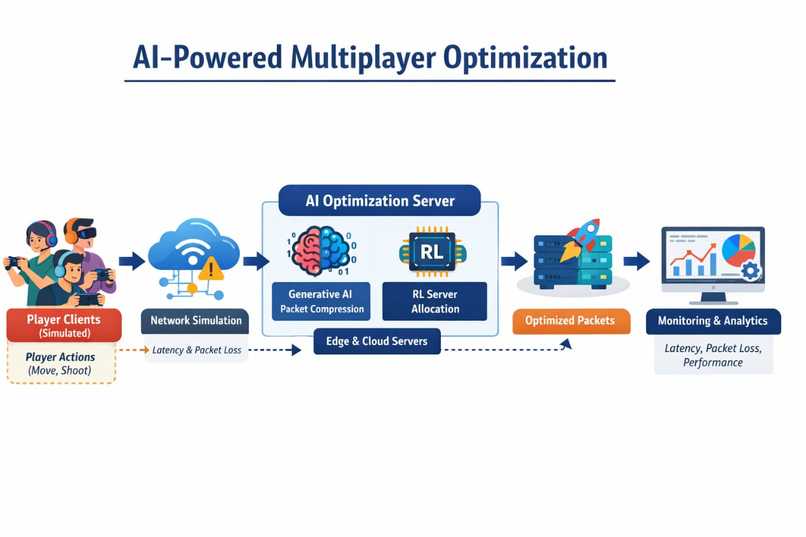
AI powered multiplayer optimization
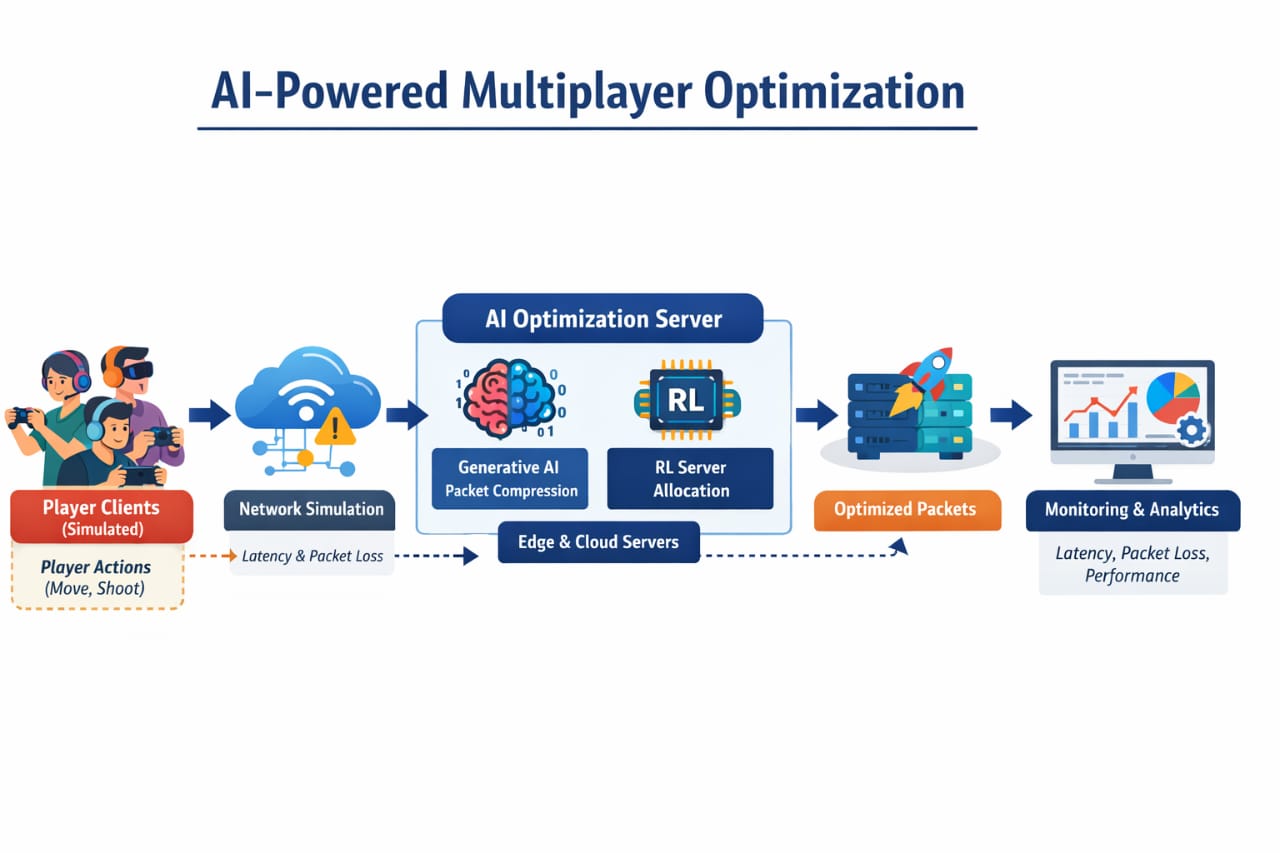
Inspiration
Online multiplayer games often suffer from latency issues such as lag, delays, and desynchronization, which negatively affect player experience and fairness in gameplay. While playing and observing multiplayer games, we noticed how even a small delay can change the outcome of a match. This inspired us to work on a project that focuses on optimizing real-time performance and reducing latency in multiplayer gaming environments.
What it does
Our project aims to design and develop an intelligent system to reduce network latency and improve real-time synchronization in multiplayer online games. The system uses optimized data transmission techniques and AI-based prediction models to manage network traffic efficiently and minimize delays between players. By analyzing network conditions such as ping, packet loss, and bandwidth, the system dynamically adjusts communication strategies to ensure smoother gameplay.
How we built it
We built this project by integrating real-time data monitoring with adaptive algorithms that predict player movements and optimize packet transmission. The system processes network parameters continuously and applies optimization techniques to reduce lag and improve responsiveness. Simulation and testing were carried out under different network conditions to evaluate performance improvements.
Challenges we ran into
One of the main challenges was handling unstable network connections and ensuring synchronization between multiple players in real time. Another challenge was balancing performance optimization without increasing system complexity. We overcame these challenges through iterative testing, algorithm refinement, and efficient data handling techniques.
Accomplishments that we're proud of
Built a working prototype that reduces latency in multiplayer games. Improved real-time synchronization and gameplay smoothness. Successfully applied AI-based optimization techniques. Handled real-time network challenges effectively. Completed the project within the given time frame through teamwork.
What we learned
Through this project, we gained practical knowledge of networking concepts, real-time systems, and AI-based optimization techniques. We also learned the importance of performance tuning and system reliability in multiplayer platforms.
What's next for Lag Zero
Integrate the system with real multiplayer game engines for real-world testing. Enhance the AI model for more accurate latency prediction and optimization. Expand the solution to support larger numbers of players and servers. Improve security and reliability for live deployment. Explore cloud and edge computing integration for faster performance.
Built With
- flask
- javascript
- mysql
- python
- socket.io
- tensorflow

Log in or sign up for Devpost to join the conversation.