Inspiration
LABYRAZE started with a simple idea: what if an arcade maze game could change the rules while you were playing?
I wanted to combine the immediate fun of classic arcade games with something more unpredictable. Instead of simply navigating a fixed labyrinth and avoiding enemies, I imagined a haunted maze with shifting doors, unusual abilities, and moments when the hunted could become the hunter.
The Halloween theme inspired two original characters: Maze Spirit, a curious little ghost, and Shadow Bite, a relentless creature born from the darkness.
Kiroween gave me the opportunity to turn that concept into a playable game using Kiro.
What it does
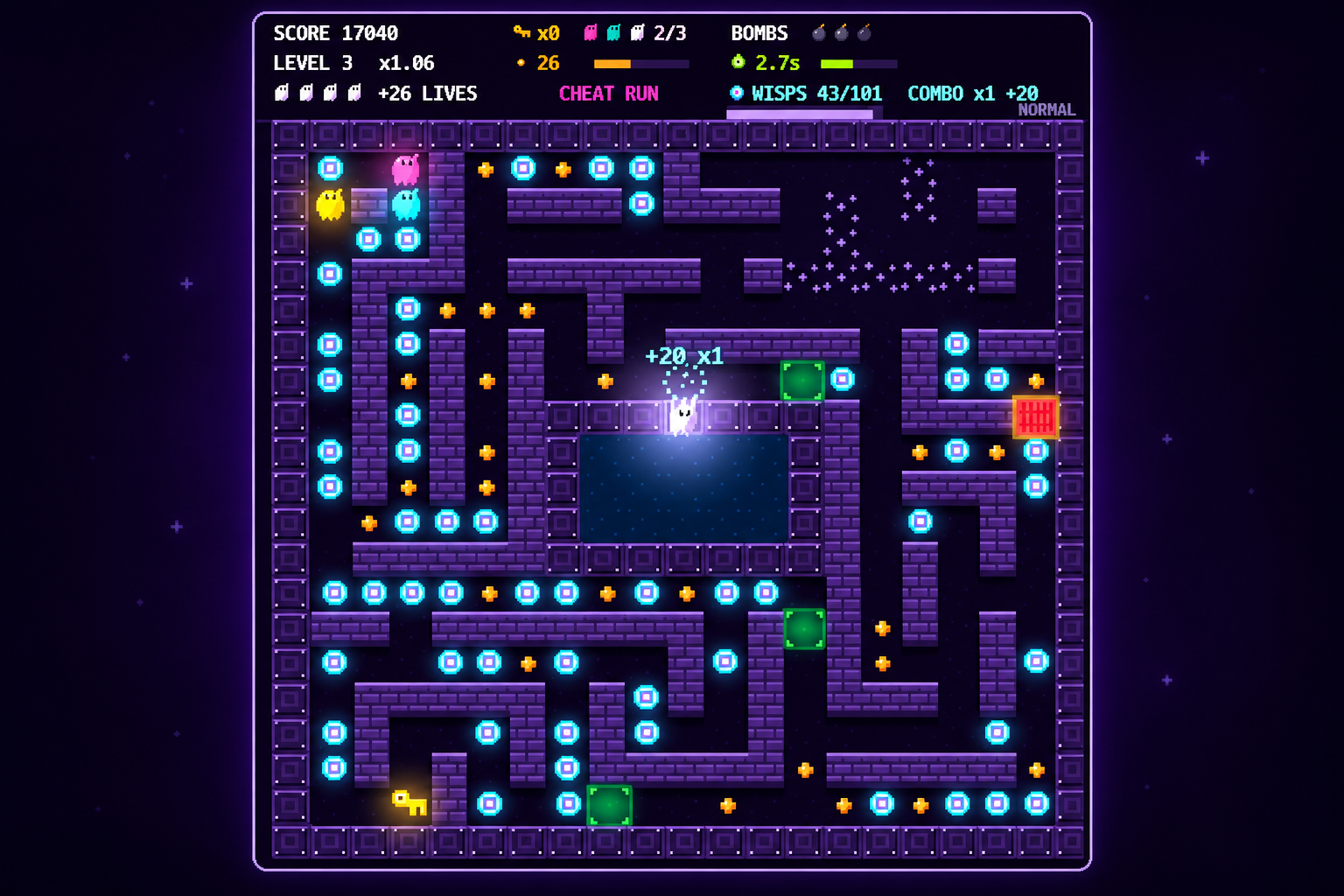
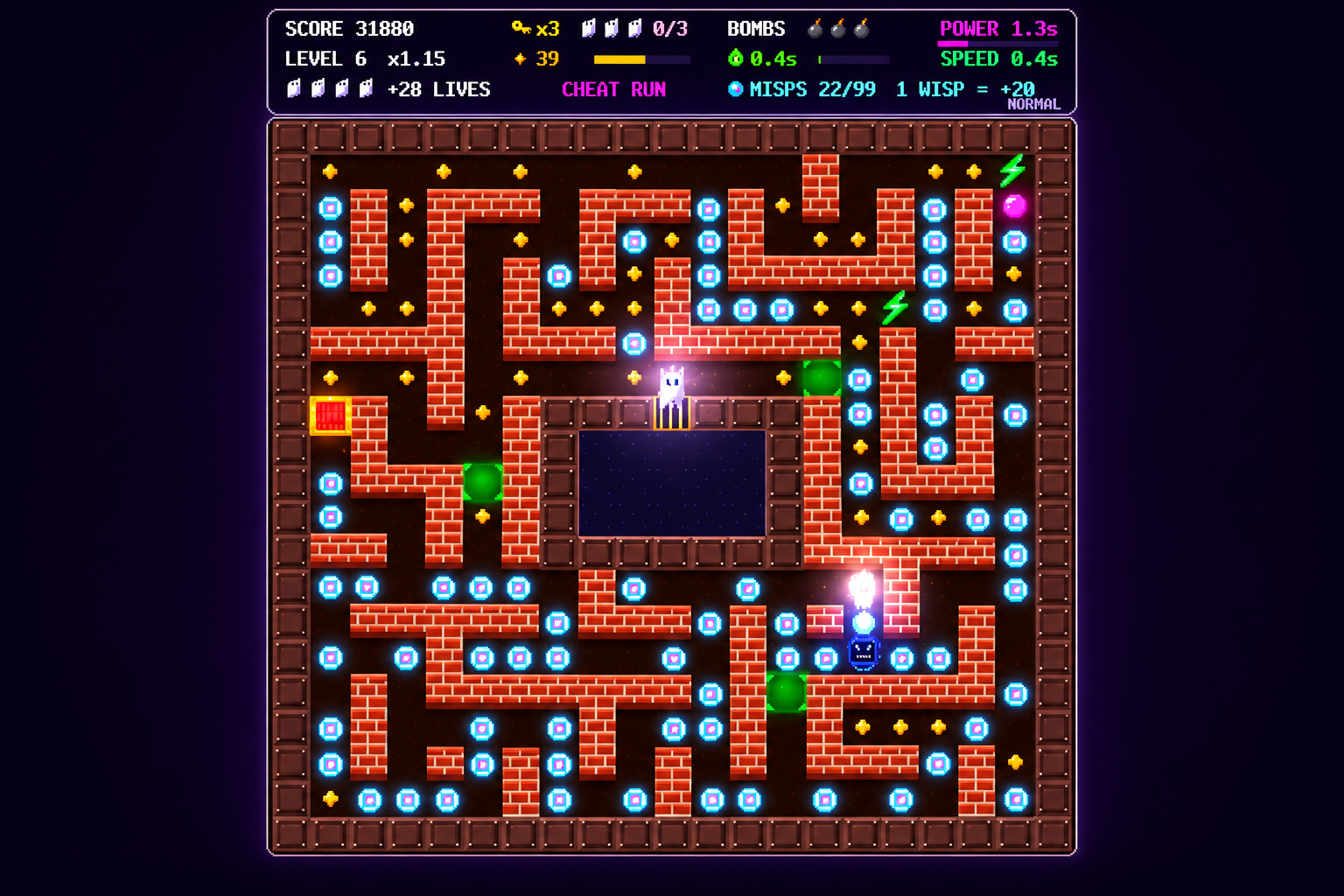
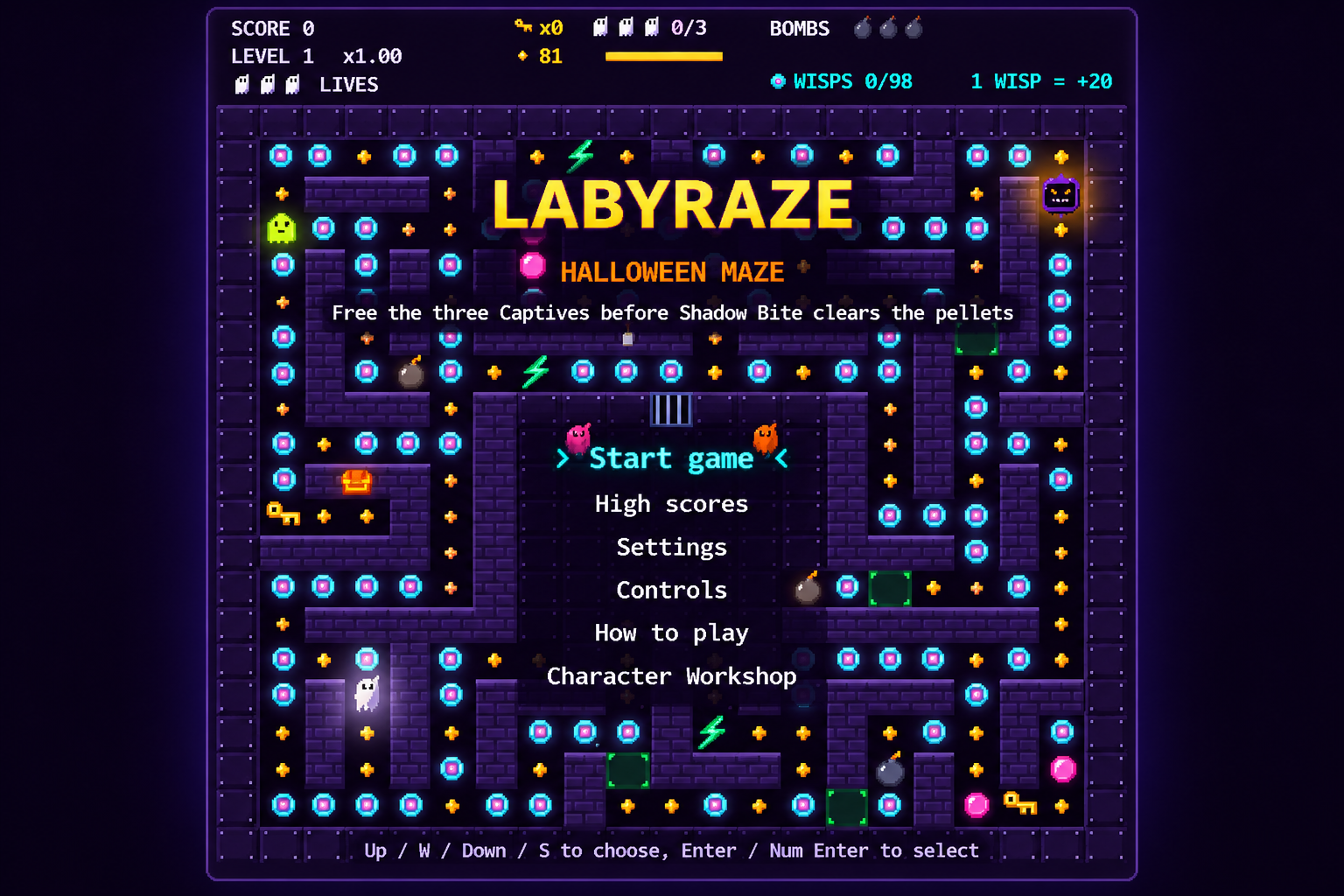
LABYRAZE is a browser-based arcade maze-chase game featuring procedurally generated labyrinths, dynamic doors, autonomous enemies, and special abilities.
Players control Maze Spirit while trying to survive Shadow Bite and navigate an ever-changing maze.
Key features include:
- Procedural mazes: Different layouts create new challenges.
- Dynamic doors: Routes change, forcing players to adapt their strategies.
- Role reversal: Special power-ups temporarily change the balance between hunter and hunted.
- Speed pellets: Change the pace of movement and pursuit.
- Bombs: Add an explosive tactical ability.
- Ghost Hunt: Summon three allied ghosts to help hunt enemies.
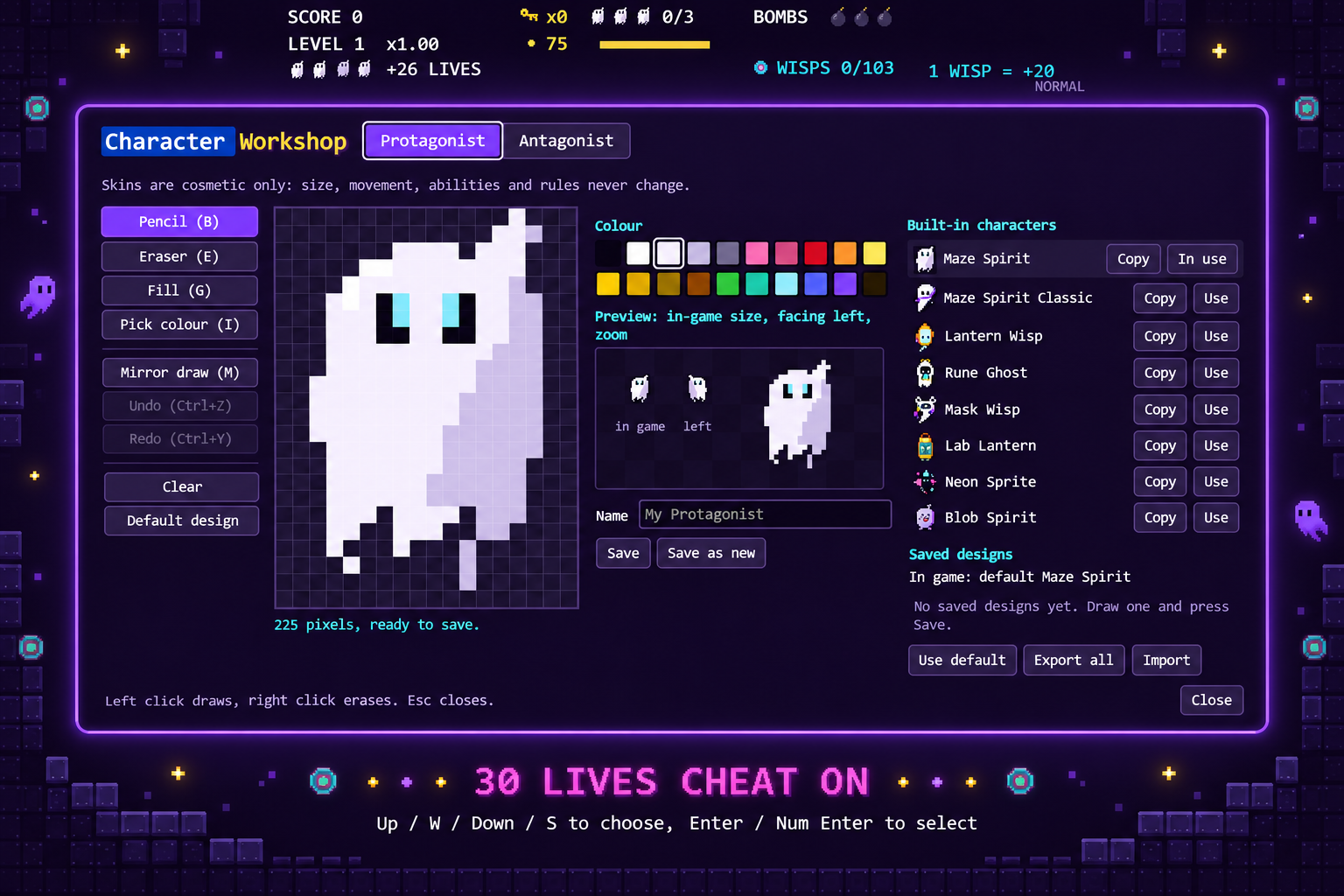
- Character Workshop: Customize pixel-art characters.
- Local leaderboard: Compete for a place among the top ten scores.
The goal was to make a game that is easy to understand but difficult to master.
How we built it
LABYRAZE was developed using Kiro, following a specification-driven development approach.
Instead of starting with random code generation, I began by defining the game's mechanics, behavior, and requirements.
The project evolved into a structured specification containing 25 requirements and 195 implementation tasks.
Kiro helped transform those specifications into functioning systems while supporting iterative development, debugging, and testing.
The browser-based game uses a deterministic 60 Hz simulation. Its systems include procedural maze generation, movement, collisions, enemy behavior, dynamic doors, power-ups, and character customization.
The visual identity was developed around original pixel-art characters, and I incorporated an original soundtrack called Pixel Pulse.
Throughout the process, I tested the game directly, evaluated the results, adjusted the design, and refined the implementation.
Kiro was an essential development tool, but the creative direction, gameplay decisions, testing, and final evaluation remained part of my hands-on workflow.
Challenges we ran into
The biggest challenge was making multiple interacting gameplay systems work reliably together.
Procedural generation needed to produce interesting, playable mazes. Dynamic doors had to introduce unexpected situations without creating unfair gameplay.
Enemy movement and special abilities also required careful coordination. A small change in movement speed, collision behavior, or power-up timing could affect several other systems.
The role-reversal mechanics were particularly interesting because they required the game to change enemy behavior and player abilities without disrupting the underlying simulation.
Another challenge was maintaining consistency as the project expanded. New features had to work alongside existing ones rather than introducing unexpected problems.
Structured specifications, automated testing, and repeated playtesting helped identify and resolve these issues.
Accomplishments that we're proud of
The achievement I'm most proud of is turning an initial arcade concept into a complete, playable browser game with its own characters, mechanics, and identity.
Some highlights include:
- Building interconnected gameplay systems rather than isolated demonstrations.
- Implementing procedural labyrinths and dynamic doors.
- Creating distinct character behaviors and special abilities.
- Developing a character customization system.
- Integrating original pixel-art character designs and original music.
- Organizing the project around detailed specifications and implementation tasks.
- Producing a gameplay demonstration for Kiroween.
Most importantly, LABYRAZE became something I could actually play, evaluate, and improve.
What we learned
This project reinforced an important lesson: AI-assisted development is not just about generating code. It's about communicating intent and verifying results.
Clear specifications made a significant difference. The more precisely I described the gameplay mechanics and expected behavior, the easier it became to implement and evaluate them.
I also learned the value of deterministic simulation, automated tests, and continuous playtesting when developing interconnected systems.
Kiro helped accelerate development, but testing revealed problems that specifications alone could not anticipate.
Perhaps the most valuable lesson was that human creativity and AI-assisted engineering work best as a collaborative process, with continuous feedback between the original idea and the actual playable result.
What's next for LabyRaze
I want to keep developing LABYRAZE beyond Kiroween.
Future improvements could include more characters, additional maze environments, new enemy behaviors, expanded power-ups, and more customization options.
I would also like to continue refining the difficulty, visual presentation, and overall game feel.
The long-term goal is to make LABYRAZE a distinctive arcade experience that rewards quick thinking, experimentation, and adaptability.
The maze changes. The rules change. The chase never stops.
