-

LabSync Logo
-
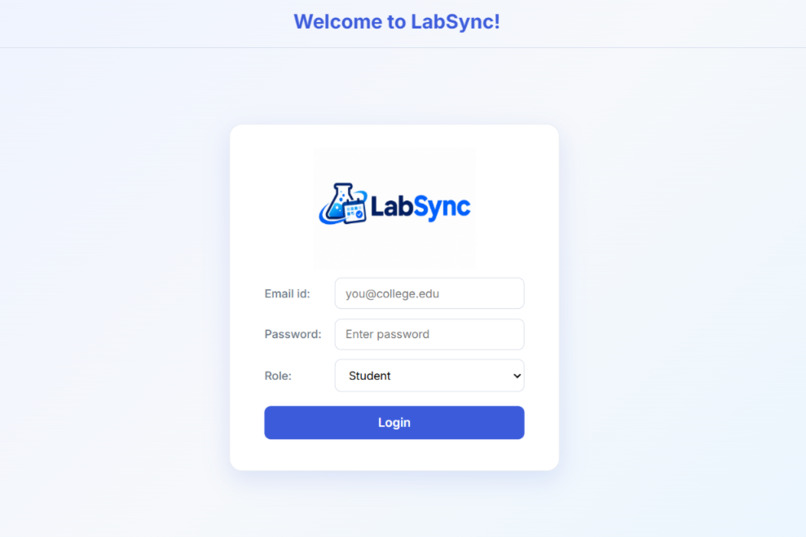
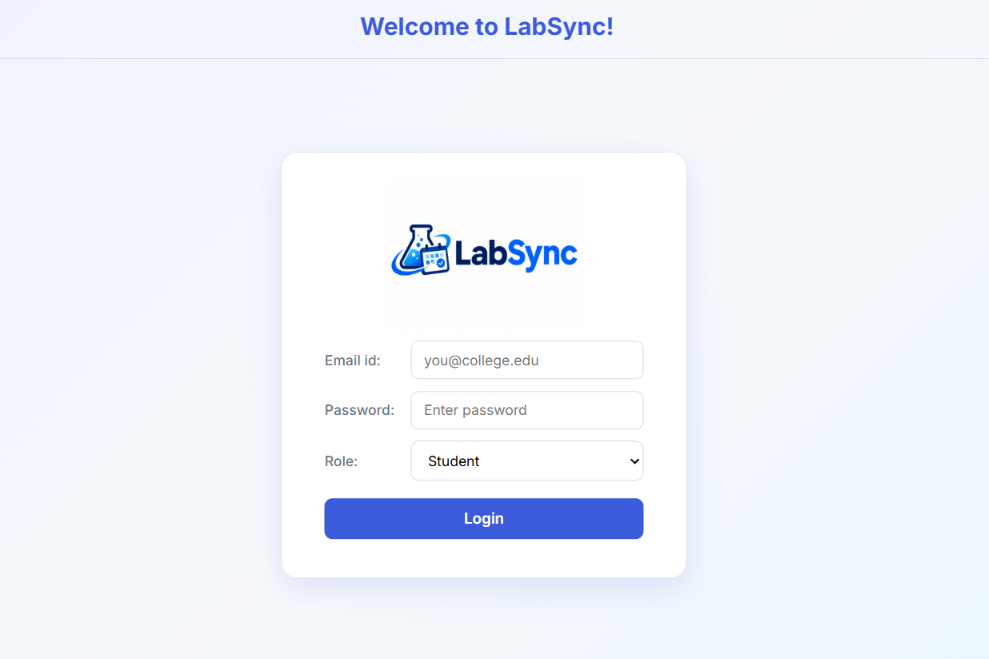
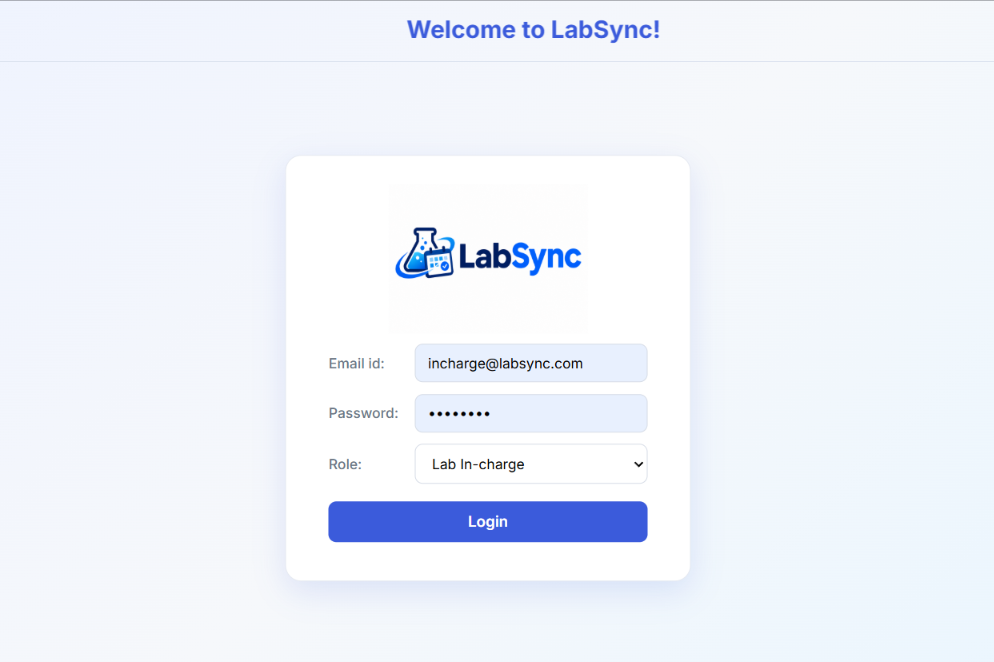
LabSync Log-in Page
-
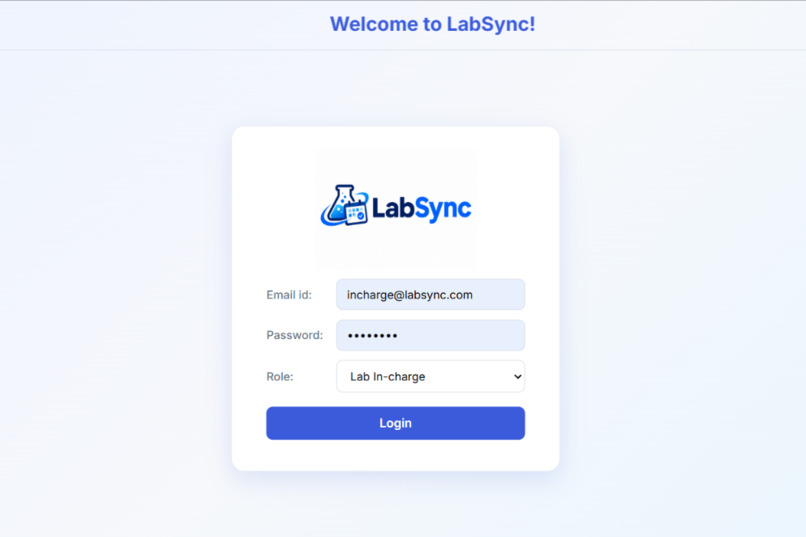
Staff Login
-
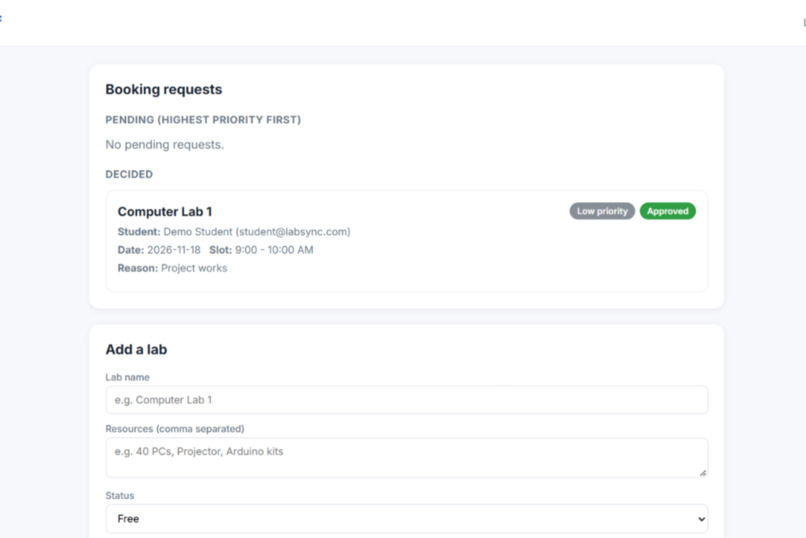
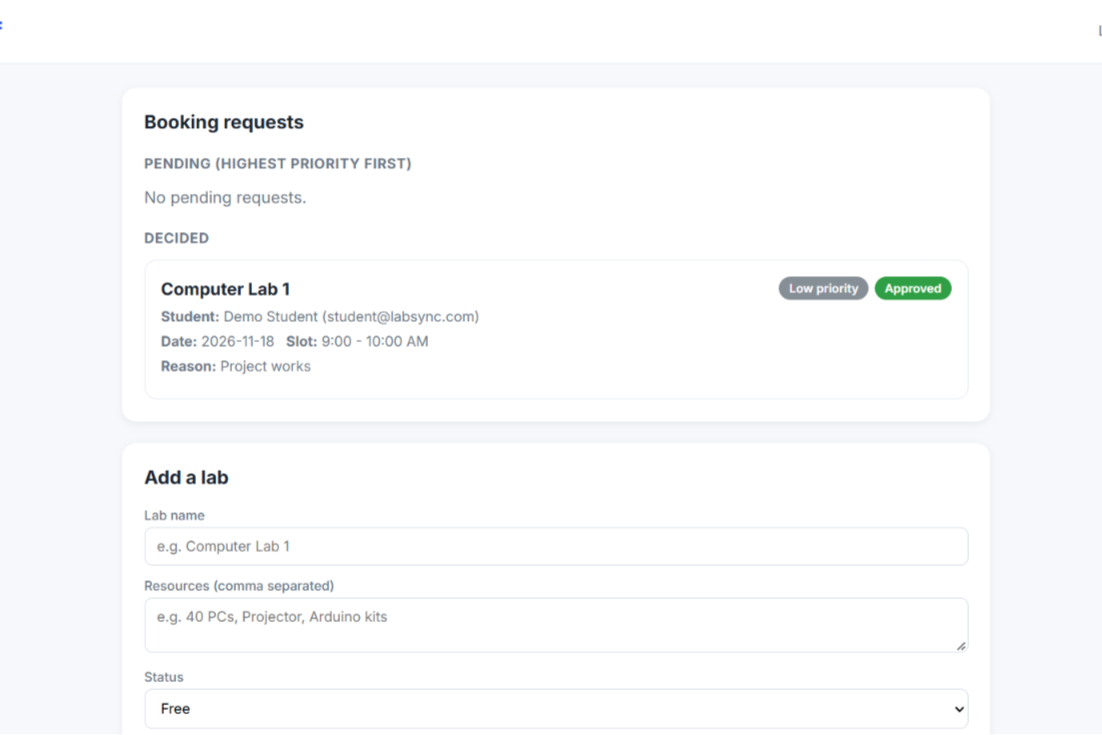
Lab-incharge Approval/Rejection
-
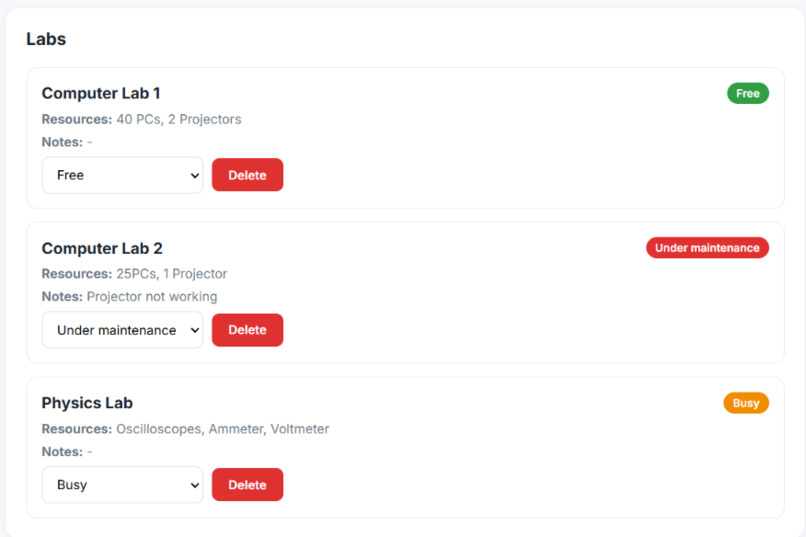
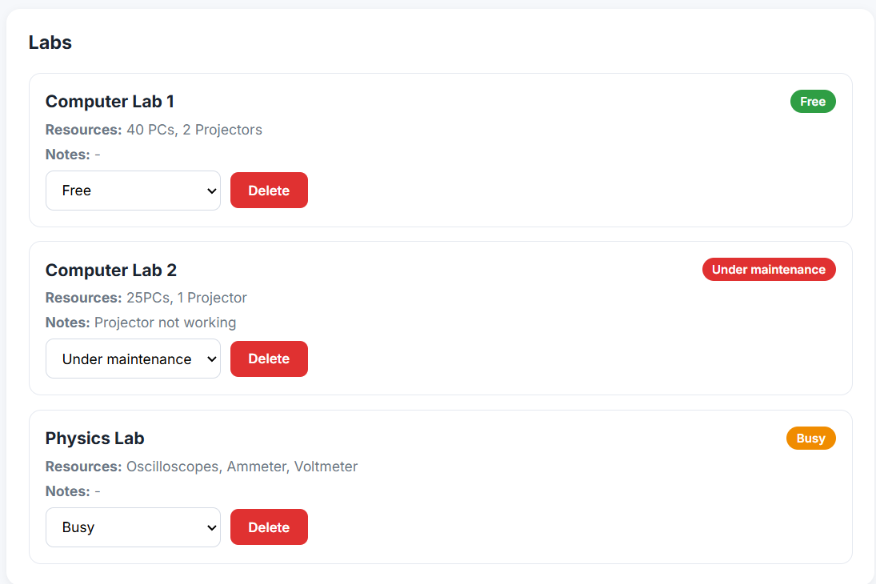
Lab created by Lab-incharge
-
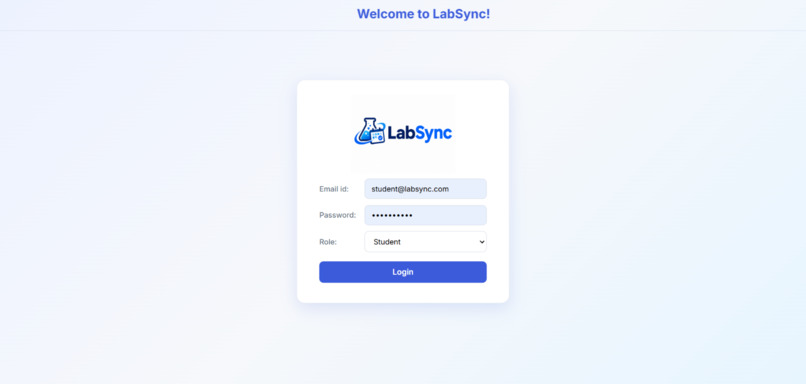
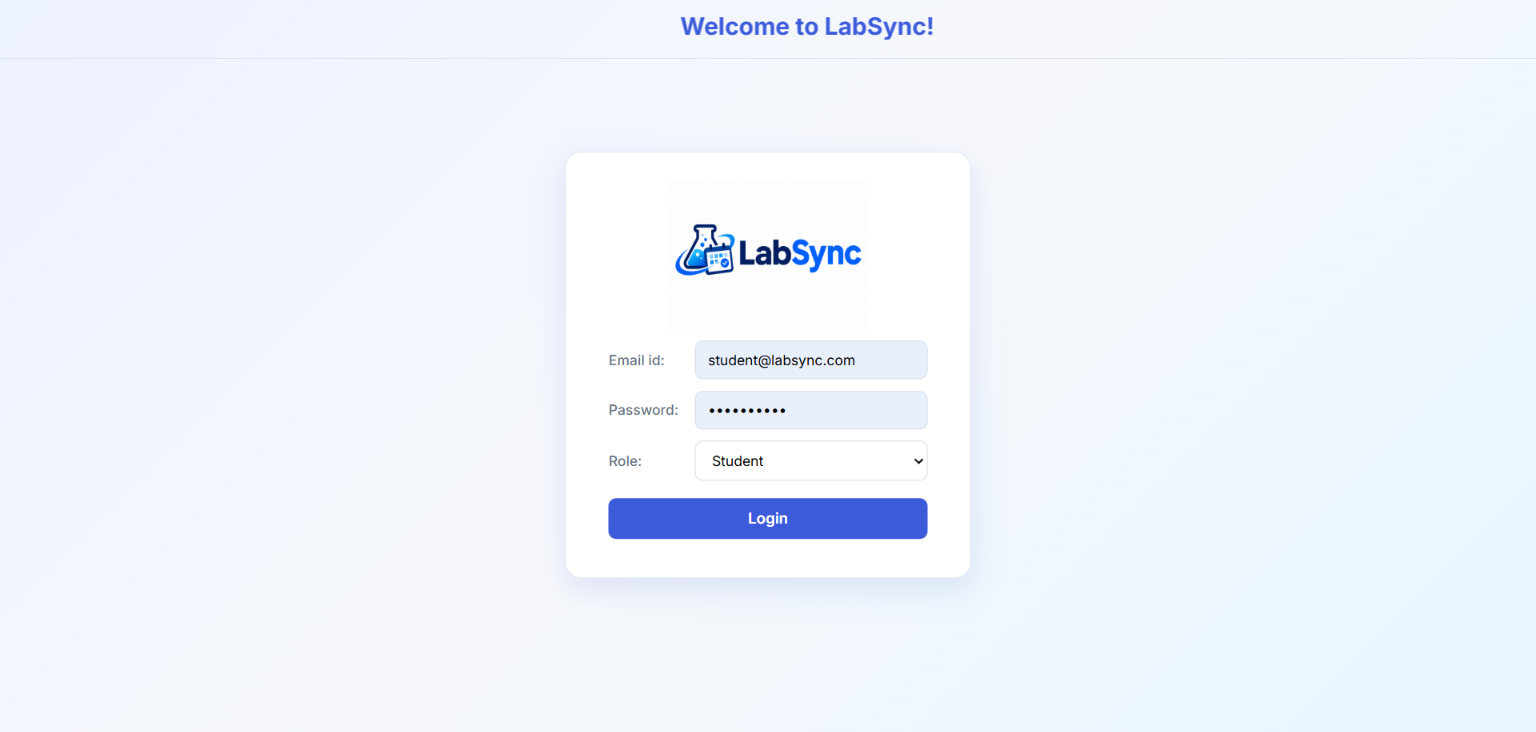
Student Login
-
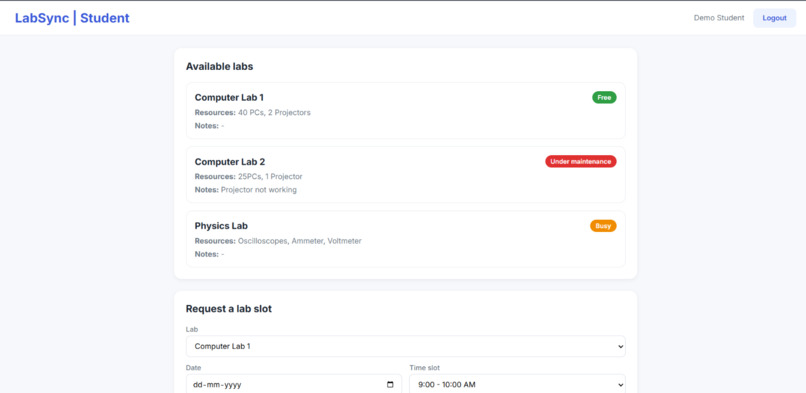
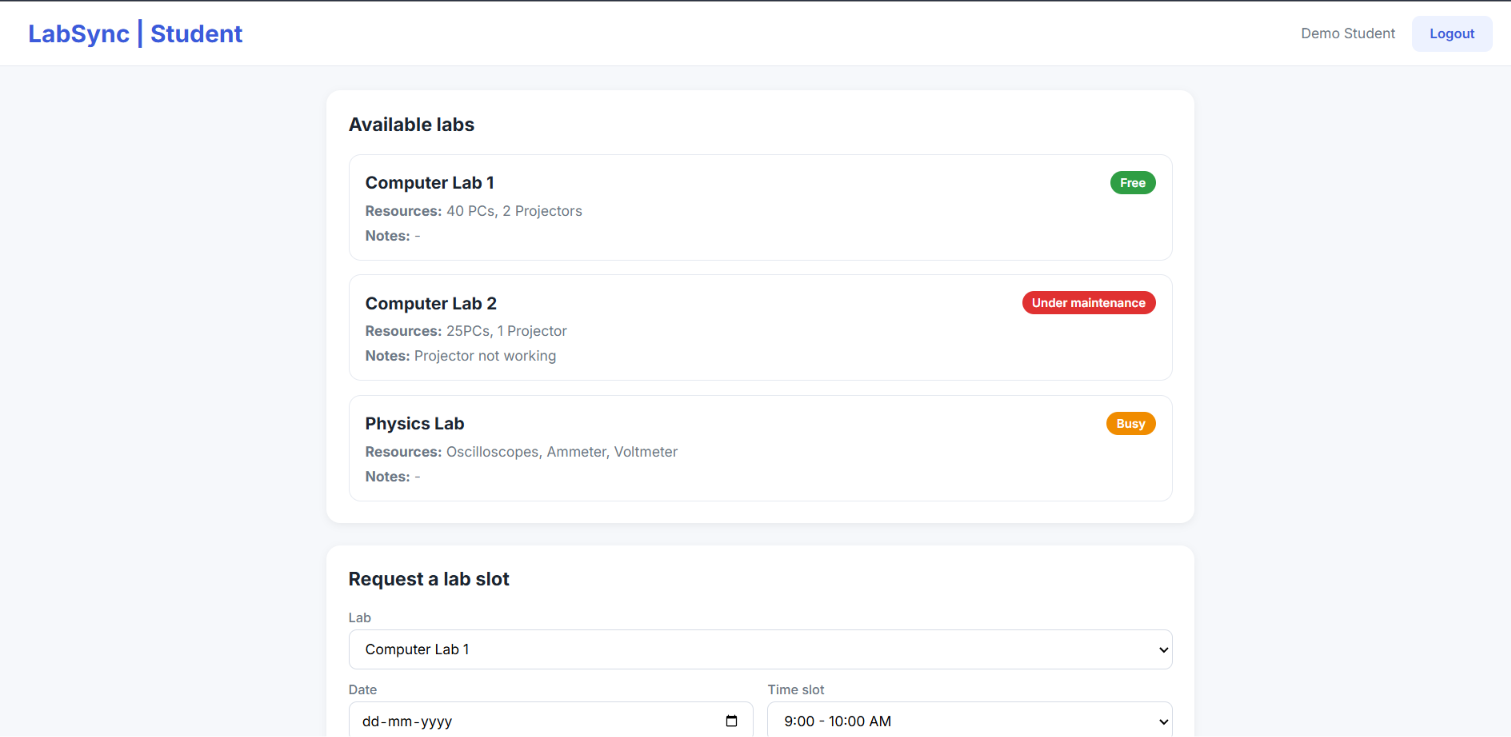
Lab details for Students
-
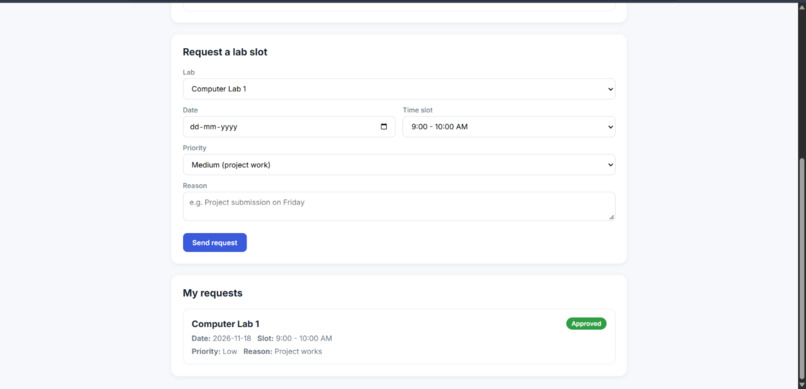
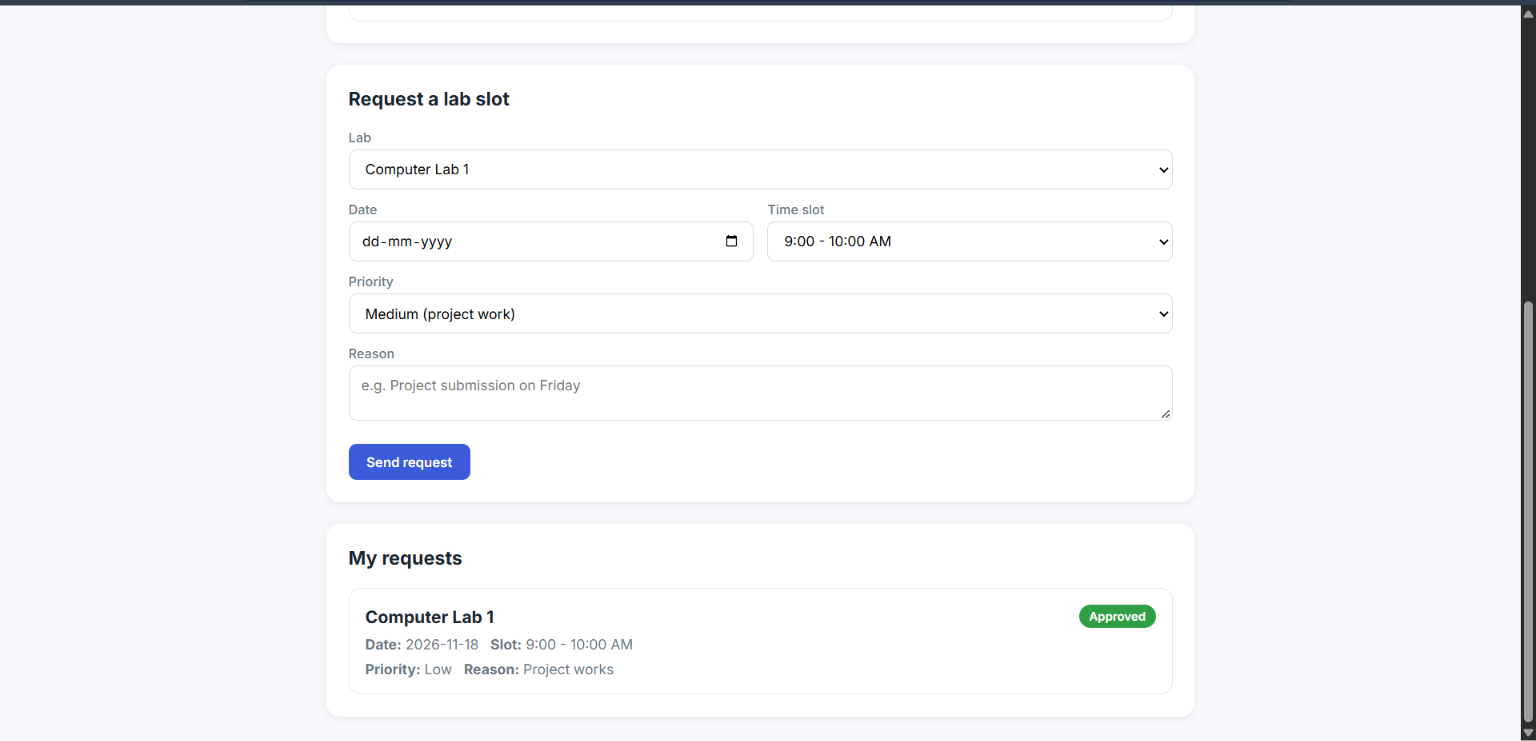
Requests and status for students

Inspiration
If you've studied in a college with limited labs, you know this moment: you need a system for your practical or project, you walk to the lab, and it's already full. Or it's locked. Or half the computers are down and nobody told you. You lose time walking around, asking people, and hoping.
The lab in-charge has the same problem from the other side. Requests come through verbal asks and scattered messages, and there's no clear way to decide who needs the lab most.
As a student myself, I've been in that spot more than once, and I wanted one place where both sides could see what's free, what's needed, and what's broken.
What it does
LabSync helps students find and book free lab slots.
- Students see every lab with its resources and live status (Free, Busy, Under maintenance), then send a booking request with a date, time slot, priority, and reason
- The lab in-charge sees requests sorted by priority, so urgent work like exams and project deadlines comes first, and approves or rejects each one
- Labs under maintenance can't be booked, and the same lab, date, and slot can't be approved twice
- Everything syncs live between the student and staff pages, with no refresh needed
Try it with the demo logins (choose the matching role on the login page):
- Student: [email protected] / student123
- Lab In-charge: [email protected] / staff123
How I built it
LabSync is built with HTML, CSS and JavaScript, with Firebase Firestore as the shared real-time database, hosted on Vercel, and the code is on GitHub. There are three pages: a login page, a student page, and a staff page. Each lab is a card with a colored status badge (Free, Busy, Under maintenance), and requests show Pending, Approved, or Rejected badges.
I came up with the idea and features, chose Firebase, and set up the Firebase project, GitHub repository, and Vercel deployment myself. I used an AI assistant for the visual design and to write most of the code, and I tested the full flow.
Challenges I ran into
- Deployment problems. Vercel was deploying from a different repository than mine, so my updates weren't going live until I found and fixed the connection. My logo also failed to show until I renamed the file to remove spaces and brackets.
- Sharing data between two pages. Students and staff needed to see the same data, which is why I moved from browser storage to Firebase.
- Fair priority and no double bookings. Requests are sorted by priority, and staff can't approve two requests for the same slot.
What I learned
- Planning around a real problem first makes everything else easier
- How to connect a web page to a cloud database and keep two views in sync in real time
- How to deploy a site through GitHub and Vercel, and how to debug when a deployment doesn't update
- A small project that works well beats a big one that's half finished
What's next
- Real login with Firebase Authentication, instead of demo accounts
- Stricter database rules based on user roles
- Notifications when a request is approved
- Usage reports for lab in-charges
Note: the demo uses hardcoded logins and open database rules, so please don't enter any real personal data.

