-
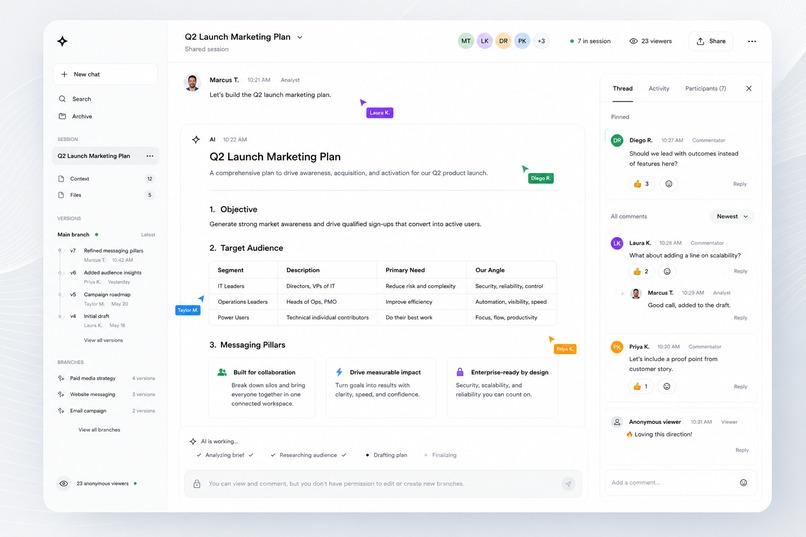
design mockup
-

company vision
-
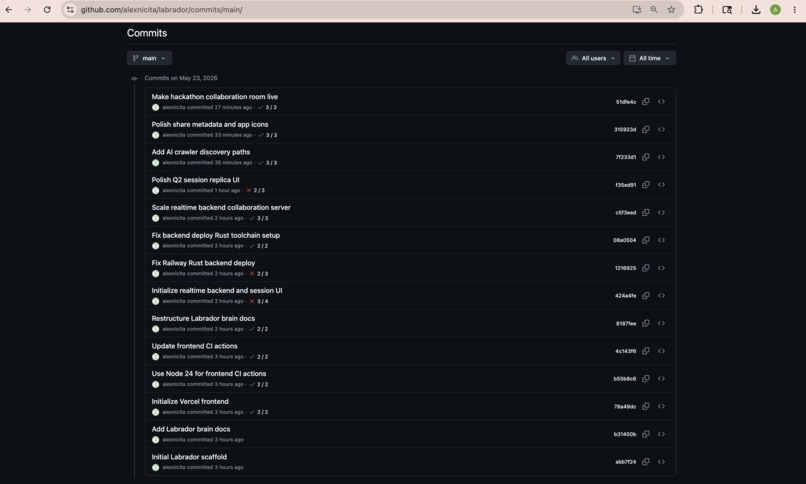
proof of all code written today at hackathon
-
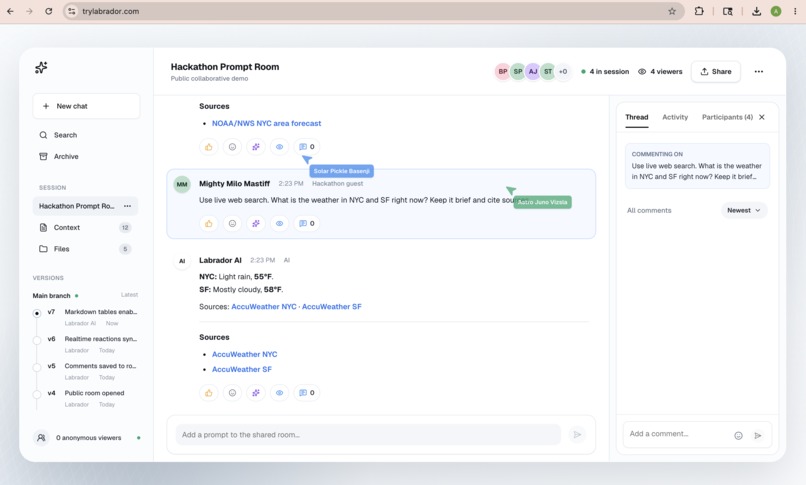
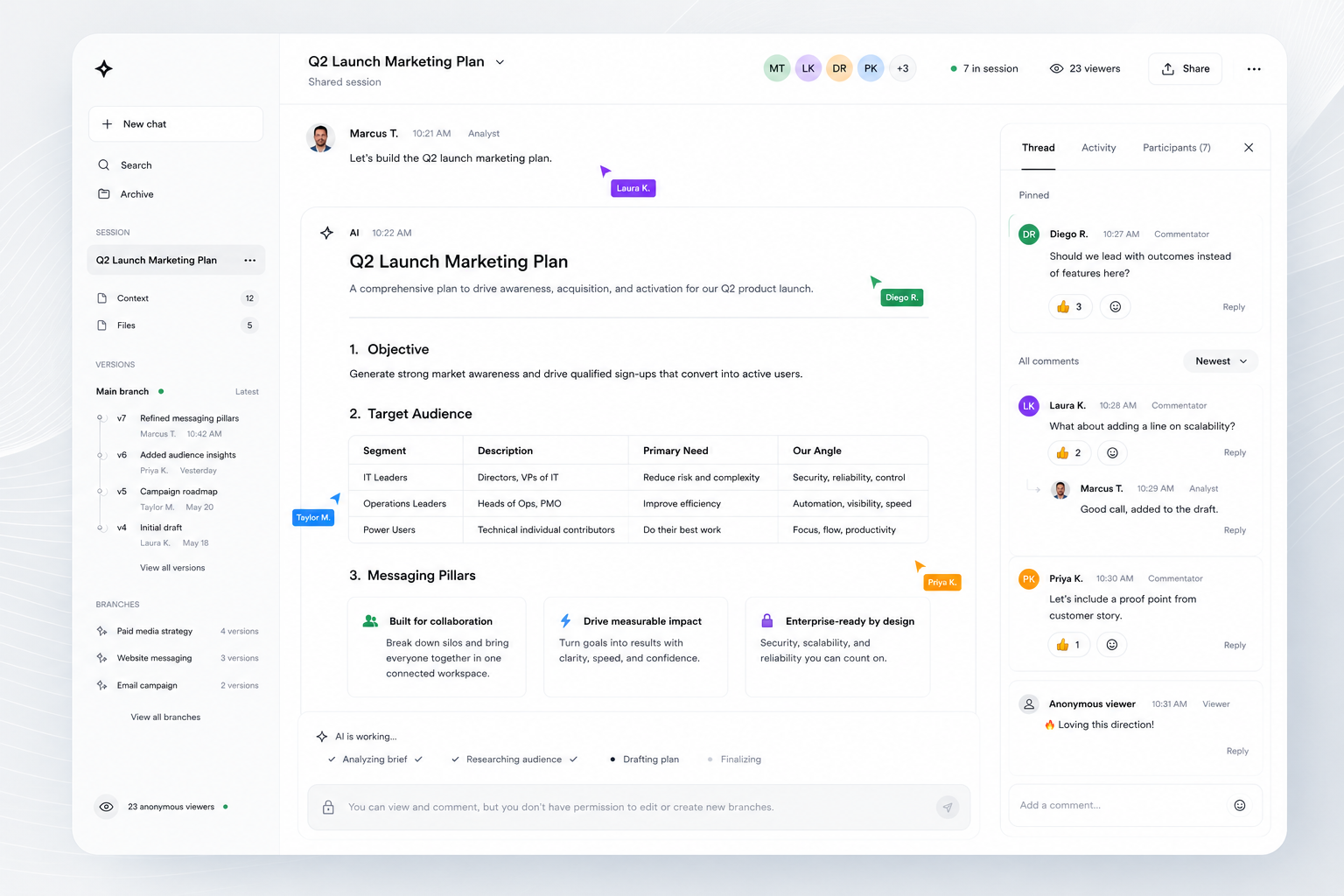
working product (would love to demo live!)

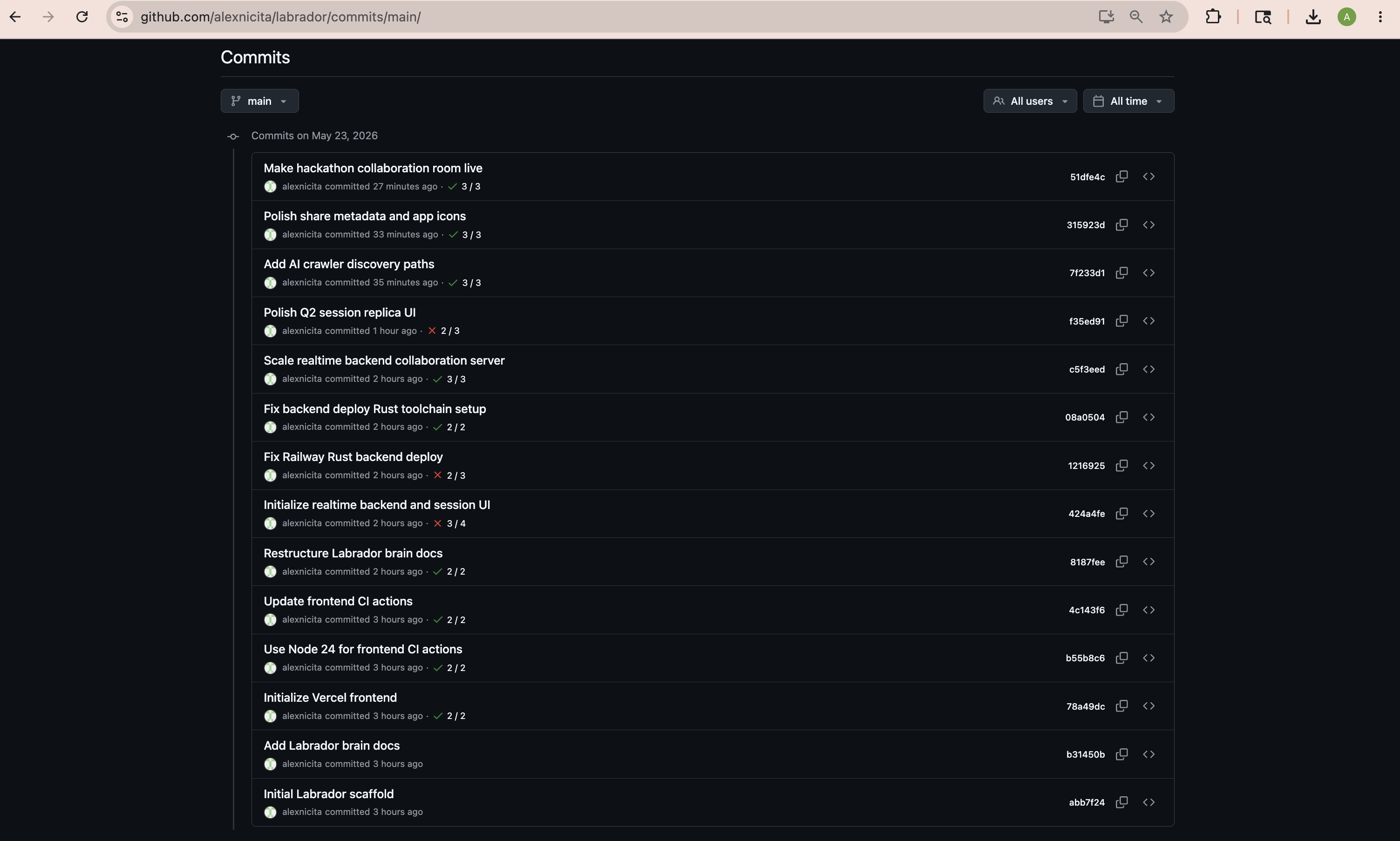
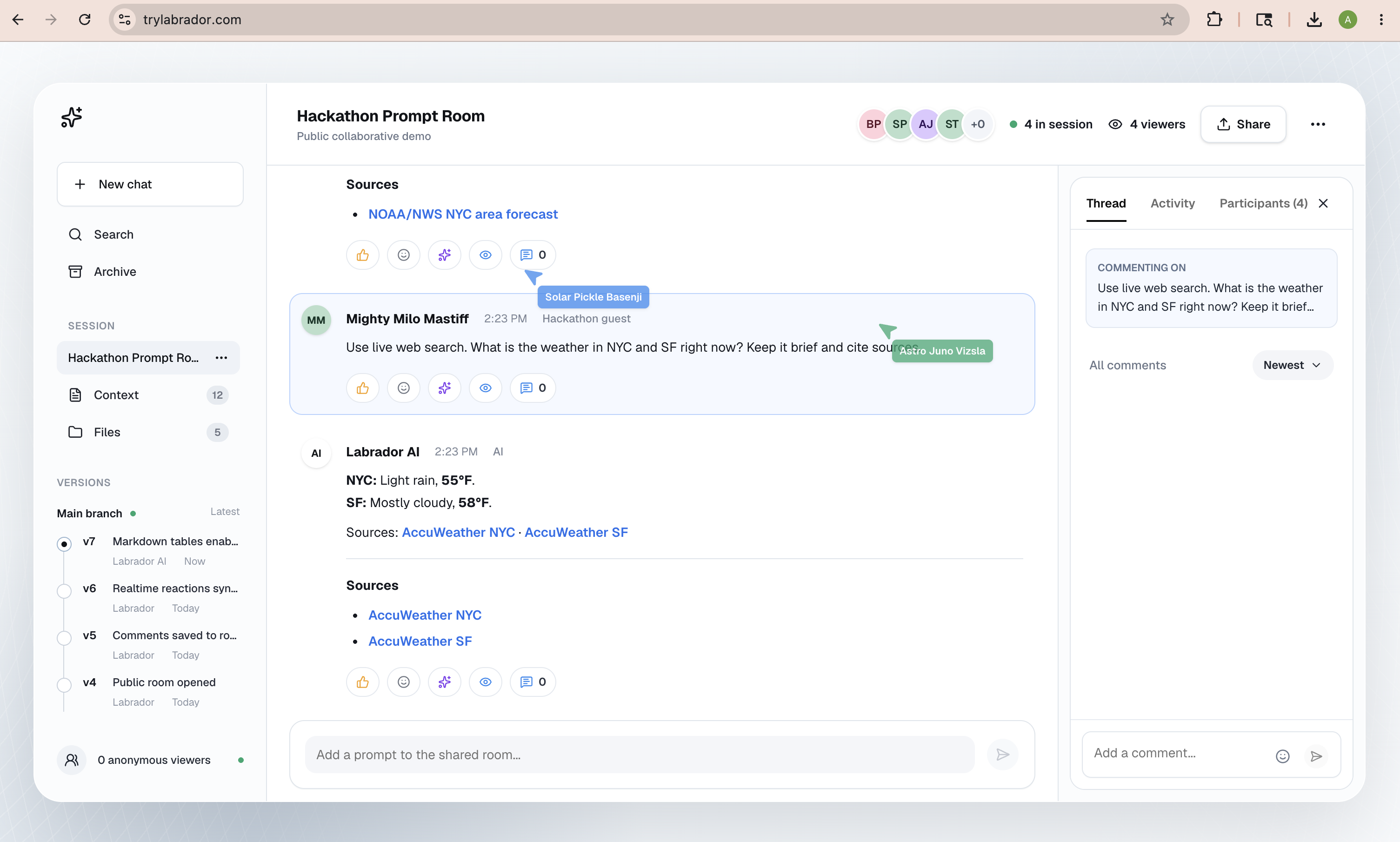
https://www.loom.com/share/016ddaa8401d42c9b19355f6ac5685ff
Project Story
About the Project
Labrador is a realtime multiplayer AI workspace: a shared session where teams can co-edit prompts, watch AI runs live, comment, manage permissions, branch versions, and collaborate from desktop or mobile.
Inspiration
The project was inspired by the gap between how people actually work with AI and how most AI tools are designed. AI work is rarely private for long: prompts get shared, outputs need review, teammates want context, and decisions need history. Labrador treats AI sessions more like Google Docs than private chat.
In short, the goal was:
AI work = collaboration + context + agent orchestration
What I Learned
Building Labrador reinforced how important realtime systems, permission models, and product clarity are. Collaboration is not just presence indicators; it requires server-enforced access, reliable event ordering, reconnection behavior, version history, and clear ownership of every durable write.
I also learned that AI interfaces need to be observable and accountable. Users should know who started a run, what prompt was used, what changed, and how to branch from prior work.
How I Built It
Labrador is designed around a split architecture:
- Next.js on Vercel for the web app, routes, UI, auth surfaces, and standard APIs.
- Rust realtime service on Railway for WebSocket rooms, presence, live editing, viewer counts, and run fanout.
- Neon/Postgres as the durable source of truth for users, workspaces, sessions, permissions, messages, comments, runs, versions, and audit records.
The product centers on shared sessions rather than isolated chats, with explicit events for collaboration and durable records for history.
Challenges
The hardest parts were designing collaboration without making it feel bolted on, keeping the realtime path fast, and making permissions reliable at the server layer. Another challenge was balancing immediacy with durability: live edits need to feel instant, but important state still needs a trustworthy source of record.
Mobile support also shaped the design early. A collaborative AI workspace has to remain useful on narrow screens, not just shrink a desktop interface.
Outcome
Labrador became a product for shared AI work: a place where teams can prompt together, review together, branch together, and keep a clear record of how AI-assisted decisions were made.
Built With
- ai
- clickhouse
- comments
- iam
- live-editing
- messages
- neon
- next.js
- nimbleway
- postgresql
- railway
- redis
- rust
- sessions
- share-links
- typescript
- ui
- vercel
- versions
- viewer-counts
- websockets
- workspaces

Log in or sign up for Devpost to join the conversation.