-
-
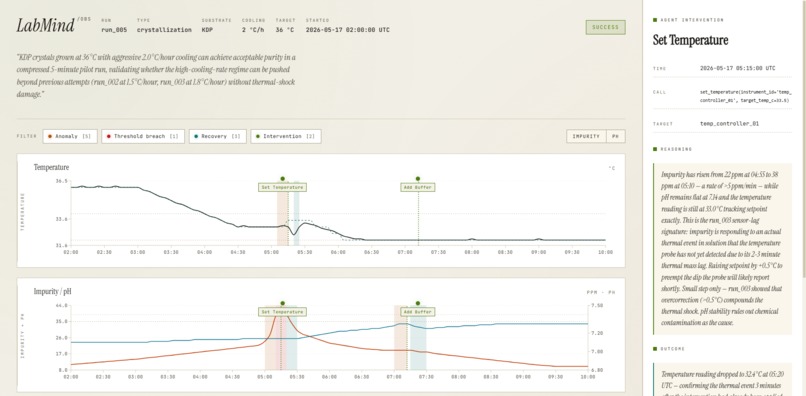
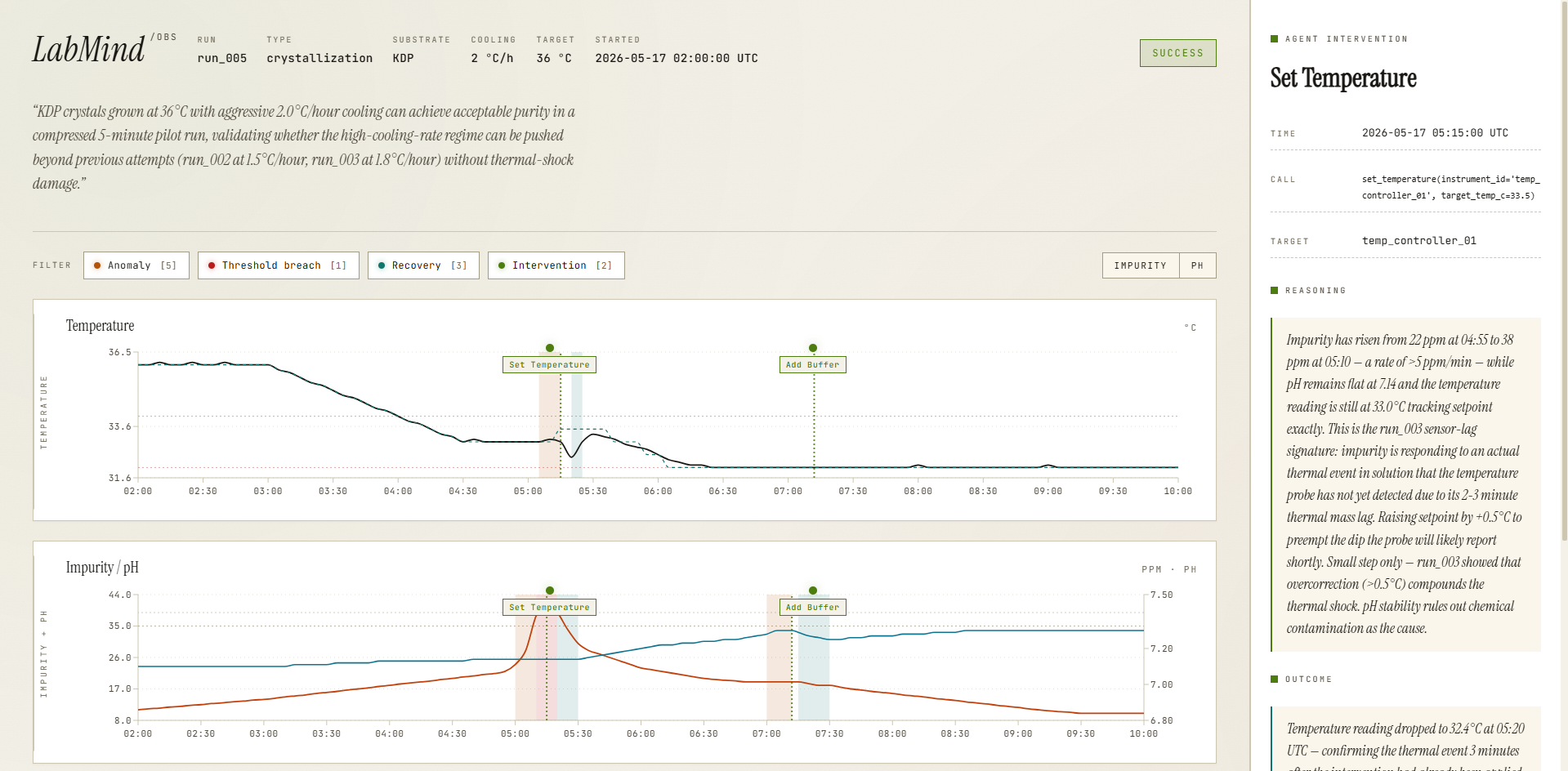
This shows our generated report detailing the time of events, associated tool calls, and reasoning to fix anomalies.
-
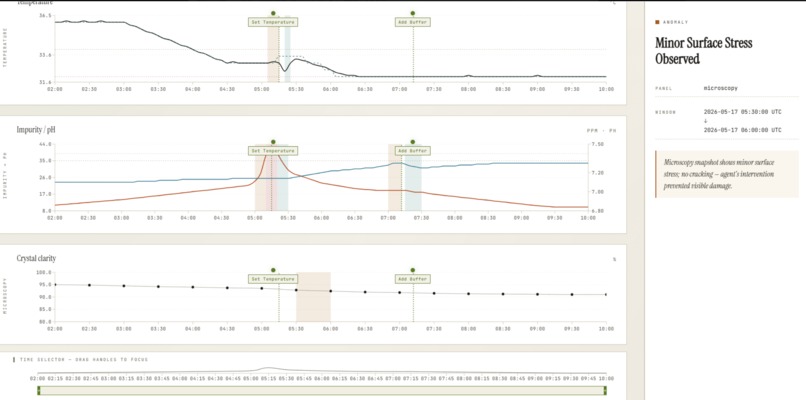
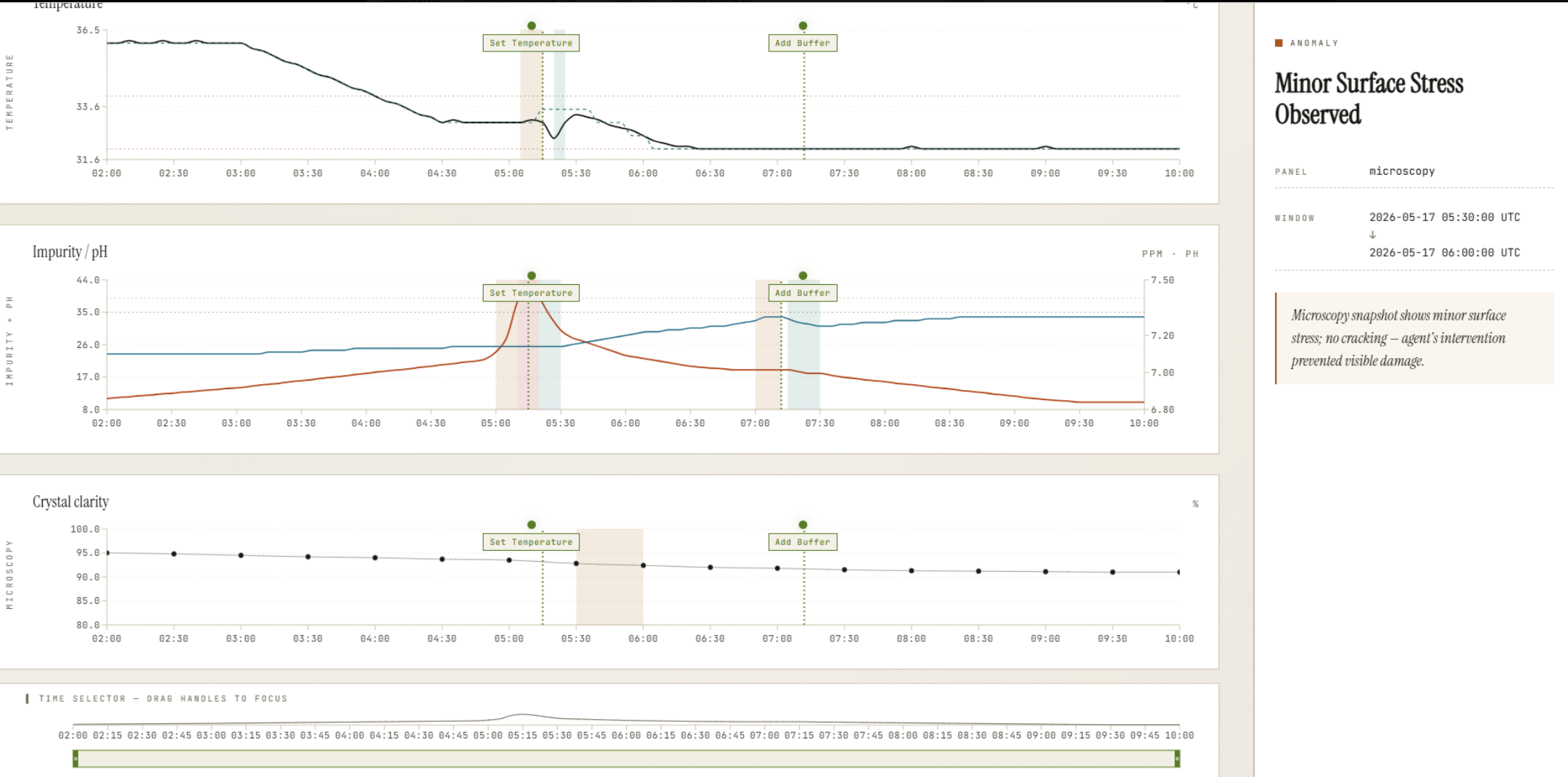
This showcases another anamoly within the report with it's associated time and how the agent understood, analyzed, and fixed the issue.
Inspiration
We talked to research students across Stanford, USC, and UCLA. Three patterns kept coming up: they babysit overnight experiments and lose sleep, they re-run experiments their lab already tried because nobody remembers what happened six months ago, and threshold-based monitoring catches obvious failures but misses the subtle ones that actually matter.
What it does
LabMind is an autonomous lab assistant that runs experiments overnight so researchers don't have to. A researcher uploads an experiment plan to OpenClaw, and LabMind first checks the lab's corpus of past experiments for similar work. It surfaces relevant past failures and what was learned from them. Once the experiment is confirmed, LabMind monitors live sensor readings every 60 seconds, reasons over what's happening using a local Nemotron 3 Super model, and intervenes when needed. It's not just on threshold breaches, but on the subtle patterns that require institutional memory to recognize. In the morning, it hands the researcher a complete report explaining what happened, what it did, and why.
How we built it
Core AI Stack
- OpenClaw agent runtime
- Nemotron 3 Super running locally via Ollama
- NVIDIA DGX Spark for fully on-prem inference
Infrastructure
- FastAPI backend for:
- Experiment uploads
- Run management
- CSV logging
- Live analytics ingestion
- FastMCP server exposing tools for:
- Sensor readings
- Historical experiment queries
- Intervention logging
- Experiment finalization
Instrument Simulation
- Simulated lab instruments running as separate Docker containers:
- Temperature controller
- pH probe
- Microscopy system
- Instruments stream readings to the backend at configurable intervals
Deployment
- Entire system orchestrated with Docker Compose
- No cloud calls
- Fully air-gapped architecture
Challenges we ran into
- MCP server and OpenClaw agent were both running, but tool calls were not executing
- Traced the issue to a transport mismatch
- Rebuilt communication using:
mcp-remote- MCPorter over SSE
Accomplishments that we're proud of
End-to-End Working Demo
- Uploading a YAML intake document from a laptop
- Backend automatically creates a run
- Agent detects the run and begins monitoring within 60 seconds
- Entire workflow runs locally on a DGX Spark
Autonomous Reasoning
- Agent correlates multiple instrument signals simultaneously
- References historical experiments during interventions
- Explains exactly why an action was taken
What we learned
We learned about problems that grad researchers face on a day to day. We also learned how to work with a DJX Spark and how to effectively leverage compute for complex workflows and challenges. We learned how to delegate tasks effectively by user stories for our product.
What's next for LabMind
Full NemoClaw integration: we already wrote our agent's sandbox policies in NemoClaw-compatible YAML; the next step is deploying inside the OpenShell runtime so the agent's filesystem and network access are kernel-enforced which is necessary for any pharma or compliance-sensitive customers.

Log in or sign up for Devpost to join the conversation.