-
-
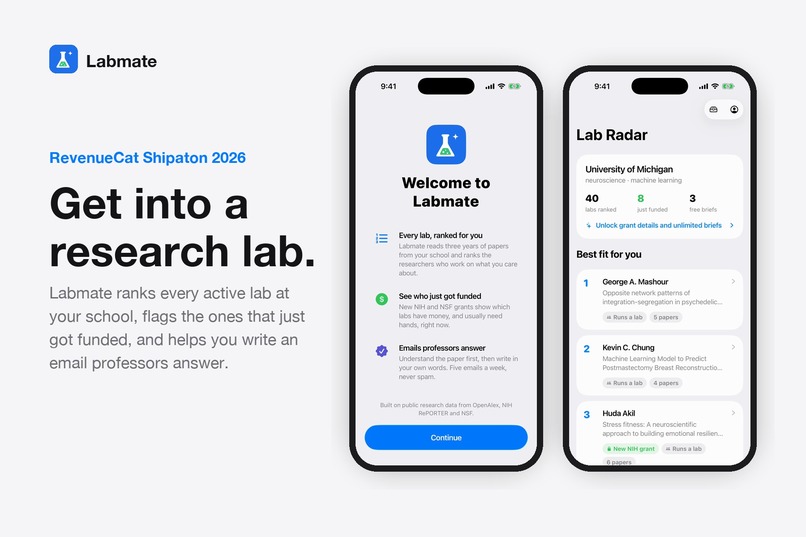
Labmate: get into a research lab.
-
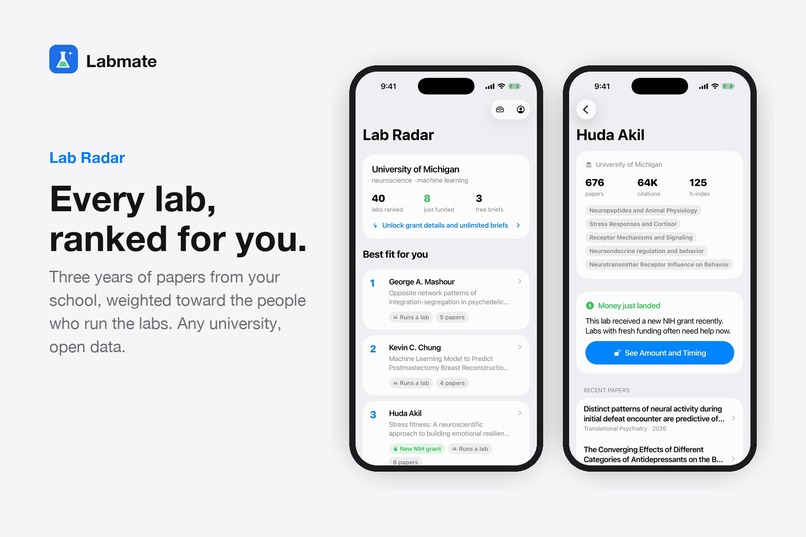
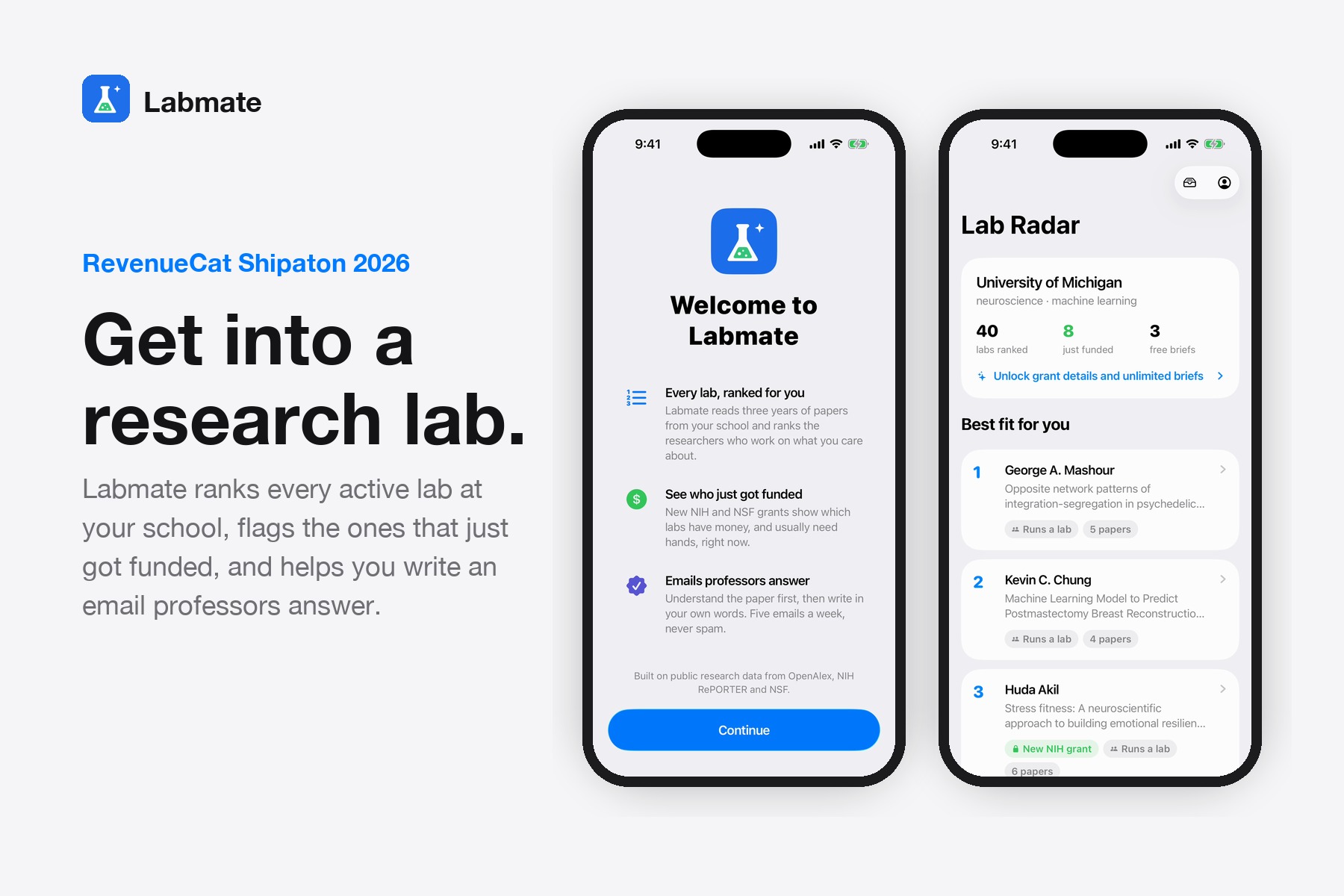
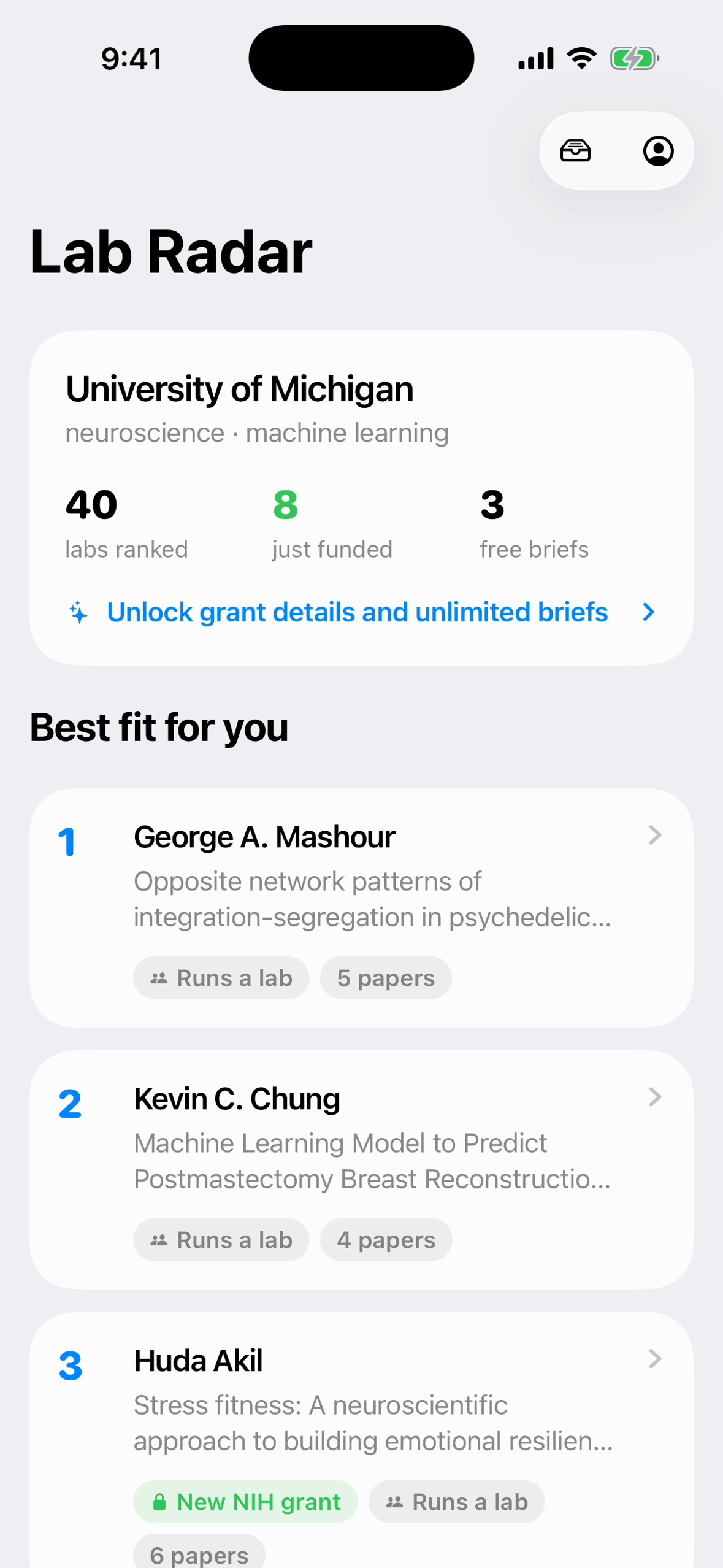
Lab Radar: every active lab at your school, ranked by fit.
-
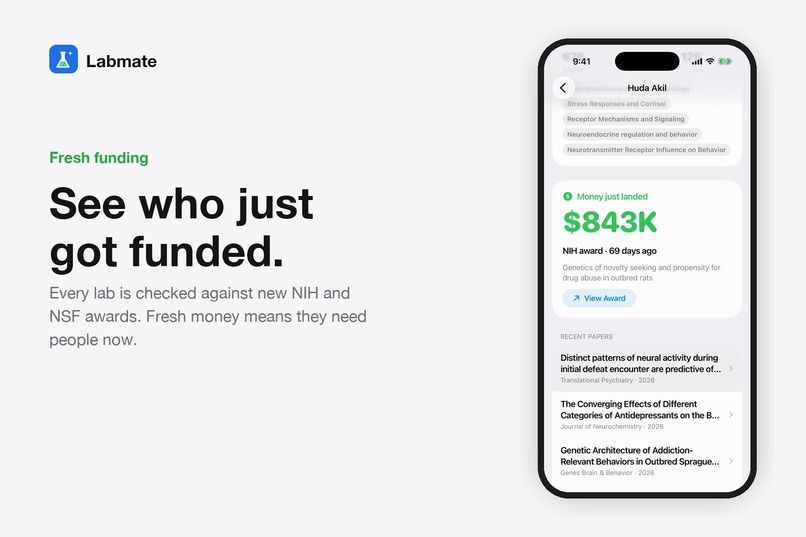
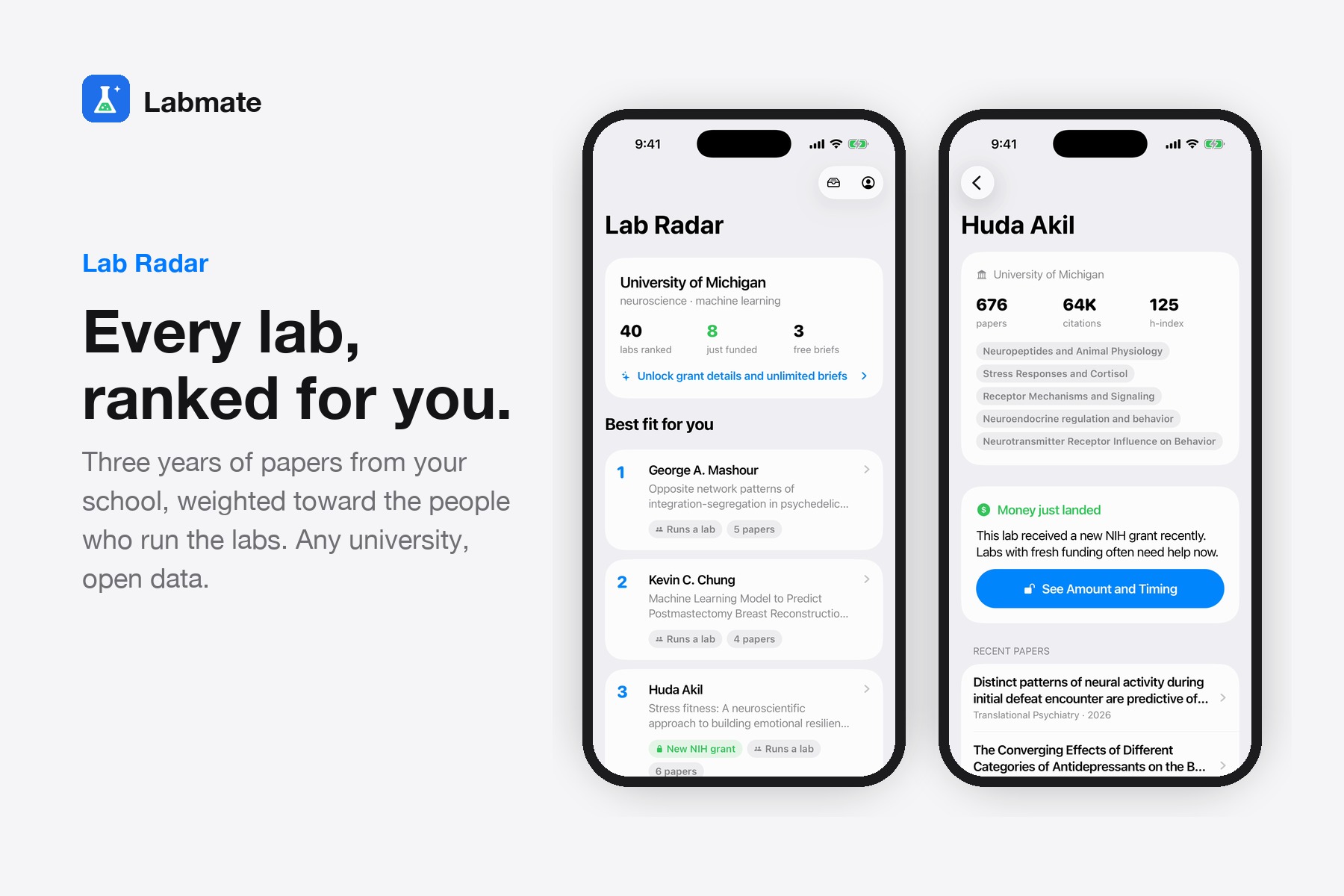
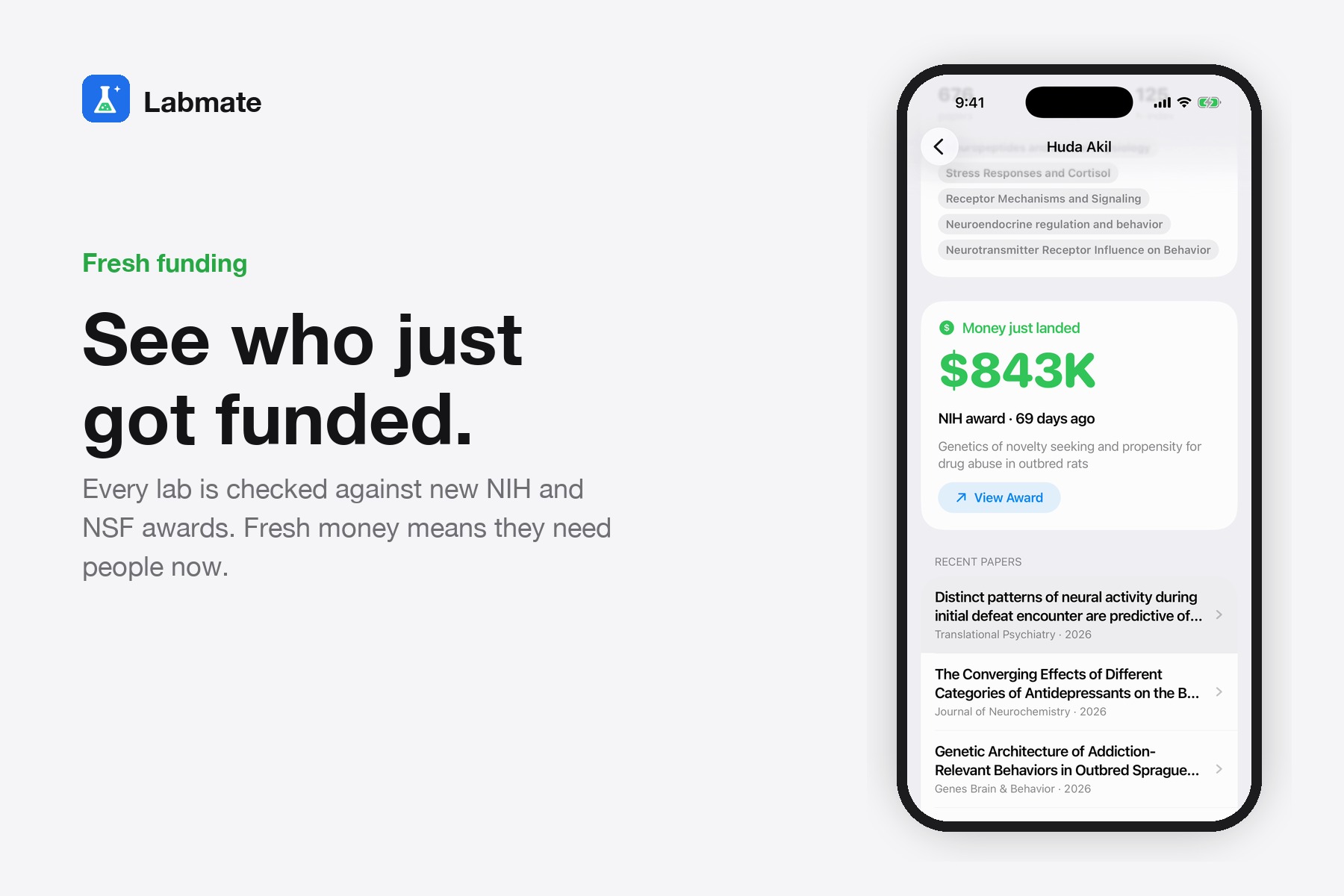
Fresh funding: new NIH and NSF grants flagged on every lab.
-
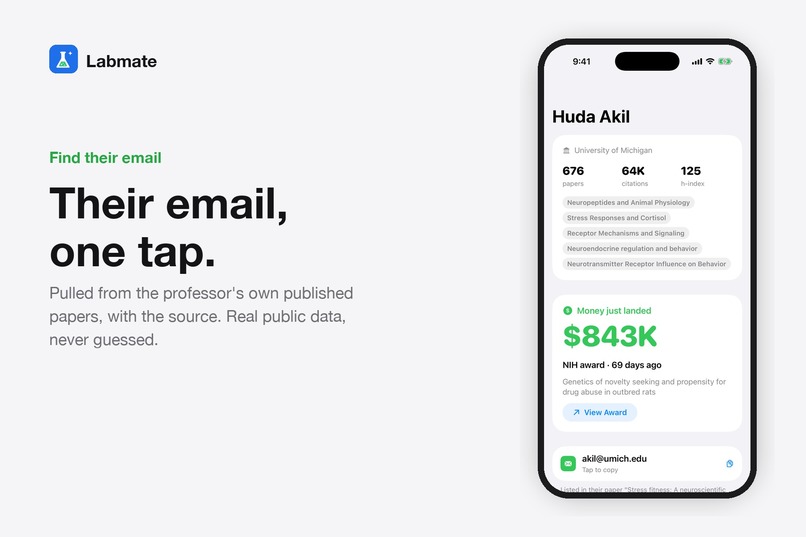
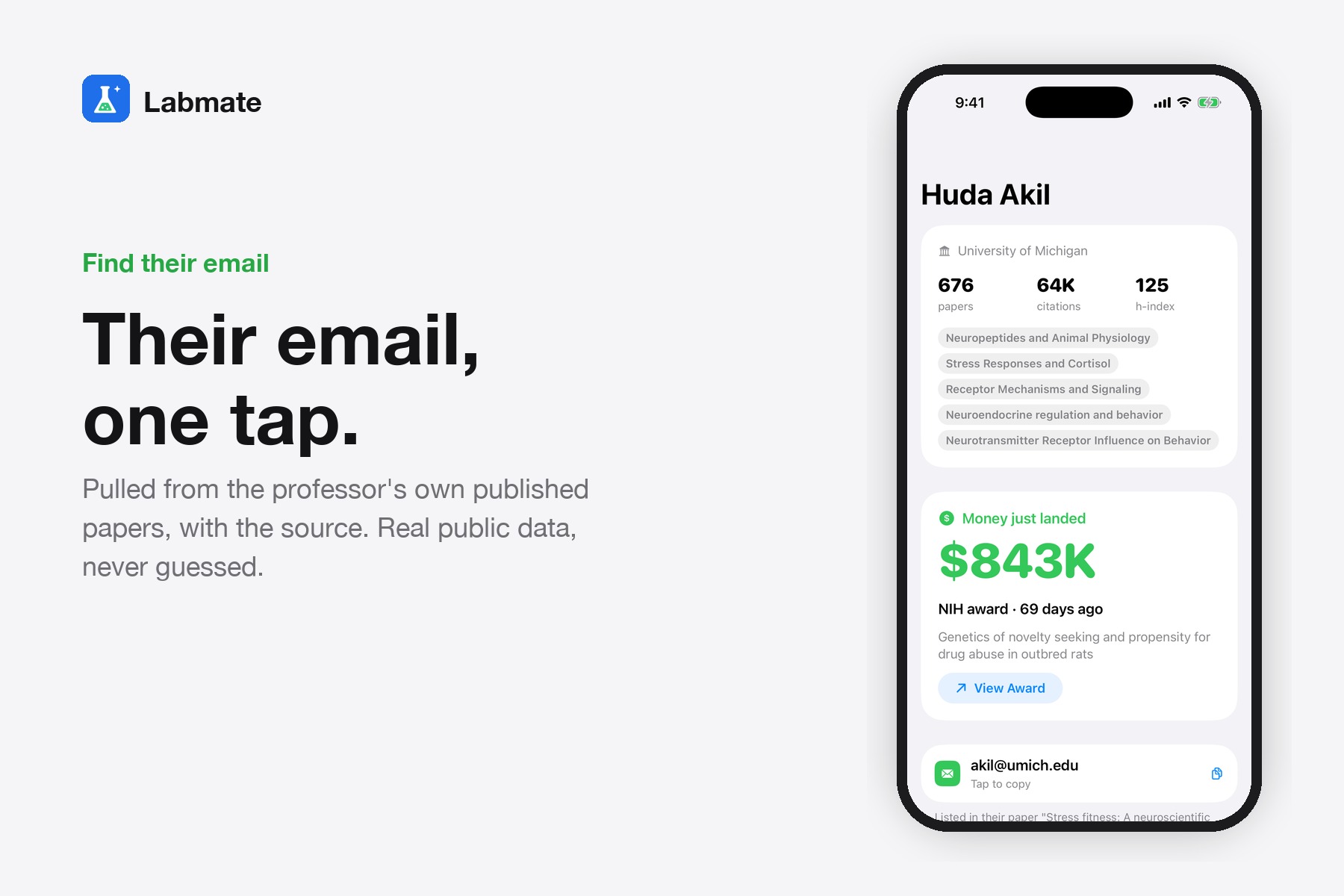
Their email, one tap: pulled from the professor's own papers.
-
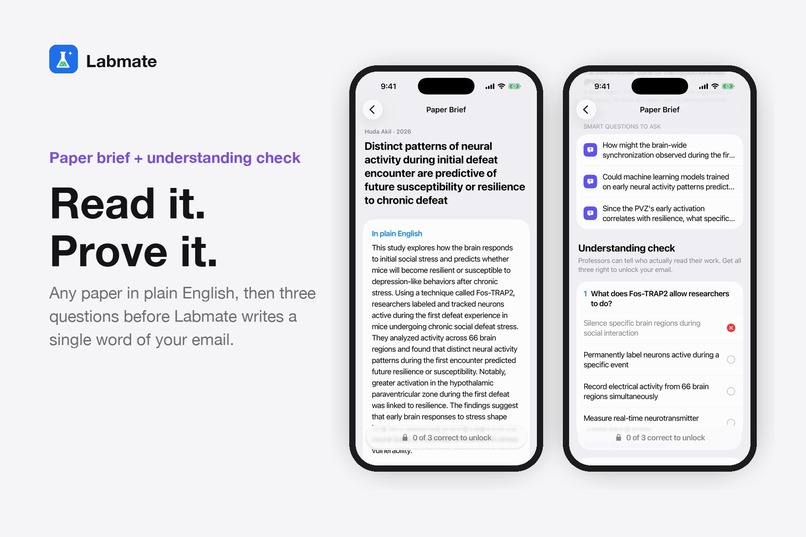
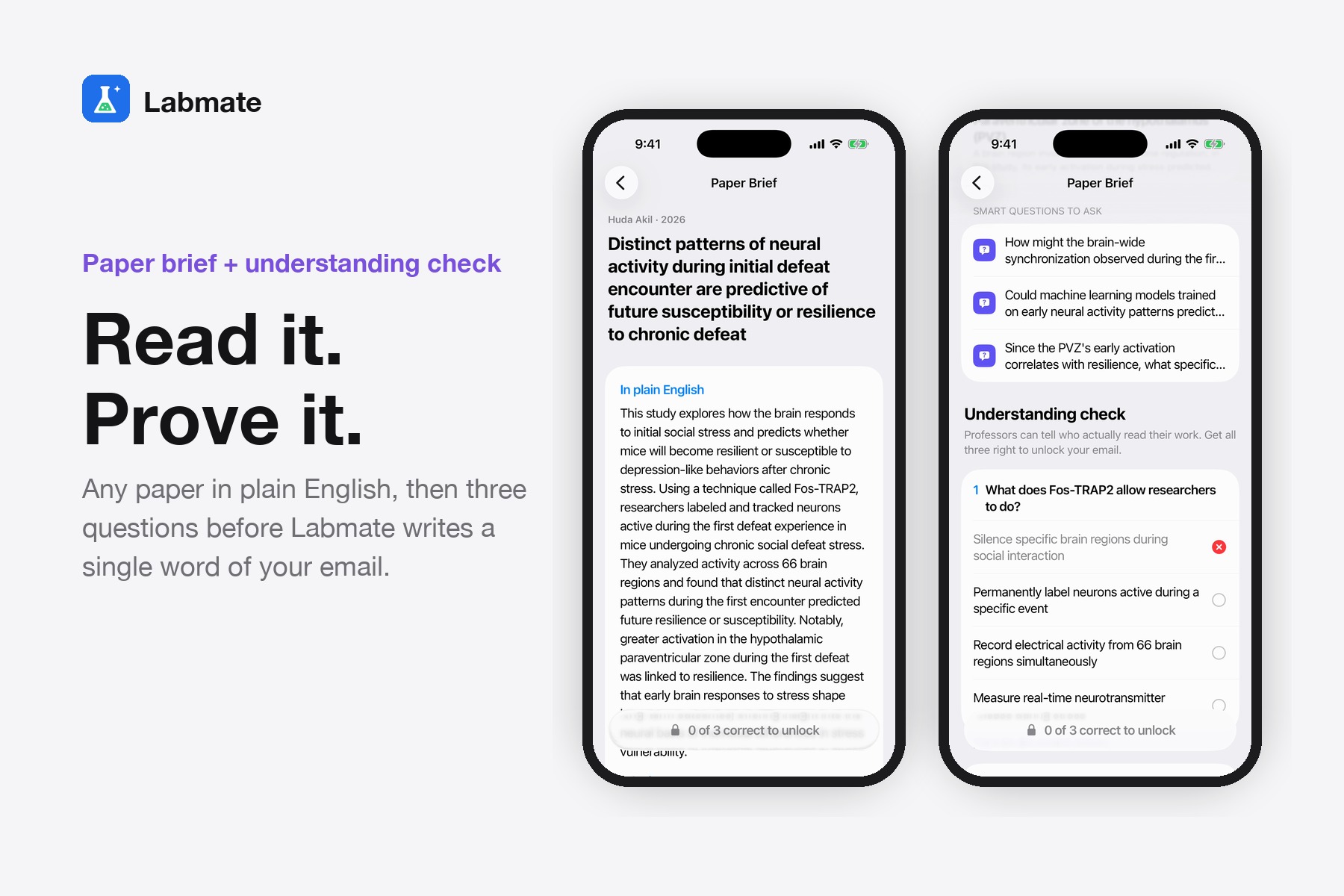
Paper brief in plain English, then a 3-question understanding check.
-
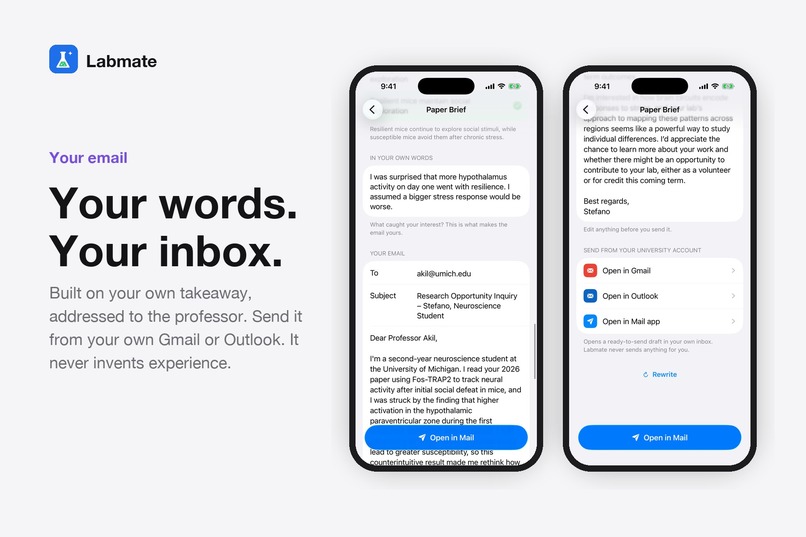
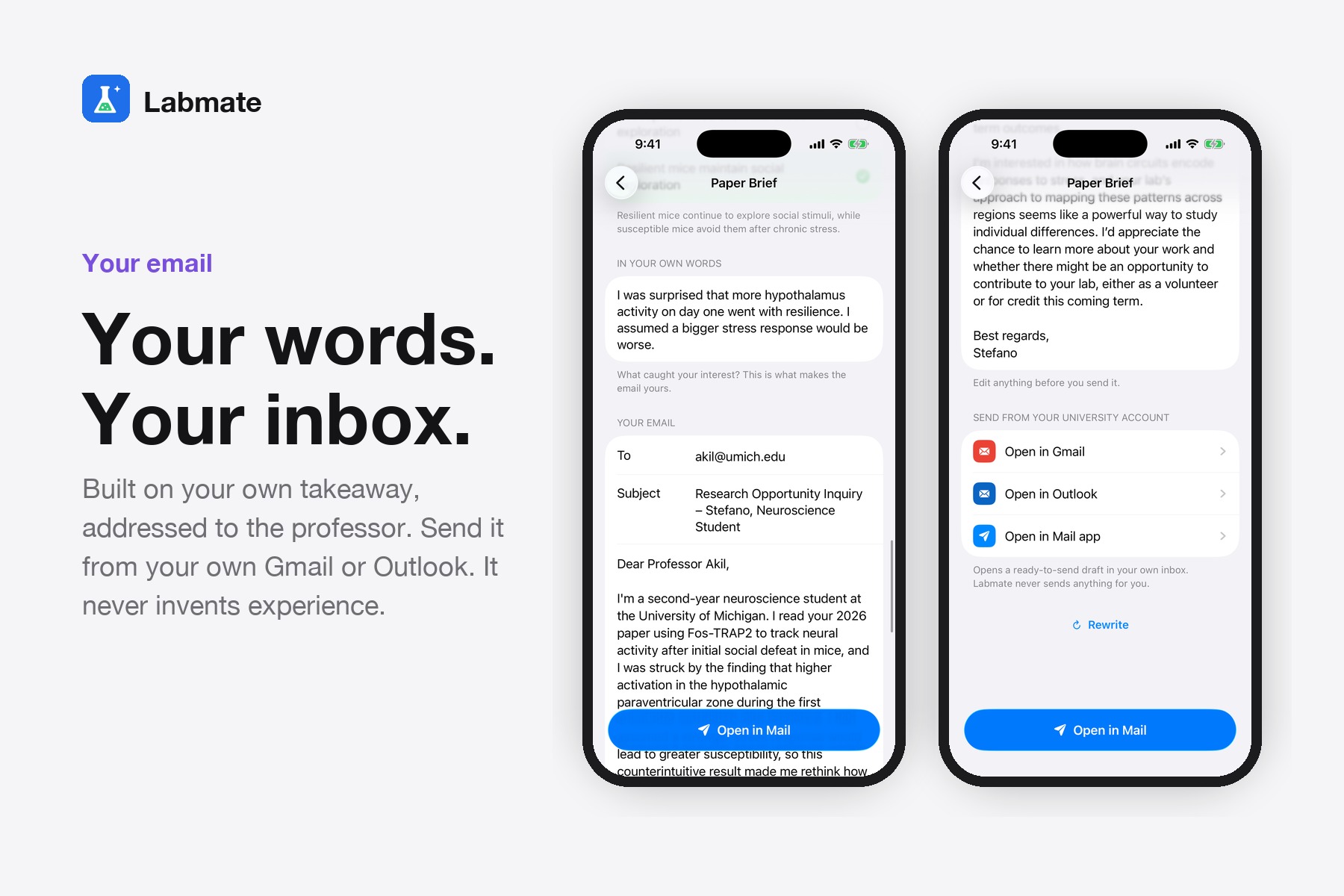
Your words, your inbox: a draft built on your takeaway, sent from Gmail or Outlook.
-
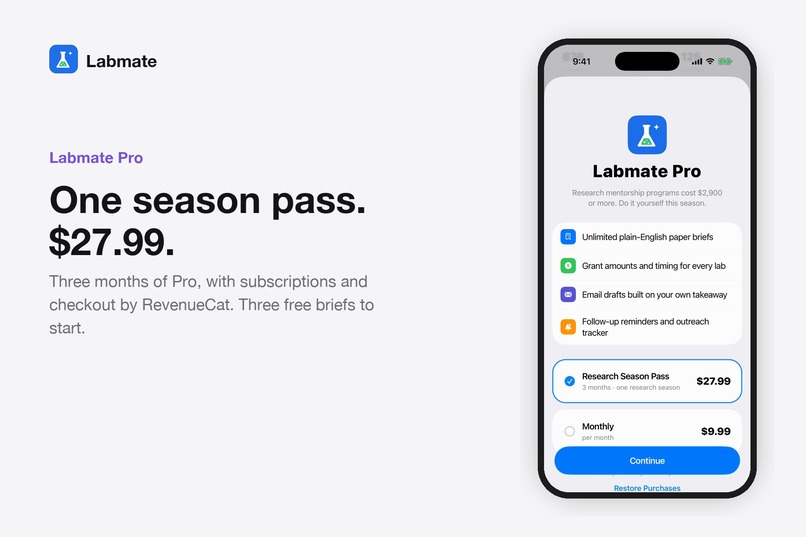
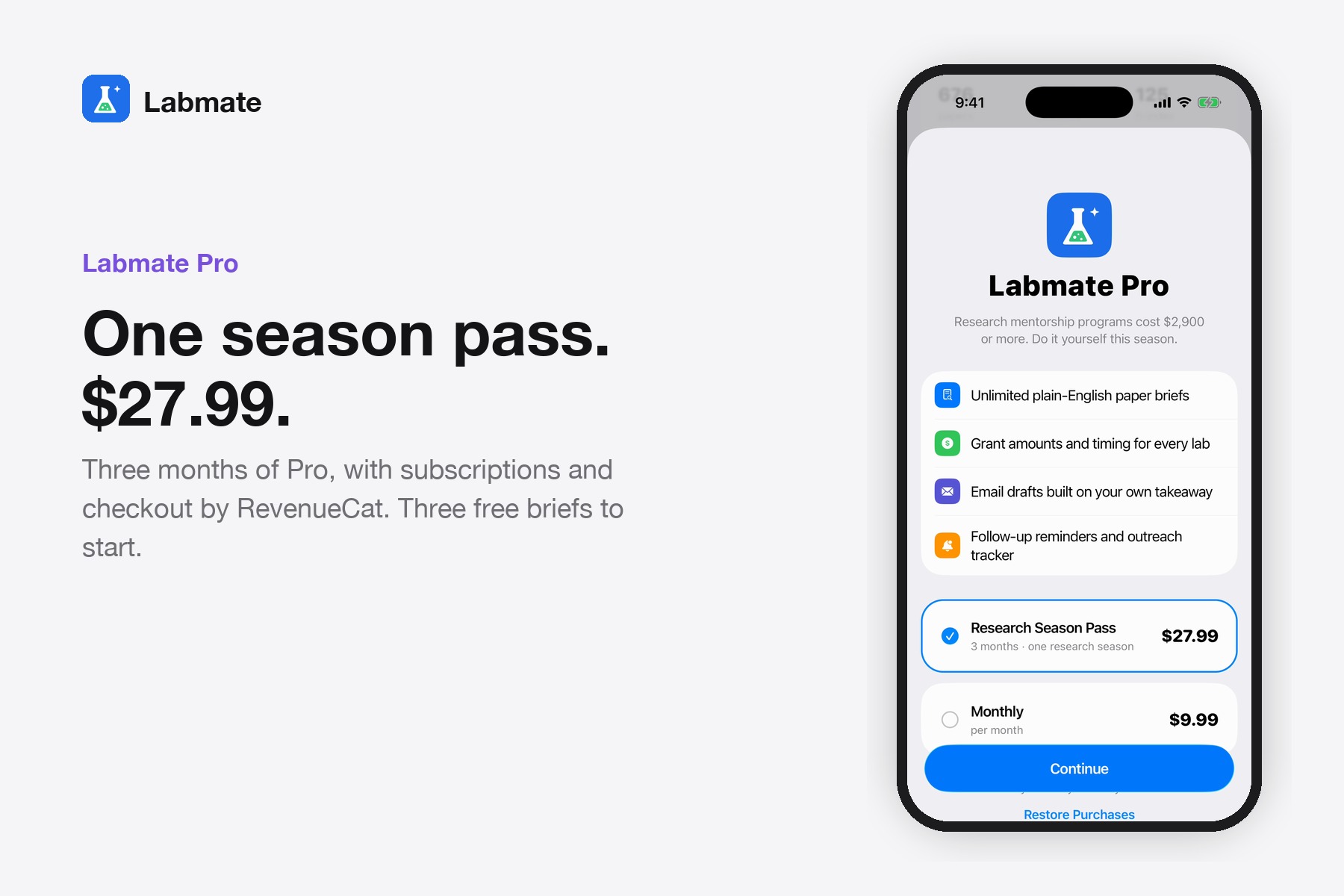
Labmate Pro: a $27.99 Research Season Pass, with checkout by RevenueCat.
-
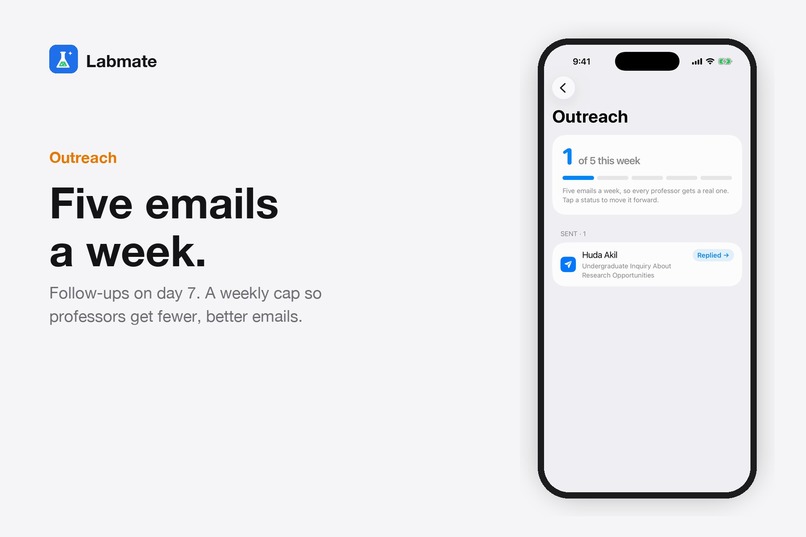
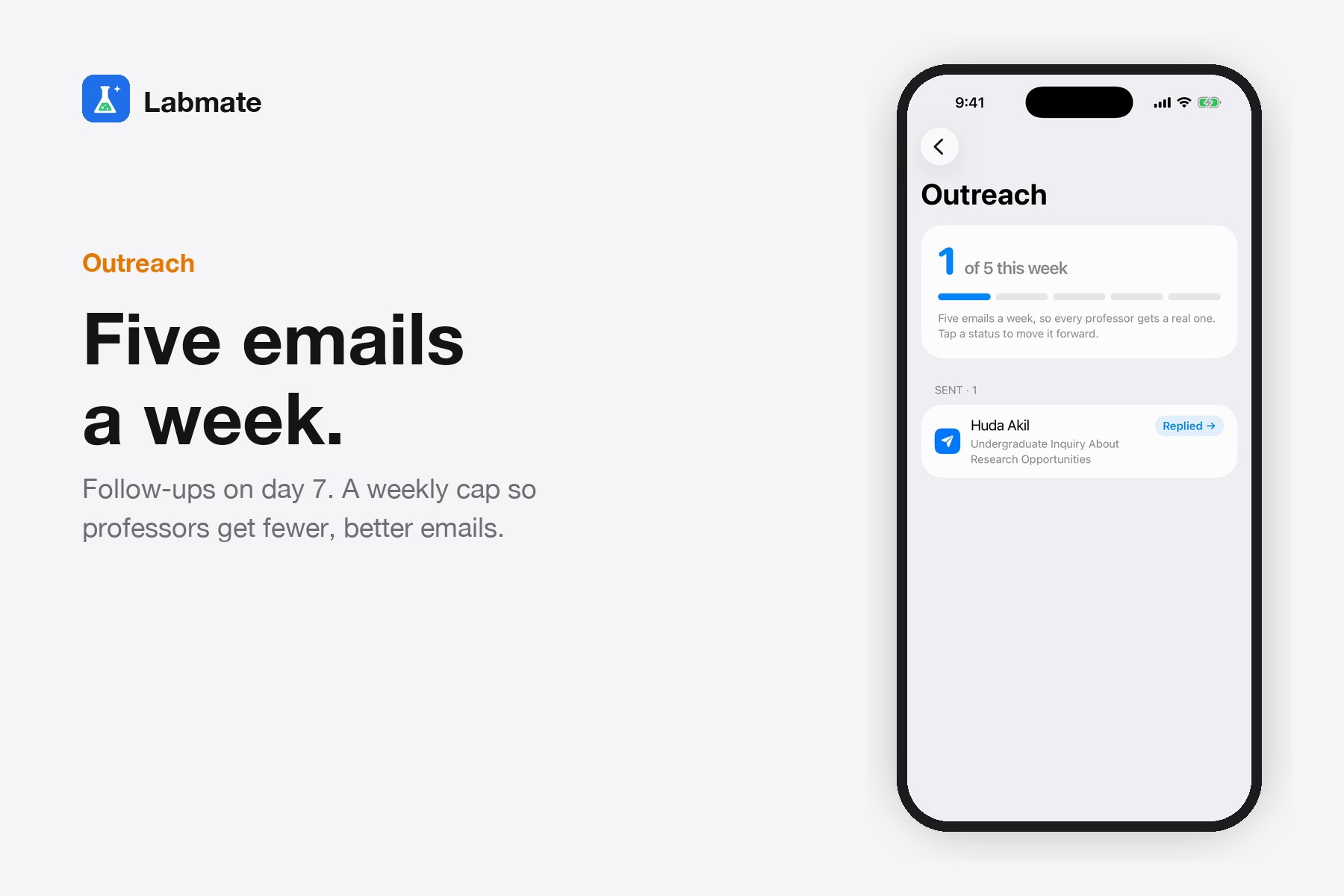
Outreach tracker: five emails a week, follow-ups on day 7.
-
App icon (1024 × 1024).
-
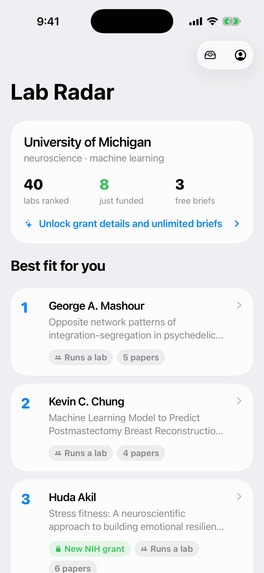
Lab Radar, raw iPhone screenshot without a device frame.
Inspiration
Research experience is close to required for med school and PhD applications, and a big edge for internships. But the only way in is cold-emailing professors, and most emails go unanswered because they're generic. Families pay research-mentorship programs $2,900 to $8,900 just to get a foot in the door. We're students who went through this, and we wanted to build the tool we wished we'd had.
What it does
- Lab Radar: pick your university and interests. Labmate reads three years of papers from your school (OpenAlex) and ranks every active researcher by fit, weighted toward the people who run labs.
- Money just landed: Labmate cross-checks NIH RePORTER and NSF awards. A lab that got a new grant weeks ago probably needs hands now, and almost no student knows to look for this.
- Their email, one tap: Labmate finds the professor's address in the author details of their own published papers (Europe PMC) and shows which paper lists it. Real public data, never guessed.
- Paper brief: any recent paper explained in plain English, with key terms and smart questions to ask.
- Understanding gate: before Labmate writes anything, you pass a 3-question quiz on the paper and write your own takeaway. The email is built around your words, addressed to the professor, and it never invents experience you don't have.
- Your inbox, not ours: open the draft in your own Gmail, Outlook or Mail app. Labmate never sends anything for you.
- Outreach tracker: follow-up reminders at day 7 and a cap of 5 emails a week, so professors get fewer, better emails.
How we built it
- Expo (SDK 57) + Expo Router + TypeScript, for iOS, Android and the web.
- Designed to Apple's Human Interface Guidelines for iOS 26: Liquid Glass (
expo-glass-effect) on the controls only, SF Symbols, SF Pro and SF Pro Rounded, system colors with dark mode, native large-title headers and haptics. - Data: OpenAlex (researchers and papers), NIH RePORTER and NSF Awards (grants), Europe PMC (professor emails). The ranking is a pure, unit-tested function.
- AI: structured outputs (zod schemas → JSON Schema) for briefs, quizzes and drafts, served from Vercel functions. It runs on Qwen through OpenRouter for about $0.0006 per brief (Claude is supported as a drop-in). Slow or broken answers are retried on another provider, and a brief is prefetched when the lab page opens so it's usually ready by the tap. Keys stay server-side; OpenAlex and NIH are proxied with caching, a parameter allowlist and a per-IP rate limit.
- RevenueCat: entitlement
pro, an offering with a 3-month Research Season Pass ($27.99) and a monthly plan ($9.99), a plan picker, restore purchases, and the customer-info listener so Pro unlocks instantly. Free tier: 3 briefs. The same RevenueCat setup runs in the web build. - Tooling: ESLint, Vitest (app + server tests), GitHub Actions CI on every PR, EAS build profiles.
How it uses RevenueCat
- Seasonal pricing that matches how students actually search for labs: a Research Season Pass instead of a forever subscription.
- A natural upsell: the fresh-grant details and unlimited briefs are gated behind
pro, and free users can see that a lab just got funded. - Parent checkout: "Ask a Parent to Pay" shares a RevenueCat Web Purchase Link (RevenueCat Billing + Stripe) tied to the student's app user ID, so a parent can pay on the web and the student's Pro unlocks live.
Challenges we ran into
- OpenAlex started requiring API keys in 2026, so we moved every call behind a caching proxy.
- Matching the same person across OpenAlex, NIH, NSF and Europe PMC, which all format names and institutions differently.
- Making an AI email tool that professors won't hate. The quiz gate and the weekly cap are product decisions, not just features.
Accomplishments that we're proud of
- Works for any university on day one, with no partnerships and no scraping, using only open data.
- The "money just landed" signal: public grant data turned into an unfair advantage for students.
What we learned
Monetization design is product design: who pays (parents), when (application season) and what feels fair (a season pass).
What's next for Labmate
- Mock lab interviews generated from the lab's own papers.
- A high-school edition: summer research programs and mentor matching.
- Publishing to the App Store and Google Play before the spring research season.
Built With
- europe-pmc
- expo.io
- github-actions
- liquid-glass
- nih-reporter
- nsf
- openalex
- openrouter
- qwen
- react-native
- react-native-web
- revenuecat
- sf-symbols
- stripe
- typescript
- vercel
- vitest
- zod

Log in or sign up for Devpost to join the conversation.