-
-
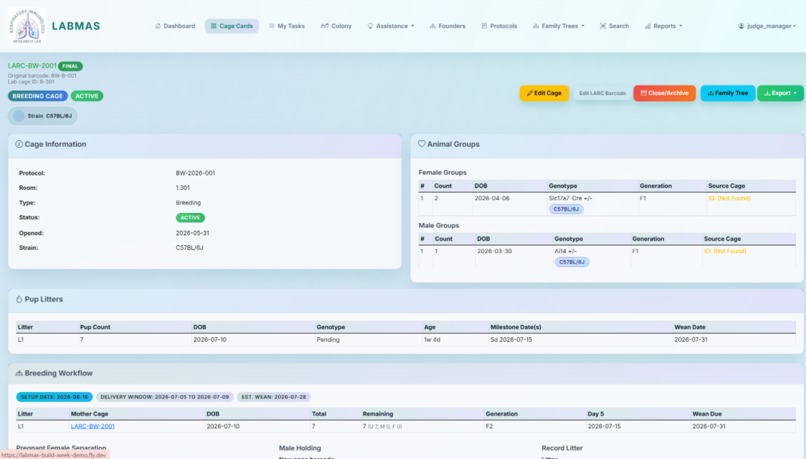
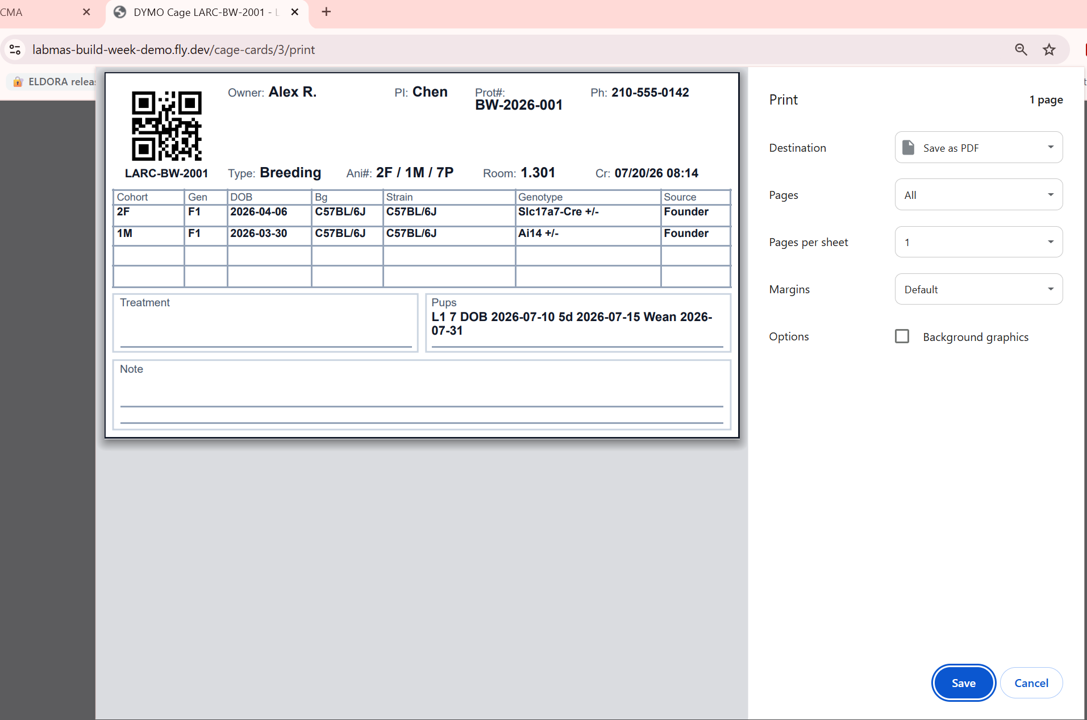
Cage card dashboard
-
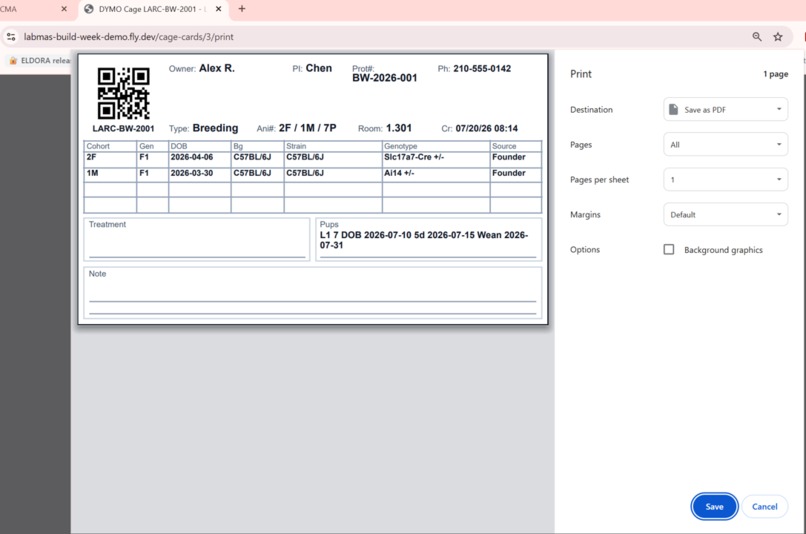
cage card auto-print
-
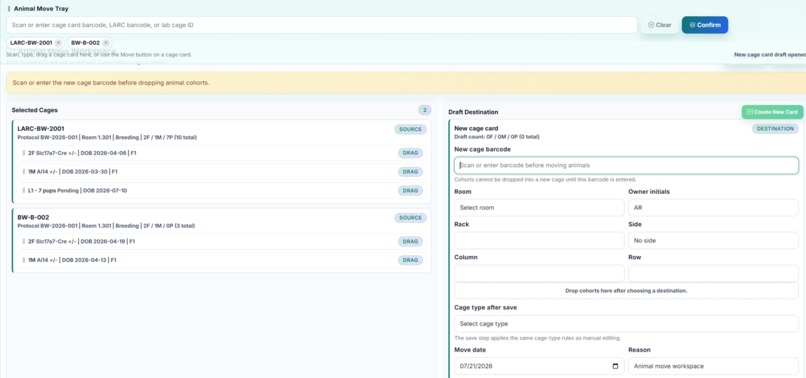
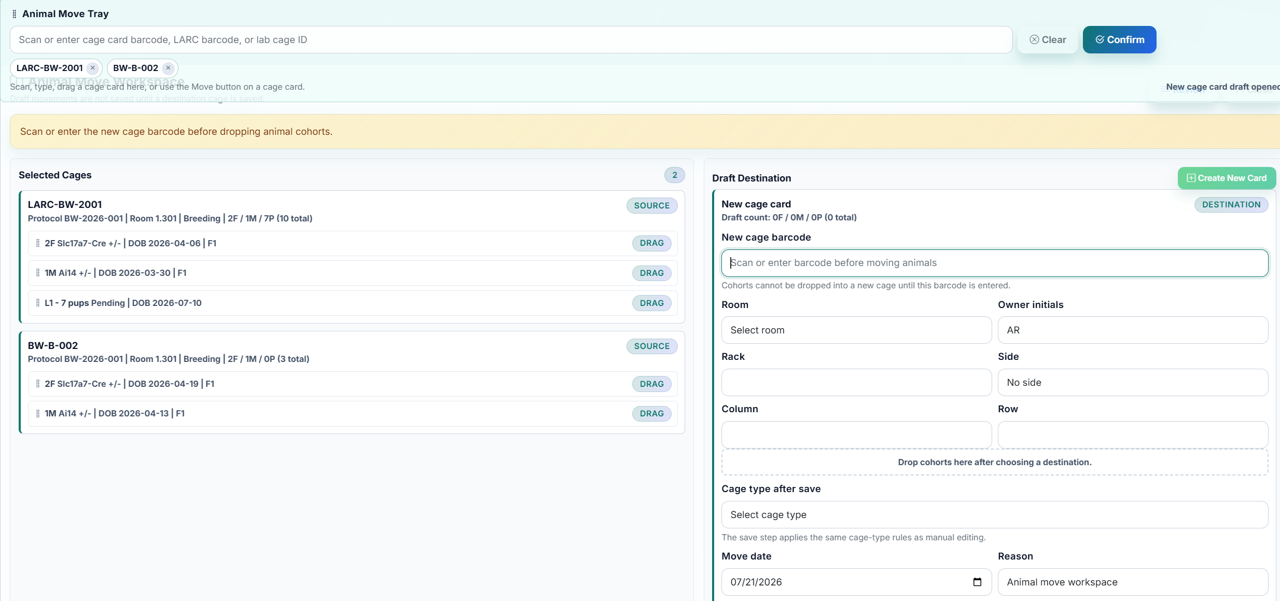
Animal movement-auto
-
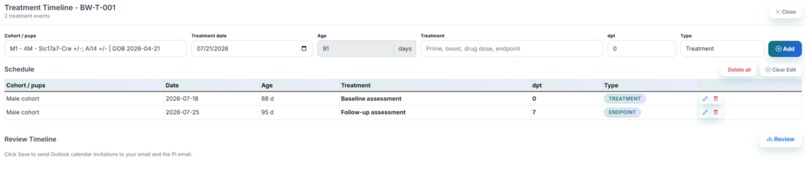
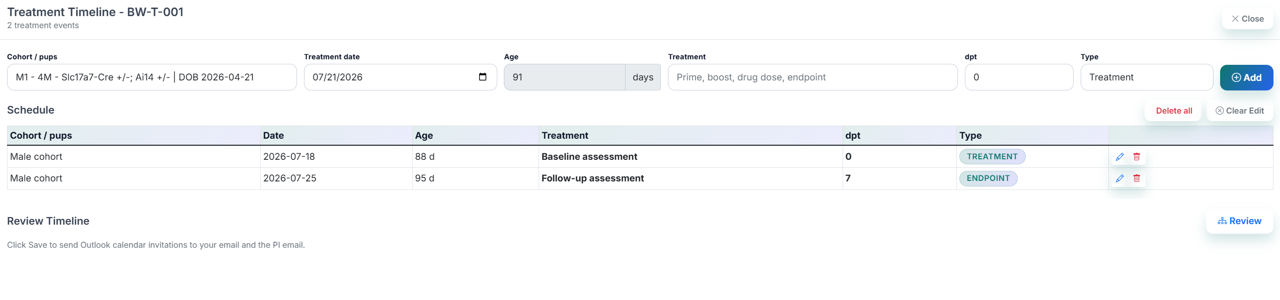
Timeline event setup for treatment-experiment reminder
-
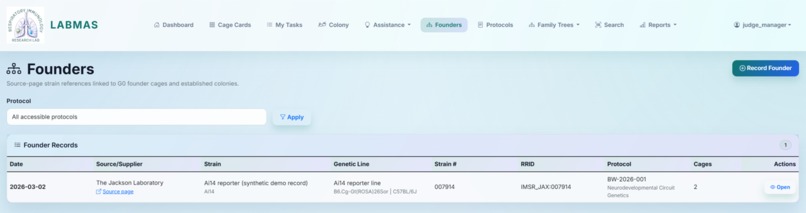
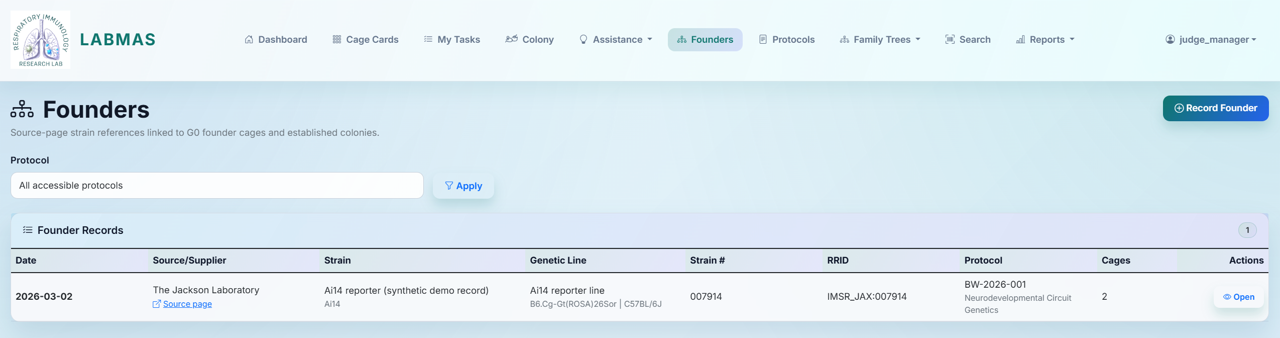
Founders of colonies
-
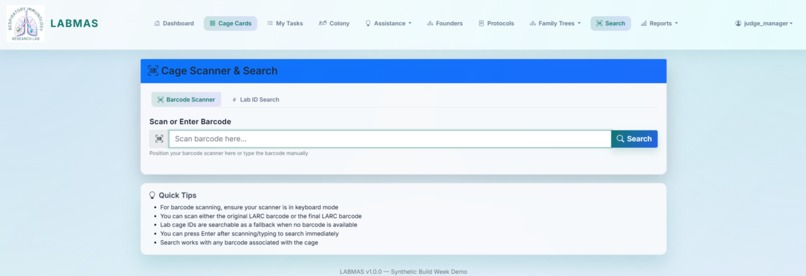
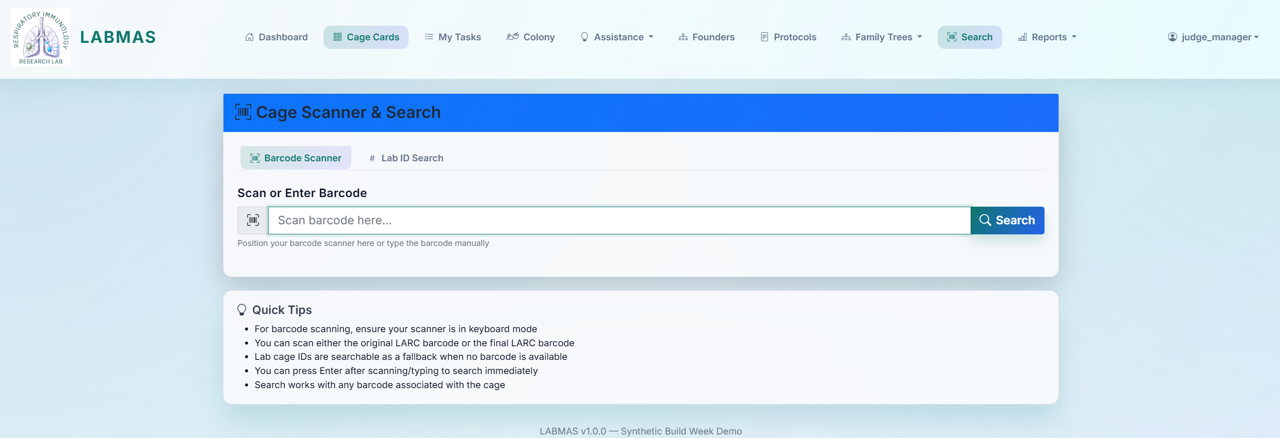
barcode scan for cage card
-
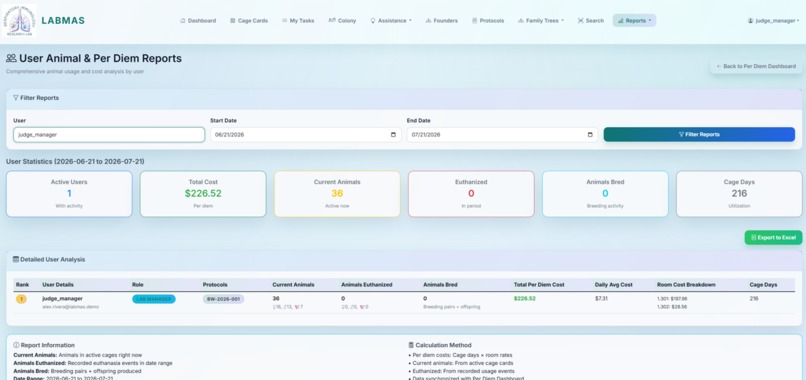
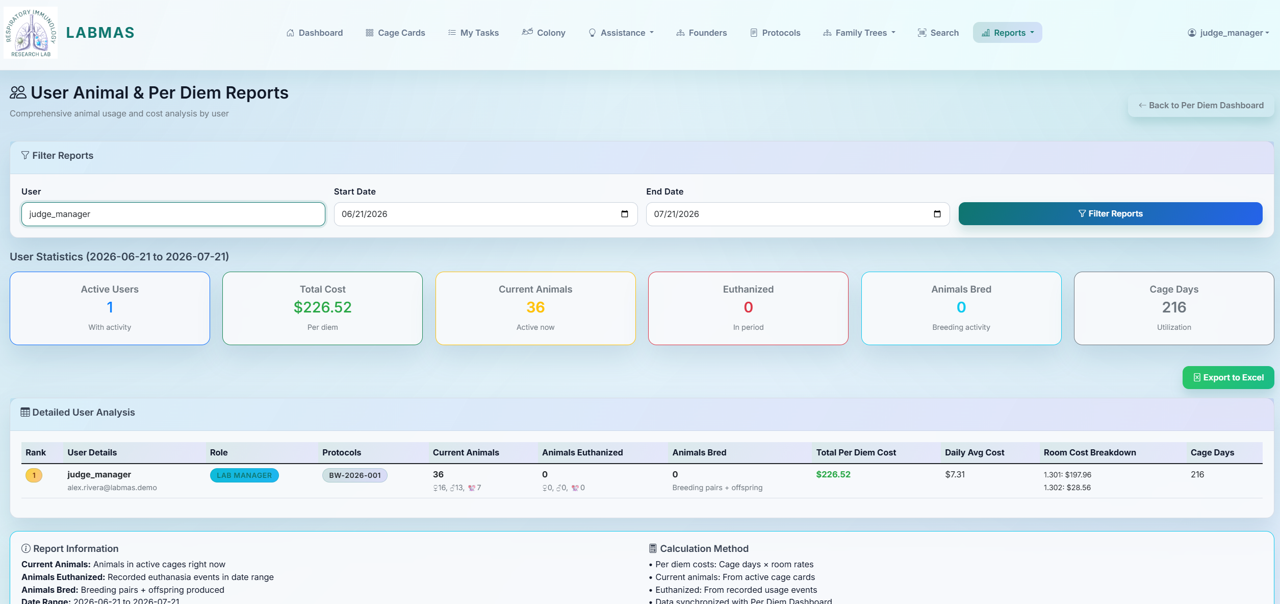
user report
-
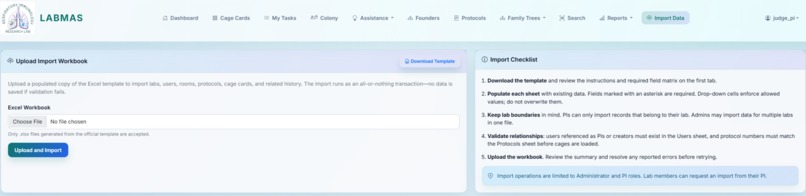
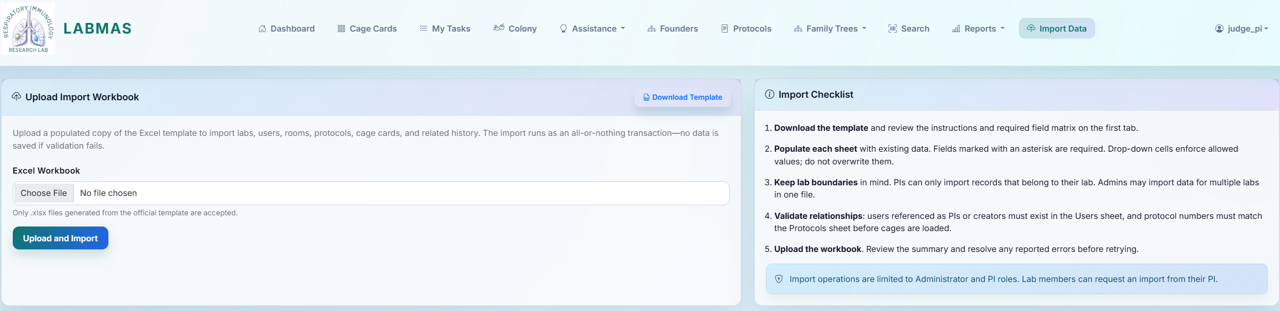
Import data-help-user-to-imgrate-to-LABMAS
-
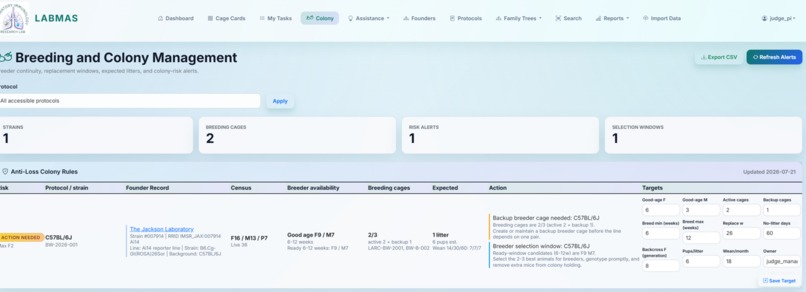
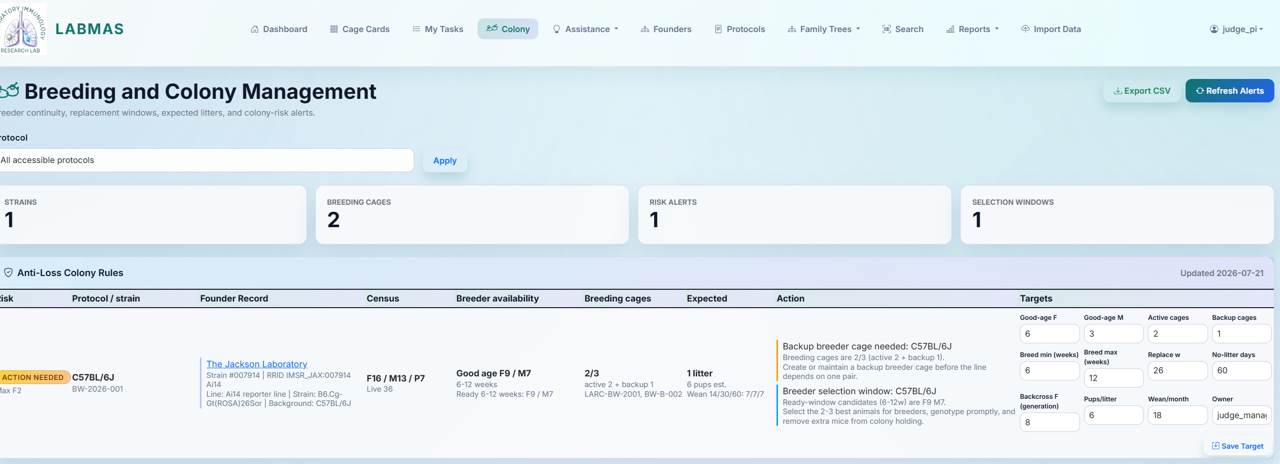
colony-record
-
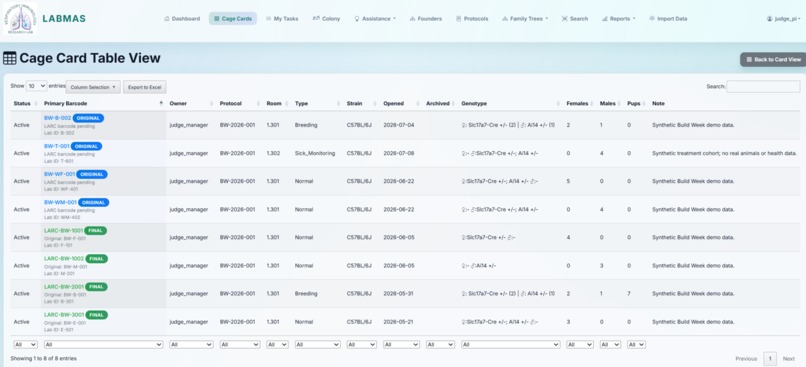
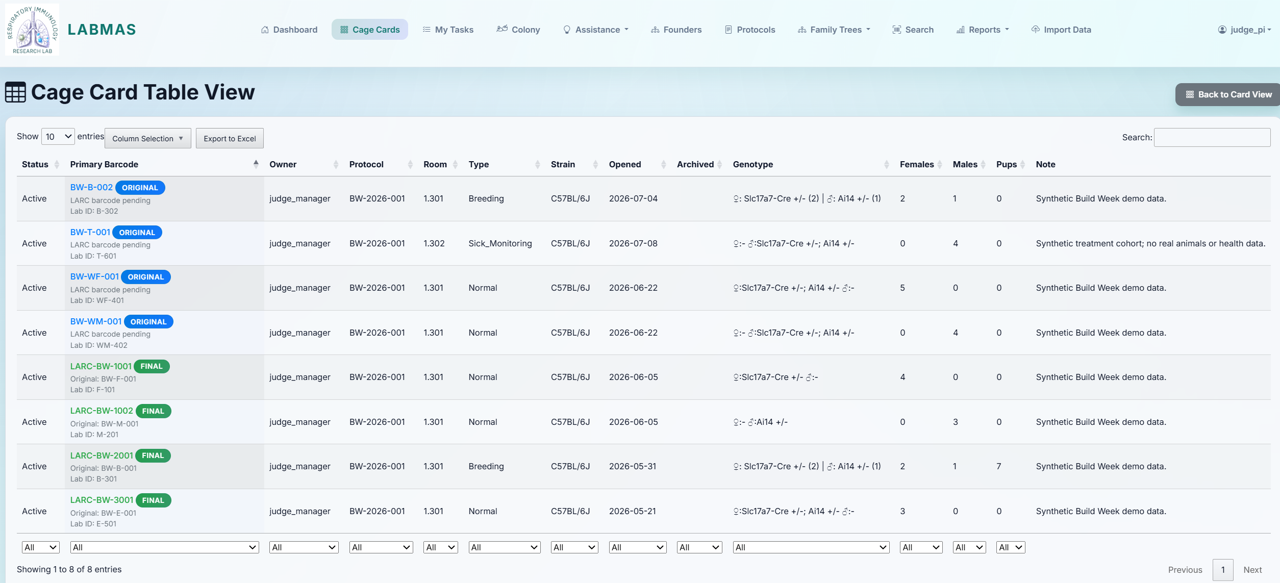
cage-card-as-table
-
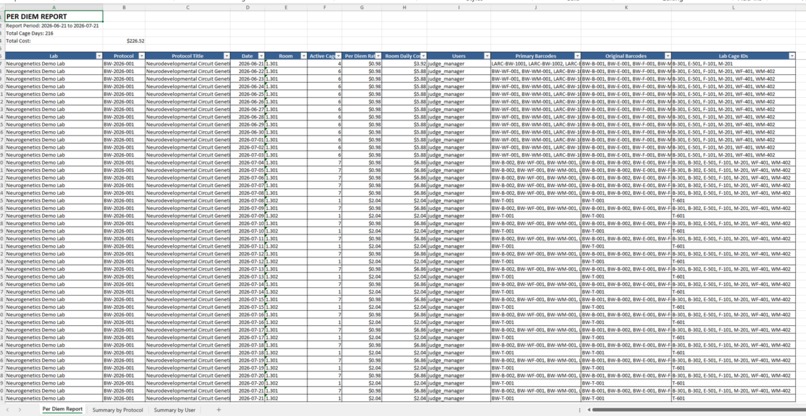
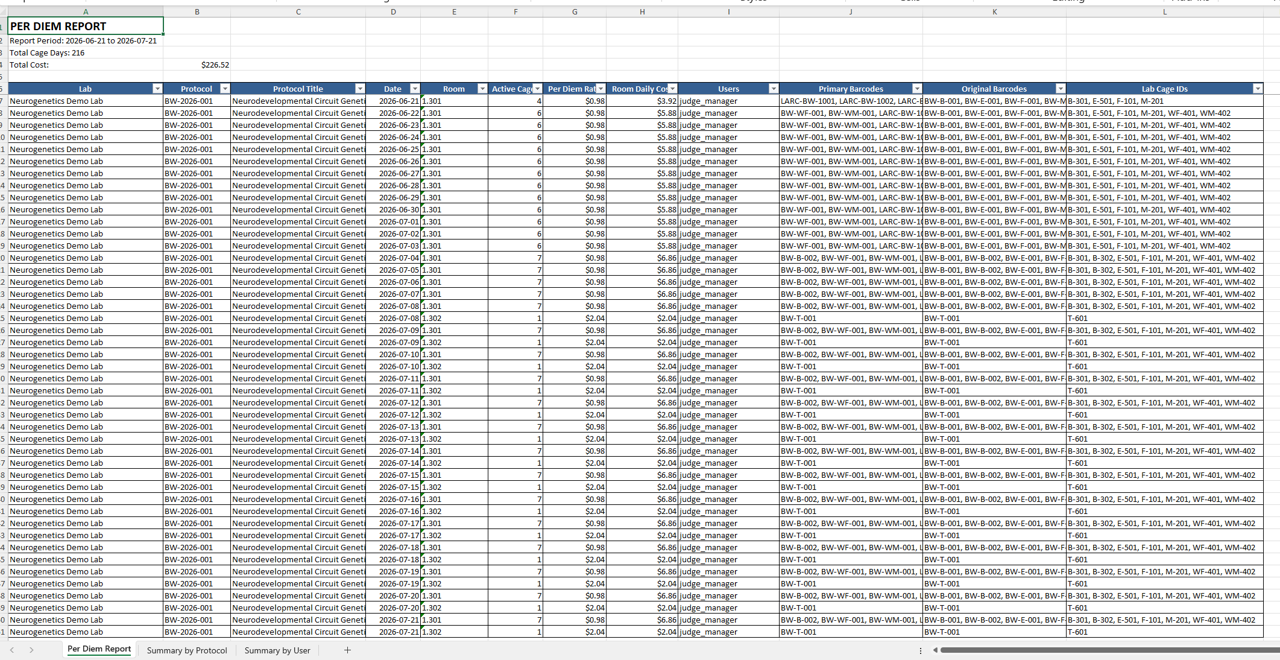
colony-info-exported-as-excel
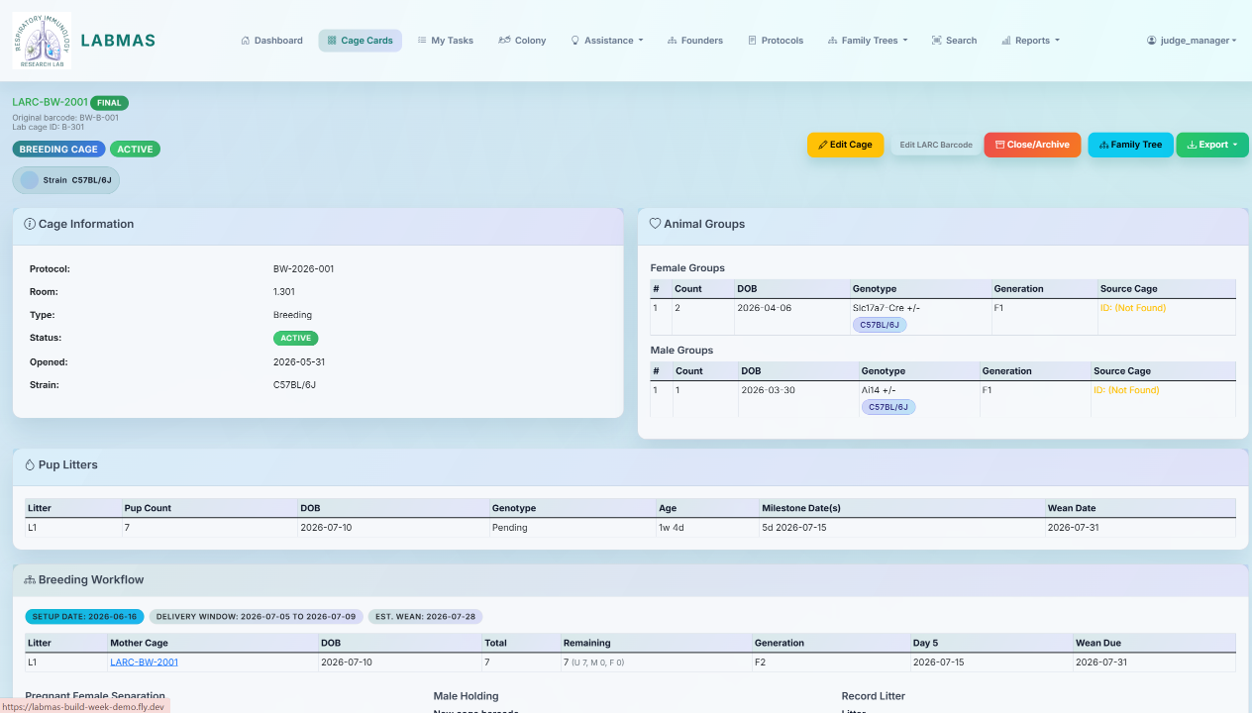
Inspiration
I am an immunologist and self-taught programmer. Since 2012, I have worked with mouse colonies in eight laboratories across Vietnam, Japan, Australia, France, and the United States. Despite different institutions and research programs, I repeatedly saw the same problem: colony information was divided among cage cards, spreadsheets, emails, calendars, and people’s memories. It was difficult to quickly determine which animals were available, whether enough breeders existed for an experiment, or what needed to happen next or which animals are reproductively ready or which cages can supply the next breeding setup or where did a lineage originate. I started LABMAS to turn that experience into a practical tool for researchers.
What it does
LABMAS brings mouse-colony maintaining tasks into one role-aware application. Researchers can manage digital cage cards, animals, breeding, litters, weaning, treatments, tasks, protocols, family trees, founder records, and reminders. Animal Inquiry helps users find authorized live cohorts by genotype, strain, sex, age, cage type, and breeding readiness. Breeding Planning works backward from an experimental target to estimate animal demand, breeder cages, source cohorts, shortages, and important dates. LABMAS also provides animal-usage and estimated per diem reports, lab and user administration, tracking-only Institutional Animal Care and Use Committee (IACUC) records, and guided training inside the real application. The system supports decisions without making them for our researchers. It does not automatically move animals, enforce regulatory limits, or replace institutional billing. Basically, researchers can use LABMAS to:
- Create digital cage cards and barcodes
- Track animals, transfers, breeding setups, litters, weaning, treatments, and euthanasia
- Search authorized live cohorts by protocol, genotype, strain, sex, age, cage type, and reproductive readiness
- Preserve founder provenance and visualize family trees
- Plan breeding requirements from an experimental target and identify eligible source cages, shortages, and key dates
- Assign colony tasks and generate Outlook-compatible reminder events
- Review scoped animal-usage and estimated per diem reports with Excel export
- Manage laboratories, users, roles, protocols, rooms, and genetic profiles
- Track IACUC approval dates and genotype-level animal allocations for future Laboratory Animal Resources Center (LARC) integration
How I built it
LABMAS is a Flask application using Python, Jinja, Bootstrap, SQLAlchemy, Alembic, PostgreSQL, and SQLite. I used Codex (GPT 5.5) throughout the project as a programming and problem-solving partner. Codex with GPT-5.5 helped me build most of the application’s foundation, including database models, workflows, interfaces, tests, browser validation, and deployment. During Build Week, GPT-5.6 supported 3 major extensions: Breeding Assistance, lab-first Admin and IACUC tracking, and role-based Training.
Challenges I ran into
The biggest challenge was translating breeding biology into useful calculations without pretending that biology is perfectly predictable. I kept assumptions such as genotype yield, survival, litter productivity, and breeder lifespan visible so researchers can judge the result themselves. Deletion was another challenge. Users and laboratories may be referenced by years of historical records. Instead of breaking that history, inactive accounts are anonymized and inactive laboratories are preserved as archived records. Training also needed to use the real application without changing data. While a lesson is active, LABMAS blocks forms, deletion, email, calendar delivery, and exports. Because LABMAS existed before Build Week, I also documented exactly what was pre-existing and what I added during the competition.
Accomplishments that I’m proud of
I am proud that LABMAS grew from my own research experience into a working production application. During Build Week, I added practical breeding decision support, safer lab administration, future-facing IACUC tracking, and training for different user roles. LABMAS has been essential tool fordaily research activities not only in my own lab but also our colleagues. I also released an isolated demonstration containing only synthetic laboratories, users, cages, animals, and protocols so judges can safely test the complete workflow.
What I learned
As a self-taught programmer, I learned that Codex is most valuable when it helps connect the whole problem, not only writing code, but understanding scientific workflows, permissions, database relationships, testing, and deployment. I also learned that scientific software earns trust by showing its assumptions and keeping people in control.
What’s next for LABMAS
My long-term goal is to pilot LABMAS as a university-wide platform connecting research laboratories with LARC operations. Future work would compare recorded animal usage with approved allocations and support warnings, reviews, and auditable institutional workflows. I also plan to build an integrated Laboratory Inventory module for reagents, antibodies, consumables, equipment, storage locations, lot numbers, expiration dates, and reordering. This would expand LABMAS from colony management into a broader research-operations workspace, such as a lab-managment ecosystem.
Built With
- 4.
- alembic
- bootstrap
- codex
- css3
- docker
- flask
- flask-login
- flask-wtf
- fly.io
- gpt-5.6
- gunicorn
- html5
- javascript
- jinja
- openpyxl
- pandas
- postgresql
- python
- sqlalchemy
- sqlite
- xlsxwriter

Log in or sign up for Devpost to join the conversation.