Inspiration
High school physics experimentation is broken and ineffective, and it’s not the fault of anyone on the academic side. Rather, the hardware (and consequently, the software) has been lagging behind for decades. With the advent of LLM’s and equipment getting scarcer, individualized learning needs to be brought to the forefront.
What it does
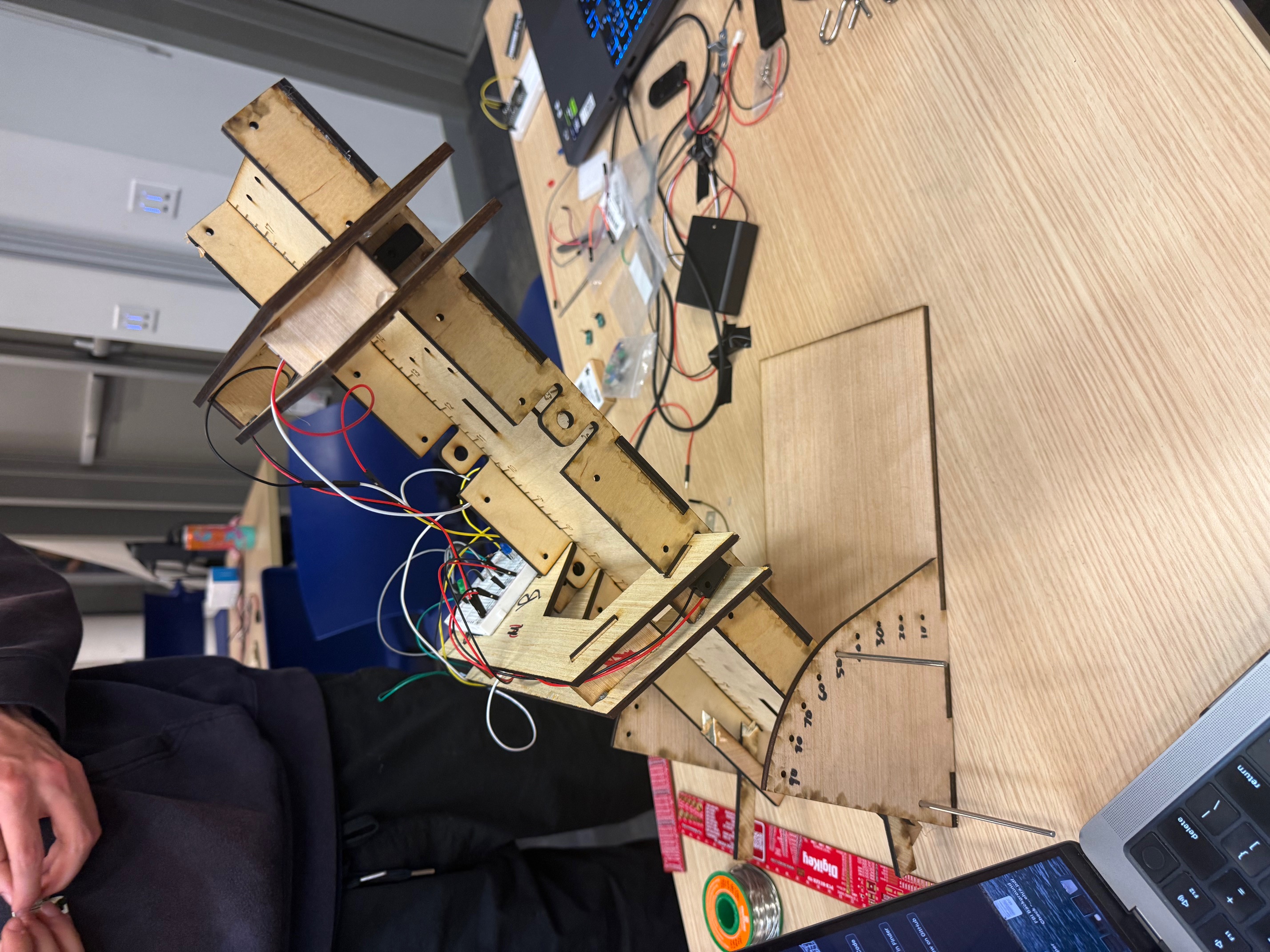
LABKickstart is set up with our first kit: an inclined plane. The inclined plane comes with a photogate module, a distance module, and an IMU module. The student launches a UI on their computer with Bluetooth enabled and connects the module(s) they need individually. Then, they can use those modules to collect data, with graphing software that updates in near real-time, for any experiment. The data is all ready to export in a CSV for the student to put into Microsoft Excel or Google Sheets and work from there.
Additionally, teachers can have students upload their lab PDFs and turn them into step-by-step instructions on how to implement our kits.
How we built it
We knew that the key to our product was its modularity, so we wanted to start out with the low-level components: the modules themselves. Starting with just our base station and one IMU module, we established Bluetooth Low-Energy communication between this module and our base station (a laptop) to stream the data that it created. We then continued to branch out, creating our Time-of-flight module, testing its streamed data on its own. Then, we created our beam break module and tested it alone as well. To combine our product into one cohesive experiment, we then designed a modular ramp that can be used for all kinds of experiments. With everything built individually, we sought to establish communication between all modules and the base station simultaneously. We uploaded custom code to each respective module and integrated battery power such that we may have multiple data streams at once. Once we confirmed that the communication between multiple devices was fast and reliable, we put it all together and created a user-friendly GUI to run experiments with our modules.
Challenges we ran into
- Diagnosing BLE issues
- Modules were randomly disconnect
- Sending data at the right frequency to make the channel more stable
- Data desynchronization with beam breaks
Accomplishments that we're proud of
- Building the adjustable inclined plane
- Getting reliable photogate data in dynamics experiments for the first time
- Integrating all our modules together in one experiment
What we learned
- How to use BLE to transmit data reliably How to setup a Lab/data analytics UI
What's next for LABKickstart
- Raspberry Pi base station that can run multiple servers in a classroom for all students to use, offboard from their own devices
- Creating rechargeable modules
- Adding assessment capability (such that teachers may be able to incorporate the lab tools into an exam)


Log in or sign up for Devpost to join the conversation.