Inspiration
- I got inspired after watching a podcast on The Diary of a CEO.
- It highlighted how ultra-processed foods can have carcinogenic ingredients.
- Checking labels manually seemed tough, so I decided to simplify it with an app.
What It Does
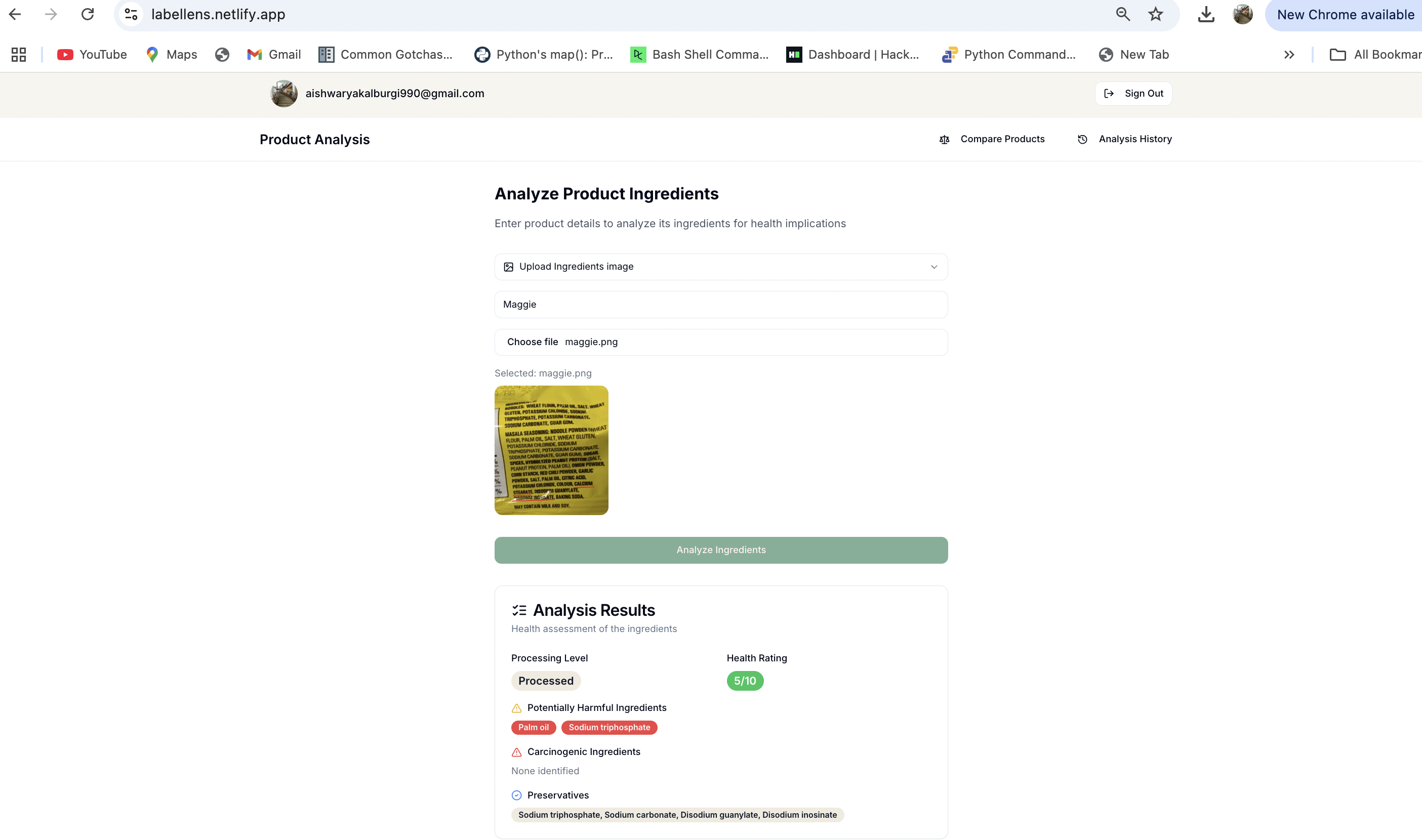
- Label Lens analyzes food product ingredient lists using AI.
- Gives a health rating (out of 10) for each product.
- Flags harmful stuff like carcinogens and preservatives.
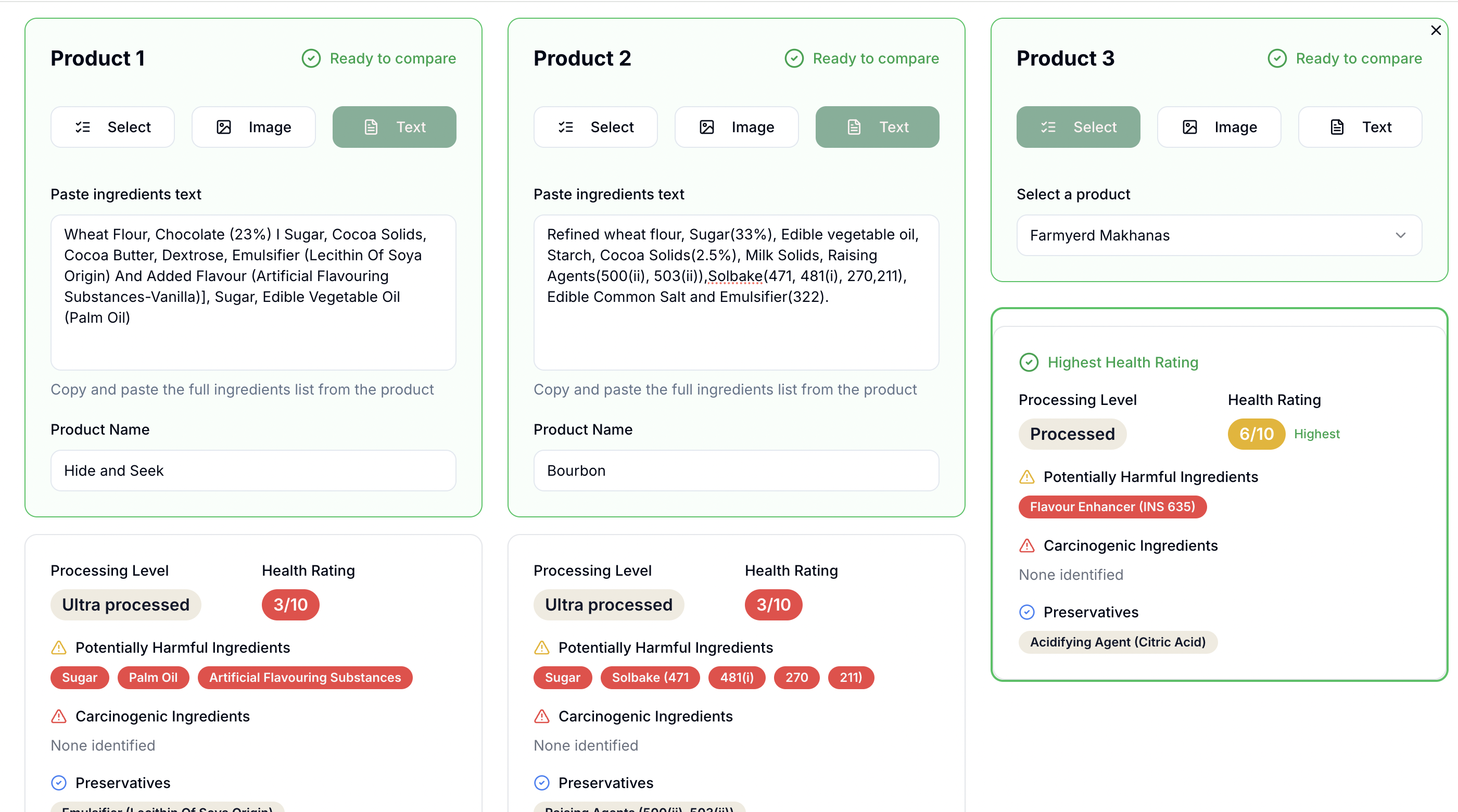
- Lets you compare up to 3 products to pick the healthiest one.
How I Built It
- Built an AI agent in Botpress, trained it to spot harmful ingredients.
- Used React Vite for a fast, user-friendly frontend.
- Connected the AI to the app via API for real-time analysis.
- Used Supabase for secure storage and user authentication.
Challenges I Faced
- Fine-tuning the Botpress AI was hard—it kept misclassifying some ingredients.
- API calls between React and Botpress were slow, so I added caching to fix it.
- Supabase authentication had bugs with user sessions, took time to debug.
- Making the interface simple yet informative needed a few redesigns.
Accomplishments I’m Proud Of
- Got the AI to accurately detect harmful ingredients.
- Built a comparison feature that works smoothly for 3 products.
- Integrated React Vite, Botpress, and Supabase seamlessly.
- Created a tool that helps people eat healthier!
What I Learned
- How to train an AI agent for a specific task like food analysis.
- Improved my skills in React Vite for frontend development.
- Learned to use Supabase for secure backend storage.
What’s Next for Label Lens
- Add barcode scanning to auto-read ingredient lists.
- Include personalized recommendations (e.g., for vegan or gluten-free diets).
- Expand the ingredient database for better analysis.
- Partner with health organizations to validate and grow the app.
Built With
- api
- botpress
- chat
- javascript
- netlify
- react
- supabase
- vite

Log in or sign up for Devpost to join the conversation.