-
-
-
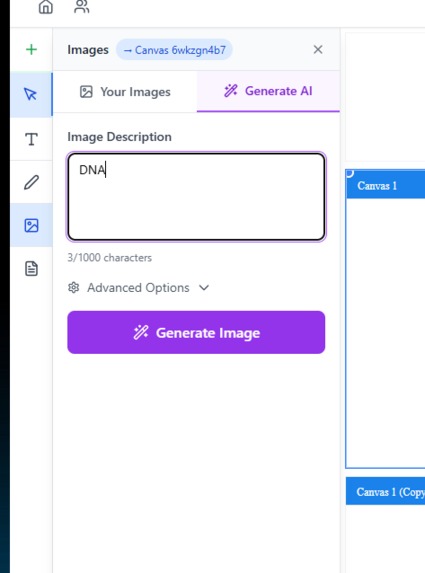
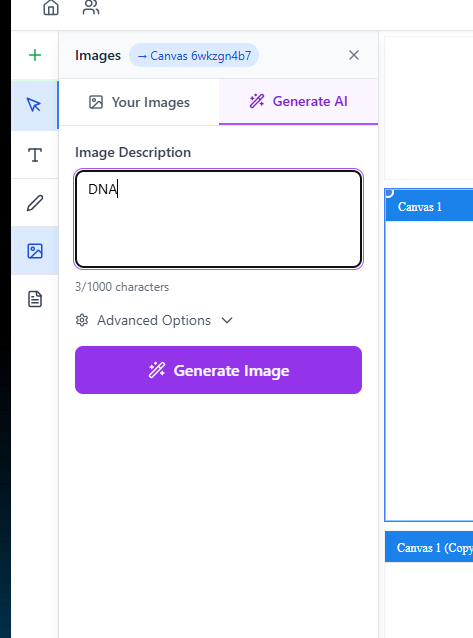
Image generation using open AI
-
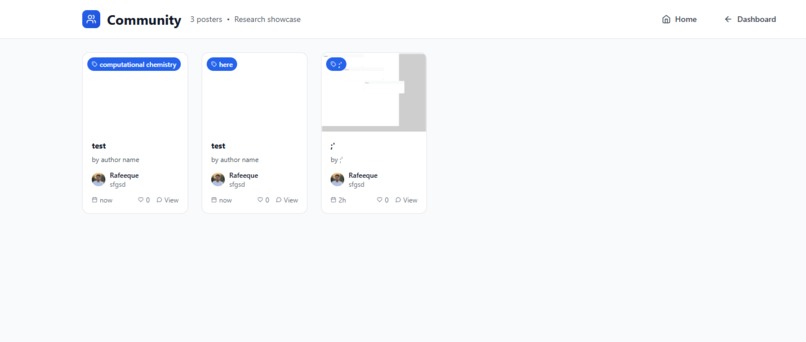
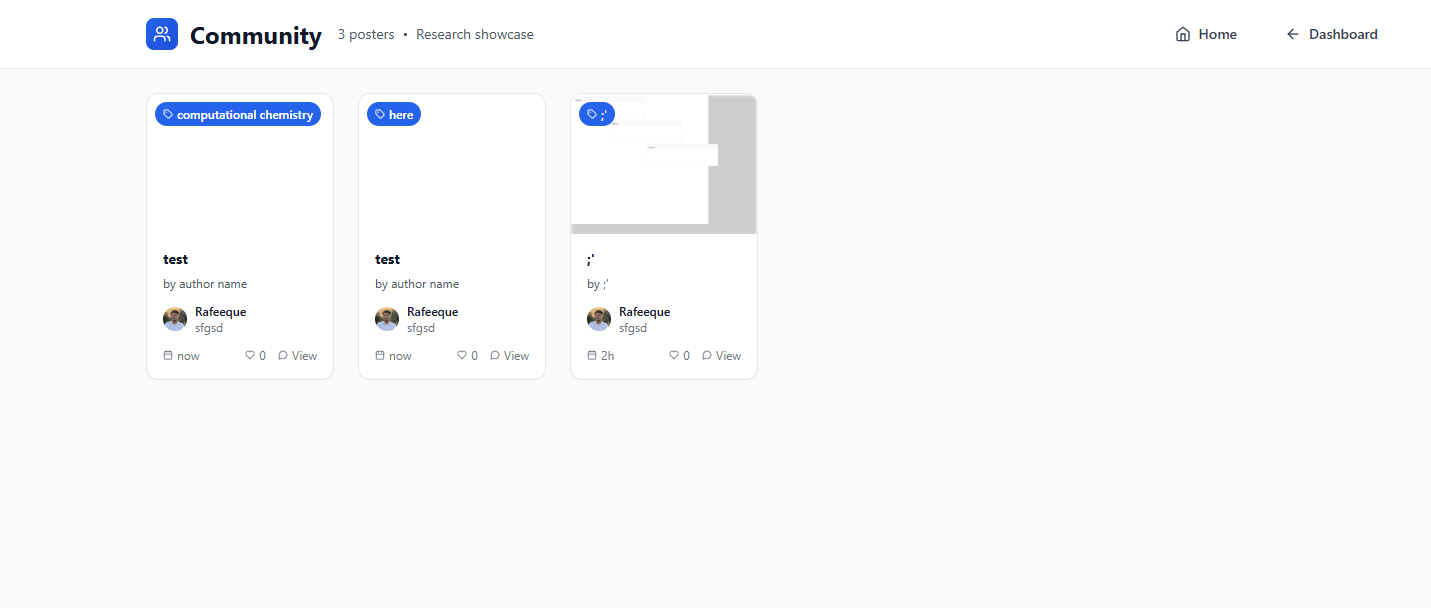
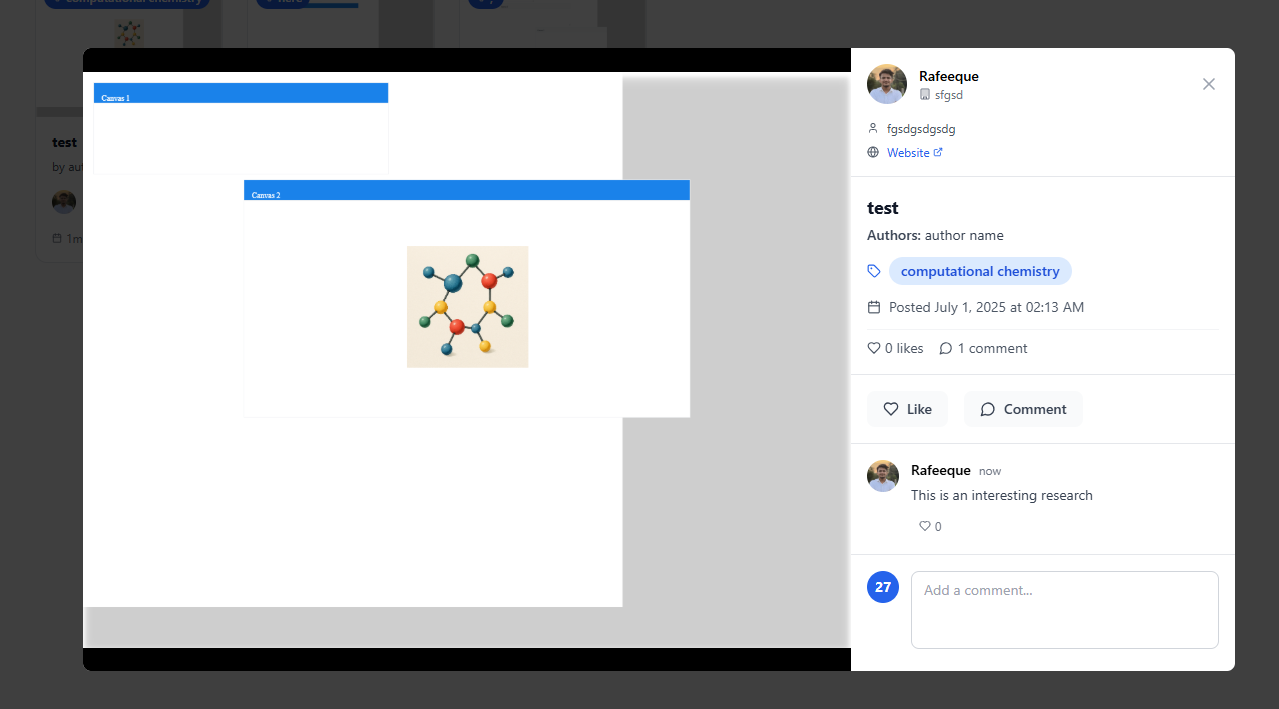
Community for sharing reseasrch posters
-
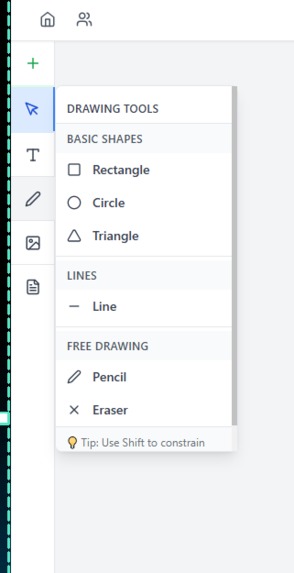
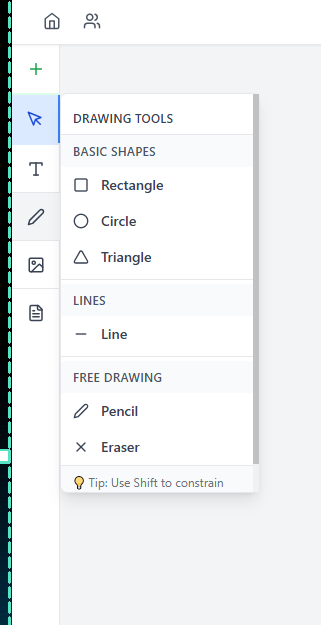
Drawing tools
-
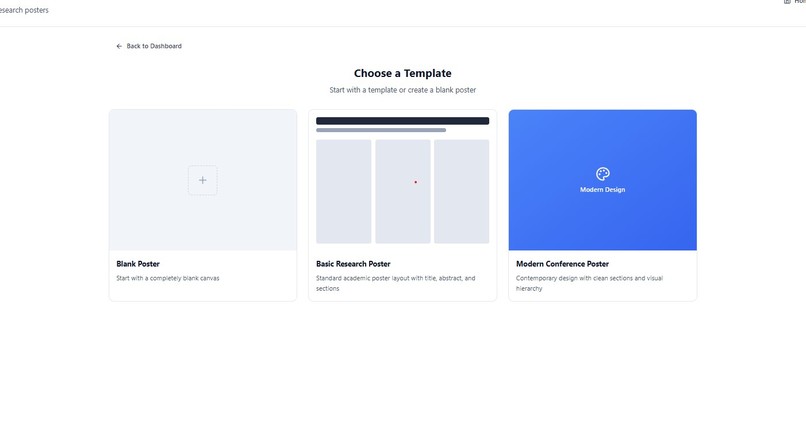
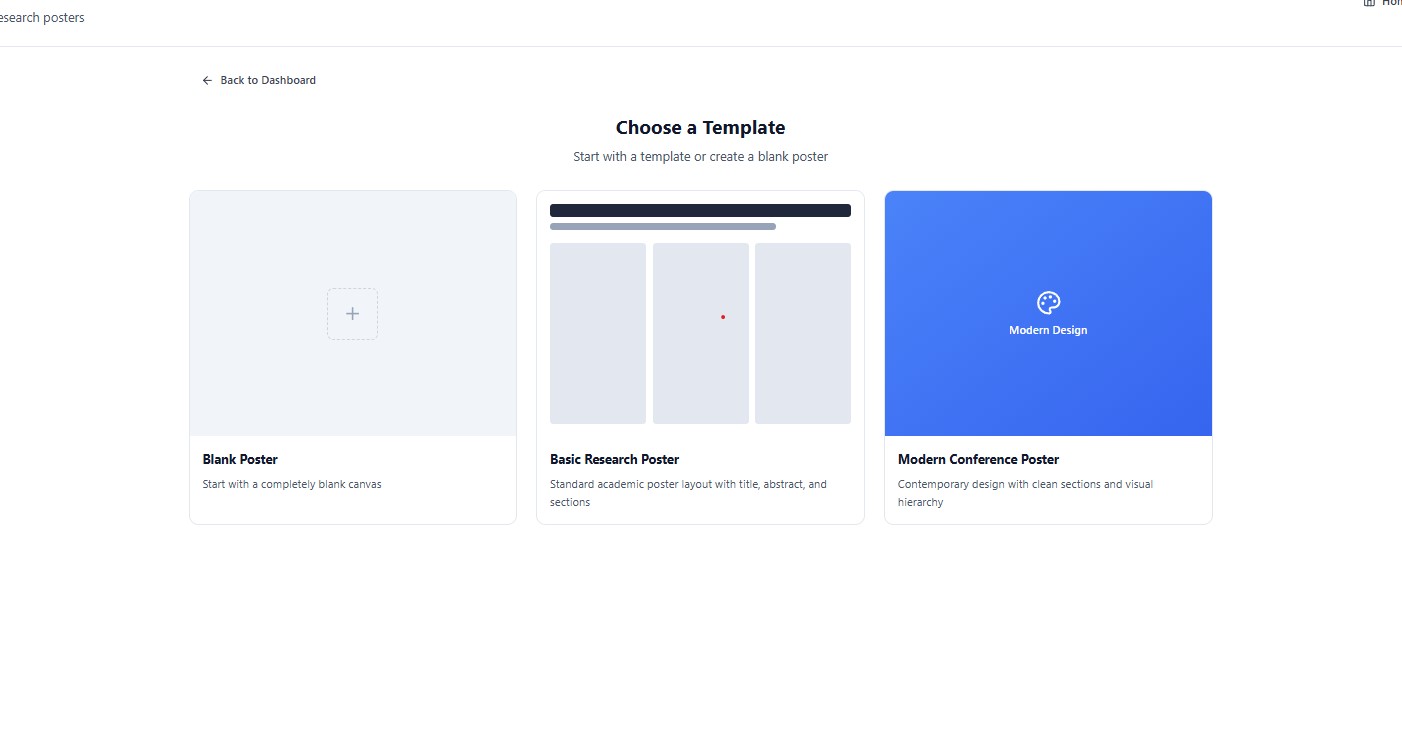
templates
-
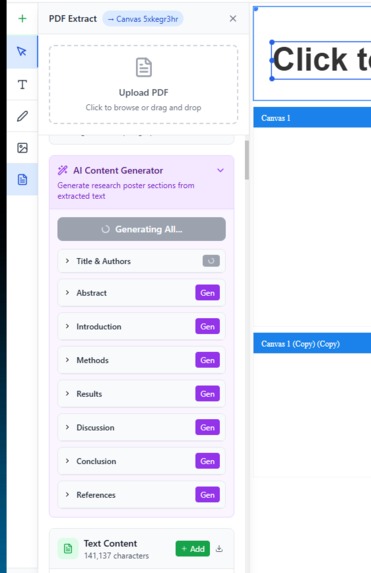
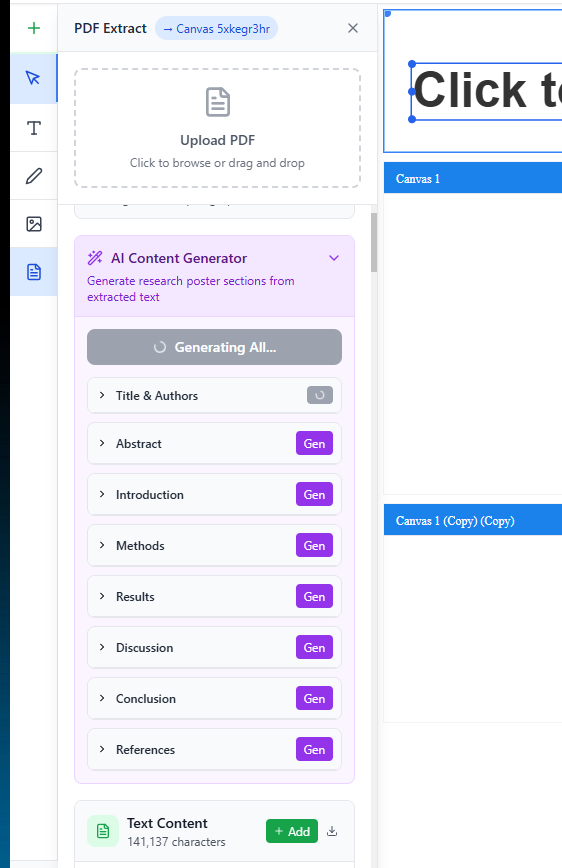
Text generation using gemini
-
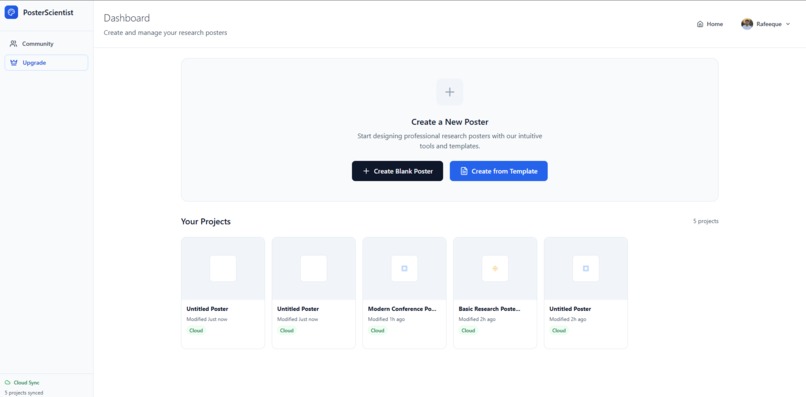
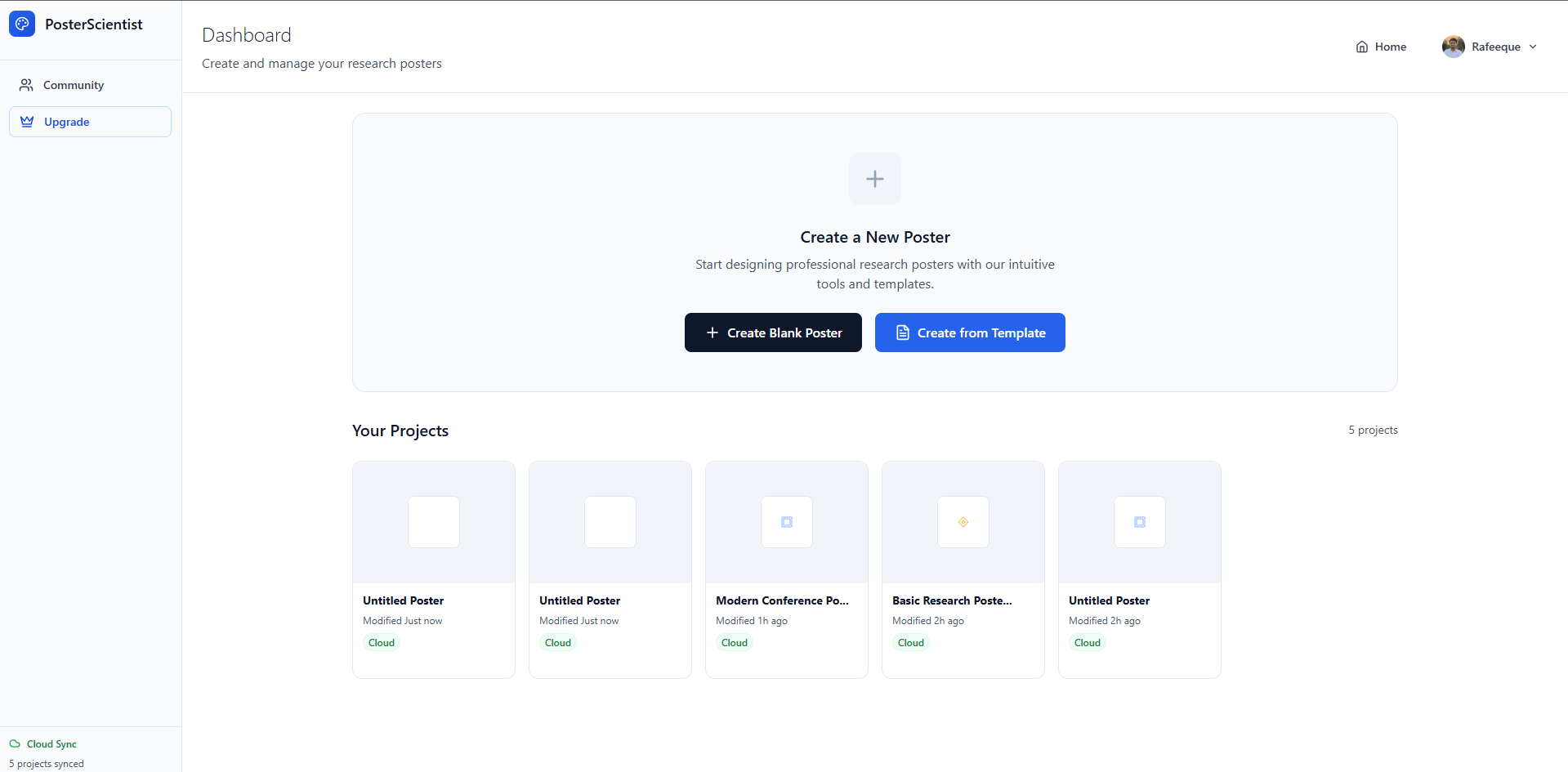
Dashboard
-
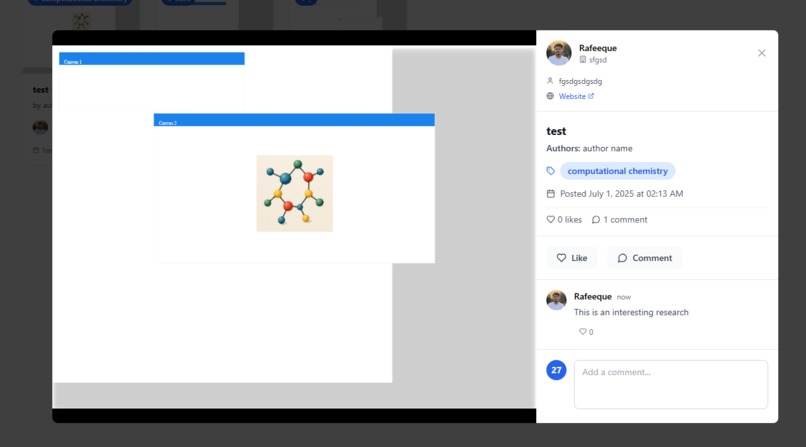
Comment on research posters in community
-
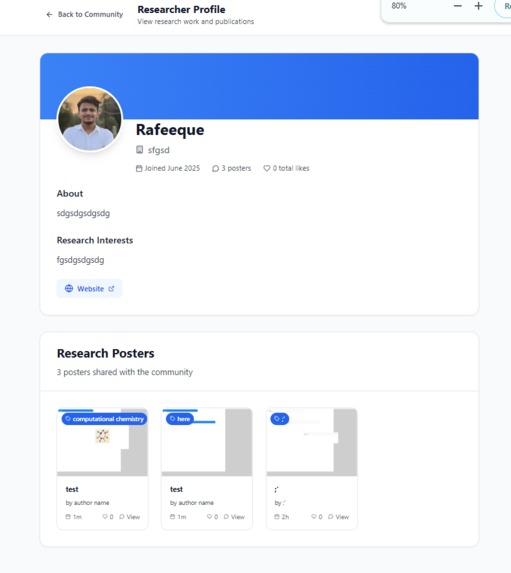
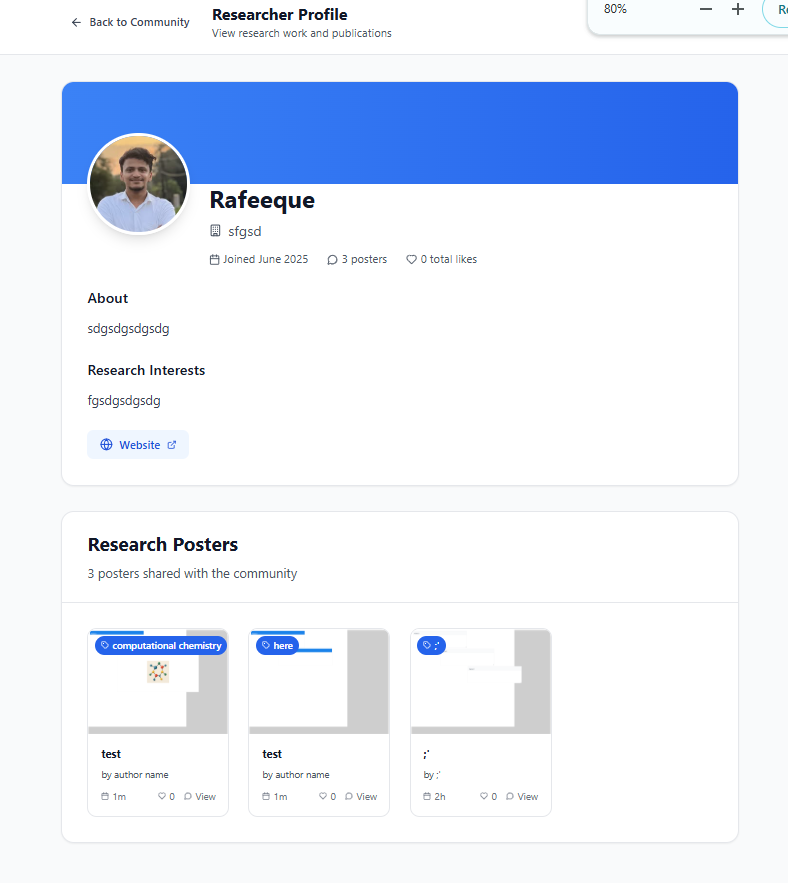
Profile page for researchers linked to community
-
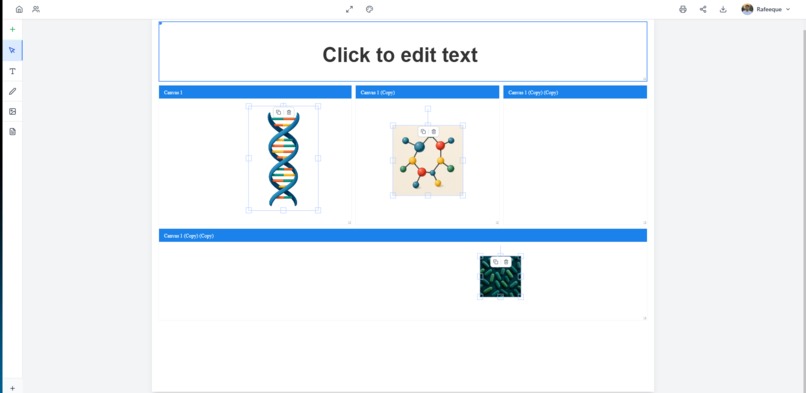
Editor
-
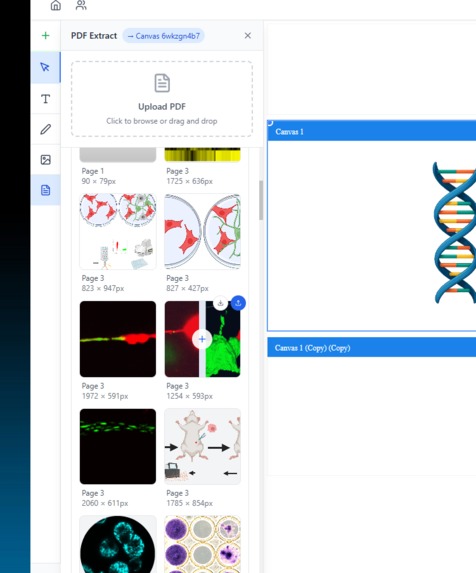
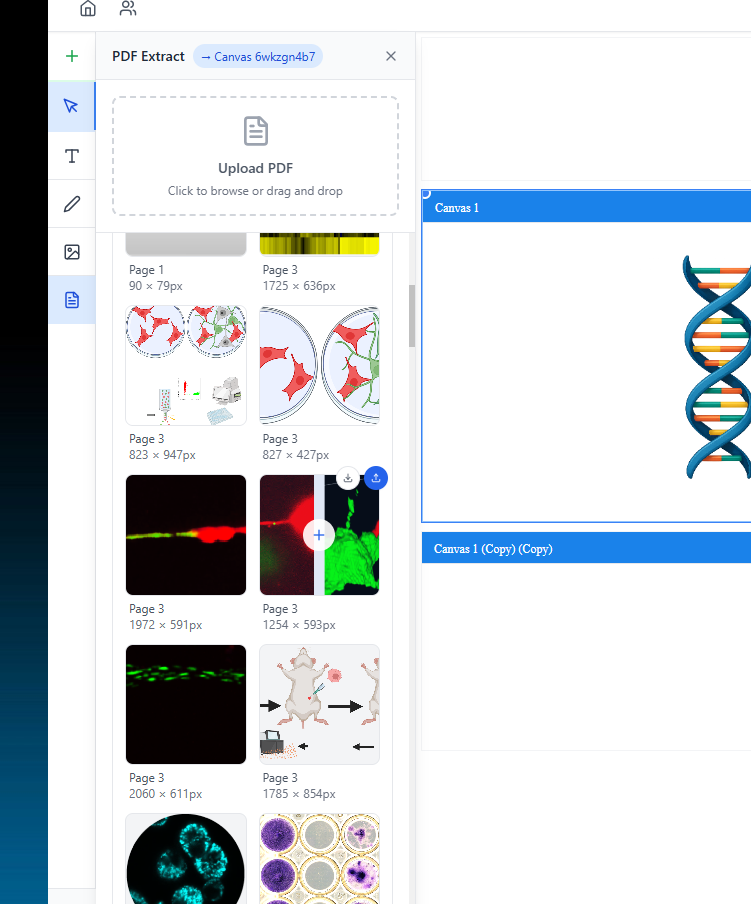
Extract images and text from research paper PDF
Inspiration
As a science illustrator with a background in both scientific research and design, I’ve spent more than 13 years helping scientists create visuals for research papers and presentations. One of the most consistent problems I saw: researchers struggle to create academic posters. They juggle multiple non-intuitive tools and templates, wasting valuable time on formatting instead of focusing on content.
Researchers need a faster, more effective way to design, present, and communicate their work. According to global data, over 2–3 million academic posters are created each year across disciplines. With more than 500,000 academic conferences held annually and around 4.5 million presentations delivered, posters remain one of the most common and powerful forms of scholarly communication, especially for early-career researchers. Yet the tools built for this workflow are outdated, fragmented, or designed for general audiences.
At the same time, poster formats are evolving. Pre-2020, 90–95% of posters were printed, but the pandemic rapidly accelerated digital adoption. As of 2024, about 35–40% of posters are now digital, with many conferences adopting hybrid formats. There is now a clear opportunity for a platform that supports both print and digital poster creation.
I always wanted to build a solution that saves time and cost. But learning to code while working full time was difficult. That changed when I discovered VibeCoding with Bolt. For the first time, I could build real tools using natural language. I had already spent months experimenting with small apps, and this hackathon was the perfect opportunity to build something meaningful.
PosterScientist brings together everything I care about: science, design, communication, community and accessibility. It lets researchers design posters quickly, extract content from their papers, generate section-wise text with AI in few minutes not hours, and share or print their work all in one place. Most importantly, I understand the research world, its time pressures, and its communication needs.
As posters increasingly serve as visual hubs for academic dialogue and collaboration, I believe PosterScientist can become the go-to space for research communication — and make the lives of thousands of researchers just easier and open more collaboration opportunities.
What it does
PosterScientist is an all-in-one web app where researchers can design, generate, share, and print academic posters with ease.
- Start by choosing a beautiful, category-based template
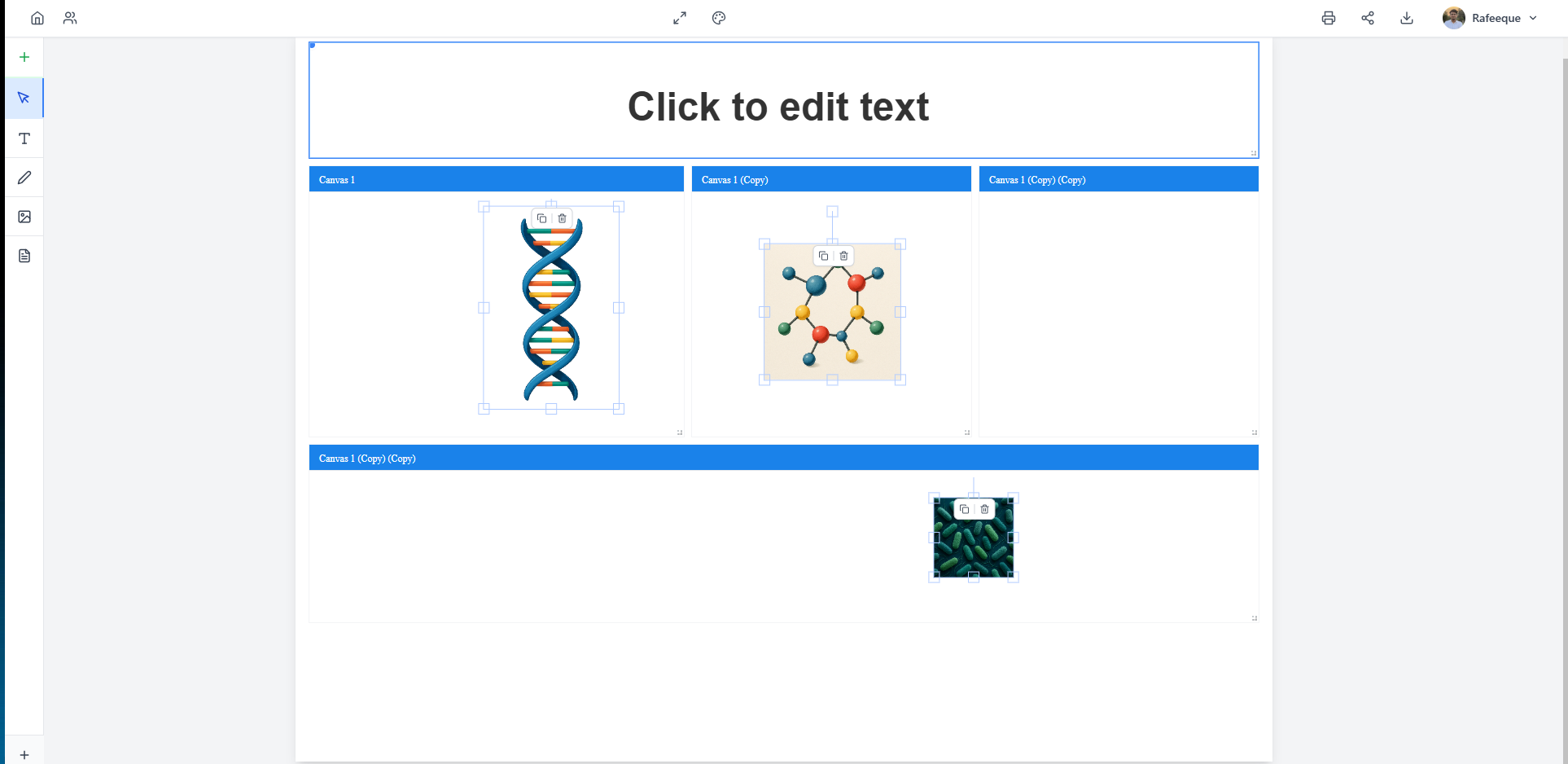
- Use a flexible editor powered by React Grid Layout and Fabric.js to add, move, resize, and customize poster sections
- Upload a research paper (PDF) — the app extracts figures and text automatically
- Use Gemini AI to generate text content for each section, then edit as needed
- Use toolbar tools to draw, add shapes, or drop in pre-built sections
- Track progress with a checklist that ensures all required sections are added
- Export posters as PDF, PNG, or JPG
- Share posters to a community feed where others can discover, comment, and engage
- View researcher profiles with posted work and details
- Submit posters for real-world printing via a request form (future versions will automate printing, tracking, and delivery)
How we built it
PosterScientist was built solo using VibeCoding on Bolt, supported by open-source libraries, Supabase, and AI APIs.
Frontend:
- React.js with React Grid Layout for layout control
- Fabric.js for drawing and visual editing
- Tailwind CSS for UI styling
Backend & Hosting:
- Supabase (PostgreSQL, Auth, Storage, Edge Functions)
- Stripe for payments
- Netlify for hosting and deployment
AI & PDF Handling:
- Google Gemini API for generating poster text
- OpenAI DALL·E for image generation
- PDF.js for in-browser extraction
- html2canvas and jsPDF for export
I iterated entirely through natural language prompts on Bolt. PDF handling and combining Fabric.js with layout grids were challenging. Bolt sometimes made unexpected changes, but I learned to improve prompts and use restore wisely. Supabase integration was new to me, but I learned through repetition and experimentation. Most importantly, I built a tool that could solve a problem I’ve witnessed for years.
Challenges we ran into
- PDF extraction with Bolt often ran into token limits
- AI models sometimes responded unpredictably, prompt engineering was key
- GPT image generation defaulted to DALL·E; integrating newer APIs took effort
- Combining React Grid Layout and Fabric.js required careful design and testing
- Backend logic with Supabase was unfamiliar, but manageable through trial
- Solo development was fun but also limiting in scale, I’ll need collaborators to grow
- UX decisions were easier because I’ve worked closely with researchers and understand their workflow
Accomplishments that we're proud of
- Successfully integrated React Grid Layout and Fabric.js for a flexible, user-friendly editor
- Created a community-first experience for researchers to share, engage, and collaborate
- Seamlessly integrated Google Gemini for content generation and OpenAI for image creation
- Enabled real-world printing and delivery for finished posters
- Built a tool I would genuinely use and recommend to others in research
- Designed a space that can evolve into a collaborative, social, and visual layer for academia
- Planned future challenges and campaigns to keep the community active and visible
What we learned
- Gained confidence integrating Supabase and Stripe to make the app production-ready
- Mastered AI prompting techniques on Bolt to reduce errors and guide the development process
- Learned how to merge creative canvas tools with structured layout components
- Realized the value of building by prompting — and now feel ready to teach others how to use Bolt
- Confirmed that listening to real user pain points leads to meaningful product design
What's next for PosterScientist
- Improve UI/UX through beta user testing
- Launch monthly poster challenges and themed campaigns
- Allow uploading externally created posters to the community
- Collaborate with research conferences and universities
- Add a scientific illustration library for drag-and-drop visuals
- Set up a complete print and delivery pipeline through logistics partnerships
- Build a team and community around the platform for scale and support
Built With
- autoprefixer
- css
- eslint
- fabric.js
- google-gemini-api
- html
- html2canvas
- javascript
- jspdf
- lucide-react
- netlify
- openai-dall?e-api
- pdf.js
- postcss
- postgresql
- react-grid-layout
- react-hooks
- react.js
- stripe
- supabase
- supabase-auth
- supabase-edge-functions
- supabase-storage
- tailwind-css
- typescript
- vite

Log in or sign up for Devpost to join the conversation.