LabAI: Your AI-Powered Virtual Laboratory for STEM Education
Inspiration
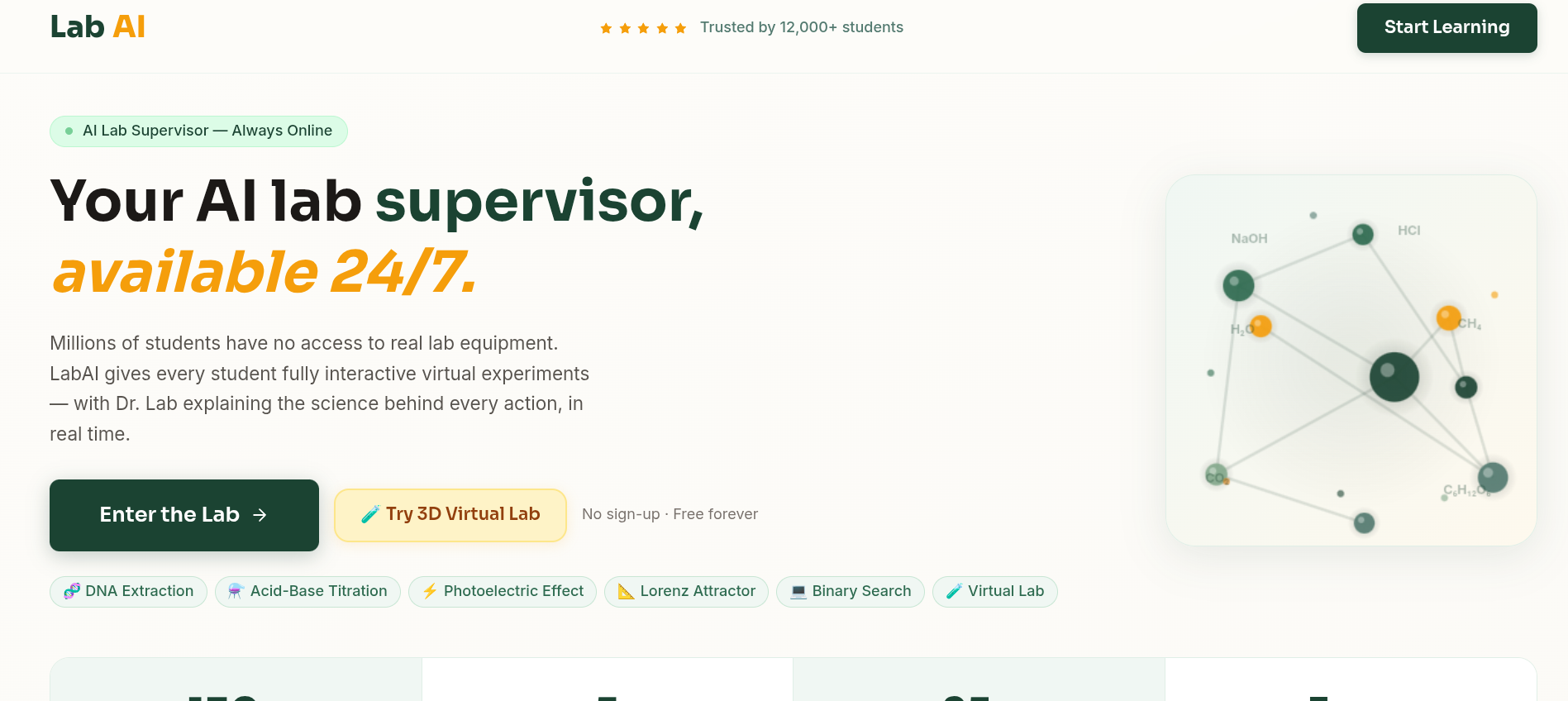
Our journey with LabAI began with a simple yet profound observation: millions of bright, curious students worldwide are held back from pursuing STEM fields not by lack of talent, but by lack of access. Traditional laboratories, with their expensive equipment and stringent safety protocols, are often out of reach. We envisioned a world where every student, regardless of their geographical location, could experience the thrill of scientific discovery firsthand. This dream fueled our desire to create a virtual space where learning is not just theoretical, but deeply experiential and universally accessible.
What it does
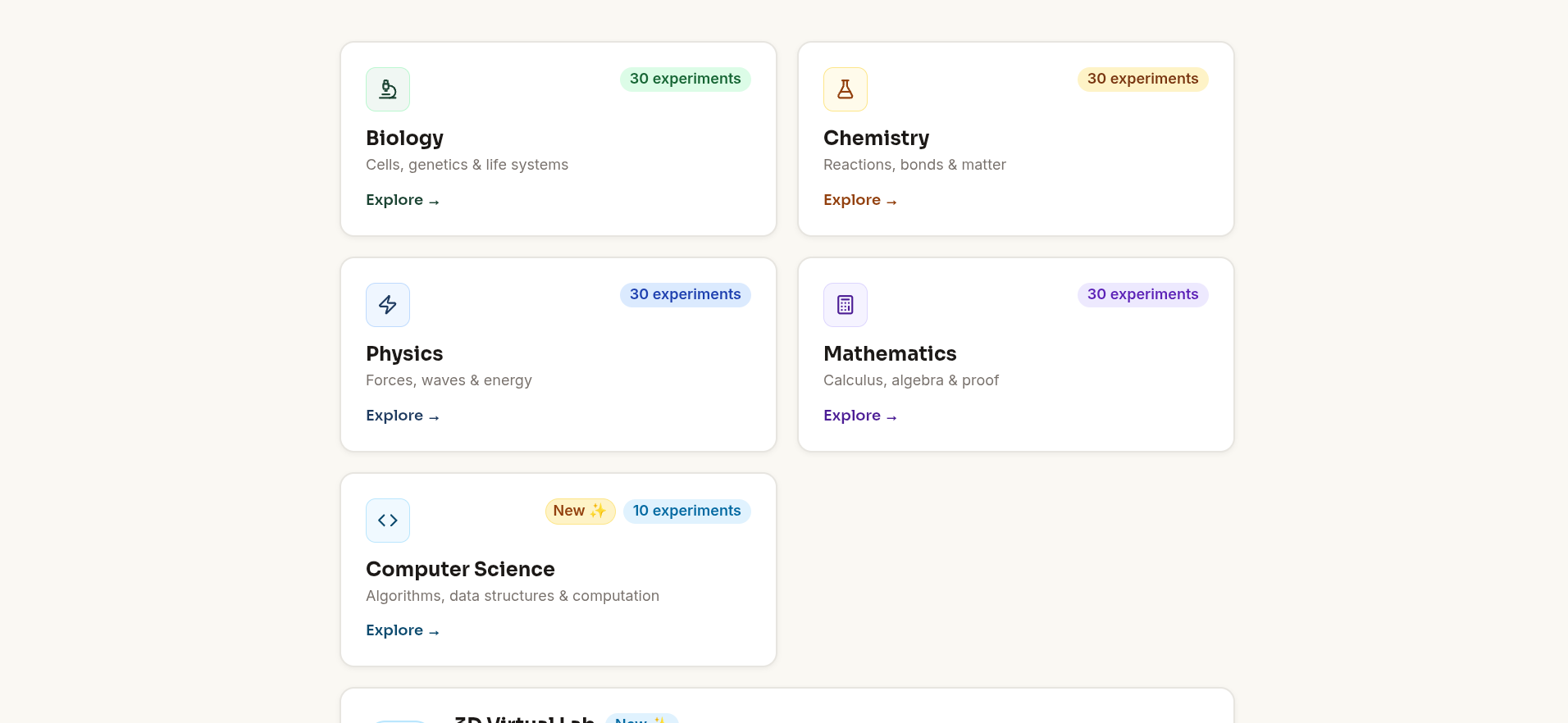
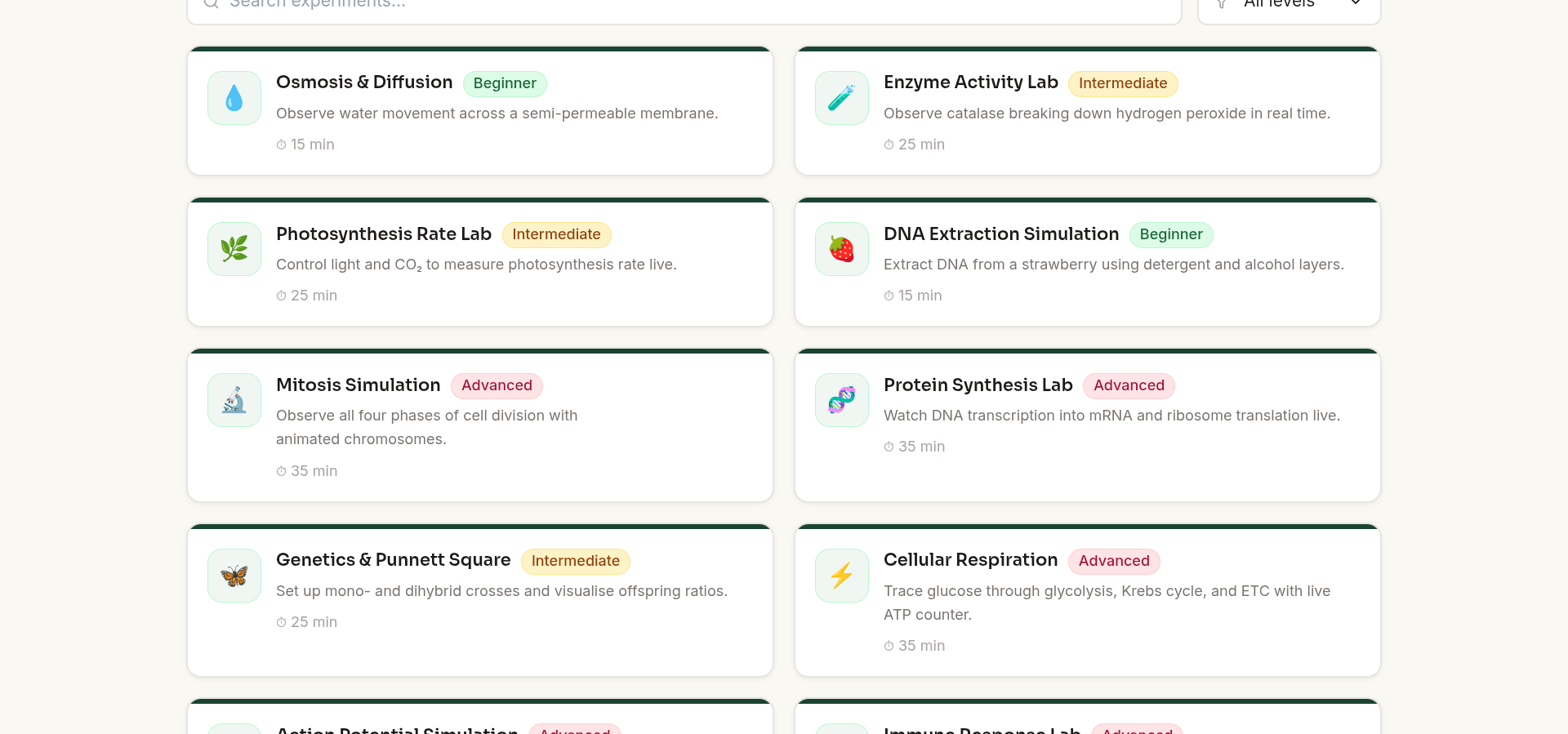
LabAI is an AI-powered virtual laboratory designed to revolutionize STEM education. It offers a rich, interactive environment where students can conduct over 80 experiments across Biology, Chemistry, Physics, Mathematics, and Computer Science.
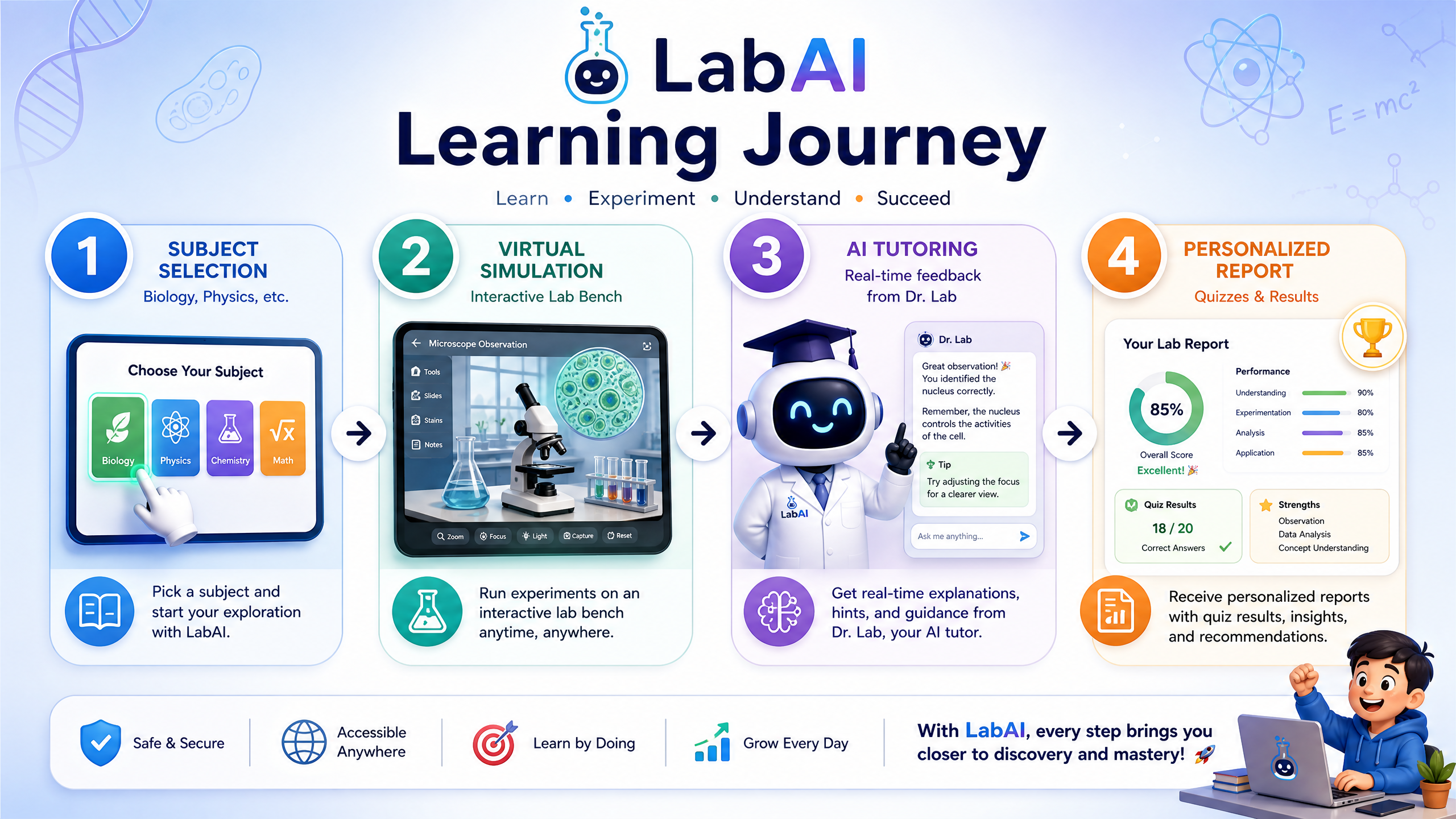
Key Features:
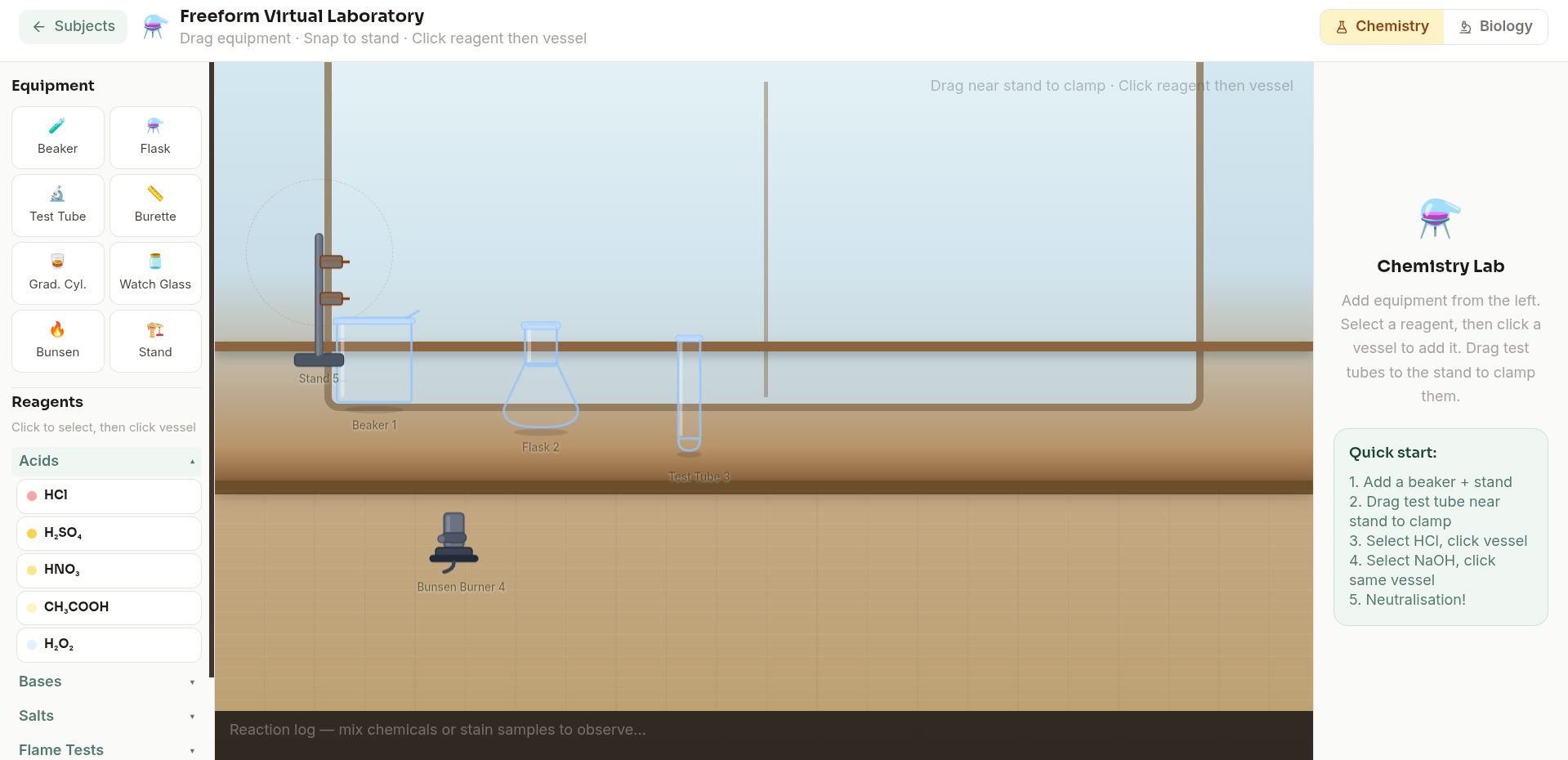
- Interactive Lab Bench: A freeform virtual environment with real-time physics and chemical reactions.
- Dr. Lab (AI Tutor): Powered by Gemini 2.5 Flash, providing real-time guidance and personalized quizzes.
- Advanced Visualizations: 10+ custom animated canvas visualizations for abstract concepts.
- Personalized Reports: Comprehensive feedback and performance metrics after every experiment.
How we built it
Building LabAI was an exhilarating challenge, a true testament to collaborative innovation. We leveraged a modern tech stack to ensure performance, scalability, and a seamless user experience.
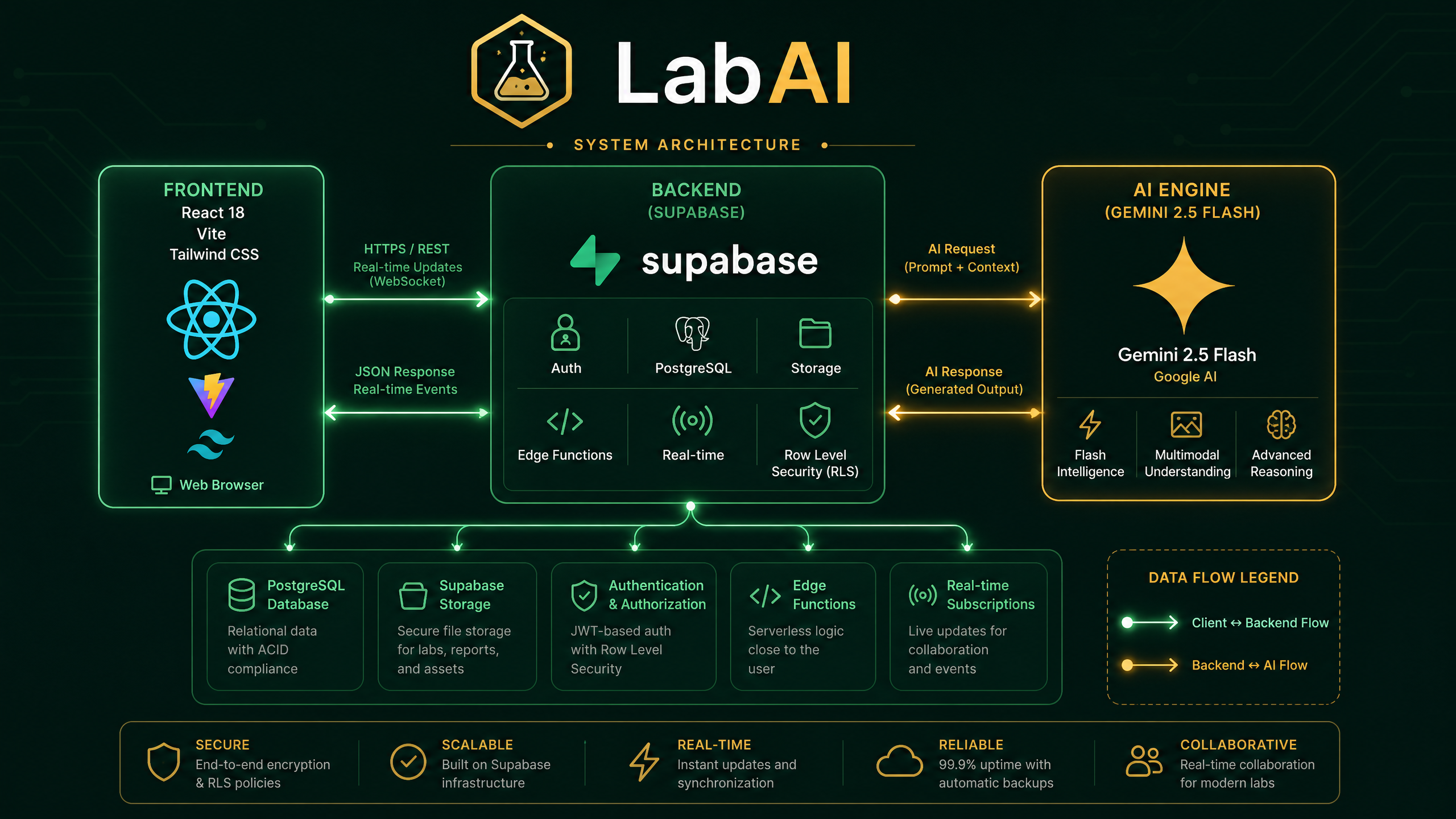
The Tech Stack:
- Frontend: React 18, TypeScript, Vite, Tailwind CSS, shadcn/ui.
- Backend: Supabase (Auth, Database, Storage).
- AI Engine: Gemini 2.5 Flash for real-time tutoring and content generation.
- Animations: Framer Motion and HTML5 Canvas for high-performance simulations.
Challenges we ran into
One of our primary challenges was optimizing complex scientific simulations within a client-side environment. For example, maintaining a stable 60fps while simulating:
$$ \frac{d[A]}{dt} = -k[A]^n $$
for high-order chemical kinetics required extensive fine-tuning. We also worked hard on the AI's "pedagogical tone"—ensuring Dr. Lab explains concepts like Le Chatelier's Principle without just giving away the answer:
"If a system at equilibrium is disturbed by a change in temperature, pressure, or concentration, the system will shift its equilibrium position so as to counteract the effect of the disturbance."
Accomplishments that we're proud of
We are incredibly proud of successfully integrating over 80 diverse experiments into a single platform. The development of Dr. Lab stands out as a core innovation, providing instant, personalized feedback that mimics a real-life lab supervisor. We're also proud of our high-performance visualizations, such as the Action Potential simulation in Biology, which visualizes the Nernst equation in real-time:
What we learned
This project taught us the critical importance of balancing computational efficiency with educational depth. We learned how to effectively integrate AI as a supportive companion, rather than just a search engine. We also deepened our expertise in building accessible, high-performance web applications that can handle diverse, real-time interactive content.
What's next
Our vision for LabAI is ever-expanding. We plan to:
- Expand Content: Introduce Quantum Computing and Advanced Biotechnology modules.
- LMS Integration: Connect with platforms like Google Classroom and Canvas.
- Collaborative Labs: Enable real-time multi-user experiments for group learning.
- Offline Support: Develop a PWA version for students in low-connectivity areas.
LabAI is more than just a tool; it's a mission to democratize science education, one experiment at a time. 🚀
Built With
- cs
- gemini
- html
- javascript
- llm
- lowcode
- react18
- supabase
- typescript
- vite

Log in or sign up for Devpost to join the conversation.